It’s fascinating to see those first little green tomatoes show up on your plant. You’ve been watering them and taking care of them for weeks, and now you can finally see it paying off.
Watching them grow bigger and slowly turn red feels like a little reward for all your hard work.
But here’s the catch: tomatoes get heavy as they grow. If your plant doesn’t have something to lean on, the stems can start to bend or sag.
Sometimes they even snap! Then your tomatoes end up on the ground, where bugs can get to them or they just rot before you get to enjoy them. That’s why giving your plant some support early on makes such a big difference.
The good news? You don’t need anything fancy to keep your tomato plants standing tall.
With a few simple supports, you can keep those branches off the ground and your tomatoes safe right up until harvest time. Here are 9 tomato plant support ideas to try in your own garden.
9 Tomato Plant Support Ideas
From simple stakes to clever DIY tricks, there’s a support method out there for every garden and every budget. Let’s look at some easy ways to keep your tomato plants happy and your fruit off the ground.
1. Wooden Stakes

Wooden stakes are probably the most classic way to support a tomato plant, and for good reason — they’re cheap, easy to find, and dead simple to use.
Just push a sturdy stake into the ground a few inches from your plant’s base, then tie the main stem to it loosely with garden twine or soft fabric strips as it grows taller.
The trick is to keep adding ties every few inches as the plant climbs, so the weight stays evenly supported instead of pulling on just one spot.
It’s not the prettiest option in the garden, but if you’ve got a single-stem tomato plant, a good wooden stake will do the job without costing you a thing.
2. Tomato Cages
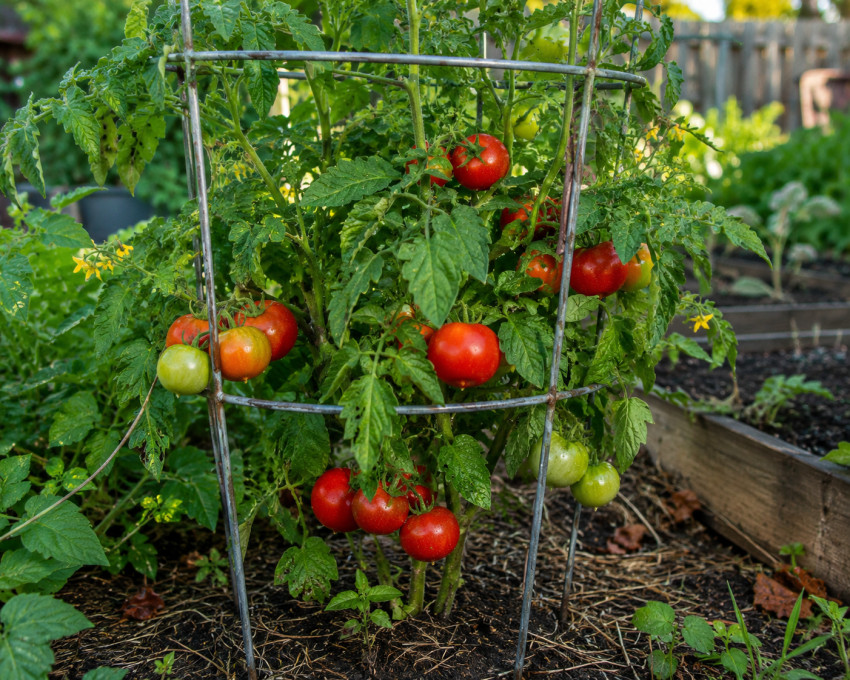
Tomato cages are a favorite for a reason — you just pop them over your young plant and let it grow right through the wire rings.
As the branches spread out, they naturally rest on the rings instead of flopping onto the ground, so you barely have to do any tying or fussing.
The one thing to remember is to set the cage up early, while the plant is still small. Trying to squeeze a cage over a tomato plant that’s already bushed out is a headache you don’t want.
Get it in place early, and the cage pretty much takes care of itself for the rest of the season.
Check this: When to Start Tomato Seeds in Greenhouse?
3. Garden Twine and Stakes (Florida Weave)
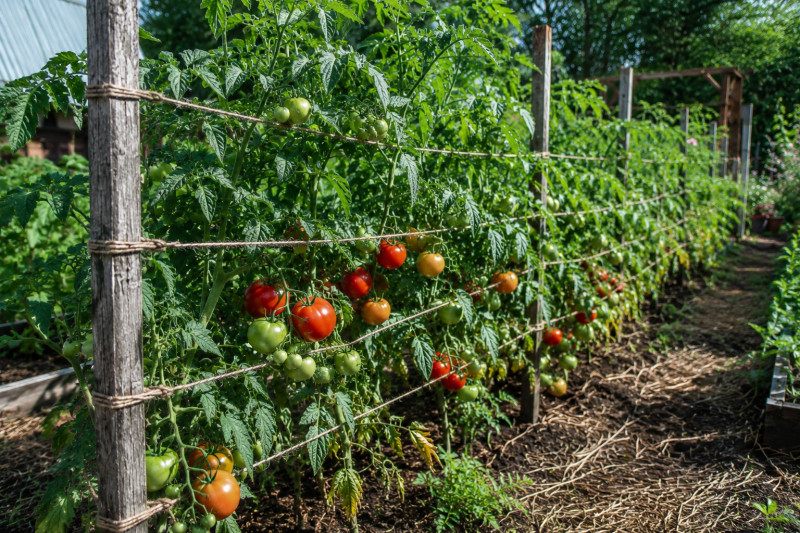
The Florida weave is a neat trick if you’ve got a whole row of tomatoes to support. You set up a stake every couple of plants, then weave garden twine back and forth between them, creating a kind of fence that holds the stems upright as they grow.
It sounds a little fiddly at first, but once you get the hang of it, it’s actually pretty quick — and it saves you from tying each individual stem by hand.
As your plants grow taller, you just add another row of twine above the last one, keeping everything snug and supported all season long.
4. Cattle Panel Trellis
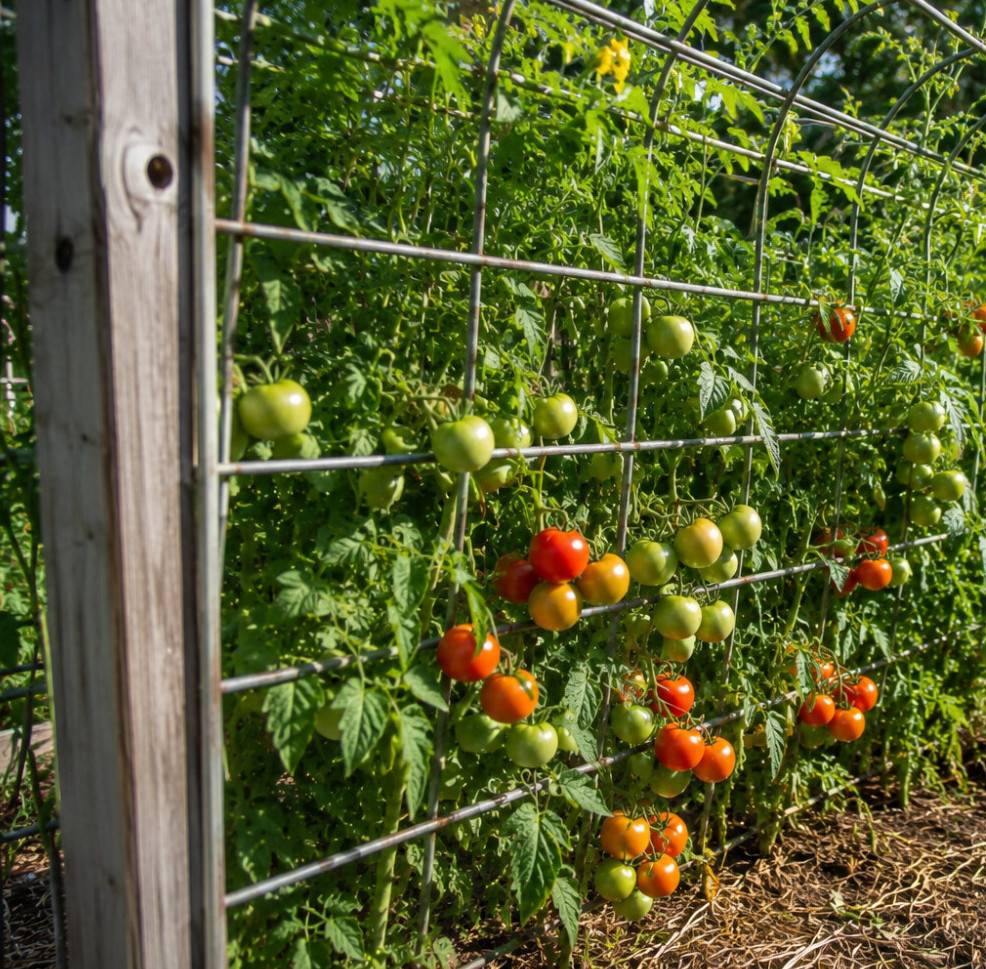
A cattle panel trellis is a great option if you’re growing tomatoes year after year and want something that’ll last.
You bend a sturdy metal cattle panel into an arch or stand it up straight between two posts, then let your tomato plants climb right up it as they grow.
It takes a bit more effort to set up than a stake or cage, but once it’s in place, it’s practically indestructible.
Rain, wind, heavy fruit — none of it bothers a cattle panel. If you’ve got the space and want a support system you won’t have to replace every year, this one’s worth the extra work upfront.
5. String Trellising

String trellising is a popular trick among gardeners who grow tomatoes in greenhouses or tight spaces, and it’s surprisingly simple.
You run a sturdy string from an overhead support down to the base of each plant, then gently wind the main stem around the string as it grows.
This method keeps your tomato plants growing straight up instead of sprawling out, which is perfect if you’re short on garden space.
It does mean checking on your plants every few days to wind the new growth, but the payoff is a tidy, vertical garden that’s easy to manage and harvest from.
Check this: 13 Homemade Fertilizers for Tomatoes
6. A-Frame Trellis
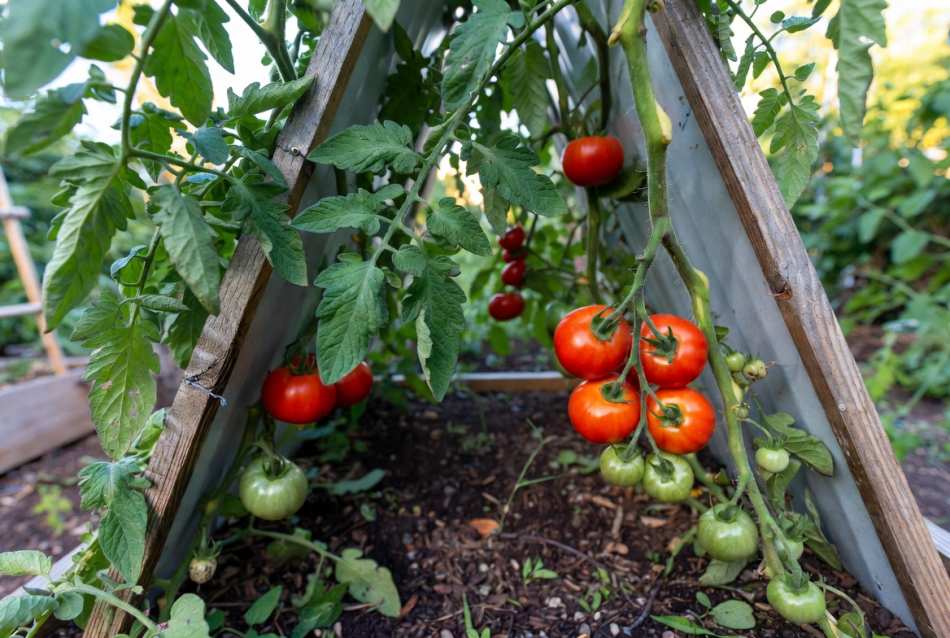
An A-frame trellis is exactly what it sounds like — two frames leaned together to form an “A” shape, with your tomato plants growing up the sides. It’s a sturdy setup that works great if you’ve got a couple of rows of plants you want to support at once.
The shape also makes it easy to reach your tomatoes from both sides when it’s time to pick them, which is a nice bonus.
You can build one out of wood, PVC pipe, or even leftover branches if you’re going for a more rustic, garden-grown look.
7. Concrete Reinforcing Wire Cages
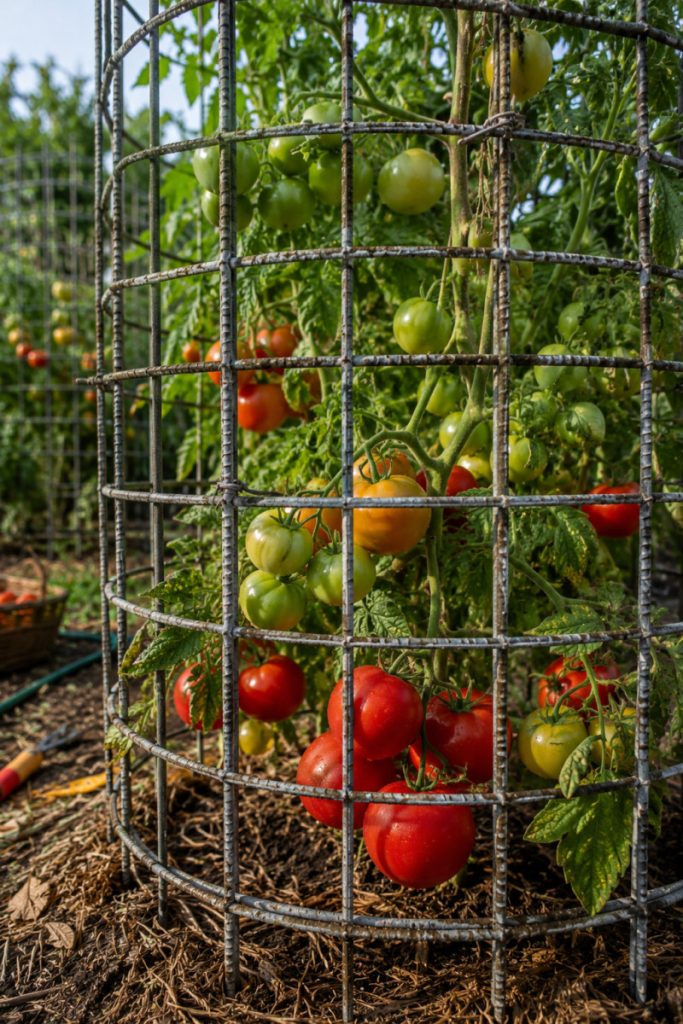
If store-bought tomato cages always feel a little flimsy, concrete reinforcing wire might be the upgrade you need.
You simply bend a sheet of this heavy-duty wire into a cylinder and stand it around your plant — and unlike thin metal cages, this stuff isn’t going anywhere, even with a tomato plant loaded down with fruit.
It costs a bit more upfront and takes some muscle to shape, but it’ll outlast flimsier cages by years. Once it’s set up, you can pretty much forget about it and let your plant grow happily inside, season after season.
8. Bamboo Teepee
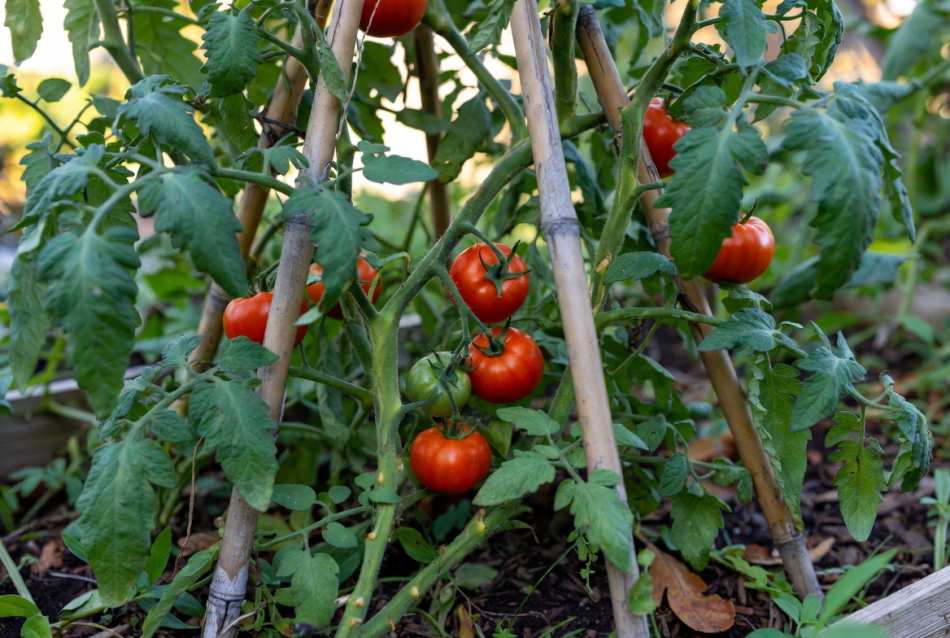
A bamboo teepee is a simple, good-looking way to support a few tomato plants at once. You just take three or four bamboo poles, push them into the ground in a circle around your plants, and tie the tops together to form a teepee shape. As the plants grow, you guide the stems toward the poles and tie them loosely as needed.
It’s an easy weekend project, and bamboo has a natural look that blends right into the garden instead of sticking out like plastic or metal supports.
Just make sure the poles are pushed in deep enough, since a teepee loaded with heavy tomato vines needs a solid base to stay upright in windy weather.
Also Read: 28 DIY Tomato Trellis Ideas for Home Garden
9. Repurposed Ladders
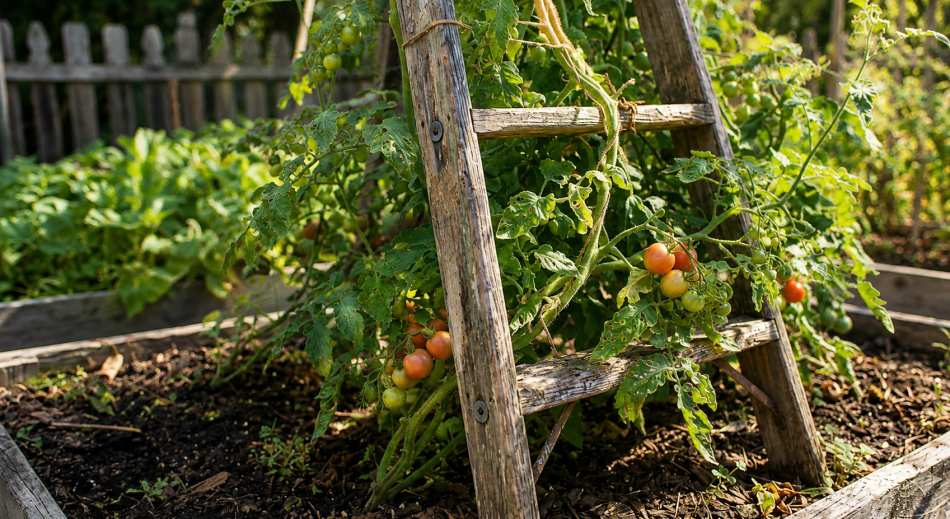
If you’ve got an old wooden or metal ladder sitting around, don’t toss it — it makes a surprisingly good tomato support.
Just lay it flat on an angle or stand it upright near your plants, then let the branches weave through the rungs as they grow. It holds up the stems naturally without much extra tying.
It’s a fun way to reuse something you already have instead of buying new supports, and it gives your garden a bit of charm too.
Plus, the wide rungs make it easy for branches to rest at different heights, so the whole plant gets even support as it fills out.
Also Read: DIY Bamboo Tomato Trellis
Tips Before You Pick a Support
With so many options, it’s easy to feel a little overwhelmed about which one to choose. A good rule of thumb is to think about how many plants you’re growing, how much space you have, and whether you want something quick and cheap or sturdy enough to last for years.
It also helps to think about what kind of tomato you’re growing. Determinate tomatoes stay fairly short and bushy, so something simple like a cage or a few stakes usually does the trick.
Indeterminate tomatoes, on the other hand, keep growing taller all season long, so they’ll need something taller and sturdier, like a trellis or a cattle panel, to keep up with them.
Don’t forget about your budget either. You don’t need to spend a lot of money to keep your plants supported — a few wooden stakes and some twine can work just as well as a fancy trellis, especially if you’re only growing one or two plants. Save the bigger setups for when you’re growing a whole row of tomatoes or want something that’ll last for years to come.
Whatever you pick, the key is to get your support in place early — before your tomato plant gets too big and bushy. Trying to add support after the plant has already sprawled out means dealing with tangled branches and risking snapped stems, which nobody wants.
That way, you’re working with the plant instead of fighting against it, and your tomatoes get to grow up happy, healthy, and off the ground.
Conclusion
At the end of the day, there’s no single “best” way to support a tomato plant — it really comes down to what works for your garden and your style.
Whether you go with a simple stake or build yourself a sturdy cattle panel trellis, the goal is the same: keep those branches up and those tomatoes safe.
So pick whichever method feels right for you, get it set up early, and then sit back and watch your plants do what they do best.
Come harvest time, you’ll be glad you gave them a little support along the way — and you’ll have an armful of tomatoes to show for it.


Khaja Moinuddin, a computer science graduate, finds joy in gardening and homesteading. Join him on this blog as he shares his experiences in homesteading, gardening, and composting