Tomatoes may start small in spring, but by midsummer they often turn into sprawling, tangled vines that quickly take over the garden.
Without support, branches flop onto the soil, fruits become harder to harvest, and plants are more vulnerable to pests and disease.
A sturdy tomato trellis keeps plants upright, improves airflow, and makes pruning, watering, and picking tomatoes much easier. The best part is that you do not need expensive materials to build one.
Simple supplies like bamboo poles, wooden stakes, cattle panels, PVC pipe, and even recycled items can create reliable supports for healthy plants.
Whether you grow tomatoes in raised beds, containers, or backyard rows, these DIY tomato trellis ideas will help save space, keep plants organized, and make summer harvesting far more enjoyable.
28 DIY Tomato Trellis Ideas
A reliable tomato trellis can completely change the way your garden grows, making plants easier to manage while keeping fruits cleaner and healthier.
From rustic wooden supports to space-saving vertical designs, these DIY ideas combine practicality with creativity for every type of home garden.
1. Simple Wooden Stake Trellis
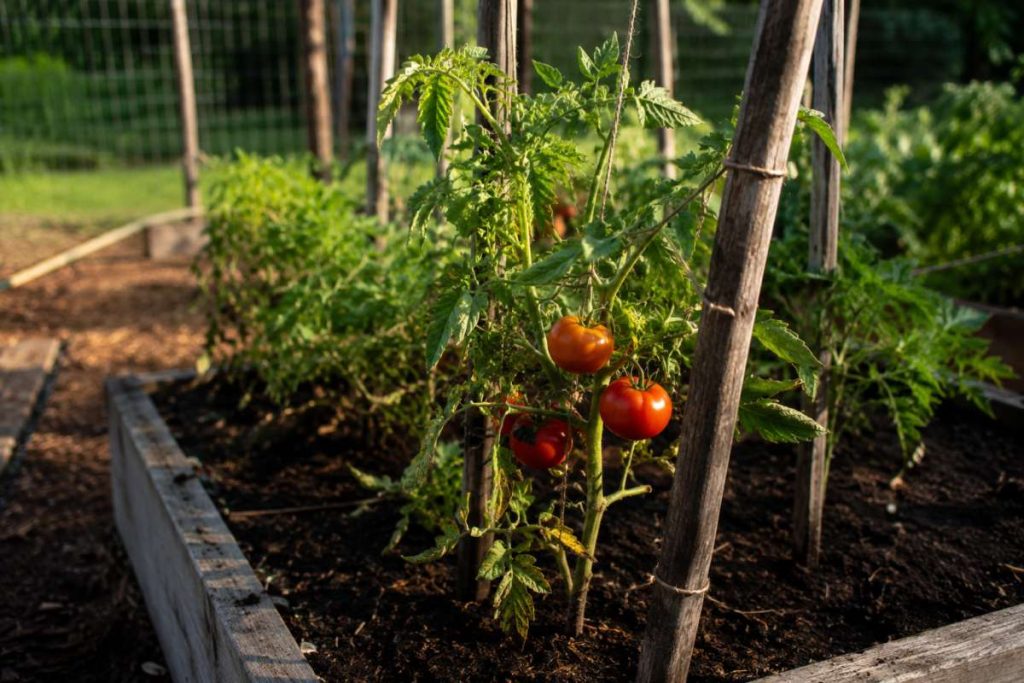
A simple wooden stake trellis is an easy, budget-friendly way to support tomato plants. It works best for determinate varieties that stay compact and manageable during the season.
Sturdy wooden stakes keep branches upright, improve airflow, and make harvesting easier while preventing fruits from touching the soil.
Install the stakes early and tie plants loosely as they grow for reliable support throughout summer.
Check this: 14 DIY Pea Trellis Ideas for Productive Garden
2. Bamboo Teepee Trellis
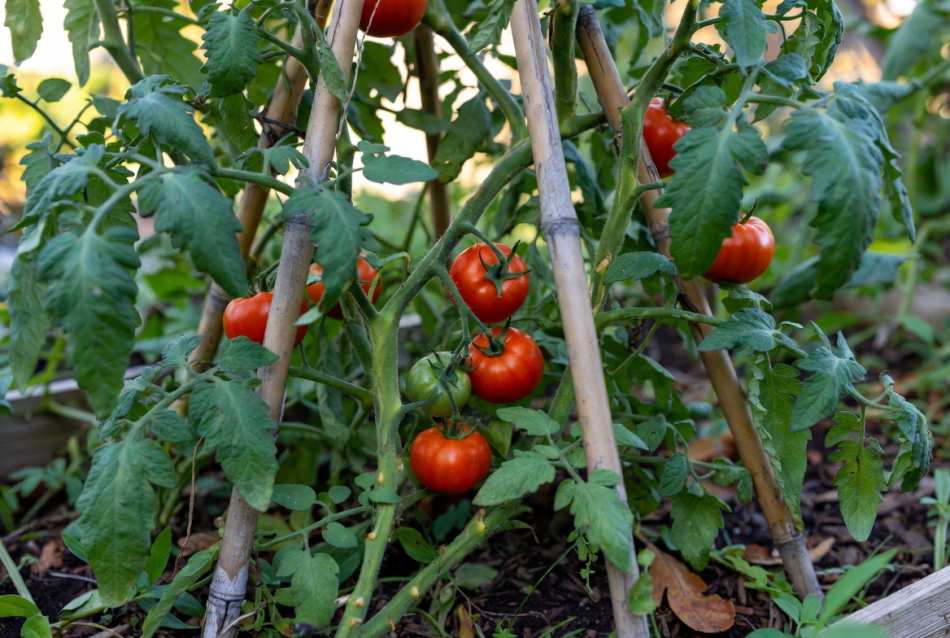
A bamboo teepee trellis adds a simple rustic look while giving tomato plants reliable vertical support.
Several bamboo poles are tied together at the top to form a sturdy cone-shaped structure that works well in raised beds, containers, and small backyard gardens.
The open design improves airflow and allows vines to climb naturally, making harvesting and pruning much easier during the growing season.
Also Read: 9 DIY Bamboo Trellis Ideas to Make for Vertical Garden
3. String Trellis System
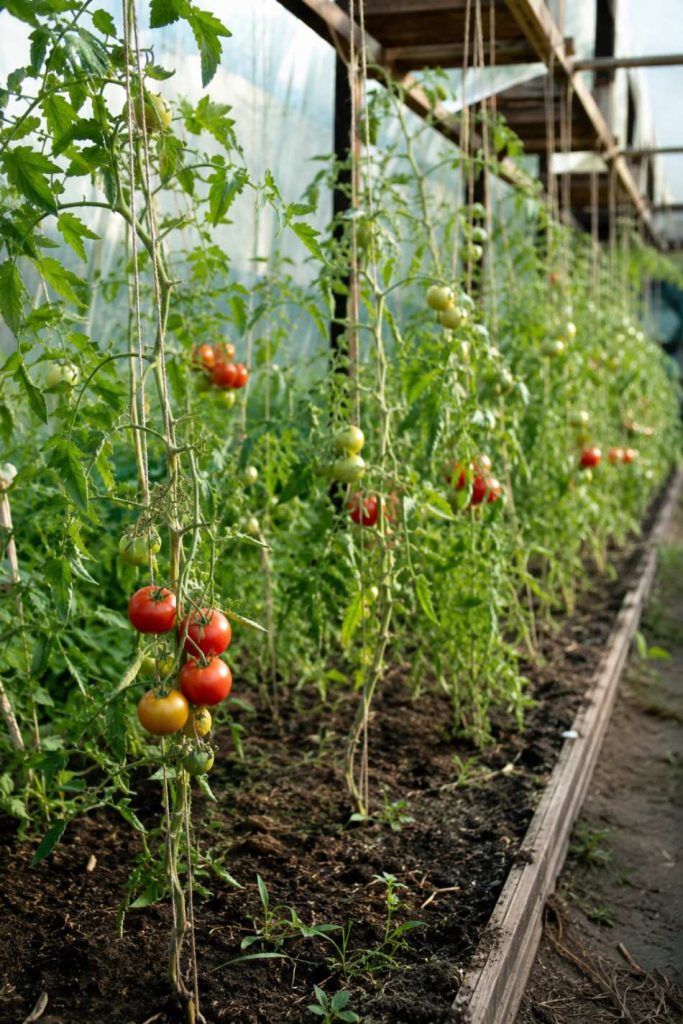
A string trellis system is a great option for gardeners who want to grow tomatoes vertically without using bulky cages or panels.
Strong twine is attached overhead and secured near the base of each plant, allowing vines to be trained upward as they grow. This setup saves space, improves airflow, and works especially well for indeterminate tomato varieties in greenhouses or narrow garden rows.
Also Read: 17 Best Vegetables that Grow on Trellis
4. Cattle Panel Tomato Trellis
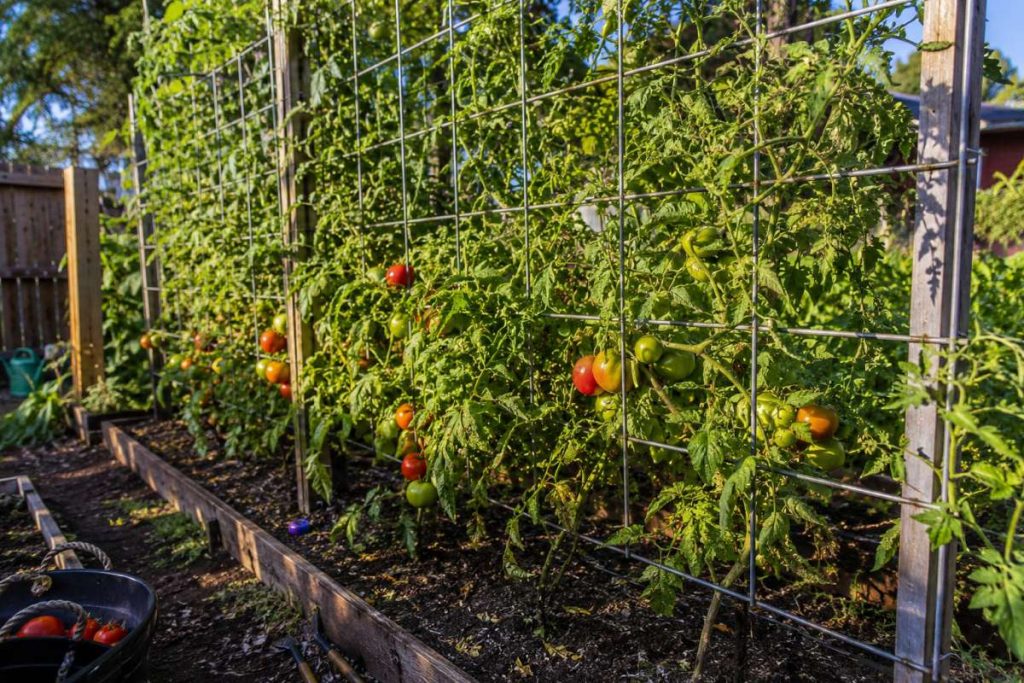
A cattle panel trellis provides strong support for large tomato plants loaded with heavy fruit.
The sturdy metal panels can be secured between wooden or metal posts to create a long-lasting vertical growing system. This setup improves airflow, keeps vines organized, and makes harvesting easier throughout the season.
It works especially well in raised beds and larger backyard vegetable gardens.
5. Tomato Cage Upgrade
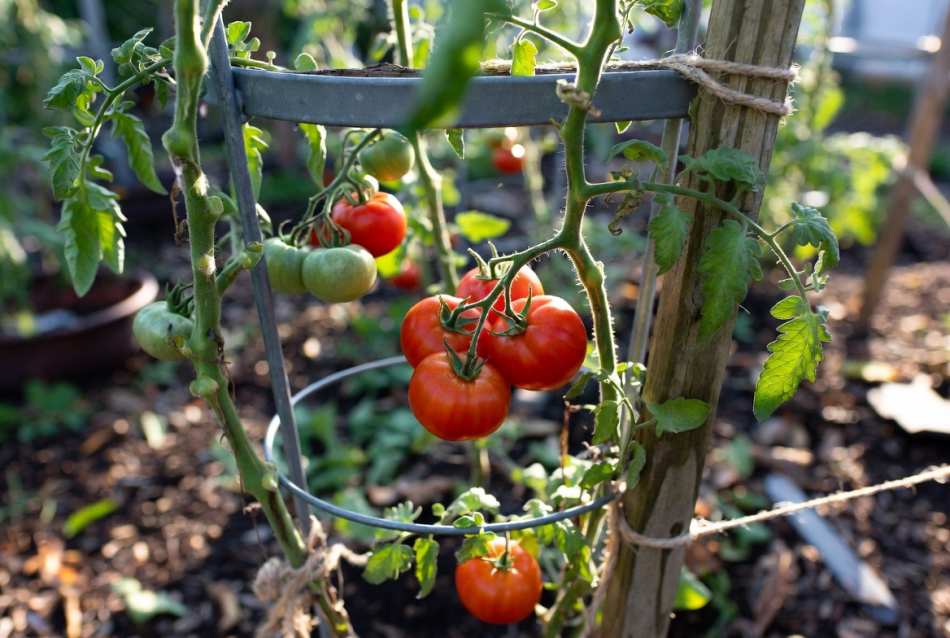
Basic tomato cages often become weak once plants start producing heavy branches and fruit.
Reinforcing them with wooden stakes or metal rods creates a much sturdier support system that lasts longer through summer storms and rapid growth. This simple DIY upgrade helps keep plants upright without replacing existing cages, making it an easy and affordable option for beginner gardeners.
6. A-Frame Tomato Trellis
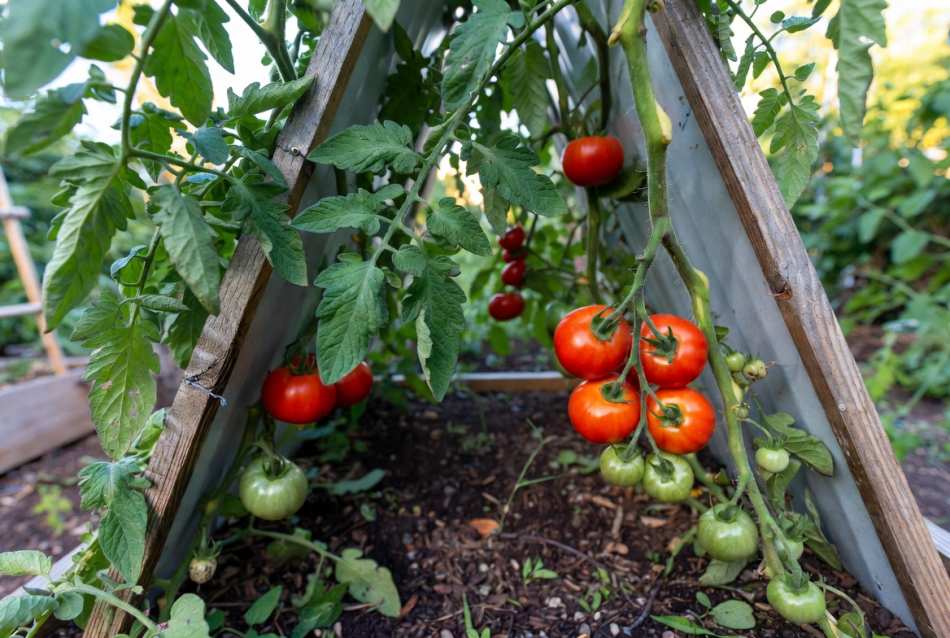
An A-frame tomato trellis creates a stable structure that supports plants on both sides while saving valuable garden space.
Built from wood, bamboo, or metal panels, the angled design allows tomatoes to climb upward with good airflow and sunlight exposure.
The open center also makes harvesting easier and keeps pathways clear, making this style ideal for raised beds and larger garden rows.
7. PVC Pipe Trellis
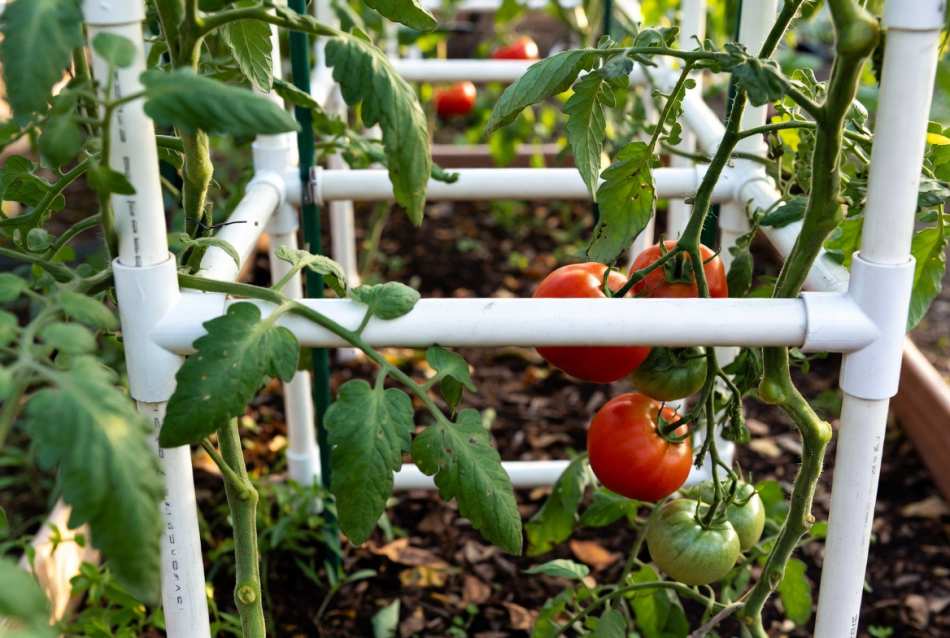
A PVC pipe trellis is lightweight, affordable, and easy to customize for different garden sizes. The pipes can be connected into simple frames, arches, or vertical supports that hold tomato plants securely throughout the season.
PVC also resists moisture and weather damage better than untreated wood, making it a long-lasting option for backyard gardens, raised beds, and container tomato setups.
8. Florida Weave Trellis
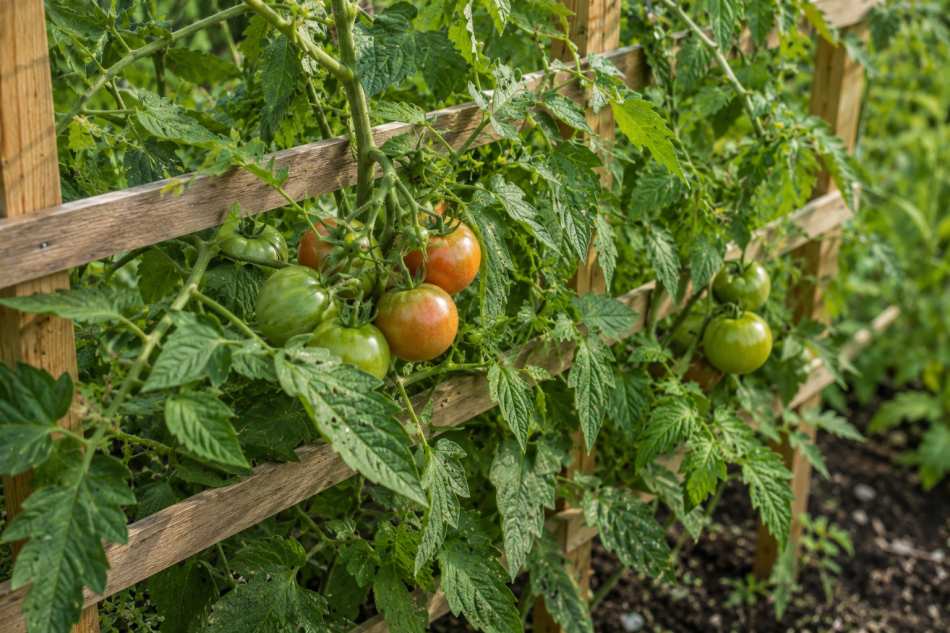
The Florida weave trellis is a popular method for supporting multiple tomato plants in long garden rows.
Strong twine is woven between sturdy stakes, creating a flexible support system that keeps vines upright as they grow. This setup improves airflow, reduces sprawling, and makes harvesting easier without using bulky cages.
It works especially well for gardeners growing several tomato plants together.
9. Recycled Ladder Trellis
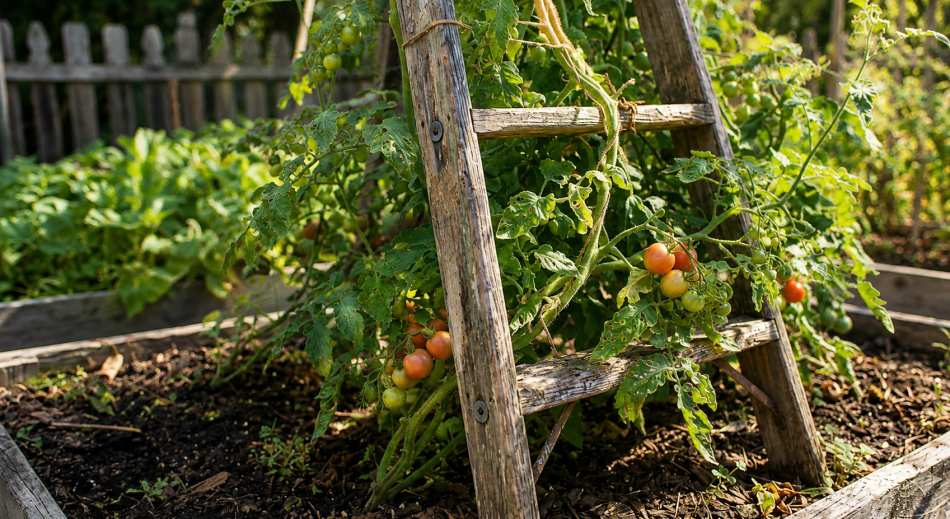
An old wooden ladder can become a creative and functional tomato trellis with very little effort. Tomato vines naturally climb along the rungs, while the vertical design saves space in smaller gardens and patios.
Recycled ladder trellises also add rustic charm to vegetable beds and work well for gardeners who enjoy repurposing materials instead of buying new garden structures.
10. Wooden Grid Trellis
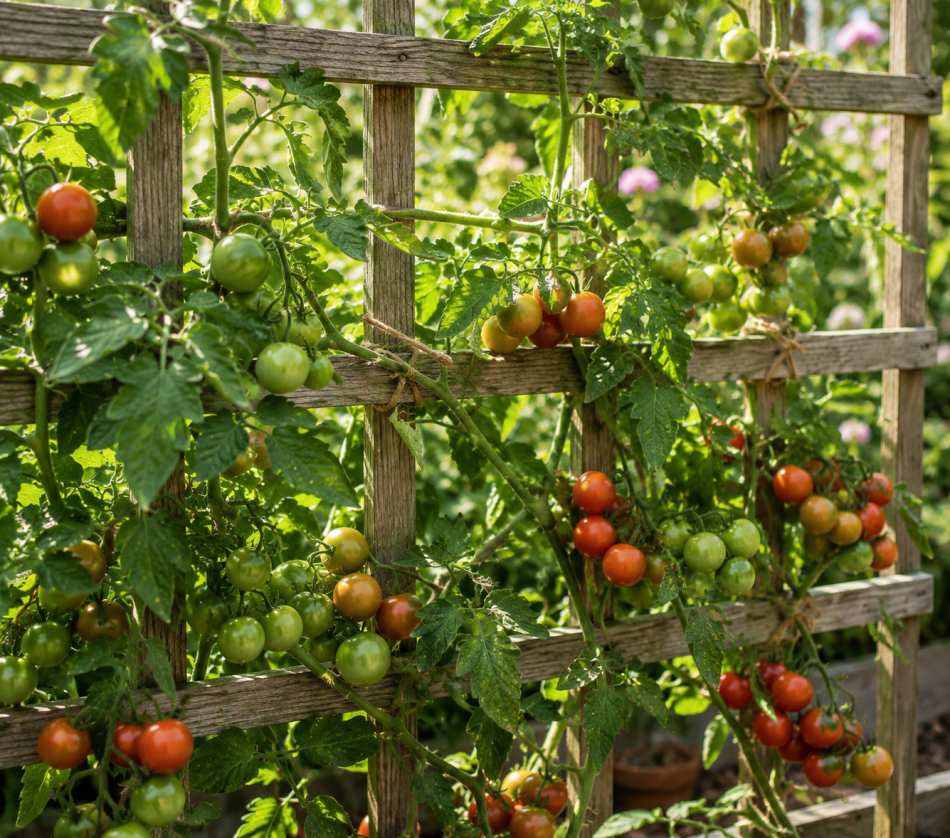
A wooden grid trellis gives tomato plants plenty of support while adding a neat, decorative look to the garden. The crisscross design creates multiple tie points that help guide vines upward as they grow.
This style works well in raised beds, along fences, or against garden walls. It also improves airflow around the plants, helping reduce moisture buildup and common tomato diseases.
11. Hanging String and Hook Trellis
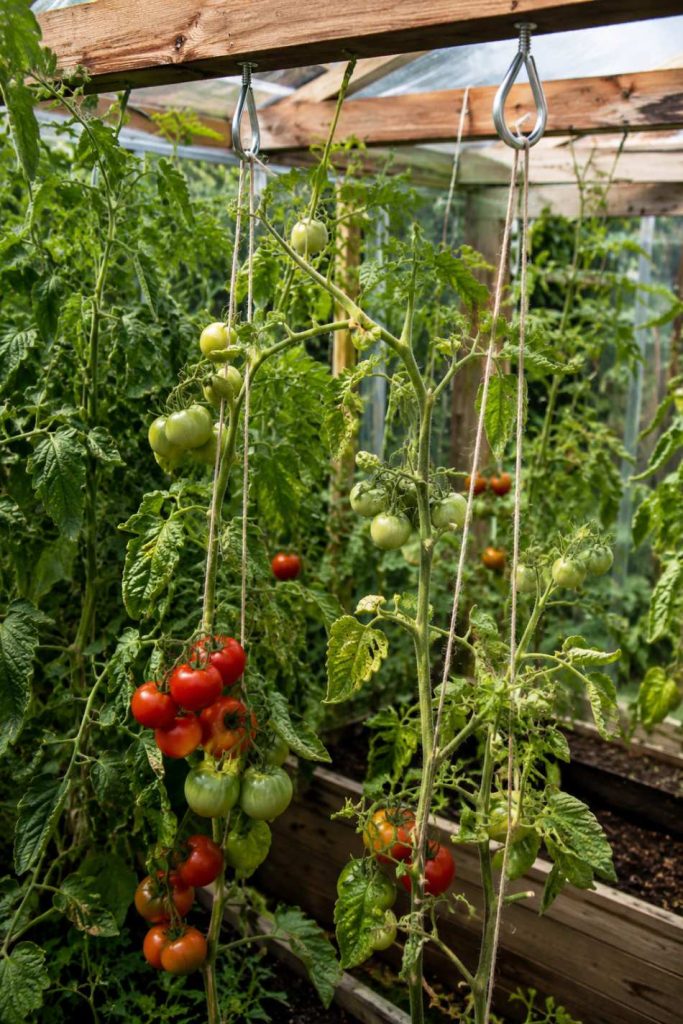
A hanging string and hook trellis is a simple vertical growing system often used in greenhouses and compact gardens. Strong hooks support hanging twine that guides tomato vines upward throughout the season. This setup keeps plants organized, saves ground space, and allows easy pruning and harvesting.
It works especially well for tall indeterminate tomato varieties that continue growing all summer long.
Also Read: 22 DIY Backyard Oasis Ideas on a Budget
12. Fence Panel Tomato Support
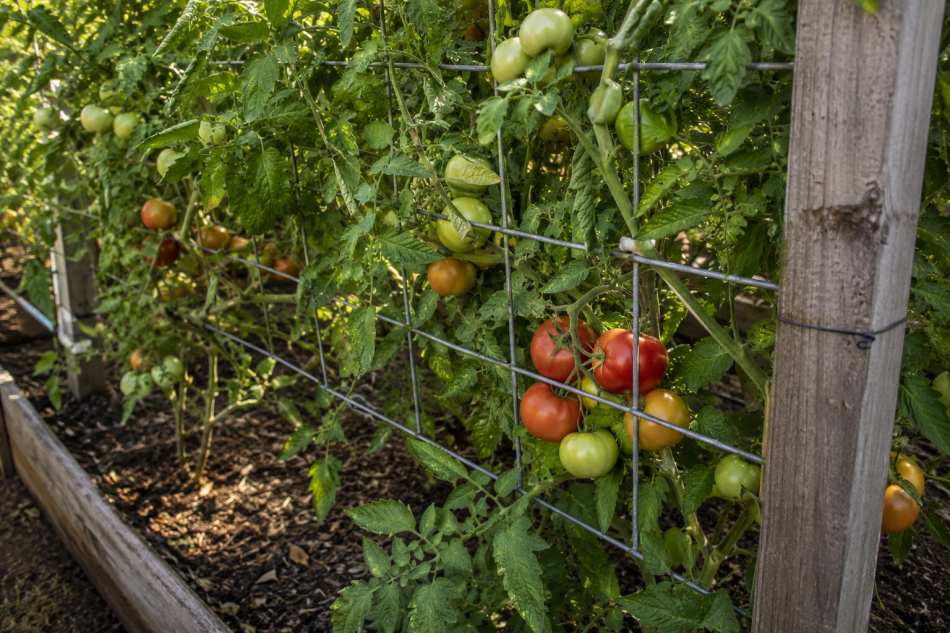
Using an existing fence panel as a tomato trellis is an easy way to save both money and garden space.
Tomato vines can be tied directly to the fence as they grow, creating a tidy vertical growing system with excellent airflow and sunlight exposure. This method works especially well in small backyards where every bit of planting space matters during the busy summer season.
13. DIY Wire Mesh Trellis
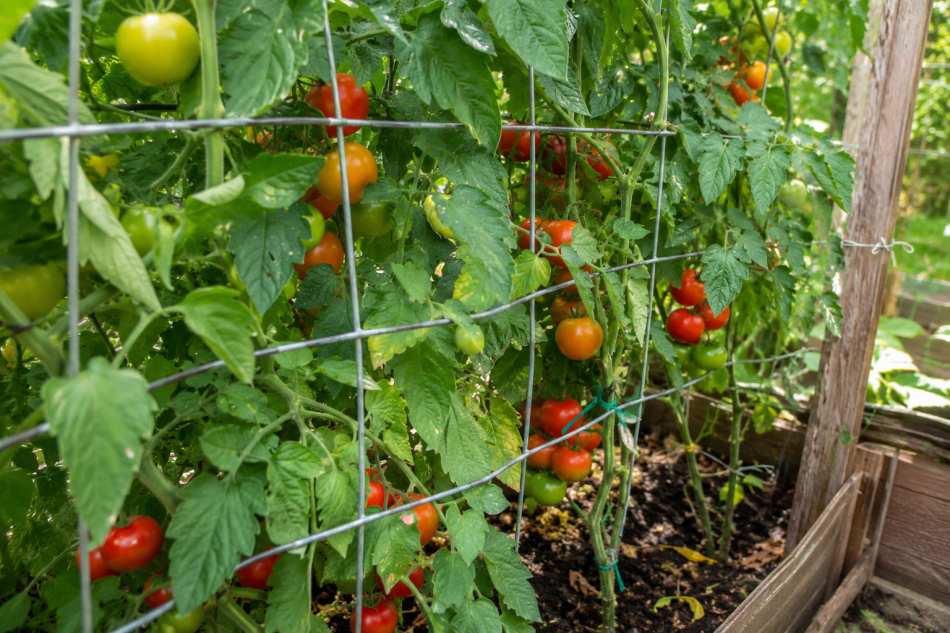
A wire mesh trellis offers sturdy support for fast-growing tomato plants while keeping vines neatly contained. The open mesh design allows good airflow and gives gardeners plenty of places to tie stems as the plants grow taller.
Wire mesh panels are also easy to install against posts or raised beds, making them a durable and practical option for larger tomato varieties.
14. Rustic Branch Trellis
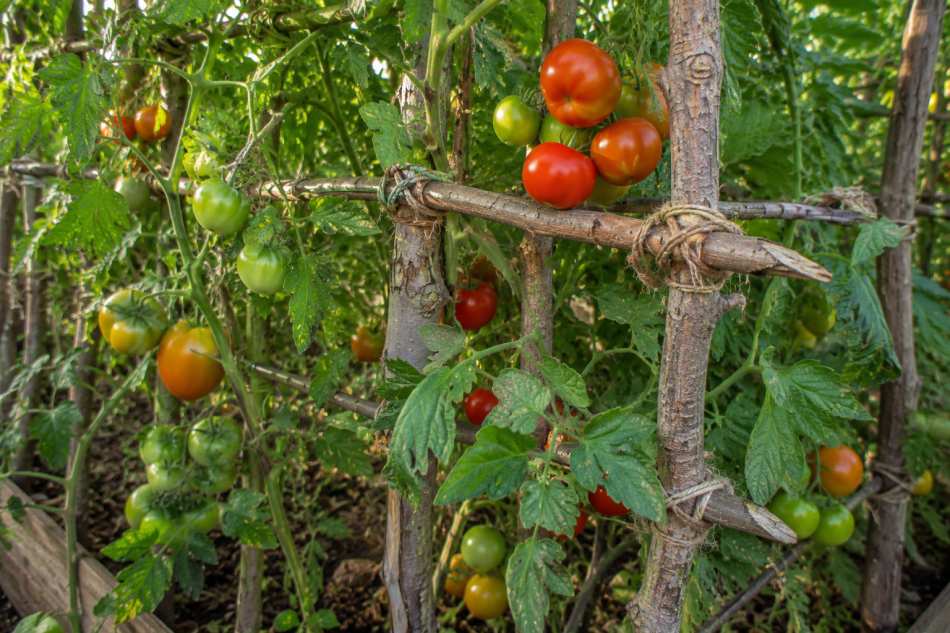
A rustic branch trellis brings a natural woodland look to the vegetable garden using sticks, pruned branches, or fallen limbs. The uneven shapes create a charming handmade appearance while still providing reliable support for climbing tomato vines.
This eco-friendly option works well for gardeners who enjoy using natural materials and want a simple trellis without spending much money.
15. Raised Bed Corner Trellis
A corner trellis helps maximize growing space inside raised beds by using vertical support without crowding the center of the garden.
Installed along the edges or corners, the structure keeps tomato vines upright while leaving more room for companion plants nearby. This setup improves airflow, simplifies harvesting, and works especially well in compact backyard gardens with limited planting space.
16. Pallet Tomato Trellis
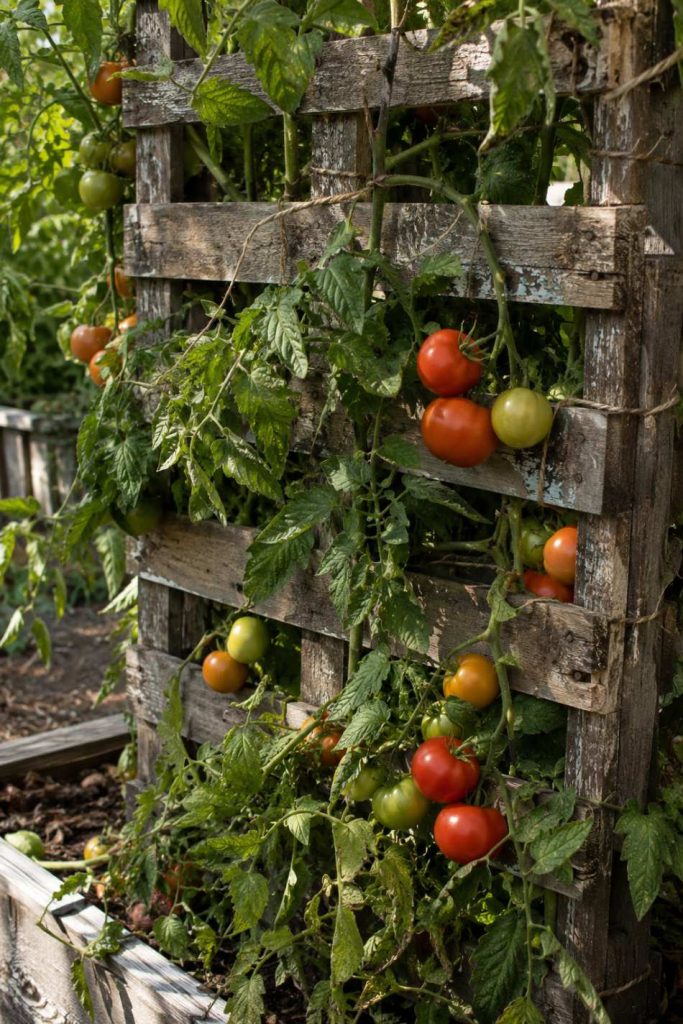
A wooden pallet can be turned into a simple tomato trellis with very little effort or expense. The slats provide natural support points for tying tomato vines as they grow taller through the season.
Leaned against a fence or secured upright in the garden, pallets create a rustic vertical growing system that works well for raised beds and small backyard spaces.
17. Arched Tomato Tunnel Trellis
An arched tomato tunnel creates both a functional support system and an eye-catching garden feature. Built from cattle panels, PVC, or flexible metal fencing, the curved structure allows tomato vines to climb overhead while keeping pathways open underneath.
The design improves airflow and sunlight exposure while making harvesting easier. It works especially well in larger vegetable gardens with multiple tomato plants.
18. Heavy-Duty Metal Conduit Trellis
A metal conduit trellis provides extremely strong support for large indeterminate tomato plants that produce heavy fruit all summer. The durable metal frame withstands wind, rain, and long growing seasons without bending or collapsing.
Although it takes more effort to build, this sturdy structure can last for years and works well for gardeners who grow tomatoes regularly every season.
19. Balcony Tomato String Trellis
A balcony string trellis is perfect for growing tomatoes in containers when garden space is limited. Strings attached to railings, hooks, or overhead supports guide the vines upward instead of allowing them to spread outward.
This vertical setup keeps balconies tidy, improves airflow around plants, and makes it easier to grow healthy tomatoes even in compact urban spaces.
20. Spiral Stake Tomato Support
Spiral stakes offer a compact and simple way to support tomato plants without bulky cages or large trellises. The metal spiral allows vines to naturally twist upward as they grow, reducing the need for constant tying.
This method works especially well for smaller garden spaces and container tomatoes while keeping plants upright, organized, and easier to harvest throughout the season.
21. Livestock Panel Arch Trellis
A livestock panel arch creates a sturdy overhead support system that can handle heavy tomato vines with ease. The curved metal panels form a tunnel-like structure where plants can climb naturally while improving airflow and sunlight exposure.
Besides being highly functional, this trellis also adds a dramatic focal point to backyard gardens and works well for larger growing spaces.
22. Tripod Tomato Trellis
A tripod trellis uses three sturdy poles tied together at the top to create a stable support structure for tomato plants. This beginner-friendly design is easy to build using bamboo, branches, or wooden stakes.
The angled shape helps improve balance and wind resistance while giving tomato vines plenty of room to grow upward throughout the summer season.
23. Concrete Reinforcement Mesh Trellis
Concrete reinforcement mesh makes a durable tomato trellis capable of supporting large indeterminate plants loaded with fruit. The sturdy metal grid provides plenty of attachment points for tying vines and keeping growth organized.
Although the material is heavier than other options, it lasts for years and works especially well in raised beds or permanent vegetable garden setups.
24. Wall-Mounted Tomato Trellis
A wall-mounted trellis is a smart way to grow tomatoes vertically while making use of empty fence or patio wall space. Wooden slats, wire grids, or metal frames can be secured directly against the surface to support climbing vines.
This setup keeps plants organized, improves airflow, and works especially well in small gardens where ground space is limited.
25. Rope and Pole Trellis
A rope and pole trellis creates a simple farmhouse-style support system using sturdy posts and strong garden rope or twine. Tomato vines can be tied and trained upward as they grow, keeping plants upright and easier to manage.
This flexible design works well for raised beds and garden rows while remaining inexpensive and easy to remove after the season ends.
26. Foldable Tomato Trellis
A foldable tomato trellis offers sturdy plant support while making off-season storage much easier. Hinged wooden frames or lightweight metal panels can be collapsed when not in use, saving valuable shed or garage space.
This practical design works well for gardeners who want reusable supports without leaving large trellises standing in the garden throughout the year.
27. Hoop Trellis for Tomatoes
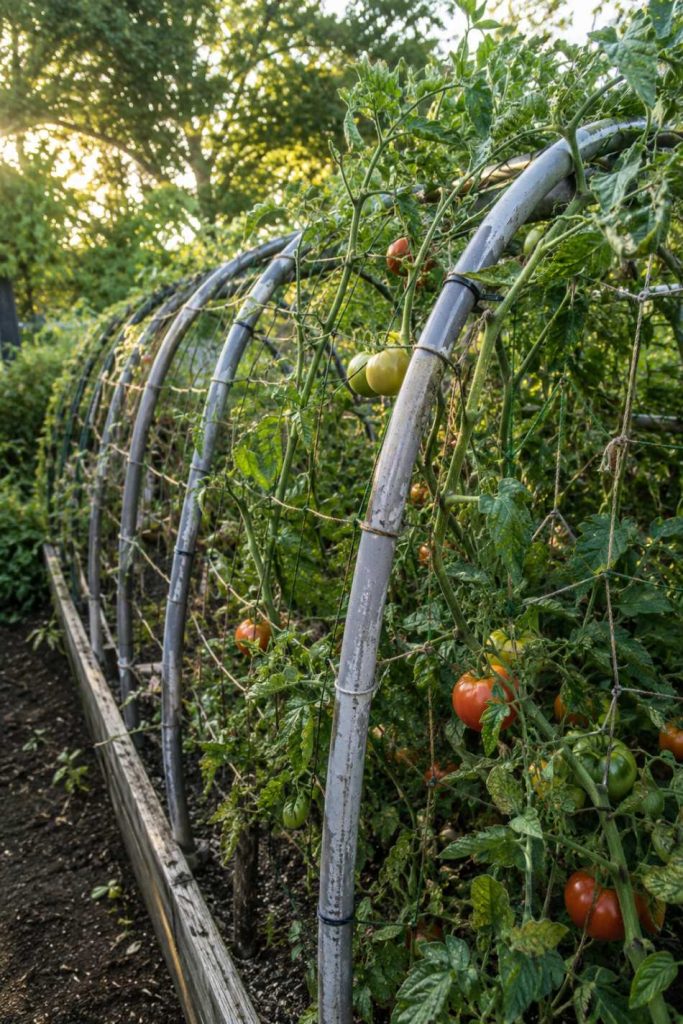
A hoop trellis uses curved metal or PVC hoops to support tomato plants while creating a clean, organized growing space.
Tomato vines can be tied along the arches as they grow, improving airflow and keeping fruits off the ground. This setup also doubles as a frame for shade cloth or protective covers, making it useful during intense summer weather.
28. Upcycled Bicycle Rim Trellis
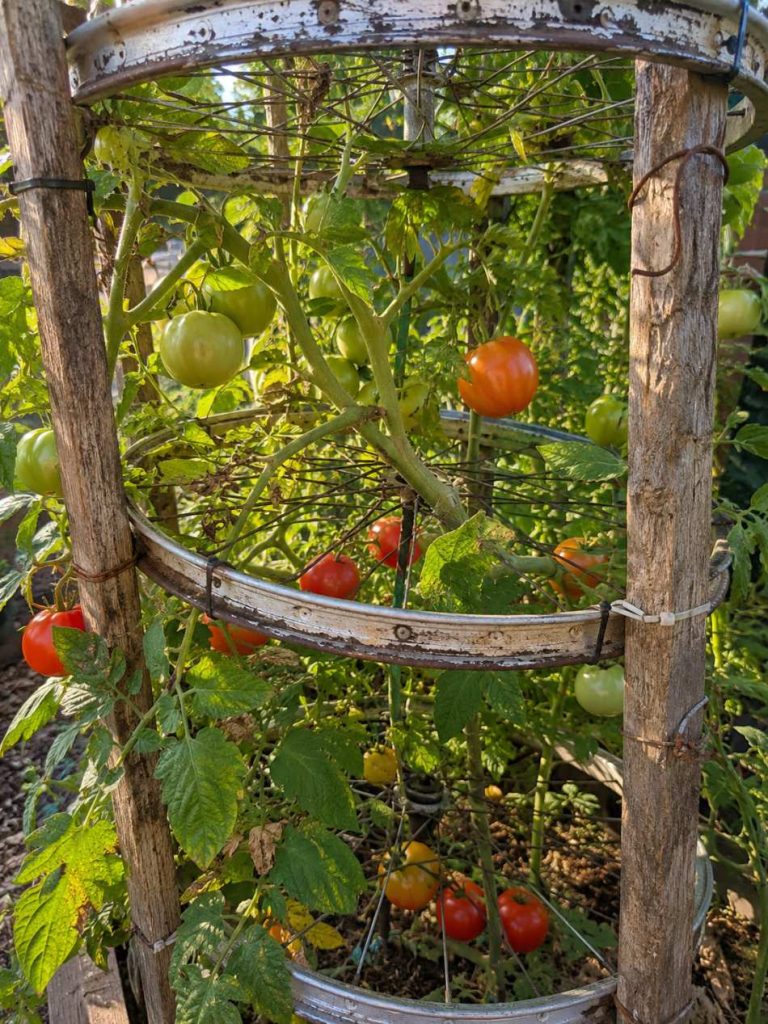
Old bicycle rims can be transformed into a creative tomato trellis that adds personality to the garden while supporting climbing vines.
The circular metal frames provide multiple attachment points for twine or plant ties, helping tomatoes grow upward in a compact space. This recycled design works especially well for gardeners who enjoy unique DIY projects with repurposed materials.
Tips for Building DIY Tomato Trellises
- Install tomato trellises early so plants can grow naturally into the support system and roots are not disturbed later.
- Choose strong materials like bamboo, wood, metal panels, or sturdy PVC pipe to handle the weight of mature tomato plants.
- Match the trellis design to the tomato variety, since determinate tomatoes need smaller supports while indeterminate types require taller, stronger structures.
- Tie tomato vines loosely using soft garden ties, cloth strips, or twine to avoid damaging growing stems.
- Leave enough space between plants and use open trellis designs to improve airflow and reduce fungal disease problems.
- Anchor trellises securely into the ground to prevent leaning or collapsing during storms and windy weather.
Conclusion
A good tomato trellis does far more than keep plants upright. It helps improve airflow, saves garden space, keeps fruits cleaner, and makes harvesting much easier throughout the growing season.
Whether you prefer a simple wooden stake setup or a large arched trellis, the right support system can make tomato plants healthier and more productive.
One of the best things about DIY tomato trellises is the flexibility they offer. Many designs can be built using affordable materials, recycled items, or supplies already available around the home and garden.
With a little creativity and planning, you can create a trellis that fits both your growing space and gardening style while helping your tomato plants thrive all summer long.


Khaja Moinuddin, a computer science graduate, finds joy in gardening and homesteading. Join him on this blog as he shares his experiences in homesteading, gardening, and composting