You don’t think about garden edging until mulch starts spilling onto the lawn, grass creeps into the flowers, and the whole yard looks unkempt no matter how much work you’ve put in.
A clean paver edge fixes that — and makes everything look sharper while you’re at it.
The best part? Paver edging works at pretty much any budget and suits almost any style.
Want something crisp and geometric? Done. More of a soft, curvy cottage vibe?
Also done. Some of these projects wrap up in a single afternoon. Others can genuinely change how your whole yard looks.
If you’re ready to stop fighting that grass-garden border war, these paver edging ideas are a solid place to start.
Why Use Paver Edging?
Paver edging draws a clear line between your lawn, flower beds, and pathways — so everything stays where you put it.
Mulch stops migrating, weeds are easier to pull, and mowing gets a whole lot less annoying with a clean edge to follow.
It’s also one of the cheaper ways to make your yard look like you know what you’re doing. Whatever material you go with, edging makes garden beds look planned instead of accidental — and most of these projects are totally doable on a weekend.
22 Paver Edging Ideas for Your Backyard Garden
Not every yard needs the same edge, and honestly that’s what makes this fun.
A cottage garden calls for something totally different than a clean modern bed — and a simple brick path border is a whole other thing again.
1. Classic Brick Border
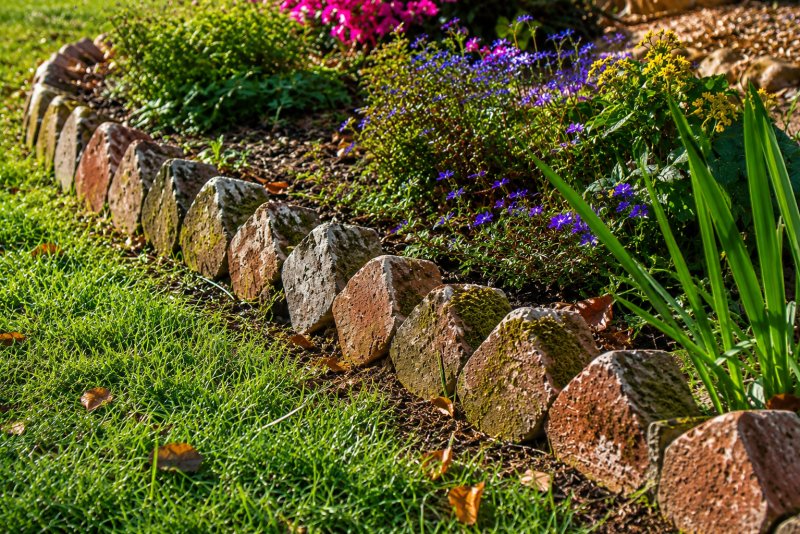
Brick is the one edging material that never really goes out of style. Cottage, formal, rustic — it works with pretty much any garden. And since old bricks are easy to find at salvage yards, it can be a pretty cheap project if you’re willing to hunt around a little.
Lay them flat for a low subtle edge or stand them on end for more presence. Either way, it looks like it’s always been there — which is honestly the best thing you can say about any edging.
Also Read: 19 DIY Pallet Garden Ideas
2. Concrete Paver Edge
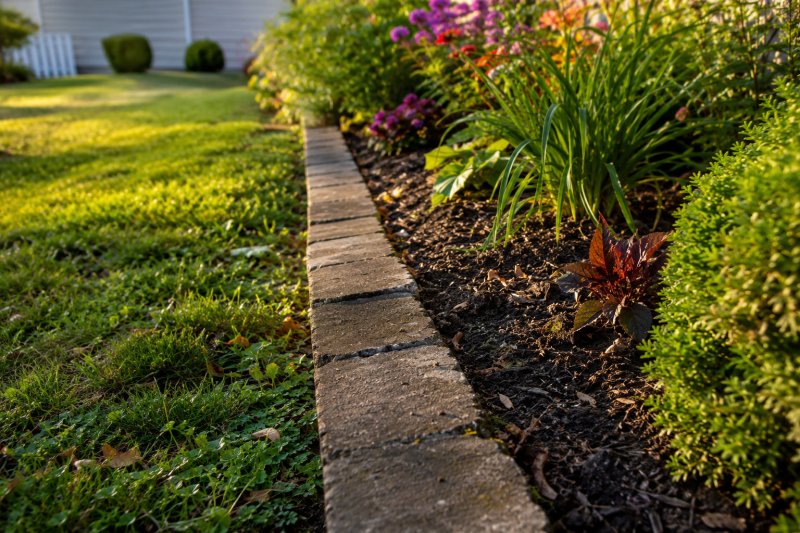
Concrete pavers are the most no-fuss edging option out there. Cheap, easy to find, and they come in enough shapes and sizes to look way more intentional than the price tag suggests. For bigger gardens with long straight runs, this is hard to beat.
They also hold up really well — no rotting, no rusting, no replacing every few years. Set them snug, keep the line straight, and you’ve got an edge that’ll still look good five summers from now with zero maintenance.
3. Natural Stone Edging
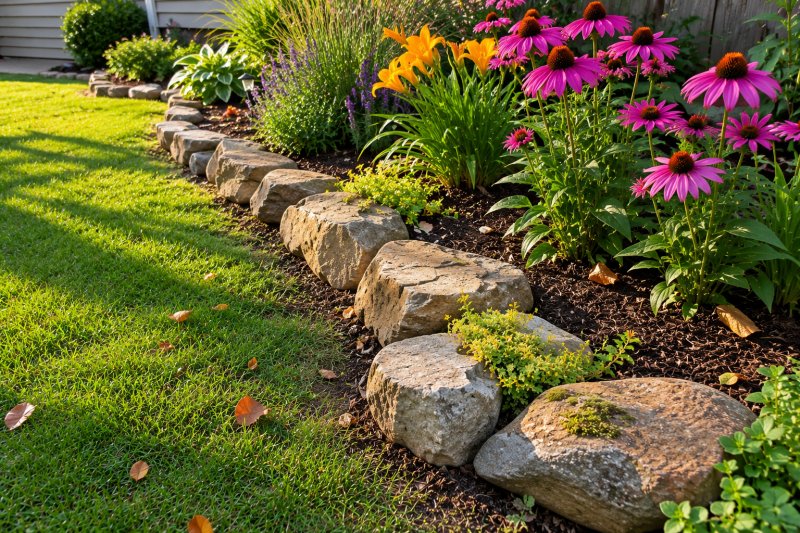
Natural stone just looks like it belongs in a garden. No two pieces are the same, so the edge ends up with this relaxed, organic feel that’s hard to fake with manufactured materials. Works especially well around flower beds with a loose, natural planting style.
It’s a bit more work since you’re fitting irregular shapes together, but that’s part of the charm. Take your time and you’ll end up with an edge that looks less like a weekend project and more like it’s been there for decades.
4. Reclaimed Terracotta Tiles
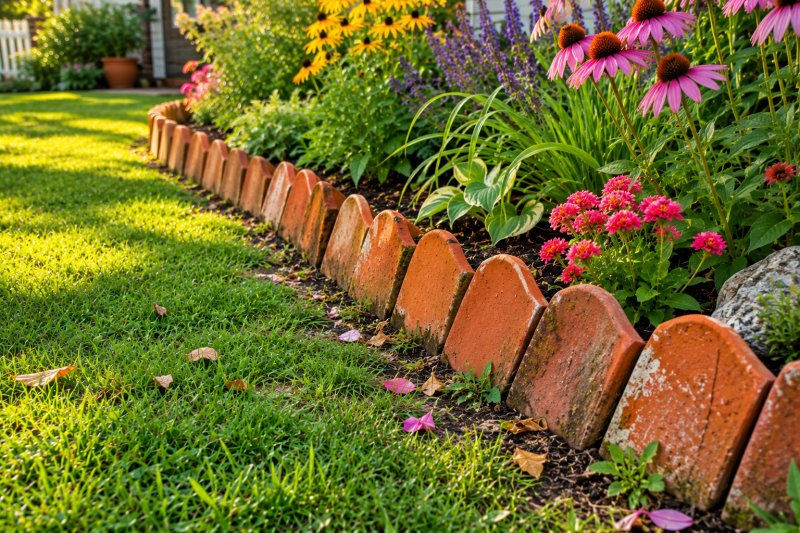
Got old terracotta tiles sitting around? They make a surprisingly beautiful garden edge. The warm earthy tones look great against green grass and dark mulch, and they add character that plain concrete just can’t pull off.
Stand them at an angle, half-buried in the soil, and you get a classic scalloped look that feels a little vintage and a lot charming. They can crack in hard freezes, so this works best in milder climates — but where it works, it really works.
5. Flagstone Border
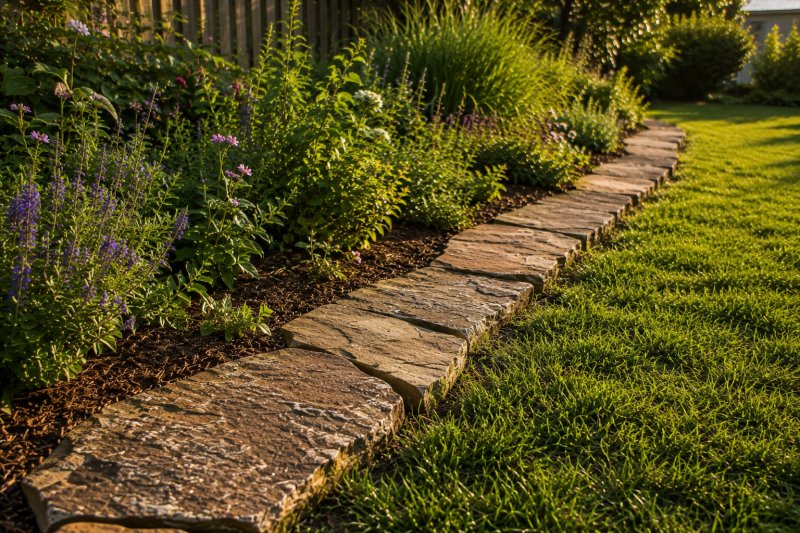
Flagstone looks expensive even when it isn’t. Laid along a bed edge it creates a wide flat border that doubles as a place to kneel while weeding — which sounds minor until you’re out there with muddy knees.
Works really well around larger beds where a thin single-paver edge might look lost. Go irregular for a natural feel or cut flagstone for something cleaner. Either way it adds real visual weight to the garden.
Check this: 18 DIY Strawberry Planter Ideas to Turn any Corner Into a Garden
6. Raised Brick Edge
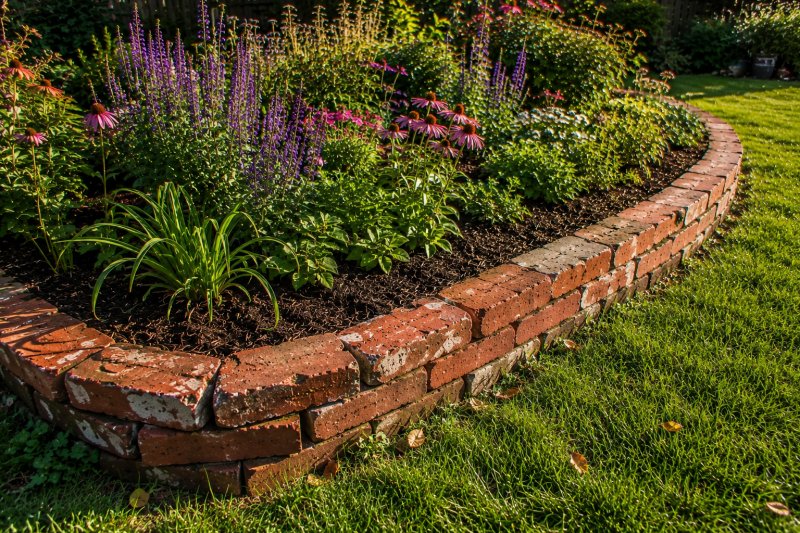
A raised brick edge does something a flat border can’t — it actually holds things in. Mulch stays put, soil doesn’t wash out after heavy rain, and the whole bed looks more structured. Small difference in height, big difference in how tidy everything feels.
Stack two courses of brick for just enough lift without looking like a wall. No mortar needed if the ground is stable — dry-stacking works fine for most beds and makes the whole thing a lot more approachable for a first-timer.
7. Cobblestone Edge
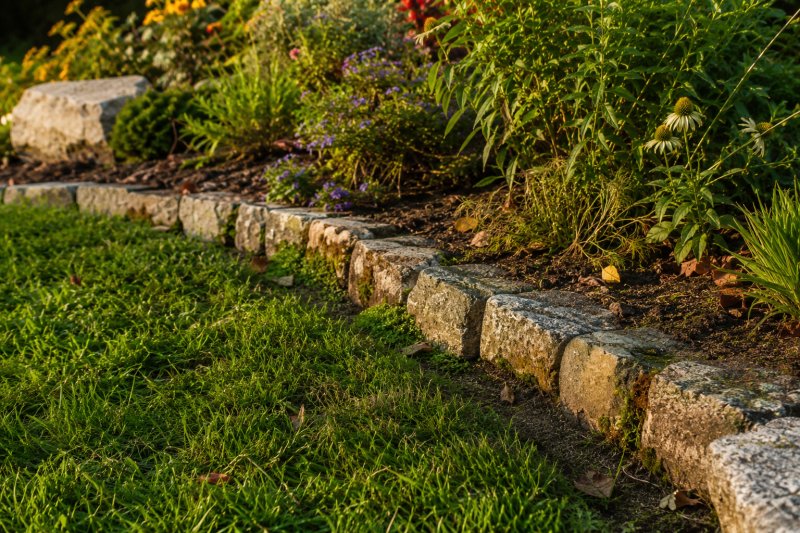
Cobblestones have an old-world charm that’s hard to replicate with anything else. Chunky, uneven, full of personality — which is exactly why they look so good bordering a cottage garden or a bed full of wildflowers and herbs.
They’re also incredibly durable. These are the same stones that survived centuries on city streets, so your garden border will be just fine. Set them close together, pack the gaps with soil or sand, and you’ve got an edge that makes your yard look like it has a little history to it.
8. Slate Paver Border
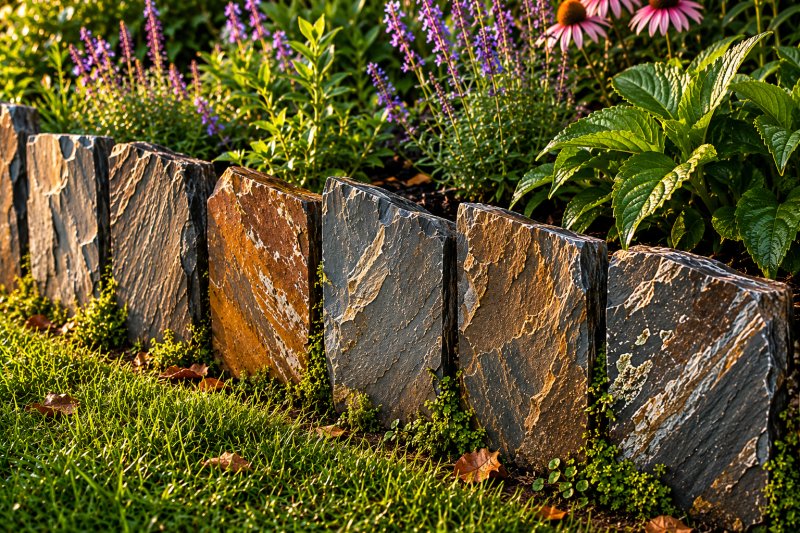
Slate has a dark, moody look that makes everything around it pop. Grass looks greener, flowers look brighter, mulch looks richer. If your garden feels visually flat, a slate edge can fix that without changing anything else.
It’s naturally flat and easy to lay — good weekend project even for beginners. The color fades a little in direct sun over time, but most gardeners actually like the weathered look it develops. It feels earned.
Also Read: 22 DIY Cheap Fence Ideas for Garden
9. Stepping Stone Edge
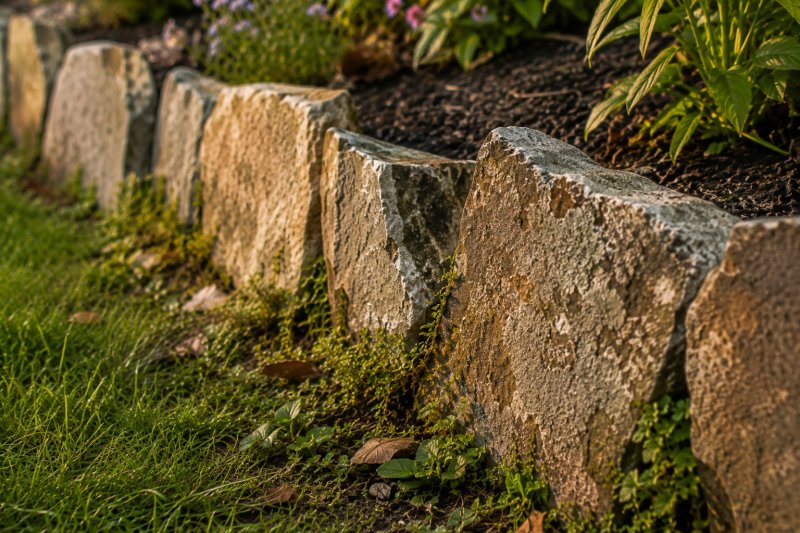
Stepping stones aren’t just for paths. Lined up along a bed border they make a relaxed, informal edge that fits right into a casual backyard. And they’re practical — you get a defined border plus built-in spots to step when you need to get into the bed without compacting the soil.
Space them slightly apart for a looser feel or push them together for something more solid. Great option if you want something that looks intentional but doesn’t feel too rigid.
10. Scalloped Concrete Border
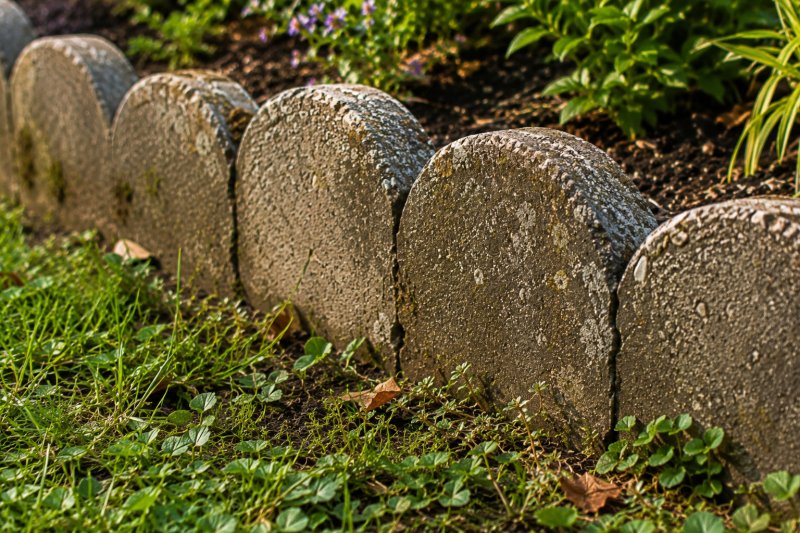
Scalloped concrete edging is the kind of thing you see in older neighborhoods and immediately think, that looks classic. The repeating curved tops give the border a decorative quality that plain straight edging just doesn’t have, especially around round or softly curved beds.
Find pre-made scalloped pieces at most garden centers for pretty cheap. Push them into the soil along your bed edge and you’re done in an hour. One of the easiest upgrades on this list and one of the most satisfying.
11. Tumbled Paver Edge
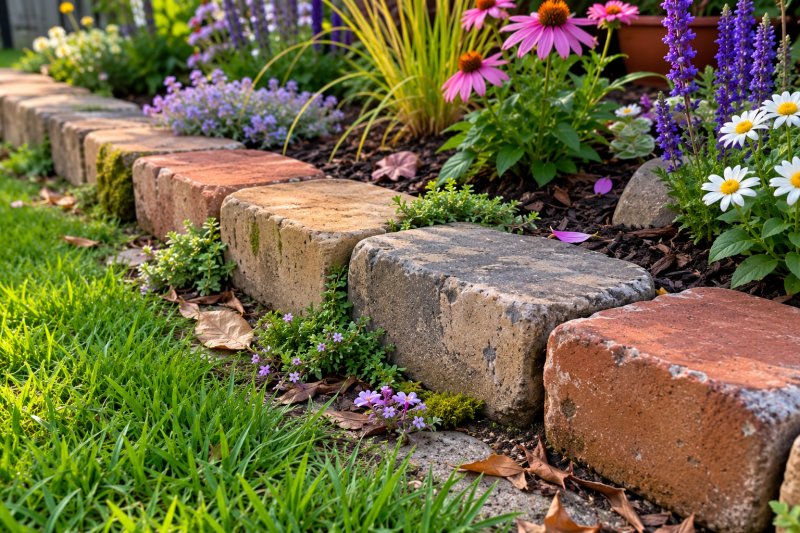
Tumbled pavers have a slightly roughed-up, worn look that makes them feel less like they just came off a pallet and more like they’ve been around a while. The tumbling process knocks off the sharp edges and gives them a softer, more natural appearance that fits really well in relaxed, informal gardens.
They come in earthy tones and work with almost any landscape style. Line them up along a curved bed and they follow the shape without looking forced. Small detail, but it gives the whole garden a more settled, established feel.
12. Limestone Paver Border
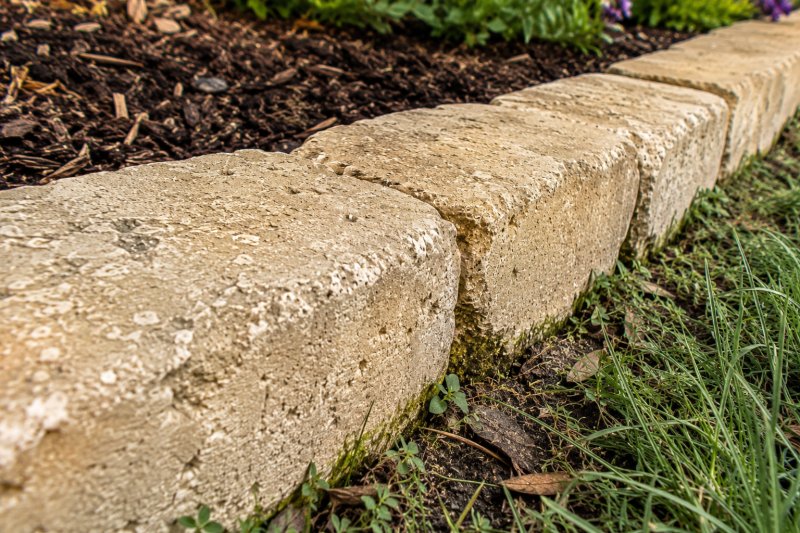
Limestone has a warm, sandy tone that just looks at home in a garden. It doesn’t try too hard — it sits there looking natural and quietly elegant, which is honestly the best kind of edging. Over time it weathers beautifully and blends into the landscape like it was always meant to be there.
It’s softer than granite or slate so it can chip if you’re rough with it, but for a garden border it holds up fine. Pair it with light gravel or pale mulch and the whole bed takes on a calm, cohesive look that’s really easy to live with.
13. Mixed Material Edge
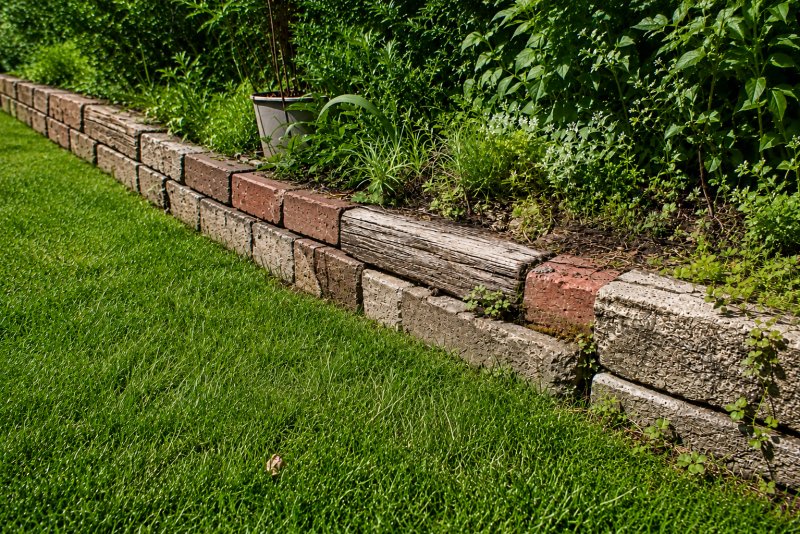
Who says you have to pick just one material? Mixing brick with stone or concrete pavers with cobblestones can look really good if you keep some consistency in the color palette. It’s also a great way to use up leftovers from other projects without the border looking like an afterthought.
The key is a thread that ties it together — similar tones, similar heights, or a repeating pattern. Get that right and a mixed edge looks creative and deliberate. A little planning goes a long way, and the result can be one of the most unique borders on the block.
14. Curved Paver Edge
Straight lines are great, but curves make a garden feel alive. A gently curved paver edge softens the whole yard and gives flower beds that flowing, natural shape that looks like someone who actually knows what they’re doing designed it.
Lay it out with a garden hose first to find a shape you like before you start digging. Use smaller pavers or cut larger ones so they follow the curve without awkward gaps. Once it’s in, you’ll wonder why you ever bothered with straight edges at all.
15. Raised Concrete Block Border
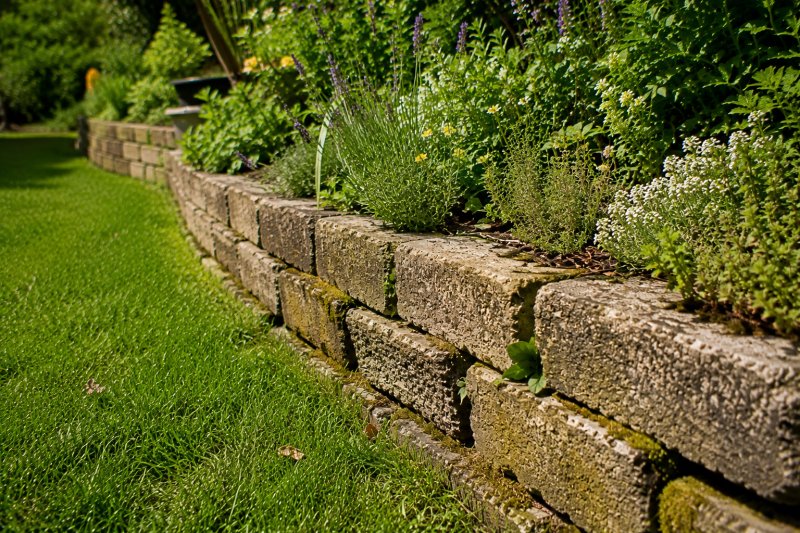
Concrete blocks are cheap, widely available, and seriously underrated as an edging material. Stack them one or two courses high and you’ve got a raised border that keeps everything contained and gives the garden a clean, structured look — works especially well in modern or minimalist yards.
No special tools, no complicated cuts, no mortar needed for a single course. Just level the ground, set the blocks, and you’re done. Not the most glamorous option on this list, but one of the most practical — and sometimes that’s exactly what a garden needs.
Check this: 12 Low Budget Backyard Designs with Gravel
16. Herringbone Brick Edge
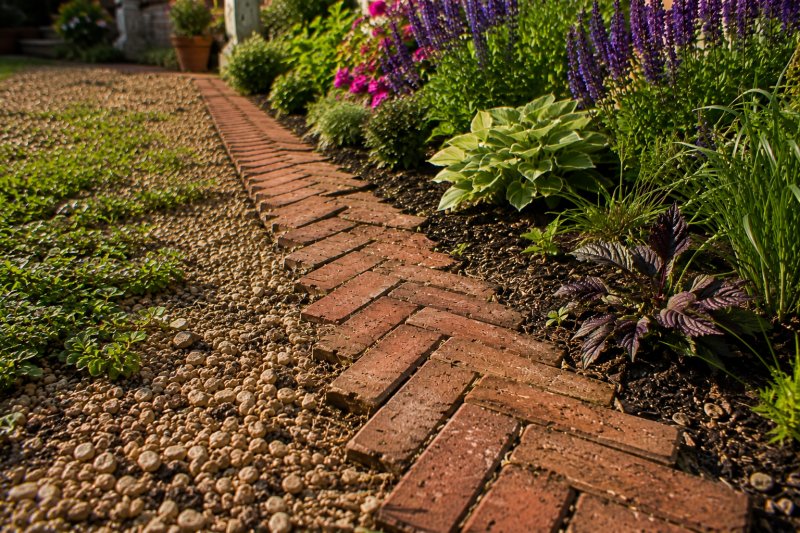
If you want an edge that actually stops people in their tracks, herringbone brick is it. That classic zigzag pattern takes a little more time than a straight single row, but the result looks like you hired someone — even when you did it yourself on a Saturday.
Works best along straight runs where the pattern can show itself off. Pair it with a trimmed lawn and tidy planting and the whole yard just looks sharp. More work, but the wow factor at the end is absolutely worth it.
17. Pea Gravel and Paver Combo
Pavers as the border, pea gravel filling the space just inside — it’s a trick that looks way more designed than it sounds. The gravel adds texture, the pavers keep everything contained, and together they create a layered edge that feels a little upscale without costing much.
Works especially well around drought-tolerant or Mediterranean-style plantings where bare soil would look sparse. Keeps weeds down too, which is never a bad thing.
18. Solar Light Paver Edge
This one pulls double duty — defined garden edge during the day, softly lit border at night. It’s a small touch that makes the yard feel completely different after dark, especially around a patio or seating area.
No rewiring, no electrician. The lights charge during the day and kick on automatically at dusk. Looks fancy, stupidly easy to pull off, and on a warm summer evening it’s genuinely hard to beat.
19. Mossy Stone Edge
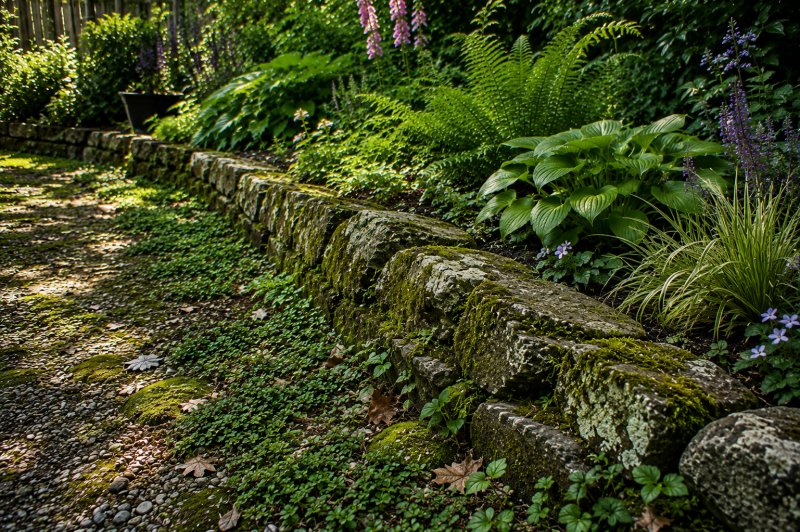
Got a shady spot that stays a little damp? Lean into it. Mossy stone edging looks beautiful in those conditions — the kind of lush, green-covered border you see in old English gardens that makes everything feel cool and a little magical. Lay the stones and the moss will come on its own if conditions are right.
Want to speed things up? Blend moss with buttermilk and brush it onto the stones. Sounds strange, works surprisingly well. Give it a few weeks and you’ll have that aged woodland look without waiting years for nature to catch up.
20. Vertically Set Paver Edge
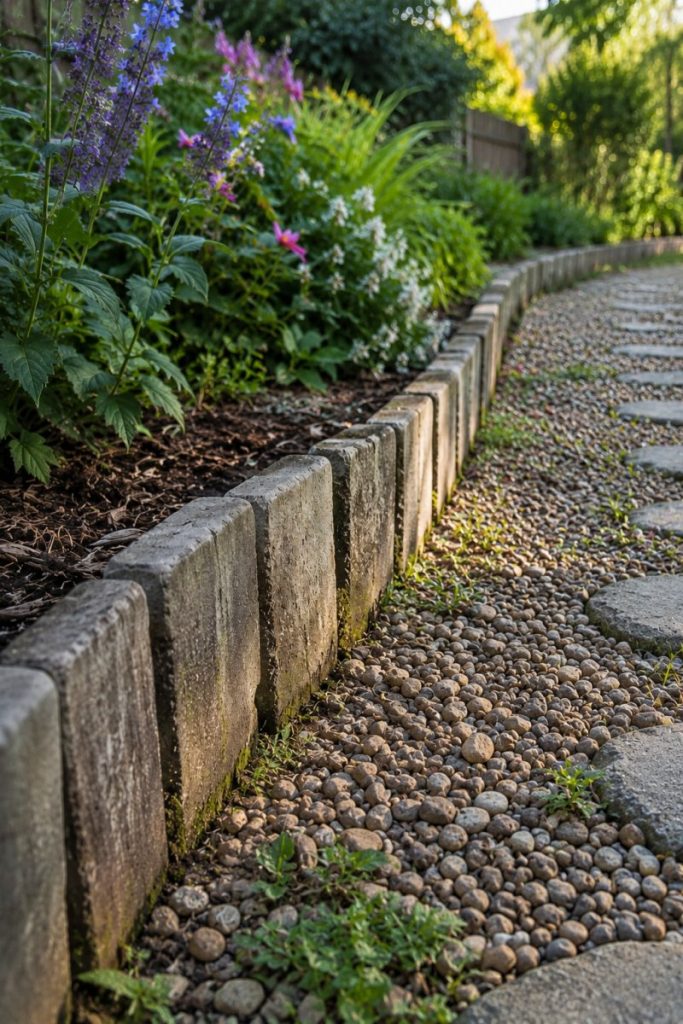
Most people lay pavers flat, which makes sense. But setting them vertically — standing on their edge, half-buried in the ground — gives you a completely different look. Taller, more presence, and better at holding back soil and mulch on sloped or raised beds where things tend to shift.
Takes a little more digging but it’s not complicated. Pack the soil tight around the base so they don’t lean over time. Done right, a vertical paver edge looks clean, architectural, and a lot more interesting than a standard flat border.
21. Painted Concrete Paver Edge
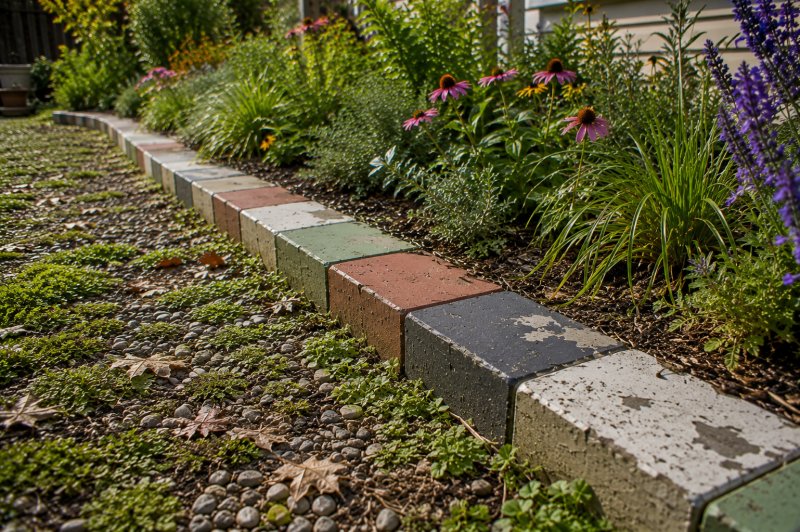
Plain concrete pavers are fine, but painted ones are genuinely fun. A coat of exterior masonry paint — terracotta, deep green, charcoal, white — can completely change the personality of a border and tie it into your house colors or outdoor furniture. One of the cheapest ways to make a big visual impact.
Needs touching up every couple of years, but that’s not a bad excuse to refresh the color if you feel like a change. Clean the pavers well before you start and use paint rated for outdoor masonry — the finish will hold up a lot better than you’d expect.
22. Reclaimed Wood and Paver Mix
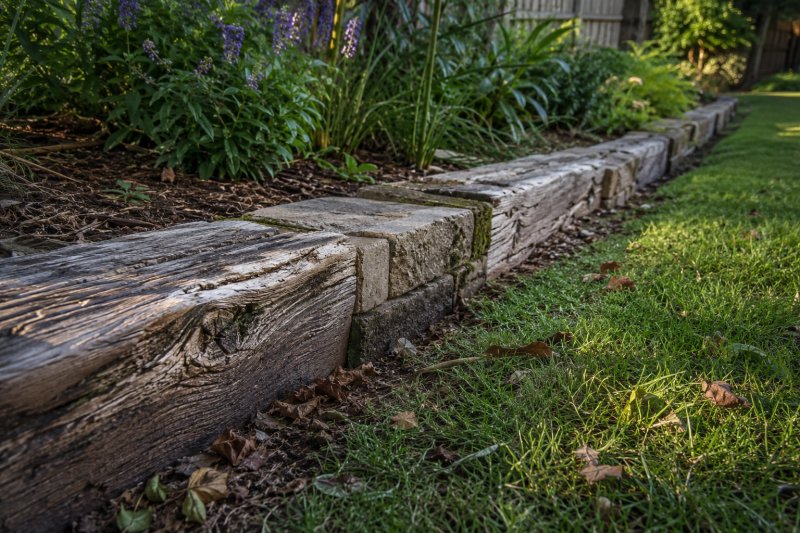
Combining thick reclaimed timber with flat pavers gives you an edge that feels warm, textured, and rustic in the best way. The wood adds an organic softness that pure stone or concrete can’t pull off, and the contrast between the two materials looks really considered and intentional.
Use sleeper-style timber for the longer runs and drop pavers in at corners or spots where wood gets tricky. Just make sure the timber is treated or naturally rot-resistant — oak or cedar will outlast softwood by years. Get that right and this edge will look great for a long time and age beautifully.
Conclusion
A clean paver border pulls the whole yard together in a way that’s hard to explain until you’re standing there looking at it thinking, yeah, that looks really good.
Pick one bed, one material, and just start. Most of these are weekend projects. Your garden will thank you — and honestly, so will your neighbors.


Khaja Moinuddin, a computer science graduate, finds joy in gardening and homesteading. Join him on this blog as he shares his experiences in homesteading, gardening, and composting