A sloped front yard can feel tricky to work with. Grass slides down, water runs off, and mowing turns into a real pain. But a slope isn’t a problem, it just needs the right plan.
With some smart landscaping ideas, that hill can become the best part of your yard. Here are 18 ways to make it happen.
Good news is you don’t need a big budget or a landscaping crew to pull it off.
Small changes like adding steps, plants that hold the soil, or a few well-placed rocks can make a huge difference. Whether your yard has a gentle slope or a steep drop, there’s an idea here that will fit.
Also Read: 27 Low Maintenance Backyard Landscaping Ideas
1. Terraced Flower Beds
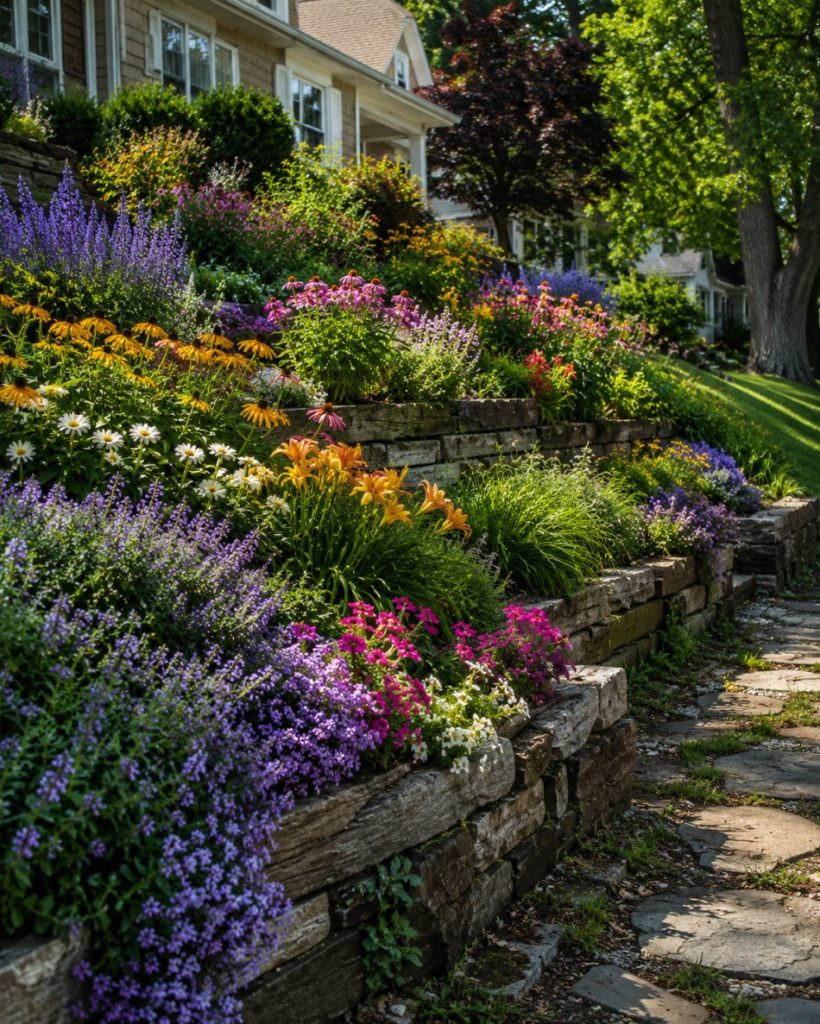
Terraces are one of the easiest ways to deal with a slope. You basically cut the hill into flat steps, so water and soil stay in place instead of washing away. Each level gives you a little flower bed to work with, and it looks neat from the street too.
You can use wood, stone, or brick to hold each terrace in place. Fill them with colorful flowers or a mix of plants at different heights. It’s a project you can do in stages, so you don’t have to finish the whole yard at once.
2. Rock Garden
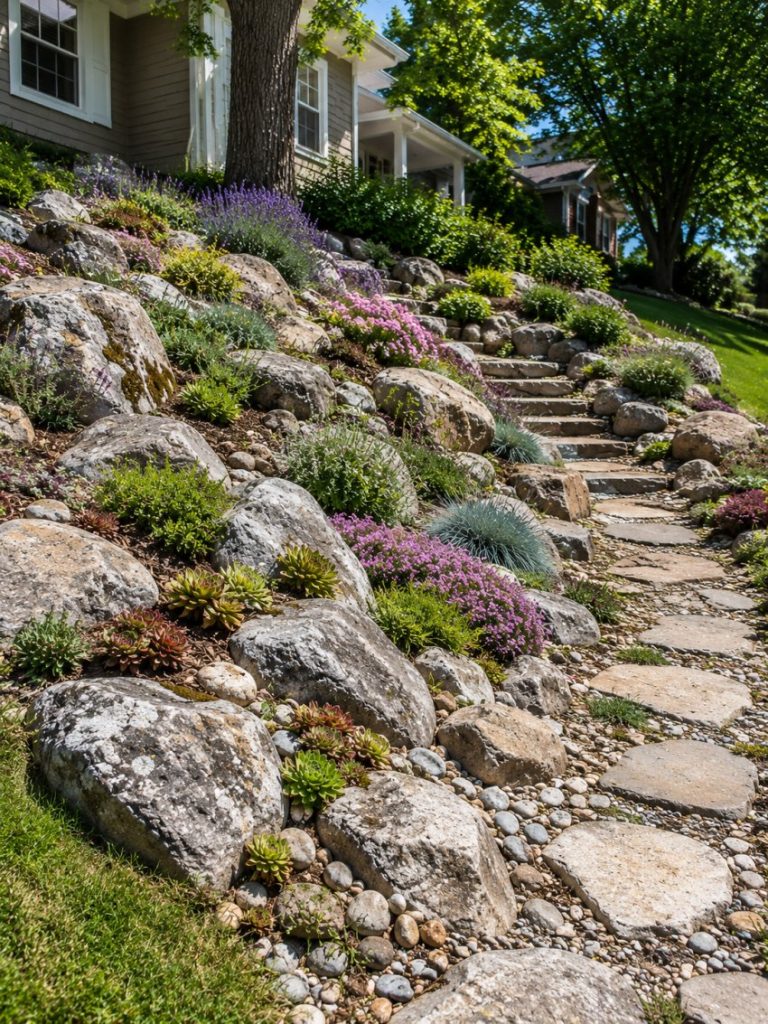
A rock garden works great on a slope because rocks don’t wash away like soil does. You place large and small stones across the hill, then tuck plants in between the gaps. It gives your yard a natural, low fuss look that still stands out.
Pick plants that don’t need much water, like sedum or creeping thyme, since they grow well around rocks. This idea also cuts down on mowing and watering, which is a nice bonus if you don’t have a lot of time for yard work.
3. Retaining Walls
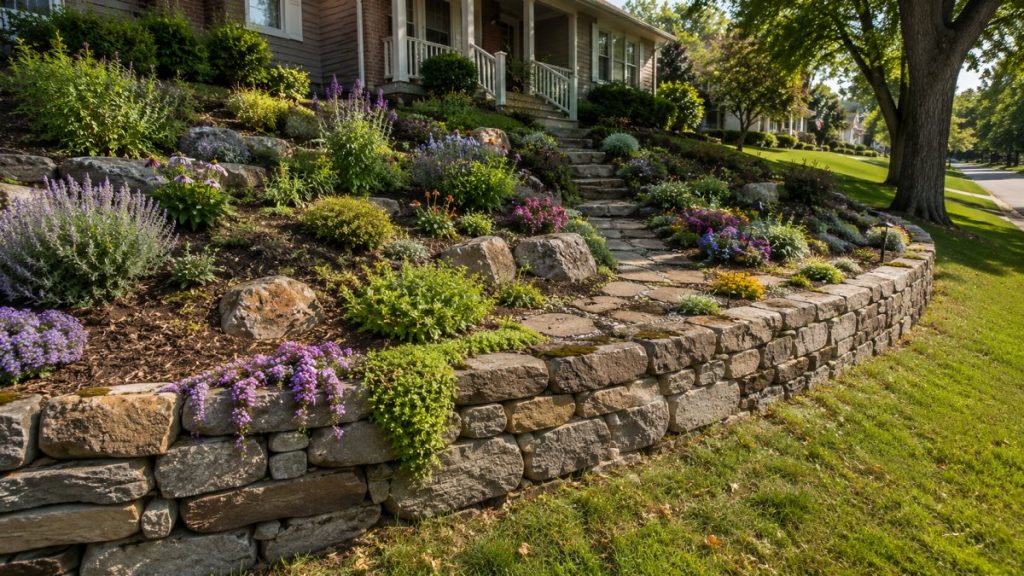
A retaining wall is one of the most solid ways to handle a steep slope. It holds back the soil so it doesn’t erode or slide down during heavy rain. Depending on how steep your yard is, you might need just one wall or a few stacked ones.
You can build walls from stone, concrete blocks, or timber, whatever fits your home’s style. Once the wall is in place, you get a flat strip of land behind it, perfect for planting flowers or even a small path.
4. Ground Cover Plants
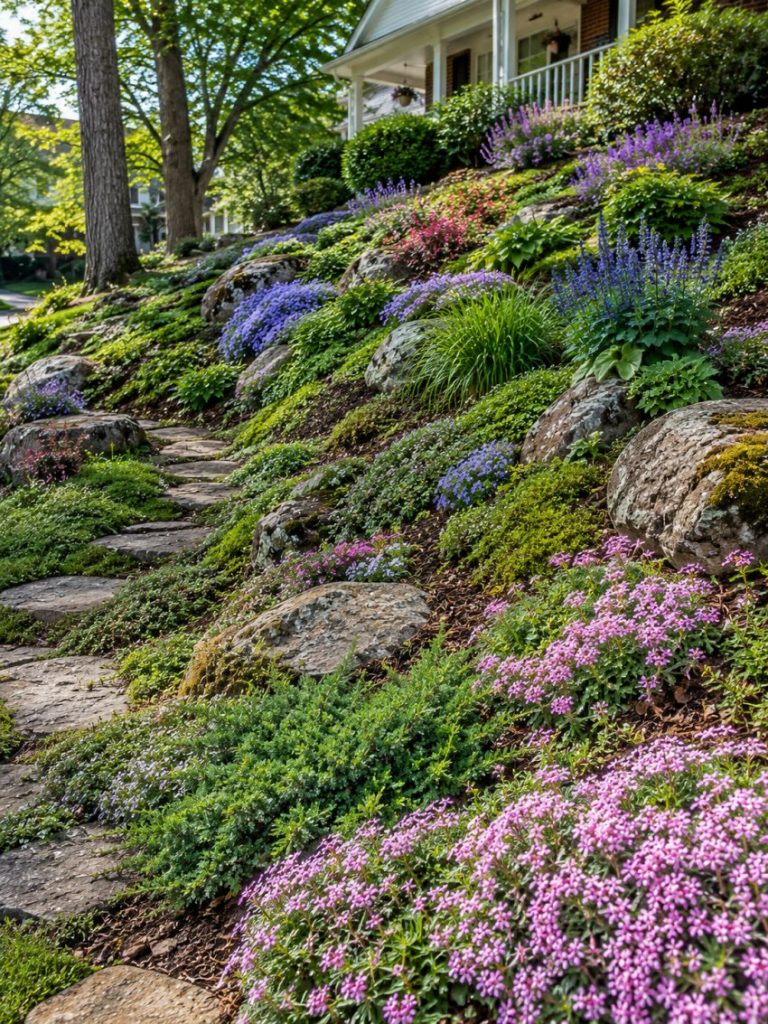
Ground cover plants spread low and wide, which makes them perfect for holding soil on a slope. Their roots grip the ground and stop erosion, so you don’t have to worry about your yard washing away after a storm. They also fill in bare spots fast.
Good choices include creeping phlox, vinca, or juniper, since they handle slopes well and need little care. Once they’re established, you won’t have to mow or trim much, just let them spread and cover the hill naturally.
Check this: 18 Steep Hillside Landscaping Ideas
5. Stone or Gravel Pathways
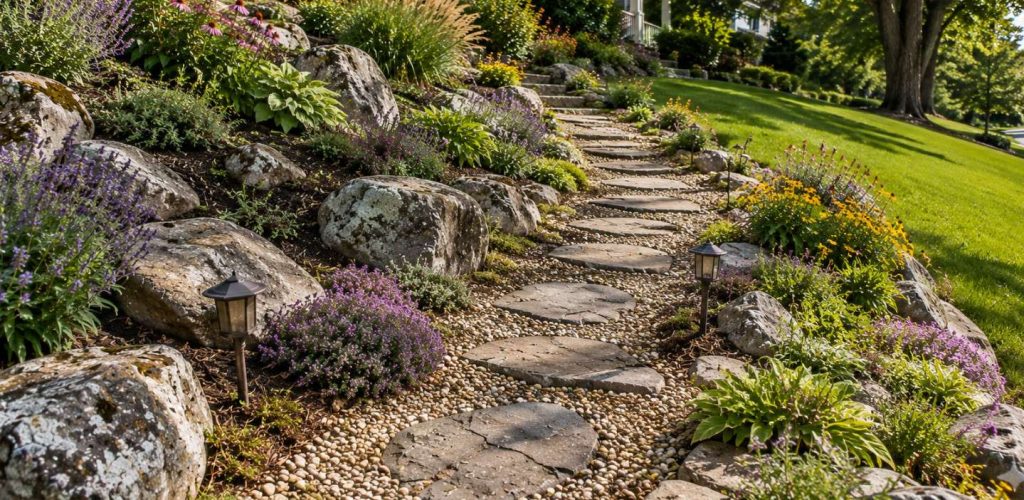
A pathway made of stone or gravel gives you an easy way to walk through a sloped yard without slipping on grass. It also breaks up the space, so the slope doesn’t feel like one big wall of green. You can curve the path to follow the natural shape of the hill.
Flat stepping stones work well for gentler slopes, while gravel fills in nicely around plants and rocks. Add some low lighting along the path if you want it to look good at night too.
6. Ornamental Grasses
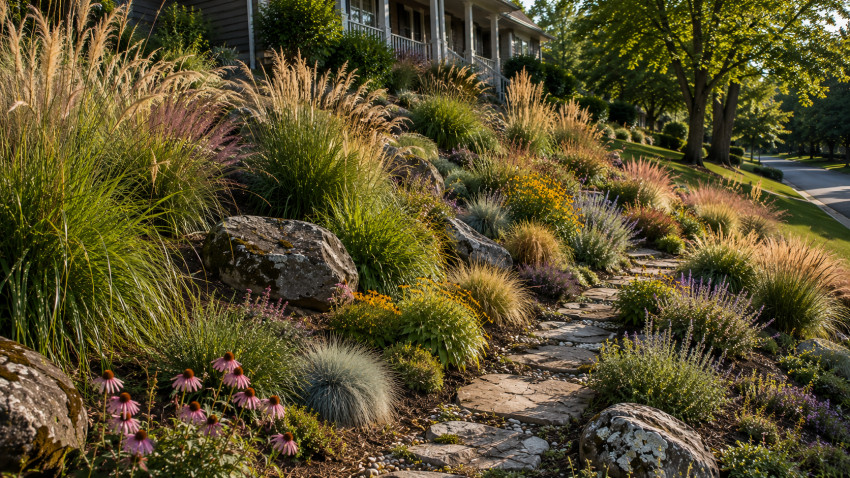
Ornamental grasses are great for slopes because their roots grow deep and hold the soil together. They also move nicely in the wind, which adds some life and motion to your front yard. Most types need very little care once they’re planted.
Try grasses like fountain grass or feather reed grass, since they handle different soil types and don’t mind a bit of a slope. Plant them in clusters for a fuller look, and they’ll come back year after year with barely any work from you.
7. Dry Creek Bed
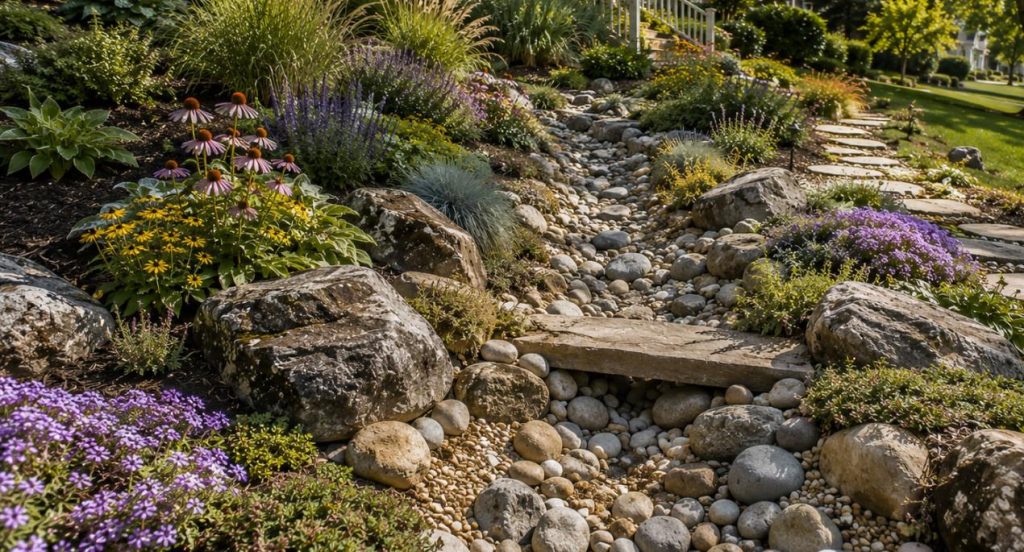
A dry creek bed is a smart way to guide water down a slope instead of letting it run wild. You line a shallow trench with stones and gravel, shaped like a real stream, so rain flows through it during storms. The rest of the time, it just sits there looking nice.
This idea works especially well if your yard tends to flood or pool water after rain. You can add small plants along the edges to soften the look and make it blend into the rest of your landscaping.
8. Stacked Stone Steps
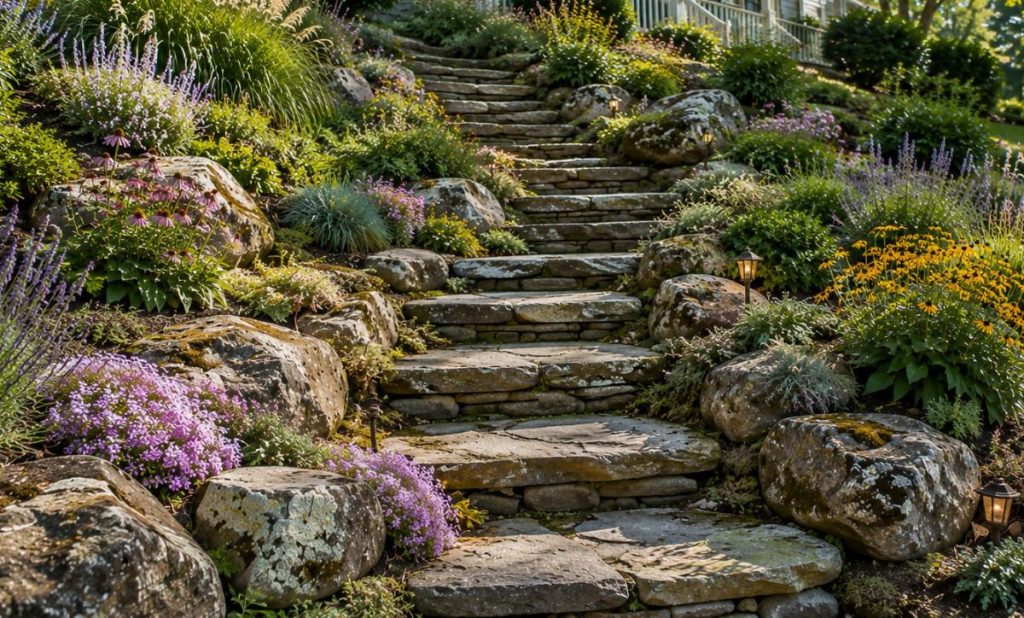
If your slope is steep, stacked stone steps make it much easier to walk up and down your yard safely. They’re built right into the hill using flat stones or pavers, so they feel like a natural part of the landscape instead of a separate structure.
You can line the steps with small plants or lights to make them stand out even more. Besides being useful, they add a nice focal point to your front yard and make the whole space feel more put together.
9. Mixed Shrub Border
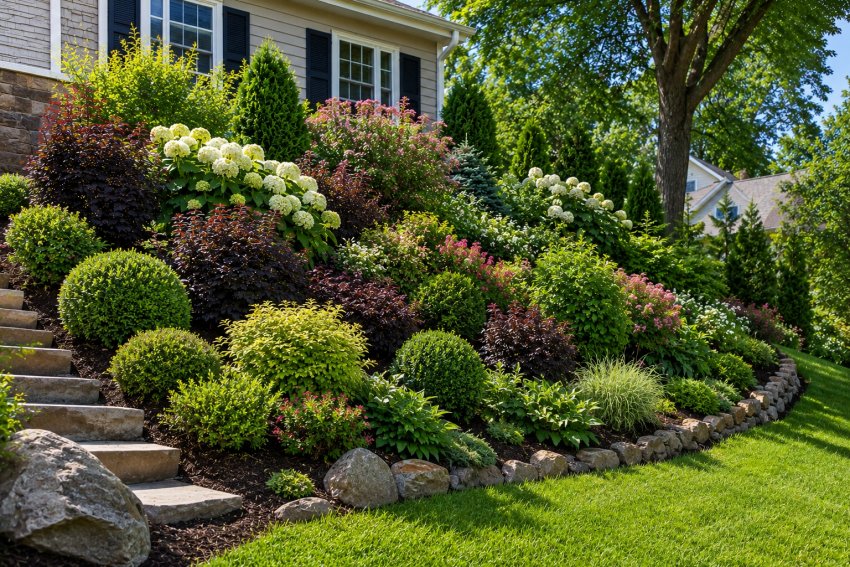
A row of mixed shrubs along your slope adds structure and helps hold the soil in place. Since shrubs have thicker roots than flowers, they’re great at keeping a hillside from washing out during heavy rain. They also give your yard some height and texture.
Try mixing a few types together, like boxwood, spirea, or holly, so you get different colors and shapes throughout the year. Once they’re established, shrubs need very little care, just an occasional trim to keep them looking neat.
10. Mulched Planting Beds
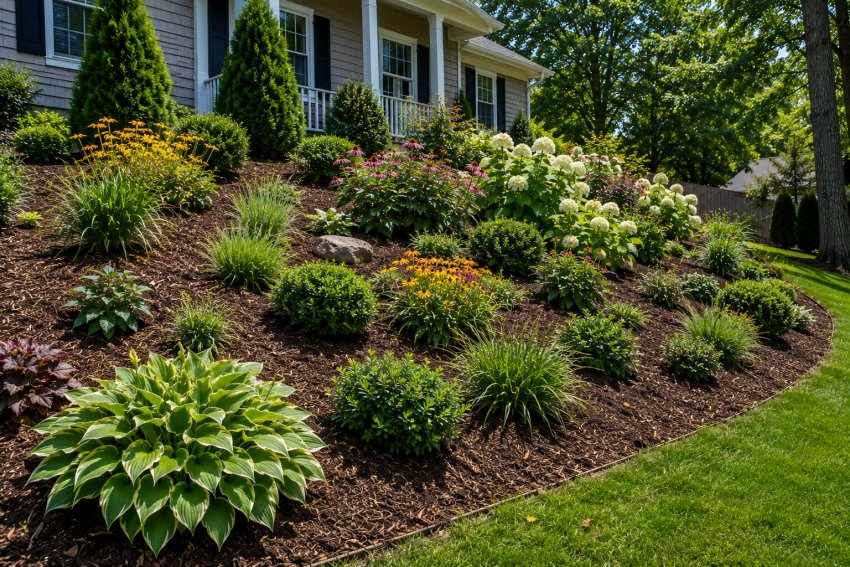
Mulch is a simple fix that makes a big difference on a slope. It holds moisture in the soil, keeps weeds down, and stops soil from washing away in the rain. Spread a thick layer around your plants and it’ll do most of the work for you.
Wood chips or bark mulch both work well and give your yard a clean, finished look. It’s an easy weekend project, and you can always add more each year to keep your beds looking fresh.
11. Boulder Accents
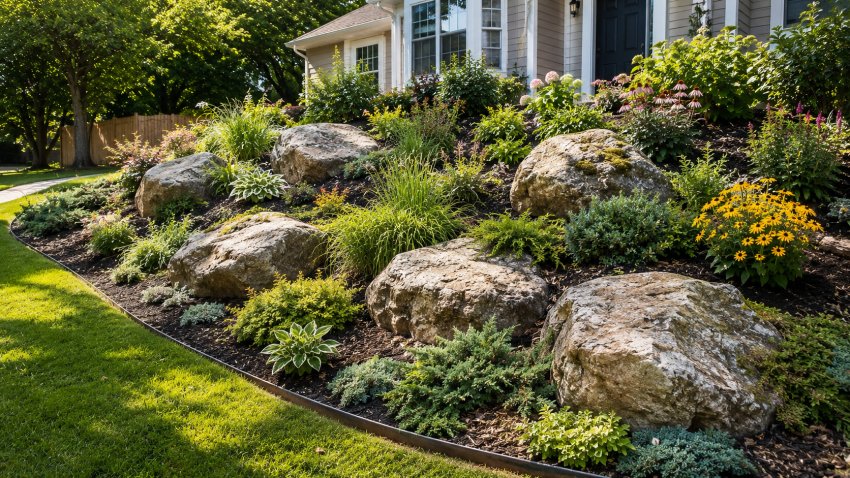
Large boulders placed on a slope act like natural anchors. They break up long stretches of hillside and give your eye something to rest on. Boulders also hold their position on a hill without any extra work, unlike plants that need care to establish.
Place a few at different points on the slope, not all in a straight line, so it looks more natural. Surround them with smaller plants or ground cover to soften the look and tie everything together.
12. Low Maintenance Succulents
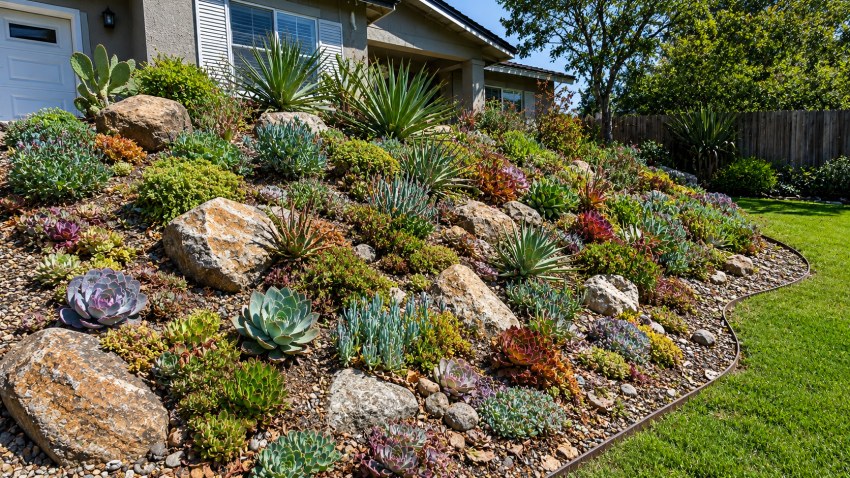
Succulents are a great pick for a sloped yard because they don’t need much water and their roots don’t mind rocky or thin soil. They store water in their leaves, so they can handle dry spells even on a hill where water runs off fast.
Plant them in clusters along the slope for a nice pattern of shapes and colors. They come in so many varieties, from small rosettes to spiky types, so you can mix a few together for a yard that looks interesting all year.
Check this: 26 Best Patio Plants for Shade
13. Wildflower Meadow Look
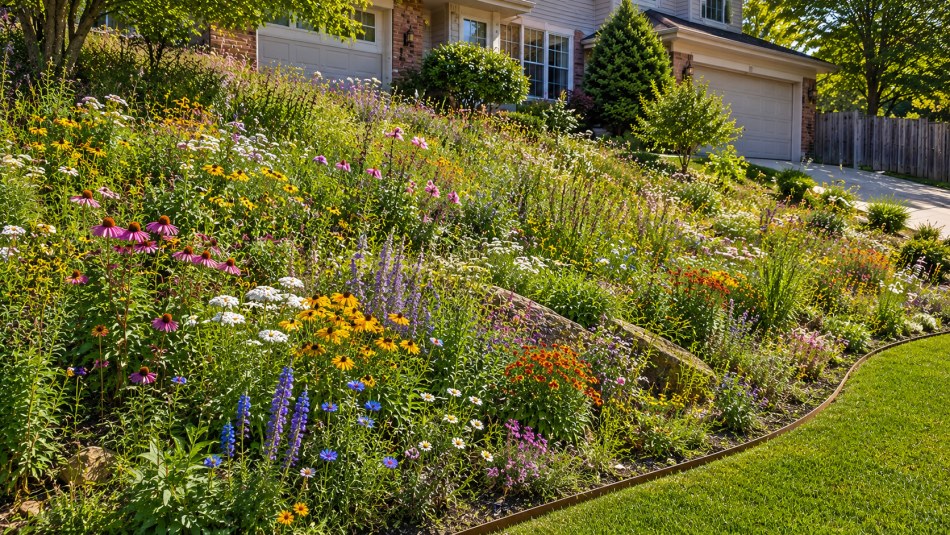
If you want something low effort but full of color, a wildflower mix can turn your slope into a natural meadow. The roots of wildflowers help hold soil in place, and once they’re established, they mostly take care of themselves.
Scatter a mix of native wildflower seeds across the hillside in early spring or fall. You’ll get different blooms popping up through the seasons, and it gives your yard a relaxed, cottage garden feel without a lot of upkeep.
14. Raised Planter Boxes
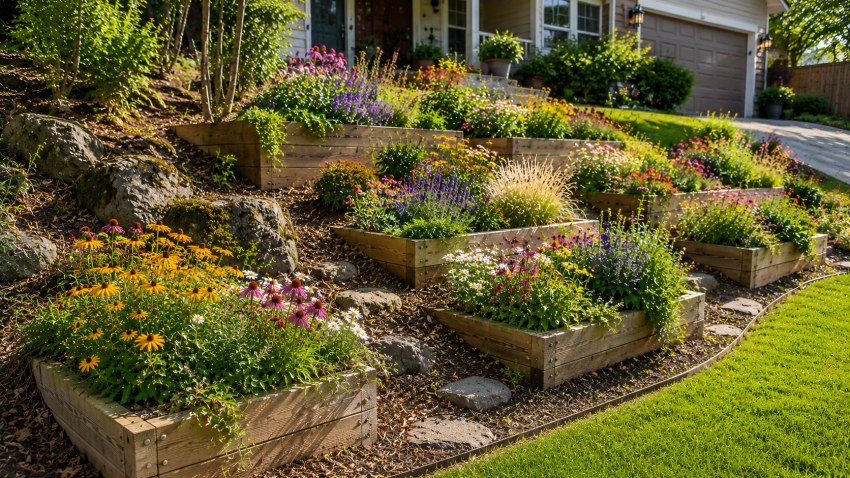
Raised planter boxes let you grow flowers or small plants on a slope without fighting the natural grade. You build the boxes level, even if the ground underneath isn’t, so your plants get even watering and drainage no matter how steep the yard is.
You can stagger a few boxes at different heights up the slope for a stepped look. Wood or stone boxes both work well, and they make it easy to change up what you plant each season without disturbing the rest of your yard.
15. Native Plant Landscaping
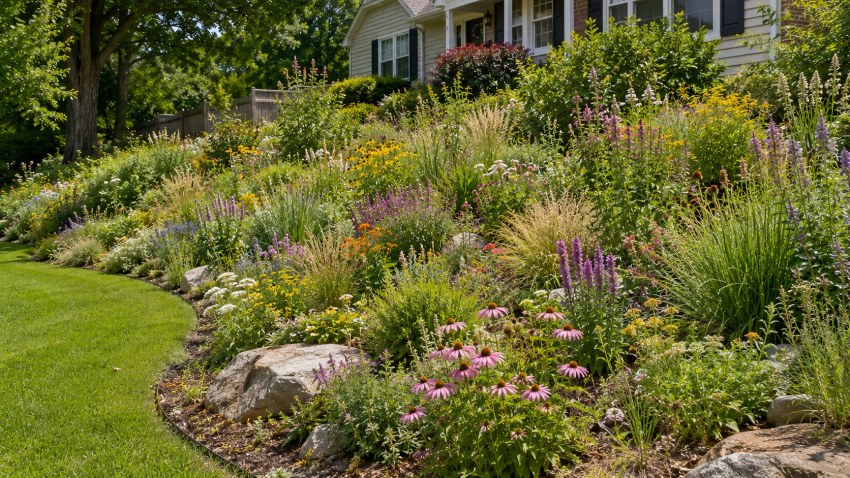
Native plants are already used to your area’s soil and rainfall, so they handle a slope better than most. Their roots are built for local conditions, which means less watering and fewer problems with erosion once they’re established.
Look up what grows naturally in your region and pick a mix of a few types for your hillside. Not only do native plants save you work, they also support local bees and birds, which is a nice bonus for your yard.
16. Erosion Control Grasses
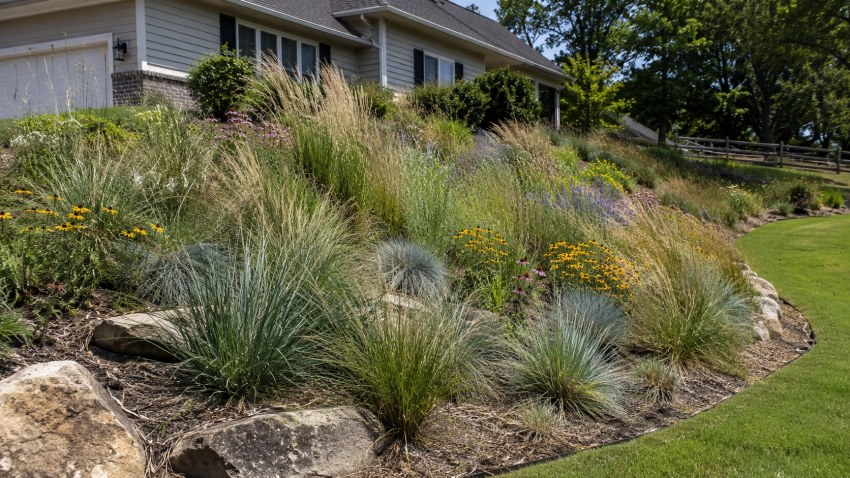
Some grasses are made specifically to fight erosion on slopes. Their root systems grow deep and wide, holding soil together even during heavy rain or wind. They’re a practical choice if your yard has struggled with washouts in the past.
Types like switchgrass or blue fescue work well for this. You can plant them across the whole slope or just in the areas that erode the most, and they’ll fill in fast to protect the ground underneath.
17. Layered Perennial Beds
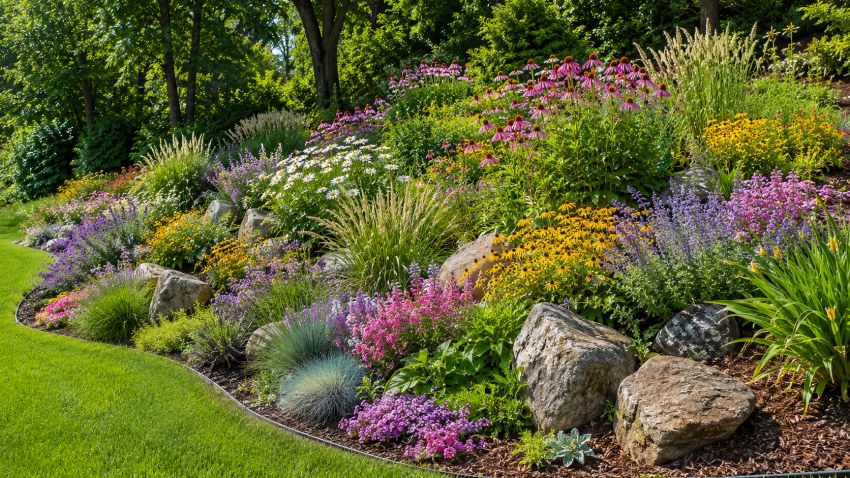
Layering perennials by height gives your slope a fuller, more finished look. You plant taller flowers near the top or back of the bed, then work down to shorter ones near the bottom, so everything is visible from the street instead of getting hidden behind each other.
Perennials also come back every year, so once you get the layout right, you don’t have to replant each season. Mix in different bloom times so there’s always something colorful going on throughout the year.
Also Read: 14 Fast Growing Shrubs for Privacy
18. Decorative Edging Along the Slope
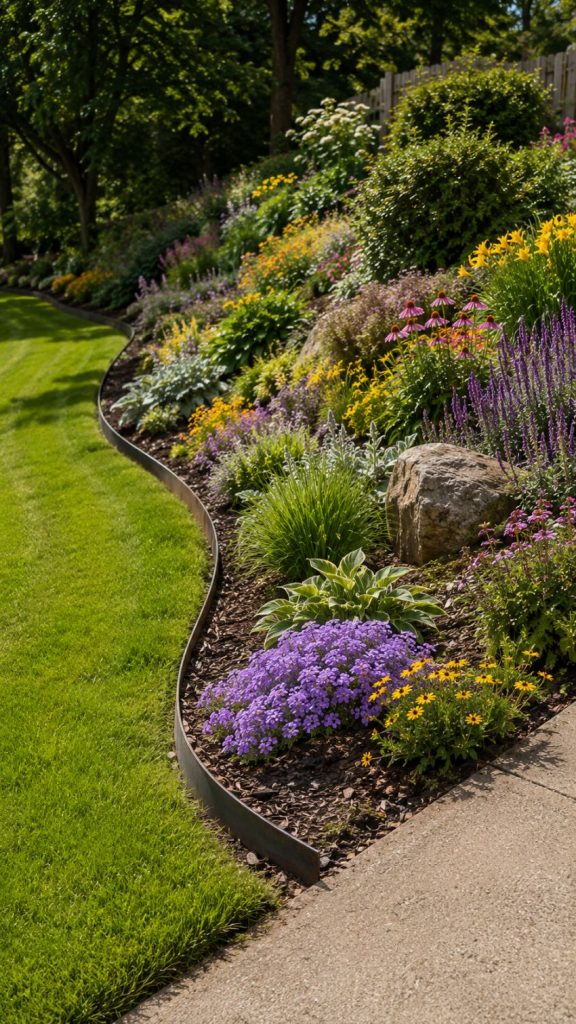
Edging might seem like a small detail, but it makes a big difference on a sloped yard. It keeps mulch and soil from spilling onto the sidewalk or driveway, and it gives each planting bed a clean, defined line even on uneven ground.
You can use stone, brick, or metal edging depending on the look you want. It’s a simple finishing touch that pulls the whole slope together and makes all your other landscaping ideas look more polished.
Conclusion
Turning a sloped front yard into something you’re proud of doesn’t have to be hard. Whether you go with terraces, rock gardens, or just a few well-placed boulders, small changes add up fast.
Pick a few ideas from this list that fit your yard and your budget, and start there. Your slope has more potential than you think.


Khaja Moinuddin, a computer science graduate, finds joy in gardening and homesteading. Join him on this blog as he shares his experiences in homesteading, gardening, and composting