If your patio sits in the shade most of the day, don’t worry. It doesn’t have to look boring. I used to think that too, until I found out some of the prettiest plants actually like a break from the hot afternoon sun.
Toss in some leafy greens, a few splashes of color, and maybe a trailing vine, and even that dark corner can turn into a spot you actually want to sit in. I tried this near my own fence last year, and it made a huge difference.
This list is full of the best patio plants for shade. They all do well in containers, hanging baskets, or regular pots, so you’ve got plenty of options no matter your style. Big tropical leaves, simple greenery, whatever you’re into, it’s here.
Got a covered porch, a balcony that never sees sun, or just a shady patch under a tree? There’s a plant on this list that will work for you.
Quick Tips for Growing Patio Plants in Shade
- First things first, know the difference between full shade and partial shade. Full shade means barely any direct sun all day. Partial shade still gets a few hours of it. This makes a real difference in which plants will actually make it.
- Pick containers with good drainage holes. Shade pots hold onto water longer than sunny ones, so you want that extra drainage to keep roots from getting soggy.
- Go with a good potting mix, not just whatever’s cheapest. A light mix that drains well gives roots the room they need, especially in a shady, damp spot.
- Water with a light hand since shade pots dry out slower. Stick your finger in the soil first so you don’t end up overwatering.
- Don’t skip the feeding, even in the shade. These plants still need nutrients through the growing season, just maybe not as much as their sun-loving neighbors.
1. Hosta

If there’s one plant that actually thrives in shade instead of just tolerating it, it’s the hosta. Too much sun scorches their leaves, so a shady patio suits them perfectly. They fill pots fast with bold leaves in green, blue, and gold, and don’t ask for much once settled in.
Blue Angel offers dramatic silvery blue leaves. Patriot brings white-edged leaves that pop in dark corners. Mouse Ears stays compact and full, perfect for smaller pots.
Keep soil moist but not soggy, use good drainage, and watch out for slugs.
Also Read: 18 Steep Hillside Landscaping Ideas
2. Coleus

Coleus gives you color without needing a single flower. The leaves come in red, purple, pink, and lime green, sometimes all on one plant, brightening up dull corners fast.
Some varieties are bred for full sun, but classic types prefer shade. Check the tag for shade tolerance, since sun-bred coleus can fade in low light.
Give it a decent-sized pot with good drainage. Pinch back the tips now and then to keep it bushy, and don’t let the soil dry out.
3. Heuchera (Coral Bells)

Heuchera brings color to shade without needing a single bloom. The leaves come in shades like amber, plum, caramel, and deep purple, and they hold that color all season long. It’s one of those plants that just makes a pot look put together.
Pair it with ferns or hostas for contrast, or tuck it next to trailing plants like ivy for a fuller look. They play well with others.
Give it well-drained soil and don’t overwater. Heuchera doesn’t like soggy roots, so let the top inch dry out between waterings.
4. Caladium

Caladium leaves look almost too bold to be real, splashed with pink, red, white, and green in patterns that instantly brighten a dark corner. Nothing else on this list makes quite the same statement.
They do great in pots, as long as the soil stays warm and evenly moist. Give them part to full shade, since direct sun can actually burn those thin, tropical leaves.
Come fall, caladiums go dormant. Bring the tubers indoors before the first frost and store them somewhere dry until it’s warm enough to replant next spring.
Also Read: 16 Concrete Raised Patio Ideas
5. Begonia

Begonias are one of the few shade plants that actually flower, and flower a lot. You get blooms in shades of red, pink, orange, and white, right through the growing season, no direct sun required.
Wax begonias are the low-maintenance option, blooming nonstop with little fuss. Tuberous begonias put on a bigger, showier flower but need a bit more attention and care.
Water when the top of the soil feels dry, not before. Begonias hate wet feet, and soggy soil is the fastest way to lose one.
6. Impatiens

Impatiens are the classic shade bloomer, and for good reason. They flower nonstop from late spring straight through summer, filling pots with color even in spots that barely see the sun.
For patios, go with brighter shades like coral, magenta, or white to really stand out against green foliage. Mixing two or three colors in one pot looks great too.
Keep the soil consistently moist, since impatiens wilt fast when they dry out. Deadheading isn’t even necessary, they just keep blooming on their own all season.
7. Fuchsia

Fuchsia flowers hang down like little dancers, with two-toned blooms in pink, purple, red, and white. They add a delicate, almost fancy touch to a shady patio that few other plants can match.
Hanging baskets are where fuchsia really shines. The trailing stems and dangling blooms look best when they can spill over the edges and sway a bit in the breeze.
To get more blooms, pinch back growing tips early in the season and feed every couple weeks. Keep the soil moist and protect it from hot afternoon sun, even a little.
8. Japanese Forest Grass
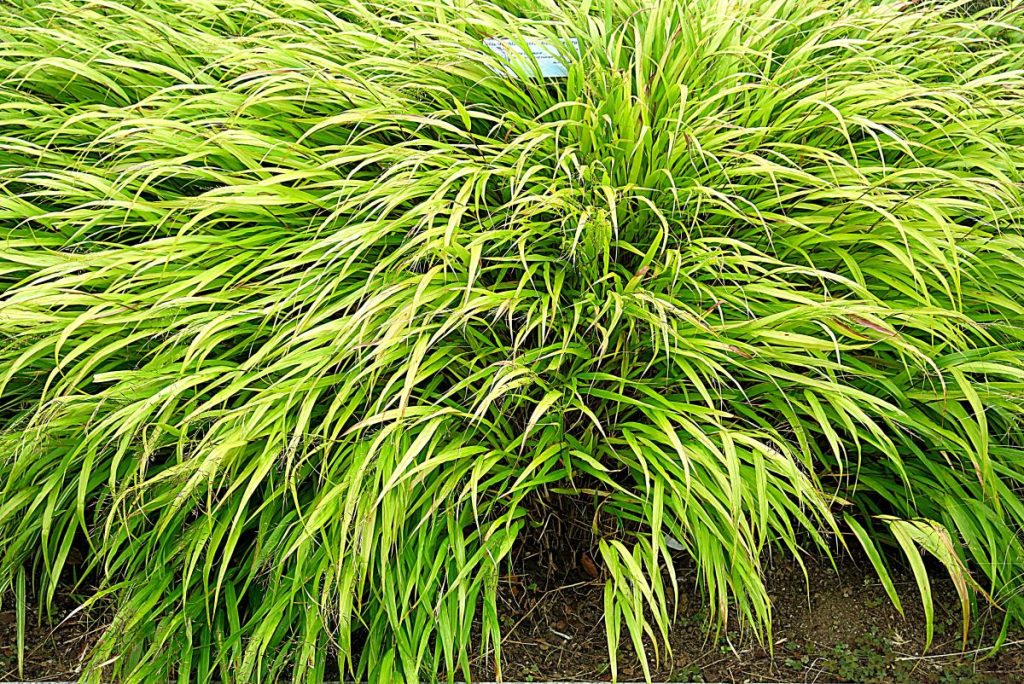
Japanese forest grass brings movement to a patio that flowering plants can’t. The blades cascade like a little green waterfall, swaying with every breeze and softening up whatever pot it’s in.
It pairs beautifully with hostas, heuchera, or ferns, adding texture next to broader leaves. The gold-variegated types especially stand out against darker greenery.
This grass likes consistently moist soil and doesn’t handle drought well. Give it a container with good drainage, and don’t worry if growth seems slow at first, it fills in nicely by midsummer.
9. Ferns

Ferns are basically made for shady patios. Their soft, feathery fronds bring texture and a cool, woodland feel to any container, no flowers needed.
Boston fern is the classic choice, but autumn fern and Japanese painted fern add nice color variation if you want something beyond plain green.
Ferns love humidity, so misting them occasionally helps, especially indoors or in dry climates. Keep soil moist at all times and avoid letting pots dry out completely, since ferns bounce back slowly once they’re stressed.
Group a few varieties together for an easy, layered look in shady corners.
10. Astilbe
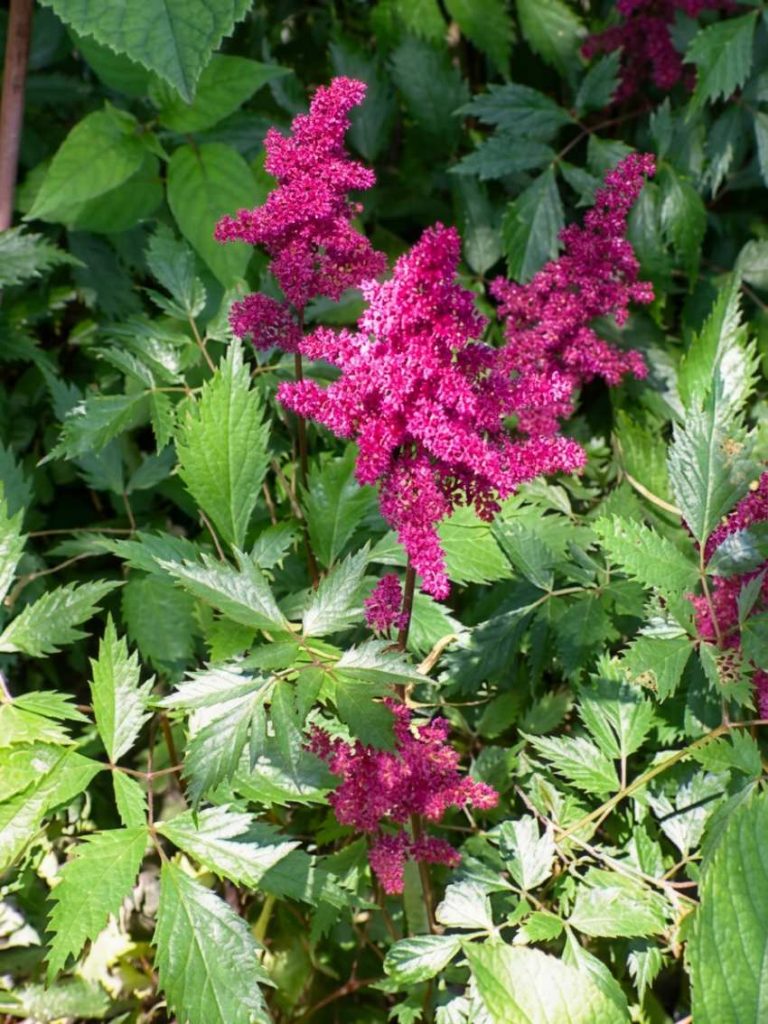
Astilbe brings feathery plumes of flowers to shade, something a lot of shade plants just can’t offer. The blooms come in pink, red, white, and purple, rising above fern-like foliage that looks good even after flowering ends.
Most astilbe varieties bloom in early to mid summer, though some later types stretch the color into fall if you plan your mix right.
Keep the soil consistently moist, since astilbe doesn’t tolerate drying out well. A rich, well-draining potting mix and regular watering will keep it happy through the season.
Also Read: 23 Inexpensive Patio Shade Ideas
11. Hydrangea

Hydrangeas can absolutely work on a patio, as long as you pick a compact variety like Bobo or Little Lime. These stay small enough for containers while still giving you those big, round flower clusters.
Most hydrangeas actually prefer morning sun with afternoon shade, making them a great fit for patios that get some light but not the harsh midday heat.
Prune right after flowering for types that bloom on old wood, or in late winter for varieties that bloom on new growth. Check your specific type before cutting, since timing really matters here.
12. Torenia (Wishbone Flower)
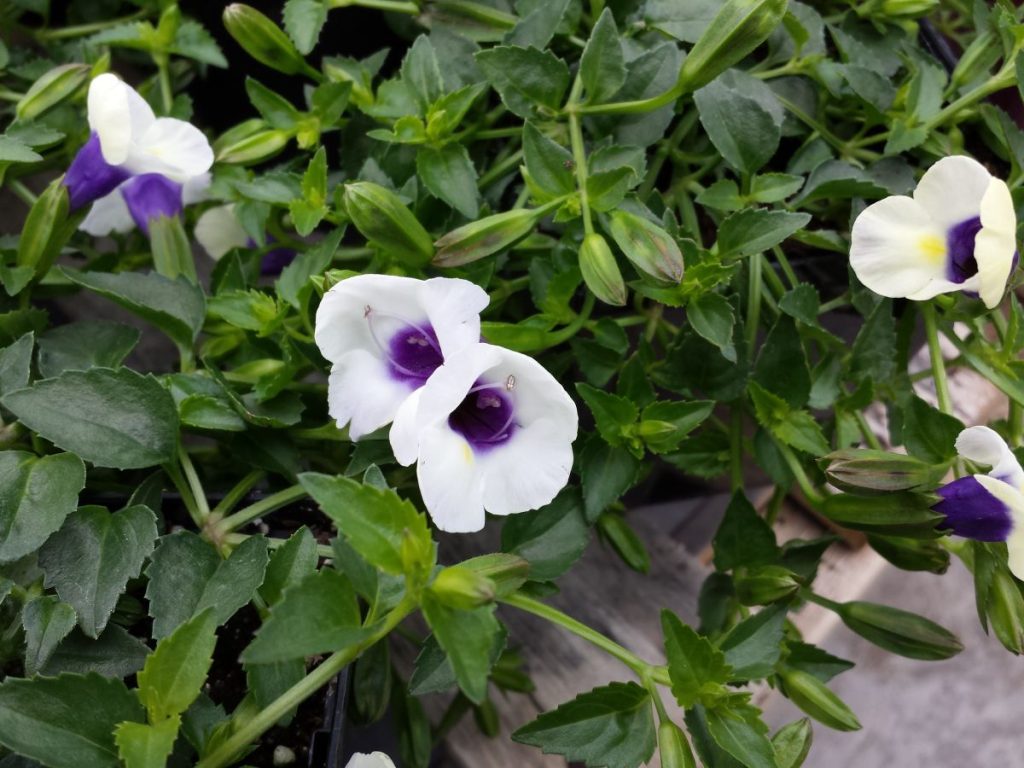
Torenia keeps blooming from late spring all the way through the first frost, which makes it one of the most reliable color sources for a shady patio. The trumpet-shaped flowers come in purple, blue, pink, and yellow.
Bees and butterflies are drawn to torenia more than people expect, so it’s a nice way to bring a little life to the patio without planting a full pollinator garden.
Keep it in a pot with rich, moist soil. Torenia doesn’t love drying out, so check it often during hot stretches.
13. Bleeding Heart

Bleeding heart earns its name honestly, with rows of little pink and white heart-shaped blooms dangling off arching stems. It’s one of the prettiest spring flowers you can grow in a shady container.
The show peaks in spring, filling pots with color right when everything else is just waking up.
By midsummer, bleeding heart often goes dormant and the foliage dies back completely. That’s normal, not a sign you did something wrong. Just cut back the dead growth and let the roots rest until next spring.
14. Hellebore
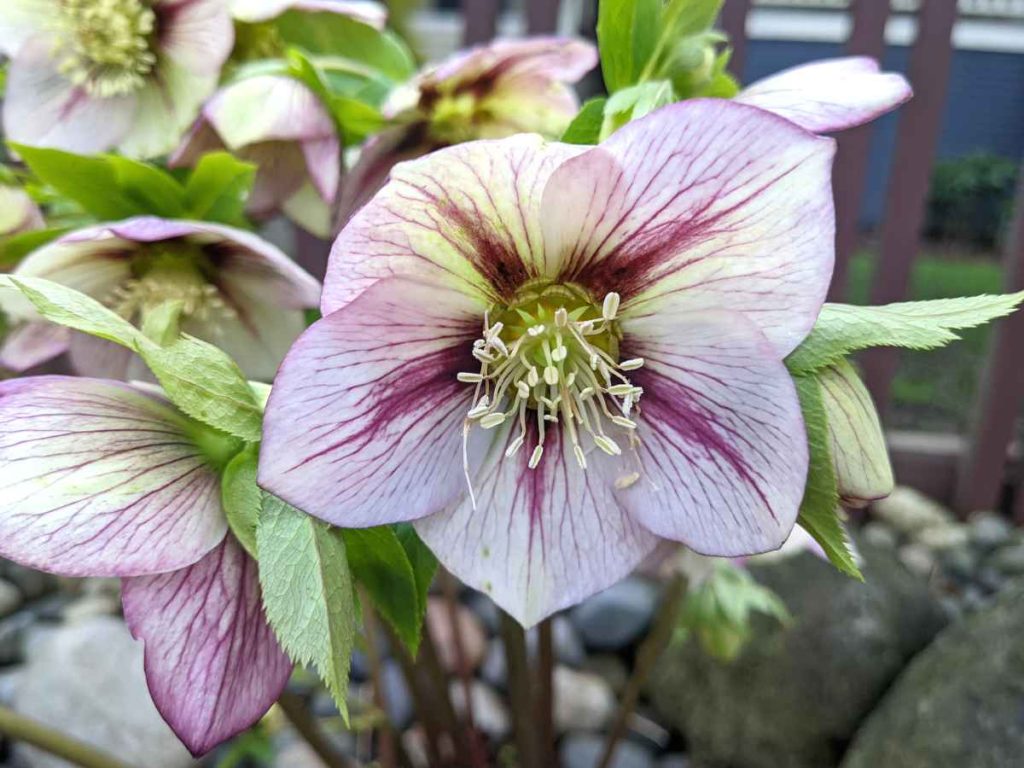
Hellebores flower when almost nothing else will, sometimes even poking through late snow. Their nodding blooms in white, pink, and deep purple make them a favorite for early-season color on a shady patio.
Unlike a lot of shade plants, hellebores keep their leathery green leaves year-round, so the pot still looks alive even when nothing’s blooming.
They’re fairly low-fuss once established. Well-draining soil, consistent moisture, and a spot out of harsh afternoon sun is really all they ask for.
15. Peace Lily

Peace lilies do beautifully on covered patios where they’re protected from direct sun and wind. Their glossy green leaves and white blooms bring an almost indoor-plant elegance to outdoor spaces.
They’re also known for filtering indoor air, which is a nice bonus if you move them inside once the weather turns cold.
Water when the top inch of soil feels dry, and don’t panic if the leaves droop a little between waterings, they perk back up fast once watered. Just avoid letting the pot sit in standing water.
16. Rex Begonia

Rex begonias are grown for their leaves, not their flowers, and once you see one you’ll understand why. The foliage comes in swirling patterns of silver, purple, red, and green, almost like each leaf was hand-painted.
A shallow, wide container suits rex begonias best, since their roots don’t grow especially deep but the leaves need room to spread out and show off.
They like higher humidity than most patio plants, so grouping them with other plants or misting occasionally helps. Avoid overwatering, since soggy soil causes root rot fast.
17. Oxalis

Oxalis looks like clover that got dressed up, with purple or green leaves and delicate little flowers in white, pink, or yellow scattered on top. It’s an easy way to add texture without much effort.
It’s genuinely low-maintenance, doing well in a simple pot with basic potting soil, no special setup required.
Water when the soil feels dry and trim back any leggy growth. Oxalis often dies back and rests for a bit, then comes back on its own, so don’t panic if it looks done for a while.
Check this: 27 Low Cost DIY Patio Ideas that Fits Your Budget
18. Browallia
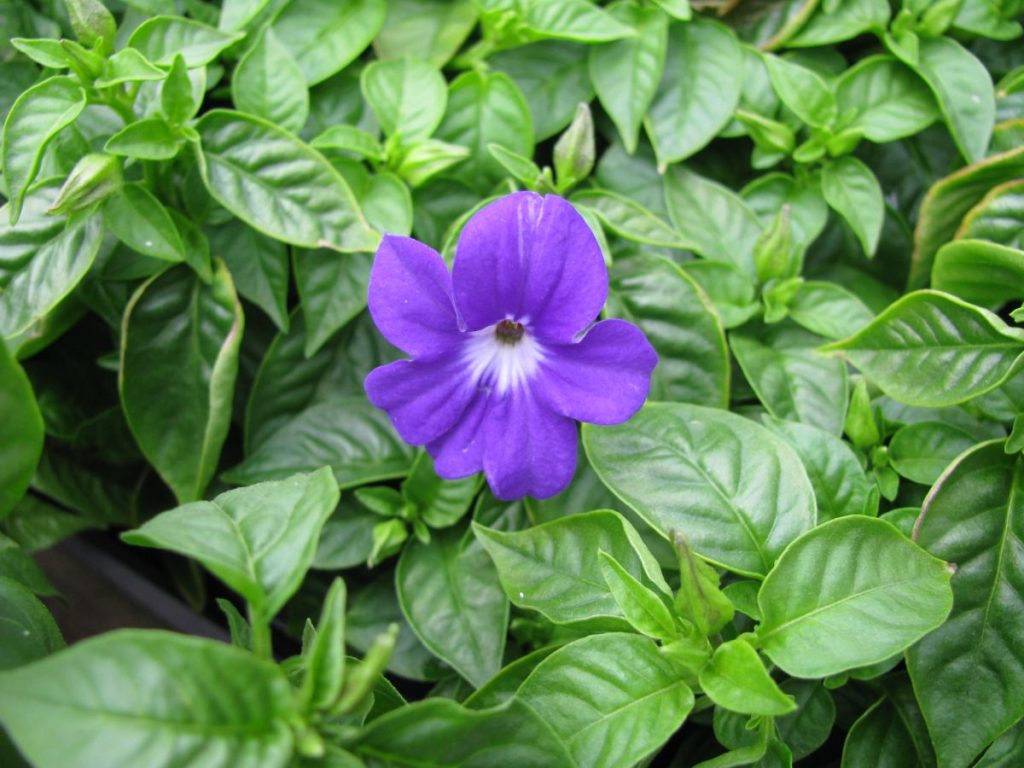
Browallia brings a deep blue and purple color you don’t see in many other shade plants. The blooms almost glow against green foliage, especially in the low light of a shady patio.
It blooms steadily from late spring through fall, giving you months of color without much fuss.
This plant genuinely prefers shade over sun, unlike a lot of “shade tolerant” plants that are really just tolerating it. Keep soil evenly moist and feed occasionally to keep the blooms coming strong all season.
19. Lamium

Lamium’s silver-streaked leaves practically light up a shady corner, especially paired with its small purple or pink flowers. It’s more about the foliage than the blooms, though.
As a spiller, lamium is hard to beat. It trails nicely over the edge of pots and softens the whole container, especially mixed with upright plants in the center.
It’s easygoing about soil and light, just keep it from drying out completely and trim back if it starts sprawling too far past the pot.
20. Ivy

Ivy is the plant most people picture when they think of a trailing patio plant, and it’s earned that reputation. The vines cascade over container edges, softening hard lines and filling in empty space fast.
Use it in mixed containers as a spiller, in hanging baskets on its own, or trained up a small trellis if you want height instead.
To stop it from getting leggy and bare, pinch back the tips regularly. This encourages fuller growth instead of long, thin vines with leaves only at the ends.
21. Creeping Jenny

Creeping Jenny spills over pot edges in bright chartreuse stems that practically glow against darker plants. It’s one of the easiest ways to add movement and color to a container without any flowers involved.
Pair it with upright plants like heuchera or hosta in the center, and let creeping Jenny trail down the sides. The contrast in color and shape makes even a simple pot look intentional.
It likes consistently moist soil and can handle a bit of overwatering better than most, so it’s forgiving if you forget to check it one day.
22. Ajuga
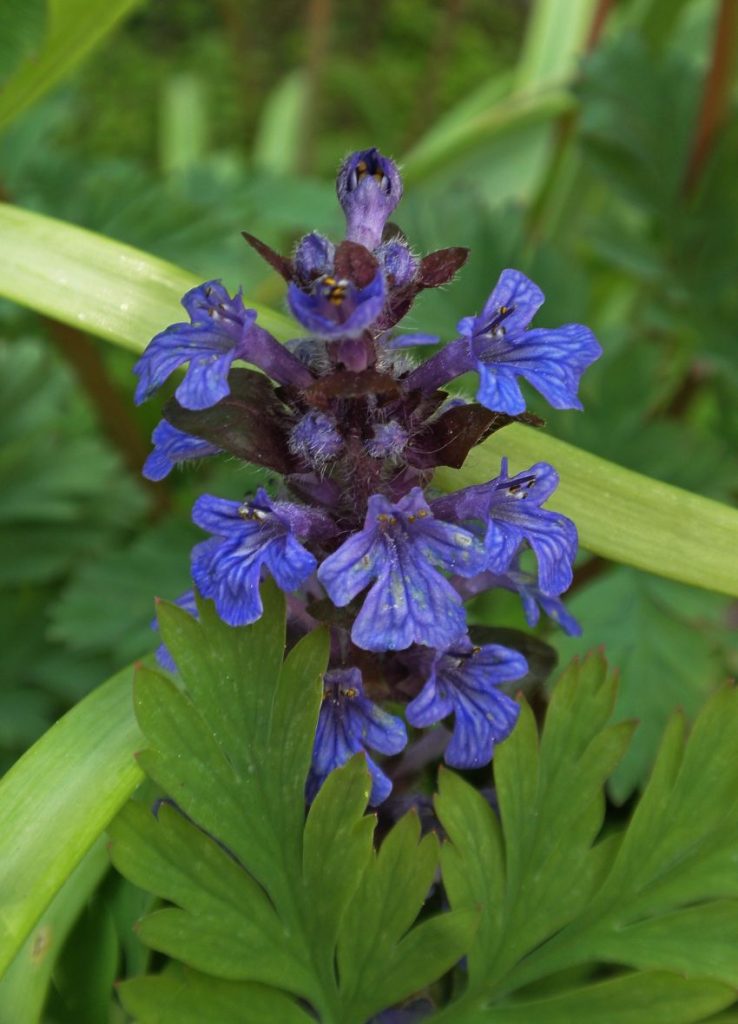
Ajuga brings color low to the ground, with leaves in bronze, purple, and burgundy, plus small spikes of blue flowers in spring. It’s more about foliage than blooms, but the flowers are a nice bonus.
As a filler in mixed containers, ajuga works hard, spreading to cover bare soil and tying the whole pot together visually.
It’s tough and low-maintenance once established. Keep the soil from drying out completely, and don’t be surprised if it spreads more than expected, it’s a vigorous grower.
23. Toad Lily
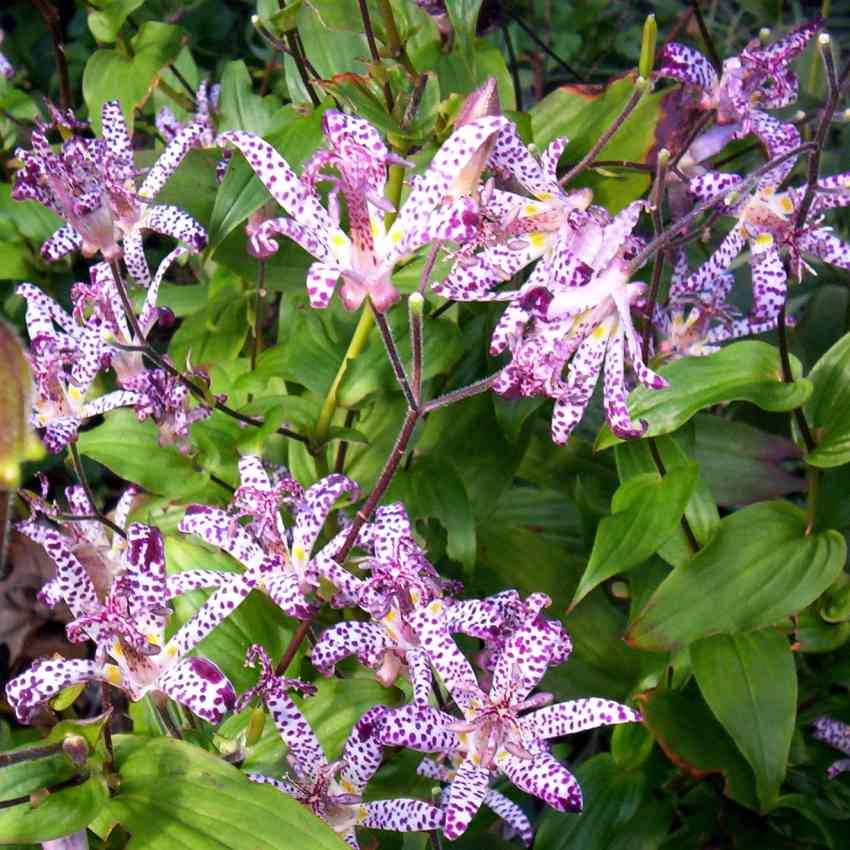
Toad lily flowers look almost too intricate to be real, speckled and shaped a bit like tiny orchids. They’re an unexpected find on a shade-loving plant list, but that’s exactly what makes them stand out.
Most plants are winding down by late summer and fall, but toad lily is just getting started, blooming right when the patio needs it most.
Give it rich, consistently moist soil and full to partial shade. It’s not the fastest grower, but it rewards patience once those blooms finally show up.
24. Lungwort (Pulmonaria)

Lungwort’s leaves are covered in silvery speckles that make the plant interesting even without flowers. It’s one of those plants that earns its spot in a pot just from foliage alone.
Come early spring, small blue, pink, or purple flowers show up before a lot of other shade plants have even woken up, giving your patio color when you need it most.
Keep it in a container with rich, well-draining soil, and don’t let it dry out completely. A little morning sun is fine, but protect it from harsh afternoon heat.
25. Persian Shield

Persian shield leaves have this metallic purple sheen that looks almost unreal in person, especially when light catches them just right. It’s a plant that makes people stop and ask what it is.
Even without flowers, it brings serious tropical energy to a patio, pairing well with other bold foliage plants like caladium or coleus.
Keep soil evenly moist and protect it from direct afternoon sun, which can fade that signature purple color. It’s a plant that rewards a little extra attention with a lot of visual payoff.
26. Leopard Plant (Ligularia)

Leopard plant brings serious size and presence to a shady patio, with big, rounded leaves that make a real statement in a large container. It’s not a plant that blends in, and it’s not trying to.
It’s thirsty, more than most plants on this list, so keep the soil consistently moist and check it daily during hot stretches.
Give it a spot with full to partial shade and a large pot to match its size. Place it where it has room to spread, since it fills out more than people expect.
How to Arrange Shade Plants on a Patio?
Use the thriller, filler, spiller method: one tall bold plant, mid-sized fillers around it, and a trailing spiller over the edge.
Mix foliage shapes and colors so the pot has texture even without blooms. Add height with tall containers or stands to avoid a flat look.
Hanging baskets use vertical space well, and layering plants at different heights makes even young plants look established.
Common Mistakes to Avoid
Don’t plant full-sun varieties in deep shade, they’ll fade or stop blooming. Overwatering is common since shady soil dries slowly, so check before watering.
Poor airflow invites mold, and pots without drainage holes drown roots. Avoid crowding plants too tightly together.
Conclusion
Shade doesn’t have to be the tricky part of your patio anymore. With the right mix of foliage and flowers, even the darkest corner can turn into one of the nicest spots to sit outside.
Start with a few plants from this list, pay attention to what your space actually needs, and build from there.
Some trial and error is part of it, but once you find the right combination, a shady patio can feel just as lively as one that gets sun all day.


Khaja Moinuddin, a computer science graduate, finds joy in gardening and homesteading. Join him on this blog as he shares his experiences in homesteading, gardening, and composting