Steep slopes can feel like wasted space. But they don’t have to stay that way.
With a little creativity, even the toughest hillside can become one of the best-looking parts of your yard. The good news? You don’t need expensive retaining walls or a professional crew for every project.
These budget-friendly hillside ideas help cut down erosion, make mowing and maintenance easier, and boost your curb appeal without draining your wallet.
Things to Know Before Landscaping a Steep Hill
Before you start digging in, a few things will save you time and money.
First, check your drainage. Watch where rainwater flows during a storm so you know if you’re dealing with runoff problems.
Next, figure out how steep your slope actually is. This affects which ideas will work and which ones won’t.
Stabilize the soil before you plant anything. Loose dirt on a hill just washes away, taking your new plants with it.
Always call before you dig. If there’s any chance utilities are buried nearby, get them marked first.
Mix hardscape with plants for the best results. Stone, mulch, and greenery working together hold a slope much better than plants alone.
And start small. Tackle one section of the hill instead of trying to transform the whole thing at once.
1. Brick Wall Design That Blends Craftsmanship with Nature
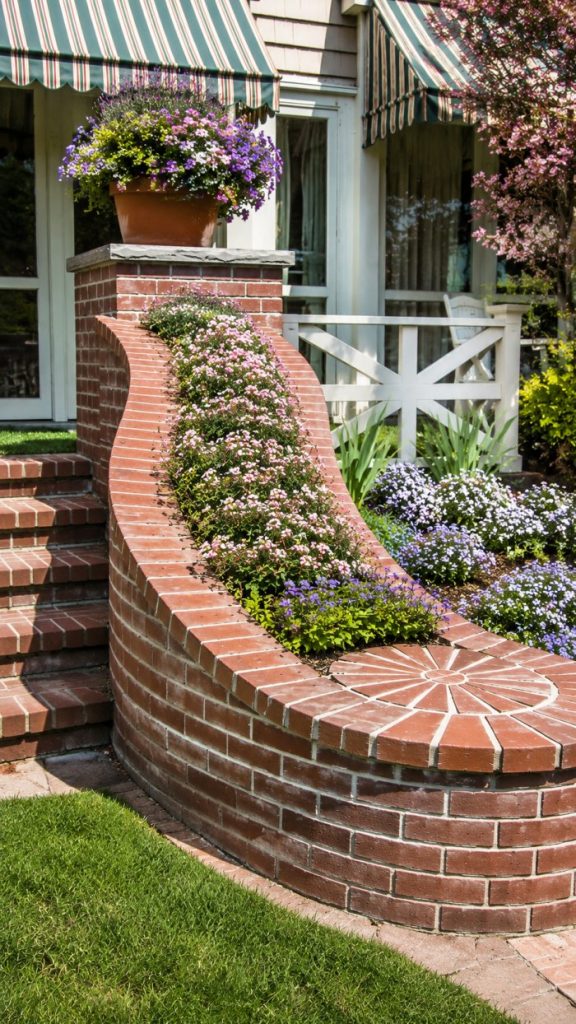
A brick wall tucked into a hillside gives it some backbone without looking cold or industrial. There’s something about the warm, textured look of brick that just sits right next to greenery, it never feels like someone dropped a concrete slab on your slope. Build it in low, stacked sections instead of one tall wall, and it’ll hold the soil in place while making the whole yard look more put-together.
You don’t have to call in a mason for a small wall like this. Pre-cast brick blocks made for garden walls stack up pretty easily on their own, and they cost a fraction of what a crew would charge.
Toss in a few low plants or some trailing vines along the edges, and pretty soon that wall stops looking like something you built and starts looking like it was always part of the yard.
Also Read: 19 DIY Pallet Garden Ideas for Your Backyard
2. Bring Extra Charm to a Rose Garden with Tiered Seating
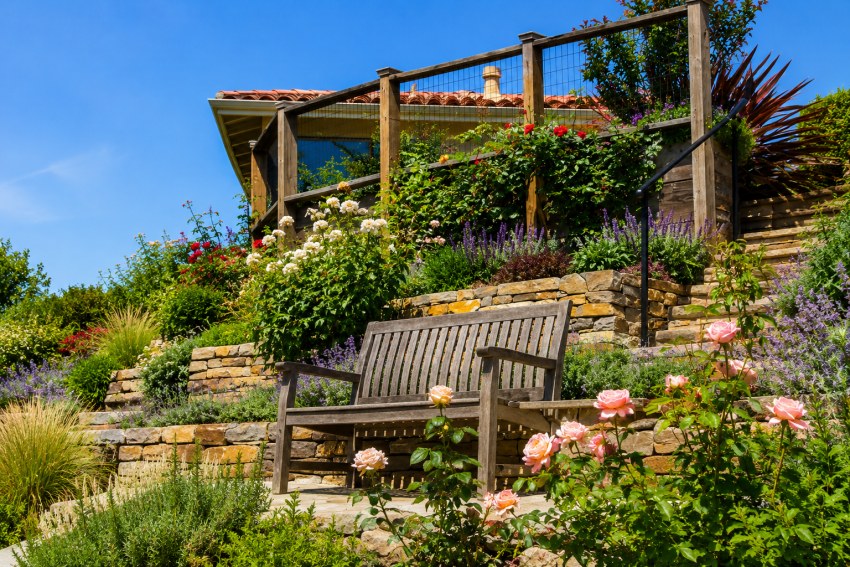
A rose garden gets even better with somewhere to actually sit and enjoy it.
Building tiered seating into the slope gives you that spot, plus it turns the incline into something useful instead of just a hill you walk past. Each level can frame a different cluster of roses, so the view changes as you move through the space.
Wood or stone benches work well here, and you don’t need anything fancy. Add a few steppers between tiers, and the whole area feels like a little garden retreat instead of an afterthought.
3. Show Off Bold Design with Brick Retaining Walls and Stairs
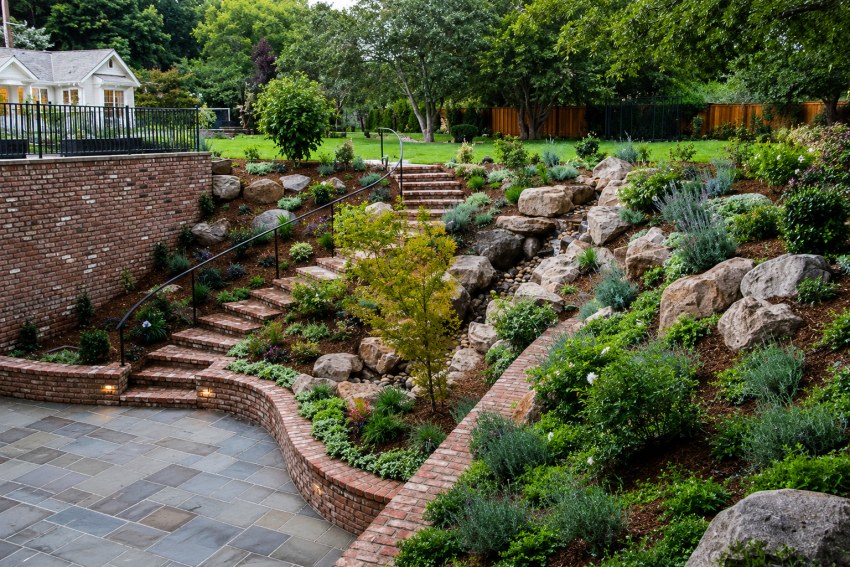
Brick retaining walls paired with stairs turn a steep hillside into a real focal point instead of a problem spot. The stacked layers create depth, and the brick adds a warm, classic look that holds up well against weather and time. Stairs cut right through the slope, so you get easy access along with all that visual structure.
This combo works great if your hill is too steep to walk across safely. Add some low plantings along the edges of the steps, and the whole thing feels less like a structure and more like a natural part of the landscape.
4. A Glamorous Hillside Retreat with Stone Slab Stairs
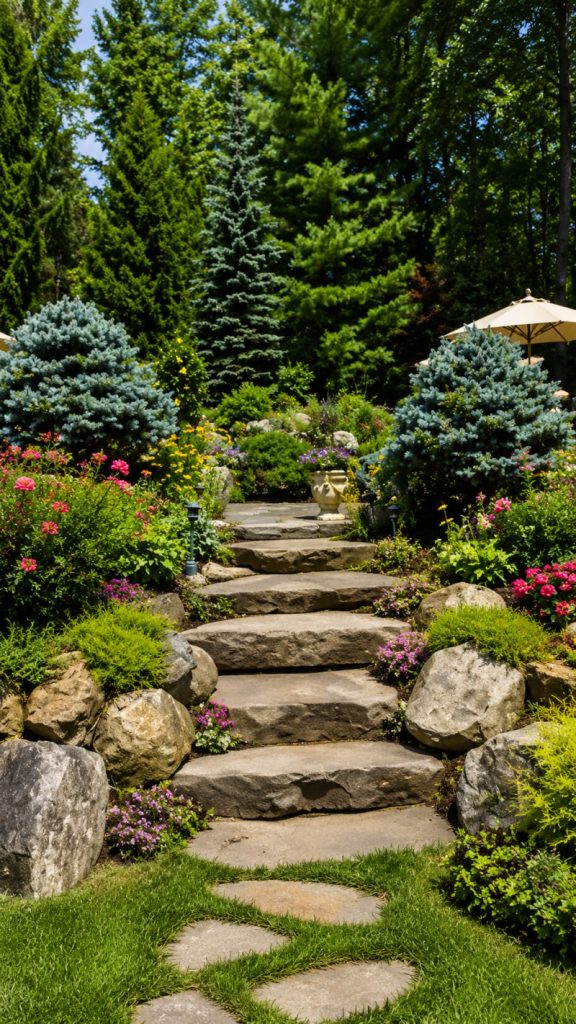
Large stone slabs turn a plain hillside into something that feels almost resort-like. The wide, flat steps give the slope a clean, upscale look, and they’re sturdy enough to handle daily use without shifting or cracking over time.
Spaced out with gravel or greenery in between, they create a path that feels intentional instead of just functional.
This idea works best on slopes that aren’t too steep, since the slabs need a stable base to sit on. Add some low lighting along the edges, and the stairway turns into a spot that looks just as good at night as it does during the day.
Check this: 23 Bucket Garden Ideas to Setup Lushest Garden Ever
5. Concrete Stairs and Seating with Contrasting Design Elements
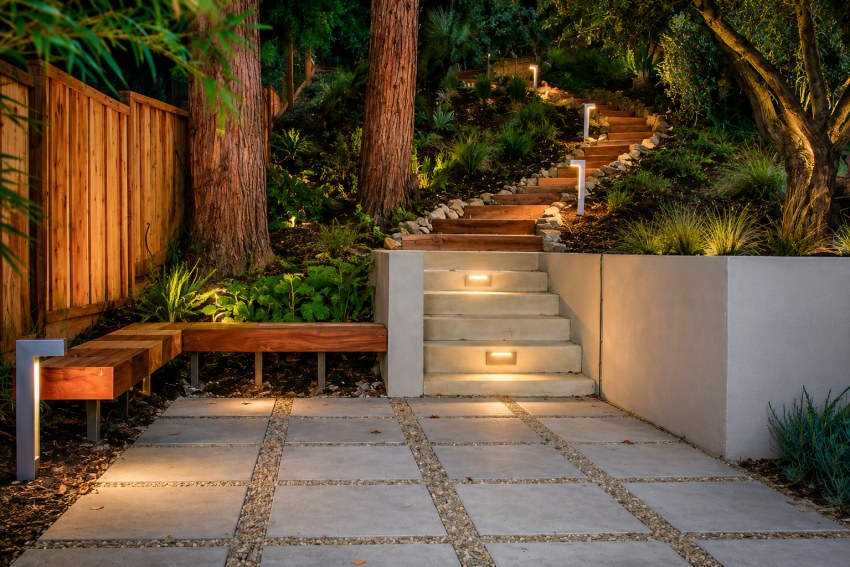
Concrete stairs paired with built-in seating make a steep hill feel functional and modern. The clean lines hold up well outdoors, and pairing concrete with wood or stone accents keeps it from looking too plain.
Add cushions or potted plants near the seating areas. It’s an easy way to soften the look and make the space feel more inviting.
6. Create a Dining Area with Brick and Reclaimed Cement Stairs
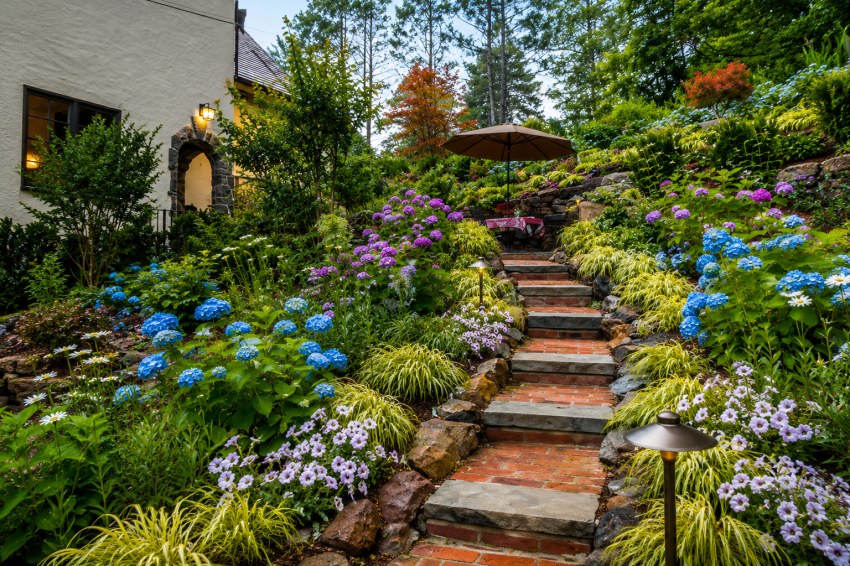
Turning a hillside into a dining spot sounds ambitious, but brick and reclaimed cement make it surprisingly doable.
The stairs lead right up to a flat dining area, so the climb feels like part of the experience instead of a chore. Reclaimed cement adds texture and character, giving the space a worn-in, established look right from the start.
Brick edging ties the stairs and dining area together visually. Pair it with simple outdoor furniture, and you’ve got a spot for dinner with a view you’d never expect from a steep slope.
7. Large Steps to Divide Your Yard
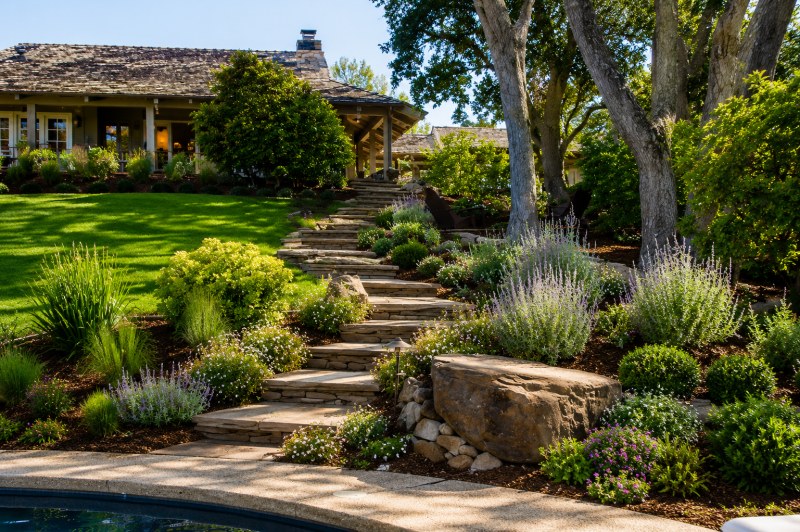
Big, wide steps do more than help you get up a hill, they naturally split your yard into separate zones. One section might work for lounging, another for plants or a fire pit, all connected by one simple staircase.
Use durable materials like stone or concrete for the steps themselves. Fill the gaps with gravel or low groundcover, and the whole thing starts to look like it was always meant to be there.
8. Soften a Hillside Stairway with Creeping Thyme
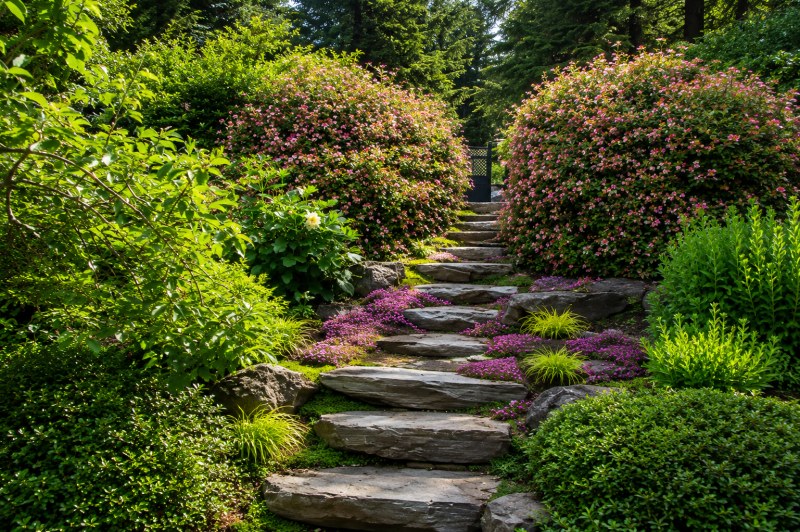
Creeping thyme fills in the gaps around stairway stones, softening the hard edges with low, lush greenery. It spreads easily, tolerates foot traffic, and even releases a light fragrance when you brush past it.
This is one of the easiest ways to dress up plain stairs. Plant it along the borders or between stepping stones, and within a season or two, it fills in on its own with barely any upkeep.
Also Read: 22 Paver Edging Ideas for Your Backyard Garden
9. Serene Waterfall for Pool with Tiered Retaining Walls Accent
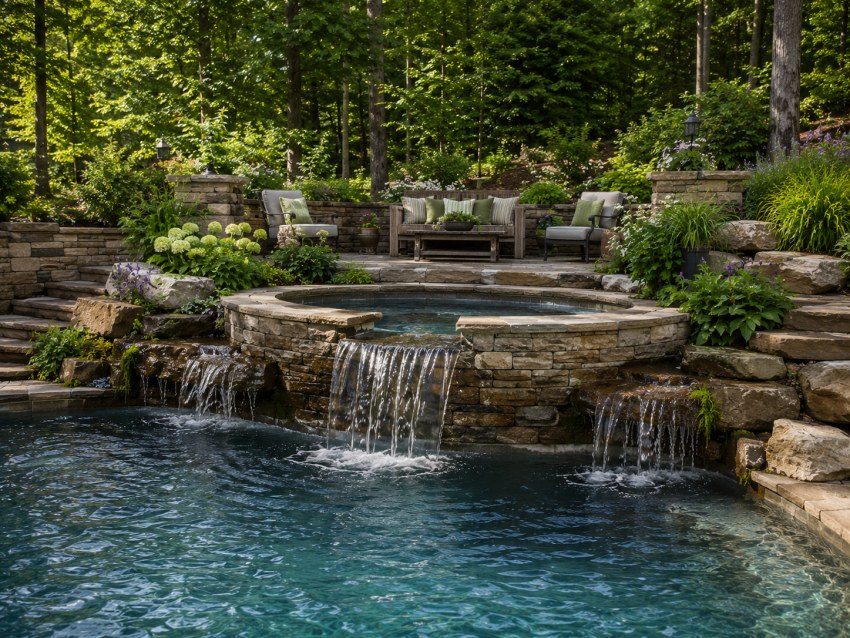
A tiered retaining wall doesn’t just hold back a slope, it can double as the backdrop for a stunning poolside waterfall. The water cascades down each level, turning a steep hillside into the standout feature of your backyard instead of a problem you had to work around.
Stone or brick tiers give the waterfall a natural, layered look that feels like it’s always been there. Pair it with some greenery along the edges, and you’ve got a peaceful, resort-style retreat right in your own yard.
10. Revamp Your Hillside with Stone Walls and Stairs, and Gazebo
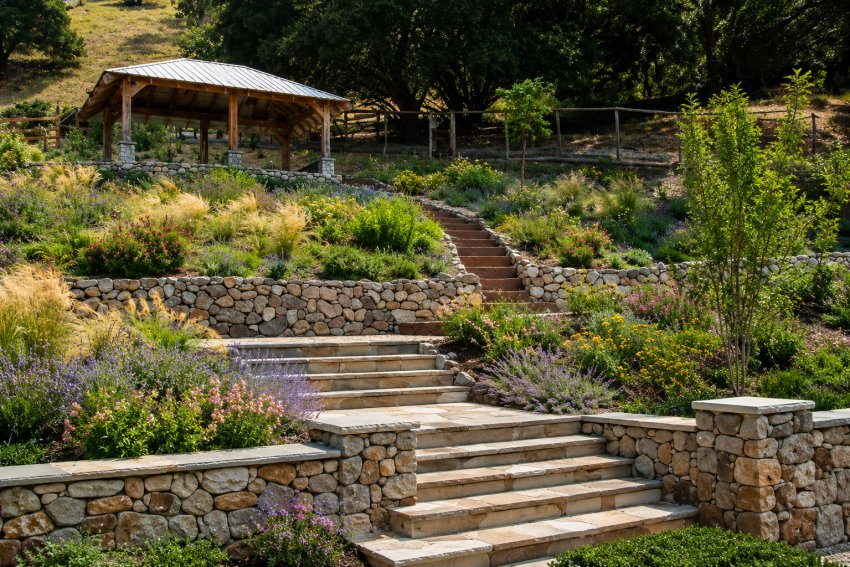
This idea brings everything together: stone retaining walls hold the slope in place, stairs make it walkable, and a gazebo at the top gives you a reason to make the climb. It turns an entire hillside into a destination instead of just a backyard feature.
The stone keeps things looking natural and sturdy, while the gazebo adds a cozy spot to relax once you’re up there. Even a small structure makes a big difference, giving the whole space a finished, purposeful feel.
11. Provide Stability with White Gravel Rocks and Railroad Ties
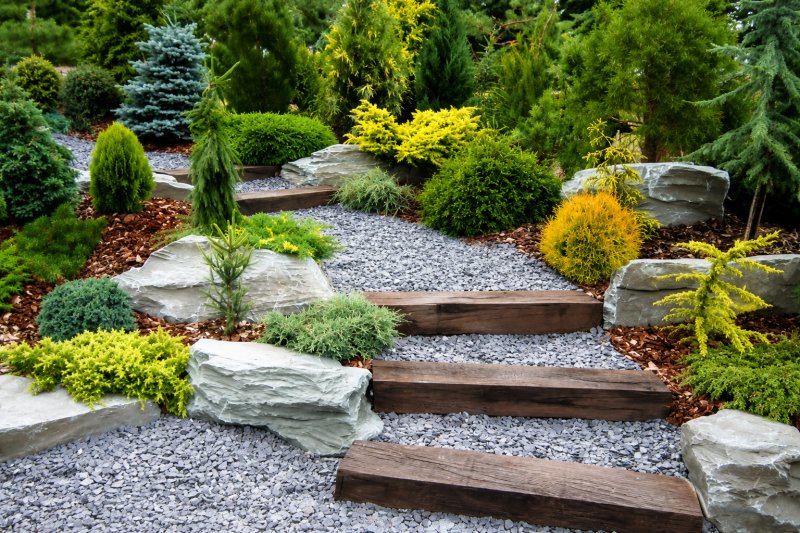
Railroad ties make a sturdy backbone for any hillside garden. Stack them in layers and they hold soil in place while giving your yard a rustic, structured look.
White gravel rocks fill in the gaps and paths between the ties, adding contrast and keeping weeds down at the same time.
This combo works great on slopes where erosion is a real problem. The ties act like steps that break up the hill, and the gravel drains water fast so it doesn’t pool and wash everything away. It’s a low-maintenance setup that still looks intentional, not thrown together.
12. Embellish Hillside Stone Steps with Colorful Ground Cover
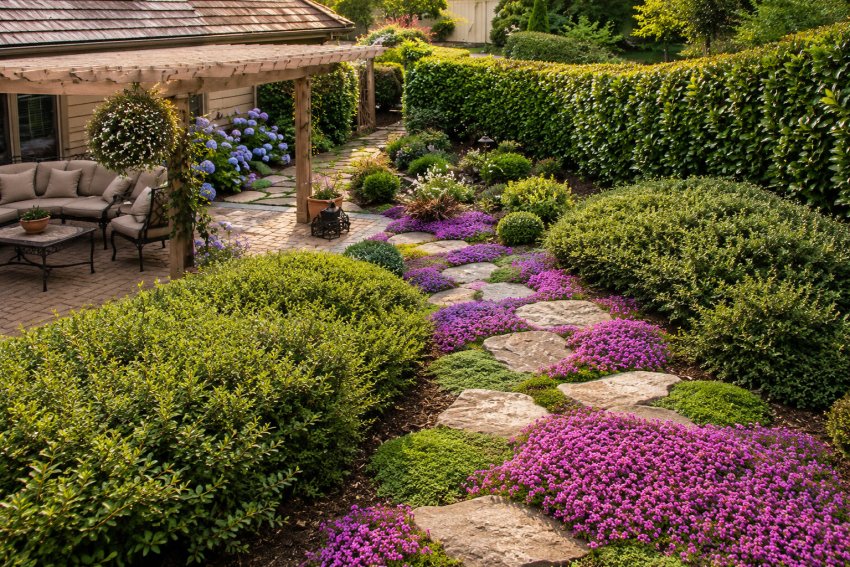
Plain stone steps get the job done, but they can feel a little stark on their own.
Tuck some ground cover plants into the cracks and edges and suddenly those steps feel like part of the landscape instead of just a path. Creeping thyme, sedum, or moss phlox all work well here.
Pick a few different colors and you get blooms at different times through the season. The plants also help hold soil around the stones, so you get a practical benefit along with the pretty one. Just leave enough bare stone in the middle of each step so it’s still safe to walk on.
13. Unwind in Luxury with Stone Steps and Uniform Brick Walls
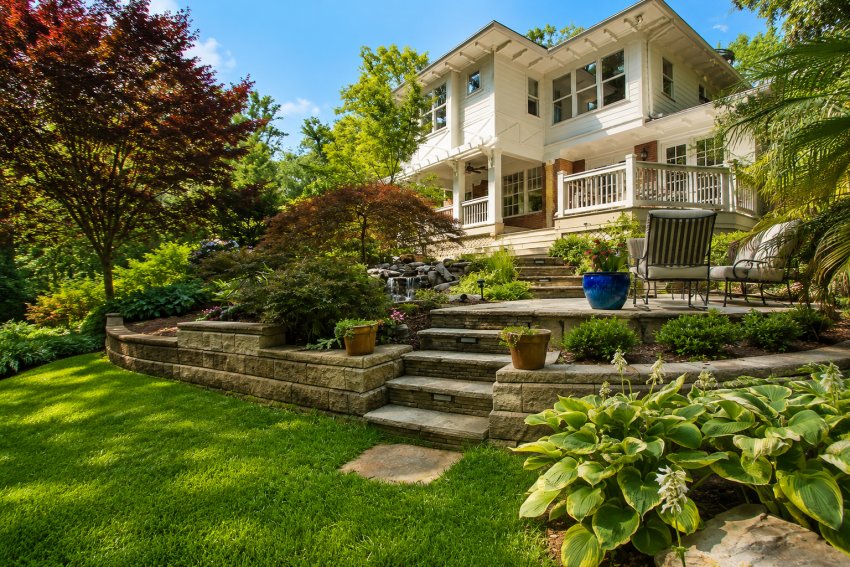
There’s something calming about a backyard that feels put together.
Stone steps paired with clean, uniform brick walls give off that polished, high-end feel without needing a huge budget. The key is keeping the brick pattern consistent so the whole space reads as one cohesive design.
This pairing works especially well for patios or seating areas you want to feel like an outdoor retreat. The brick walls add structure and a sense of enclosure, while the stone steps guide you through the space naturally.
Add some soft lighting and a couple of comfortable chairs and it turns into the spot you actually want to spend your evenings.
Check this: 27 Deck Awning Ideas for Small and Large Outdoor Spaces
14. Reclaimed Bricks Create Retaining Wall for Wildflower Beds
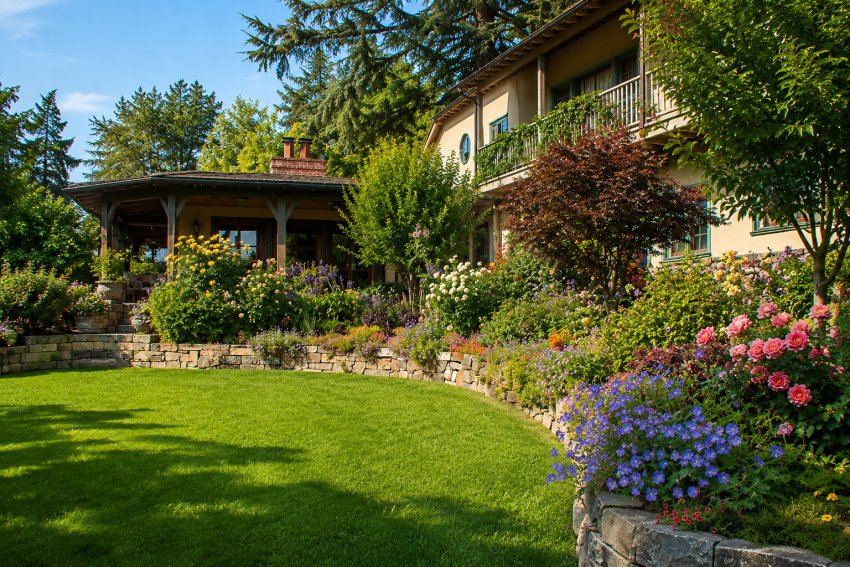
Reclaimed bricks bring character that new materials just can’t fake. The chips, color variation, and worn edges give a retaining wall a lived-in charm that pairs beautifully with a loose, informal wildflower bed. It’s a great way to reuse materials and cut down on waste too.
Build the wall a little uneven on purpose. Wildflowers look best when they’re not boxed into a perfectly straight line, so let some blooms spill slightly over the edge of the bricks.
The contrast between the structured wall and the wild, scattered flowers is what makes this combination work so well.
15. Get a Polished Look with Raised Garden Beds
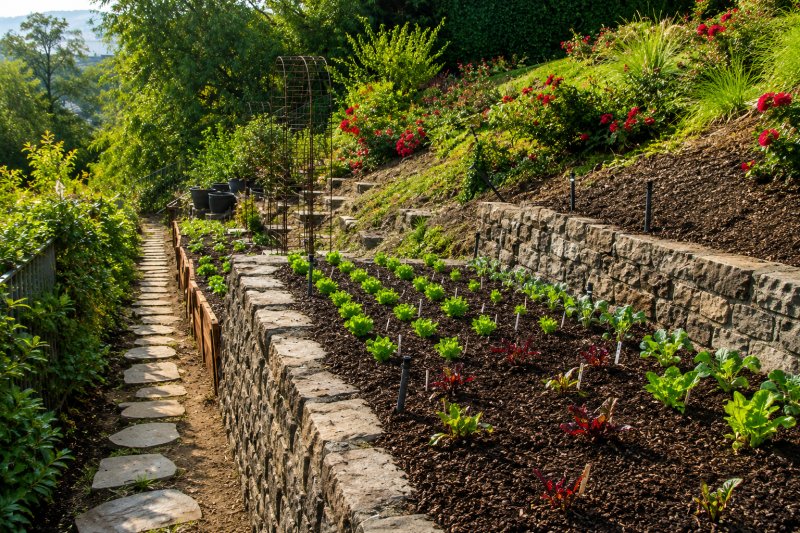
Raised garden beds instantly make a yard look more organized. They create clear boundaries for your plants, which means no more guessing where the garden ends and the lawn begins. Wood, stone, or metal beds all work, depending on the style you’re going for.
Beyond looks, raised beds make gardening a lot easier on your back and knees.
You also get better control over soil quality since you’re filling the bed yourself instead of fighting whatever your yard naturally has. It’s a simple upgrade that pays off in both appearance and convenience.
16. Add Texture to Your Retaining Wall with Climbing Ivy
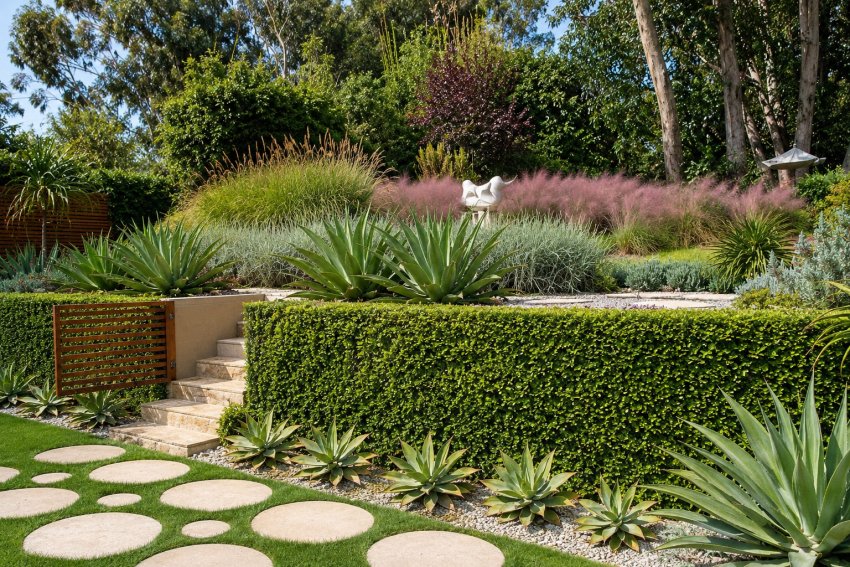
A bare retaining wall can feel a little flat, literally and visually. Climbing ivy softens those hard lines and adds depth, turning a plain wall into a green, textured feature.
Over time it fills in and creates a natural curtain effect that looks great year-round in milder climates.
Keep an eye on growth though, since ivy can spread fast and get into mortar joints if left unchecked. A little trimming a few times a year keeps it looking lush without letting it take over or damage the wall underneath.
17. Prevent Erosion with Creeping Phlox Ground Cover
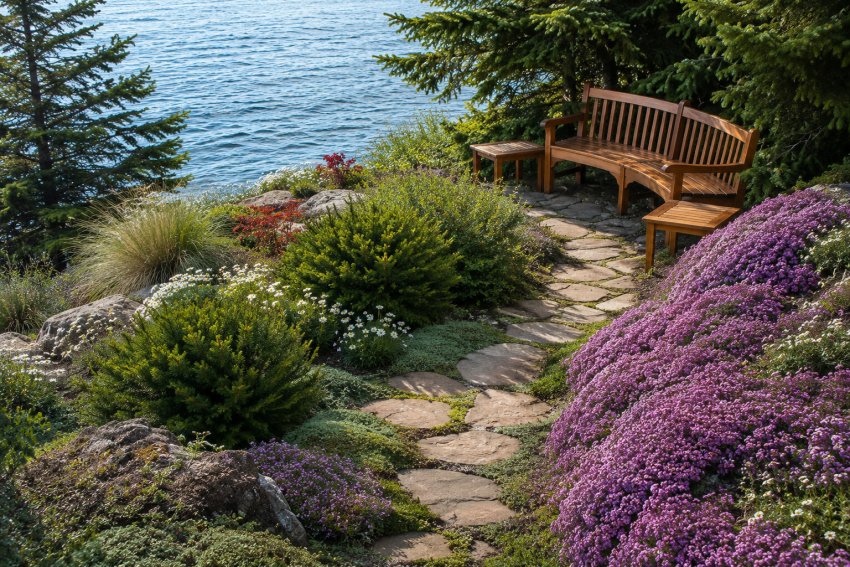
Creeping phlox is one of the best plants for holding soil on a slope. Its roots spread wide and shallow, which means it grabs onto loose dirt and keeps it from washing away during heavy rain. On top of that, it bursts into bright purple, pink, or white flowers each spring.
It’s also low maintenance once established, since it tolerates poor soil and doesn’t need much watering.
Plant it along any slope or hillside that’s given you erosion trouble in the past, and you’ll get a practical fix that doubles as a colorful spring display.
18. Incorporate Plants in Retaining Walls and Paving Stones
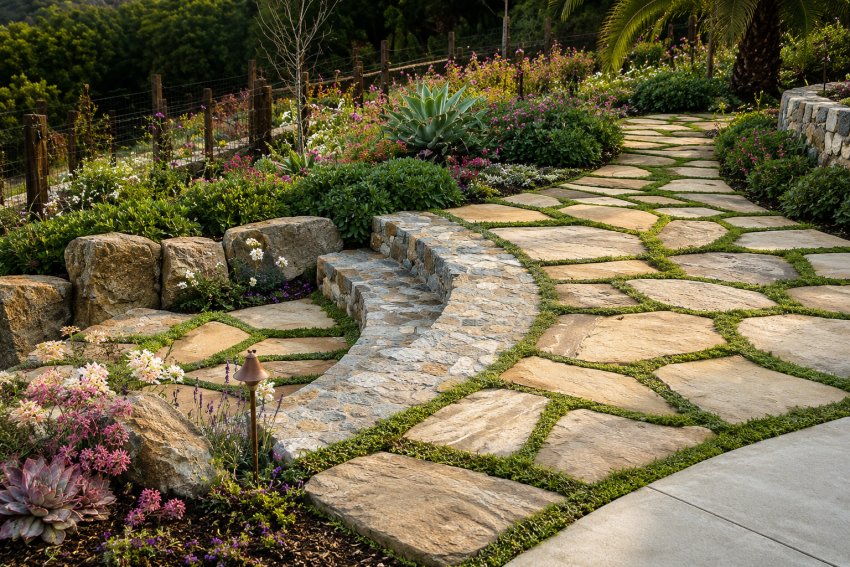
Tucking plants into the gaps of retaining walls and paving stones softens the whole hardscape.
Instead of looking like a slab of stone and concrete, the space feels like it’s growing right out of the ground. Small succulents, creeping herbs, or low ground covers all work well in these tight spots.
This approach also helps with drainage and prevents weeds from taking over the gaps on their own. It’s an easy way to blend hardscaping with your garden so the two don’t feel like separate projects, but more like one connected design.
Conclusion
Your hillside doesn’t have to stay a problem spot. With ground covers, retaining walls, and a little patience, a steep budget yard can become the best part of your property.
Start with one section. Let the rest follow over time. You don’t need a big budget, just a plan that fits your space and your weekend.


Khaja Moinuddin, a computer science graduate, finds joy in gardening and homesteading. Join him on this blog as he shares his experiences in homesteading, gardening, and composting