This morning, I went out to check on my flock like I do every day.
Everything looked fine at first. The hens were scratching the ground, and a few were fighting over the feeder.
Then I saw one chicken standing alone. Something looked wrong with her back end.
I walked closer. Her feathers were stuck together with dried poop. It was a mess.
It looked bad, and it smelled worse.
My first thought was, “Is she sick?” My second thought was, “How long has she been like this?”
If you have seen a chicken poopy butt, you know that feeling. It is hard to look at, and it makes you worry.
The good news is that this problem is common. Most of the time, you can fix it.
In this article, I will explain what causes a chicken poopy butt. I will also show you how to clean it and stop it from coming back.
What Is a Chicken Poopy Butt?
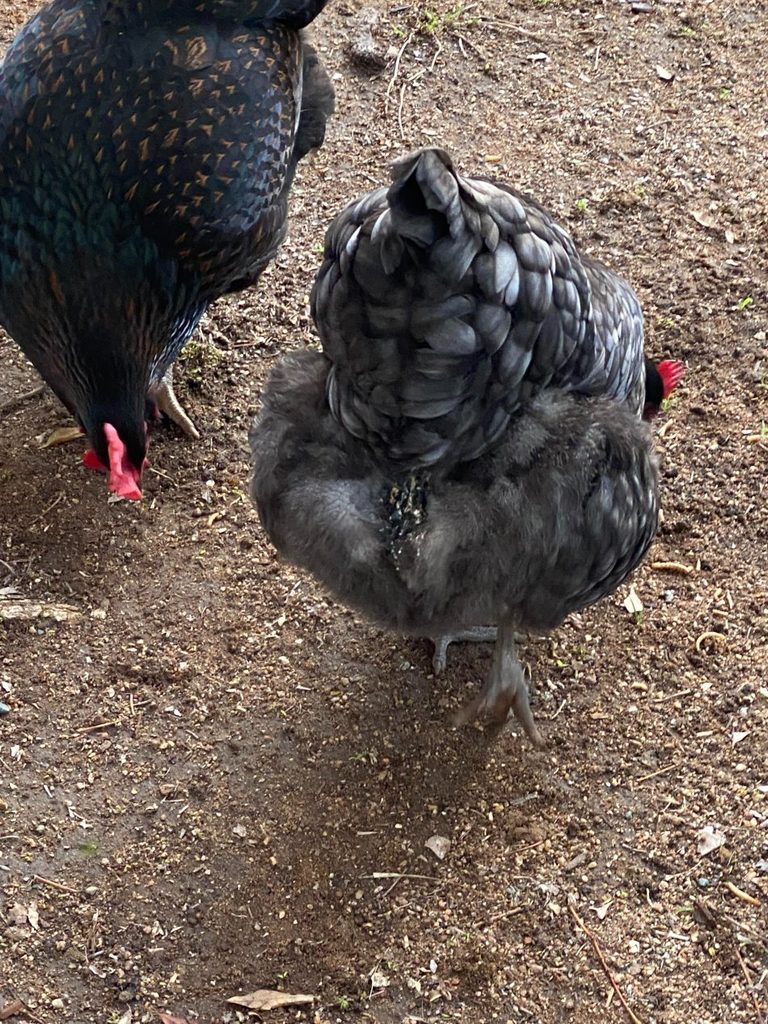
A chicken poopy butt is when poop sticks to the feathers around the vent. The vent is the opening under the tail where poop and eggs come out. In baby chicks, it is often called a pasty butt.
When the poop dries, it forms a hard crust. The feathers clump together, and the area can look sore and smell bad.
It is not a disease. It is a sign that something else is going on, like diet problems, worms, or stress.
Why Does a Chicken Get a Poopy Butt?
Most causes fall into three groups: what your chicken eats and drinks, what is happening inside her body, and the place she lives.
Look at her poop and her behavior together, and the cause is often easy to spot.
1. Pasty Butt in Baby Chicks
Pasty butt is the most common cause in chicks. Soft poop sticks to the fluff and dries over the vent.
Stress is the main trigger. Shipping, a rough ride home, or a new brooder can all upset a chick’s belly.
Wrong brooder heat also plays a part. If it is too hot or too cold, chicks get stressed and their poop turns runny.
This one is serious. A blocked vent can kill a chick in a day or two, so check your chicks every day.
2. Wrong Diet
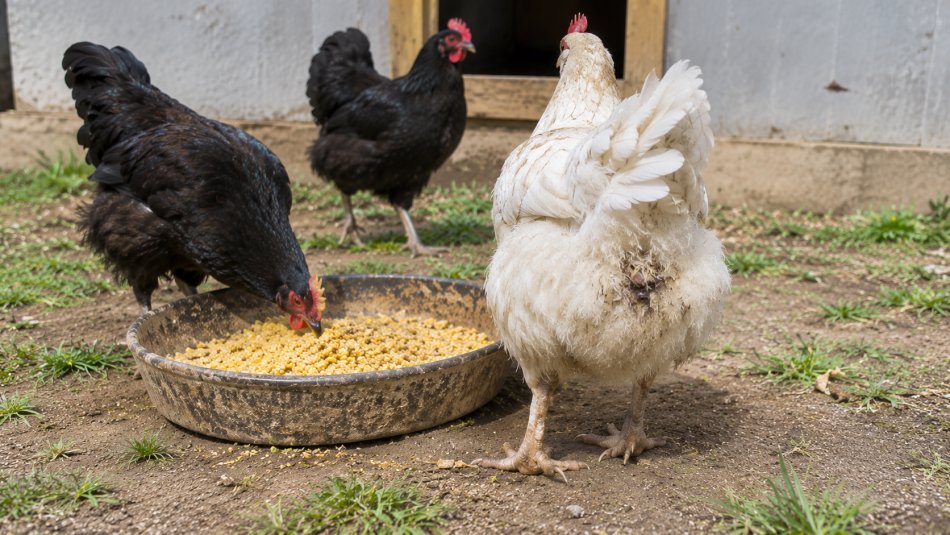
What goes in comes out. A poor diet is one of the top reasons adult hens get a messy vent.
Too many treats are a common problem. Kitchen scraps, bread, and scratch grains can fill your hen up and push out her balanced feed.
Watery foods like lettuce, cucumber, and watermelon can also cause loose poop. A little is fine, but a lot is not.
Cheap or old feed can cause trouble too. Always check that the feed is fresh, dry, and made for your chicken’s age.
3. Dehydration or Too Much Water
Water changes poop more than most people think.
When a chicken does not drink enough, her poop gets thick and sticky. It clings to the feathers and dries into a hard crust.
On the other side, a hen that drinks too much will have watery poop. This can happen in hot weather or when she is sick.
Dirty water can also make chickens avoid drinking. Wash waterers often, and keep the water cool and clean.
4. Worms and Parasites
Worms live in the gut and steal nutrients. They can make poop loose, foamy, or smelly.
Other signs include weight loss, a pale comb, and a hen that looks tired.
Mites and lice are a different problem. They live on the skin and like warm spots near the vent.
They make your chicken itchy and stressed. Check under the tail for tiny moving bugs, scabs, or dirty-looking skin.
Check this: How to Make a Chicken Dust Bath?
5. Coccidiosis
Coccidiosis is a gut infection caused by tiny parasites. It spreads fast through dirty, wet bedding.
Young chickens are hit the hardest, usually between 3 and 18 weeks old.
Watch for watery or bloody poop, puffed-up feathers, and a chicken sitting hunched in a corner. She may also stop eating.
If you see blood in the poop, call a vet. Do not wait.
Also Read: How to Get Rid of Coccidiosis in Chickens Naturally?
6. Vent Gleet
Vent gleet is an infection around the vent. It is often linked to yeast.
The biggest clue is the smell. It is sour and strong, and it is hard to miss.
You may also see a white or yellow sticky discharge, sore red skin, and a lot of poop on the feathers.
It can follow stress, a poor diet, or another illness. It needs treatment, so cleaning alone will not fix it.
7. Heat and Stress

Hot weather can cause a messy vent. Chickens drink more to cool down, and their poop gets runny.
Stress does the same. Moving to a new coop, adding new birds, or a visit from a predator can upset a hen’s gut.
Most of the time, this clears up once the stress is gone. Give her shade, cool water, and a calm space.
8. Long Fluffy Feathers
Sometimes the problem is just the feathers. Fluffy feathers around the vent catch poop easily.
Breeds like Silkies, Polish, Brahmas, and Orpingtons get messy more often than others.
If your hen is healthy and only the feathers are the issue, trimming the fluff around the vent can help a lot.
9. Egg Laying Problems
Laying problems can also cause a dirty vent. Egg binding is the most serious one. This is when an egg gets stuck inside the hen.
Signs include straining, standing upright like a penguin, and sitting in the nest for hours.
A broken egg or soft-shelled egg inside the hen can also leave a wet, messy vent.
If you think your hen is egg bound, act fast. It can become an emergency quickly.
Not all messy poop is a problem. Chickens poop 12 to 15 times a day. Once or twice a day, they drop a soft, dark, smelly cecal poop. That is normal.
But if poop stays stuck day after day, take action. It can attract flies and cause infection.
How to Fix a Chicken Poopy Butt?
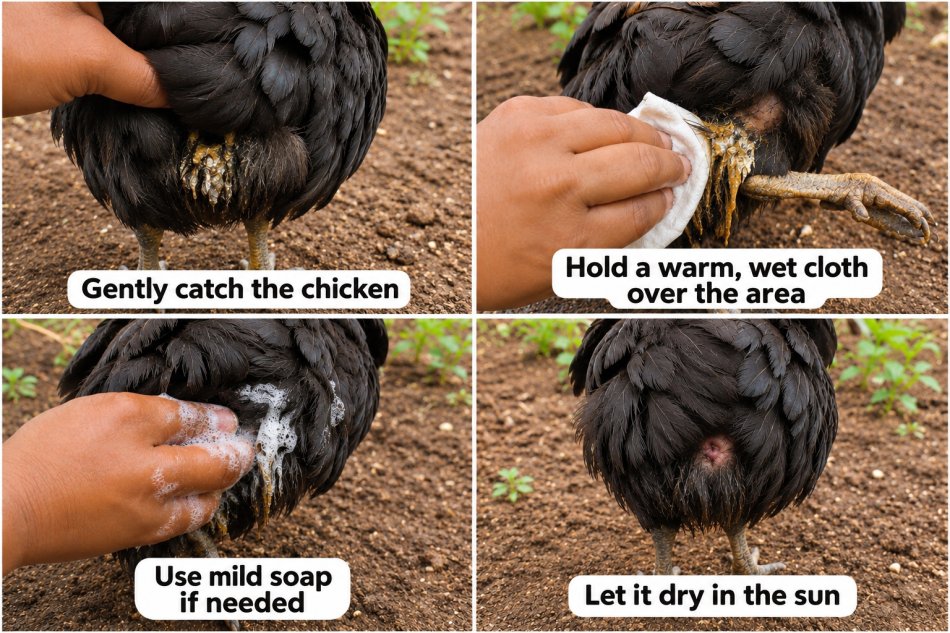
To fix a chicken poopy butt, soak her back end in warm water, gently remove the poop, and dry her well. Then find the cause and fix it so the mess does not come back.
What You Will Need?
Get everything ready before you catch your chicken. It makes the job faster and less stressful for her.
- A tub or bucket with warm water (not hot)
- Mild, unscented soap
- A soft cloth or old towel
- Small blunt-tip scissors
- A clean, dry towel
- Gloves
Step-by-Step Cleaning
1. Catch and calm your chicken. Pick her up gently in a quiet spot. Tuck her body under your arm or wrap her in a towel. Keeping her wings close helps her stay calm.
2. Soak her back end. Lower her bottom into the tub for 5 to 10 minutes. The water should feel warm on your wrist. This softens the dried poop.
3. Loosen the poop gently. Rub it away with your fingers or a soft cloth. Never pull it off. Pulling can tear her skin and feathers.
4. Trim stuck feathers. If some feathers are still stuck, cut them with blunt scissors. Go slowly and keep the blades away from her skin.
5. Rinse and dry well. Rinse off the soap with clean warm water. Pat her dry with a towel. Wet feathers can make her cold.
6. Keep her warm and dry. Put her in a small crate or box until she is fully dry. This can take an hour or two.
How to Clean Baby Chicks Safely?
Chicks are fragile, so do not dunk them in water. Use a gentler method.
Hold the chick in one hand. With the other, dab the poop with a warm, wet cloth or cotton ball. Keep dabbing until the crust softens.
Then wipe it away slowly. Pulling too fast can tear the thin skin around the vent.
If the skin looks red or raw, put a tiny bit of coconut oil on it. This keeps the skin soft.
Dry the chick well with a towel. A wet chick gets cold very fast.
Make sure the vent is open and clear before you put her back in the brooder.
Check this: How to Deworm Chickens Naturally?
Fix the Cause
Cleaning helps, but it only solves half the problem. If you do not fix the cause, the mess will come back.
- Diet: Cut back on treats and watery foods. Go back to a good quality feed for her age.
- Water: Give her fresh, clean water every day. Wash the waterer often.
- Chicks: Check your brooder heat. Chicks that huddle under the lamp are too cold. Chicks that stay far away from it are too hot.
- Mites or lice: Treat the hen and clean the coop well.
- Worms: Use a poultry dewormer. Always follow the label.
- Fluffy feathers: Trim the feathers around the vent so poop does not stick.
- Heat and stress: Give her shade, cool water, and a calm space.
If the poop is bloody, smells sour, or does not improve, the cause may be bigger. That could be coccidiosis, vent gleet, or an egg problem. These need a vet or proper treatment.
Aftercare
Check her vent again the next day. If poop is building up again, the cause has not been fixed.
Watch her poop for a few days. It should slowly go back to normal.
Make sure she is eating and drinking well. A chicken that stops doing either needs more help.
Also check the rest of your flock. If more than one bird has a messy vent, the problem is likely the feed, the water, or the coop.
When to Call a Vet?
Most poopy butts can be handled at home. But some signs mean your chicken needs professional help.
Call a vet if you see any of these:
- Runny poop that lasts more than 2 to 3 days
- Blood in the poop
- A strong sour smell or white or yellow discharge from the vent
- Red, raw, or sore skin around the vent
- Maggots or flies on her skin
- She stops eating or drinking
- She is weak, tired, or sitting alone with puffed-up feathers
- A swollen belly or trouble walking
- She keeps straining or sitting in the nest for hours
If you see maggots or think she is egg bound, do not wait. Both can become an emergency fast.
If you cannot find a vet who treats chickens, call a local farm or livestock vet. Many of them can help with poultry.
How to Prevent Chicken Poopy Butt?
Prevention is much easier than cleaning a messy vent. A few simple habits can keep your flock clean and healthy.
- Feed a balanced diet. Use a good quality feed that matches your chicken’s age. Starter feed is for chicks, and layer feed is for hens.
- Limit treats. Treats should only be a small part of her diet. Too many scraps or watery foods can cause loose poop.
- Keep water clean. Change the water every day. Wash waterers often to stop slime and germs from building up.
- Keep the coop dry. Wet bedding is the perfect place for germs and parasites to grow. Replace dirty bedding and make sure the coop has good airflow.
- Check your flock often. Take a quick look at each bird’s vent once a week. Catching a problem early makes it much easier to fix.
- Check for worms and mites. Look for signs of mites and lice every few weeks. Talk to a vet about a deworming plan that fits your flock.
- Get the brooder heat right. The brooder should be about 95°F for the first week. Lower it by 5°F each week after that. Watch how your chicks act, and adjust the heat if needed.
- Trim fluffy feathers. If your breed has long feathers around the vent, trim them a little. This keeps poop from sticking.
- Reduce stress. Add new birds slowly, keep predators away, and give your flock shade in hot weather.
Also Read: How to Clean and Disinfect the Chicken Coop?
FAQs
Is a poopy butt normal in chickens?
An occasional messy vent can happen, especially in hot weather or after a diet change. But poop that keeps sticking to the feathers is not normal. It is a sign that something is wrong.
Can a poopy butt kill a chicken?
Yes, it can. In baby chicks, a blocked vent can be deadly in a day or two. In adult hens, it can lead to infection or flystrike if you leave it alone.
Why does my chicken have runny poop?
Runny poop can come from too many watery foods, stress, heat, worms, or infections like coccidiosis. Look at her diet, water, and coop first. If it lasts more than a few days, call a vet.
Can I use home remedies to clean it?
Warm water and mild soap are the safest options. Avoid harsh cleaners, strong soaps, and hot water. A little coconut oil can help soothe sore skin. If the skin looks infected, see a vet instead of trying home fixes.
Should I separate a chicken with a poopy butt?
Yes, it helps. Keep her in a clean, dry crate until she is fully dry. If you think she has an infection or parasites, keep her apart from the flock until she is treated. This stops other birds from getting sick or pecking at her.
How often should I check my chickens’ vents?
Once a week is a good habit. Check chicks every day, since they can get a blocked vent very quickly. Check more often in hot weather or after a change in feed.
Also Read: How to Treat Scaly Leg Mites in Chickens?
Conclusion
A chicken poopy butt looks bad, but it is usually something you can fix. The cause might be as simple as too many treats, or as serious as worms or an infection.
Clean her gently, then find out why it happened. That is the only way to stop it from coming back.
The best thing you can do is check your flock often. A quick look every week can help you catch problems early, and early action makes all the difference.


Khaja Moinuddin, a computer science graduate, finds joy in gardening and homesteading. Join him on this blog as he shares his experiences in homesteading, gardening, and composting