The first time I saw a hen with rough, raised scales on her feet, I thought it was just old age. I was wrong.
It was scaly leg mites, and they had been working under her skin for weeks before I noticed.
If you are here to learn how to treat scaly leg mites in chickens, I have good news. This problem is slow, easy to spot once you know the signs, and very fixable at home.
The key is acting early and being patient with the treatment.
Put the chicken’s legs in warm water with a spoonful of Epsom salt for 5 to 10 minutes. Then gently brush the legs with a soft toothbrush to loosen the crust. Do not pull off any scales that are stuck, and dry the legs with a clean towel.
Cover the legs and toes with a thick layer of petroleum jelly or coconut oil. Rub it in between the scales. Do this once a day for the first week, then every second day for four to six weeks.
The oil kills the mites and makes the rough scales soft. Keep the sick bird away from the other chickens, and clean the coop while you treat.
What Are Scaly Leg Mites?
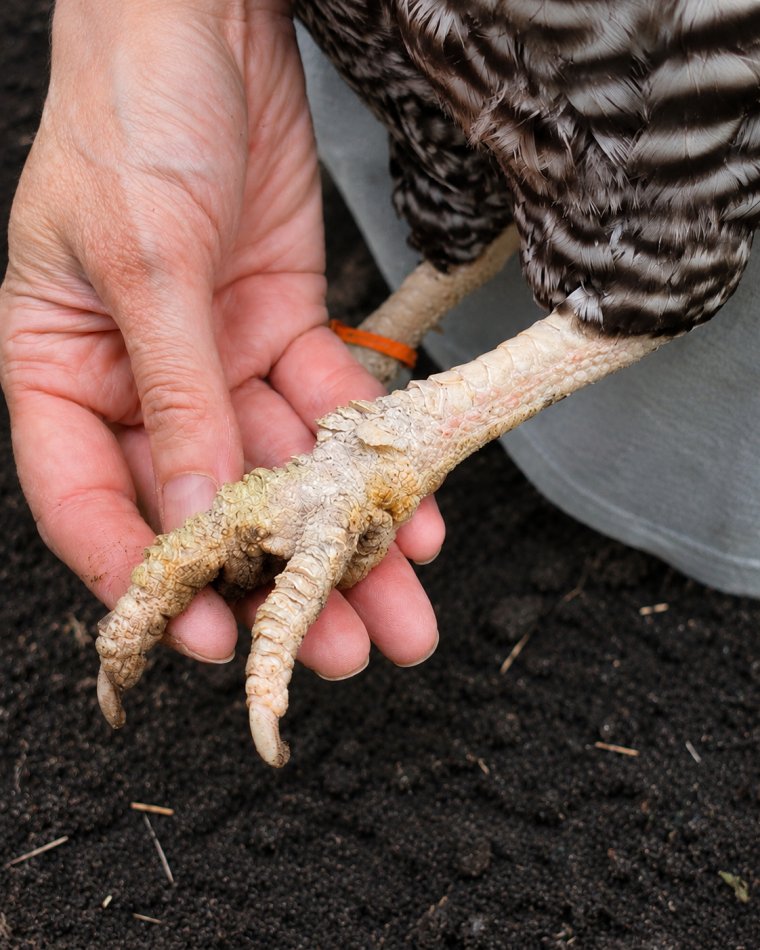
Scaly leg mites are tiny parasites that live on the legs and feet of chickens. Their scientific name is Knemidocoptes mutans, but you do not need to remember that.
They are too small to see with your eyes alone. What you see is the damage they leave behind.
These mites burrow under the scales on the legs. They feed on skin tissue and leave crusty waste behind.
Over time, the scales lift up and the legs look swollen and rough. That is where the name comes from.
Unlike red mites, they do not hide in the coop and come out at night. They stay on the bird, almost always on the lower legs and toes.
They are also very slow. A flock can carry them for months before anyone notices.
That is why so many keepers miss them in the early stage.
Also Read: What Breed of Chicken Lays Green Eggs?
Signs Your Chicken Has Scaly Leg Mites
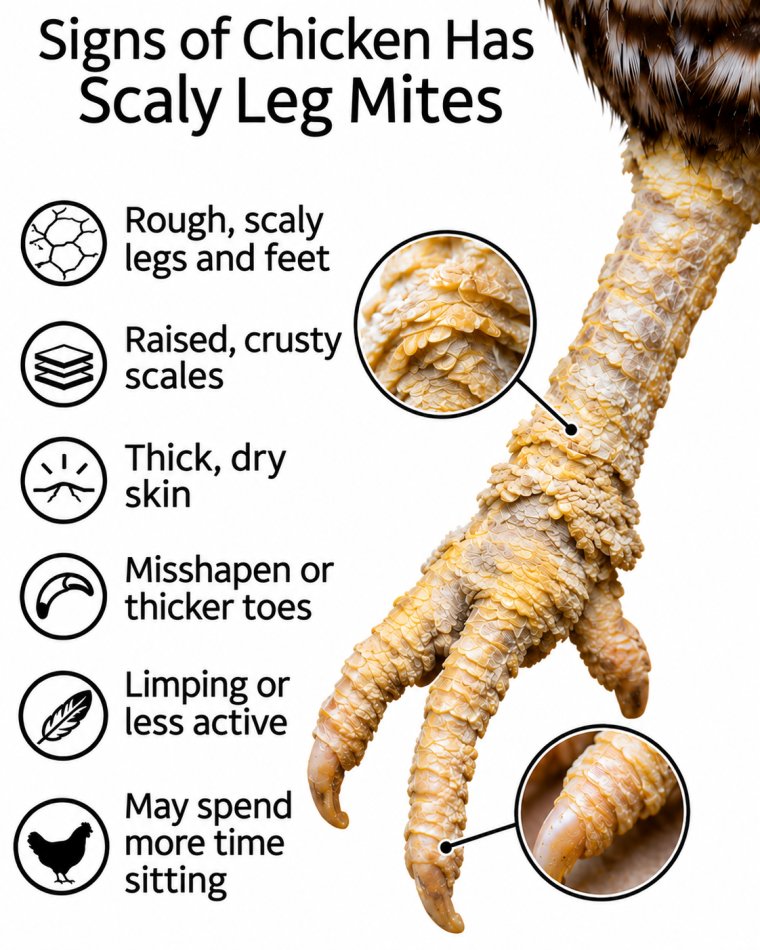
Check the legs first. Hold the bird gently and look at the shanks and toes in good light.
Here is what you may see:
- Scales that stick out or look lifted instead of lying flat
- White or gray crusty bits under and between the scales
- Legs that look thick, bumpy, or swollen
- Rough, dry skin that looks like dried mud
- Redness or small cracks around the toes
- A hen that limps or stands on one foot
- A bird that keeps pecking at her own feet
In healthy chickens, the scales are smooth and lie flat. The legs are clean and shiny.
In the early stage, you may only see a little dry flaking. Many people think it is dirt and wipe it off.
Do not skip this step. If the crust comes off and the skin under it looks raw, mites are likely the cause.
In later stages, the legs can become very thick and deformed. Toes can swell, and walking becomes painful.
How Do Chickens Get Scaly Leg Mites?
These mites spread slowly, but they do spread.
The most common way is direct contact. One infected bird walks around, roosts next to others, and the mites crawl from leg to leg.
New birds are a big risk. A hen that looks fine at the farm or swap meet can carry mites on her feet without any signs yet.
This is why a quarantine of at least two to four weeks matters so much.
Older birds get hit more often. Their skin and immune systems are weaker, and mites settle in easier.
Dirty bedding and damp coops help too. Mites like warm, dirty cracks where they can survive for a short time off the bird.
Perches with rough wood are another hiding place. The mites can sit in the grain of the wood and climb onto the next bird that lands there.
You can also carry them. Shoes, hands, and shared tools can move mites from one coop to another.
Sparrows and other wild birds are less likely to carry this exact type. But a messy coop that attracts wild birds can still add other parasite problems on top.
Scaly leg mites can slowly cause painful, thickened scales, infections, and even permanent toe damage if left untreated.
They can spread through your flock, but early treatment can help your chickens recover and prevent further damage.
How to Treat Scaly Leg Mites in Chickens: Step by Step
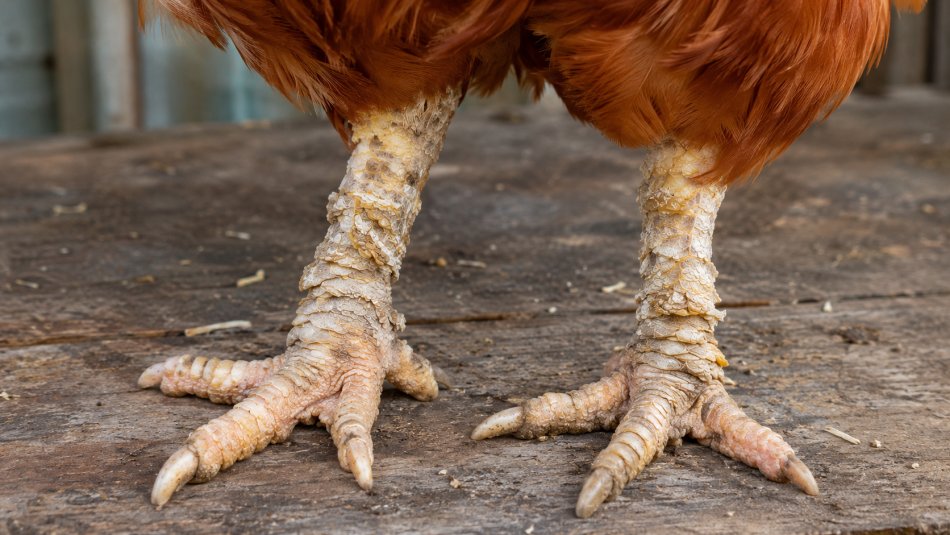
Here is the plan I follow. It works best when you do every step and do not rush the timeline.
Step 1: Separate the Sick Birds
Move the affected chickens into a clean pen or a large dog crate. Use fresh, dry bedding.
This stops the mites from moving to healthy birds while you treat. It also makes handling easier.
If you cannot tell which birds are sick, check every bird in the flock. Legs first, always.
Step 2: Soften and Clean the Legs
Fill a shallow tub with warm water. Add a spoonful of Epsom salt and a small squirt of mild soap.
Let the chicken stand in it for five to ten minutes. Most birds relax if you keep them calm and warm.
Then gently scrub the legs with a soft toothbrush. Work in the direction of the scales, not against them.
Do not pull off scales that are stuck. Ripping them off hurts the bird and can cause bleeding.
Pat the legs dry with a clean towel. Dry skin is important before you add any treatment.
Step 3: Smother the Mites
This is the heart of the treatment. Mites live under the scales, so you need something thick that blocks their air and stays on the skin.
Coat the legs and toes fully with one of these:
- Petroleum jelly
- Coconut oil
- Olive oil
- A thick natural salve made for poultry legs
Work it between the scales and around the toes. Be generous.
The oil or jelly smothers the mites and softens the crust at the same time.
Repeat once a day for the first week. Then every second day for several more weeks.
Step 4: Treat the Coop at the Same Time
This step is easy to forget, and it is why many treatments fail.
Clear out all old bedding and burn it or bag it far from the coop. Do not toss it in the compost pile.
Scrub the perches, nesting boxes, and floor with hot water and a mild disinfectant.
Pay close attention to the roost bars. Fill cracks and sand down rough spots if you can.
Let everything dry fully in the sun, then add fresh, dry bedding.
Step 5: Check the Whole Flock Again

Even if only one hen shows signs, treat the whole flock if you can. At minimum, check every bird once a week.
Mites can be present for a long time before the legs look bad.
Take a note of each bird’s legs on your phone. A quick photo each week helps you see what is getting better and what is not.
Step 6: Repeat and Be Patient
The mite life cycle takes a few weeks, so one round will not do it. Plan on treating for at least four to six weeks.
The scales will not look normal right away. The damaged scales need to grow out and fall off on their own.
That can take several months. Do not panic if the legs still look rough while the mites are already gone.
What you want to see is steady progress. Less crust, less swelling, and a bird that walks easily again.
Home Remedies to Get Rid of Scaly Mites
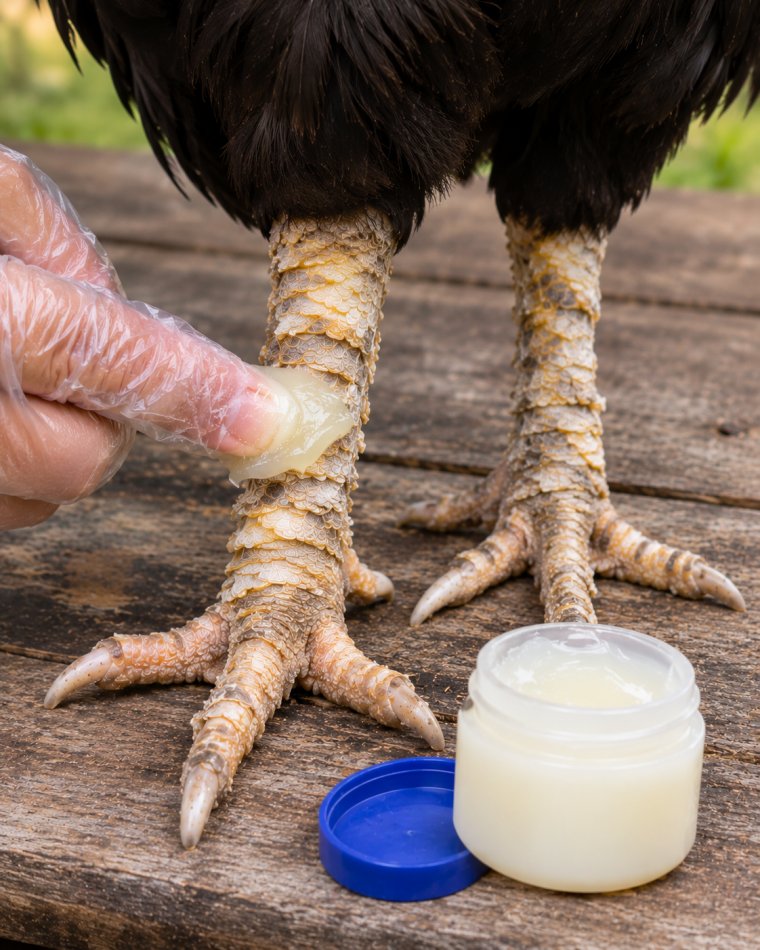
There are plenty of scaly leg mite home remedies, and many are safe and cheap. As an urban homesteader, these are the ones I trust most.
Keep in mind that all of them work best when you also clean the coop and keep birds apart from healthy ones.
- Petroleum jelly. It is the simplest option. It is thick, easy to find, and stays on the legs for hours.
- Coconut oil. It smells nice and is gentle on skin. It also helps the legs stay soft while the old scales loosen.
- Olive oil with a few drops of neem oil. Neem is a natural pest repellent. Use a very small amount and mix it well into the carrier oil.
- Vinegar soak. Mix one part apple cider vinegar with three parts warm water. A short soak can help loosen crusts before you apply oil.
- Garlic oil. Crush a few cloves in olive oil and let it sit for a day. Strain it, then rub a thin layer on the legs. Test on one leg first to check for irritation.
- Sulfur ointment. Some keepers use a poultry-safe sulfur salve on the legs. Look for products made for animals and follow the label closely.
A few things to avoid. Do not use kerosene, motor oil, or diesel on chicken legs. They are toxic and can burn the skin.
Do not use strong essential oils straight from the bottle either. They can burn bare skin and upset a bird’s breathing.
And skip anything with harsh chemicals unless a vet tells you to use it.
When to Call a Vet?
Home care works well for mild and medium cases. But some cases need help.
Call a vet if the legs are bleeding, if toes look bent or twisted, or if the bird cannot walk at all.
Also call if you see yellow pus, a bad smell, or heat in the foot. Those are signs of infection.
If you have a large flock and the mites keep coming back, a vet can talk to you about prescription options.
Some poultry vets use ivermectin or similar treatments. The right dose and the egg withdrawal time depend on the product and where you live.
Please do not guess the dose yourself. Too much can harm a chicken, and the eggs may not be safe to eat for a while.
Ask your vet how long to wait before eating or selling eggs from a treated hen.
Common Mistakes People Make
I have made a few of these myself, so no judgment here.
- Stopping too early. The legs look better after two weeks, so you quit. Then the mites come back stronger.
- Ignoring the coop. Treating legs without cleaning the perches is like mopping the floor with the tap still running.
- Pulling off the scales. It is tempting, but it only hurts the bird and opens the door to infection.
- Skipping quarantine for new birds. One new hen can undo months of hard work.
- Treating only the worst bird. If one hen has mites, others probably do too.
- Using harsh home mixes. Kerosene and other old tricks are not worth the risk to your birds.
How to Prevent Scaly Leg Mites?
Prevention is much easier than treatment. A few simple habits go a long way.
Quarantine every new bird for at least two to four weeks. Check the legs on day one and again each week.
Inspect your flock legs every month. It takes a few minutes and catches problems early.
Keep the coop dry and clean. Replace wet bedding fast and fix leaks.
Use smooth, well-sanded perches. Fewer cracks means fewer hiding spots.
Give your birds a dust bath area with dry soil, sand, and a little wood ash. It will not stop scaly leg mites alone, but it helps with other parasites.
Wash your hands and change your shoes after handling a sick bird. Mites can travel with you.
A light coat of coconut oil on the legs a few times a year is an easy extra layer for older birds.
Check this: 11 Black Chicken Breeds with Feathers on their Feet
How Long Does It Take to Recover?
This is the question I get most often, so here is a straight answer.
Mites usually die off within a few weeks of steady treatment. But the legs take much longer to look normal.
Mild cases may look better in one to two months. Heavier cases can take three to six months to fully clear.
Some older birds keep a few rough scales for life. That is okay as long as the mites are gone and the bird is comfortable.
Watch for these good signs:
- The crust gets thinner each week
- The legs are less swollen
- The bird walks easily and roosts well
- New scales are smooth and flat
If the legs get worse after a month of steady care, it is time to see a vet.
Check this: Why Are My Chickens Laying Small Eggs?
Can humans get scaly leg mites from chickens?
No. These mites are specific to birds. They will not live on your skin.
Are the eggs safe to eat while I treat my hens?
With simple home treatments like oils and petroleum jelly, eggs are generally fine to eat. If a vet gives you a medicated treatment, ask about the egg withdrawal time.
Can scaly leg mites spread to other animals?
They mainly affect poultry and some other birds. Dogs and cats are not at risk.
Can I treat just the sick chicken?
You can start with that, but it is smarter to check and treat the whole flock. Mites hide for a long time before they show up.
How do I know the mites are gone?
The crusty buildup stops coming back, and new scales grow in smooth. The skin looks pink and healthy instead of gray and rough.
Do scaly leg mites come back?
They can, especially if the coop is not cleaned or new birds bring them in. Regular checks keep them from taking hold again.
Check this: 12 Homemade DIY Chicken Feeders and Waterers Ideas
Conclusion
Scaly leg mites look scary, but they are one of the easier chicken problems to fix when you catch them early.
So if you are wondering how to treat scaly leg mites in chickens, remember the basics. Separate the birds, clean the legs, smother the mites, and clean the coop.
Then stay patient. The legs heal slowly, but they do heal.
Make leg checks part of your weekly routine, and your flock will stay comfortable and healthy for years.


Khaja Moinuddin, a computer science graduate, finds joy in gardening and homesteading. Join him on this blog as he shares his experiences in homesteading, gardening, and composting