Raising chickens is fascinating, and it doubles when chicks come out of eggs and you start wondering whether they are hens or roosters.
Every backyard chicken keeper reaches that exciting stage where they closely observe tiny behaviors, feather patterns, and growth changes hoping to guess the gender early.
Most of us can only make a rough guess after 10–12 weeks, especially once the sickle feathers begin to develop in young roosters. Until then, chicks often look surprisingly similar, which makes identifying them both fun and confusing.
While no method is completely accurate at a very young age, there are several signs that can help you tell whether your chick may grow into a hen or a rooster.
In this guide, we’ll look at 9 simple ways to identify the difference between hens and roosters, from feather growth and comb development to behavior and posture.
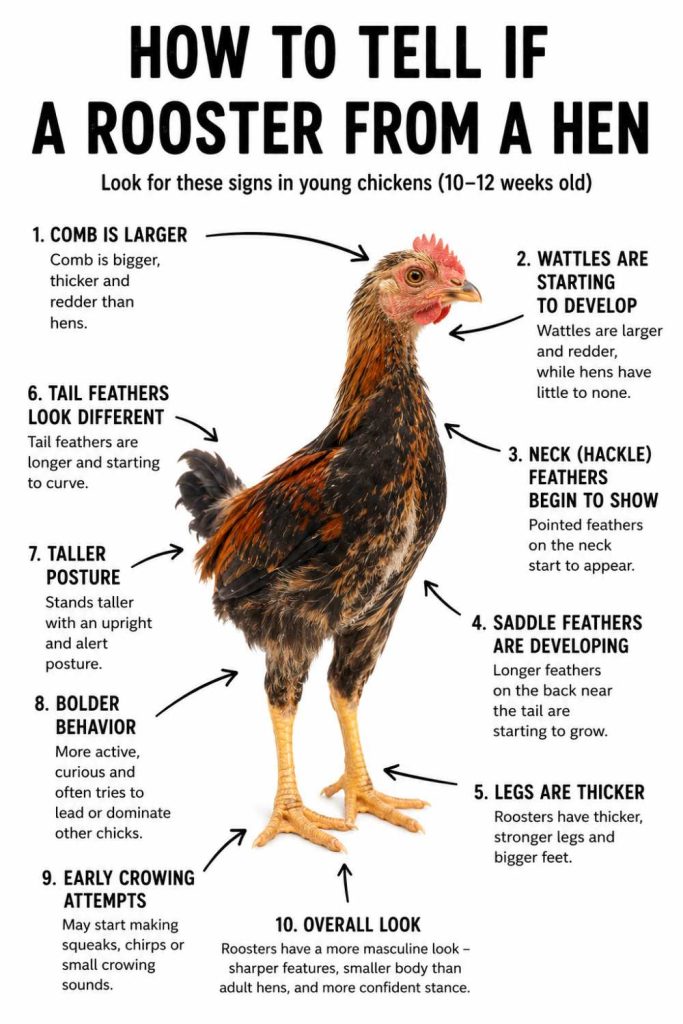
1. Look at Feather Growth
One of the earliest clues comes from feather development. In many chicken breeds, young hens usually feather out faster than roosters. You may notice that female chicks begin growing wing feathers and tail feathers earlier, while males stay fluffier for a longer time.
At around 2–4 weeks old, pullets often look a little more “finished” compared to cockerels of the same age. Their feathers appear fuller and more even, while young roosters can look awkward and patchy during growth stages.
This method works especially well in certain fast-feathering breeds, though it is not always perfectly accurate. Some breeds develop at different rates, and individual chicks can surprise you. Still, feather growth is one of the first signs many backyard chicken keepers watch closely after hatching.
Also Read: How to Keep Chickens Cool in the Summer?
2. Watch the Comb and Wattle Development
Another reliable clue appears on the chick’s head. Roosters usually start developing larger combs and wattles much earlier than hens. Even at just a few weeks old, male chicks may show thicker, taller combs that turn pink or red faster.
Pullets, on the other hand, tend to keep smaller and paler combs for a longer time. Their faces often stay softer and less noticeable while the young roosters begin looking bold and confident.
If you place chicks of the same breed and age side by side, the difference can become surprisingly obvious around 6–8 weeks. The chick with the brighter comb and thicker legs is often the future rooster strutting around the coop.
3. Check the Leg Thickness
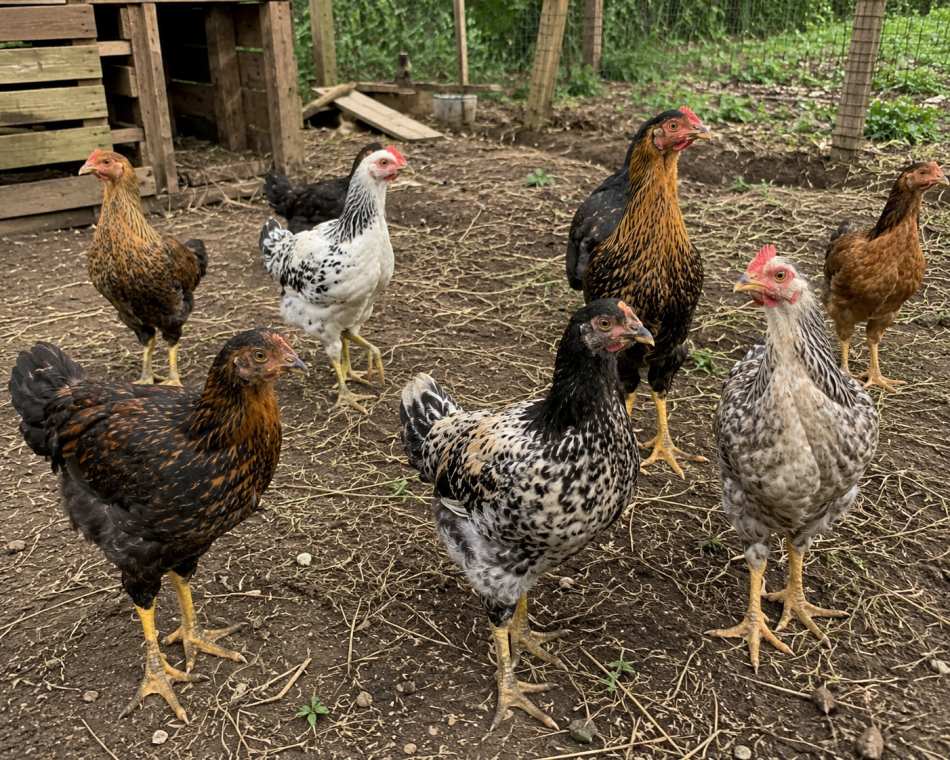
Young roosters often have thicker, sturdier legs compared to hens. Even when they are only a few weeks old, cockerels tend to stand taller with larger feet and a stronger overall build.
Pullets usually look slimmer and more delicate underneath all that fluffy chick fuzz. Their legs appear finer, while roosters already seem built for showing off around the coop.
This sign becomes easier to notice as chicks grow, especially when comparing several chicks from the same hatch. The chunkier chick with oversized feet often ends up being the rooster.
4. Notice Their Behavior
Behavior can reveal a lot earlier than most people expect. Young roosters are often more curious, bold, and energetic than hens. They may stand taller, challenge other chicks, or even practice tiny chest bumps long before crowing begins.
Pullets are usually calmer and more relaxed in the brooder. They tend to stay focused on eating, scratching, or quietly exploring without trying to dominate the group.
Of course, every chick has its own personality, so this method is never perfect. Still, many experienced chicken keepers can spot future roosters simply by watching which chick acts like it already owns the coop.
Check this: 19 DIY Chicken Dust Bath Container Ideas
5. Look for Early Tail Feather Differences
Tail feathers can offer another helpful clue as chicks grow. Pullets usually develop neat, even tail feathers earlier, giving them a more balanced appearance. Young hens often look smoother and more put together overall.
Roosters, however, may take longer to fill out properly. Their tails can appear uneven or sparse during the awkward teenage stage. Later on, male chicks begin developing longer, pointed saddle and sickle feathers that eventually curve downward.
Once those shiny curved feathers start showing, the mystery is usually over.
6. Listen for Early Crowing Attempts
One morning, you may suddenly hear a strange squeaky noise coming from the coop. That is often a young rooster trying very hard to crow for the first time.
Cockerels typically begin practicing their crow anywhere between 6–16 weeks, depending on the breed. The sound usually starts as a hilarious broken squeak before turning into a real crow over time.
Pullets almost never make these repeated crowing attempts. So if one chick keeps stretching its neck and making dramatic noises every morning, you probably have a future rooster on your hands.
7. Observe the Pecking Order
Roosters naturally like to establish dominance early. Even as chicks, males are often the first to challenge others, guard food, or stand watch while the group explores.
You may notice one chick acting extra alert or stepping between the flock and anything unfamiliar. Some young cockerels also try to break up small scuffles or show bossy behavior surprisingly early.
Pullets can still be confident, but they are generally less dramatic about claiming authority. In many backyard flocks, the chick constantly trying to become “the boss” usually turns out to be a rooster.
Also Read: How to Stop Chickens from Pecking Each Other?
8. Watch for Saddle and Hackle Feathers
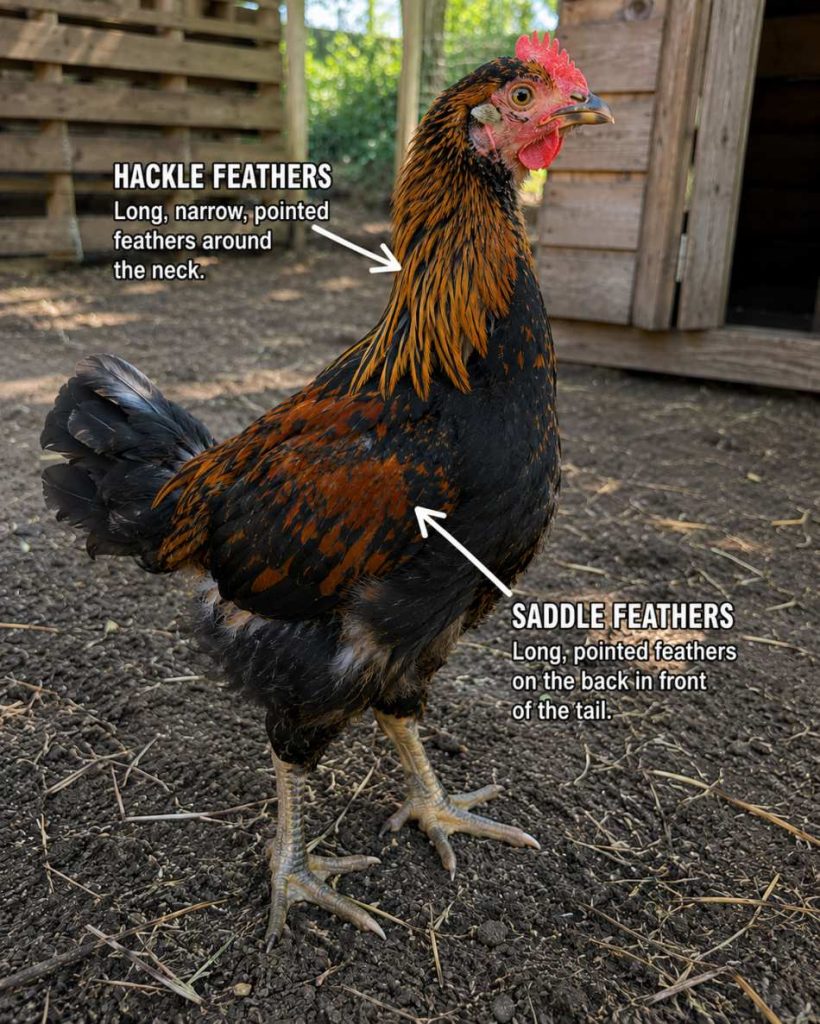
As chickens approach 10–12 weeks old, feather shape becomes one of the clearest signs. Young roosters begin growing long, narrow, pointed feathers around the neck and lower back areas. These are called hackle feathers and saddle feathers.
Pullets keep softer, rounded feathers that look smooth and uniform. Their feather patterns usually stay neat without the sharp, flowing appearance seen in males.
Once those pointed feathers start appearing, especially near the saddle area in front of the tail, there is usually very little doubt left about the chick being a rooster.
9. Pay Attention to Overall Posture
Roosters often carry themselves differently long before adulthood. Young cockerels tend to stand taller, stretch their necks higher, and walk with an alert, confident posture.
Pullets usually move in a more relaxed and compact way. They spend more time quietly scratching the ground or staying close to the flock without trying to appear impressive.
When watching a mixed group of chicks, the rooster is often the one posing like a tiny guard chicken already in charge of the backyard.
Check this: 70 Things Chickens Can Eat & 30 Food Items to Avoid
Tips for Identifying Hens and Roosters
- Compare chicks of the same breed and age: Differences are much easier to notice when chicks grow together in the same batch.
- Do not rely on one sign alone: A single clue can be misleading. Feather growth, comb size, posture, and behavior together usually give a better answer.
- Some breeds are harder to identify: Certain chicken breeds naturally mature slower or show fewer visible differences early on.
- Wait before making final decisions: Many chicks surprise their owners later. A quiet chick may suddenly crow one morning, while a confident pullet may simply have a bold personality.
- Take weekly photos: Looking back at pictures makes growth changes easier to spot, especially comb development and feather patterns.
- Vent sexing is best left to experts: While professional hatcheries use vent sexing for accurate identification, it requires training and can harm chicks if done incorrectly.
- Expect a few surprises: Even experienced chicken keepers occasionally guess wrong. That mystery is part of what makes raising chicks so enjoyable.
Conclusion
Figuring out whether your chicks are hens or roosters is part of the fun of raising chickens. Some signs appear early, while others only become obvious after a few months. No single method is completely accurate for every breed, but combining several clues usuallṣ gives you a pretty good idea.
In the end, patience is often the real answer. As chicks grow, their feathers, behavior, and personality slowly reveal whether you have future egg-laying hens or proud little roosters preparing to rule the coop.


Khaja Moinuddin, a computer science graduate, finds joy in gardening and homesteading. Join him on this blog as he shares his experiences in homesteading, gardening, and composting