Watching your chicken start laying eggs is a rewarding experience. But sometimes the eggs come out small, tiny, or soft-shelled.
And then one day, you may find an egg with no shell at all. Just a soft, wobbly sack in the nesting box.
If that happens, don’t panic. It happens in almost every flock at some point.
Here’s something many keepers don’t know. An egg spends about 20 hours in the shell gland, and that’s where the shell forms. If the egg is pushed out too early, it comes out covered only by a thin membrane.
A single shell-less egg is usually nothing serious, especially in young hens that have just started laying. But if it keeps happening, it can point to a calcium shortage, stress, or an underlying illness.
Why Does a Chicken Lay an Egg Without a Shell?
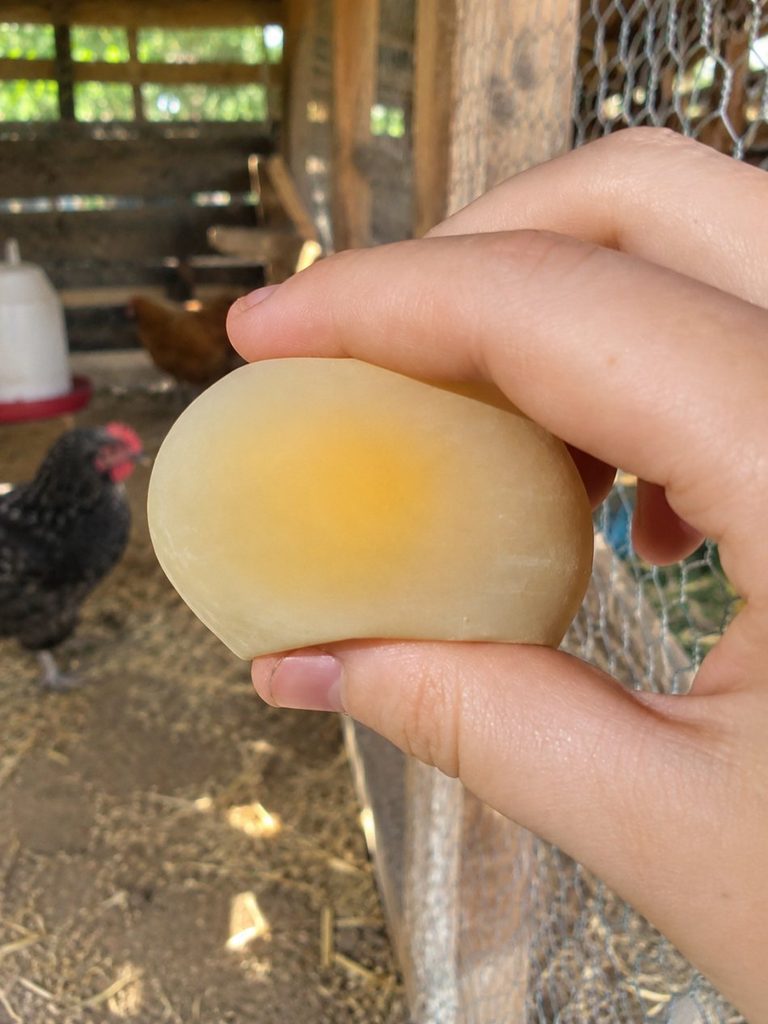
To understand the problem, it helps to know how an egg is made. A yolk travels down the hen’s body and picks up egg white first. Then it reaches the shell gland, where calcium is added to build the shell.
That last step takes around 20 hours. If anything interrupts it, the egg slips out with only a thin, rubbery membrane around it.
Let’s look at the most common reasons this happens.
Must Read: What Breed of Chicken Lays Green Eggs?
1. Stress
Stress is one of the biggest causes of shell-less eggs. When a hen gets scared or upset, her body can release the egg early, before the shell gland finishes its job.
Common stress triggers include:
- Adding new birds to the flock
- A predator hanging around the coop
- Loud noises or barking dogs
- Moving the coop or changing the run
- Extreme heat
Hens that were already laying well can suddenly drop a soft egg after one bad day. In most cases, the next egg comes out normal once things settle down.
2. Not Enough Calcium
A hen needs a lot of calcium to make a shell, and her body can’t store enough of it for daily laying. She needs fresh calcium from food every day.
If her diet is low, she may produce a thin-shelled egg first. After that, soft eggs with no shell at all can follow.
Here is what to check:
- She should be eating a proper layer feed, not scratch or a grower feed.
- Treats, kitchen scraps, and scratch grains should be a small part of her diet. Too many treats push out the nutrition in her feed.
- Vitamin D3 also matters, because the body can’t use calcium well without it. Hens that never get sunlight may fall short.
Also Read: What Causes Chicken Poopy Butt and How to Fix it?
3. Young Hens Just Starting to Lay
Pullets are new to this. Their egg-making system needs a few weeks to find its rhythm.
During this time, you may find soft eggs, tiny eggs, or eggs with strange shapes. It looks worrying, but it’s usually normal.
If your hen is under 30 weeks old and otherwise healthy and active, give her time. Most pullets sort this out on their own.
4. Older Hens
Just like people, hens slow down with age. After a few years, the shell gland may not work as well as it used to.
An older hen may lay fewer eggs, and some of them may come out thin-shelled or with no shell. This is a normal part of aging.
If your older hen seems healthy in every other way, there is not much to fix. She has earned her retirement.
5. Disease
This is the most serious reason, but it’s also the least common. Some poultry diseases damage the reproductive system, including infectious bronchitis and egg drop syndrome.
The main clue is numbers. One soft egg from one hen is rarely a disease issue. If several hens start laying soft, rough, or misshapen eggs, you need to take it seriously.
Watch for these other signs:
- Coughing, sneezing, or watery eyes
- Gasping or noisy breathing
- Low energy
- A sudden, big drop in egg production
If you see these, call a poultry vet or your local agricultural office. Keep sick birds away from the rest of the flock.
What to Do When You Find a Shell-less Egg?
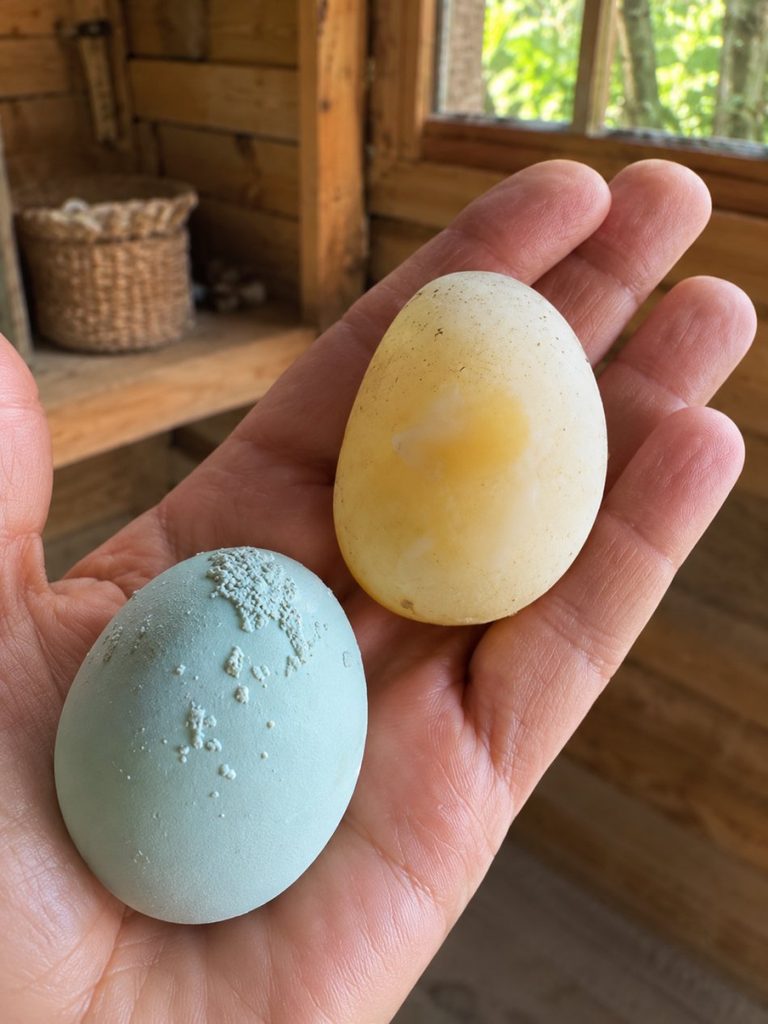
Pick it up quickly, because hens may start eating their own soft eggs. Once they get a taste for it, the habit can be hard to break.
Here are the steps I’d follow:
1. Collect the egg as soon as you see it.
A soft egg breaks easily, and the smell and taste can attract the whole flock. Checking the nesting boxes a few times a day helps stop egg eating before it starts.
2. Check your feed and make sure it’s a complete layer feed.
Look at the bag and confirm it says “layer feed.” Layer feed usually has 16 to 18 percent protein and the right amount of calcium. Stale or damp feed loses its value, so also check the date and storage.
3. Put out a separate dish of crushed oyster shell so hens can take what they need.
Don’t mix it into the feed. Hens that are laying will eat more of it, and hens that aren’t will mostly leave it alone. This way, each bird takes only what her body needs.
4. Look for anything stressing the flock.
Walk around the coop and run. Look for signs of a predator, a new bird being bullied, crowded roosts, or loud noise nearby. Even small changes can upset a laying hen.
5. Keep track of which hen is laying them, if you can.
If it’s always the same hen, the problem is likely with her alone, such as age or her first weeks of laying. If it’s different hens each time, the cause is more likely feed, stress, or something affecting the whole flock.
You can spot the layer by watching the nesting boxes or by checking which hen has a messy vent.
Also Read: How Long Do Fresh Chicken Eggs Last on the Counter?
Can You Eat a Shell-less Egg?
If it’s fresh, clean, and the membrane is not broken, you can cook it well and eat it. The shell is the egg’s main protection against germs, so don’t take chances with one that has been lying around.
If the membrane is torn, or you’re not sure how long it has been there, throw it away.
Here is how to decide:
When it’s safe to eat
- You found it right after it was laid, or you saw it drop.
- The membrane is whole, with no cracks, tears, or leaks.
- It’s clean and was not sitting in droppings, mud, or wet bedding.
- It was not lying in the heat for hours, especially in summer.
When to throw it away
- The membrane is torn or leaking.
- You don’t know how long it has been in the nesting box.
- It’s dirty, smelly, or has bits of bedding stuck to it.
- It has been stepped on or pecked by other hens.
How to use it?
Cook it fully, until both the white and yolk are firm. Scrambled, boiled, or fried hard are all fine. Avoid runny yolks or raw use, since the thin membrane gives much less protection than a shell.
Also, a shell-less egg doesn’t keep well. Use it the same day, or cook it and feed it back to your hens as a treat.
Cooked egg is a good source of protein for them, but cook it well and mash it up so they don’t connect it with eggs from the nesting box.
How to Prevent Shell-less Eggs?
Prevention is simple, and it mostly comes down to routine.
1. Feed a good layer feed to all hens that are laying.

A complete layer feed has the right mix of protein, calcium, and vitamins. Switch your pullets to it when they start laying, usually around 18 to 20 weeks. Before that, a grower feed is better for them.
2. Keep oyster shell available at all times.
Use a separate dish so each hen can eat what she needs. Laying hens often visit it in the evening, when the shell is being formed overnight. Refill it before it runs out.
3. Give your hens some sun, or make sure their feed has vitamin D3.
Hens need vitamin D3 to absorb calcium. Free-range hens usually get enough from sunlight. If your birds stay indoors most of the time, check that the feed has added D3.
4. Keep the coop calm, clean, and safe from predators.
A frightened hen can drop an egg before the shell is ready. Close the coop at night, repair any gaps, and keep dogs and children from chasing the birds. A clean coop also keeps stress and disease lower.
5. Give shade and cool water during hot weather.
Heat stress is a common cause of thin and soft shells. Hens eat less when it’s hot, so they take in less calcium. Provide shade, fresh water, and a well-ventilated coop. Cool water encourages them to drink more.
6. Introduce new birds slowly, with a few days of side-by-side housing first.
Let the old and new birds see each other through a fence before mixing them. This cuts down on fighting and stress. Even a week or two of separation helps, and it also gives you time to spot any illness in the new birds.
7. Limit treats and scratch grains.
Treats should make up no more than about 10 percent of the daily diet. Hens that fill up on treats eat less layer feed and miss out on the calcium they need.

Is it normal for a chicken to lay an egg without a shell once?
Yes. A single shell-less egg is common, especially from young hens or after a stressful day.
Can too many treats cause soft eggs?
Yes. Treats can fill your hens up, so they eat less of their balanced feed and miss out on calcium.
Should I give my hens crushed eggshells?
You can, but oyster shells are usually a better and more reliable source. If you do feed eggshells, crush them well so hens don’t start recognizing them as eggs.
Can chicks eat oyster shell and layer feed?
No. Layer feed has too much calcium for growing chicks and can harm their kidneys. Wait until they start laying.
How long until a hen goes back to normal?
After fixing the cause, most hens lay normal eggs again within a week or two.
Conclusion
A shell-less egg can be surprising, but in most cases it’s not a sign of serious trouble. Stress, low calcium, and young or old age are the usual reasons.
Good feed, free-choice oyster shell, and a calm coop solve most problems. Keep an eye on the whole flock, and if more than one hen is affected, call a vet.


Khaja Moinuddin, a computer science graduate, finds joy in gardening and homesteading. Join him on this blog as he shares his experiences in homesteading, gardening, and composting