There’s something oddly satisfying about the crunch of pebbles under your feet as you walk through a garden. It’s a small detail, but it changes how a space feels.
Pebbles have been used in gardens for centuries, long before mulch and grass became the go to choice for filling empty beds. Gardeners relied on them for both looks and practicality.
They hold heat during the day and release it slowly at night, which helps protect nearby plant roots during chilly evenings. It’s a small perk most people never notice until someone points it out.
Beyond the practical side, pebbles bring a quiet texture to a yard that soil or grass can’t match. It’s the kind of detail that makes a garden feel finished, even when nothing is in bloom.
If you’ve been staring at a bare patch and wondering what to do with it, pebbles might be the answer. They’re low effort, but the payoff is bigger than you’d expect.
Why Are Pebble Gardens Worth Adding To Your Yard?
Pebble gardens solve real problems, not just fill up bare patches. They also make your yard look a lot more put together.
For starters, they cut way down on maintenance. No mowing, no watering, and barely any weeding.
They also help with drainage in spots where water tends to pool. Pebbles let water pass through instead of sitting and drowning your plants.
Got poor soil or too much shade for grass? Pebbles don’t care about sunlight or soil quality, so they’ll still look good.
They come in so many colors and sizes that you can match almost any style, whether modern, rustic, or somewhere in between.
And honestly, they just make a yard feel finished, tying together plants, pathways, and borders in a way that feels intentional.
20 Creative Pebble Garden Ideas
Pebbles work well for garden design because they add texture and structure without much upkeep. They also fit into almost any yard style, from modern to rustic.
1. Pebble Border Along Garden Beds
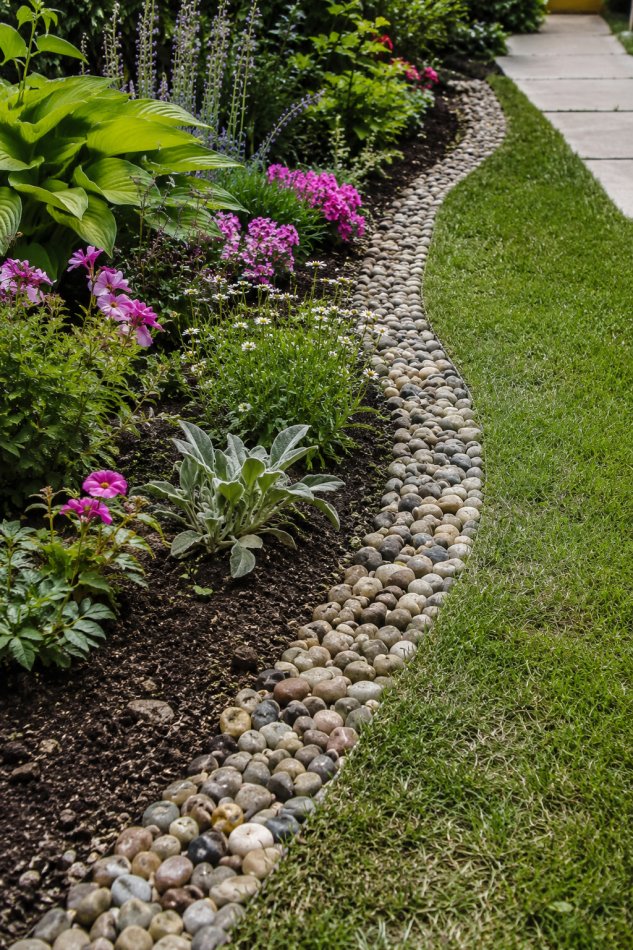
A pebble border is one of the easiest ways to give your flower beds a clean, finished edge. Just lay a strip of pebbles along the outline of your bed to separate it from the grass or walkway.
Start by digging a shallow trench a few inches deep and lining it with landscape fabric to keep weeds out. Then fill it with your pebbles, pack them down a bit, and you’ve got a border that’ll hold its shape for years with almost no upkeep.
Also Read: 18 Practical Ideas to Hide Trash Cans Outside
2. Pebble Pathway Through the Yard
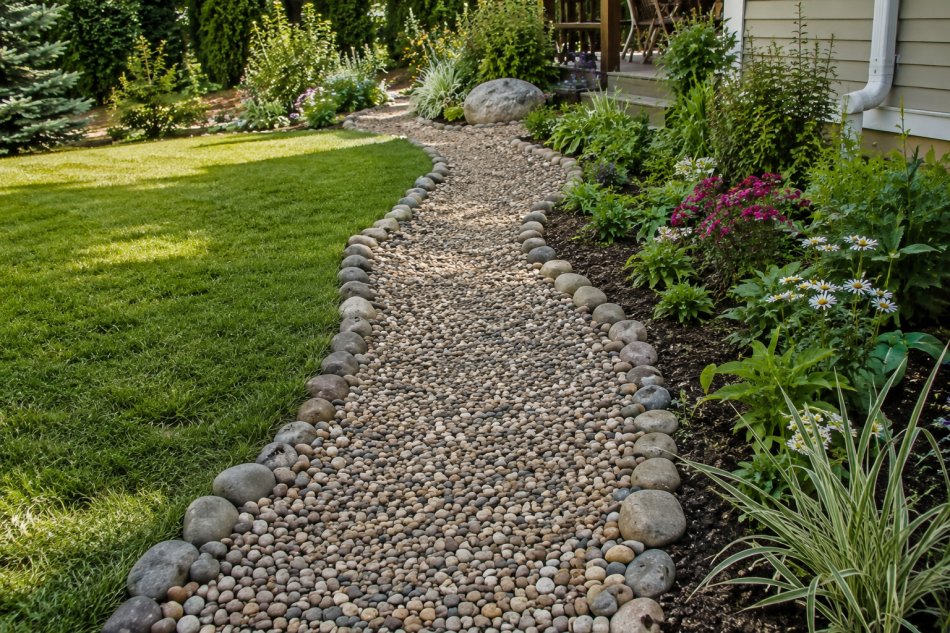
Ever notice how a plain grass path just doesn’t have the same charm as one with a bit of texture underfoot? A pebble pathway fixes that, guiding people through your garden while adding visual interest along the way.
To build one, mark out your path with stakes and string, then clear away the grass and level the soil underneath. Lay a weed barrier down first, add a base layer of sand or gravel for stability, and finish it off with your pebbles for that satisfying crunch with every step.
3. Zen-Style Pebble and Rock Garden
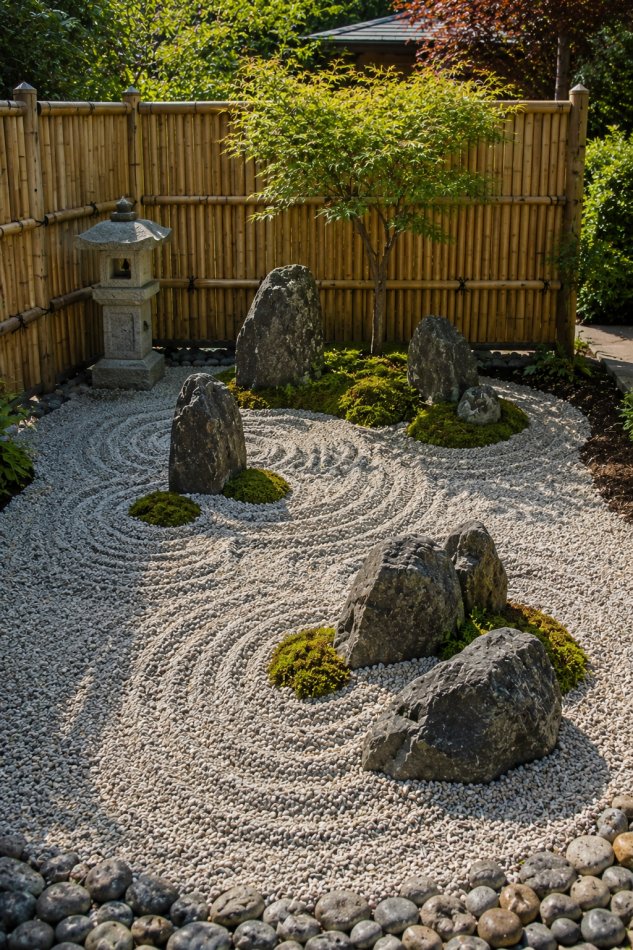
Some of the most peaceful corners in Japanese gardens aren’t planted with flowers at all, just carefully placed rocks and raked pebbles. That same idea works beautifully in a small, quiet corner of your own yard.
Choose a mix of larger stones as focal points and surround them with smaller pebbles or gravel raked into gentle wave patterns. Keep the plant life minimal, maybe a single dwarf tree or a few mosses, so the stones and pebbles stay the star of the space.
Check this: 30 Low Cost Patio Privacy Screen Ideas
4. Pebble Mulch Around Trees and Shrubs
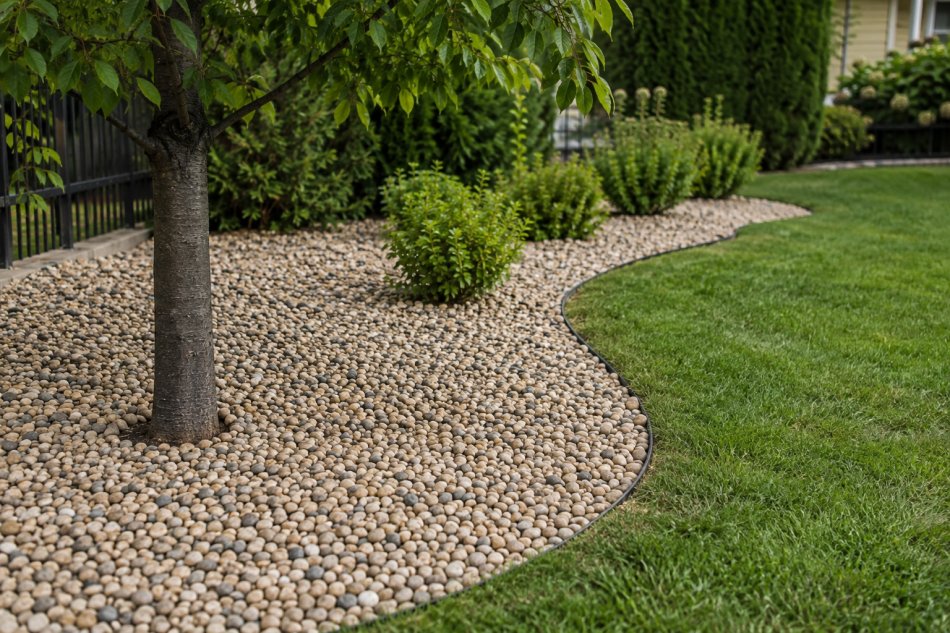
Grass struggling to grow around the base of your trees? That bare, patchy ring doesn’t have to stay that way.
Swap it out for a layer of pebble mulch instead. Clear the area, lay down landscape fabric to block weeds, then spread a couple inches of pebbles around the trunk, leaving a small gap right at the base so moisture doesn’t build up against the bark.
5. Dry Creek Bed With Pebbles
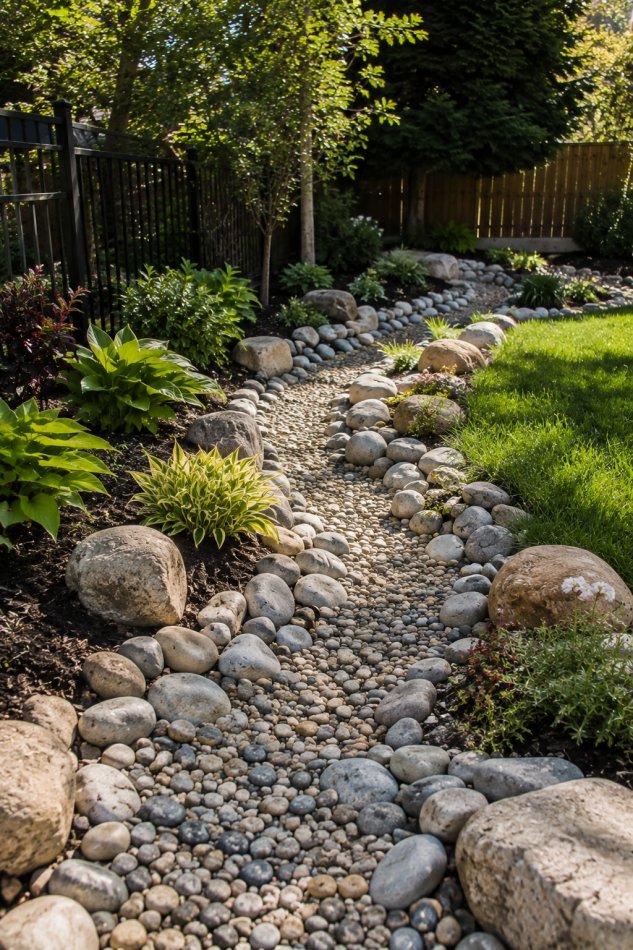
Picture a winding stream cutting through your yard, except there’s no actual water in it. That’s the charm of a dry creek bed, and it’s surprisingly simple to pull off.
Dig a shallow, curving trench where you want the “stream” to flow, then layer it with a mix of pebble sizes, smaller ones toward the edges and larger stones scattered in for a natural look. It doubles as a smart way to redirect rainwater runoff away from your house.
6. Pebble Mosaic Stepping Stones
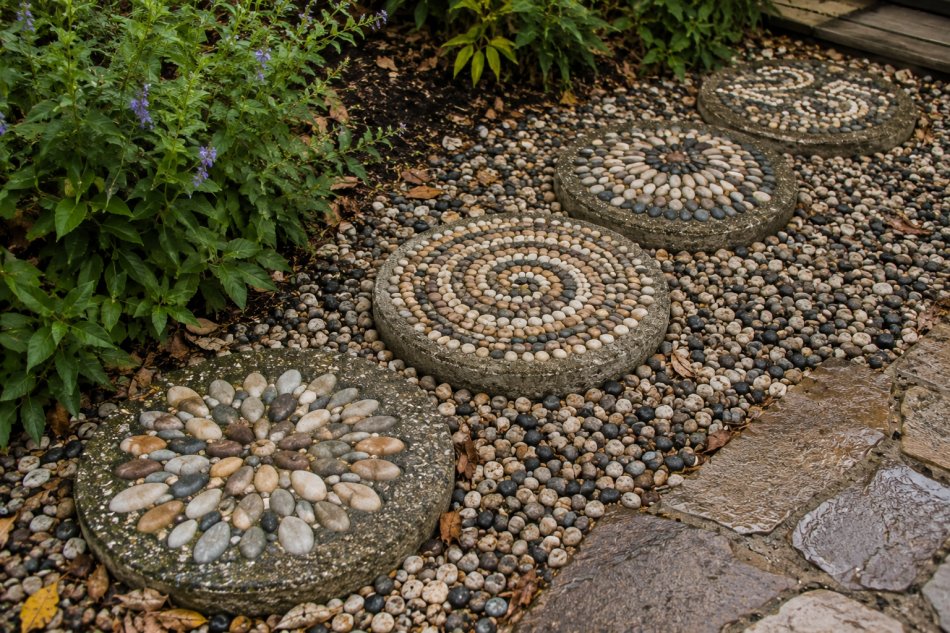
Stepping stones don’t have to be plain concrete slabs. Press small pebbles into wet cement to create a mosaic pattern, then let them set before placing the stones along your path.
You can get as creative as you want here, spirals, sunbursts, even your house number worked into the design. It’s a fun weekend project, and no two stones ever turn out exactly the same.
Also Read: 27 Narrow Front Yard Landscaping Ideas
7. Pebble-Filled Fire Pit Area
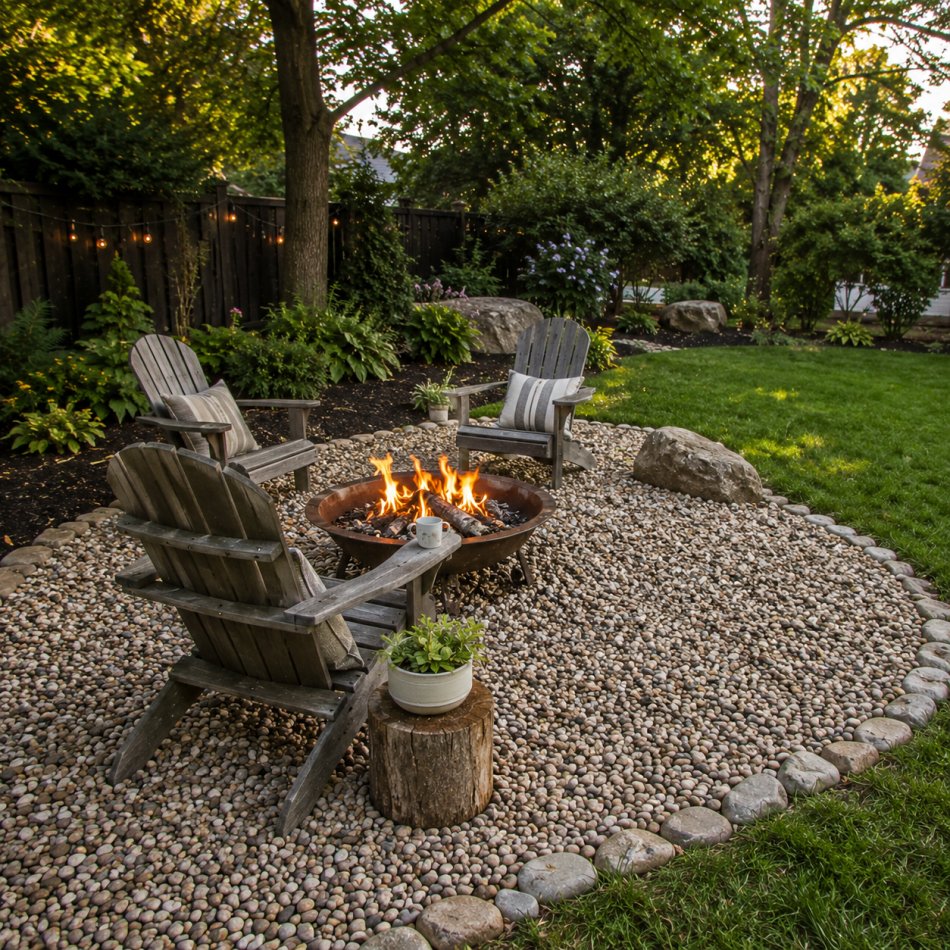
A fire pit surrounded by grass is a fire hazard waiting to happen. Ring the area with pebbles instead, since they’re heat resistant and give you a safe, clean surface to pull up chairs around.
Go with a wider ring than you think you’ll need, since sparks and embers can travel further than expected. It also makes cleanup easier, since ash and soot are simple to sweep off pebbles compared to grass.
8. Pebble Accent Around a Water Feature
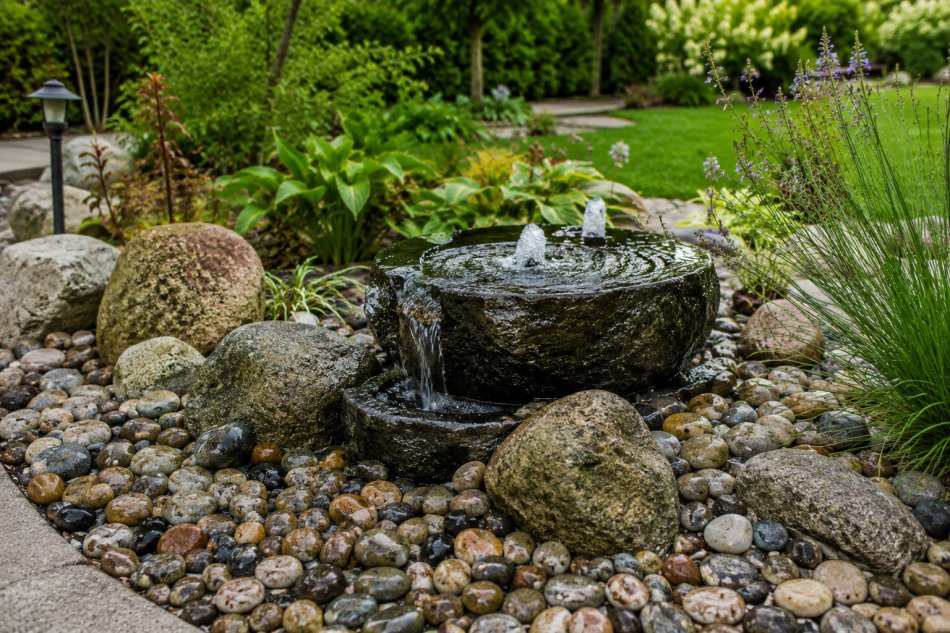
Water features look better with something other than bare dirt around them. Scatter pebbles around the base of a fountain or pond, and they’ll catch the light beautifully whenever water splashes over them.
Mixing in a few larger stones among the pebbles adds some natural variation and helps hide any exposed liner or edging. Over time, they’ll even collect a bit of moss, which only adds to the natural look.
9. Colorful Pebble Mosaic Design
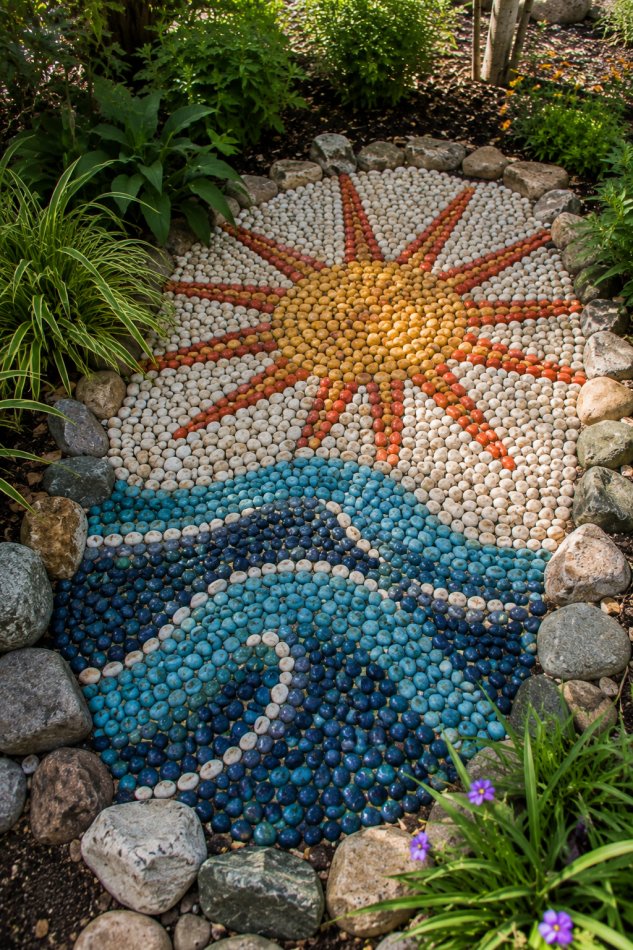
Who says pebbles have to stay in their natural colors? Dyed and polished pebbles come in blues, reds, purples, and pretty much every shade in between, letting you turn a plain patch of yard into a real focal point.
Try grouping colors into patterns or even simple shapes, like a sun or a wave design. Just keep the area small and contained, since too much color scattered around can end up looking busy instead of intentional.
10. Pebble Ground Cover for Shady Spots
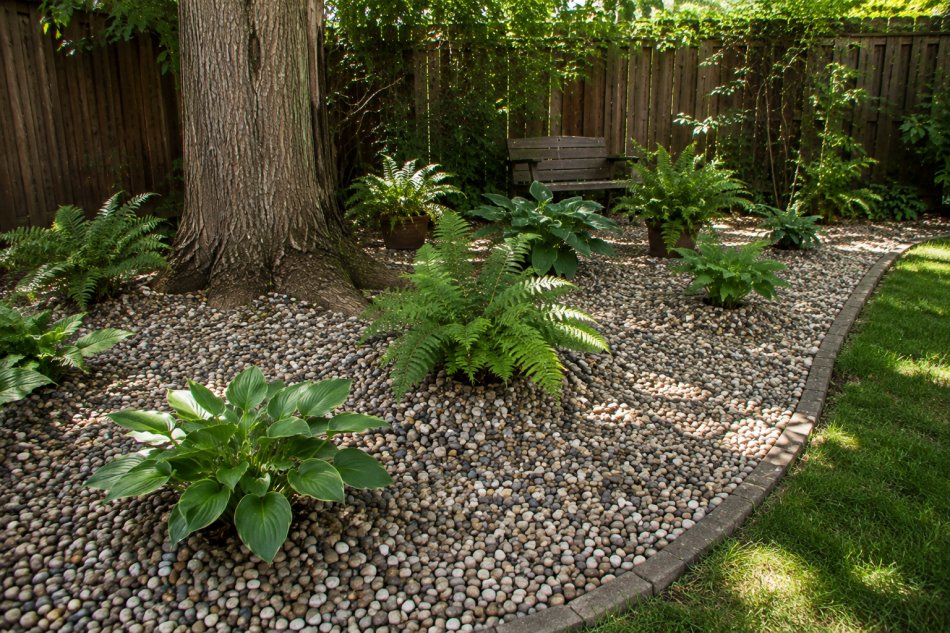
Grass hates shade, and most gardeners know the frustration of watching it thin out under a big tree. Pebbles couldn’t care less about sunlight, which makes them a smart fix for those stubborn dark corners of the yard.
Clear out whatever patchy grass is left, lay down a weed barrier, and spread your pebbles evenly across the space. Toss in a few shade-loving ferns or hostas here and there, and the spot goes from an eyesore to one of the more interesting parts of the yard.
Check this: 23 Beautiful Boxwood Landscaping Ideas
11. Pebble Edging Around a Patio
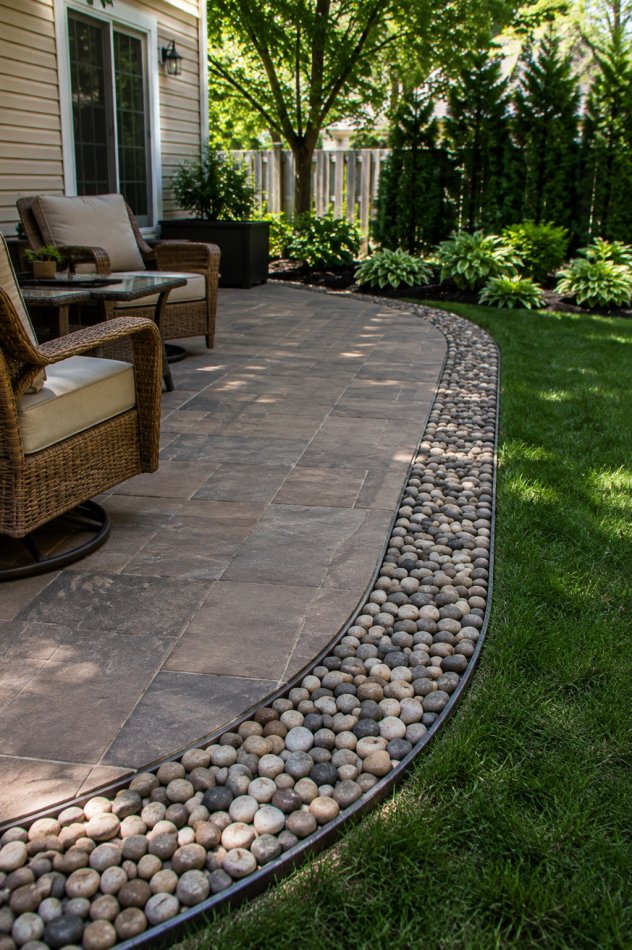
A patio can look a little unfinished when it just drops off into grass or dirt. Adding a strip of pebbles around the perimeter gives it a clean, deliberate edge instead.
This also works as a practical buffer, since it keeps grass clippings and soil from creeping onto the patio surface. A simple metal or stone edging strip along the outer line keeps everything neatly contained.
12. Succulent Garden With Pebble Mulch
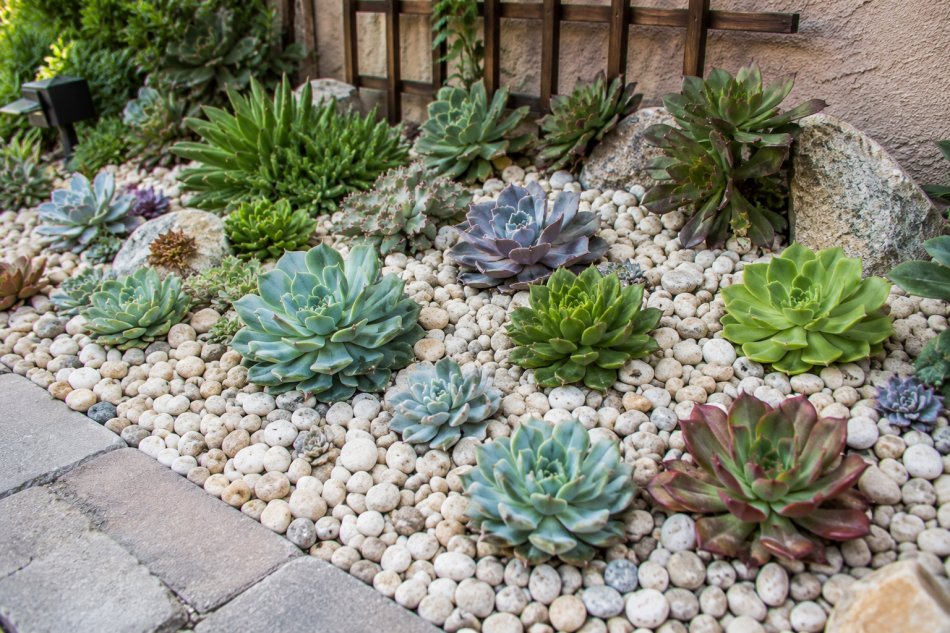
Succulents and pebbles just make sense together, since both thrive on neglect rather than constant care. Top off a succulent bed with a layer of light-colored pebbles, and the plants practically pop against the background.
The pebbles do more than look good too. They keep moisture away from the base of the plants, which matters a lot since succulents are prone to rotting in soil that stays too wet.
13. Pebble Circle Around a Tree Base
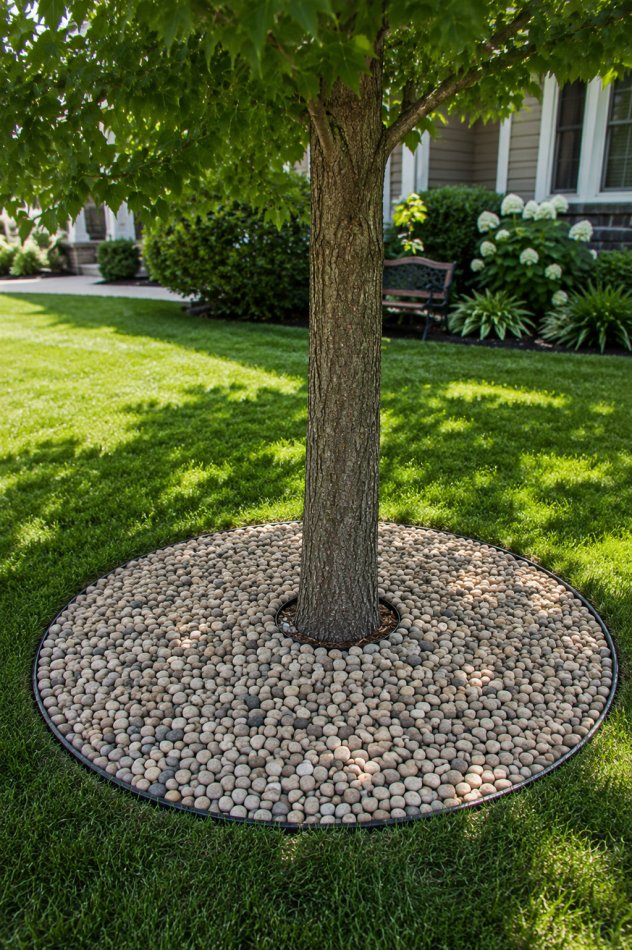
A single ring of pebbles around the base of a tree is one of those small touches that makes a whole yard look more cared for. It’s a quick weekend project that pays off every time you glance out the window.
Keep the circle a foot or two wider than the tree’s canopy line for the best look, and leave a small gap right at the trunk. That gap matters more than people realize, since pebbles piled directly against the bark can trap moisture and invite rot.
Also Read: 21 Cheap No-Grass Backyard Ideas for Dogs
14. Pebble-Lined Flower Bed Borders
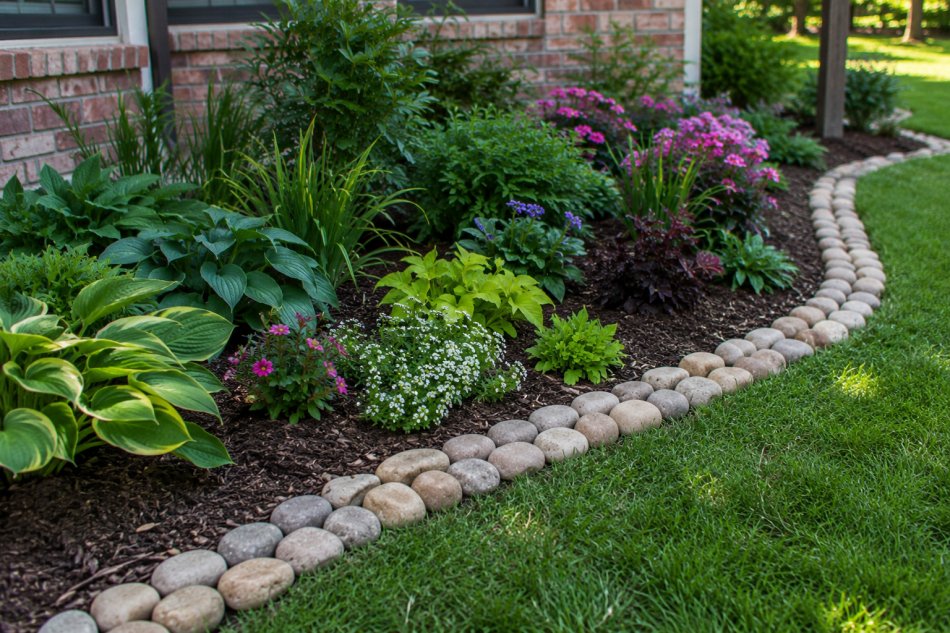
A row of pebbles along the edge of a flower bed does more than just look tidy. It keeps mulch from spilling onto the lawn and gives your mower a clear line to follow without chewing into the flowers.
You don’t need anything fancy here, just a single or double row of larger, uniform pebbles works fine. It’s one of those small details that makes the whole bed look more deliberate, even if the flowers inside are still growing in.
15. Minimalist Pebble Courtyard
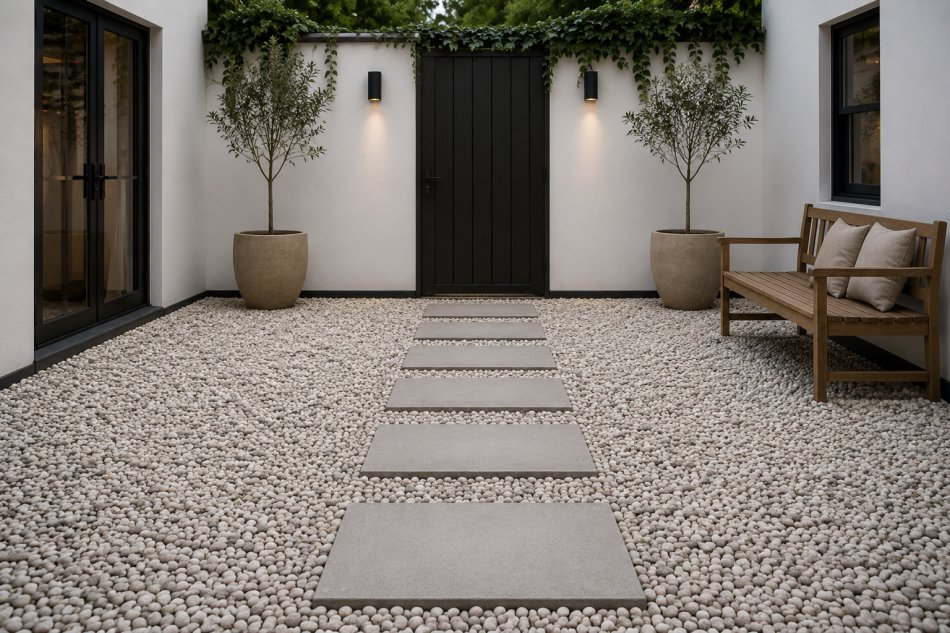
Not every outdoor space needs grass or plants to feel complete. A courtyard filled entirely with pebbles, broken up by a few large stepping stones, can feel just as inviting, especially if you’re going for a clean, modern look.
Stick to one or two pebble colors so the space doesn’t feel cluttered. A single potted plant or a small bench in the corner is usually all it takes to keep the area from feeling too bare.
16. Pebble and Gravel Combo Garden
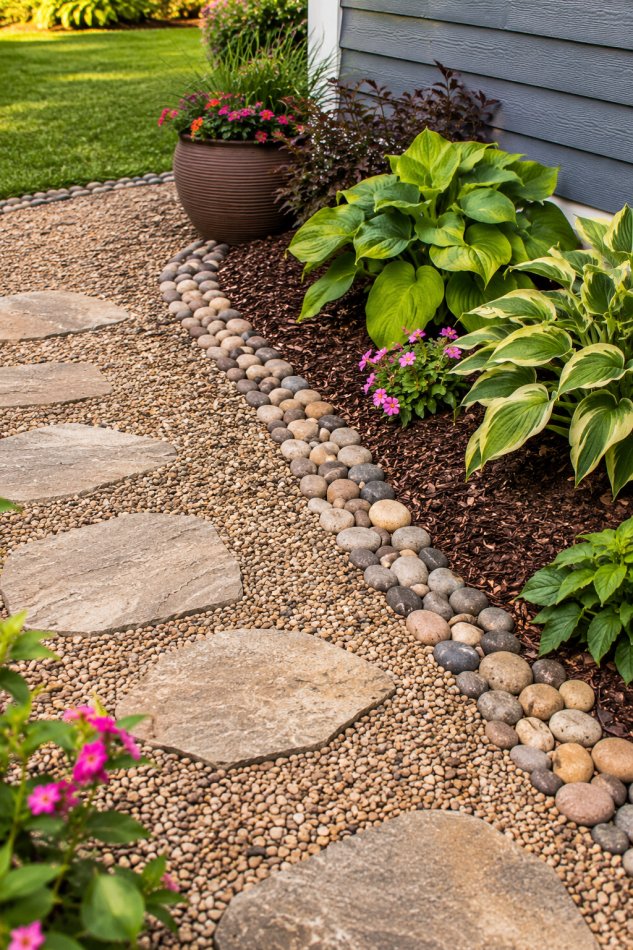
Pebbles and gravel aren’t interchangeable, but they work great together. Use gravel as a base layer for larger areas, then scatter pebbles on top or along the edges to add texture and break up the uniform look.
This combo is also budget-friendly, since gravel costs less per square foot than pebbles alone. Save the pebbles for the spots people will actually notice, like pathways or borders, and let gravel fill in the rest.
17. Pebble Accents Along a Driveway Edge
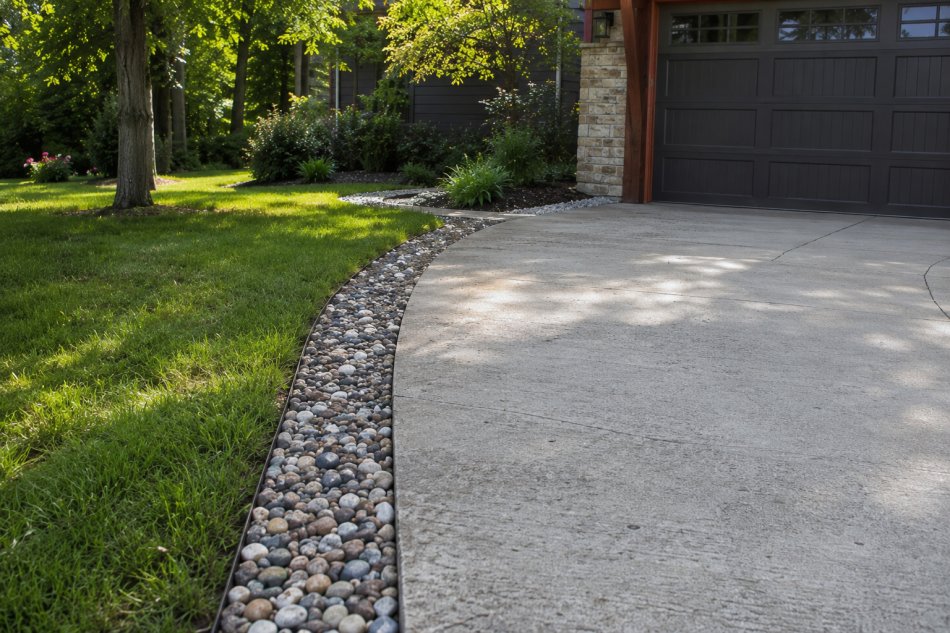
Driveways can look pretty stark on their own, especially where they meet the lawn. A strip of pebbles along that edge softens the transition and gives the whole area a more finished look.
It also solves a practical problem, since that edge is usually the first place grass gets worn down from tires or foot traffic. Pebbles hold up to that wear a lot better than grass ever could.
18. Pebble Mulch for a Cactus Garden
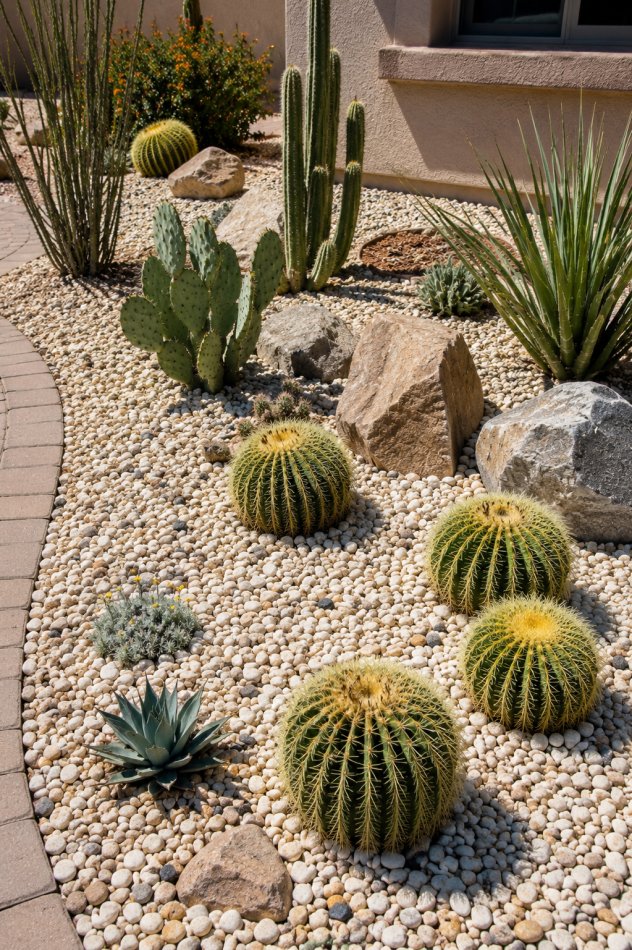
Cactus gardens and pebble mulch are practically made for each other. The pebbles mimic the rocky, dry conditions cacti naturally grow in, and they keep the soil from staying too damp around the base.
Light-colored pebbles work especially well here, since they reflect heat and give the whole bed a desert-like feel. Toss in a few larger rocks between the cacti for scale, and the space starts to look like it belongs somewhere out west.
19. Pebble-Filled Planters and Pots
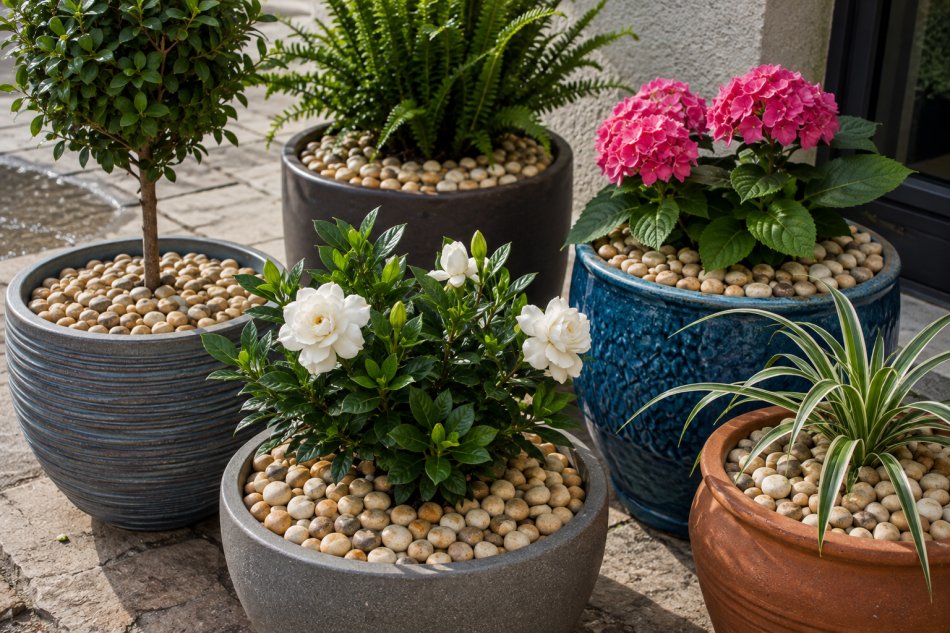
Topping off a potted plant with a layer of pebbles isn’t just decorative, it actually helps the plant underneath. The pebbles slow down evaporation, which means less frequent watering during hot stretches.
It also keeps soil from splashing up onto leaves or nearby surfaces every time you water. For an easy upgrade, match the pebble color to your pot or the plant’s flowers for a coordinated look without much extra effort.
Check this: 17 Vinyl Porch Railing Ideas to Transform Entrance
20. Pebble Garden With Decorative Stepping Logs
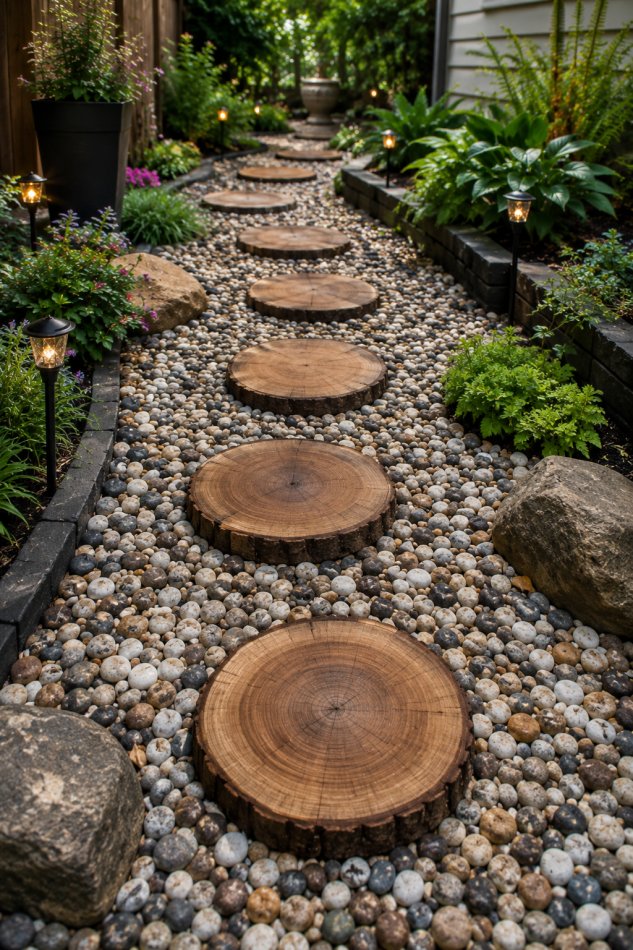
Swapping stepping stones for wood rounds gives a pebble garden a warmer, more natural feel. Surround a few log slices with pebbles, and you’ve got a path that feels a little more like a forest trail than a typical yard.
Just make sure to treat the wood so it holds up outdoors, since untreated logs can rot or attract pests over time. It’s a small trade-off for a look that stands out from every other pebble path on the block.
Conclusion
Pebble gardens prove you don’t need a ton of space or a big budget to make your yard stand out. Sometimes the smallest details end up making the biggest difference.
Whether you start with a simple border or go all in with a full pebble courtyard, there’s an idea on this list for almost any yard. Pick the one that fits your space, and build from there whenever you’re ready to add more.
At the end of the day, pebbles are forgiving to work with and hard to mess up. That makes them one of the easiest ways to give your garden a fresh, finished look without much ongoing effort.


Khaja Moinuddin, a computer science graduate, finds joy in gardening and homesteading. Join him on this blog as he shares his experiences in homesteading, gardening, and composting