Like most warm season crops, tomatoes won’t survive frost if they aren’t taken care of. They love warmth, and the cold shuts them down fast.
Tomato plants grow best when daytime temperatures are between 65°F and 85°F, with nights staying above 55°F. Once it dips below 50°F, growth slows and flowers may drop. Young seedlings are even weaker, and a few hours at 32°F can finish them.
The good news is you don’t need to spend much to protect them.
One easy option is an old bedsheet or light blanket thrown over the plants in the evening. Just use a few stakes to hold it up so the fabric doesn’t crush the leaves.
Another cheap trick is to turn plastic milk jugs or water bottles into mini covers.
Cut the bottom off, place one over each seedling, and you have a little greenhouse. Next, I’ll show you how to use both methods the right way.
How to Know When Frost Is Coming?
The first step in protecting your tomatoes is knowing when the cold is on its way. If you find out too late, there’s nothing much you can do.
Check the forecast every evening. Don’t just look at the daytime high. Look at the overnight low. If it says 36°F or below, frost can still form on your plants, because the air near the ground is usually colder than what the forecast shows.
Watch the sky. Clear skies with no clouds are the biggest warning sign. Clouds act like a blanket and hold heat in, but on a clear night, all the warmth escapes and the temperature drops fast.
Notice the wind. Still, calm nights are more dangerous than windy ones. When the air is calm, cold settles on the ground and sits right on your plants.
Pay attention to the evening. If the temperature falls quickly after sunset and the air feels dry and crisp, take it seriously. I always cover my plants on those evenings, even if the forecast looks borderline.
Use a simple thermometer. Place a cheap outdoor thermometer near your tomato bed. Garden spots can be a few degrees colder than your house, especially in low areas where cold air collects.
Know your first frost date. Search for your area’s average first frost date and mark it on your calendar. It’s not exact, but it tells you when to start watching the weather closely.
12 Ways to Protect Tomato Plants from Frost
You don’t need a greenhouse or fancy gear to save your tomatoes. Most of these ideas use things you already have at home.
Some work best for young seedlings, and some are better for big, fruiting plants. Pick the ones that fit your garden and your budget.
1. Cover with a Bedsheet or Old Blanket
An old bedsheet or light blanket is the easiest way to protect your tomatoes. It traps the heat that rises from the soil and keeps the cold air off your plants.
Put a few stakes or tall sticks around the plants first, then drape the cloth over them. This keeps the fabric from touching the leaves, because wet cloth that touches the plant can cause frost damage.
Cover the plants in the evening, before the sun goes down. Remove the cloth in the morning once the frost has melted, so your plants get sunlight and don’t overheat.
2. Use Milk Jug or Bottle Cloches
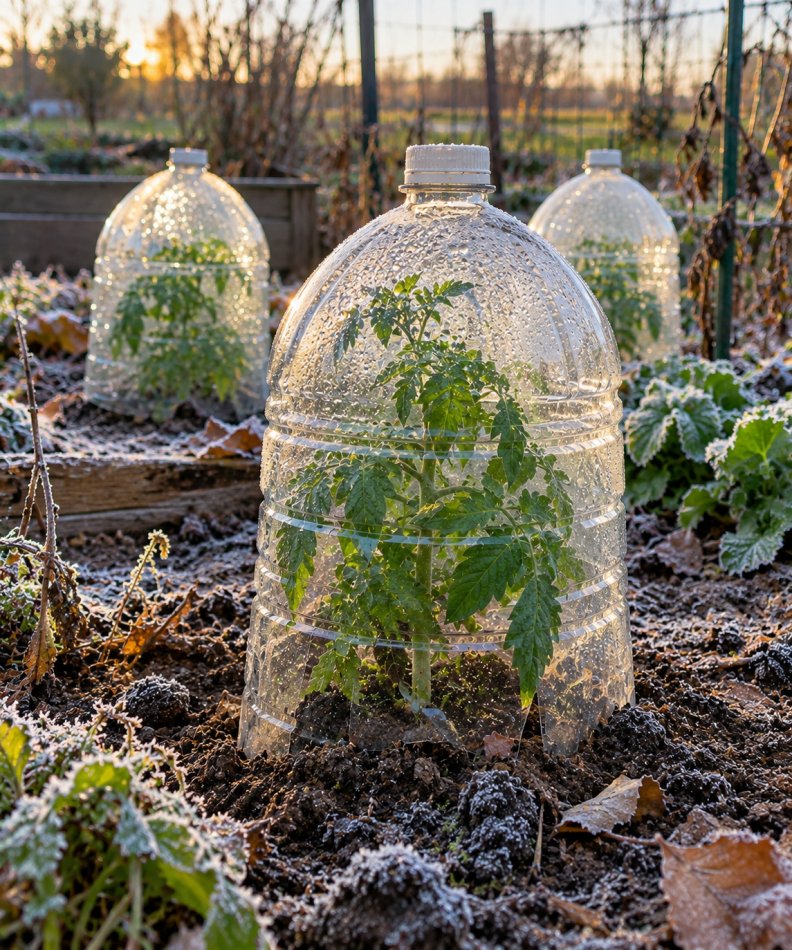
Plastic milk jugs and water bottles make great mini greenhouses for young tomato seedlings. They let sunlight in and keep the cold air out, and they cost you nothing.
Cut the bottom off the jug or bottle and place it over the seedling. Push it gently into the soil so it stays in place, and take off the cap at night if the weather is mild.
Remove the cap during the day to let air in. In the morning sun, the inside can get hot very fast, and too much heat can hurt your seedlings as much as frost.
Also Read: How to Can Fresh Tomatoes the Right Way in Easy Steps?
3. Water the Soil Before a Cold Night
Moist soil holds heat much better than dry soil. During the day, wet soil soaks up the sun’s warmth and slowly releases it at night, which keeps the air around your plants a little warmer.
Water your tomatoes in the morning or early afternoon on the day frost is expected. Don’t water late in the evening, because extra moisture on the leaves can freeze and cause damage.
You don’t need to flood the bed. A deep, normal watering is enough to make a real difference.
4. Add a Thick Layer of Mulch
Mulch works like a warm jacket for the soil. It stops the heat from escaping and protects the roots when the temperature drops.
Spread 3 to 4 inches of straw, dry leaves, or wood chips around the base of your plants. Keep it a few inches away from the stems so they don’t stay damp and rot.
Mulch protects the roots, but it won’t save the leaves and stems on a very cold night. Use it together with a cover for the best results.
5. Use Row Covers or Frost Cloth
Row covers and frost cloth are made for this exact job. They are light, breathable fabrics that let in sunlight and water while keeping frost off your plants.
Lay the cloth over a frame of hoops or stakes, and use rocks, bricks, or soil to hold the edges down so cold air can’t sneak in. A medium weight cloth can add about 4°F to 8°F of protection, which is often enough for a light frost.
You can reuse frost cloth for many seasons, so it’s a good buy if you grow tomatoes every year. Take it off in the morning on sunny days to prevent overheating.
6. Wrap String Lights Around the Plants
Old-style incandescent string lights give off a gentle heat, and that small warmth can be enough to keep a light frost away. This works well for a few plants in a small garden bed.
Wrap the lights loosely around the stems and cages, and cover everything with a sheet or frost cloth to trap the heat. Switch them on in the evening and turn them off in the morning.
Don’t use LED lights, because they stay cool and won’t help. Also, use only outdoor-rated lights and cords, and keep the plugs off the wet ground for safety.
7. Place Cardboard Boxes or Buckets Over Seedlings
If you have small seedlings and a sudden cold night, a cardboard box or an upside-down bucket can save them in minutes. It blocks the cold air and traps the warmth from the soil.
Place the box or bucket gently over each plant in the evening. Put a small stone or brick on top so the wind doesn’t blow it away.
Take it off first thing in the morning. If you leave a bucket on during a sunny day, the plant can get too hot and dry out, and it won’t get the light it needs.
8. Move Container Tomatoes Indoors
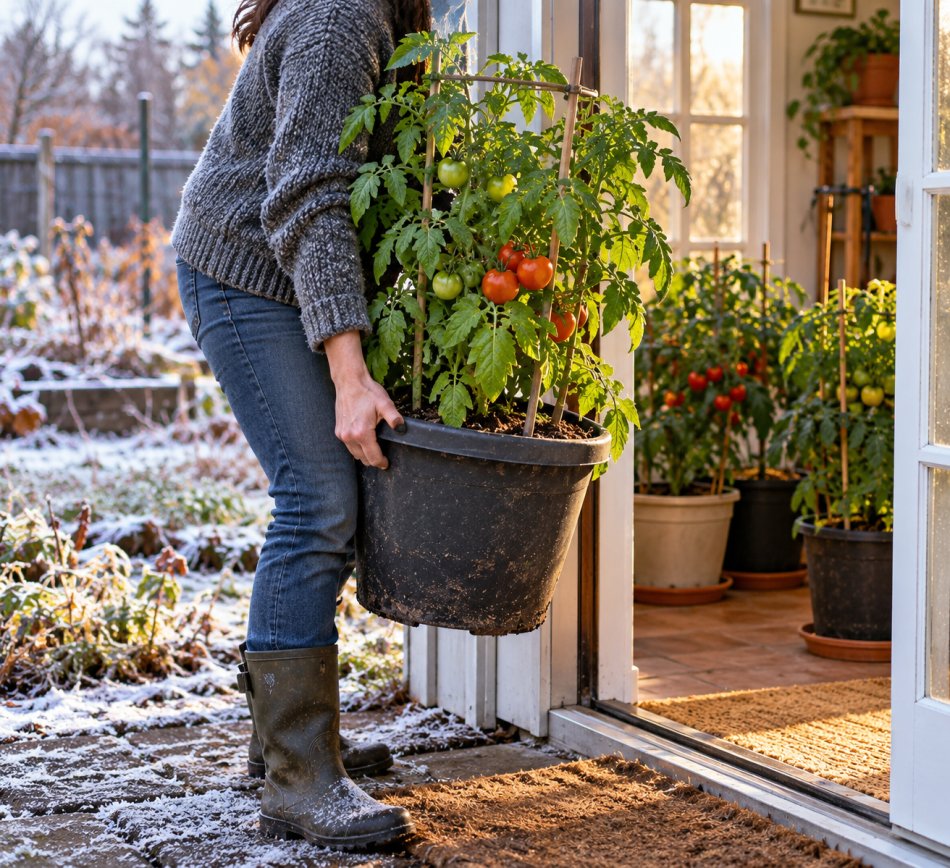
Tomatoes growing in pots are the easiest to protect, because you can simply carry them to a warmer place. Potted soil also gets cold faster than ground soil, so containers are at higher risk.
Move the pots into a garage, shed, porch, or a bright room before the sun goes down. If the pots are too heavy, put them on a wheeled plant stand or a small trolley to make it easier.
If you can’t bring them inside, push the pots close to the house wall and cover them. The wall holds heat from the day and gives them a little extra protection through the night.
9. Plant Near a South-Facing Wall
A south-facing wall soaks up sunlight all day and slowly gives off that heat at night. Tomatoes planted close to it can stay a few degrees warmer than the ones out in the open.
If you’re planting a new bed, choose a spot about a foot or two away from a brick, stone, or concrete wall. It also blocks cold wind, which helps a lot on frosty nights.
For plants already in the ground, you can’t move them, but you can plan better next season. Pair this trick with a cover for even more protection.
10. Set Water Jugs Around the Plants
Water holds heat longer than air or soil. Dark-colored jugs filled with water act like small heaters that warm up in the day and release that heat at night.
Fill old milk jugs or large bottles with water and place them around your tomato plants in the morning. Painting them black or wrapping them in dark cloth helps them absorb more heat.
Put the jugs under a cover for the best effect. The cover traps the heat from the jugs, and your plants stay warmer until sunrise.
11. Build a Simple Plastic Tunnel
A low plastic tunnel works like a mini greenhouse over your whole tomato row. It’s cheap to make and protects many plants at once.
Push bent PVC pipes or flexible wire hoops into the soil along the bed, then stretch clear plastic sheeting over them. Hold the edges down with bricks or soil so the cold air stays out.
Open the ends of the tunnel on sunny days. Plastic traps a lot of heat, and without airflow, the plants can get too hot and wilt.
Also Read: 7 Reasons Why Tomatoes Not Ripening on the Vine
12. Harvest Green Tomatoes Before a Hard Freeze
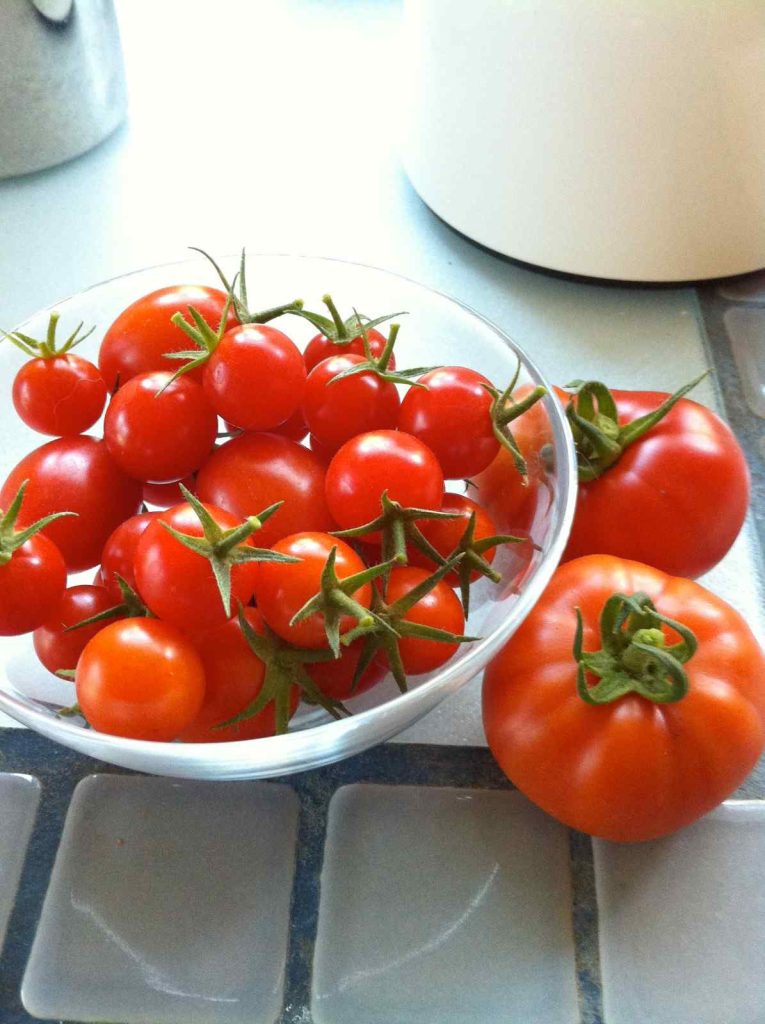
Sometimes the cold is just too strong, and there’s no way to save the plant. In that case, save the fruit. A hard freeze below 28°F can ruin every tomato left on the vine.
Pick all the full-sized green tomatoes, especially the ones with a little blush of color. Wipe them clean and check for cracks or soft spots, because damaged ones won’t ripen well.
Keep them in a cardboard box or paper bag at room temperature, out of direct sun. Add a ripe banana or apple to the bag to speed up ripening, and they’ll turn red in a week or two.
Extra Tips to Protect Tomato Plants from Frost
- Don’t let covers touch the leaves. Use stakes, cages, or hoops to hold the cover up. Cloth or plastic touching the plant can pass the cold straight to the leaves.
- Cover early, uncover late. Put covers on before sunset so the soil heat stays trapped. Remove them only after the frost has melted in the morning.
- Cover all the way to the ground. Heat rises from the soil, so leave no gaps at the bottom. Hold the edges down with bricks, rocks, or soil.
- Skip plastic touching the plant overnight. Plastic is fine for tunnels and cloches, but keep it off the leaves and open it up in the morning.
- Harden off seedlings slowly. Seedlings raised indoors need a week of gradual outdoor time. Plants used to the outdoors handle a cold night better.
- Wait to transplant. Plant tomatoes outside only after the last frost date has passed and night temperatures stay above 50°F (10°C).
- Remove damaged leaves later. If a plant gets hit by frost, wait a few days before pruning. The blackened leaves still protect the healthy parts underneath.
- Keep a backup cover ready. Store a few old sheets, buckets, or bottles near the garden so you can act fast when a cold night is announced.
Also Read: 13 Homemade Fertilizers for Tomatoes
Conclusion
Frost can feel scary when you’ve spent months growing tomatoes, but it doesn’t have to ruin your harvest. A little planning and a few simple covers can keep your plants safe through a cold night.
Start by watching the forecast and the sky, then pick the methods that suit your garden. A bedsheet, a milk jug, or a layer of mulch costs almost nothing, and they really work.
If a hard freeze is coming and your plants can’t be saved, pick the green tomatoes and ripen them indoors. That way, you still get something from all your hard work.
Now it’s your turn. Which of these ways will you try first on the next cold night?


Khaja Moinuddin, a computer science graduate, finds joy in gardening and homesteading. Join him on this blog as he shares his experiences in homesteading, gardening, and composting