Water is one of the three essentials for plant growth. But research shows that regular watering drains primary nutrients like nitrogen and phosphorus right out of the container.
Here’s the thing: potting soil isn’t forever.
Every time you water, a little more goodness washes through the drainage holes. Over time the mix breaks down, packs tight, and stops draining the way it should. Add leftover fertilizer salts and the odd pest or fungus, and your plant is living in a worn-out home.
So how often should you change it?
Most houseplants and container plants are happiest with fresh soil every 12 to 18 months. But it’s not one-size-fits-all. Fast growers need it sooner, slow growers can wait, and your plant will usually drop hints when it’s time.
In this guide, we’ll cover timing for different plants, the signs your pot needs a refresh, and how to do it without stressing your plant out.
Why Potting Soil Doesn’t Last Forever?
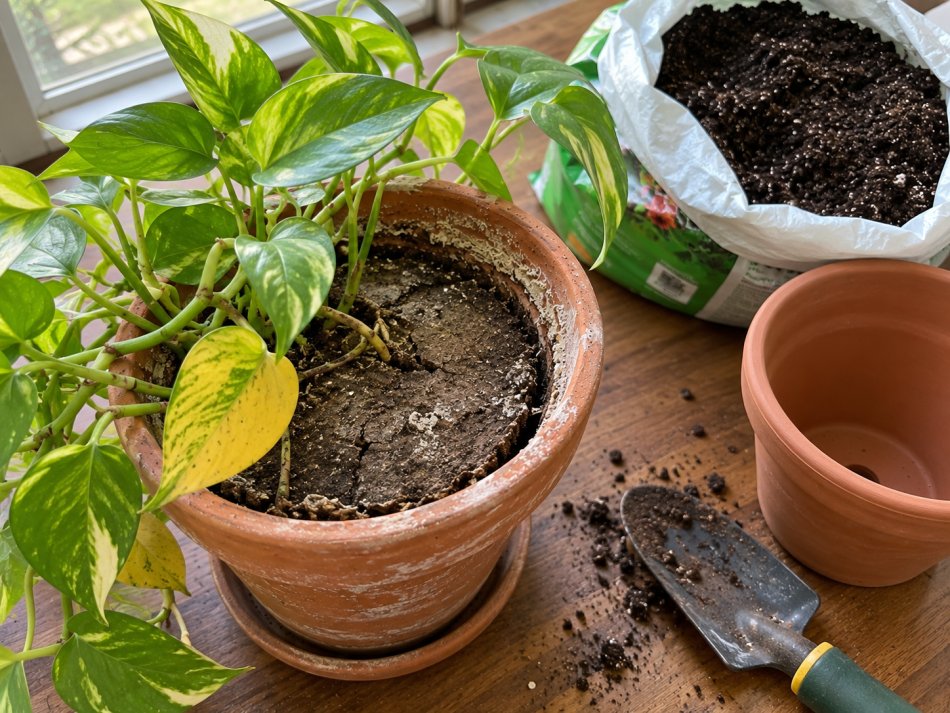
A pot isn’t like a garden bed. There’s no deep ground to pull nutrients from and no earthworms working the soil for you. Your plant gets what’s in that pot, and that’s it.
Here’s what slowly goes wrong.
Nutrients wash away.
Every time water flows out of the drainage holes, it carries nutrients with it.
Research from the USDA’s Agricultural Research Service tracked this in container mixes and found that nitrogen and phosphorus both drain out with the water. The starter fertilizer in a bagged mix also gets used up fast, according to UConn Extension.
The mix breaks down.
Peat, bark, and compost slowly decompose. The soil gets finer and denser, which means less air and slower drainage.
Salts build up.
Fertilizer and tap water leave minerals behind. You might see a white crust on the soil surface or the pot rim.
Pests and fungus settle in.
Old, soggy soil is the perfect hiding spot for fungus gnats, mold, and root problems.
Even the best potting mix eventually wears out. So the real question is how soon.
How Often Should You Change Potting Soil?
Every 12 to 18 months for most houseplants and container plants.
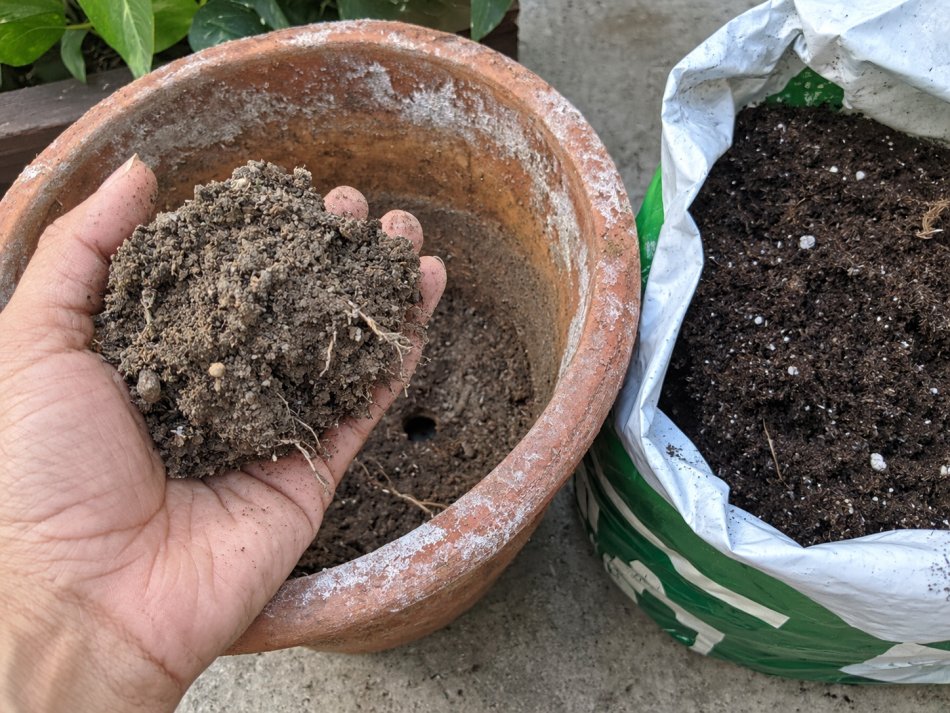
That’s the number to remember. But think of it as a starting point, not a deadline.
A fast-growing pothos in a small pot can use up its soil in a year. A slow, steady snake plant might be fine for two. The pot size, the type of mix, and how often you water and feed all play a part.
Your plant will also tell you when it’s time. Slower growth, water rushing straight through, or a crusty white layer on top are all hints that the soil is done.
You also don’t always need a full change. Sometimes swapping out just the top few inches gives the plant enough of a boost, especially in big pots that are hard to move. We’ll cover when to do which a bit later.
First, let’s look at how this timing changes from plant to plant.
How Often to Change Soil by Plant Type?
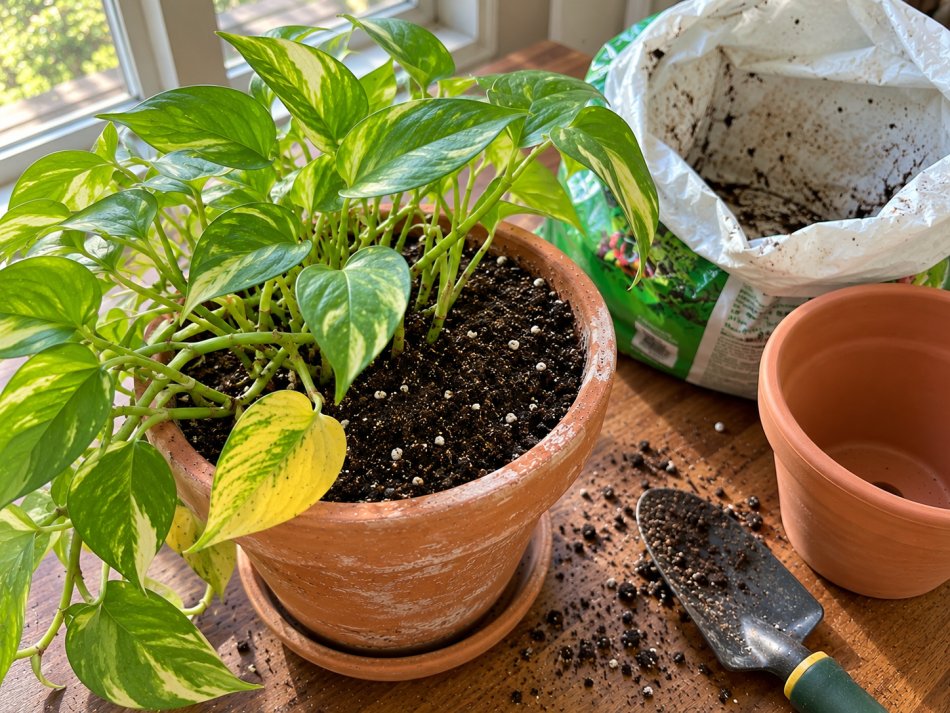
Not every plant uses up its soil at the same speed. Fast-growing houseplants like pothos, monstera, and spider plants drain a pot’s nutrients quickly, so fresh soil once a year keeps them going strong.
Slow growers like snake plants and ZZ plants use much less, so every 18 to 24 months is usually plenty. Succulents and cacti are similar. They like a lean, gritty mix, and a refresh every two years works, or sooner if the mix turns dense and stays wet for days.
Orchids usually grow in bark, not soil. Bark breaks down over time and holds too much water, so replace it every one to two years.
Plants that work hard in containers need more frequent changes. Herbs, vegetables, and outdoor annuals do best with fresh mix every season or at least once a year.
Large container shrubs and small trees are a big job to repot. Change the soil every two to three years, and refresh the top few inches each spring in between. Of course, the calendar isn’t the only clue, so next, let’s look at what your plant is trying to tell you.
Check this: Can I Put Old Potting Soil in My Compost?
Full Soil Change vs. Topsoil Refresh
You don’t always have to repot the whole plant. Sometimes a small refresh does the job.
A topsoil refresh is enough when:
- The plant is growing well
- The pot is large or heavy
- The top layer looks crusty, faded, or compacted
Scrape off the top 2 to 3 inches and replace it with fresh mix.
Go for a full soil change when:
- Water runs straight through or sits on top
- Roots are crowded or circling the pot
- The soil smells sour or has gone hard
When in doubt, start with the topsoil refresh. If the plant doesn’t perk up, move to a full change.
8 Signs Your Plant Needs Fresh Soil
Your plant usually drops hints before things go wrong. Watch for these.
- Water runs straight through. The soil has shrunk or compacted, so water slips down the sides without soaking in.
- Water pools on top. The mix has turned dense and can’t drain.
- A white crust on the soil or pot. That’s fertilizer and mineral salt buildup.
- Roots poking out of the drainage holes. The plant has run out of room.
- Slow or stunted growth. Little new growth during the growing season often means the nutrients are gone.
- Yellowing leaves. If light and watering are right, tired soil is a likely cause.
- A sour or musty smell. Healthy soil smells earthy and fresh. A bad smell points to rot or stale, soggy mix.
- Fungus gnats or mold. Old, wet soil attracts both.
If you spot two or three of these, it’s time for fresh soil.
Best Time of Year to Change Potting Soil
The best time to change potting soil is spring, or the start of the growing season. That’s when your plant is waking up and pushing out new roots.
Fresh soil gives it a nutrient boost right when it can use it. It also recovers faster from any root disturbance.
Early to mid spring works well for most houseplants. If you miss it, early summer is still fine. Herbs, veggies, and annuals do best with fresh mix at the start of their season.
Try to avoid winter, when most plants are resting and growing slowly. Peak summer heat is also a poor time, since it adds stress to outdoor pots. If your plant is flowering, wait until the blooms fade unless the soil is in bad shape.
If your plant is struggling with soggy, smelly soil, don’t wait for the right season. Fix it right away.
How to Change Soil Without Stressing Your Plant?
Repotting sounds scary, but it’s easy when you go slow and gentle.
What you’ll need: fresh potting mix, a clean pot with drainage holes, a trowel or spoon, and a watering can.
- Water the plant a day before. Slightly moist roots slide out easier and handle the move better.
- Loosen the plant. Tip the pot on its side and gently squeeze or tap it. Slide the plant out by holding the base of the stem, not pulling the leaves.
- Shake off the old soil. Loosen the root ball with your fingers and let the old mix fall away. Don’t worry about removing every bit.
- Check the roots. Healthy roots are firm and pale. Trim any that are black, mushy, or smelly.
- Add fresh mix to the pot. Put a few inches at the bottom so the plant sits at the same height as before.
- Place the plant and fill in. Pour fresh mix around the sides and press lightly. Don’t pack it tight, since roots need air.
- Water well. Water until it drains from the bottom, then let the pot drain fully.
After repotting, keep the plant out of harsh direct sun for a week or so. Hold off on fertilizer for about a month, since the fresh mix already has nutrients. A little droopiness at first is normal. Most plants bounce back within a couple of weeks.
Check this: 18 Houseplants with Red and Green Leaves
Common Mistakes to Avoid
A few small slip-ups can undo all your good work. Here’s what to watch for.
Using Garden Soil in Pots
Garden soil may look rich and healthy, but it doesn’t work well in a container. It gets heavy and dense once it’s packed into a pot, and it drains poorly.
Roots end up sitting in soggy, airless soil, which can lead to rot. A good potting mix stays light and fluffy, so water drains freely and air reaches the roots.
Choosing a Pot That’s Too Big
It’s tempting to give your plant a lot of room to grow. But a pot that’s too big holds a lot of extra soil, and that soil stays wet for a long time.
The roots can’t use all that moisture, so the soil stays soggy and root rot becomes a real risk. Go up only 1 to 2 inches in pot size. Your plant will grow into it in no time.
Fertilizing Right After Repotting
Fresh potting mix usually comes with a starter dose of nutrients. Adding fertilizer on top can be too much, and the extra salts can burn tender roots that were just disturbed.
Give your plant about a month to settle in first. After that, you can go back to your normal feeding routine.
Packing the Soil Too Tight
Pressing the soil down hard might feel like you’re giving the plant a firm grip. But squeezed soil leaves very little room for air, and roots need air as much as they need water.
Tightly packed soil also drains slowly and can turn hard over time. Press the mix in lightly around the roots and let your first watering settle it naturally.
Repotting a Stressed Plant
Repotting always disturbs the roots a little. If your plant is already sick, wilting, or in full bloom, the extra stress can set it back.
Unless the soil itself is the problem, wait until the plant recovers or the flowers fade. If the soil is soggy or smelly, though, don’t wait. Fix it right away.
Can You Reuse Old Potting Soil?
Yes, if the plant was healthy and the soil is still loose. Break up clumps, remove old roots, and mix it 50/50 with fresh potting mix. Add some compost to restore nutrients. Toss soil that had pests, rot, or fungus.
FAQs
Can I just add fertilizer instead of changing the soil?
Fertilizer replaces nutrients, but it can’t fix soil that has turned dense or hard. It also adds more salts to a mix that may already have too many. Use it as a short-term boost, not a replacement for fresh soil.
Do plants in bigger pots need soil changes less often?
A little less often, yes. A larger pot holds more nutrients and takes longer to break down. Still, refresh the top few inches every year and watch for the warning signs.
Should I change the soil when I buy a new plant?
Not right away. Give it two to four weeks to adjust to your home first. The exception is soil that’s soggy, smelly, or full of pests, or a plant with roots packed tight in the pot.
Can I change the soil while the plant is flowering?
It’s best to wait until the blooms fade. Repotting can stress the plant and cause it to drop flowers. If the soil is causing real problems, go ahead and fix it.
Also Read: 15 Best Houseplants for South-Facing Windows
Conclusion
Potting soil doesn’t last forever. Watering washes out nutrients, and the mix slowly breaks down. Most plants do best with fresh soil every 12 to 18 months.
Don’t rely only on the calendar, though. Your plant will show you when it’s time. Slow growth, crusty soil, or water running straight through are all clear hints.
Spring is the best time to repot; and a gentle hand makes all the difference. Do it right, and your plants will reward you with fresh, healthy growth.
Have you changed the soil in your pots lately? Share your plant tips in the comments below, and check out our other plant care guides for more ideas.


Khaja Moinuddin, a computer science graduate, finds joy in gardening and homesteading. Join him on this blog as he shares his experiences in homesteading, gardening, and composting