If you’ve got some creativity and are ready to get your elbows greased, you can transform your landscape without breaking the bank.
A few strands of solar lights, some leftover pavers, and a can of paint can go further than most people expect. Landscaping doesn’t have to mean writing a big check to a contractor.
Below are cheap landscaping ideas that cover everything from ground cover and edging to lighting and DIY planters.
Whether you’re working with a tiny patio or a full backyard, you’ll find a mix of quick weekend fixes and small upgrades that add up over time.
27 Cheap Landscaping Ideas
These ideas range from simple ground cover swaps to small DIY projects like edging, lighting, and planters.
Most use materials you can find secondhand, repurpose from around the house, or pick up cheap at a hardware store.
1. Mulch Your Flower Beds

Mulch is one of the cheapest upgrades you can make, and it instantly makes your beds look tidy and finished.
It also holds in moisture, blocks weeds, and breaks down over time to feed your soil. You can buy bags cheap at most garden centers, or ask a local tree service if they have free wood chips (most do).
How to do it:
Clear out any weeds first, then lay down 2 to 3 inches of mulch around your plants. Keep it a few inches away from stems and trunks so it doesn’t trap moisture against them and cause rot. Top it off once or twice a year as it breaks down.
Also Read: 40 Spooky and Cozy Halloween Porch Decorating Ideas
2. Edge Your Lawn With Rocks or Bricks

Edging gives your lawn a clean, defined look without much effort. It keeps grass from creeping into your beds and grass clippings from covering your mulch.
Dig a shallow trench along the border, then lay bricks, rocks, or pavers snugly in place. You can use leftover materials from other projects or check local listings for free ones. No trench needed if you just stack rocks along the edge instead.
3. Plant Ground Cover Instead of Grass in Shady Spots

Grass struggles in shade and often ends up patchy no matter what you do. Ground cover plants fill in those spots and actually thrive there instead of fighting for light.
Clear out the dead grass and loosen the soil, then plant low growers like creeping thyme, clover, or vinca a few inches apart. Water them well until they establish, then let them spread on their own. Within a season or two, they’ll fill in the bare patches completely.
4. Add a Gravel Pathway
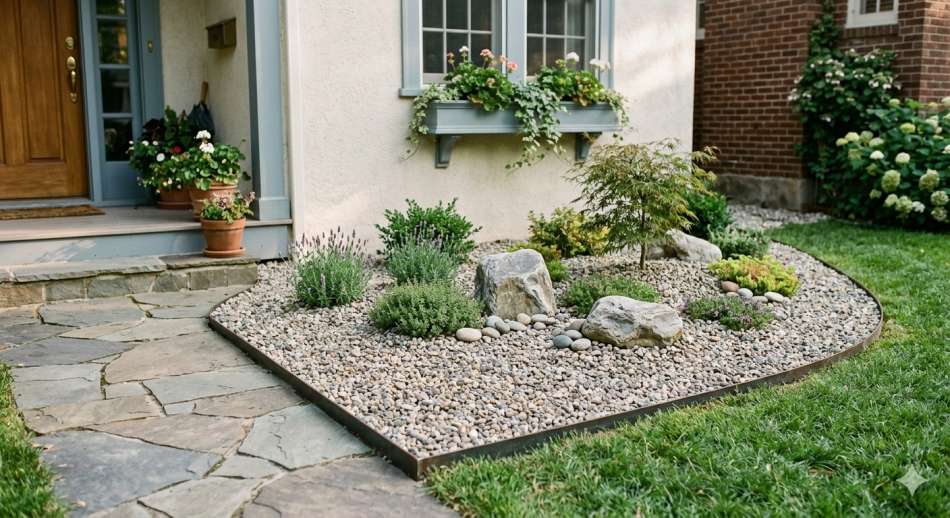
A gravel path is one of the fastest ways to turn a muddy or overgrown walkway into something that actually looks planned.
Mark out your path with a hose or spray paint, then dig down a couple inches and lay landscape fabric to block weeds. Pour gravel over the top and rake it level, adding edging on the sides to keep it contained. It holds up well and needs almost no upkeep once it’s down.
Check this: 16 Budget-Friendly Backyard Bird Sanctuary Ideas
5. Build a DIY Raised Garden Bed From Scrap Wood

Old fence boards, pallet wood, leftover lumber from another project—any of it works for a raised bed. You’re not buying anything new here, just putting scraps to use.
Cut the wood into four sides and screw them together into a rectangle or square. Set it on bare soil, fill it with a mix of compost and topsoil, and it’s ready to plant. Even rough, mismatched wood looks fine once it’s got plants growing out of it.
6. Repurpose Old Tires as Planters

Old tires that would otherwise sit in a garage or get hauled to the dump make surprisingly sturdy planters.
Stack one or two tires for depth, or leave a single tire flat on the ground as a low bed. Fill with soil and plant flowers, herbs, or vegetables. For a cleaner look, paint the outside first or tuck the tires behind low shrubs so only the greenery shows.
7. Create a Rock Garden in a Dry Patch

Every yard has that one spot where nothing seems to grow. Instead of fighting it, turn it into a rock garden.
Clear the area and arrange rocks of different sizes in a natural-looking cluster. Fill the gaps with drought-tolerant plants like succulents or sedum, which need almost no water. It turns a problem spot into a feature, and once it’s set up, it needs virtually no maintenance.
8. Install Solar-Powered Pathway Lights

Solar lights are cheap, need no wiring, and charge themselves during the day.
Push the stakes into the ground along a walkway or garden edge, spacing them evenly so the light spreads out at night. There’s no need to run electrical lines or flip a switch. Once they’re in the ground, they just work on their own.
Also Read: 22 Paver Edging Ideas for Your Backyard Garden
9. Plant a Mix of Perennials that Spread on their Own

Perennials come back year after year, and many varieties spread and fill in space without any help from you.
Plant a few clumps of spreaders like daylilies, black-eyed Susans, or hostas in the spots you want filled. Give them a season or two, and they’ll multiply on their own, giving you more plants without spending more money.
10. Add a Border of Low-Maintenance Shrubs
Shrubs give a yard structure and make beds look intentional instead of scattered.
Pick hardy varieties like boxwood, spirea, or juniper that don’t need constant pruning or feeding. Space them evenly along a bed or fence line and mulch around the base. Once they’re established, they mostly take care of themselves.
11. Use Free Wood Chips From a Local Tree Service

Tree companies often have more wood chips than they know what to do with, and many will drop off a load for free just to save themselves a dump trip.
Call around to local services and ask if they’re chipping nearby. Spread the chips over paths, beds, or bare patches once you have them. It’s the same benefit as store-bought mulch, just without the price tag.
12. Build a Simple Gravel Fire Pit Area
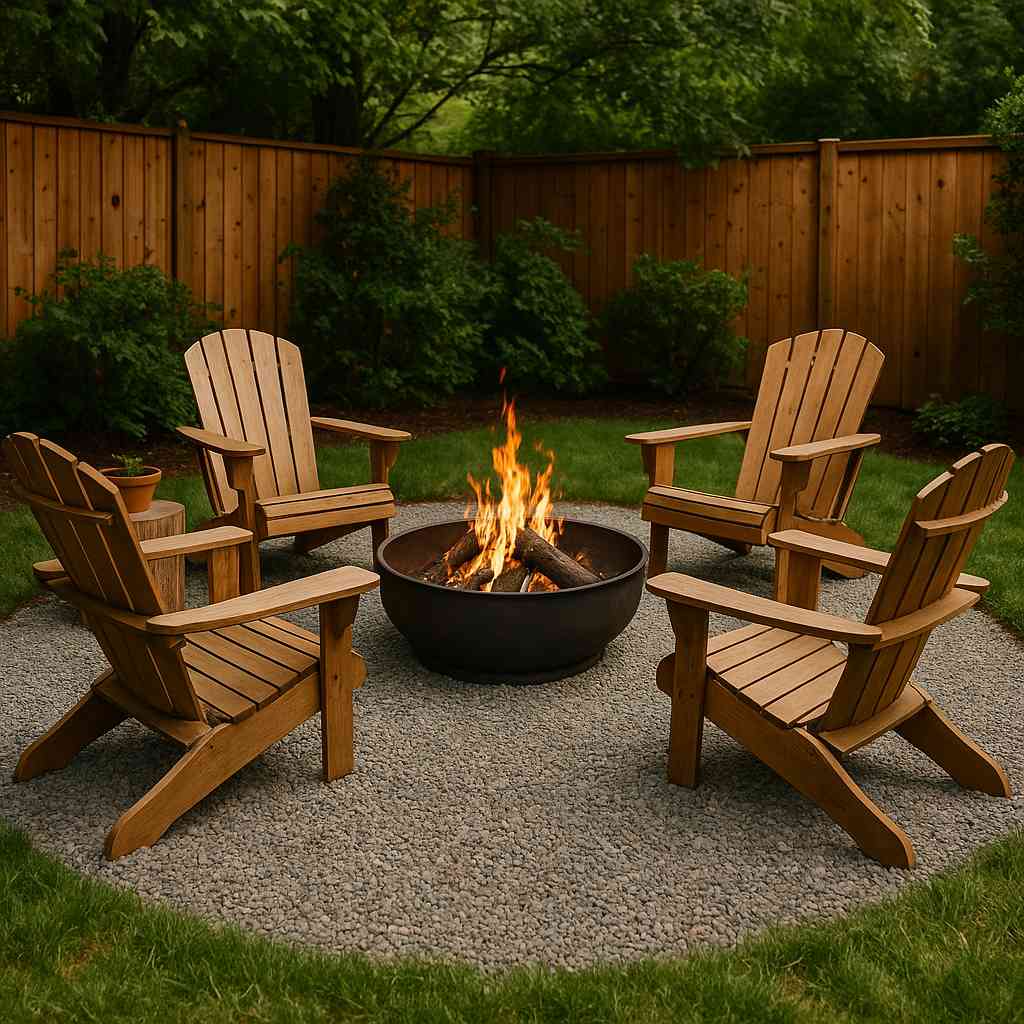
A fire pit area doesn’t need to be fancy to get used all the time.
Mark out a circle, dig down a couple inches, and line the edge with rocks or pavers. Fill the center with gravel and place a simple fire pit or ring in the middle. Add a few chairs around it, and you’ve got a gathering spot for next to nothing.
13. Divide and Replant Perennials From Your Own Yard

If you’ve already got perennials growing, you likely have more plants than you realize.
Dig up an established clump, gently split the root ball into sections, and replant the pieces wherever you want more coverage. It’s essentially free plants, straight from what’s already in your yard, and most perennials handle dividing without any issue.
14. Add a DIY Trellis for Climbing Plants
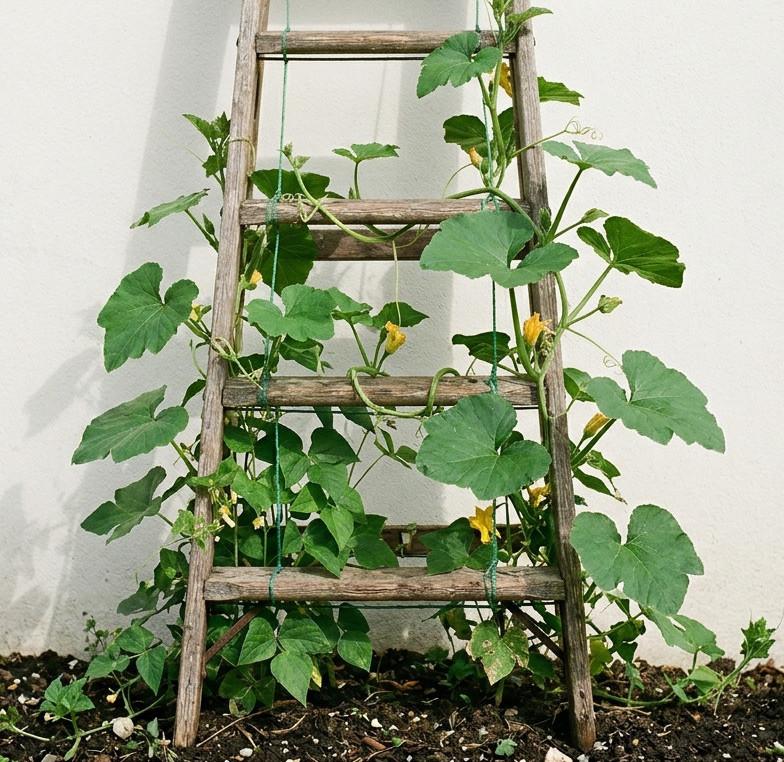
A trellis gives climbing plants like beans, cucumbers, or clematis somewhere to grow up instead of sprawling across the ground.
Nail or zip-tie together some leftover branches, bamboo stakes, or scrap wood into a simple lattice or A-frame shape. Stick it into the soil near the base of the plant and guide the vines toward it as they grow. It saves space and keeps your beds looking neater.
15. Paint Your Fence or Gate a Fresh Color

A tired, weathered fence can drag down an otherwise nice yard, and a coat of paint fixes that fast.
Clean off any dirt or mildew first, then apply an exterior paint or stain in a color that fits your space. Even a simple white, black, or natural wood tone makes a big difference. It’s one of the cheapest ways to make your whole yard feel updated.
16. Create a Mulched Seating Nook With a Bench

A quiet little corner to sit in doesn’t need a deck or patio, just a bit of mulch and a bench.
Clear a small area, lay down mulch or gravel as a base, and set a bench or a couple of chairs on top. Tuck it near some plants or under a tree for shade. It gives you a spot to actually enjoy the yard you’re working on.
17. Plant a Pollinator-Friendly Wildflower Patch
Wildflowers fill in bare patches with color and bring in bees and butterflies without any real upkeep.
Scatter a wildflower seed mix over loosened soil in a sunny spot and water until they sprout. After that, they mostly take care of themselves, coming back and reseeding on their own each year. It’s one of the lowest-effort ways to add color to a yard.
18. Use Broken Concrete as Stepping Stones

Leftover concrete from a demolition or old walkway doesn’t have to go to the dump. It works just as well as store-bought pavers.
Break larger pieces into stepping-stone-sized chunks if needed, then lay them along a path with a bit of space between each one. Fill the gaps with gravel, mulch, or low ground cover. It’s a free way to create a path that still looks put together.
19. Add Hanging Planters Made From Repurposed Containers

Old buckets, tin cans, or even milk jugs can all be turned into hanging planters with a little drilling.
Punch a few drainage holes in the bottom, attach some rope or wire for hanging, and fill with soil and plants. Hang them from a porch beam, fence, or tree branch. It adds greenery at eye level without taking up any ground space.
20. Install a Simple Drip Irrigation System

A basic drip system waters your plants slowly and directly at the roots, which saves water and cuts down on how often you need to be out there with a hose.
Run a length of soaker hose or drip tubing along your garden bed and connect it to an outdoor spigot with a timer. Once it’s set up, it waters on its own schedule. It pays for itself quickly in saved time and lower water bills.
21. Create a Vertical Garden Using Pallets

A single wooden pallet, stood on end, turns into a vertical planter that takes up almost no space.
Line the back and bottom with landscape fabric to hold soil in place, then fill the gaps between slats with soil and plants. Lean it against a wall or fence to plant it. Herbs, succulents, and small flowers all do well in this setup.
22. Add Outdoor String Lights for Ambiance
String lights turn a plain backyard into a space people actually want to hang out in after dark.
Run the lights between two posts, along a fence line, or across a patio, securing them with hooks or clips. Plug them into an outdoor outlet or use a solar-powered set. It’s a small addition that changes the whole feel of the space at night.
23. Plant Native Grasses that Need Little Upkeep
Native grasses are built for your local climate, which means they need less water, less fertilizer, and less fussing over in general.
Look up a few varieties native to your region and plant them in clusters along a border or bare patch. Once established, they mostly maintain themselves through the seasons. It’s an easy way to add texture and movement to your yard without extra work.
24. Build a Small DIY Water Feature From a Container

A water feature doesn’t need to be a full pond. A large pot, barrel, or basin can work just as well and costs a fraction of the price.
Line the container if needed, fill it with water, and add a small solar-powered pump to keep the water moving. Toss in a few aquatic plants or floating flowers for a finished look. It brings the sound of moving water to your yard without any digging.
25. Use Straw Bales as Temporary Garden Borders

Straw bales make a quick, no-dig border for a garden bed, and they’re cheap to pick up from most farm or garden supply stores.
Line them up along the edge of your bed to hold in soil and mulch. Over time, they’ll break down and can be worked right into the soil as compost. It’s a temporary fix that ends up feeding your garden in the long run.
26. Add Potted Plants Near the Entryway

A couple of potted plants by the front door make a house feel welcoming without any real landscaping work.
Pick a few pots in different heights and fill them with easy plants like ferns, geraniums, or small shrubs. Group them near the entrance where they’ll get noticed first. It’s a small touch that makes a big first impression for very little cost.
27. Create a Compost Area to Fuel Free Fertilizer

Composting turns kitchen scraps and yard waste into free fertilizer for everything else on this list.
Set aside a corner of the yard for a simple compost bin, or build one from scrap wood or wire fencing. Add food scraps, leaves, and grass clippings, turning the pile occasionally to speed things along. In a few months, you’ll have rich compost ready to feed your beds for free.
Conclusion
You don’t need a big budget or a professional crew to turn your yard into something you’re proud of. A little creativity, some elbow grease, and a handful of free or cheap materials can go a long way.
Start with one or two ideas that fit your space and your schedule, then build from there as time and budget allow. Before long, you’ll have a yard that looks like you spent way more than you actually did.


Khaja Moinuddin, a computer science graduate, finds joy in gardening and homesteading. Join him on this blog as he shares his experiences in homesteading, gardening, and composting