Grass looks great in a backyard, but keeping it that way with dogs around is a whole different story.
Between the running, digging, playing, and frequent bathroom breaks, a lawn can turn into a patchy, muddy mess faster than you’d expect.
Then there’s the mud tracked in after every rain, plus that one worn-out path where your dog runs the same route along the fence line, day after day. If you’re tired of reseeding, mowing, and patching up the same spots over and over, you don’t have to keep fighting a losing battle.
A dog-friendly backyard doesn’t need grass to look good or feel comfortable.
Gravel, mulch, pavers, artificial turf, and a handful of other low-maintenance options can give your dog plenty of room to run while cutting your yard work way down.
1. Pea Gravel Dog Run
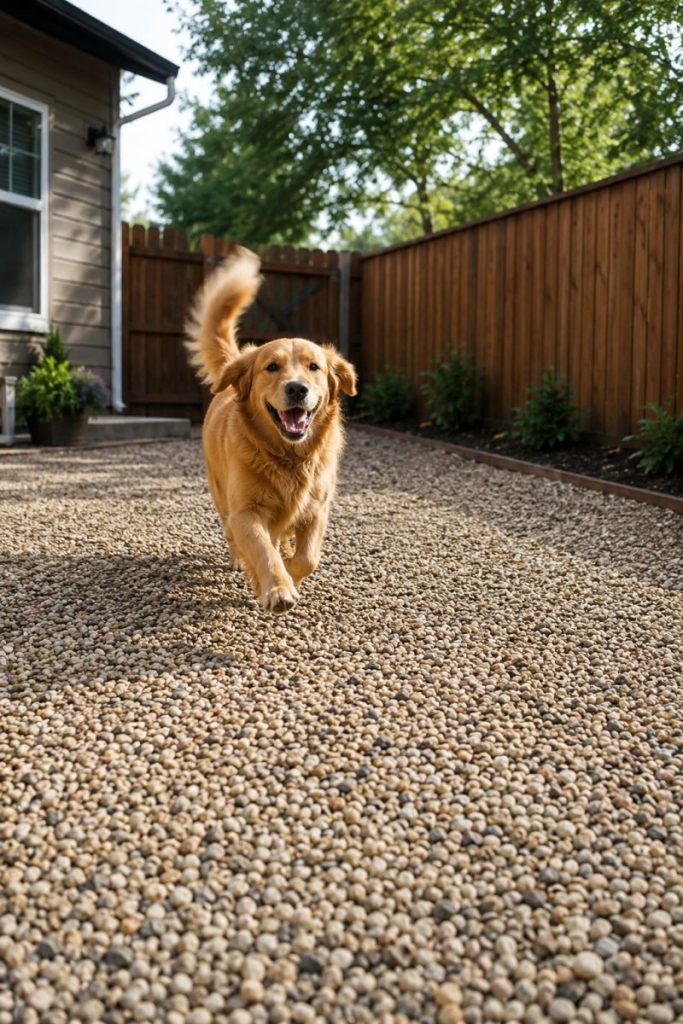
Pea gravel is one of the easiest swaps if you’re ditching grass. The stones are small and rounded, so they’re soft on paws and comfortable for dogs to walk and run on all day.
Rain is where pea gravel really shines. Water drains through it fast, so you won’t be dealing with puddles or mud after a storm. And if a section gets worn down or dirty over time, you can just top it up with more gravel instead of redoing the whole area.
2. Artificial Turf for Dogs
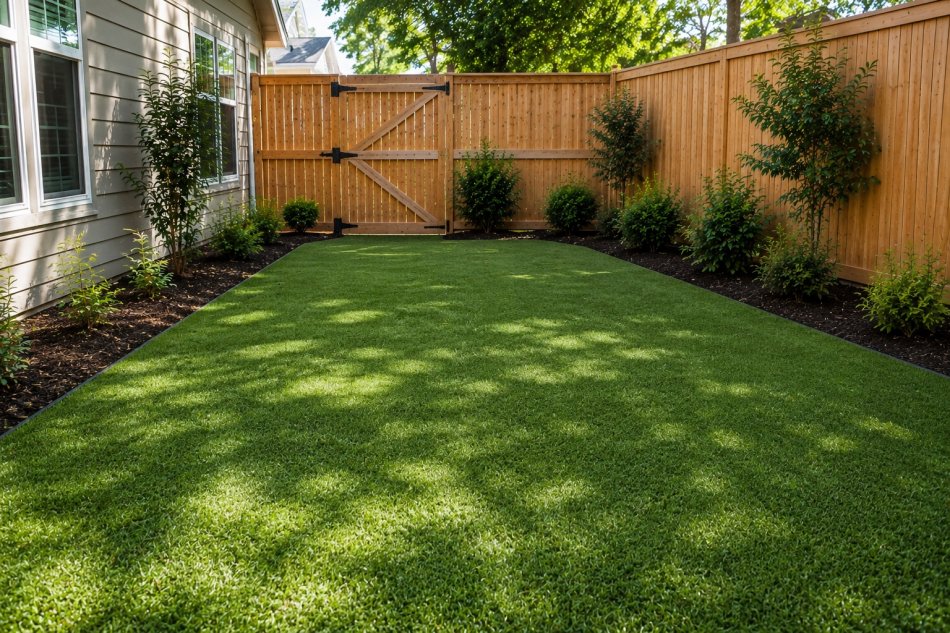
If you like the look of a green lawn but not the upkeep, artificial turf gets you both. No mowing, no reseeding, no brown patches from where your dog likes to lie down.
The key is picking turf made specifically for pets. Regular artificial grass can trap odors and hold onto urine, so look for pet-friendly turf with built-in drainage holes that let liquid pass straight through to the base below.
Even with good drainage, you’ll want to rinse it down regularly and give it an occasional deeper clean to keep smells from building up.
Also Read: 17 Vinyl Porch Railing Ideas to Transform Entrance
3. Mulched Backyard Play Area
Wood mulch gives your dog a soft, cushioned surface that’s easier on joints than bare dirt or concrete. It works especially well tucked around trees or garden beds, where grass tends to struggle anyway.
Not all mulch is safe for dogs, though. Skip cocoa mulch entirely. It contains theobromine, the same compound that makes chocolate toxic to dogs, and the sweet smell can actually tempt them to eat it. Stick with cedar, pine, or another dog-safe wood mulch instead.
4. Decomposed Granite Patio
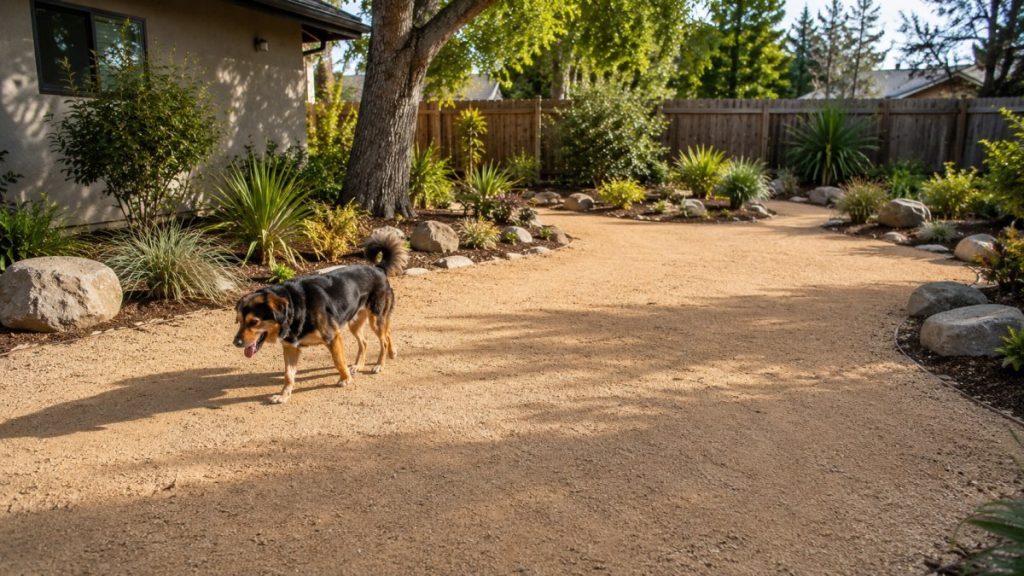
Decomposed granite, sometimes called DG, is crushed granite that packs down into a firm, natural-looking surface. It has an earthy, sandy color that blends into most backyard landscapes.
Compared to bare concrete, it’s noticeably easier on your dog’s paws, especially in hot weather when concrete can get uncomfortably warm. It works well both as a pathway material and as a larger open area for dogs to move around in.
5. Gravel and Paver Combination
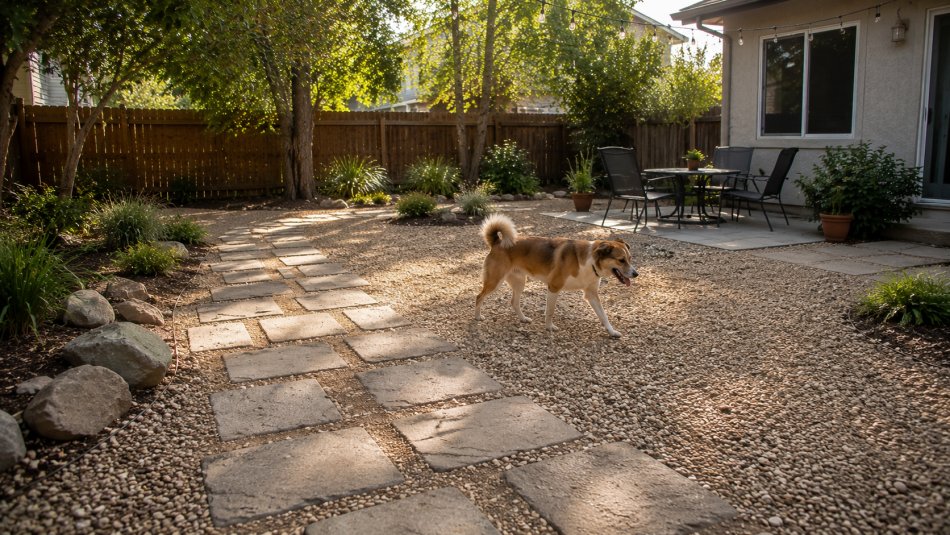
Pairing pavers with gravel gives you the best of both. Use pavers to create clear walking paths or seating areas, then fill the gaps and surrounding space with gravel.
This combination adds structure to your backyard without feeling too rigid. The gravel sections still give your dog plenty of room to roam, while the pavers keep high-traffic areas stable and easy to walk on, even after rain.
6. Concrete Dog Patio
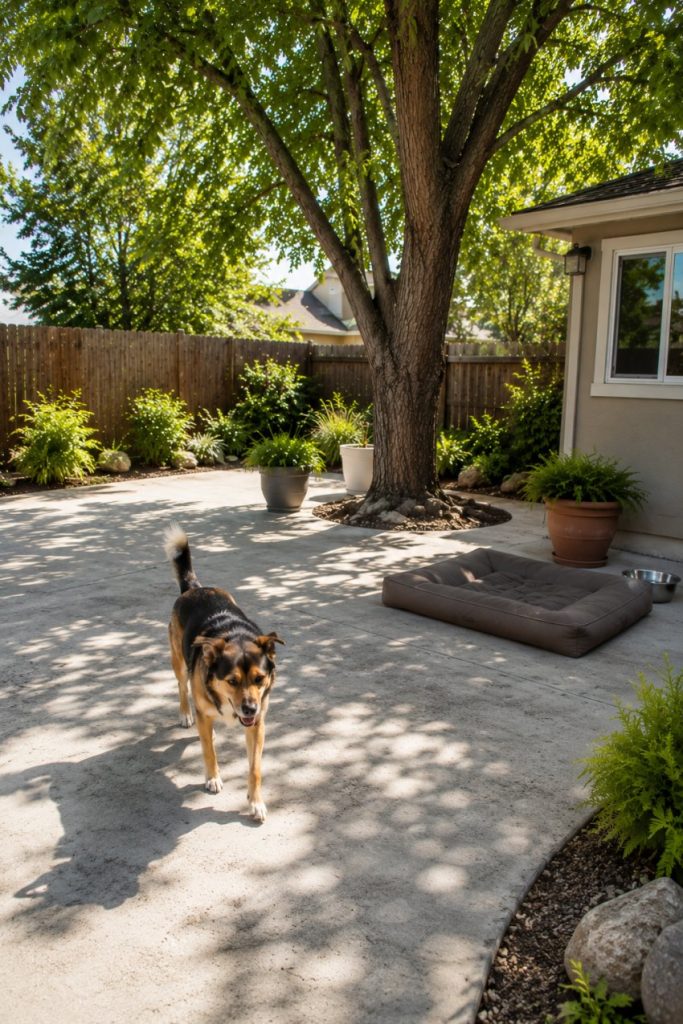
Concrete is about as low-maintenance as it gets. It holds up to heavy digging, running, and rough play, and cleanup is as simple as sweeping or hosing it down.
The one downside is that concrete offers zero natural shade or cushioning. If you go this route, plan for a shaded spot, whether that’s a patio umbrella, a pergola, or a shady tree nearby, along with a comfortable bed or mat where your dog can rest without lying on hot, hard ground.
7. Large Paver Patio
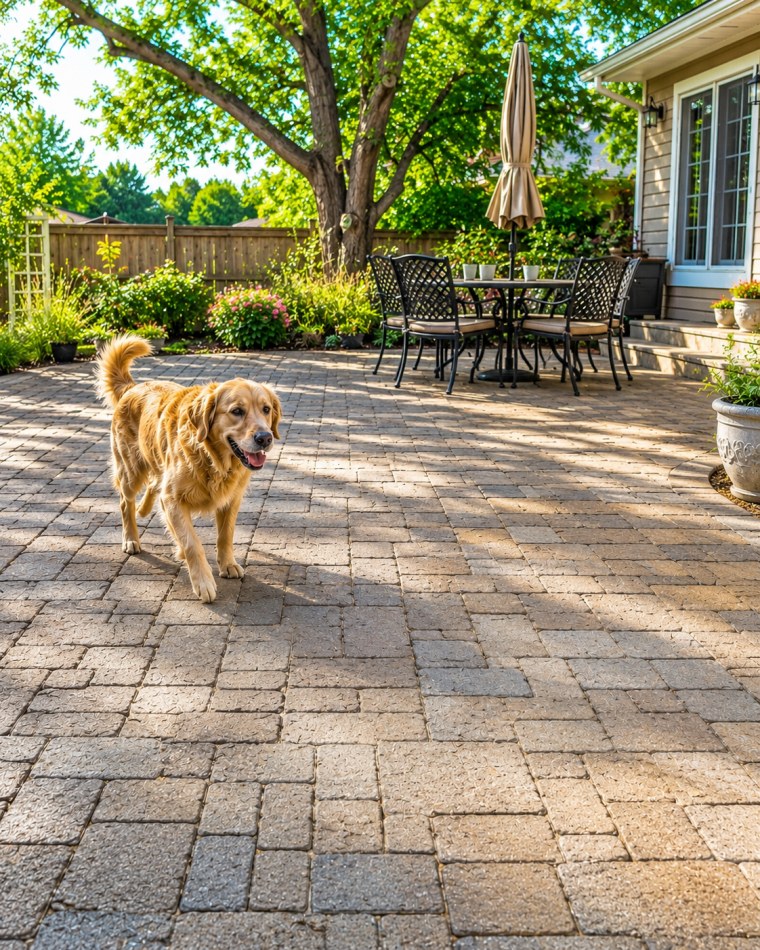
A large paver patio gives both you and your dog plenty of room to spread out. It’s a solid choice if you use your backyard as much as your dog does.
Pavers are easy to sweep and hose off, so muddy paws and stray fur aren’t a big deal. Just look for textured or slightly rough pavers rather than smooth, polished ones. Smooth pavers can get slippery when wet, which isn’t ideal for a dog running at full speed.
8. Dog-Friendly Groundcover
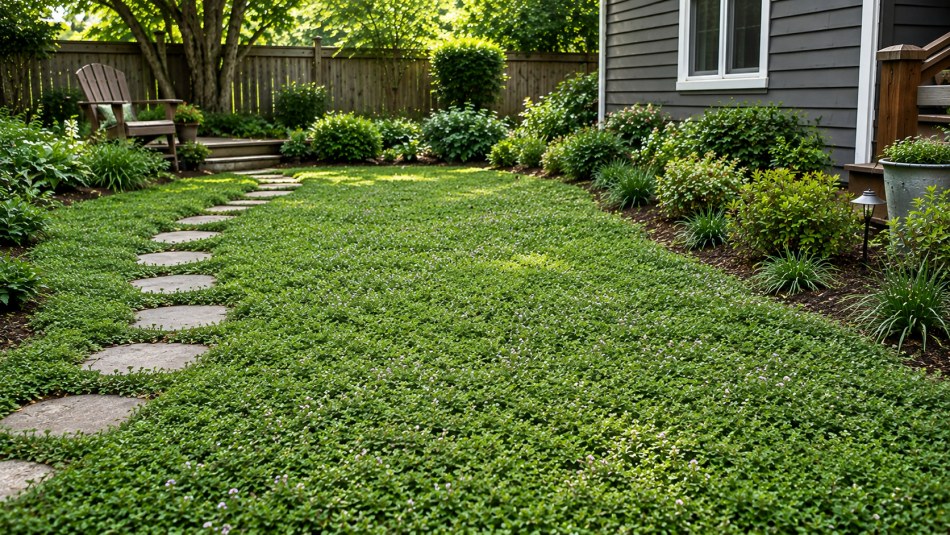
If you still want some greenery, low-growing groundcover plants can replace a traditional lawn. Unlike grass, many groundcover varieties handle dog traffic without turning into bare dirt within a season.
The right choice depends on your climate and how hard your dog plays. Creeping thyme, elfin thyme, and dwarf mondo grass are popular picks in USDA zones that suit them.
Whatever you choose, keep newly planted areas fenced off or blocked for a few weeks so the roots have time to establish before your dog starts running over them.
9. Clover Backyard
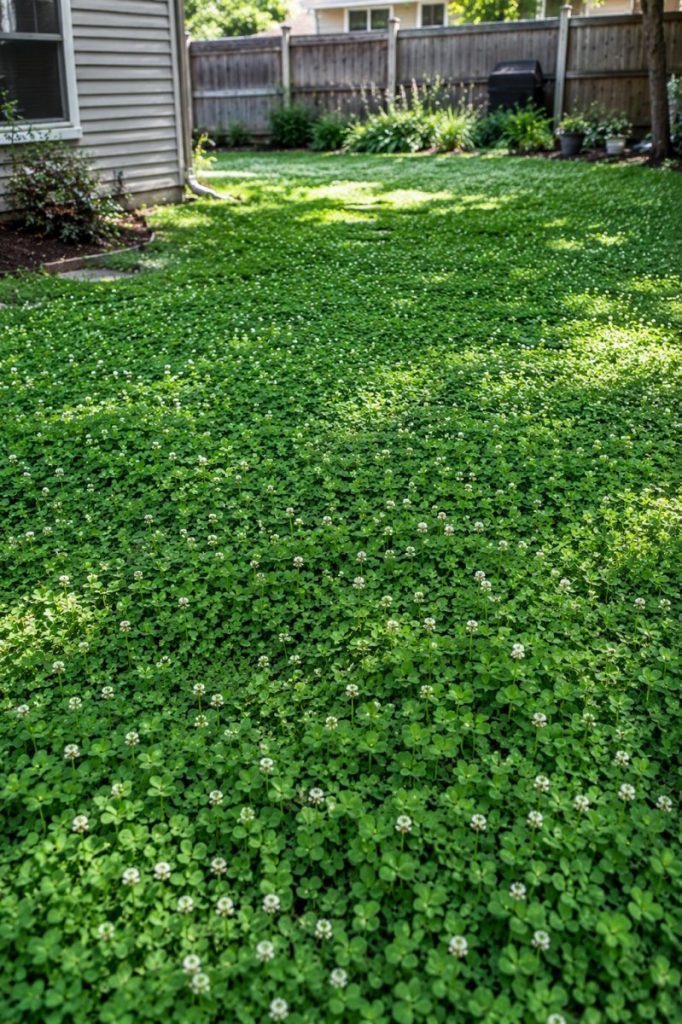
Clover is often planted alongside or instead of grass, and it holds up better to moderate foot traffic. It stays green, doesn’t need much fertilizer, and tends to bounce back faster from urine spots than traditional turf grass.
It’s not indestructible. A dog that digs constantly or wears the same path every day will still create bare patches. But for a yard that gets regular, moderate use, clover is usually easier to maintain than a conventional lawn, with less mowing and no need for chemical weed killers.
10. Sand Play Area
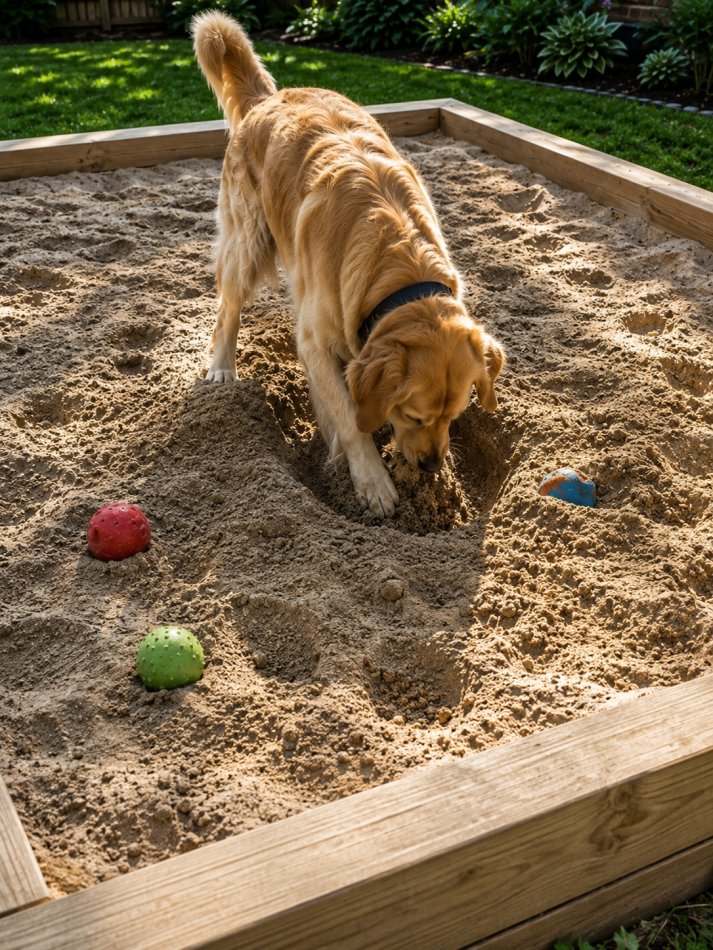
For dogs that love to dig, fighting the instinct usually doesn’t work. Giving them a designated spot to do it does.
A sand play area gives your dog a place to dig to their heart’s content without tearing up the rest of your yard.
Use clean, pet-safe sand, and keep it contained with a border, raised frame, or small retaining wall so it doesn’t spread into walkways or garden beds. Bury a few toys or treats in it to help redirect your dog’s digging habit toward that one spot.
11. Wood Chip Dog Run
Wood chips create a defined running path that looks intentional rather than worn down. They’re especially useful along fence lines, where dogs tend to pace back and forth all day anyway.
The bigger benefit is mud control. Wood chips absorb some moisture and keep paws off bare dirt, so you’ll deal with a lot less tracked-in mess after rain. Over time the chips break down and compact, so plan to refresh the surface every so often to keep it doing its job.
Also Read: 27 Low Cost DIY Patio Ideas that Fits Your Budget
12. Flagstone Backyard
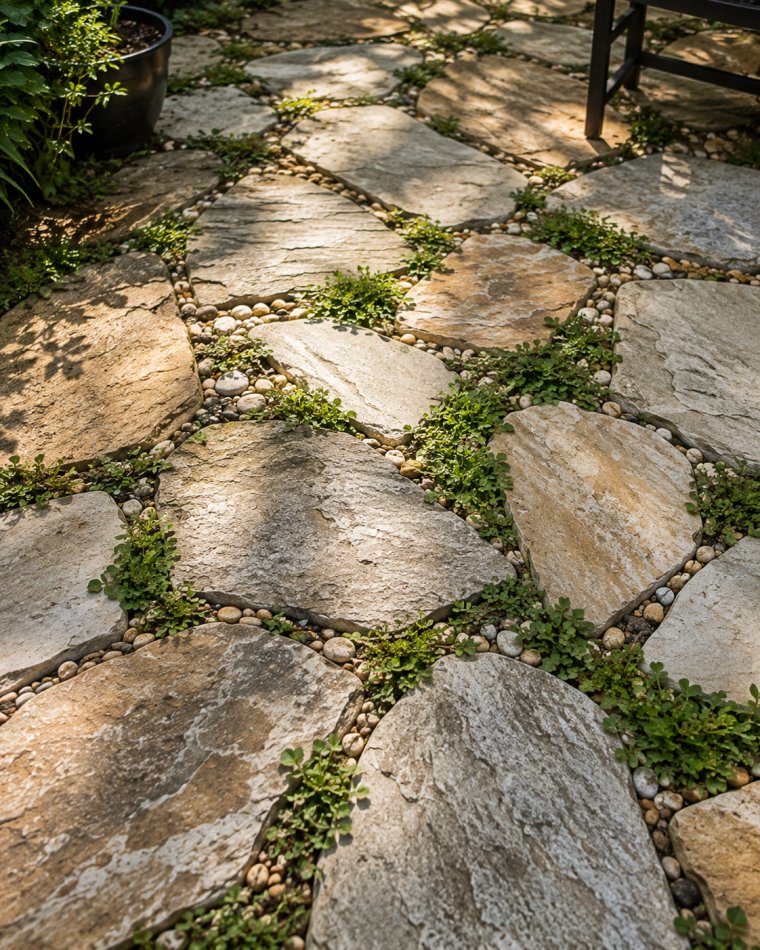
Flagstone gives you a natural stone surface that’s both durable and good-looking, with an irregular shape that fits a more relaxed, organic backyard style than uniform pavers.
Instead of fitting the stones tightly together, leave gaps between them filled with gravel or low groundcover. This mix of hardscape and softer material gives your dog some variety underfoot and keeps the whole area from feeling like one solid slab.
13. Gravel Path With a Digging Corner
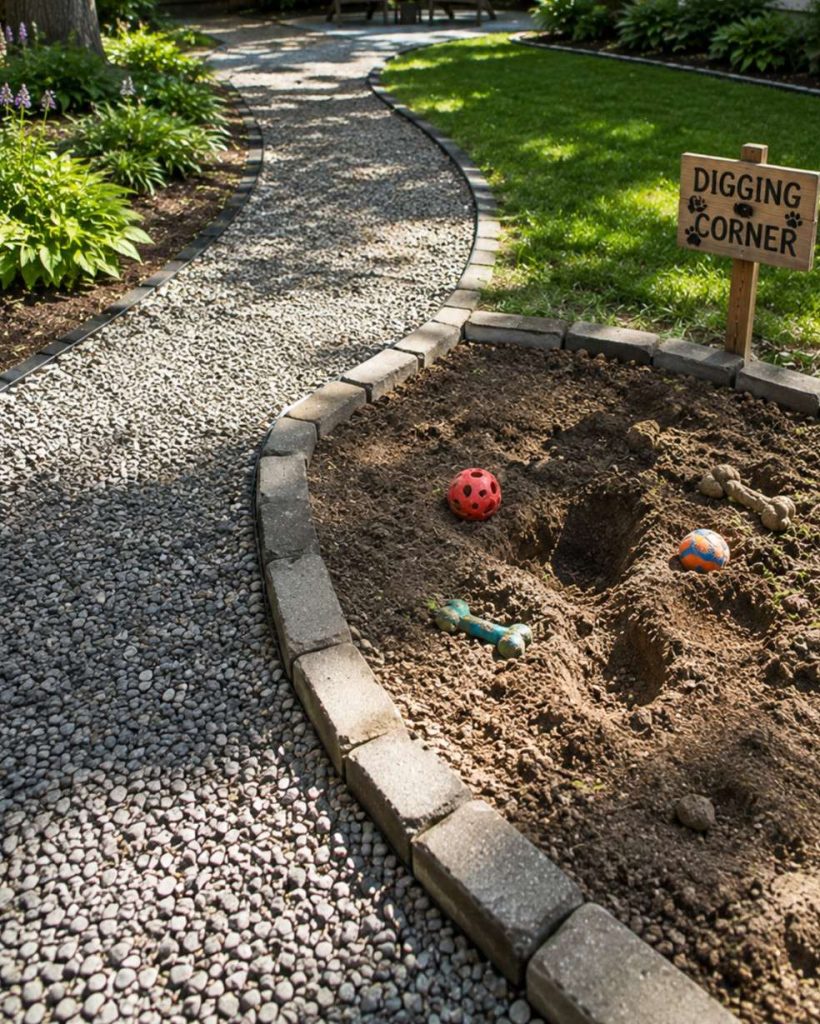
This is a simple way to work with your dog’s habits instead of against them. Use gravel to create clear paths for walking and general movement around the yard, then set aside one corner specifically for digging.
Mark the digging zone clearly, whether with a border, a change in surface material, or just consistent placement of toys there.
Dogs pick up on patterns fast, and giving them a designated spot often cuts down on random digging elsewhere in the yard.
14. Raised Deck With a Dog Run
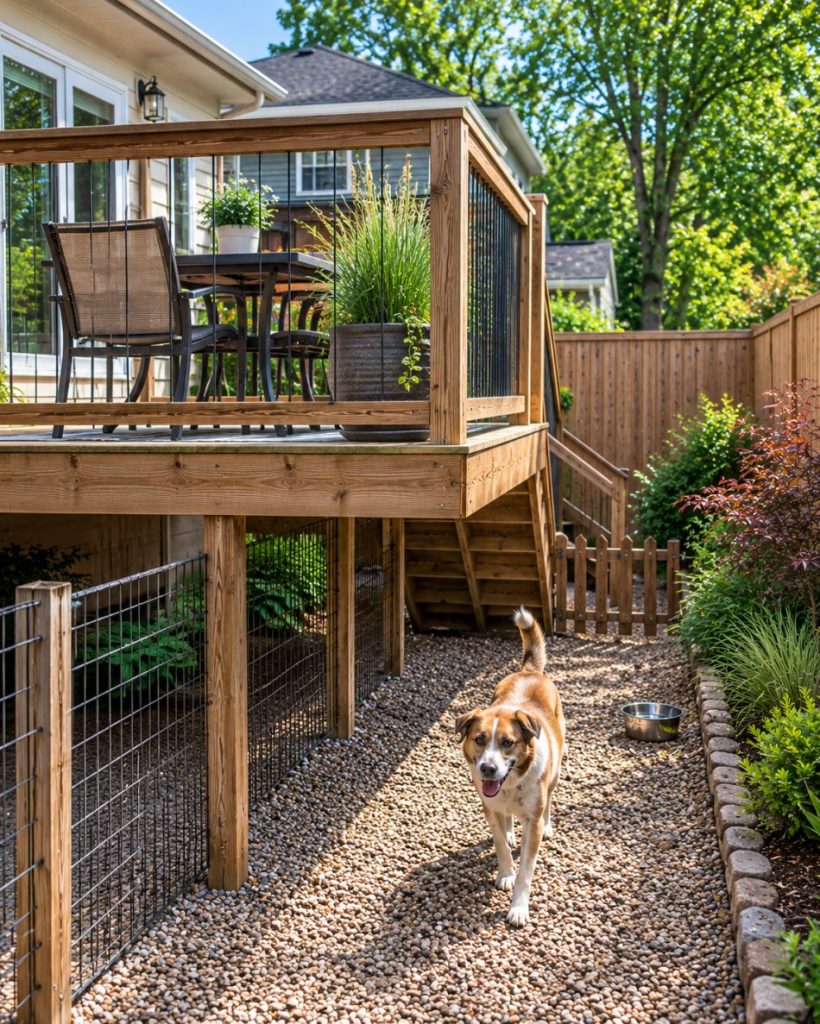
A raised deck gives you a comfortable outdoor living space, somewhere to sit, eat, or relax above ground level. Pair it with a separate dog-friendly surface underneath or alongside it, like gravel or mulch, and you get functional space for both of you.
This setup is especially useful in small backyards where every square foot needs to earn its place. The deck handles your outdoor living needs, while the ground-level run gives your dog room to move without the two spaces competing for the same footprint.
15. Bark Mulch Backyard
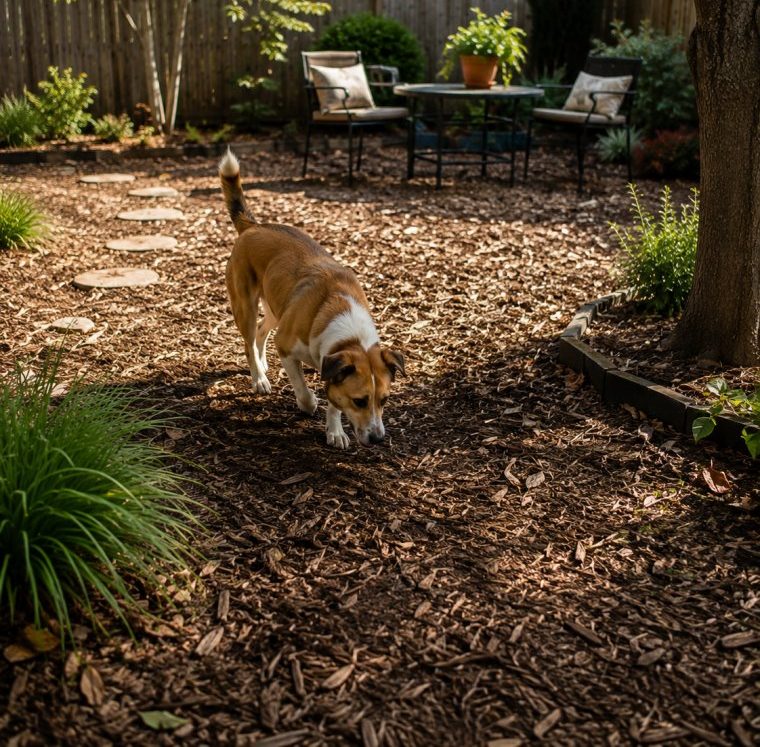
Bark mulch has a softer, more woodland feel than gravel or stone, and it works especially well layered around seating areas, trees, or garden beds where you want a natural look.
It does shift and compact with regular use, so expect to rake it back into place or add fresh mulch periodically, especially in high-traffic spots where your dog runs the same route often.
16. Outdoor Dog-Friendly Patio
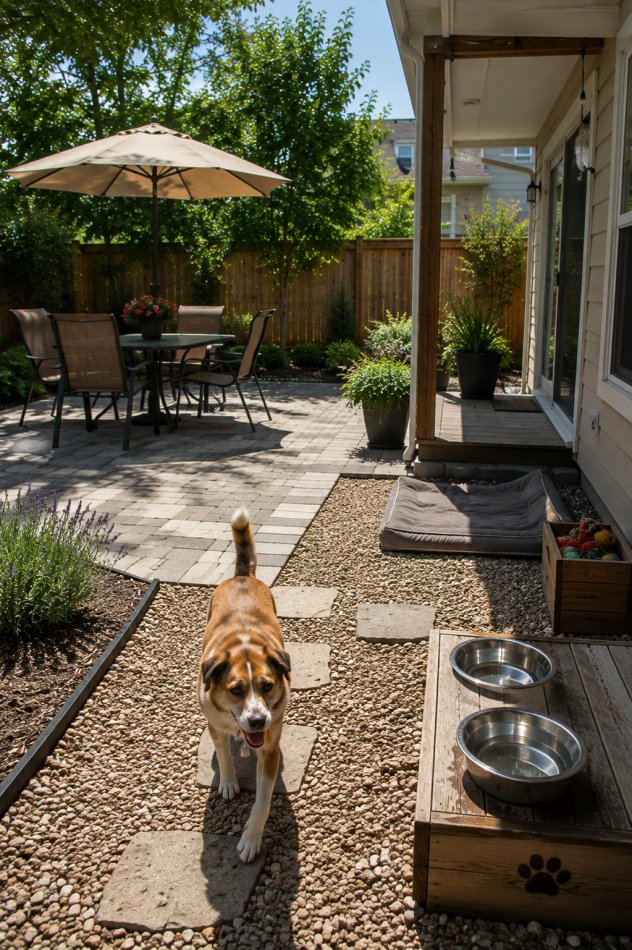
This is less about one material and more about combining a few. Pavers, concrete, and gravel can work together to create different zones within the same patio space, one area for sitting, another for your dog to move around in.
Add the details that make it functional day to day: a water bowl station, a dog bed or mat in the shade, and maybe a spot for toys. A backyard that accounts for both people and dogs from the start tends to get used a lot more than one that’s an afterthought for either.
Also Read: 18 Practical Ideas to Hide Trash Cans Outside
17. River Rock Landscaping
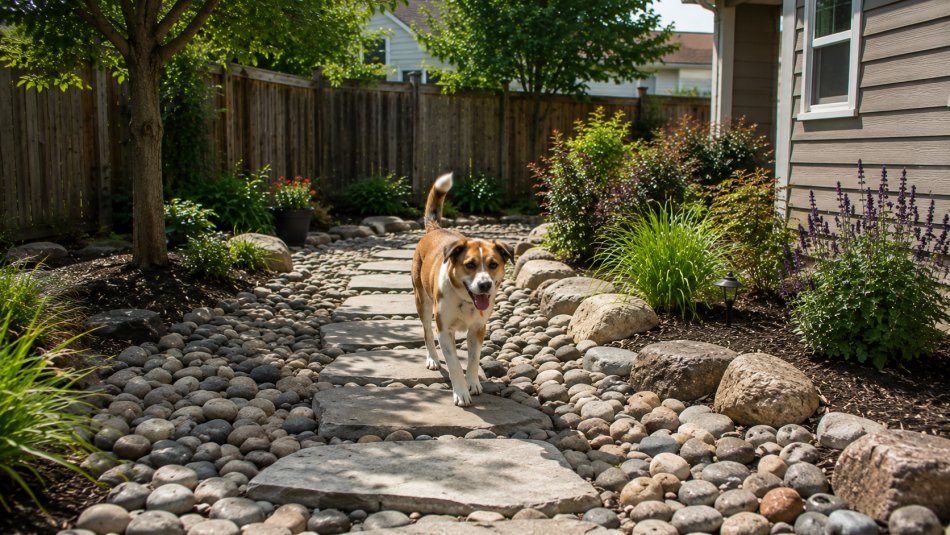
River rock adds a decorative, natural touch to backyard borders or accent areas. The smooth, rounded stones look great paired with large stepping stones for a path that’s both functional and attractive.
One important note: skip very small river rock. Dogs, especially puppies or dogs that like to chew, can accidentally swallow small stones, which can lead to a trip to the vet. Stick to larger rocks that are too big to be a choking or ingestion risk.
18. Backyard With a Dedicated Dog Run
A dedicated dog run gives your dog a clear, defined space that’s just theirs. Use fencing, edging, or even a change in surface material to separate it from the rest of the yard.
For the surface itself, prioritize good drainage and easy cleanup. Pea gravel, decomposed granite, or artificial turf all work well here, since dog runs tend to get more concentrated use than the rest of the backyard.
19. Dog-Friendly Xeriscape Yard
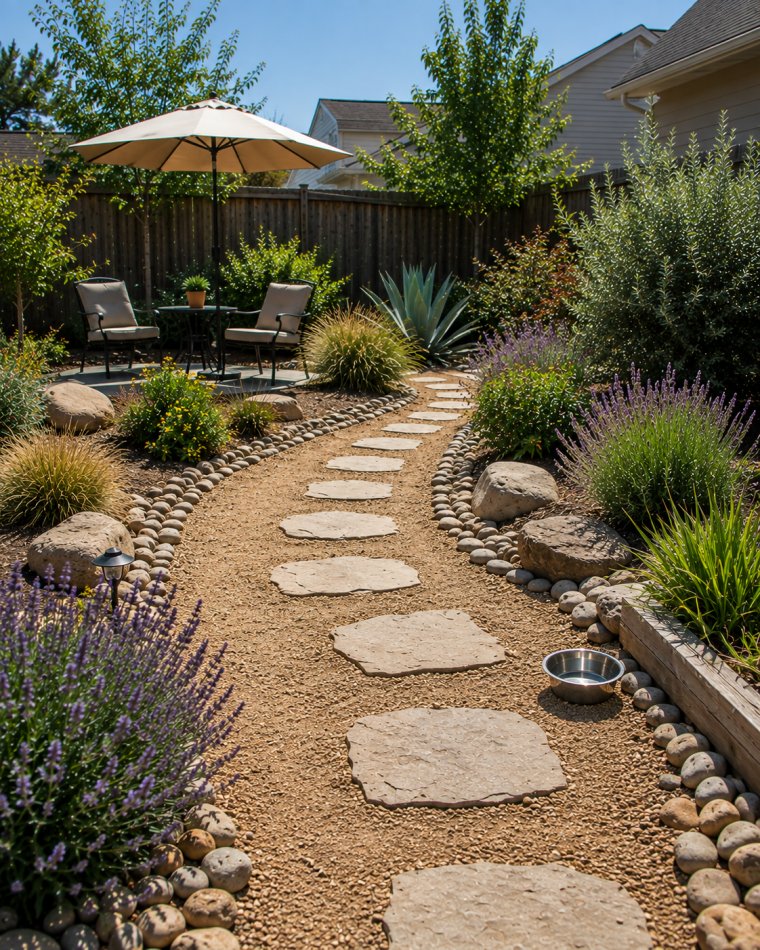
Xeriscaping means designing a yard around drought-tolerant plants and materials instead of a thirsty lawn. For dog owners, it’s a practical way to cut down on watering and mowing while still having an attractive backyard.
Combine gravel or decomposed granite for open areas, pavers for pathways, and drought-tolerant shrubs or plants suited to your climate. Just double check that whatever you plant is non-toxic to dogs, since xeriscape plant lists often include options like succulents that aren’t always pet-safe.
20. Patio With a Small Potty Area
Dogs tend to pick their own bathroom spot anyway, so you might as well plan for it. A small, designated potty area keeps mess contained to one spot instead of scattered across the yard.
Gravel, mulch, or artificial turf all work well here since they’re easy to hose down or spot-clean. Position the area away from your outdoor dining or seating space, both for the obvious reason and so guests aren’t sitting near it.
21. Mixed-Surface No-Grass Backyard
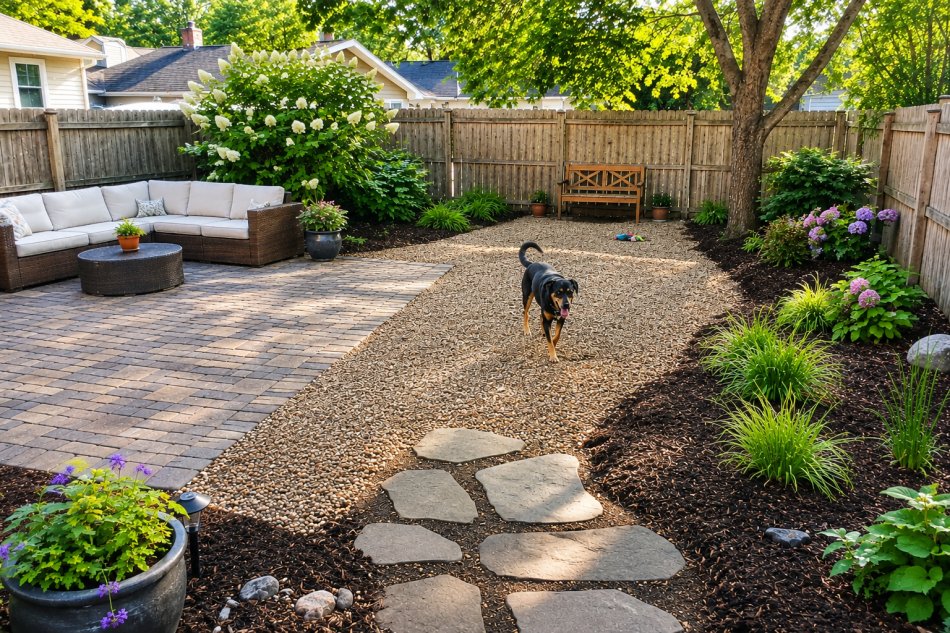
Rather than committing to one material for the entire yard, mixing surfaces often works better in practice. Different zones can serve different purposes: pavers for a patio, pea gravel for a dog run, mulch around garden beds, and dog-friendly plants along the borders.
This approach also makes the yard easier to adjust over time. If one section isn’t working, whether it’s wearing down too fast or your dog just doesn’t like it, you can swap that zone without redoing the whole backyard.
Check this: 18 Sloped Front Yard Landscaping Ideas
How to Choose the Best No-Grass Surface for Your Dog?
For active dogs, go with gravel, artificial turf, pavers, or concrete. These hold up to constant running and movement.
For diggers, give them a sand pit or dedicated digging corner instead of fighting the habit.
For rainy climates, prioritize drainage. Pea gravel, decomposed granite, and drainage-hole turf handle wet weather best.
For hot climates, skip surfaces that trap heat. Concrete and dark turf can burn paw pads, so add shade or choose lighter materials.
For older dogs, pick flat, non-slip surfaces like textured pavers or packed decomposed granite over loose gravel.
For messy dogs, choose surfaces you can hose off fast, like concrete, pavers, or turf.
What to Avoid in a Dog-Friendly No-Grass Backyard?
Skip sharp or jagged gravel. It can cut paw pads. Use smooth, rounded stones instead.
Check plants for toxicity before adding them. Many common landscaping plants are harmful to dogs.
Avoid cocoa mulch. It’s toxic and smells appealing to dogs, a bad combination.
Don’t install large shadeless areas, especially concrete or dark turf in hot climates.
Steer clear of small, loose materials like tiny pebbles. Dogs can swallow them.
Avoid poorly draining areas that stay muddy long after rain.
Conclusion
A no-grass backyard isn’t a downgrade. It’s often easier to maintain while giving your dog a better space to play.
The best setups combine durable surfaces, good drainage, some shade, and at least one area just for your dog.
You don’t have to choose between a good-looking backyard and a dog-friendly one. The right mix of materials gives you both.


Khaja Moinuddin, a computer science graduate, finds joy in gardening and homesteading. Join him on this blog as he shares his experiences in homesteading, gardening, and composting