As a beginner, I never really understood how important it is to have a garden border—until I slowly noticed my backyard turning into a mess. Weeds started invading the garden beds, grass kept creeping in, and mulch was spilling everywhere after watering.
Everything changed when I bordered my landscape with painted rocks and gravel pathways. Suddenly, things looked cleaner and more put together.
But it’s not just about aesthetics—landscape bordering helps lock in soil moisture, reduces weed growth, and clearly separates pathways and lawns from your garden area, making the whole space easier to manage.
As mentioned earlier, instead of spending a lot of money, you can easily reuse leftover materials like rocks, wood chips, or stones to create a beautiful landscape border. It’s simple, budget-friendly, and still looks great when done right.
Below are few such landscape border ideas you can try.
18 Inexpensive Landscape Border Ideas
My grandma never believed in throwing things away—she always said everything can be reused somewhere or the other.
Back then it felt old-school, but now it just makes sense, especially in the garden.
That’s exactly why we end up with a storeroom or a random corner in the garden—filled with “might be useful someday” stuff.
1. Painted Rock Border
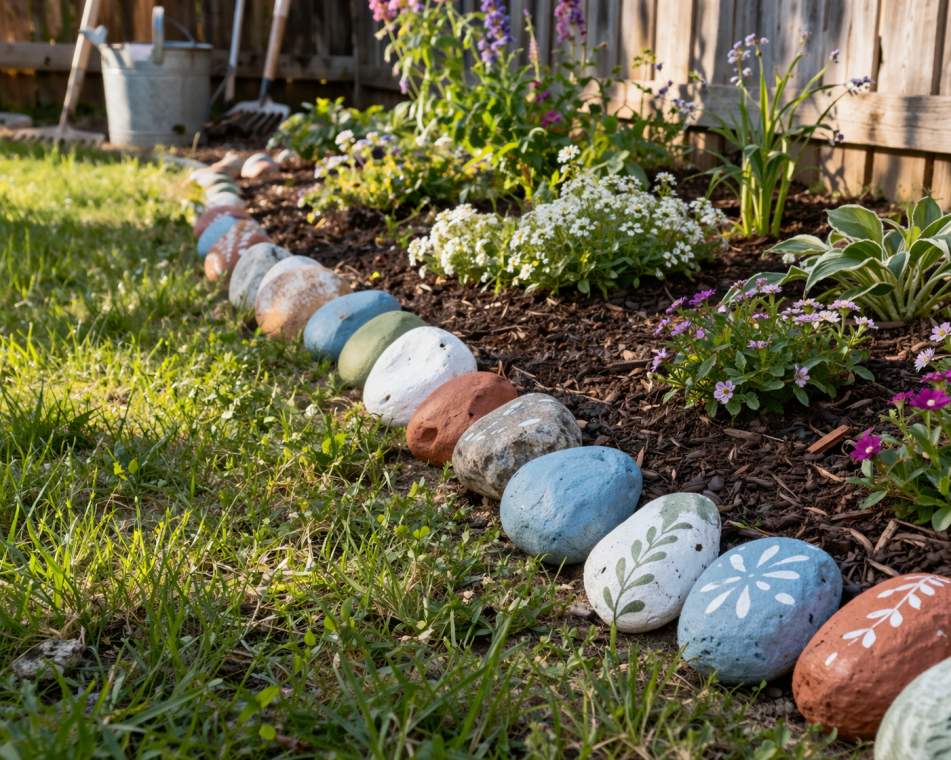
Start by collecting medium-sized rocks—either from your yard or nearby areas. Give them a quick wash and let them dry, then paint them in colors you like (or keep it simple with whites and natural tones).
Once ready, just line them up along the edge of your garden bed, slightly pressing them into the soil so they stay in place.
You don’t need to be perfect here—the uneven look actually adds charm.
This kind of border instantly makes your garden look neat and intentional. It creates a clear boundary that keeps mulch and soil from spilling out, and it also helps slow down weeds and grass from creeping in.
Plus, the painted touch adds personality without spending much at all.
Also Read: 27 Low Cost DIY Patio Ideas
2. Gravel Edge Border
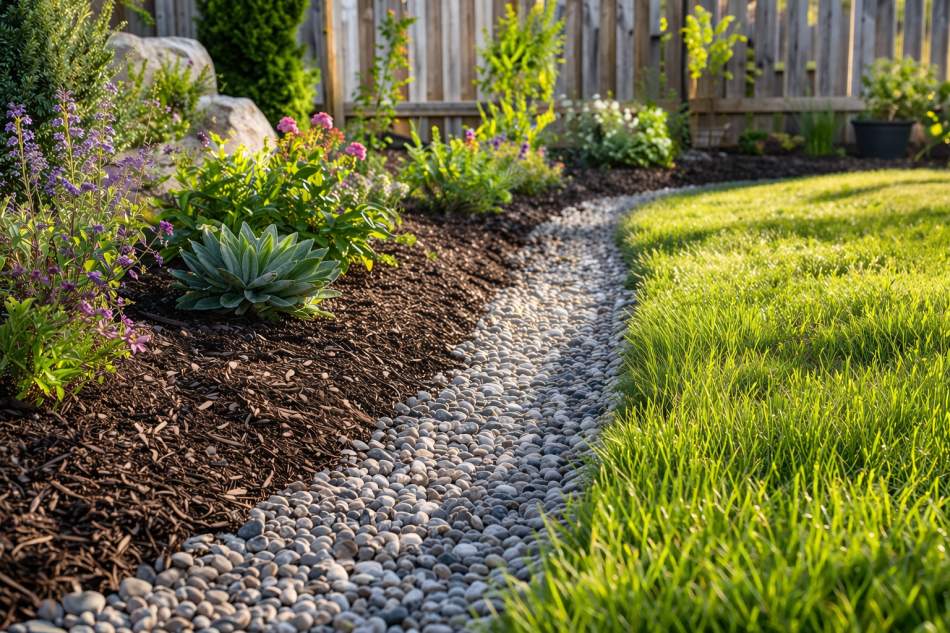
If you want something quick and fuss-free, gravel is a solid option. Just outline your garden edge, scrape out a narrow strip of soil, and lay down some landscape fabric.
After that, pour in your gravel and level it out with your hands or a rake. You don’t need to be too precise—slightly uneven edges can actually make it look more natural.
What makes gravel really useful is how it quietly does its job. It blocks grass from sneaking into your beds, keeps mulch from spilling over, and helps water drain instead of pooling up.
Over time, it also cuts down the amount of weeding you’ll need to do, which is always a win.
3. Recycled Brick Edging
Got some old bricks lying around? This is where they shine. Just dig a shallow line along your garden edge and start placing the bricks side by side.
You can lay them flat for a clean look or tilt them slightly for that classic zigzag style. No need for cement unless you want something permanent—just press them firmly into the soil.
Bricks give your garden a structured, polished feel without trying too hard. They hold soil and mulch in place really well and create a strong barrier against grass spreading in. Plus, since they’re heavy, they don’t shift around easily, so once they’re set, you can pretty much forget about them.
4. Wood Log Border
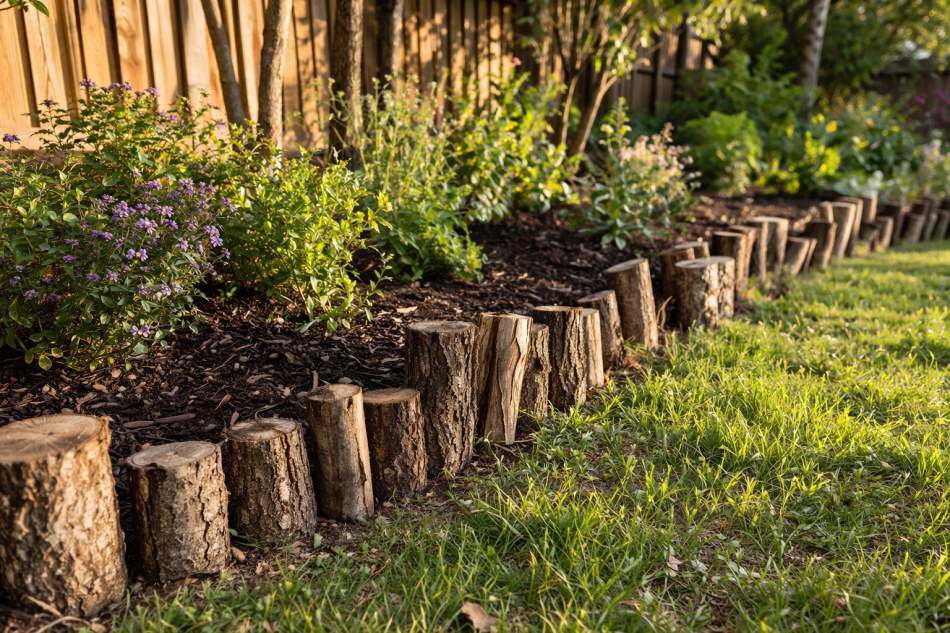
If you’ve got leftover firewood or fallen branches, don’t toss them—turn them into a border.
- Cut logs into similar lengths and place them upright or lay them horizontally along the edge.
- Push them slightly into the soil so they stay put, or secure them with a bit of dirt packed around the base.
This style brings a natural, rustic vibe that blends right into the garden. It helps define the space while keeping everything contained, especially mulch and loose soil.
Over time, the wood may weather or fade, but honestly, that aged look only makes it more charming.
5. Pallet Wood Edging
Old pallets are super easy to repurpose here.
- Break them down into planks, cut them to size, and line them along your garden edge—either vertically like mini fences or laid flat for a cleaner look.
- You can leave the wood raw for a rustic feel or give it a quick stain or paint if you want it to pop a bit.
- This kind of border is lightweight but still does a good job of holding soil and mulch in place.
It clearly separates your garden from the lawn and gives everything a more organized look. Plus, since it’s basically free material, you can redo or adjust it anytime without worrying.
6. Stone Border (Natural Rocks)
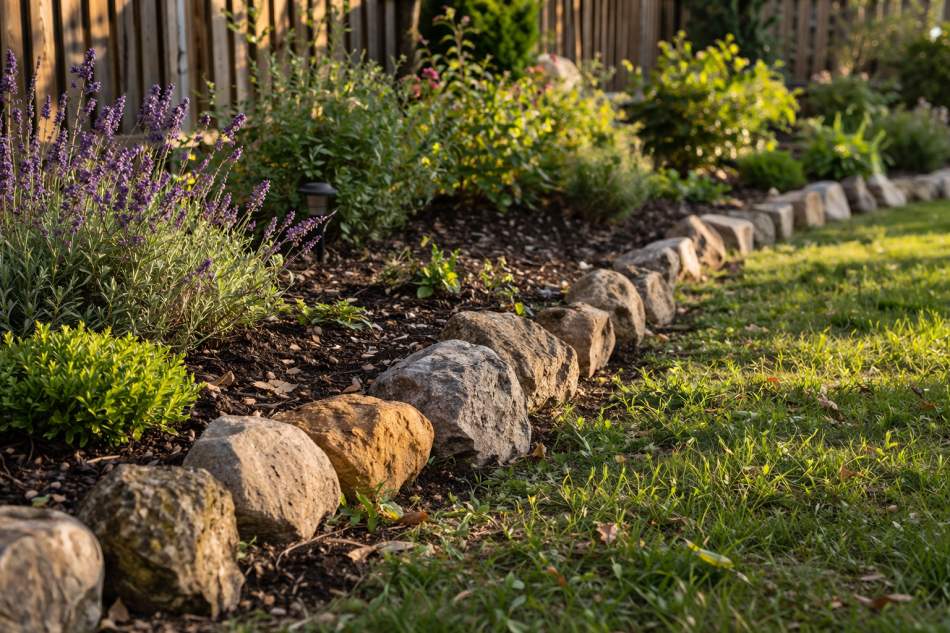
Sometimes the simplest option is just using what you already have. Gather natural stones of different shapes and sizes, then arrange them along the edge of your garden bed.
Fit them together like a puzzle and press them slightly into the soil so they don’t wobble.
Natural stone borders blend in effortlessly with any garden style. They create a solid barrier that keeps everything where it should be while adding a bit of texture and character.
And since rocks don’t rot or break down, this is one of those set-it-and-forget-it solutions.
7. Cinder Block Edging
Cinder blocks might not sound pretty at first, but they can actually look quite neat when placed right.
Just line them up along the garden edge, either in a straight row or slightly staggered. You can even fill the holes with soil and plant small flowers or herbs for a creative touch.
They’re sturdy, affordable, and stay exactly where you put them. This kind of edging is great for keeping soil contained and preventing erosion, especially in slightly raised beds.
The added bonus? Those hollow spaces double up as mini planters, giving you extra growing room.
Also Read: 17 Dahlia Garden Ideas to Brighten Your Unused Space
8. Terracotta Pot Border (Half-Buried)
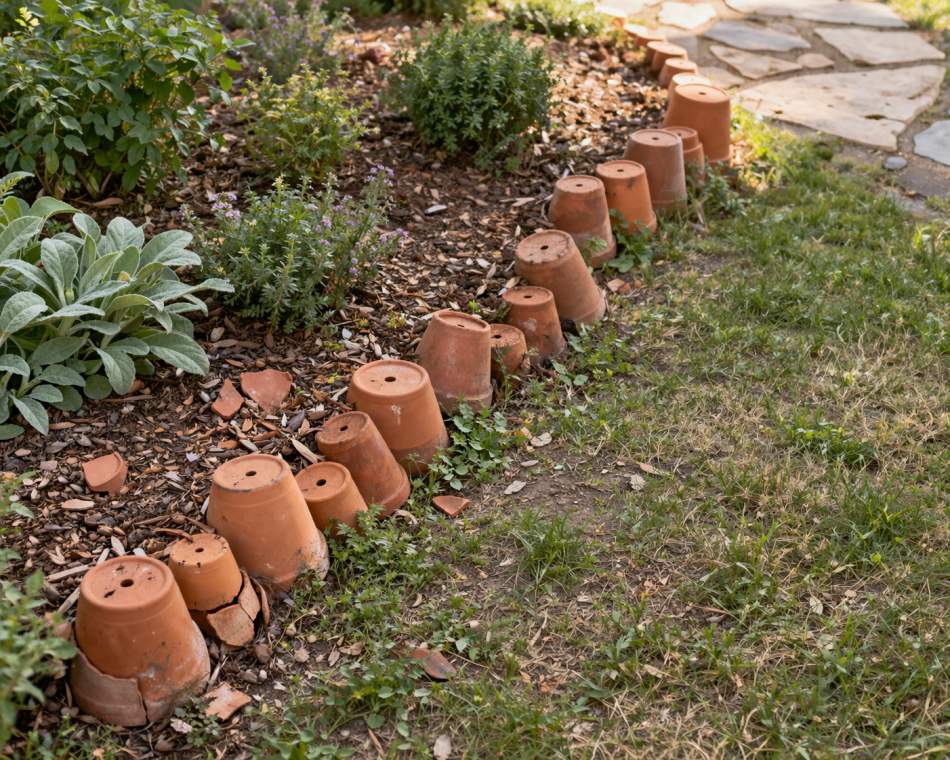
If you have cracked or unused terracotta pots, don’t throw them out. Just turn them sideways or upside down and bury them halfway along the edge of your garden bed.
You can keep them whole or even use broken pieces for a more artsy, uneven look.
This style adds a warm, earthy feel that instantly makes the space more interesting.
Besides looks, it helps hold soil in place and creates a gentle barrier for grass and weeds. It’s one of those borders that feels decorative but still gets the job done.
9. Bamboo Edging
Bamboo works great if you’re going for a simple, natural border. Cut bamboo sticks to similar lengths and line them up tightly along the edge, either pushed into the soil or tied together in small panels before placing.
It gives your garden a clean, uniform edge while still keeping that organic look.
Bamboo is surprisingly strong and holds back soil well, especially in smaller beds. Plus, it’s lightweight and easy to adjust if you ever want to change the layout.
10. Old Tile / Mosaic Border
Got leftover tiles from a renovation? Put them to use. Just dig a shallow trench and place the tiles vertically or at an angle along the border. You can mix different colors and patterns to create a mosaic-style edge.
This adds a bit of personality and color without buying anything new. It also forms a solid edge that keeps mulch and soil from spreading out. And since tiles are durable, they’ll hold up well even with regular watering and weather changes.
11. Wine Bottle Border (Upside Down)
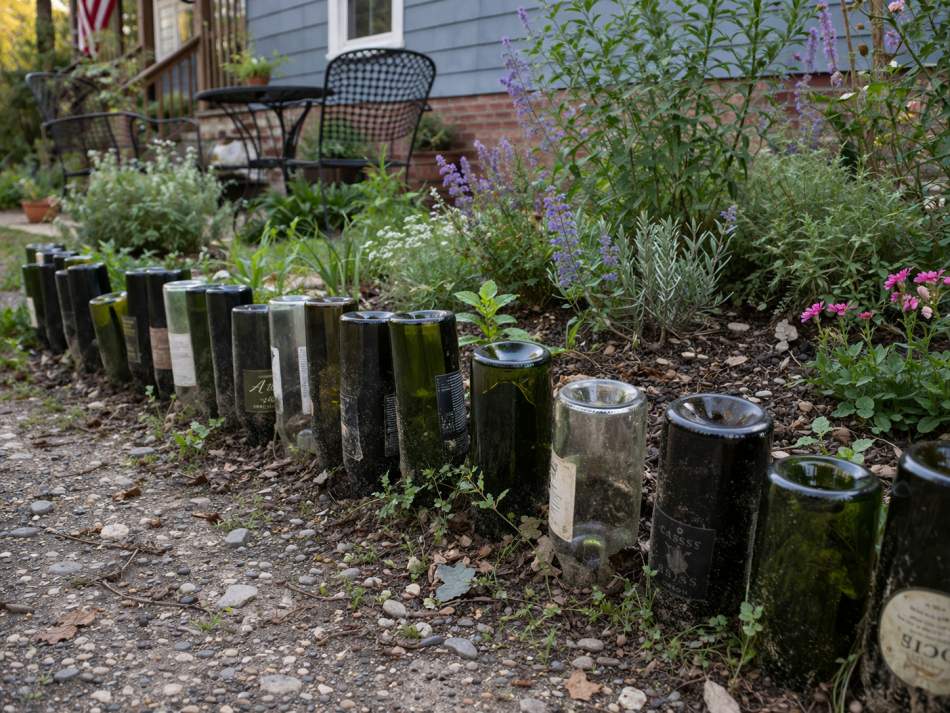
Empty glass bottles can turn into a surprisingly cool border. Push them neck-down into the soil, placing them close together to form a line around your garden bed. You can stick with one color or mix different shades for a fun effect.
Aside from looking unique, this creates a firm edge that helps keep everything contained. The glass also reflects a bit of light, which can make the border stand out nicely during the day. It’s a creative way to reuse something that would otherwise just sit around.
12. Metal Sheet Edging (Scrap Metal)
If you’ve got leftover metal sheets or strips, this can turn into a sleek border. Just cut them into manageable pieces and push them into the ground along the edge. You can keep them straight for a modern look or gently bend them to follow curves.
It creates a sharp, clean boundary that really defines your garden space. Metal is durable and doesn’t shift much, so it keeps soil and mulch nicely contained. Over time, it may develop a bit of patina, which actually adds to the character.
13. Rope Border with Stakes
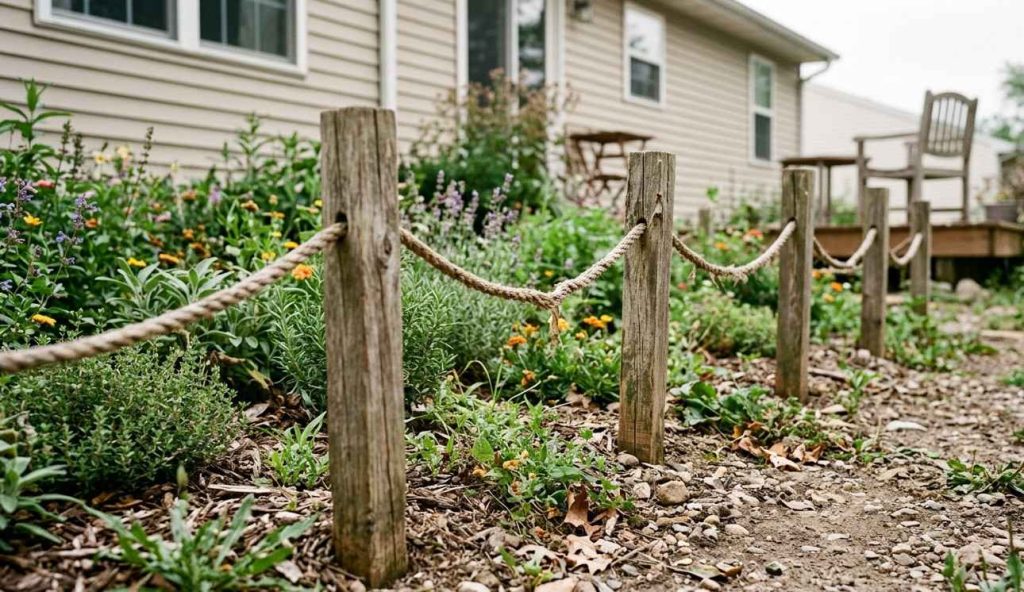
For something a bit different, try using thick rope with wooden stakes. Drive small stakes into the ground along your border line, then loop the rope through or wrap it around them to create a low fence effect.
This one is more about style than strength, but it still helps visually separate your garden from the rest of the yard. It’s great for guiding foot traffic and keeping things looking organized without feeling too rigid or heavy.
Check this: 22 DIY Cheap Fence Ideas for Garden
14. Tree Branch (Stick) Border
Gather fallen branches or trimmed sticks and line them along the edge of your garden. You can place them horizontally for a casual look or stick them upright into the soil like a mini natural fence.
It gives off a very raw, woodland vibe that blends perfectly with plants. While it may not be the strongest barrier, it still helps define the space and keeps mulch from spreading too far. And since it’s all natural, it fits right into the garden without looking forced.
15. Concrete Edging (DIY Poured)
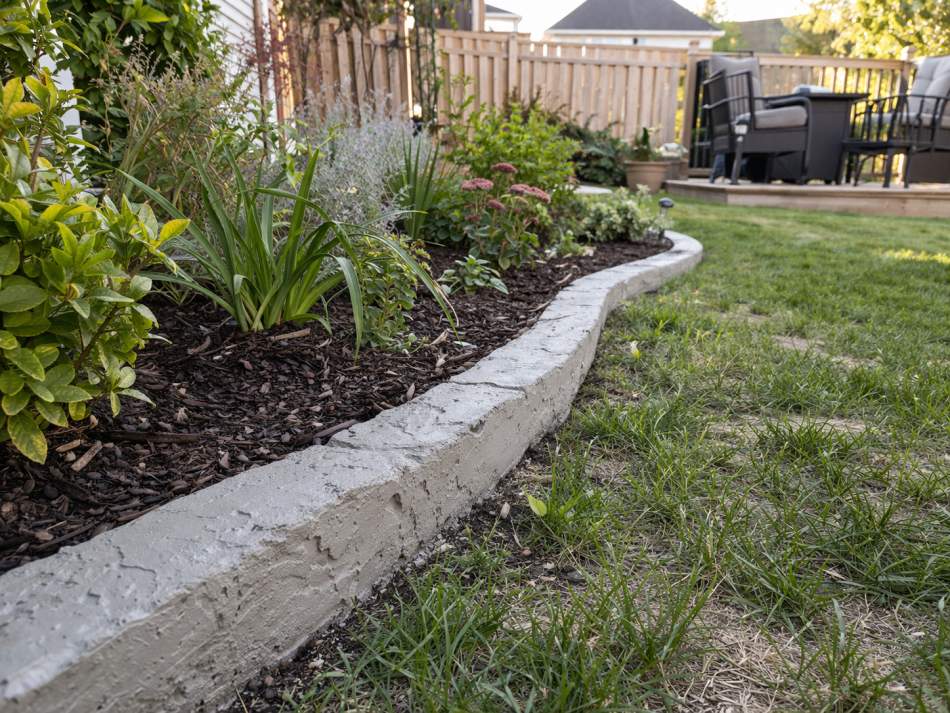
If you’re okay putting in a bit more effort, try a simple poured concrete edge. Mark your border, dig a shallow trench, and set up a basic form using wood or flexible plastic.
Then mix and pour the concrete, smoothing it out before it sets. You can even add slight curves for a softer look.
Once it hardens, you get a strong, long-lasting border that barely needs any maintenance. It keeps everything exactly where it should be—soil, mulch, even gravel—and stops grass from creeping in. It’s one of the more permanent options, but that’s also what makes it so reliable.
16. Rubber Edging (Old Tires Cut)
Old tires can be surprisingly useful here. Cut them into strips and lay them along your garden edge, either slightly buried or pinned down with stakes. You can keep the natural black look or paint them if you want something more eye-catching.
Rubber is flexible, so it works well around curves and uneven edges. It acts as a solid barrier that keeps grass out and holds mulch in place. Plus, it’s weather-resistant, so you won’t have to worry about it breaking down anytime soon.
Also Read: 21 Small Front Yard Landscaping Ideas
17. Shell or Pebble Border
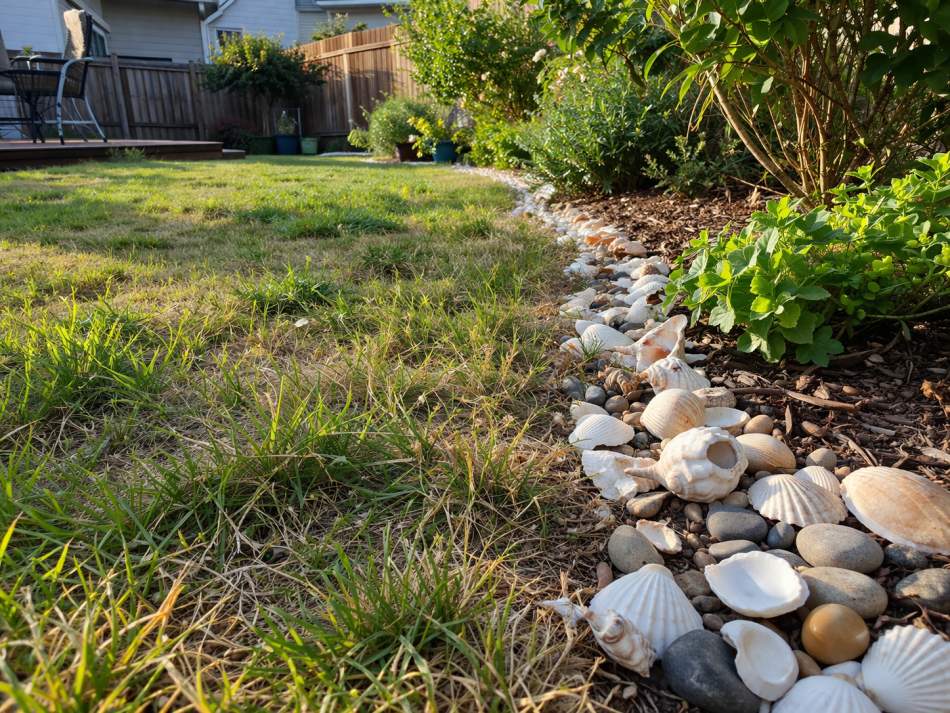
If you have access to small pebbles or shells, this one’s super easy. Just create a narrow trench along the edge and fill it with your chosen material. You can keep it simple or mix sizes for a bit of texture.
This type of border gives a soft, decorative finish while still being practical. It helps with drainage and keeps your garden edges from looking messy. It’s not heavy-duty, but for light use, it does a nice job of keeping things neat and defined.
18. Reclaimed Fence Board Edging
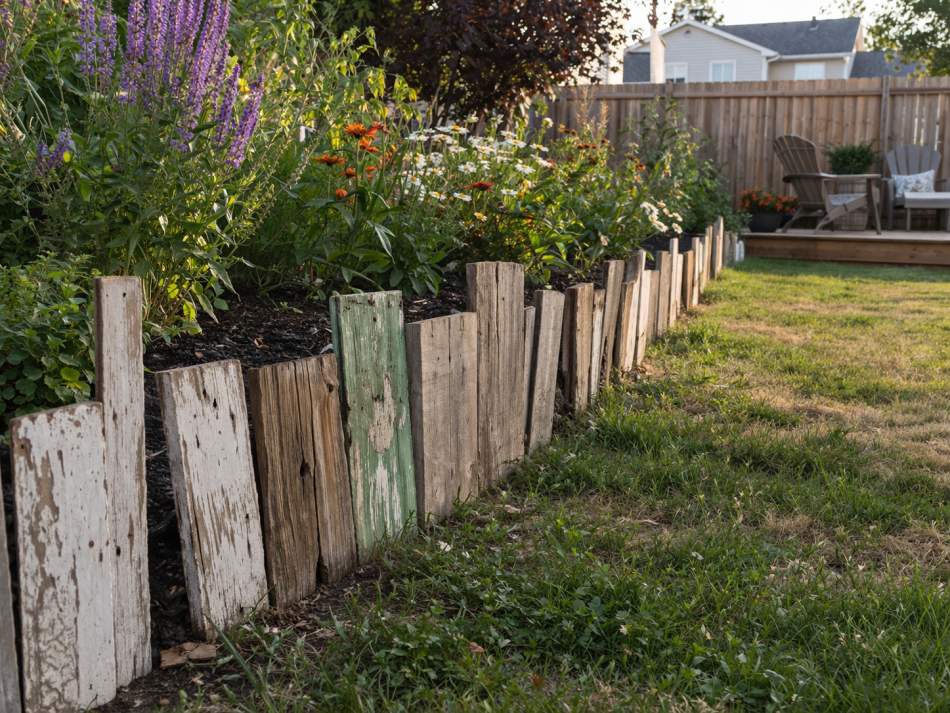
If you’ve got old fence panels or leftover boards, cut them into equal lengths and line them along your garden edge. You can place them vertically like a mini fence or lay them flat for a cleaner, low-profile look. Just press them into the soil or secure them with a few stakes.
This gives your garden a neat, structured boundary without spending on new materials. It keeps mulch and soil from spilling out and helps clearly separate your lawn from planting areas. Plus, that slightly weathered wood look adds a nice bit of character.
Tips for Choosing the Right Landscape Border
Choosing the right border really comes down to how you use your garden and how much effort you want to put in. There’s no one-size-fits-all here—what works for one backyard might not suit another. A little planning upfront can save you time, money, and effort later on.
Think About Maintenance: If you don’t want to keep fixing things, go for sturdy options like stone, brick, or concrete. For something flexible and easy to change, wood or gravel works better.
Match Your Garden Style: Try to pick a border that blends with your space. Rustic gardens look great with logs or rocks, while modern setups suit clean lines like metal or bricks.
Use What You Already Have: Before buying anything, check your storage or backyard. Old tiles, leftover wood, or stones can turn into a really good-looking border without extra cost.
Consider Durability: Some materials last for years, while others may wear out faster. Choose something that fits your weather and how long you want it to last.
Keep It Practical: A good border isn’t just for looks—it should also help control weeds, keep mulch in place, and make your garden easier to manage.
Conclusion
Creating a neat and well-defined garden doesn’t have to cost a lot. As you’ve seen, even the simplest materials—like rocks, wood, or leftover items—can turn into beautiful and practical landscape borders. It’s less about spending money and more about using what you already have in a smart way.
The best part is, you don’t need to get everything perfect on the first try. Start small, experiment with different ideas, and see what fits your space and style. Over time, these little changes can make a big difference in how your garden looks and feels.
At the end of the day, a good border not only improves the appearance of your backyard but also makes it easier to manage. And when it’s done on a budget, it just feels even more satisfying.

Khaja Moinuddin, a computer science graduate, finds joy in gardening and homesteading. Join him on this blog as he shares his experiences in homesteading, gardening, and composting