From the heart-warming Christmas traditions to the grand celebrations of New Year’s Eve, the poinsettia is a centrepiece that effortlessly captures the essence of joy and togetherness.
Most people think of placing poinsettia outdoors to elevate the beauty of holiday celebrations. But that brings us to the question: can poinsettias be left outside in the cold?
Poinsettia plants can be damaged if the temperature falls below 50, according to the University of Minnesota. In addition, the report also mentions that freezing temperatures can actually kill this beautiful plant.
Ideal Temperature to Grow Poinsettias

Poinsettia is a tropical plant and does well when the temperature is 65-75 F. As mentioned already, this plant is intolerant towards cold.
Poinsettias also prefer slightly cooler nights, around 60-65F. Anything lower than that for long hours will slow down the growth and stress the plant.
Even the potted poinsettias should be kept away from the spots where temperature fluctuates—for instance, cold drafts, heat ducts, space heaters and firewood.
Sudden changes are as risky as the cold itself. Moving the plant from a warm shop to a cold car, and then to a chilly porch, can make the leaves droop and fall within a day or two.
The best place to keep poinsettias is an east or west-facing window that gets an ample amount of bright light for at least 4 hours.
I need not mention the importance of light for green foliage. But, those who are looking for red blooms should calculatedly exclude light exposure and, at the same time, keep the plant healthy.
Can Poinsettias Be Left Outside in the Cold?
No, potted poinsettias can’t be left outside in winter.
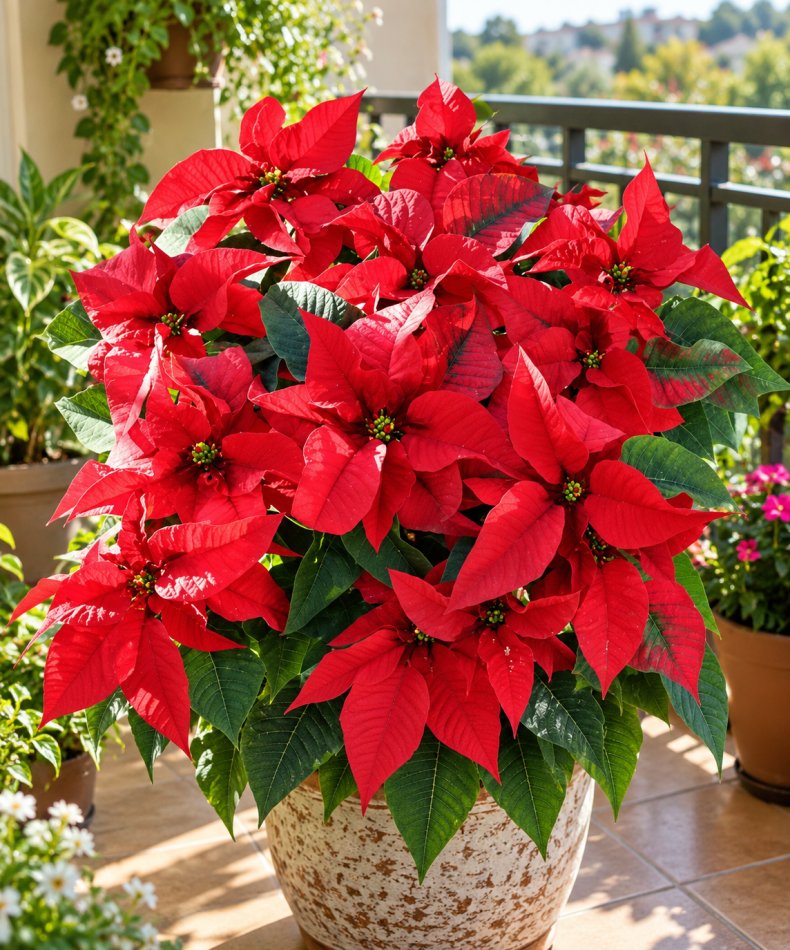
However, to elevate your holiday celebration during the daytime, you can bring the potted poinsettias outside for a few hours. But, ensure the temperature is above 55F.
Interestingly, you can plant poinsettias in the garden when the danger of frost has gone. You need to check your hardiness before planting it in the garden.
Poinsettias are extensively used to decorate Christmas and New Year celebrations. Its vibrant coloured red bracts that resemble flowers can elevate the ambience of your holiday.
Native to Mexico, it was first brought to the United States in the late 1820s by Joel Robert Poinsett. Thus, the plant got its name from this U.S. ambassador for Mexico.
Though poinsettia is said to be toxic, there is no strong proof to back its toxicity. Thus, it is declared safe for humans and pets. But, the sap of poinsettia can cause dermatitis or skin infection.
Can Poinsettias Be Outside in the Cold at Night?
No. Night is the real danger for poinsettias. Even if the day is sunny and warm, the temperature can fall quickly after sunset. If the night temperature goes below 50F, the leaves can turn limp, and the plant may not recover.
So, if you take your potted poinsettia outside for the day, make it a habit to bring it back indoors before the evening gets cold.
Can Poinsettias Be Outside in the Cold for a Few Hours?
A short stay is usually fine if the weather is mild. Keep the pot in a sheltered spot, such as a covered porch or near a wall that blocks the wind.
Do not leave it in direct cold wind. Wind makes the plant lose moisture quickly and speeds up leaf damage.
Poinsettias Cold Tolerance
Native to Mexican and Guatemala habitats, Poinsettias can produce vibrant foliage when the temperature is mild, between 65-75F, as mentioned above.
If you keep the poinsettia plant outside when the temperature is below 50F, then its attractive foliage starts to wilt and fall off from the plant.
However, you can fix poinsettias if the exposure to cold is confined to a limited time. Prolonged exposure can often kill the patient.
In USDA zones 9 to 11, where winters are mild, you can leave poinsettias outside during the daytime to expose them to sunlight.
Even in such regions, you should be aware that the night temperature doesn’t drop below 50F.
Continuous exposure to cold temperatures can result in a drop in leaves, and the root system can be damaged completely.
Here are the common signs of cold damage in poinsettias:
- Leaves and bracts droop or look limp
- Leaves turn yellow or dark and fall off
- Red bracts fade or turn translucent
- Stems look soft or blackened
- Soil stays wet because the roots are no longer taking in water
If you notice these signs, move the plant to a warm place immediately.
Do Poinsettias Survive in the Cold?
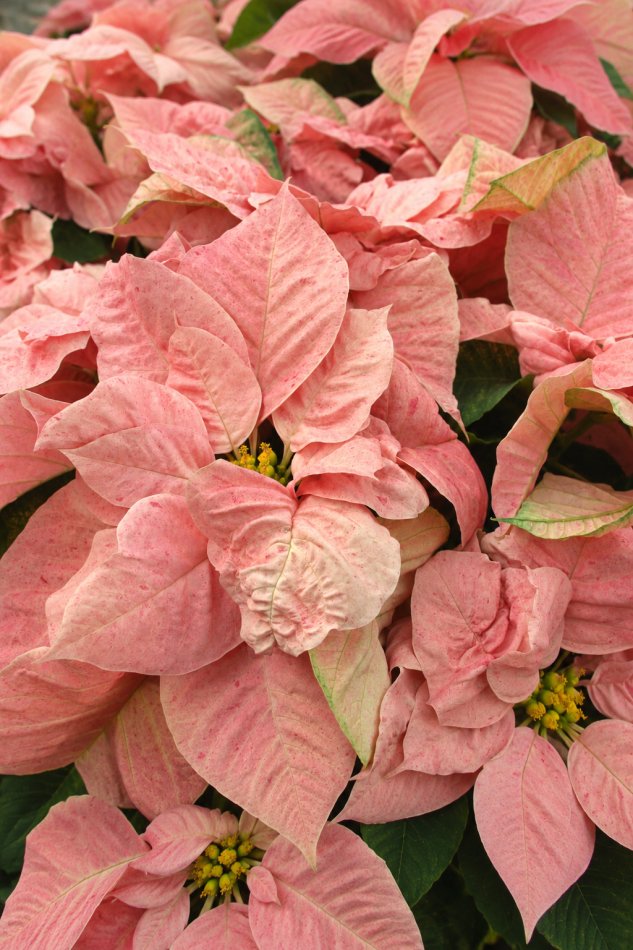
Poinsettia plants can’t survive if the temperature drops below 50F.
However, if winter in your region is mild, then you can keep poinsettias outdoors in the daytime and bring them back indoors at night.
In regions where the temperature is near freezing, you should ensure the room temperature is maintained above 65F for optimal growth.
Must Read: 29 Different Types of Poinsettia Plants
How do we keep Poinsettias alive outside?
You can grow poinsettias in the garden if the temperature is above 65F.
To keep the plant alive, you should choose a spot where it gets bright sunlight, and the danger of frost has passed.
Avoid low spots in the garden where cold air settles. A place near a south-facing wall is better, as the wall holds some heat during the day and releases it at night.
In regions with mild winters, you can cover the plant with mulch to protect the root system from cold.
You can also grow these plants in a greenhouse, but you should be aware of the skills and care it requires to maintain poinsettias.
How do you revive a cold poinsettia plant?
Depending on how long you have left this Mexican native plant outdoors or in a car, you can be able to save cold-damaged poinsettias.
If your poinsettia plant is exposed to cold weather for a limited time, then you might notice a dropping of leaves.
To revive, relocate the poinsettias indoors where the temperature consistently is above 65F.
Cut dead or yellow leaves and locate the poinsettia pot towards the east. So that it can get bright sunlight.
Don’t put the plant near the radiator or heater.
Keep the soil moist and add balanced fertilizer so the plant gets the required amount of boost to revive itself.
Do not water heavily right after the cold shock. Overwatering a stressed plant can lead to root rot.
Also, ensure the plant is kept in the dark for 14 hours.
Be patient. It can take a few weeks before you see new growth.
Also Read: How to Make Poinsettias Bloom?
How to protect poinsettias from frost?
The best way to save poinsettia plants from frost is to relocate them indoors.
There is no way you can place poinsettias in frost and revive them.
As mentioned, cold temperatures below 50F can damage leaves and root systems.
If you grow poinsettias in the garden in USDA zones 9 to 11 and a cold night is forecast, cover the plant with a frost cloth or an old bedsheet before sunset. Remove the cover in the morning.
Avoid plastic sheets that touch the leaves, as they trap moisture and can make the damage worse. This is only a short-term fix for a single cold night, not a replacement for bringing potted plants indoors.
How to Take Care of Potted Poinsettias Outdoors?
The best time to plant poinsettias is in early or mid-spring when the danger of the last frost has passed.
The container should have a drainage hole to remove excess water and fill it with well-drained, organic-rich soil.
You can add peat moss and old compost along with potting soil mix to ensure the soil retains the required moisture and drains excess water.
While watering, check the soil for moisture—water poinsettias only when the top 2 inches of the soil surface is dry.
Poinsettia plants need 4-6 hours of bright indirect sunlight. To be able to bloom, poinsettias must be kept in the dark for 15 hours continuously.
Maintain an ideal temperature between 65 and 75F for healthy poinsettia plants.
Fertilize the poinsettia plant in spring, when the plant leaves start to emerge. Use balanced fertilizer to encourage the ideal growth of this plant.
Pruning is essential for new growth. To promote bushier growth, pinch off the tip of poinsettia plants.
Also, remove dead yellow leaves so that the energy produced can be used to form new foliage.
Check this: 27 Ideas for Decorating with Poinsettias for Christmas
When to Bring Poinsettias Back Indoors?
If your poinsettia has spent the day or the warm season outside, bring it indoors when the night temperature starts to approach 55F. Do not wait until the first cold night.
Before moving it inside, check the leaves and the soil for pests like whiteflies and aphids. Gently wash the leaves if needed.
Do not place the plant right next to a heater after bringing it in. Let it adjust in a bright room for a few days, so the change in temperature doesn’t shock it.
Common Mistakes When Keeping Poinsettias Outside
- Leaving the plant outside overnight because the daytime weather feels warm
- Placing the pot near a door that keeps opening to cold air
- Leaving the plant in a parked car for a long time during winter
- Keeping the pot in a wet saucer, which makes cold damage to roots worse
- Planting in the garden before the danger of the last frost has passed
Know this: Why are Poinsettias Associated with Christmas?
Conclusion
You can’t leave potted poinsettias outside in the cold.
Keep it indoors, where the temperature can be maintained above 65F.
In some regions, where the winter isn’t harsh, you can keep poinsettia plants outside in the daytime. But, ensure you bring it back at night.
You can grow poinsettias in the greenhouse, but it can exceed your gardening budget.
Comparatively, growing poinsettias indoors is easy and safe.
So, this Christmas, prepare yourself to protect this Christmas star (Euphorbia pulcherrima) from the cold.


Khaja Moinuddin, a computer science graduate, finds joy in gardening and homesteading. Join him on this blog as he shares his experiences in homesteading, gardening, and composting