Central Florida has two growing seasons, not one. Most gardeners here can grow food and flowers for almost all twelve months. (source)
The trick is knowing what to plant and when. Plant the right crop in the wrong month, and the heat, rain, or a surprise cold snap will end it fast.
Most of Central Florida sits in USDA zones 9b and 10a. The last frost usually comes between mid-February and early March, and the first frost often shows up in December.
The soil here is mostly sand. It warms up quickly and drains fast, which is great for roots but hard on water and nutrients.
I have made plenty of timing mistakes over the years. I lost tomatoes to a late frost and lettuce to an early heat wave.
This month-by-month guide is built from those lessons, so you can skip a few of them. Use it as a simple calendar you can come back to all year. (Source)
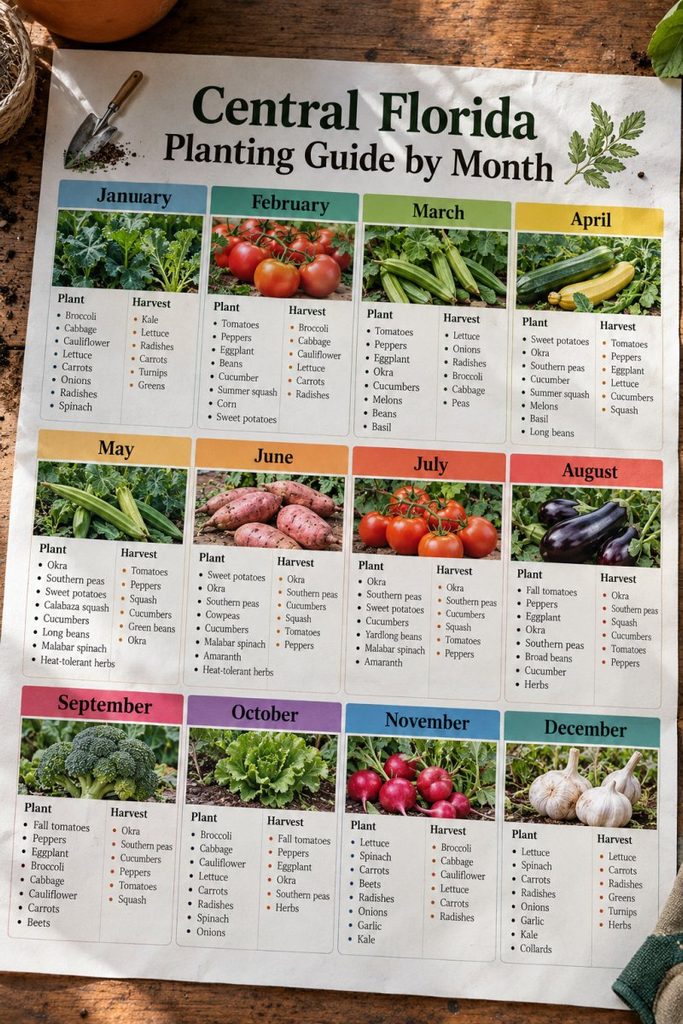
Central Florida Planting Guide by Month
Plant cool-season greens, roots, and strawberries from October to February, and warm-season crops like tomatoes, peppers, and okra from March to April. Summer is for heat lovers like sweet potatoes and southern peas, and the fall garden starts again in August.
Protect plants from late frost and storms, and mix compost into your sandy soil. Timing is the real secret to a good harvest.
January: Plant Cool-Season Greens and Start Seeds Indoors
January is cool, dry, and a great month for cool-season crops. Frost can still hit, so keep an old bedsheet nearby.
Here is what to focus on this month:
- Plant lettuce, kale, spinach, carrots, beets, radishes, and peas
- Add broccoli and cabbage transplants
- Start tomato and pepper seeds indoors for February or March
- Plant trees and shrubs while the weather is cool
- Keep pansies, snapdragons, and dianthus watered during dry spells
Sow seeds a little thicker than you think you need. You can thin them later and eat the baby greens.
A sunny window works fine for indoor seeds. If your light is weak, a cheap grow light will keep seedlings from getting tall and leggy.
February: Get Tomatoes in the Ground, but Watch for Late Frost
February is a busy month and a tricky one. The days warm up fast, but one last cold night can still show up.
Watch the forecast closely. If frost is coming, cover tender plants in the evening and remove the cover in the morning.
Use cloth, not plastic. Plastic touching the leaves can transfer cold and damage the plant.
Plant tomato transplants this month, but be ready to protect them. Peppers, eggplant, and cucumbers can also go in near the end of the month.
Bush beans, summer squash, and watermelon are good options too. Keep seeds and young plants moist so they get off to a strong start.
You can still plant carrots, lettuce, and leafy greens early in the month. They will fade once the heat arrives.
Citrus trees can be planted now. Choose a spot with full sun and well-drained soil.
Dig the hole twice as wide as the root ball, but no deeper. Planting too deep is one of the most common citrus mistakes.
Also Read: How to Protect Tomato Plant from Frost?
March: Peak Planting Month for Warm-Season Vegetables and Flowers
March is one of the best planting months in Central Florida. The soil is warm, the frost risk is low, and plants grow fast.
Here are the best things to plant right now:
- Tomatoes, peppers, eggplant, cucumbers, squash, and corn
- Sweet potato slips and southern peas
- Okra, which loves the coming heat
- Basil, planted in full sun
- Zinnias, sunflowers, marigolds, and cosmos for color
Soak okra seeds overnight to speed up sprouting. Pinch basil tips often to keep the plant bushy.
Pollinators matter in a vegetable garden. More bees mean better yields on squash, cucumbers, and beans.
This is also a good month to start a lawn from sod. Warm-season grasses like St. Augustine and Bermuda grow best from spring through summer.
Add compost to your beds before planting. Florida sand drains quickly, so it needs extra organic matter.
April: Plant Heat-Loving Crops and Start Mulching

April is warm and often dry. Watering becomes a daily job for new plants.
Plant okra, southern peas, sweet potatoes, and peanuts. These crops handle heat well and keep going into summer.
You can still plant tomatoes early in the month, but they may struggle once nights stay hot. Plant fast-growing varieties for better luck.
Cherry tomatoes handle heat better than large slicers. They keep setting fruit when bigger types give up.
Add mulch around your plants. A two to three inch layer keeps moisture in and weeds down.
Pine straw, wood chips, and shredded leaves all work well. Keep mulch a few inches away from stems to prevent rot.
Herbs like rosemary, thyme, oregano, and basil do great now. Mint grows well too, but keep it in a pot or it will take over.
Plant tropical flowers such as lantana, hibiscus, and pentas. They love the heat and bloom for months.
May: Grow Only Heat Lovers Before the Rainy Season

May is hot and dry, right before the rainy season starts. Plants need steady water, and shade becomes helpful.
Plant heat lovers only. Good choices include okra, southern peas, sweet potatoes, Malabar spinach, and roselle.
Skip tomatoes, lettuce, and other cool-season crops. They will bolt or stop producing in this heat.
A piece of shade cloth can save struggling plants. Even 30 percent shade helps on the hottest afternoons.
Watering early in the morning is best. It reduces evaporation and lowers the risk of fungal problems.
Water at the base of the plant, not over the leaves. Wet leaves in hot weather invite disease.
For flowers, plant zinnias, torenia, vinca, and purslane. They handle heat and need little care.
This is also a good time to set up rain barrels. Summer storms will fill them quickly.
Check this: How to Use Epsom Salt for Tomato Plant?
June: Rainy Season Planting and Hurricane Prep
June brings the rainy season and hurricane season. Both start around the first of the month.
Here are the key things to keep in mind:
- Space plants well so air can move between them
- Plant sweet potatoes, okra, southern peas, and Malabar spinach
- Check local fertilizer rules, since many counties limit use from June through September
- Use compost instead of heavy fertilizer, because rain washes nutrients out of sandy soil
- Mulch well to stop soil from splashing onto leaves
- Stake tall plants and move pots to a sheltered spot before storms
Humidity and rain can cause fungus and rot. Good spacing and mulch go a long way.
Know what you will bring inside if a hurricane watch is issued. Loose pots can become flying objects.
July: Tough Summer Crops and Fall Seed Starting

July is hot, wet, and tough on most plants. Focus on crops that actually enjoy these conditions.
Plant okra, southern peas, sweet potatoes, and roselle. Pigeon peas and cassava are also good choices.
Start fall tomato and pepper seeds indoors near the end of the month. Seedlings will be ready to move outside in August.
Keep the seed trays in a bright, cool spot. Indoor air conditioning actually helps, since heat makes seedlings weak.
Pick vegetables often. Okra especially grows fast, and old pods turn tough.
Watch for pests like caterpillars, aphids, and whiteflies. Check leaf undersides every few days.
A strong spray of water knocks off many small pests. For bigger problems, try insecticidal soap in the evening.
Flowering shrubs and tropical plants can go in the ground now. The rain helps them establish, but avoid planting right before a big storm.
August: Plan Ahead and Get the Fall Garden Started

August is the month to think ahead. The fall growing season begins now, even though it still feels like summer.
Transplant tomato and pepper seedlings late this month or early in September. Give them afternoon shade for the first couple of weeks.
An old bedsheet or a piece of shade cloth works well. Remove it once the plants look strong and settled.
Plant bush beans, cucumbers, and squash too. They grow quickly and often produce before cooler weather arrives.
Cut back leggy summer plants to encourage fresh growth. Okra and basil respond well to a good trim.
Keep an eye on storms. Tropical systems can show up at any time, so keep supplies ready.
Prepare your beds by adding compost and removing spent plants. A clean start helps fall crops.
Pull out any diseased plants and throw them in the trash, not the compost pile. This keeps problems from carrying over.
Also Read: 30 Best Vegetables to Grow in Buckets
September: Fall Tomatoes, Peppers, and Citrus Planting
September is still hot, but the fall garden is now in full swing. This is one of the most exciting planting months.
Here is your September planting list:
- Tomatoes, peppers, eggplant, cucumbers, and squash
- Southern peas and bush beans
- Broccoli, cabbage, and cauliflower late in the month, with shade if heat lingers
- Citrus trees, which can be planted now through October
Fall tomatoes often taste better than spring ones. The nights cool down, and the fruit sets without the stress of extreme heat.
Keep up with mulch and watering. Even with rain, young plants can dry out in sandy soil.
Push your finger two inches into the soil to check. If it feels dry, it is time to water.
Fertilizer rules often end on September 30. After that, you can feed lawns and gardens again, following local guidelines.
October: Cool-Season Veggies, Strawberries, and Herbs

October is the true start of cool-season gardening. The air feels better, and so does the garden.
These are the best crops to get in the ground:
- Broccoli, cabbage, cauliflower, kale, collards, and Swiss chard
- Lettuce, spinach, and arugula
- Carrots, beets, radishes, and turnips, sown directly in loose soil
- Strawberries, planted now or in early November for spring fruit
- Cilantro, parsley, dill, and chives in sun or light shade
- Petunias, snapdragons, and alyssum for color
Carrots need soft, rock-free soil to grow straight. If your bed is hard, try a raised bed or a deep container.
Keep the crown of each strawberry plant right at soil level. Burying it can cause rot, and planting too high dries out the roots.
Pansies and violas are best started in November.
November: Onions, Greens, Winter Flowers, and Tree Planting
November is mild and dry, with cool nights. Plants grow steadily and pests slow down.
Keep planting greens, root vegetables, and brassicas. Peas and snap peas do well too.
Succession planting is a smart habit now. Sow a small batch of lettuce or radishes every two weeks for steady harvests.
Plant onions, leeks, and shallots. These cool-season crops need time to size up before spring.
Choose short-day onion varieties for Florida. Long-day types will not form good bulbs here.
Add pansies, dianthus, and calendula for color. They will bloom through winter.
This is a wonderful time to plant trees and shrubs. Roots settle in during the cooler months, and plants are ready for spring growth.
Hurricane season ends November 30. After that, the weather risk drops a lot.
December: Cold Protection, Quick Greens, and Garden Planning
December is calm and cool, though frost becomes possible. Keep covers handy for tender plants.
Plant lettuce, kale, spinach, radishes, and peas. Broccoli and cabbage transplants still do well early in the month.
Cold nights can hurt tropical plants. Cover them or move potted ones to a protected spot.
Water the soil before a cold night. Moist soil holds heat better than dry soil and protects roots.
Water less often overall, since cooler weather slows evaporation. Check the soil with your finger before you water.
Use this quiet time to plan. Order seeds, clean tools, and sketch what you want to grow next year.
Citrus fruit may be ripening now. Pick when it feels heavy and tastes sweet.
Taste one before you pick the whole tree. Color alone does not tell you if citrus is ready.
Also Read: How to Stop Lettuce From Bolting?
A Few Simple Tips for Success
Know your last and first frost dates. They shift a little each year, so watch local forecasts.
Build your soil first. Compost, aged manure, and mulch make a huge difference in sandy Florida ground.
Water deeply but not too often. Deep watering builds strong roots, while shallow watering leads to weak plants.
Choose varieties made for Florida. Heat tolerance and disease resistance matter more than fancy names.
Your local extension office is a great free resource. They offer planting calendars and can help with pest and soil questions.
Keep notes on what you plant and when. After a year or two, you will know your own yard better than any guide.
Check this: What to Plant December – Before it’s Too Late
Conclusion
Central Florida gardening is all about timing. Once you know the rhythm of the seasons, planting gets much easier.
Use cool months for greens and roots, spring for warm crops, and summer for tough heat lovers. Then restart in late summer for the fall garden.
You do not need a big yard or fancy tools. A few pots, good soil, and the right plants at the right time are enough.
Start with a few plants this month and build from there. Every season teaches you something new.


Khaja Moinuddin, a computer science graduate, finds joy in gardening and homesteading. Join him on this blog as he shares his experiences in homesteading, gardening, and composting