Adding wood to your backyard makes it feel like you’ve poured your thoughts and soul into it. There’s just something about it that makes a patio feel warm and inviting, without needing a contractor’s budget to get there.
This list is built around that idea. Wood has a way of turning an ordinary backyard corner into a space that feels lived-in and cared for, even on a tight budget.
Some of these ideas come together in a single weekend. Others unfold slowly over a season, built evening by evening until the whole thing feels earned.
Either way, none of it demands fancy tools or a heavy wallet. Just a little patience and a willingness to let the wood do what it does best.
26 Affordable Wood Patio Ideas
Wood patios don’t have to break the bank to look like a designer had a hand in them. With a bit of planning and the right layout, even a small space can turn into the spot everyone wants to hang out in.
1. Pallet Wood Patio Deck
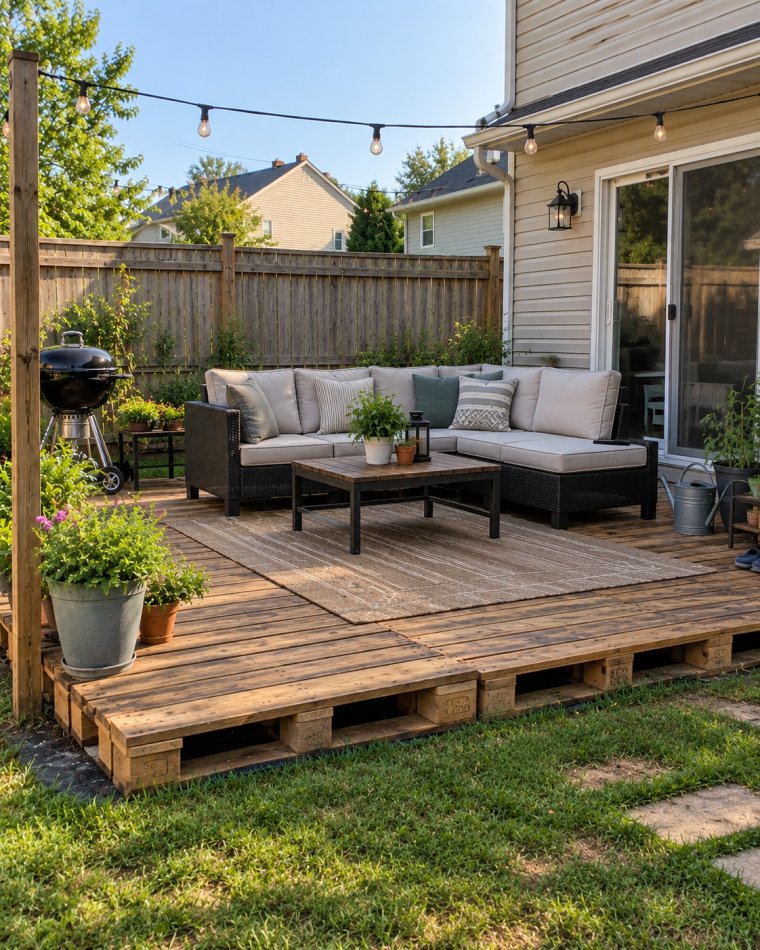
Pallets are probably the cheapest way to get a real wood patio going. Most hardware stores and warehouses give them away for free, and with a little sanding and staining, they turn into something that actually looks intentional.
The best part is how forgiving the process is. Lay them flat on a level patch of ground, secure them together, and add a coat of weatherproof sealant. It’s a weekend project that costs next to nothing but still gives the backyard a real upgrade.
2. Simple Ground-Level Wood Platform
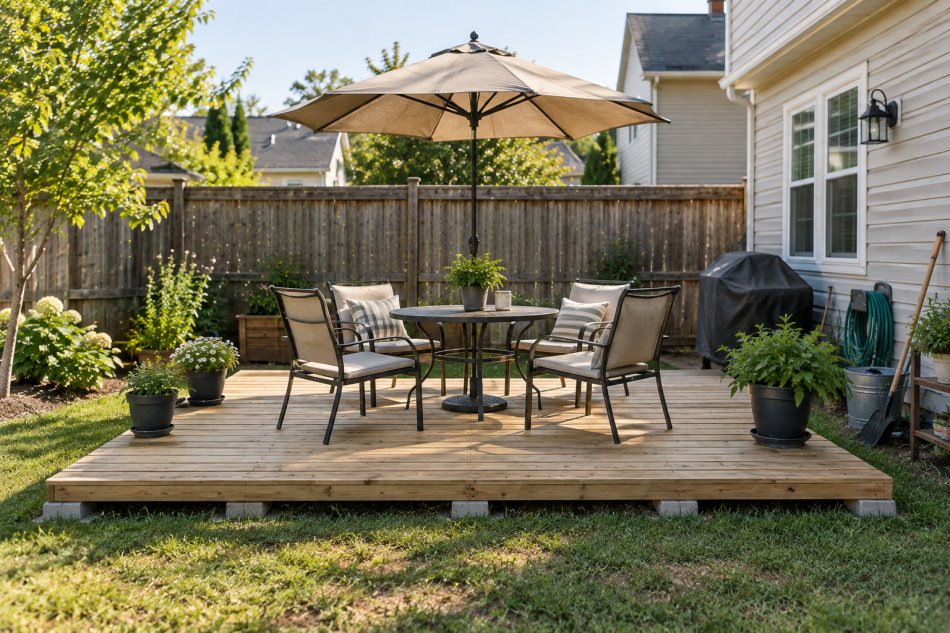
No steps, no railings, just a flat wood platform sitting right on the ground. It’s about as low-effort as patios get, which makes it perfect for anyone who wants results without a big project hanging over their weekend.
A few treated wood boards, some concrete deck blocks, and a level are really all it takes. Skip the fancy joinery and keep the gaps even, and it’ll hold up through plenty of seasons outside.
Also Read: 30 Low Cost Patio Privacy Screen Ideas
3. Floating Wood Deck Tiles
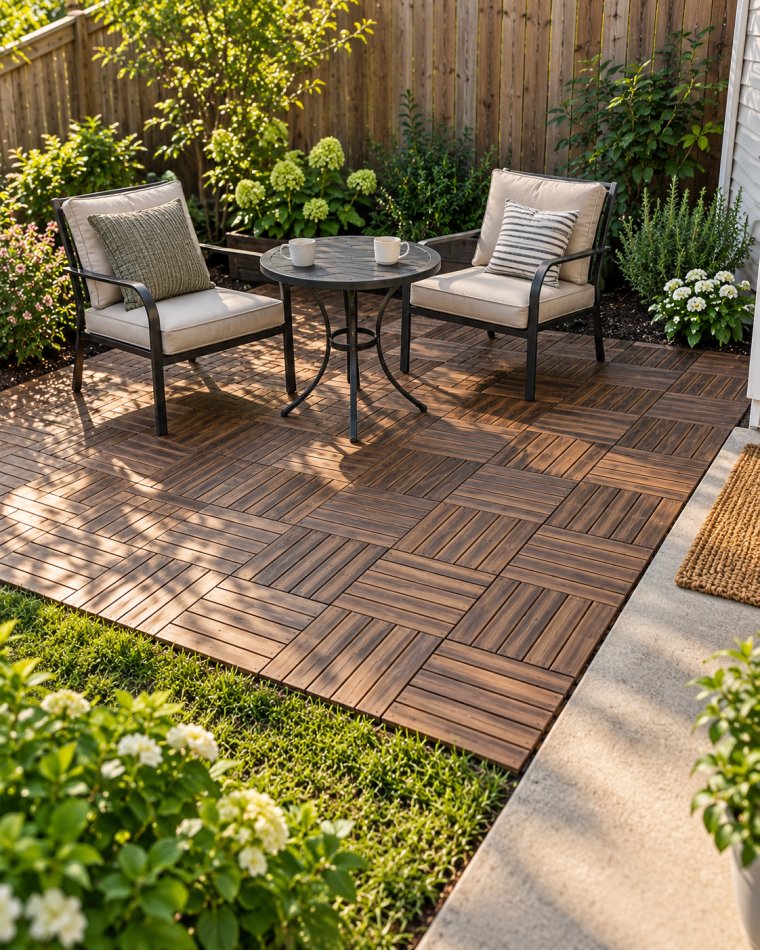
Ever notice how some patios look like they just clicked into place? That’s usually floating deck tiles at work. They snap together over grass, dirt, or old concrete without any digging or permanent installation involved.
Renters love these for obvious reasons, but homeowners get just as much out of them. Pick them up whenever the layout needs to change, rearrange the shape, or take the whole thing along during a move.
4. Reclaimed Wood Patio Flooring
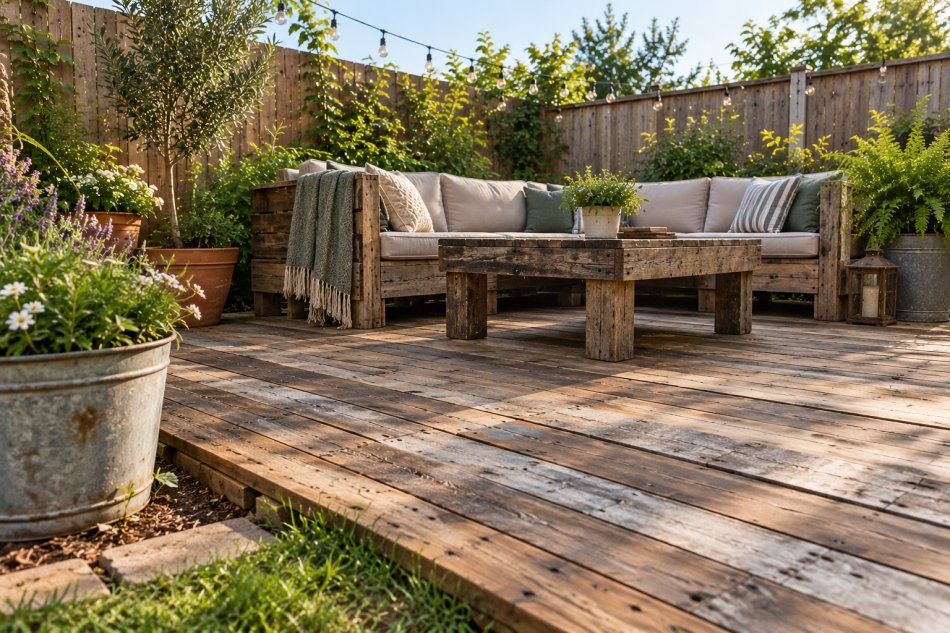
Old barn wood, salvaged fence boards, leftover shipping crates. Reclaimed wood carries a kind of character that new lumber just can’t fake, and it usually costs a fraction of the price too.
The wear and tear is part of the charm here. Nail marks, faded patches, slightly uneven edges. All of it adds texture to a patio that would otherwise look flat and store-bought.
5. Cedar Plank Patio
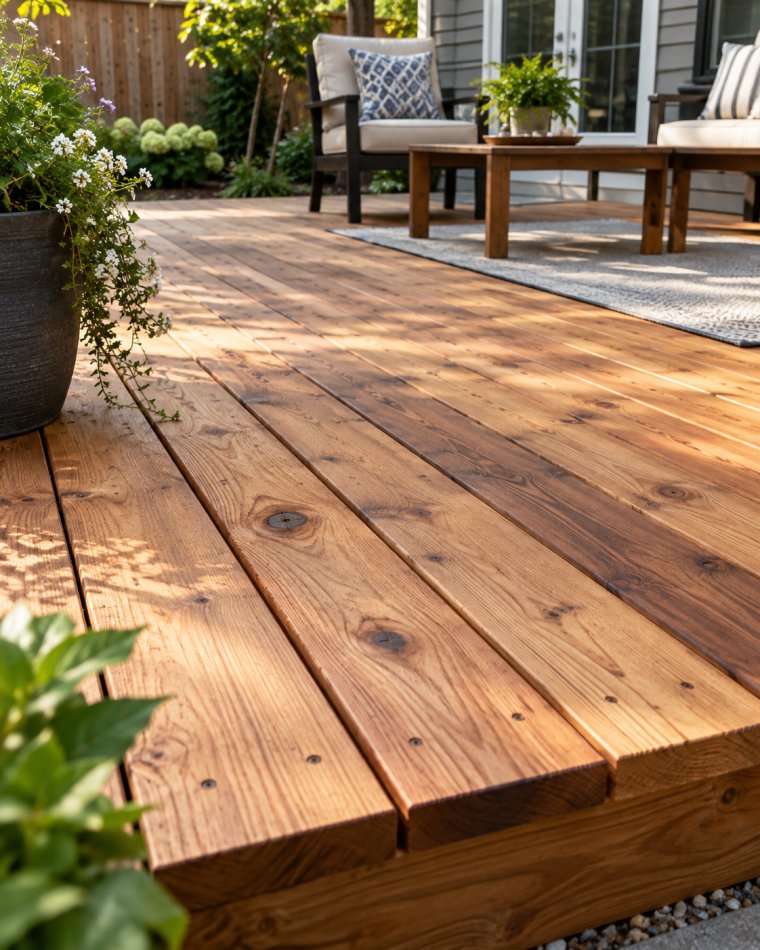
Cedar has a natural resistance to rot and bugs, which makes it one of the smarter wood choices for anyone who doesn’t want to redo the patio every few years. It also happens to smell incredible when it’s freshly cut.
Building with cedar planks typically means laying them over a simple joist frame, spacing them evenly, and sealing the surface once a year. The upfront cost runs a little higher than pine, but the years saved on repairs usually even things out.
Check this: 27 Low Cost DIY Patio Ideas that Fits Your Budget
6. DIY Wood Pallet Seating Nook
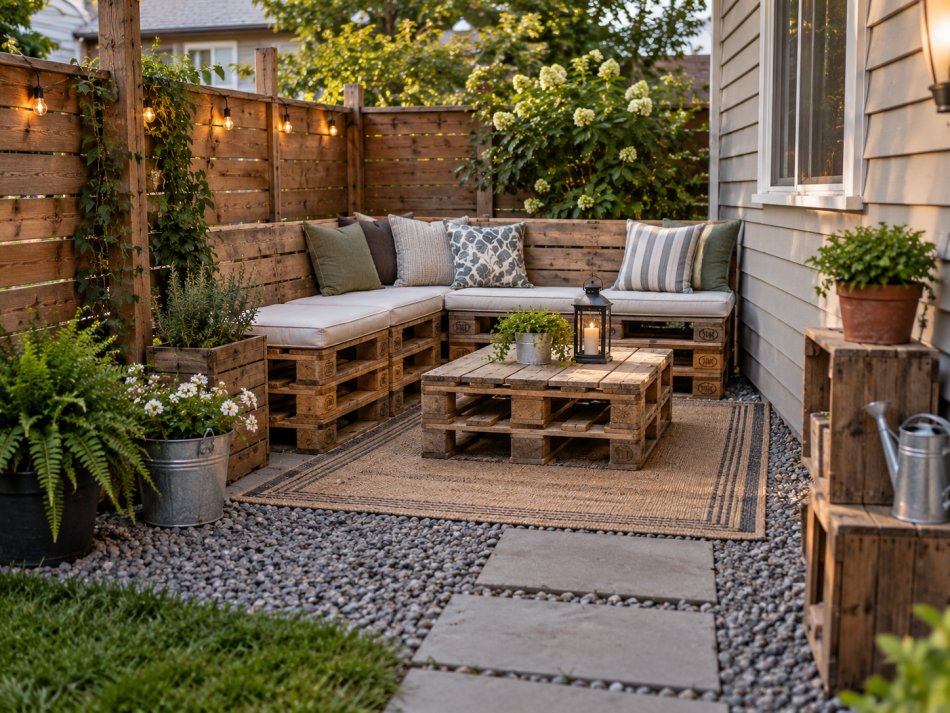
Why stop at flooring when the pallets can double as furniture too? A stacked pallet bench or a low seating wall built from the same wood ties the whole space together without needing to buy separate patio furniture.
This idea works especially well for small backyards. Building the seating right into the patio layout saves floor space while still giving everyone somewhere comfortable to sit.
7. Rustic Wood Fire Pit Patio
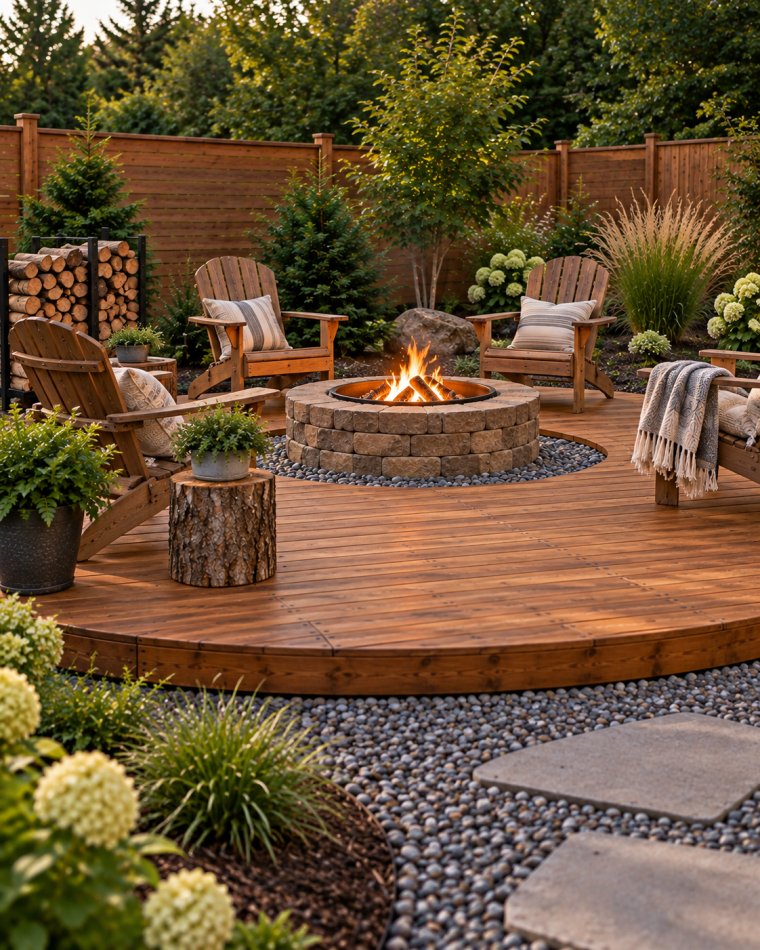
A circle of wood decking around a fire pit turns any backyard into a gathering spot. The layout naturally pulls people toward the center, which makes it great for evenings with family or friends.
Keep the wood a safe distance from the flames and use a metal ring or stone base underneath. That one detail keeps the whole setup safe without taking away from the look.
8. Wood Patio with Built-In Planters
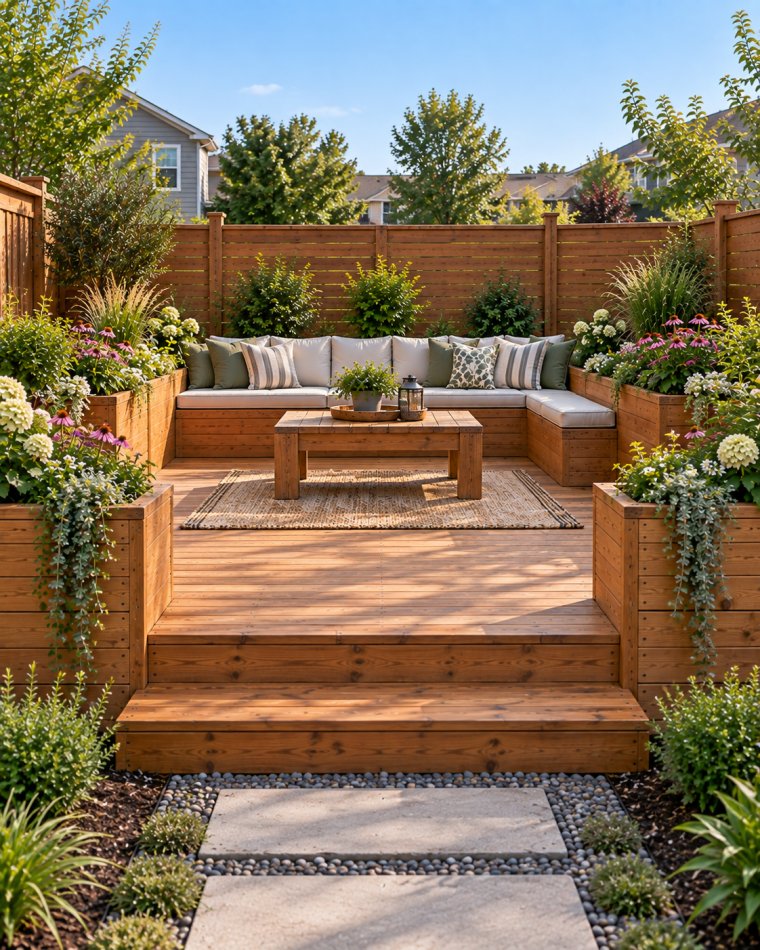
Some patios skip separate garden beds entirely and build the greenery right into the structure. Wood planter boxes along the edges hold flowers, herbs, or small shrubs without eating up walking space.
It’s a simple way to soften a wood patio that might otherwise feel too boxy. The greenery breaks up the straight lines and adds some color throughout the season.
9. Pressure-Treated Pine Deck
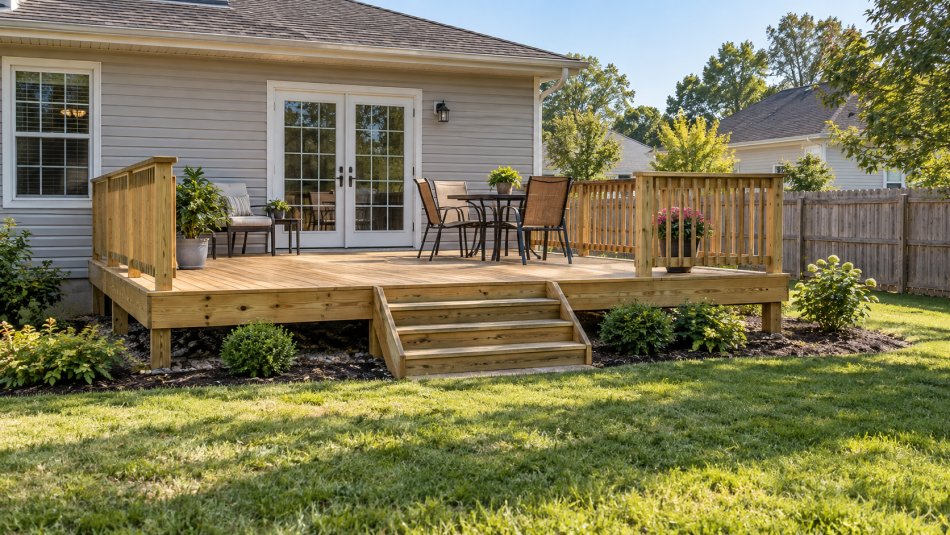
Pine is one of the most budget-friendly woods out there, and pressure treatment helps it stand up to moisture and pests far better than untreated lumber. For anyone watching costs closely, this is usually the starting point.
A basic frame with evenly spaced joists is all it takes to get going. Stain it in a shade that matches the house, and it holds up as a dependable patio for years.
10. Wood Patio with Pergola Cover
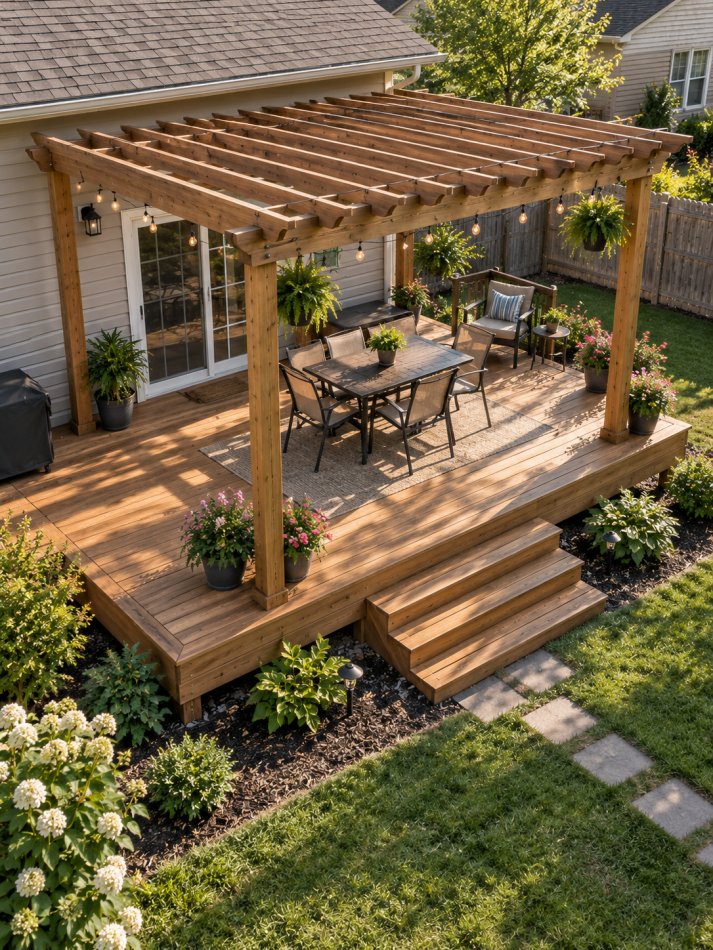
Adding a pergola overhead changes the whole feel of a wood patio. Suddenly there’s shade, a sense of structure, and a spot for string lights or climbing vines to grow across.
The build itself stays fairly simple. A few support posts, crossbeams, and the existing patio underneath do most of the work, so the addition doesn’t require starting from scratch.
Check this: 26 Best Patio Plants for Shade, Regardless of Sun
11. Interlocking Wood Deck Tiles
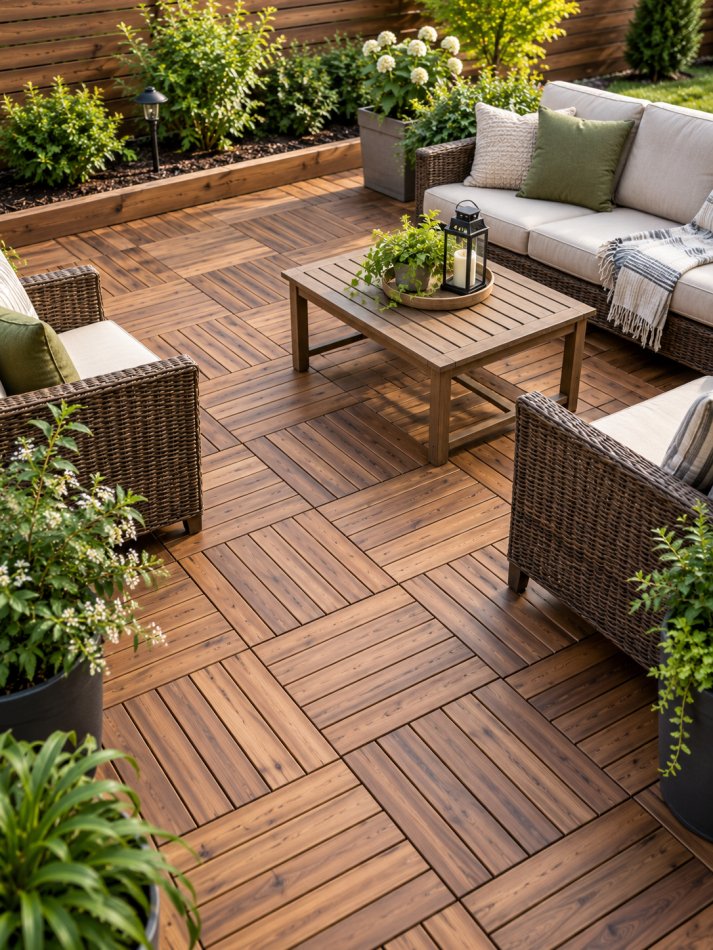
These tiles click together like puzzle pieces, which makes installation almost foolproof. No screws, no glue, just pieces that lock into place over any flat surface.
They’re a solid pick for patios that might need to be adjusted down the road. Pull a few tiles up, rearrange the layout, and put them back without any real hassle.
12. Herringbone Wood Patio Pattern
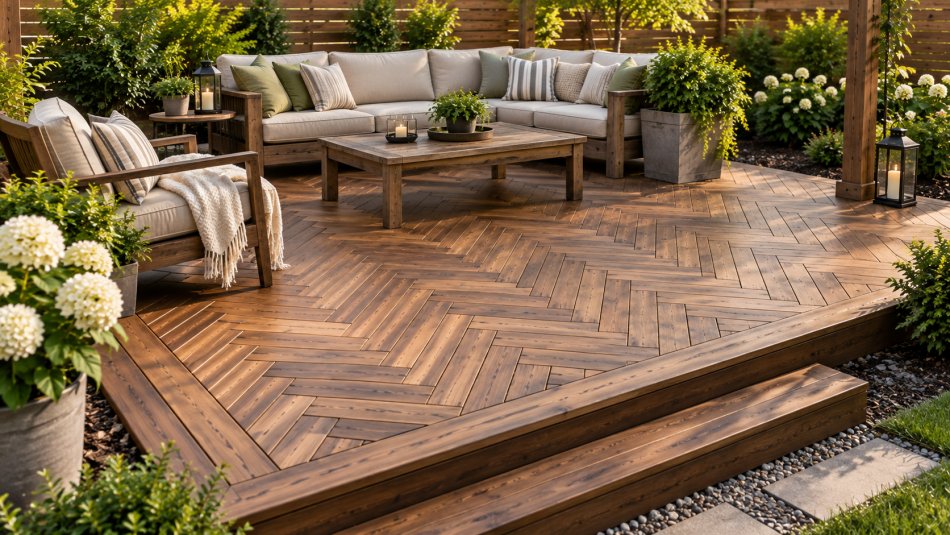
Instead of laying boards straight across, herringbone patterns angle them into a zigzag design. It takes a bit more planning, but the finished look feels far more custom than a standard layout.
Most of the extra work happens during cutting, since each board needs a precise angle to fit the pattern. Once it’s down, though, it holds up just like any other wood patio.
13. Small Balcony Wood Overlay
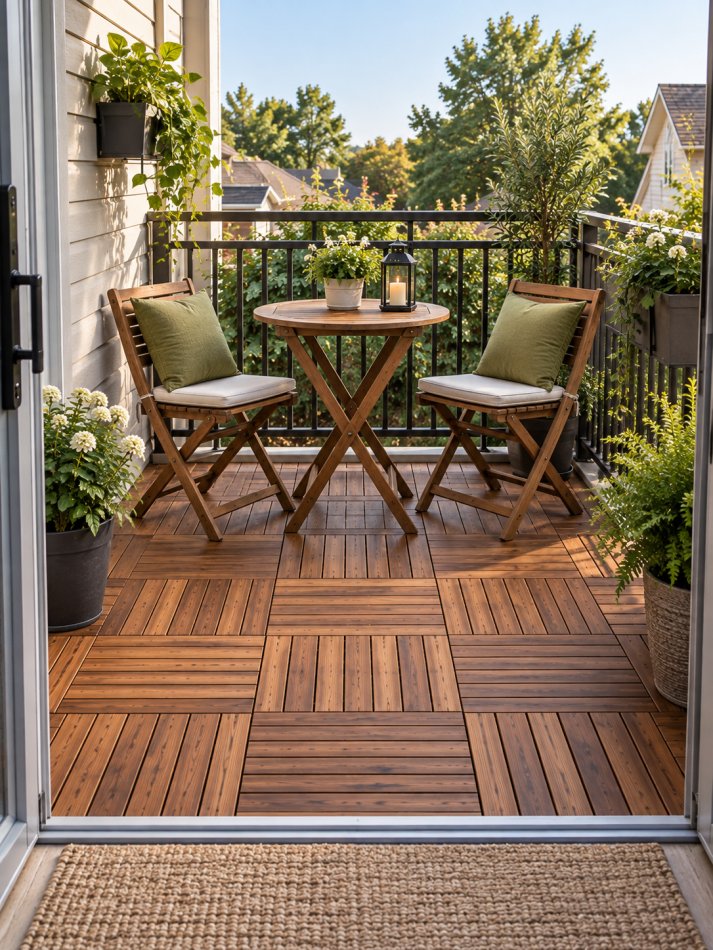
Balconies rarely get much attention, but a wood overlay can turn a plain concrete slab into a cozy little retreat. Interlocking wood tiles or thin decking boards work well here since they don’t add much weight.
This is one of the easier upgrades on the list. Most balconies can be covered in an afternoon, with no major tools or construction involved.
Also Read: 16 Concrete Raised Patio Ideas for Stunning Outdoor
14. Wood Patio with String Lights
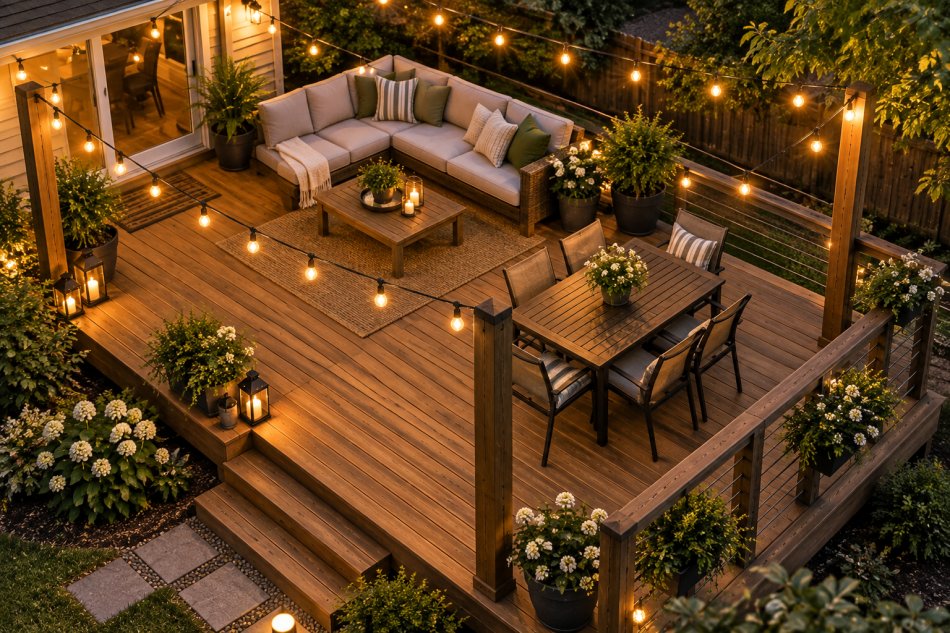
Sometimes the wood itself doesn’t need to change at all. Stringing warm white lights overhead across a wood patio instantly makes it feel more inviting once the sun goes down.
Wooden posts, a pergola frame, or even nearby trees can hold the lights in place. It’s one of the cheapest ways to upgrade a patio’s atmosphere without touching the flooring.
15. Sunken Wood Patio Lounge
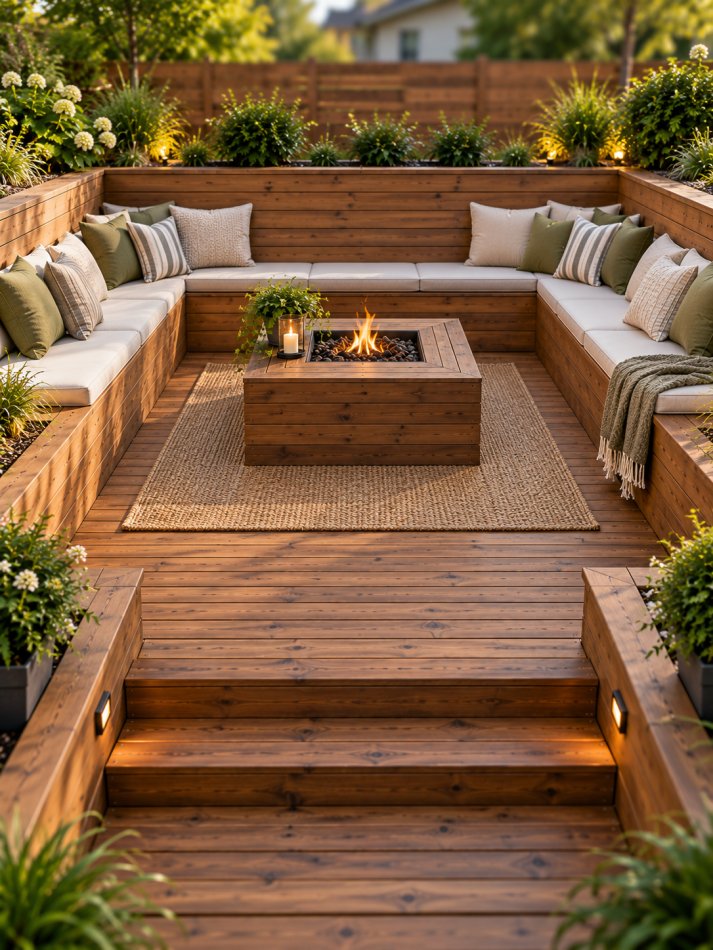
A patio that dips slightly below the main yard level creates a natural sense of separation, almost like its own little room outdoors. Wood decking lines the sunken area, often paired with built-in seating around the edges.
This one takes more digging and planning than most ideas on this list. But the cozy, tucked-away feel it creates is hard to match with a flat patio.
16. Wood Patio Border Around Gravel
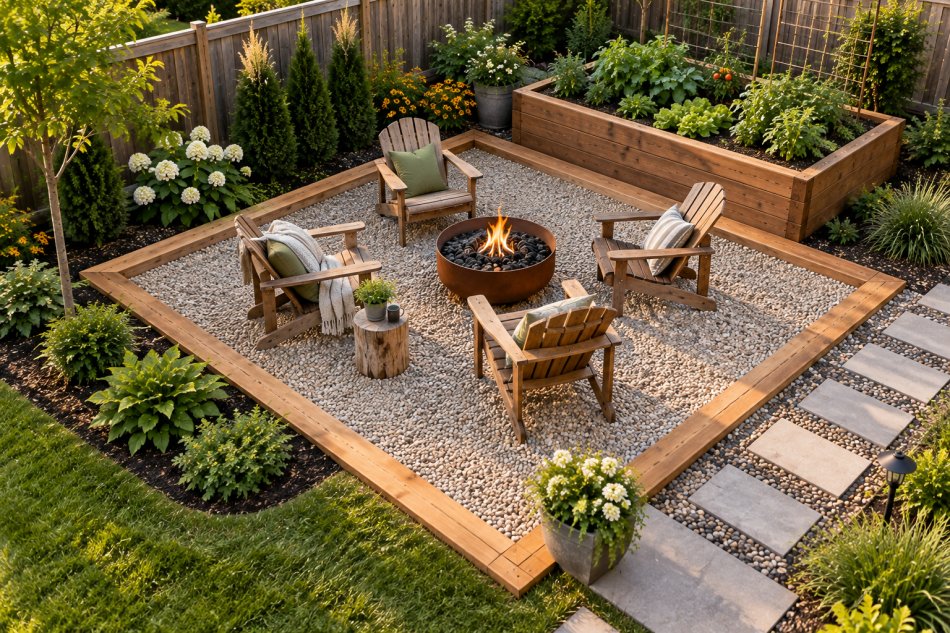
Combining wood with gravel keeps costs down while still giving the space a finished look. A wood frame or border lines the perimeter, and gravel fills in the middle instead of full decking.
This works especially well for larger areas where covering the whole space in wood would get expensive fast. It also drains well, so puddles after rain aren’t much of an issue.
17. Multi-Level Wood Patio Deck
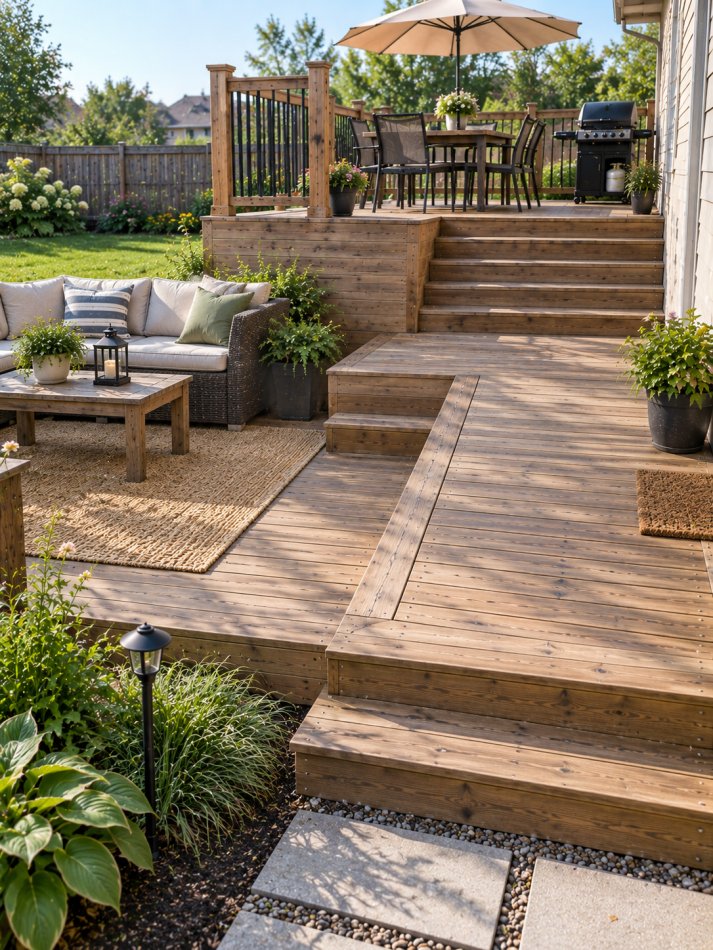
Yards with a slope don’t have to be a problem. Building the patio in stages, with each level connected by a few steps, works with the land instead of against it.
Each level can serve its own purpose too. One section for dining, another for lounging, all tied together by the same wood decking throughout.
Check this: 16 Budget-Friendly Backyard Bird Sanctuary Ideas
18. Wood Patio with Built-In Bench Seating
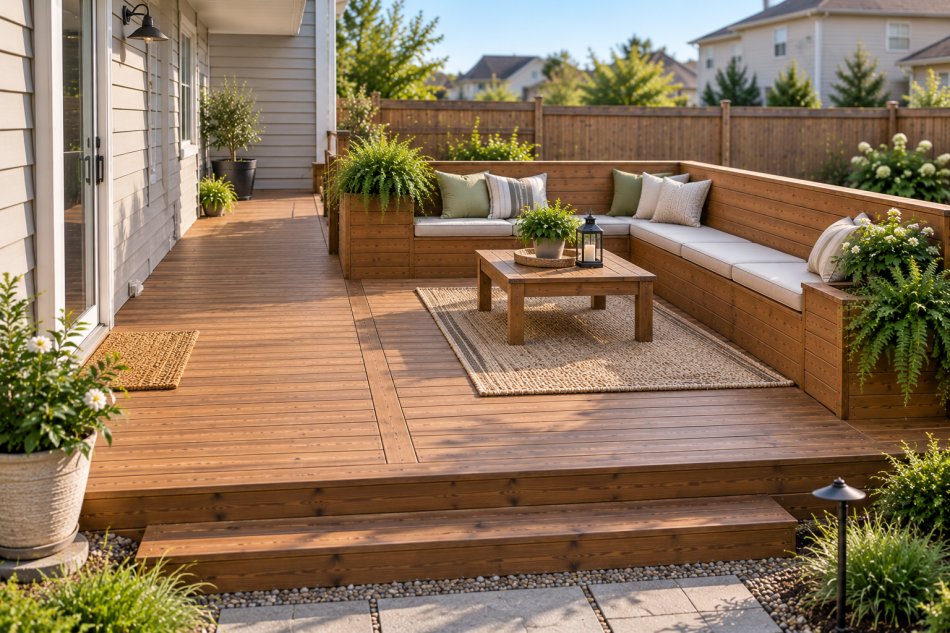
Attaching bench seating directly to the patio’s edge saves the hassle of buying and storing separate outdoor furniture. It also gives the whole space a cleaner, more finished look.
Building it at the same time as the patio itself keeps things simple, since the same wood and tools are already out. A cushion or two on top makes it just as comfortable as regular furniture.
19. Bamboo Patio Flooring
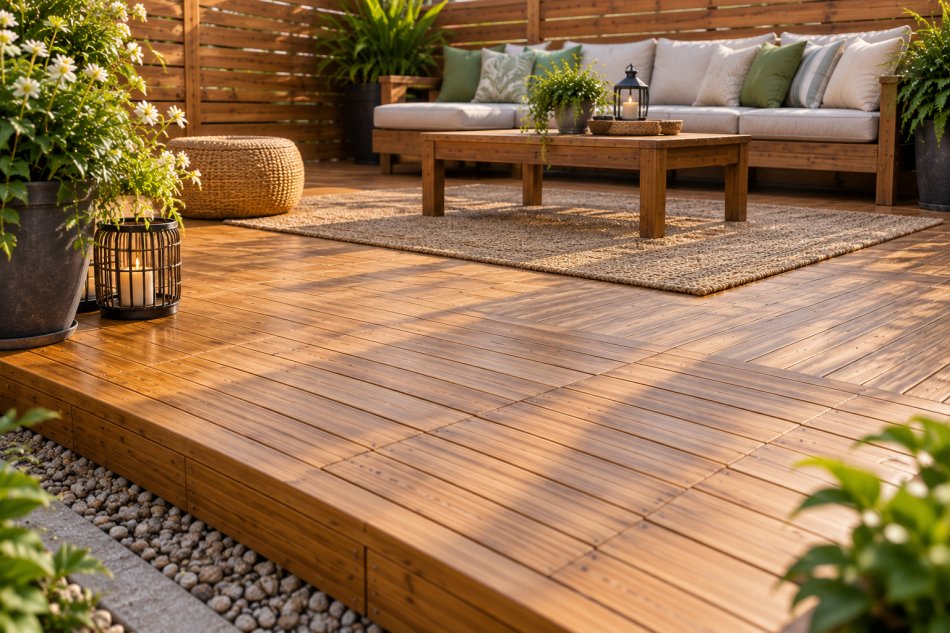
Bamboo isn’t technically wood, but it acts like one and costs less than most hardwood options. It’s also one of the faster-growing materials out there, which keeps the price down and the supply steady.
Installation looks a lot like standard wood decking, with interlocking planks or tiles laid over a flat base. Sealing it properly is the key step, since bamboo needs a bit more protection from moisture than pine or cedar.
20. Wood Patio Walkway Extension
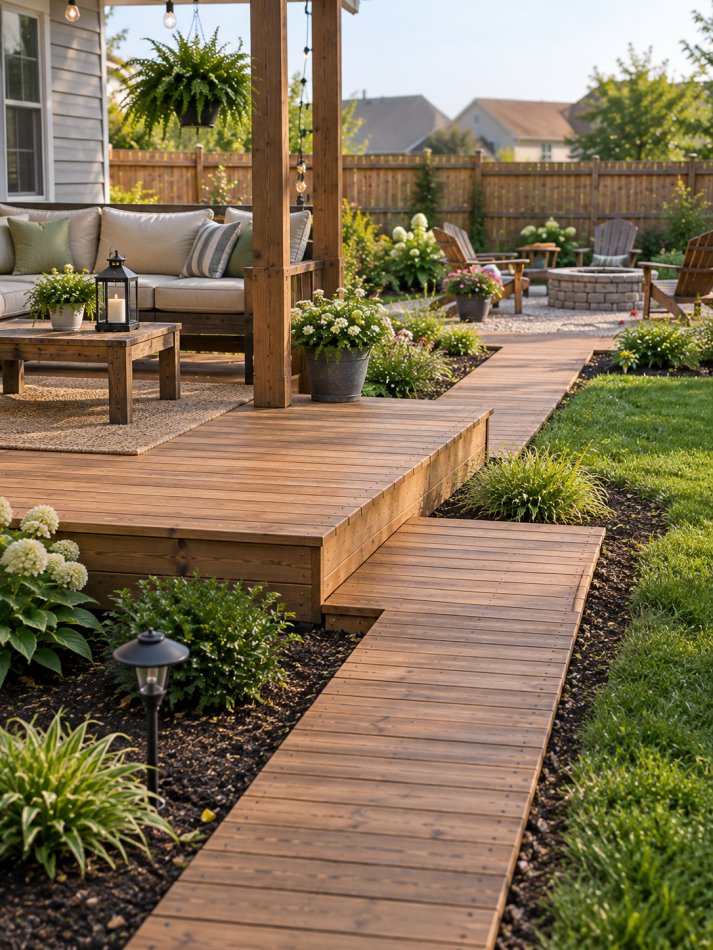
Rather than treating the patio as one isolated square, extending a wood walkway from it ties the whole backyard together. It leads the eye further into the yard and gives the space a sense of flow.
A narrow strip of decking boards, running from the patio toward a garden or seating area, does the job well. It’s a small addition that makes the whole layout feel more connected.
21. Corner Wood Patio Nook
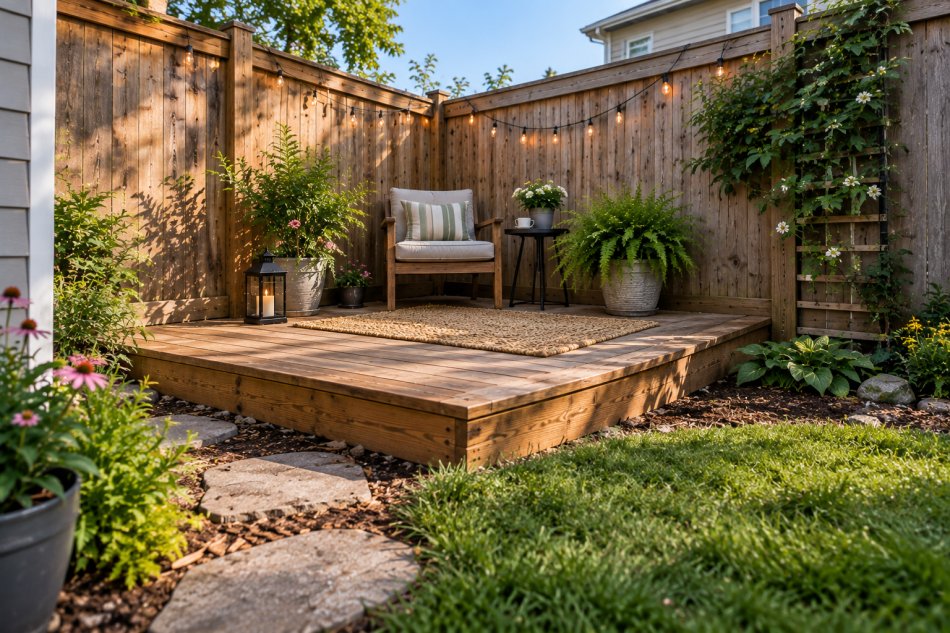
Awkward corners in a backyard often go unused, but a small wood patio tucked into that space can turn it into a quiet little escape. Even a modest 6×6 foot platform works well here.
Adding a single chair or small bistro set completes the look without overcrowding the space. It’s one of the simplest ways to make use of a corner that would otherwise sit empty.
22. Wood Patio with Fire Pit Ring
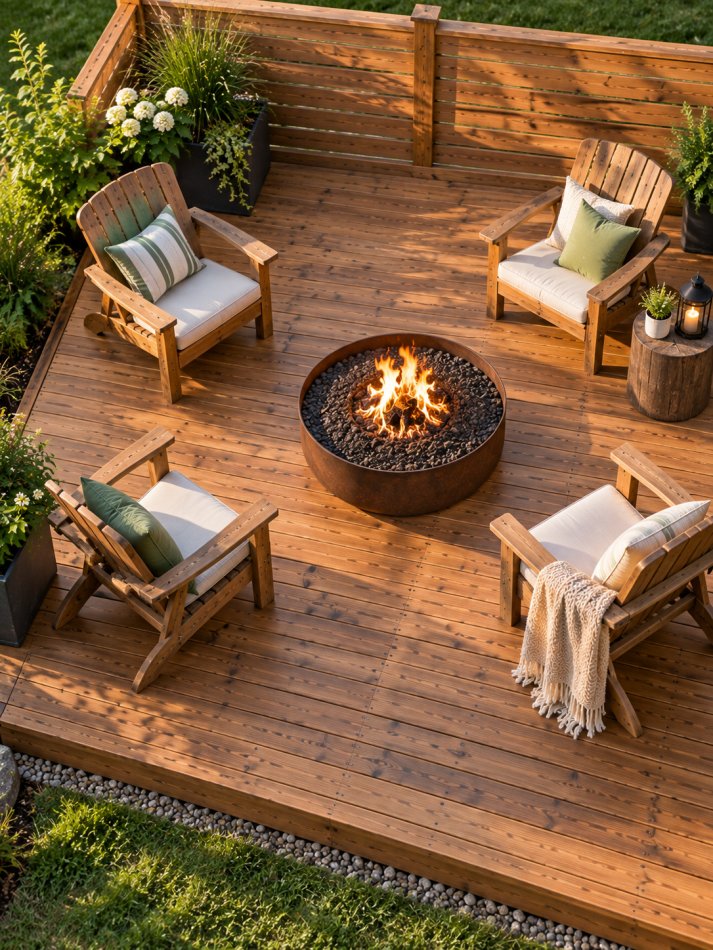
This one pairs a wood patio with a dedicated metal or stone fire ring set right into the decking. Unlike a full fire pit patio, this keeps the flame source contained to one small, defined area.
It works well for smaller yards where a large fire pit setup wouldn’t fit. The wood surrounding the ring still gives that warm, gathering-spot feel without taking up too much space.
Check this: 20 Creative Pebble Garden Ideas for Every Yard
23. Budget Wood Deck with Railing
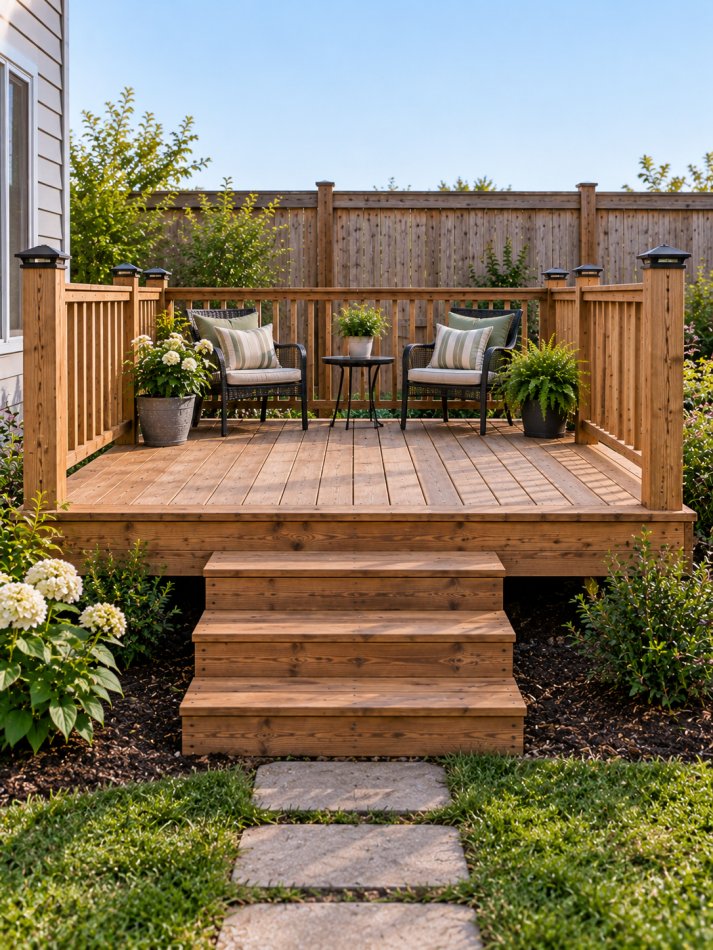
Adding a simple railing changes how a wood deck feels, especially if it sits a bit higher off the ground. It doesn’t need to be elaborate, just sturdy enough to define the edges of the space.
Basic wood posts and horizontal rails keep the cost low while still meeting safety needs. It’s a practical touch that also gives the deck a slightly more finished, put-together look.
24. Wood Patio Under a Shade Sail
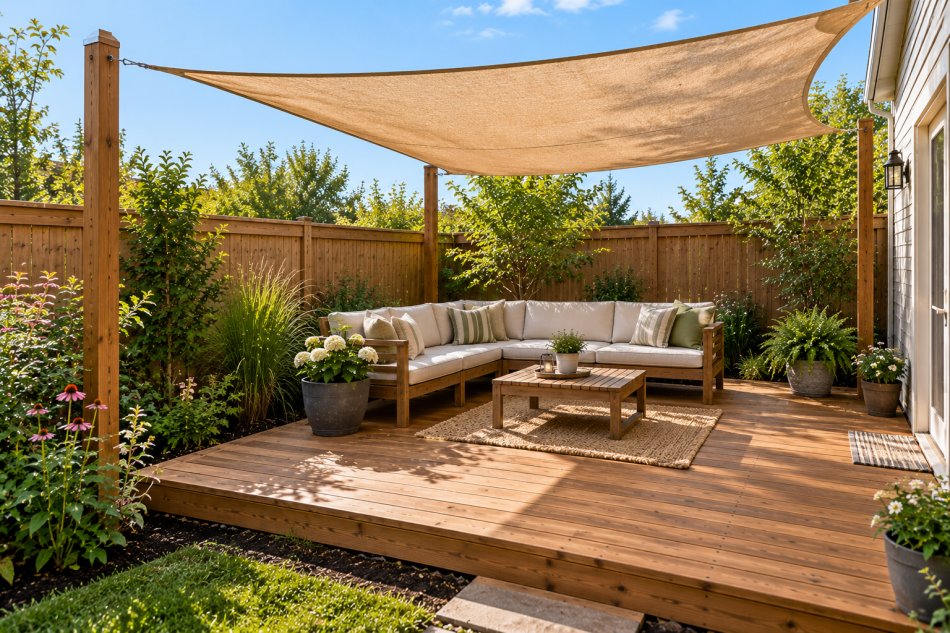
A shade sail stretched above a wood patio blocks harsh sun without the cost or weight of a full roof. The fabric comes in various shapes and colors, so it can match the rest of the backyard easily.
Anchoring the sail to a few sturdy posts or an existing structure is usually enough to hold it in place. It’s a lightweight solution for anyone who wants shade without committing to a permanent cover.
25. Stained Wood Patio with Rug Accent
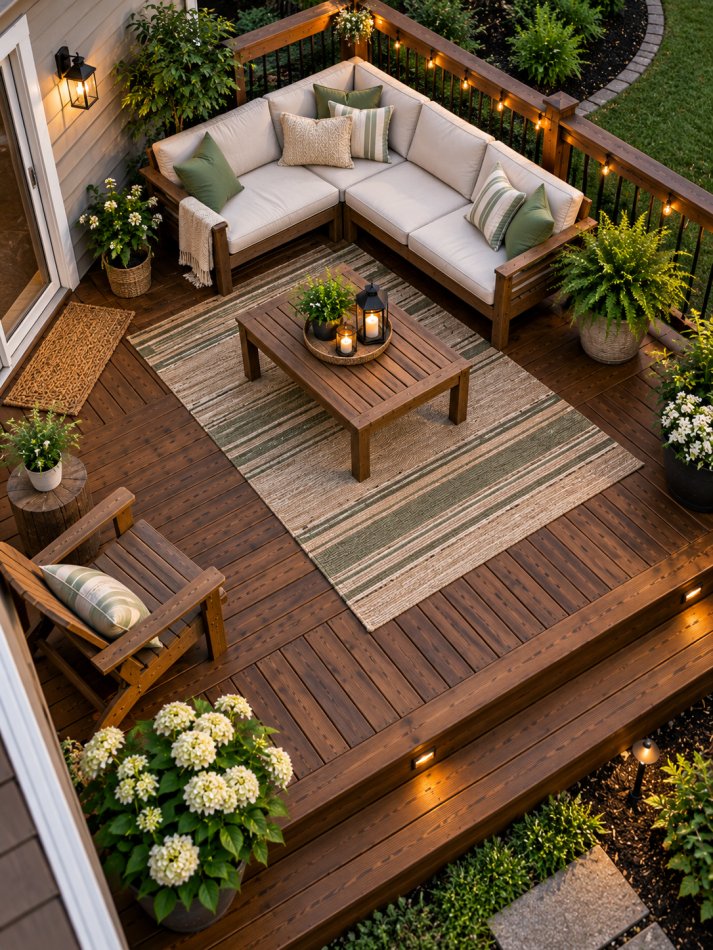
Sometimes the simplest upgrade is just a coat of stain and an outdoor rug. A well-chosen stain color can completely change the mood of the wood, from warm honey tones to deep espresso shades.
Layering an outdoor rug on top adds color and comfort underfoot. It’s an easy way to refresh an existing wood patio without any rebuilding involved.
26. Wood Patio Extension Off the Back Door
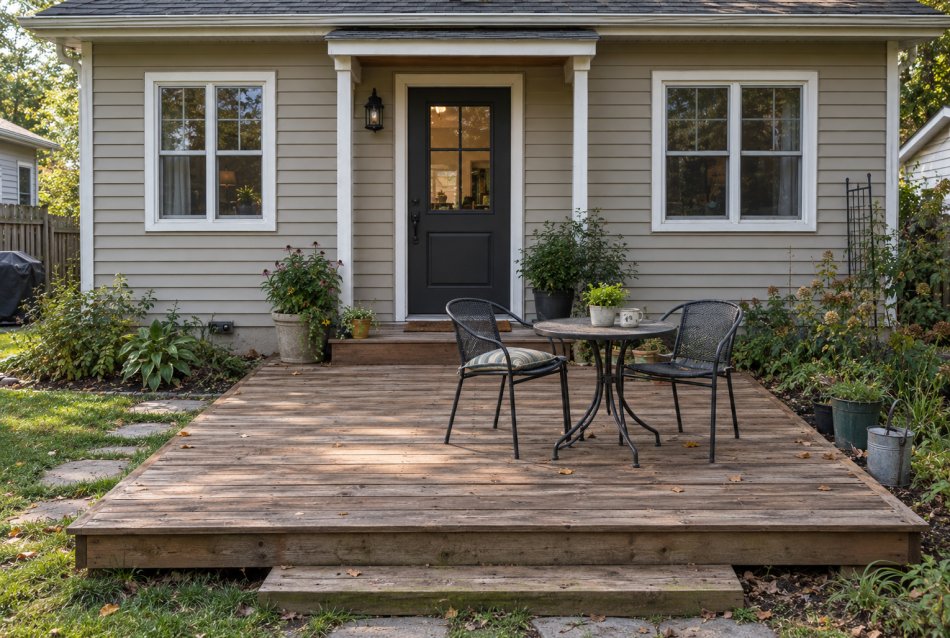
Building the patio directly off the back door creates a smooth transition from indoors to outdoors. There’s no awkward walk across grass or gravel to reach it, just a few steps and it’s right there.
This layout works especially well for morning coffee or quick evening sits outside. Keeping it close to the door also makes it more likely to actually get used day to day.
Tips for Choosing the Right Wood
The wood picked isn’t just a style choice. It decides how long the patio lasts, how much upkeep it needs, and how well it holds up against rain, sun, and everyday wear, so spending a little more on the right type now usually means fewer headaches later.
- Wood reacts differently depending on the climate. Cedar and redwood tend to handle moisture well in humid areas, while pressure-treated pine works better in drier climates with less rain.
- Not all wood holds up the same way against bugs and decay. Cedar, teak, and redwood are naturally more resistant, while other types need chemical treatment to last outdoors.
- The cheapest board isn’t always the cheapest option long-term, and some woods need more upkeep than others.
Cedar and redwood generally need less maintenance than pine, so a low-cost wood that needs replacing in a few years can end up costing more than a slightly pricier option that lasts a decade.
Conclusion
A wood patio doesn’t need a big budget to make a real difference in a backyard. Whether it’s a simple pallet deck or something built in stages over a slope, the right choice comes down to what actually fits the space and how it’ll be used.
The wood chosen along the way matters just as much as the design itself. A little research upfront on climate, maintenance, and durability goes a long way toward keeping the patio looking good for years.
At the end of the day, the best patio is one that gets used. Whether it’s morning coffee by the back door or evenings around a fire pit, a wood patio built with a bit of thought turns into a space worth spending time in.


Khaja Moinuddin, a computer science graduate, finds joy in gardening and homesteading. Join him on this blog as he shares his experiences in homesteading, gardening, and composting