Garlic is a flavorful, healthy ingredient in the kitchen, and it is just as useful in the garden. Because it contains sulfur compounds, garlic works as a natural repellent for many pests, so you can turn it into an affordable and safe pesticide that costs only a few cents per batch.
You can make your own garlic spray to deal with slugs, caterpillars, aphids, and many other insects, and even some animals. A healthy garden depends on a good balance of beneficial insects that keep the damaging ones under control.
Chemical pesticides also kill the helpful insects, which throws the garden out of balance and leaves it with no natural defenses.
That starts a vicious cycle, because you end up needing more and more pesticide. So before you reach for toxic products, try garlic for pest control first.
Why Garlic Works Against Garden Pests?
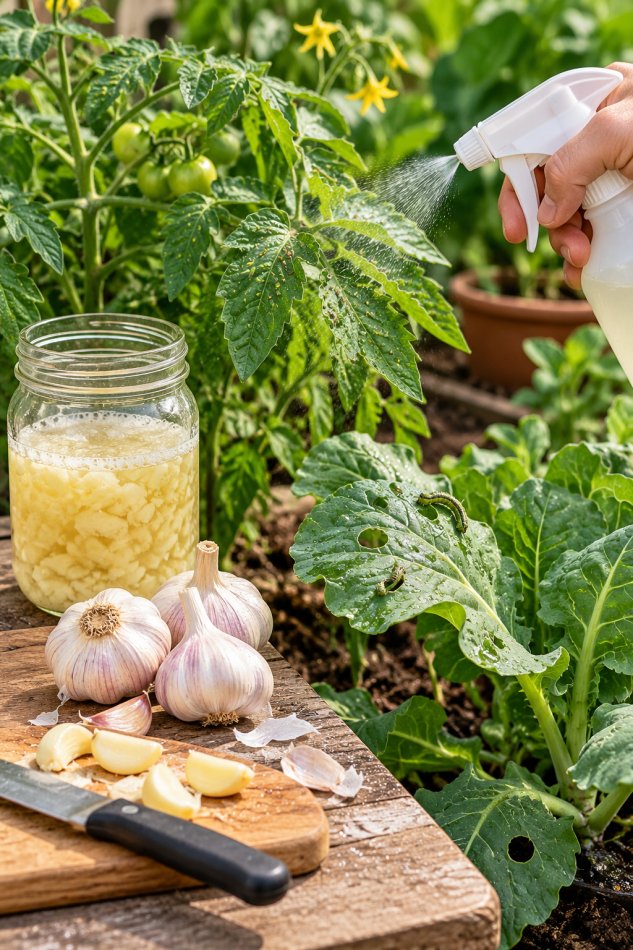
Garlic gets its sharp smell from sulfur compounds, and these are what pests dislike. When you crush a clove, the compounds are released and create a strong odor that confuses insects and masks the scent of the plants they would normally feed on. Many pests simply move on to a more appealing spot.
The same compounds also have antifungal properties, which is why garlic helps with some plant diseases as well as insects. Since the smell fades after a few days, the protection is temporary, but it is gentle enough to repeat as often as the plants need.
How to Make Garlic Spray for Pests?
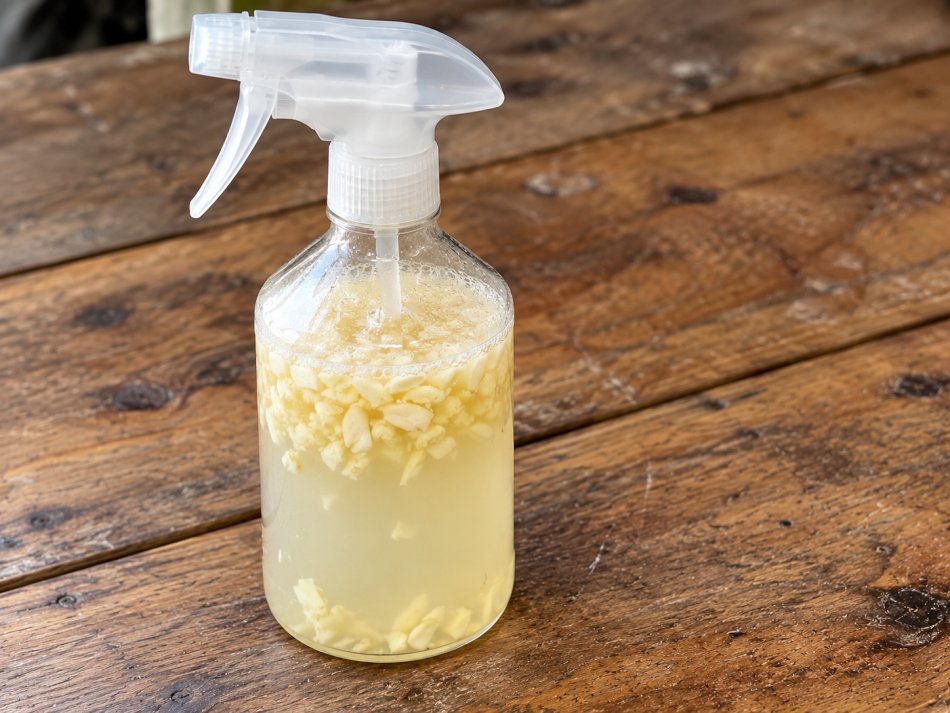
You will find plenty of recipes online, but this is the easiest and simplest one.
1. Start by making a concentrated garlic extract. Mash 4-6 garlic cloves using a food processor, a blender, or anything else that crushes them well.
Then add one quart of water and five drops of dish soap, or a biodegradable soap if you prefer. The soap helps the spray stick to the leaves instead of running off.
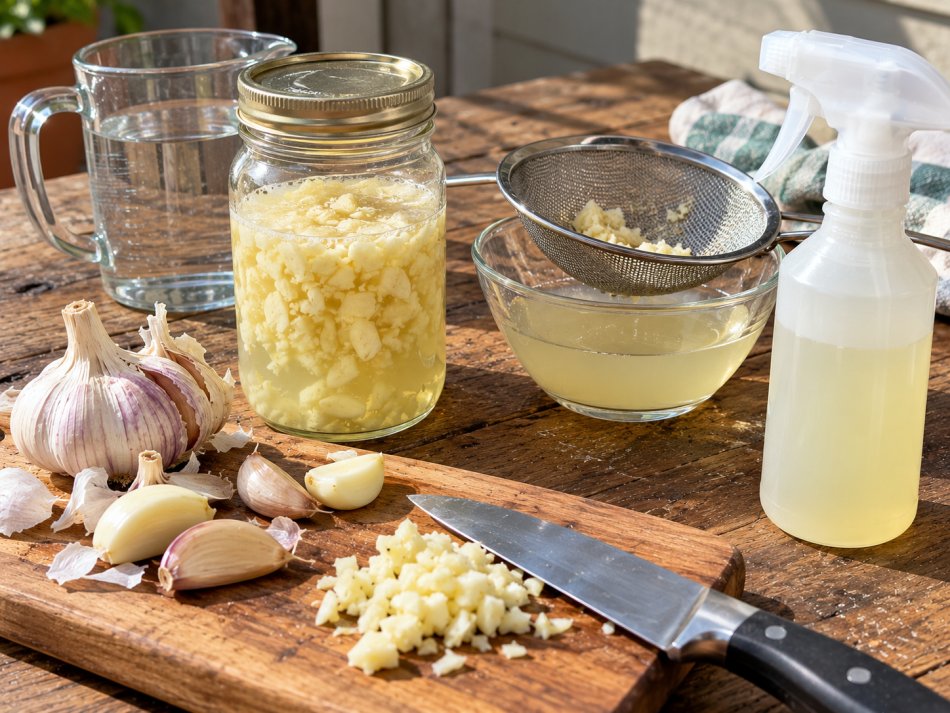
2. Strain the mixture through a clean cloth twice to remove any garlic pieces that could clog your spray bottle. Store the leftover concentrate in a glass jar or another container with a tight lid.
When you are ready to spray, dilute the concentrate with two cups of water and pour it into a spray bottle or any sprayer. Keep in mind that this natural pesticide does not last forever.
3. Use the spray soon after mixing, as it loses strength over time. Spray the plants once a week to protect them from pests.
Avoid spraying close to harvest unless you want your lettuce to taste like garlic. Garlic spray is also a broad-spectrum pesticide, so spray only the parts of the plant that are infested. This lowers the risk of harming beneficial insects.
4. Another way to use garlic for pest control is companion planting, which means growing garlic among your other crops.
It works especially well if you enjoy garlic yourself. Garlic does a great job of driving pests away from many plants, but keep it away from legumes, peas, and potatoes.
Garlic Insecticide Spray
Garlic is well known for its pungent aroma. Some people like it and others find it repellent, and that strong smell is exactly what helps keep pests in check.
It is not entirely clear whether garlic and chilli sprays are true insecticides or, more likely, insect repellents. Either way, these common kitchen ingredients can easily knock back pest infestations in the garden. To make a garlic insecticide spray:
Take two whole garlic bulbs, or as many as you need, and puree them with one quart of water in a blender or food processor.
Let the mixture sit overnight. Then pour it into a jar, add half a cup of vegetable oil and one teaspoon of mild liquid soap, and top up the jar with water. The oil helps the spray coat the pests and the leaves, which makes it more effective on soft-bodied insects. To use it, mix one cup of this concentrate with one cup of water and spray it carefully on the affected plants.
Common Tips for Making and Using Garlic Extracts
1. Choose garlic that is free from disease.
Store the bulbs in a cool, dry, shady place. The simplest method is to cut off the dried tops and hang the bulbs so they can cure. Alternatively, spread them in a single layer in a well-ventilated, dry, shady spot, the same way you would store onions.
2. Use clean utensils and wash them again after use.
Avoid direct contact with the crude extract while preparing and applying it. If you leave the extract sitting overnight, keep it out of reach of kids and pets.
3. The garlic scent stays on sprayed plants for a while, so don’t spray right before harvest, or pick all the ripe fruit before you spray. To find the right strength for a specific pest, try different concentrations of the extract.
4. Test the spray on a few infested plants before applying it to the whole garden.
Wait a day or two and check for leaf burn or wilting. If you add soap as an emulsifier, use a potash-based washing soap. Wear protective clothing when handling the extract, and always wash your hands afterward.
When and How to Spray for the Best Results?
Timing makes a big difference. Spray early in the morning or in the evening, when the sun is not strong. Spraying in the heat of midday can scorch leaves, especially when the mix contains oil or soap. Early evening can also be a good time because many pests become active after dark.
Coat both sides of the leaves, since pests like aphids and spider mites hide on the undersides. Also spray the stems and the base of the plant.
After rain, reapply the spray, as water washes it away. If the infestation is heavy, you may need to spray every few days for the first couple of weeks, then switch to once a week for prevention.
Benefits
According to the Environmental Protection Agency, exposure to some toxic pesticides is a health hazard. If you, your children, or your pets spend time in the yard, that is not something you want to worry about.
Garlic, on the other hand, is an organic, natural solution that poses no serious health risk to anyone at home. It does not kill beneficial bugs. Its sharp smell simply makes plants unappealing as a place to feed or lay eggs.
This helps the garden restore its balance and defend itself. Homemade garlic spray has many uses and works on vegetables, fruits, ornamentals, and indoor plants too. It is also budget friendly, because you can make it from kitchen scraps and leftover garlic.
Natural Pesticide and Insecticide
As a foliage spray, garlic is effective against aphids, Colorado potato beetles, whiteflies, bean beetles, cabbage worms, spider mites, moths, diamondback moths, ants, and termites. As a soil treatment, garlic water is a well-known remedy for nematodes and fungus gnats.
Natural Fungicide
The active sulfur compounds in garlic can fight several kinds of fungal infections. The spray is a strong preventive and treatment for mildew, so it is worth using on plants like cucumbers, squash, and roses that often suffer in humid weather.
Natural Repellent
Mixed with chilli, garlic works very well as a deterrent against mice, rats, rabbits, deer, and voles. Spray it around the edges of beds and along the bases of plants that animals love to nibble.
Precautions
Garlic spray is non-toxic, but it can irritate the eyes, especially if you add extras like pepper or dish soap. Point the nozzle away from your face, and wash your hands after spraying or touching treated plants.
Don’t let children or pets play near freshly sprayed plants. If you won’t use the spray within a few days, store it in the freezer, since it spoils like any other perishable food. Also, don’t apply it more than twice a week as a leaf spray, or more than once a week as a soil treatment.
Remember that the spray is not selective. It can bother bees and other pollinators if you spray open flowers, so avoid blooms and apply it when pollinators are least active.
Conclusion
Garlic spray is one of the easiest ways to protect your plants without harsh chemicals. It takes a few minutes to make, uses ingredients you already have at home, and keeps your garden safer for your family, your pets, and the beneficial insects that do so much good work.
Start with a small batch, test it on a few plants, and adjust the strength to suit your garden. With regular, careful use, you will see fewer pests and healthier plants all season long.


Khaja Moinuddin, a computer science graduate, finds joy in gardening and homesteading. Join him on this blog as he shares his experiences in homesteading, gardening, and composting