You had a bountiful harvest in your backyard, or you just brought home a big bag of onions from the store. Letting them sit on the shelf and expecting them not to sprout is something that rarely works out.
A few weeks later, you find green shoots poking out, soft mushy spots, and that unmistakable smell, and half the batch ends up in the trash.
The good news is that onions are one of the longest-lasting vegetables in your kitchen, if you store them the right way.
With proper curing, the right storage spot, and a few simple habits, you can keep them firm and fresh for months instead of weeks.
In this guide, you’ll learn how to cure onions, where to store them, which varieties last the longest, and the common mistakes that cause onions to sprout and rot.
Whether you’re storing a big backyard harvest or just a few extra onions from the grocery store, these tips will help you save money and cut down on waste.
Why Do Onions Sprout and Rot?
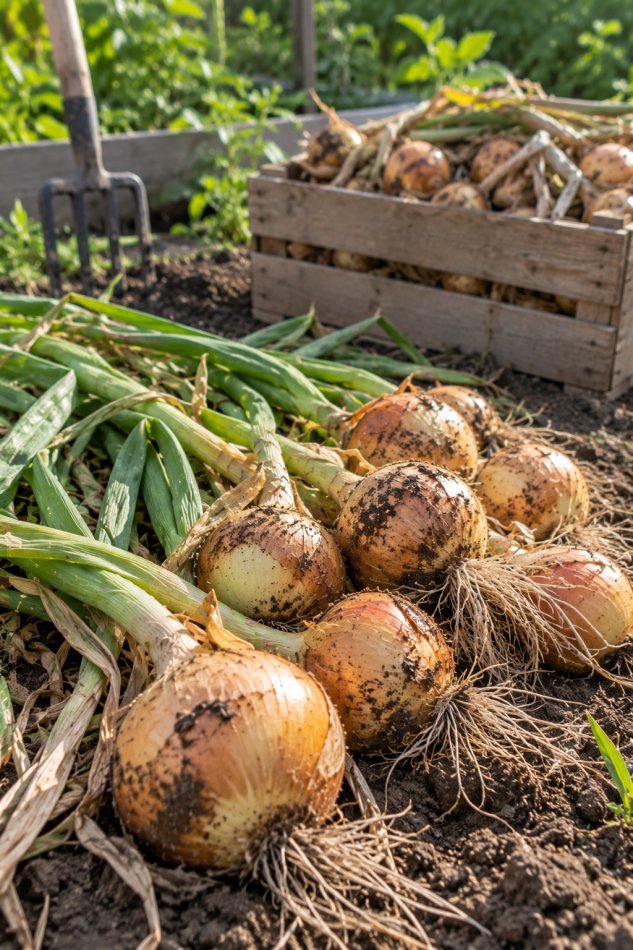
Onions are alive, even after you pick them. They start to grow when the place feels like spring, and they rot when water and damage let germs and mold get in.
Too much water is the biggest problem: Damp air or wet skin makes onions soft and moldy. In a closed bag or box with no fresh air, onions trap their own moisture, and the mold spreads fast.
Onions also stay asleep in cool, dark places: When it gets warmer than 70°F or the onions sit in bright light, they wake up, grow green shoots, and go bad faster.
The dry, papery skin protects the onion, so cuts and bruises let germs get inside. Skipping curing is another mistake. Fresh onions have wet, open necks that let rot in, while cured onions have dry necks that keep them safe for months.
The wrong type and the wrong neighbors matter too. Sweet onions hold more water, so they spoil sooner. Keeping onions next to potatoes also makes both go bad faster.
How to Store Onions for a Long Time?
To store onions for a long time, start with the right type, like yellow onions, and cure them first.
Spread them in a single layer in a warm, dry, shady spot with good airflow for 2 to 4 weeks, until the necks are dry and the skin is papery. Then sort them and keep only firm, undamaged onions for storage.
Keep the onions in a cool, dry, dark, and airy place, like a pantry, basement, or cellar, using a mesh bag, basket, or pantyhose.
Don’t use plastic bags, and keep them away from potatoes. Check them every week or two and remove any that are soft or sprouting.
Best Onion Types for Long-Term Storage
A simple rule: the stronger the smell and taste, the longer the onion will last.
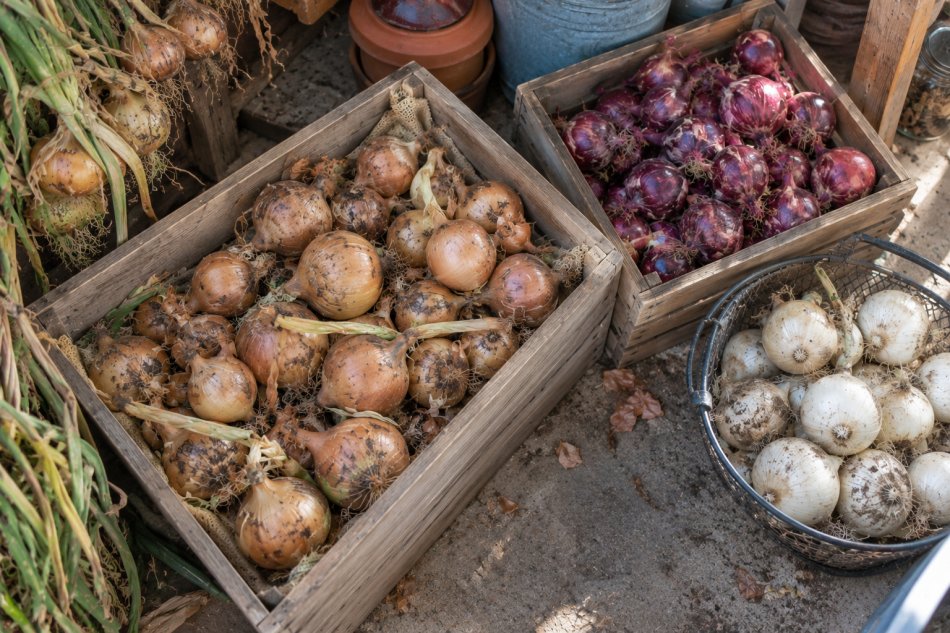
Not all onions last the same amount of time. Some can stay fresh for many months, while others go bad in a few weeks. Picking the right type makes storage much easier.
Yellow onions are the best for long storage. They have a strong taste and thick, dry skin, and they can last 6 to 10 months when stored well. Copra, Patterson, and Stuttgarter are popular choices for backyard growers.
Red onions come next. They usually keep for 3 to 6 months, which is enough for most homes. Red Wing is a good variety to try. White onions have thinner skin and last a bit less, about 2 to 4 months.
Sweet onions, like Vidalia and Walla Walla, don’t keep well. They hold more water and have a milder taste, so they spoil quickly. Use them first, within a few weeks.
Also Read: 5 Simple Ways to Store Carrots from the Garden
How to Harvest Onions for Storage?
When and how you pick your onions decides how long they will last. Pick at the right time and handle them gently, and they can stay fresh for months.
When to Harvest: Wait until the green tops turn yellow and fall over on their own. This usually happens in late summer.
When half to two-thirds of the tops are bent down, the onions are ready. Don’t pick too early, because young onions have thick, wet necks and don’t store well.
Pick a Dry Day: Choose a dry, sunny day. Wet soil means wet onions, and wet onions rot faster. Stop watering about 2 weeks before harvest so the soil can dry out.
Pull Them Gently: Loosen the soil with a garden fork, then pull the onions out by hand. Don’t cut, drop, or bruise them. Even a small bruise can turn into a rotten spot later.
Don’t Wash or Trim Yet: Just brush off the loose dirt with your hand. Leave the tops and roots on. You will trim them after curing.
How to Cure Onions Before Storing?
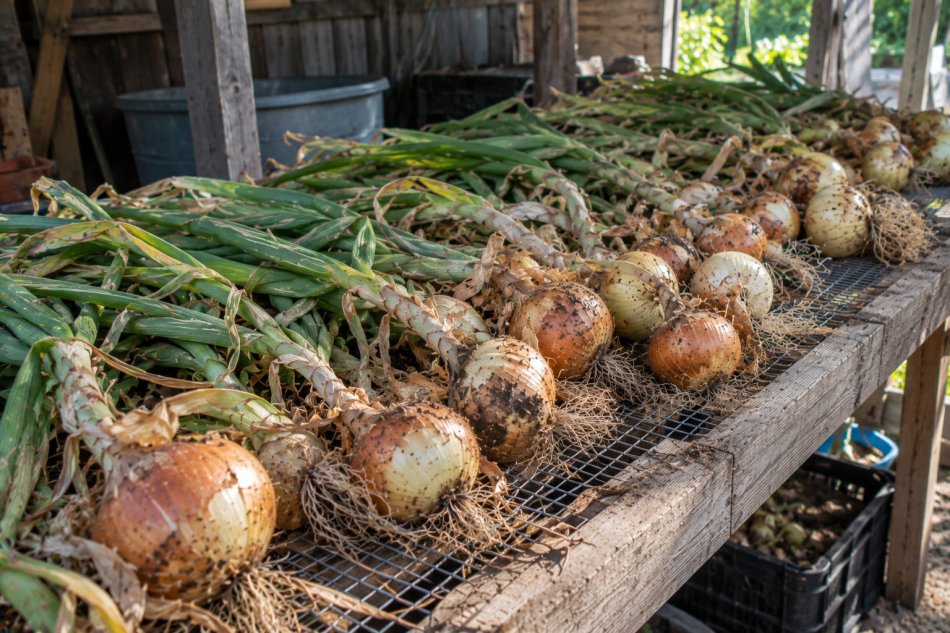
Curing means drying onions so their outer skin turns papery and their neck closes up. It is the most important step for long storage, because it seals the onion and keeps rot out.
- Spread them out: Lay the onions in a single layer in a warm, dry, shady spot with good airflow, like a garage, porch, or covered patio. A wire rack, mesh tray, or old window screen lets air reach all sides.
- Avoid sun and rain: Direct sun can burn the onions, and rain will undo all your work. A fan can help if the air is still.
- Wait 2 to 4 weeks: Warm, dry weather cures onions faster, and humid weather takes longer. Don’t rush this step.
- Check if they are ready: Cured onions have a dry, tight neck, papery skin that rustles in your hand, and hard, dry roots.
- Trim and clean: Cut the tops to about 1 inch above the bulb and trim the roots short. Brush off dry dirt, but don’t wash them.
Once your onions are fully cured, sort them before storing. Set aside any onion with a soft spot, a thick wet neck, or damaged skin, and use those first, since they won’t last in storage.
How to Pick Onions for Storage?
Only the best onions should go into storage, so one bad onion doesn’t spoil the rest.
Squeeze each onion gently. A good one feels hard and solid, with a thin, dry, tight neck, papery skin that isn’t torn, and a normal onion smell.
Leave out onions with soft spots, thick wet necks, cuts, bruises, green shoots, or mold. Use these first, along with sweet onions.
Check this: How to Can Fresh Tomatoes the Right Way in Easy Steps?
Best Place to Store Onions
Where you keep your onions matters as much as how you prepare them. The right spot keeps them asleep and dry, and it can add months to their life.
- Cool: The best temperature is 32 to 40°F, but most homes don’t have that. A spot between 45 and 55°F works very well, and anything below 70°F is fine for a few months.
- Dry: Onions like low humidity, around 65 to 70 percent. Damp places make them soft and moldy.
- Dark: Darkness keeps onions from sprouting. Avoid bright windows and open shelves.
- Airy: Good airflow carries away moisture, so choose a spot where air can move around the onions.
Good places include a cool pantry, a basement, an unheated garage, a root cellar, or a cupboard away from the stove. Avoid spots under the sink, near the dishwasher, or next to the stove, where heat and steam build up.
Check your onions every week or two and remove any that are soft or sprouting. This keeps one bad onion from spoiling the whole batch.
Best Containers and Storage Methods
The right container keeps air moving around your onions and keeps moisture away. Whichever method you choose, the goal is the same: dry, airy, and dark.
Mesh bags are cheap and let air flow freely, so hang them in a cool, dark spot or set them on a shelf. Open baskets and wooden crates also work well. Use a single layer or a shallow pile so the onions at the bottom don’t get squashed.
If you have onions with long tops, you can braid them and hang the braid on a wall or rafter. Another fun method is the pantyhose trick.
- Drop one onion into the leg of clean pantyhose, tie a knot above it, then add the next one. Hang it up and snip off one onion at a time. The knots keep the onions from touching, so rot can’t spread.
- A paper bag with a few holes or a cardboard box with air gaps can work if you have no other option. Keep the layers shallow and check them often.
- Avoid plastic bags and sealed containers, because they trap moisture and make onions rot much faster. Keep your onions off the floor and away from potatoes, and check them every week or two.
Where Not to Store Onions?
Even the best onions can spoil fast in the wrong spot. Knowing where not to keep them is just as important as knowing where to store them.
- Next to potatoes: Potatoes give off moisture and gases that make onions spoil faster. Onions can also make potatoes sprout sooner, so keep them in separate spots.
- Under the sink or near the dishwasher: These places are damp and humid, which leads to soft, moldy onions.
- Near the stove or on top of the fridge: Heat and steam wake onions up and make them sprout.
- On the counter in bright light: A sunny counter works for a few days, but it is not good for long storage.
- In the fridge: Whole onions don’t do well in the fridge because the moist air makes them soft and moldy. The only time the fridge is a good idea is for cut or peeled onions, or for sweet onions, which can last a few weeks longer when kept cold.
Remember, the golden rule is cool, dry, dark, and airy. If a spot is warm, damp, or bright, find a better place for your onions.
Check this: How to Store Potatoes After Harvest?
How to Store Cut or Peeled Onions?
Cut onions go bad faster than whole ones, so they need special care.
Put the cut onion in a sealed container or zip-top bag and press out the extra air. If you save half an onion, place it cut side down and cover it well so the smell doesn’t spread in the fridge.
Always keep cut or peeled onions in the fridge. A peeled whole onion lasts 10 to 14 days, and a chopped onion lasts 7 to 10 days. Throw them away if they feel slimy, smell sour, or have mold.
How to Freeze, Dehydrate, or Pickle Onions?
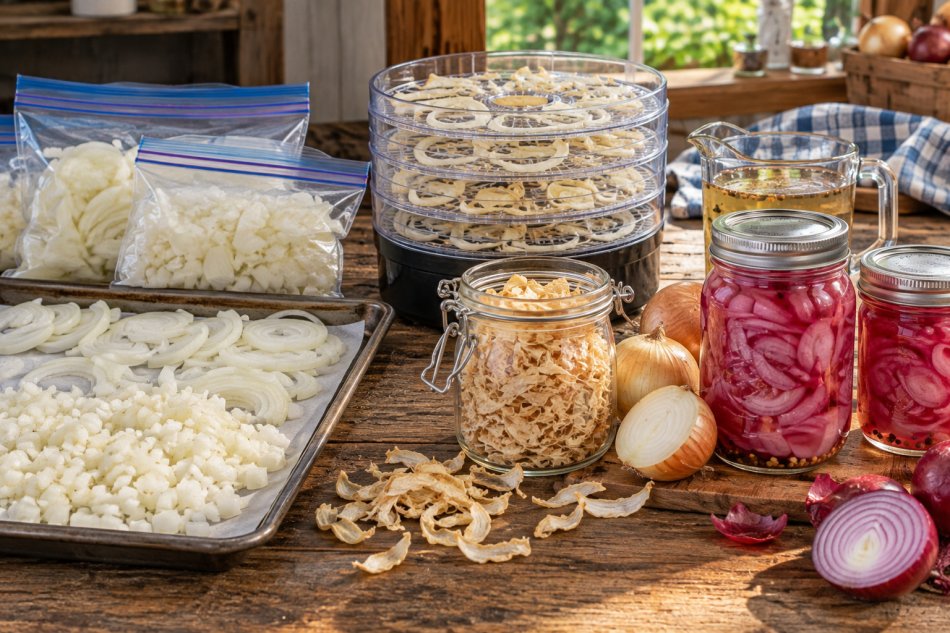
Too many onions, or they’re going soft? Freezing, drying, and pickling can save them.
To freeze, chop or slice the onions, spread them on a tray for 1 to 2 hours, then move them to a freezer bag. They last 6 to 8 months and are best for cooked food like soups and curries.
To dehydrate, slice thin and dry at 125°F for 6 to 10 hours until crisp. Store in an airtight jar for a year or more.
To pickle, pour hot vinegar, water, salt, and sugar over sliced onions. Keep them in the fridge for 2 to 3 weeks.
Common Mistakes to Avoid
Most onions go bad because of a few simple mistakes. The good news is that they are easy to fix once you know what they are.
- Skipping the curing step: Uncured onions have wet necks that let rot in. Always cure them for 2 to 4 weeks first.
- Storing them with potatoes: Potatoes give off moisture and gases that make onions spoil faster. Keep them apart.
- Using plastic bags: Plastic traps moisture and stops air from moving. Use mesh bags, baskets, or paper bags instead.
- Washing onions before storing: Water on the skin leads to mold and rot. Just brush off dry dirt.
- Keeping them in a warm or bright spot: Heat and light make onions sprout. Choose a cool, dark place.
- Storing damaged onions with good ones: One bruised or soft onion can spoil the whole batch. Sort before you store.
- Never checking them: A bad onion is easy to miss. Check your stored onions every week or two and remove any that are soft or sprouting.
Also Read: How to Pickle Cucumbers with Vinegar and Sugar?
How to Tell if an Onion Has Gone Bad?
Check your onions often to catch a bad one early. A good onion feels hard and firm. If it feels soft, mushy, or hollow, has powdery mold, smells sour, or has slimy, brown layers inside, throw it away.
Sprouting is different. If a sprouted onion is still firm and smells normal, it is safe to eat. Cut off the green shoot and use it soon.
When in doubt, throw it out. Wipe down the storage spot so rot doesn’t spread.
FAQs
Can you store onions in the fridge?
Whole onions don’t do well in the fridge because the moist air makes them soft and moldy. Cut or peeled onions, and sweet onions, are the exceptions. Keep them in an airtight container in the fridge.
Why do onions sprout in storage?
Onions sprout when they feel warmth, light, and moisture. A cool, dark, dry spot keeps them asleep for much longer.
Can you store onions and potatoes together?
No. Potatoes give off moisture and gases that make onions spoil faster, and onions can make potatoes sprout sooner. Keep them in separate places.
How long do onions last in the pantry?
Cured yellow onions can last 6 to 10 months in a cool, dry, dark pantry. Red onions last 3 to 6 months, and white onions last 2 to 4 months. Sweet onions last only a few weeks.
Can you eat sprouted onions?
Yes, if the onion is still firm and smells normal. Cut off the green shoot and use the onion soon. If it is soft, moldy, or smells bad, throw it away.
Should you wash onions before storing them?
No. Water on the skin leads to mold and rot. Just brush off the dry dirt.
Why are my stored onions turning soft?
Soft onions are usually caused by moisture, poor airflow, or skipped curing. Move them to a drier, airier spot and remove any soft ones right away.
Also Read: How to Can Fresh Green Beans?
Conclusion
Storing onions for a long time is easy when you follow the basics. Choose a good storage variety, cure it well, and keep it in a cool, dry, dark, and airy spot, and your onions can last for months.
Avoid plastic bags, potatoes, and washing before storage, and check your onions every week or two. If you have extras, freeze, dehydrate, or pickle them so nothing goes to waste.


Khaja Moinuddin, a computer science graduate, finds joy in gardening and homesteading. Join him on this blog as he shares his experiences in homesteading, gardening, and composting