You don’t have to go out of your budget to build your patio. With a few simple materials and a bit of effort, you can turn any outdoor space into a neat and useful area. A low-cost DIY patio is perfect if you want a place to sit, relax, or keep plants without spending too much money.
The best part is you can build it your own way using budget-friendly options like gravel, bricks, or recycled materials. Even a small patio can make a big difference in how your garden looks and feels. In this guide, you’ll learn easy and affordable ideas to create your own patio at home.
How to Build a Low-Cost DIY Patio?
1. Choose the Right Spot
Start by picking a good location in your yard. Look for a flat area that is easy to walk to from your house. It’s also better to choose a spot that doesn’t collect water after rain, as that can damage your patio over time. If possible, pick a place with a mix of sun and shade so it feels comfortable throughout the day.
2. Clear and Level the Ground
Remove all grass, weeds, roots, and stones from the area. Use a shovel to dig down about 3–5 inches. This creates space for your base layer. After digging, level the ground as much as you can. You don’t need it perfect, but the smoother it is, the better your patio will look and last.
3. Add a Base Layer
Spread a layer of gravel or coarse sand across the area. This base helps with drainage and keeps your patio from sinking over time.
Try to make this layer about 2–3 inches thick. Use a rake or a flat piece of wood to spread it evenly, then press it down firmly so it feels solid under your feet.
4. Lay Your Materials
Now start placing your patio surface. You can use bricks, concrete pavers, or even large stepping stones depending on your budget.
Place them one by one and keep small gaps between each piece. As you go, check that they are sitting flat and level. Take your time here, as this step makes the biggest difference in how your patio looks.
5. Fill the Gaps
Once all the pieces are in place, fill the gaps with sand or fine gravel. Pour it over the surface and sweep it into the spaces using a broom. This helps lock everything in place and prevents movement. You can lightly sprinkle water to help the material settle better.
6. Finish and Decorate
Clean the surface and check if anything needs adjusting. Now you can make the space feel more inviting. Add a couple of chairs, some potted plants, or even simple outdoor lights. You don’t need to spend much—small touches can make your patio feel cozy and complete.
Cheapest Materials to Use
You don’t need expensive materials to build a good-looking patio. Many low-cost options work really well and are easy to find. The key is to choose materials that fit your budget and are simple to install.
Gravel
Gravel is one of the cheapest and easiest options. You just need to spread and level it, and it works as both the base and the surface. It also allows good drainage, so water doesn’t stay on your patio. You can choose different sizes and colors to match your space.
Sand
Sand is another budget-friendly choice, especially when used with stepping stones or bricks. It helps create a smooth base and is easy to work with. On its own, it may shift over time, so it’s better when combined with other materials.
Bricks (New or Recycled)
Bricks are a great option if you want a classic look. You can often find old or recycled bricks at a lower price. They are strong, long-lasting, and easy to arrange in different patterns. Even if they are not all the same color, they can give your patio a nice natural look.
Concrete Pavers
Concrete pavers are affordable and widely available. They come in different shapes and sizes, so you can choose what fits your design. They are also easier to install than poured concrete and don’t require special tools.
Stepping Stones
Stepping stones are perfect if you want a simple patio without covering the whole area. You can place them with gaps in between and fill the space with gravel or grass. This reduces cost while still creating a neat and usable space.
23 Low Cost DIY Patio Ideas
All you need is a bit of creative mind and a few leftovers in the garden. It can be gravel, stones or bricks, you can come-up with different patio ideas.
Below listed are few, check them out.
1. Gravel Patio
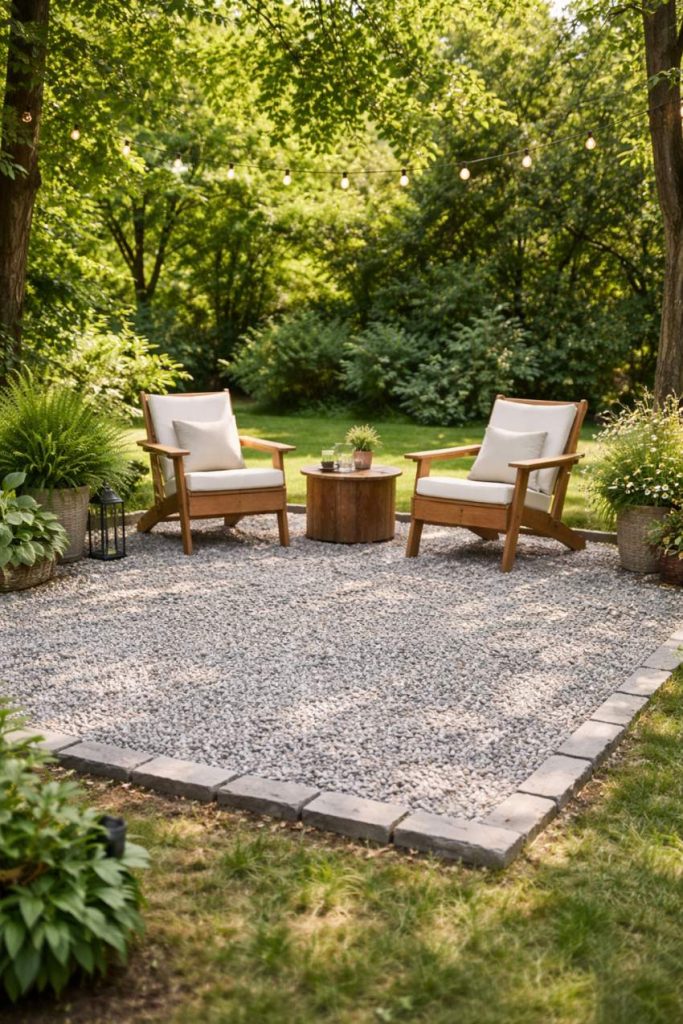
Start by clearing the area where you want to make your patio. Remove grass, weeds, and stones, then dig the ground about 3–4 inches deep. Add a layer of gravel and spread it evenly across the space.
Use a rake or a flat board to level it, and press it down firmly so the surface feels stable to walk on.
Gravel is one of the cheapest and easiest materials to use for a patio. It allows water to drain well, so you won’t have puddles after rain.
You can also choose different gravel colors to match your garden. Add a few chairs, plants, or lights, and your simple patio is ready to use.
2. Brick Patio
Clear away grass and debris, then dig the soil about 3–5 inches deep. Add a layer of sand and level it properly to create a smooth base. Place the bricks carefully, leaving small gaps and checking that each one sits evenly.
Bricks are durable and give a neat, timeless look to your patio. You can save money by using old or recycled bricks.
Once everything is in place, fill the gaps with sand to keep them stable. This simple setup can last for years with very little maintenance.
3. Concrete Paver Patio
To make this patio, follow these simple steps:
- Clear and level the ground area
- Dig about 3–4 inches deep
- Add and spread a layer of sand or gravel
- Place the pavers evenly with small gaps
- Check that all pavers are level
Concrete pavers are affordable and easy to work with, making them a popular choice for DIY patios. They come in different shapes and sizes, so you can create a neat and simple design. Once installed, they provide a strong and stable surface that is perfect for seating and outdoor use.
4. Stepping Stone Patio
Level the ground as much as possible so the stones sit evenly. Place the stepping stones with some space between each one, then press them firmly into the soil. You can fill the gaps with gravel, sand, or even grass for a more natural look.
This type of patio is simple, low-cost, and easy to build without much effort.
Since you don’t need to cover the whole area, it saves both time and money. It also blends nicely with the garden and creates a relaxed, open feel.
5. Sand Patio
A sand patio is a great option if you want something simple, soft, and very low cost. It is easy to set up and doesn’t require much effort or special tools. Sand also drains water well, so it doesn’t stay muddy after rain, making it a practical choice for many gardens.
Start by clearing the area and removing grass, weeds, and stones. Dig the ground about 3–4 inches deep, then spread a thick layer of sand evenly across the surface.
Level it using a rake or a flat board and press it down firmly to make it more stable. You can also add a border around the edges to keep the sand in place.
6. Pallet Wood Patio
A pallet wood patio is very budget-friendly because you can often find old wooden pallets for free or at a low cost. Instead of buying new materials, you can reuse what’s already available. This makes it a great option if you want to build something without spending much money.
Start by collecting good-quality pallets and cleaning them properly. Level the ground where you want your patio, then place the pallets side by side.
Make sure they are stable and even. You can secure them together if needed and add a mat or outdoor rug on top for a smoother and more comfortable surface.
7. Recycled Tile Patio
A recycled tile patio helps you reuse leftover or broken tiles instead of throwing them away.
It’s a smart way to reduce waste while creating a unique and creative outdoor space. Even different shapes and colors can give your patio a nice artistic look.
Begin by clearing and leveling the ground area. Add a layer of sand or mortar as a base, then arrange the tiles in a pattern you like.
Press them gently into place and fill the gaps with sand or grout to keep everything stable. This method creates a strong surface while keeping costs low.
8. Mulch Patio
A mulch patio works well if you want a soft and natural-looking space in your garden. It blends nicely with plants and greenery, making the area feel more relaxed and organic. It’s also one of the easiest options to set up with very little effort.
Begin by clearing the area and removing any grass or weeds. Level the ground, then spread a thick layer of mulch evenly across the surface.
Press it down lightly to keep it in place, and add a simple border around the edges to stop it from spreading outside the patio area.
9. Grass and Stone Patio
This type of patio is a good choice if you want to mix greenery with a usable sitting area. It keeps your space looking fresh and natural while still giving you a firm place to walk or sit. It’s also a cost-saving option since you don’t need to cover the whole area.
Start by marking the layout and placing stones or pavers where you want them. Leave space between each piece for grass to grow.
Level the ground and press the stones firmly into place. Over time, the grass will fill the gaps and create a clean, balanced look.
10. Small Corner Patio
A small corner patio is perfect if you don’t have much space but still want a place to sit and relax. It makes use of unused corners in your yard and turns them into a neat and functional area without spending much money.
Start by choosing a corner and clearing the space properly. Level the ground and add a simple base like gravel, sand, or pavers. Keep the design simple and compact, then add a chair or two with some plants to make the space feel complete and cozy.
11. Concrete Slab Patio
A concrete slab patio is a strong and long-lasting option that still fits a low budget if done simply. It gives a clean and solid surface that works well for seating and outdoor use.
Prepare the area by clearing and leveling the ground, then create a basic frame using wood to hold the concrete. Pour the concrete evenly and smooth the surface with a flat tool. Let it dry completely before using the space, and you’ll have a durable patio that can last for years.
12. Outdoor Rug Patio
An outdoor rug patio is a quick and low-cost way to create a sitting space without much work. It helps define the area and makes it feel more comfortable and inviting, even on a simple surface.
Clear and level the ground, then place an outdoor rug over the area. You can use gravel, concrete, or even plain soil underneath. Add a few chairs or cushions around it, and your patio space is ready with very little effort.
13. Crushed Stone Patio
A crushed stone patio is a budget-friendly option that looks neat and stays in place better than loose gravel. It creates a firm surface while still allowing water to drain easily.
Start by clearing and leveling the area, then add a base layer if needed. Spread crushed stone evenly and press it down to make it compact. You can add edging around the patio to keep the stones from spreading.
14. Wooden Plank Patio
A wooden plank patio gives a warm and natural look without the cost of a full deck. It’s a good option if you have access to leftover wood or reclaimed planks.
Prepare a flat base and place wooden planks side by side, making sure they are stable. You can secure them with simple supports underneath. Adding a protective coating helps the wood last longer outdoors.
15. Brick and Gravel Mix Patio
This type of patio combines bricks and gravel to create a balanced and low-cost design. It looks more interesting than using just one material and still stays within budget.
Lay bricks in a simple pattern with space between them, then fill the gaps with gravel. Make sure the ground is level before placing materials. This mix improves drainage and gives your patio a clean and stylish finish.
16. Flagstone Patio
A flagstone patio gives a natural and slightly rustic look without needing perfect shapes or patterns. It works well if you want something simple that still looks attractive in a garden setting.
Clear and level the area, then place the flagstones one by one with small gaps in between. Press them firmly into a sand or soil base. Fill the gaps with gravel or soil to hold them in place and improve stability.
17. Compact Dirt Patio
A compact dirt patio is one of the cheapest options you can create using what you already have. It may not look fancy, but it can still be neat and useful for seating.
Level the ground properly and remove any weeds or debris. Add a little water and press the soil down firmly to make it compact. You can repeat this a few times to make the surface harder and more even.
18. Log Slice Patio
A log slice patio is a creative way to use cut wood pieces to build a unique outdoor space. It adds a natural and warm touch to your garden without spending much.
Place log slices on a leveled surface, keeping them close together. Press them into sand or soil so they stay stable.
You can fill the gaps with small stones or sand to keep everything in place and make the surface more even.
19. Cement Block Patio
A cement block patio is a strong and budget-friendly option that is easy to arrange. The blocks are affordable and give a clean, simple look to your outdoor space.
Level the ground and place the cement blocks in a pattern you like. Keep them close together and check that they sit evenly.
You can fill the gaps with sand or gravel to hold everything in place and improve stability.
20. Pebble Patio
A pebble patio creates a smooth and decorative surface while still being low cost. It adds a natural feel and works well for small sitting areas.
Clear and level the area, then spread pebbles evenly across the surface. Press them down lightly so they stay in place. Adding a border around the edges helps keep the pebbles from spreading.
21. Old Stone Patio
Using old stones is a great way to build a patio without spending much. You can reuse stones from other projects or find them at low cost.
Place the stones on a leveled surface and adjust them so they sit flat. Keep small gaps between them and fill those gaps with sand or soil. This creates a stable and natural-looking patio.
22. Tile and Gravel Mix Patio
This patio combines tiles and gravel to create a simple but stylish design. It helps you use leftover tiles while keeping the cost low.
Arrange tiles with space between them, then fill the gaps with gravel. Make sure the base is level before placing materials. This mix improves drainage and gives a neat finish.
23. Raised Patio with Bricks
A raised patio is useful if your ground is uneven or you want a slightly elevated space. Using bricks keeps the cost low while still creating a defined area.
Build a low border using bricks to outline the patio, then fill the inside with gravel or sand. Level the surface properly and press it down to make it firm. This creates a clean and slightly elevated patio space.
24. Painted Concrete Patio
A painted concrete patio is a simple way to improve an old or plain surface without spending much money. Instead of rebuilding, you can refresh the look with paint and give it a clean, updated feel.
Start by cleaning the concrete properly to remove dust and stains. Once it is dry, apply outdoor concrete paint evenly across the surface.
You can keep it plain or add simple patterns for extra style. This method is quick, affordable, and makes a big visual difference.
25. Border-Defined Gravel Patio
This patio idea helps make a basic gravel space look more neat and organized. Adding a border gives the patio a clear shape and keeps the materials from spreading out.
Clear and level the ground, then set a border using bricks, stones, or wood around the edges. Fill the inside with gravel and spread it evenly.
Press it down lightly so it stays in place. The border not only improves the look but also makes the patio easier to maintain.
26. Mixed Material Patio
A mixed material patio uses different low-cost items together, like bricks, stones, and gravel. This helps you use whatever materials you already have and still create something interesting.
Prepare the ground by clearing and leveling it. Place larger materials like bricks or stones first, then fill the remaining spaces with gravel or sand. This creates a balanced surface while keeping the overall cost low and flexible.
27. Simple Covered Patio
A simple covered patio adds comfort without needing a full structure. Even a basic cover can make your outdoor space more usable during strong sun or light rain.
Set up your patio base using gravel, pavers, or any low-cost material. Then add a simple cover like a cloth shade, bamboo sheet, or lightweight roofing.
This small addition makes the space more comfortable and allows you to use your patio throughout the day.
Conclusion
As mentioned above, building a patio doesn’t have to be expensive or complicated. With simple materials and a little effort, you can create a space that is both useful and comfortable. The key is to keep things simple and choose ideas that fit your budget and space.
Even small changes can make a big difference in how your outdoor area looks and feels. Whether you use gravel, bricks, wood, or recycled materials, you can create a patio that works for you. Start small, use what you have, and improve it over time as needed.

Khaja Moinuddin, a computer science graduate, finds joy in gardening and homesteading. Join him on this blog as he shares his experiences in homesteading, gardening, and composting