Ice plant, or Delosperma is a hardy sun-loving succulent that can be your ground covering plant.
Apart from locking moisture in the soil, it keeps weeds away and adds aesthetics to your gardening space with bright, cheerful pink, orange and yellow colored blooms.
You can easily multiply this succulent through propagation using either stem cuttings or division, both of which are beginner-friendly methods.
Simply snip a healthy, non-flowering stem, let it dry for a few hours to be callous, and place it in well-draining soil. Within days, it begins to root with minimal care.
For larger, established plants, gently separating clumps from the base and replanting them works just as well.
With plenty of sunlight and light watering, your new ice plants will quickly spread, forming a vibrant, low-maintenance carpet of color.
Propagating Ice Plant from Seeds Vs Cuttings Vs Division
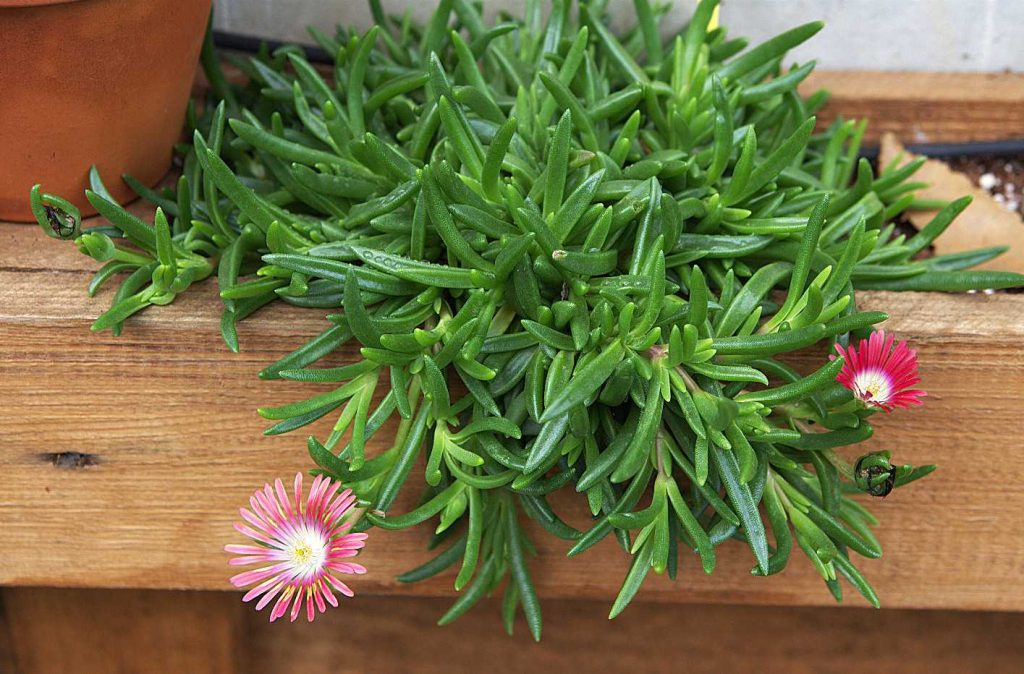
When it comes to propagating ice plant, both seeds and cuttings work — but they give very different results
Seeds take more time and patience, while cuttings are quick and almost effortless. So the “best” method really depends on how fast you want results and how much effort you’re willing to put in.
Growing from seeds is a slower process. You need warm conditions, consistent moisture, and a bit of care during early growth.
Germination can take time, and not all seeds may sprout. It’s a good option if you want to grow many plants at once or enjoy starting plants from scratch, but it’s not the easiest route for beginners.
Cuttings, on the other hand, are the simplest and fastest way to propagate ice plants.
Since this succulent naturally spreads, its stems root very easily when placed in soil. There’s no waiting for germination, and you’ll see growth much quicker. Even beginners can succeed with very little effort.
Division is another easy and reliable method, especially for mature plants.
You simply lift the plant, gently separate rooted sections, and replant them.
It gives instant results because each division is already established. This method is great when your plant has grown dense and needs splitting, making it just as effective as cuttings for quick propagation.
Also Read: How to Care for Pink Princess Philodendron?
Best Time to Propagate Ice Plant
Spring and early summer is regarded as the best time to propagate an ice plant, when the weather is warm and the plant is actively growing.
- Faster rooting: During this period, stems root much faster, so your cuttings start growing in less time.
- Quick establishment: Divided plants adjust easily to new soil and begin growing without much stress.
- Better success rate: Overall, more cuttings and divisions survive and grow well compared to colder seasons.
- Ideal growing conditions: Warm weather supports new growth, and the soil dries at the right pace, which helps prevent rot.
Avoid propagating in winter or heavy rainy seasons, as cold slows growth and excess moisture can cause cuttings to rot before rooting.
How to Propagate an Ice Plant from Cuttings (Step-by-Step)?

This is the easiest and most reliable way to grow new ice plants. The best part? You don’t need any special tools or experience. Just follow these simple steps, and you’ll have new plants in no time.
1. Choose a healthy stem
Pick a fresh, green, and healthy stem from your ice plant. Avoid stems that are flowering, damaged, or dried out. A strong stem has more energy stored in it, which helps roots develop faster and more successfully.
2. Cut the stem properly
Use clean scissors or a sharp knife to cut a piece about 3–5 inches long. Make your cut just below a node (the spot where leaves grow). This is important because roots usually form from these nodes.
3. Remove lower leaves (if needed)
If your cutting has leaves near the bottom, gently remove them. This creates a clean section of stem that can go into the soil and prevents leaves from rotting under the surface.
4. Let the cutting dry (don’t skip this step)
Place the cutting in a dry, shaded place for a few hours or up to a day. This allows the cut end to form a protective layer called a callous. If you plant it immediately, it may rot—so this step really improves your success rate.
5. Prepare the right soil
Ice plants need well-draining soil. Use a sandy mix or a cactus/succulent potting mix. If you’re using regular garden soil, mix in some sand or perlite to improve drainage.
6. Plant the cutting
Insert the dried end of the cutting into the soil. You don’t need to plant it deep—just enough so it stands upright. Press the soil gently around it to keep it stable.
7. Water lightly
Give a small amount of water after planting. The soil should be slightly moist, not wet. Overwatering is the most common mistake and can quickly lead to rot.
8. Give proper light
Place the pot in a bright area with indirect sunlight for the first few days. Once the cutting settles, you can gradually move it to full sunlight, which ice plants love.
9. Be patient and watch for growth
Roots usually start forming within a few days to 1–2 weeks in warm conditions. You may not see them, but new leaves or growth on top is a good sign that roots are developing below.
10. Transplant if needed
Once your plant is well-rooted and growing, you can move it to a bigger pot or directly into the ground. It will continue to spread and form a beautiful ground cover.
Simple tip: Ice plants prefer a “less is more” approach. Plenty of sunlight, light watering, and good drainage are all they need to thrive.
Also Read: How to Propagate Geraniums from Cuttings?
How to Propagate an Ice Plant by Division?
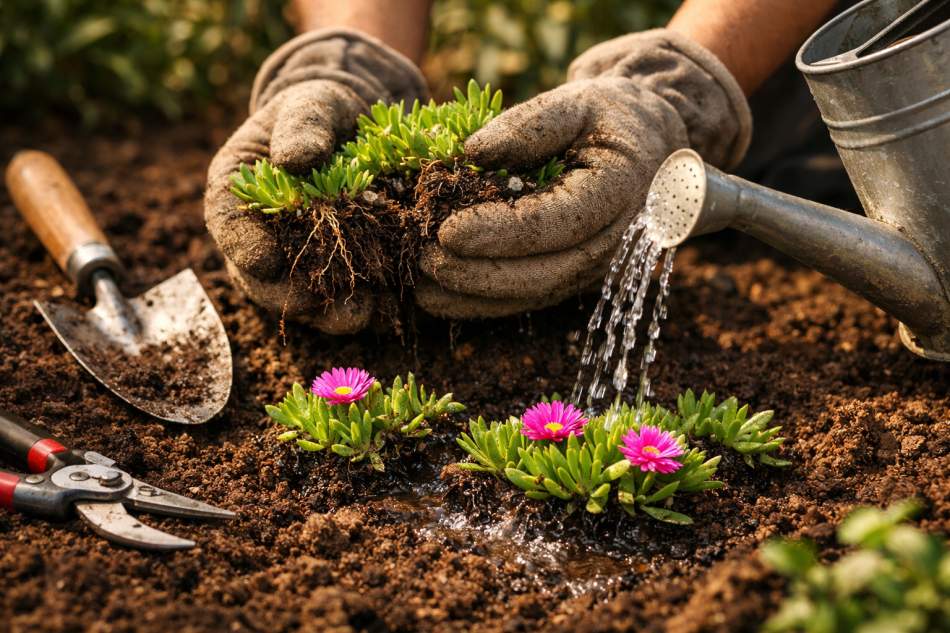
Division is one of the fastest ways to multiply ice plants, especially when your plant has spread into thick, crowded clumps. The big advantage here is that you’re working with already established parts, so growth continues almost immediately.
1. Choose a mature, crowded plant
Look for a plant that has spread well and formed dense patches. These natural clumps make division easy and more successful.
2. Gently lift and separate
Carefully loosen the soil and lift the plant. Then, gently pull apart the sections. Each piece should have its own roots and stems attached.
3. Replant the sections
Place each divided clump into a new spot or container. Make sure the roots are covered properly and the plant is stable in the soil.
4. Let it settle and grow
Since these divisions already have roots, they don’t need much effort to establish. Within a few days, they adjust and continue growing like a mature plant.
Simple tip: Division is ideal when your ice plant becomes overcrowded. It helps you create new plants while keeping the original one healthy and well-spaced.
Soil and Pot Requirements for Ice Plant
Ice plants grow best when their soil and container setup allows water to drain quickly. Since they are succulents, they don’t like sitting in wet soil for long. The right mix keeps the roots healthy and prevents common problems like rotting.
- Use light, well-draining soil such as sandy mix or cactus soil
- If using garden soil, mix in sand or perlite to improve drainage
- Always choose pots with drainage holes to let excess water escape
- Avoid very large pots, as they hold more moisture than needed
- Ice plants can also grow well in the ground if the soil drains properly
Good drainage is the key—dry, airy soil keeps your ice plant healthy and growing strong.
Ice Plant Care After Propagation
Once your ice plant is propagated, this is the stage where it starts settling and growing new roots. It doesn’t need too much attention, but the right care will help it establish faster and grow healthier. Think of it as giving your plant a smooth start.
- Sunlight: Place your plant in a bright spot with plenty of sunlight. Ice plants love full sun, but for the first few days, you can keep them in indirect light to avoid stress. After that, gradually move them to direct sunlight.
- Watering: Water lightly after planting, then allow the soil to dry out before watering again. Ice plants store water in their leaves, so they don’t need frequent watering. Too much water is the biggest mistake.
- Soil condition: Always keep the soil loose and well-draining. If the soil stays wet for too long, roots can rot before the plant fully establishes.
- Protection from rain: Newly propagated plants are sensitive to excess moisture. If there’s heavy rain, try to move pots to a sheltered area or ensure proper drainage in the ground.
- Air circulation: Good airflow helps keep the plant dry and healthy. Avoid placing it in closed or humid spaces.
- Watch for new growth: After a few days or weeks, you’ll notice fresh leaves or spreading stems. This is a sign that roots have developed and your plant is doing well.
With proper sunlight, light watering, and good drainage, your ice plant will quickly settle in and start spreading beautifully.
Check this: 29 Easy Plants to Propagate from Cuttings
Common Mistakes to Avoid While Propagating
Overwatering is the most common mistake when growing ice plants. These plants store water in their leaves, so they don’t need frequent watering. Too much moisture can quickly lead to root or stem rot.
Using heavy or poorly draining soil can also cause problems. Ice plants prefer light, sandy soil that allows water to pass through easily. Wet, compact soil keeps the roots soggy for too long.
Skipping the drying step before planting cuttings is another mistake. If you plant a fresh cutting right away, it can rot. Letting it dry and form a callous helps protect it.
Lack of sunlight can slow down growth. Ice plants need bright light to stay healthy. Without enough sun, they may become weak and grow poorly.
Planting cuttings too deep or using pots without drainage holes can also harm the plant. Good drainage and proper planting depth are key to keeping your ice plant healthy.
Must Read: 13 Small Garden Ideas in Your Budget
How Long Does an Ice Plant Take to Grow?
Ice plant is a fast-growing succulent, especially when propagated the right way. But the time it takes can vary depending on the method you choose.
Cuttings are the quickest option. In warm conditions, they usually start forming roots within a few days to one week. You may not see the roots, but new leaf growth is a good sign that the plant is establishing.
Division is even faster because the plant already has roots. Once replanted, it settles within a few days and continues growing almost immediately without much delay.
Seeds take the longest time. Germination can take a couple of weeks, and the plants grow slowly in the beginning. It requires more patience compared to other methods.
Overall, if you want fast results, cuttings and division are the best choices, as they establish quickly and start spreading sooner.
Also Read: How to Propagate Black-Eyed Susan?
Conclusion
Ice plants are one of the easiest succulents you can grow and multiply at home. With simple methods like cutting and dividing, you can quickly turn one plant into many without much effort.
By choosing the right time, using well-draining soil, and avoiding overwatering, you give your plant the best chance to grow strong and healthy. Even if you’re a beginner, ice plant propagation is very forgiving and easy to learn.
Once established, these plants spread beautifully, adding bright color and acting as a natural ground cover in your garden or containers.
With just a little care and plenty of sunlight, your ice plants will continue to grow, spread, and thrive for years.

Khaja Moinuddin, a computer science graduate, finds joy in gardening and homesteading. Join him on this blog as he shares his experiences in homesteading, gardening, and composting