Just like you bundle your kids in blanket during winter, dahlias need to be winterized to avoid rotting.
If you don’t care to protect dahlia tubers from cold and frost, they will freeze, rot and won’t come back in next spring.
Depending on climatic conditions in your region, you can either dig dahlia tubers, dry them and store in a dark place to be planted in spring.
Second option is for those who don’t have to worry about ground freezing in winter. They can leave dahlias in the ground with good drainage the tubers will come back in the next spring.
Both cases aren’t perfect.
Gardening comes with lots of person experience.
Your dahlia tuber may rot or mold in both cases. Follow the instructions given below to reduce the loss.
Due to colder climate professional gardeners recommend to dig dahlia tuber to save them. But they have enough space and are over-wintering experts.
But amateur gardener lacks both. Shortage of space and zero experience in over-wintering can result in loss of tubers.
So, should you dig tubers or leave them in the ground?
Let’s understand it in more detail.
Should You Dig Dahlia Tubers?
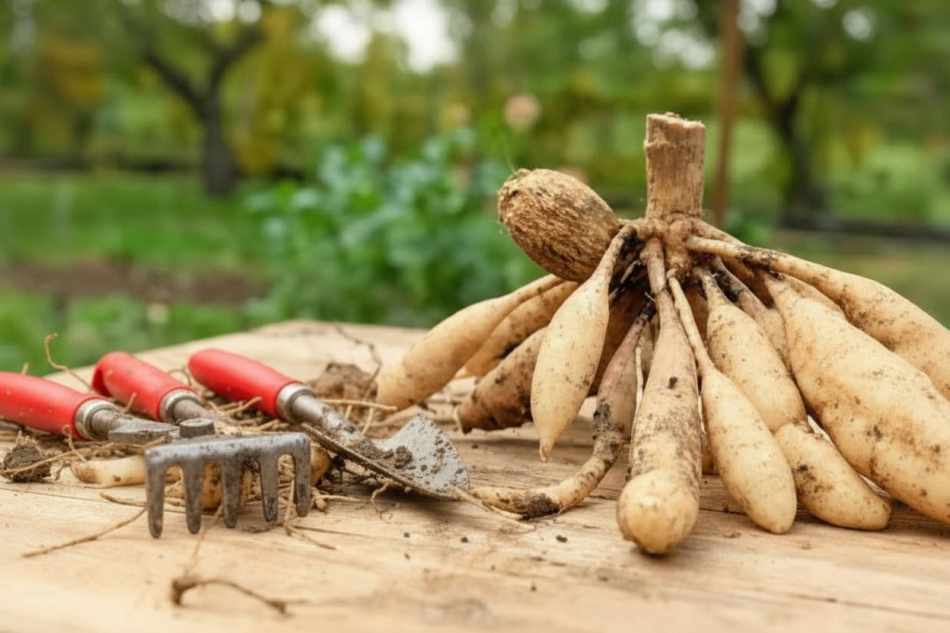
If climate in your regions keeps the soil dry and drains well with rare frost, then you can leave the dahlias in the ground.
But, when the ground gets very cold and wet, you cannot leave dahlia tubers to stay safe.
Knowing the process of digging and storing is very essential, as the tubers may not survive winter outside.
So, it’s all about the climatic condition in your region.
When can you leave dahlia tubers in the ground?
Dahlia tubers can stay in the ground in USDA zones 8-11, where winter soil usually doesn’t freeze. To protect them from mild frosts, cover the tubers with a thick layer of mulch for insulation.
In colder zones (7 and below), it’s best to dig up the tubers after the first frost, once the foliage has blackened. Leaving tubers too long in cold, wet soil may cause rot or death, so timely lifting is important. Good drainage is also key if tubers are left in the ground to avoid soggy conditions that promote rotting.
This method helps dahlias survive the winter and grow healthy again in spring. Proper winter care ensures your tubers will come back strong next season.
How to Overwinter Dahlias?
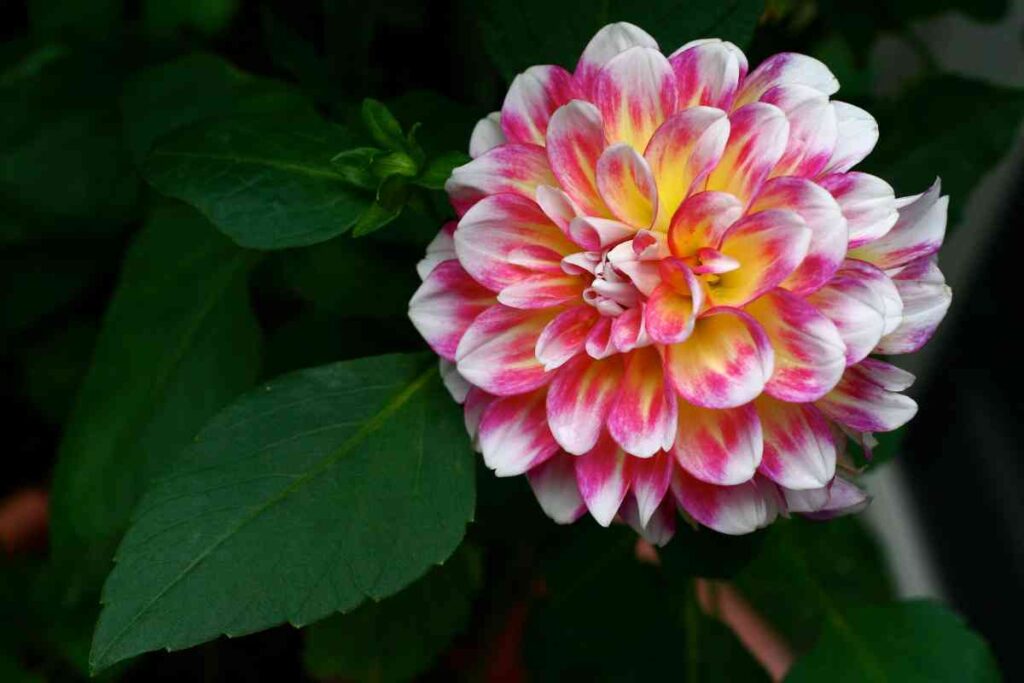
Once your dahlias get hit by the first frost and the foliage turns black and mushy, that’s your cue. Go ahead and cut the stems back to about 4–6 inches above the soil—but don’t rush to yank the tubers out just yet.
Leaving them in the ground for another week or two gives the plant enough time to pull every last bit of stored energy down into the tubers. This little waiting window helps make them stronger and better prepared for winter storage.
But here’s the catch: if you live in a region where the soil freezes hard and deep, you can’t risk waiting too long.
Frozen soil = dead tubers.
In frost-prone or unpredictable climates, lift the tubers sooner rather than later.
Check this: How to Propagate Dahlias from Cuttings?
Cleaning and Sanitizing Methods
Once your tubers are out of the soil, you’ve got two ways to clean them—and gardeners swear by both.
Method 1: Gently brush off loose soil and leave the rest as is. The remaining dirt acts like a natural protective coating.
Method 2: Give them a proper rinse. Wash off all the soil and dunk the tubers in a mild 5% bleach solution (that’s 95% water, 5% bleach). This kills lurking bacteria and fungi and gives your tubers a cleaner start.
Just remember—if you go the washing route, the tubers must be completely dry before moving on. Any leftover moisture becomes a mold magnet in storage.
The Curing Process
Think of curing as letting your tubers toughen up before burying them away for winter. Spread them out in a single layer somewhere warm, dark, airy, and dry—like a garage, basement, carport, or covered porch. Aim for 50–60°F.
Let them cure for one to two weeks. During this time, their skins toughen, tiny cuts seal, and excess moisture evaporates. This step is your best defence against winter rot and mold, so don’t skip it.
Storage Medium Options
Dahlia gardeners get creative when it comes to storage mediums. You can choose from:
- Slightly damp peat moss
- Vermiculite
- Sawdust or wood shavings
- Even unwashed soil kept around the clump
Place the tubers in cardboard boxes, paper bags, or any breathable container. Line the bottom with newspaper and give each tuber its own little space—don’t let them touch.
Some gardeners love storing whole, unwashed clumps in bulb crates since the soil helps hold moisture naturally. Others swear by the famous Saran Wrap method, where each dried, divided tuber gets wrapped individually after sanitizing. It sounds funny, but it works surprisingly well.
Also Read: 19 Herbs to Grow Indoors in Winter
How Do You Store Dahlia Bulbs for the Winter?

Storing dahlia bulbs for winter is really about keeping them cool, dry, and safe from frost. After digging them up and letting them cure for a week or two, choose a breathable container like a cardboard box or paper bag.
Fill it with a storage medium—slightly damp peat moss, vermiculite, sawdust, or wood shavings—and tuck the tubers in so they’re cushioned but not touching each other.
Place the box in a cool, dark spot that stays around 40–50°F, like a basement or insulated garage wall. Check on them once a month.
If they look shriveled, lightly mist the medium; if they look too moist, crack the box open for more airflow.
A little winter babysitting goes a long way, and your dahlias will be ready to grow strong again in spring.
Spring Preparation
Around late winter or early spring—roughly 4–6 weeks before your last frost—wake your tubers up by moving them to a warmer room. Inspect them, trim off any damaged areas, and divide large clumps if needed. Each piece must have at least one “eye” to grow.
If you want an early start (and who doesn’t?), pre-sprout your tubers. Place them in a shallow tray with damp potting mix, give them warmth and bright light, and let them send out fresh shoots.
Once the soil outside warms to about 60°F, your dahlias are ready to return to the garden and start their new season of growth.
Expert Advice on Growing Dahlias
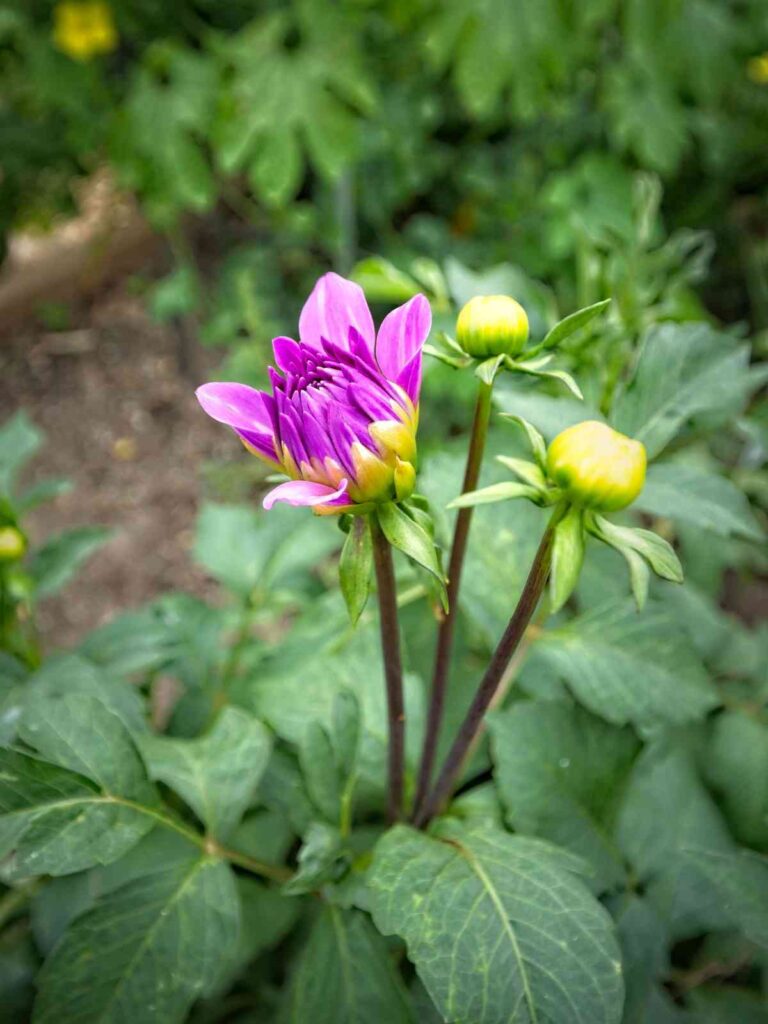
These plants love attention, but once you understand what makes them happy, they’ll reward you with blooms that look like they belong in a flower show.
Start with healthy tubers, give them warm soil, and don’t plant too early. Dahlias hate cold feet, so wait until the soil hits around 60°F before tucking them in.
When your dahlias start growing, treat them like hungry teenagers. They love rich, well-draining soil and respond beautifully to regular feeding. A low-nitrogen fertilizer keeps them busy making blooms instead of oversized leaves.
Water deeply but not daily—think of it as giving them a good drink rather than constant sips. Mulching helps keep moisture in and weeds out, making your life easier.
As they grow taller, staking becomes essential.
- Dahlias flop faster than you’d expect, especially when heavy blooms start forming.
- Put stakes in early so you don’t accidentally spear a tuber later.
- Pinching the tips when the plants are about a foot tall encourages bushier growth and even more flowers. It feels ruthless, but trust the process—it works.
- Throughout the season, keep an eye out for pests like aphids and slugs. They love dahlias almost as much as you do.
- A quick spray of soapy water handles aphids, while slug traps or copper tape keep the slimy ones at bay. And don’t forget to deadhead.
- Regularly removing spent blooms keeps the plant motivated to produce more.
As fall approaches, enjoy the final bloom show but start planning for winter. Dahlias aren’t naturally built for cold weather, so you’ll need to either dig and store the tubers or protect them in mild climates.
Each garden is different, and every gardener learns a few lessons the hard way—but that’s part of the fun. With a little care and a lot of enthusiasm, dahlias become the kind of plant you look forward to growing year after year.
Also Read: 17 Perennials that Bloom in Fall and Winter
Conclusion
Winterizing dahlias isn’t complicated once you understand what your plants need—it’s really just about protecting those precious tubers until spring.
Whether you dig them up or leave them in the ground, the goal is the same: keep them dry, protected, and safe from freezing.
Every gardener eventually finds a method that fits their climate, space, and experience, so don’t stress if you need a season or two to figure out what works best.
With a little care now, your dahlias will wake up strong, healthy, and ready to put on an even better show next year.

Khaja Moinuddin, a computer science graduate, finds joy in gardening and homesteading. Join him on this blog as he shares his experiences in homesteading, gardening, and composting