Being one of the most widely consumed vegetables, tomatoes are a common sight in almost every edible garden.
Although they are among the easiest crops to grow in your backyard, tomato plants are heavy feeders that require phosphorus, nitrogen, and potassium to thrive.
Instead of relying on store-bought fertilizers, you can use homemade options to enrich your tomato plants naturally.
However, before applying any fertilizer, it’s important to understand the plant’s nutritional needs, which change depending on its growth stage.
For instance, the plant needs nitrogen at an early stage, but when you apply fertilizers with excess amounts of nitrogen it can overburden the plant.
If you ask me, I’d choose well-aged compost to fertilize my tomatoes. It’s simple, safe, and feeds tomato plants slowly without burning the roots.
You can always add small boosts like banana peels or eggshells later, but a good layer of compost is the foundation I trust for healthy, productive tomato plants.
Nutritional Requirement of Tomato Plants
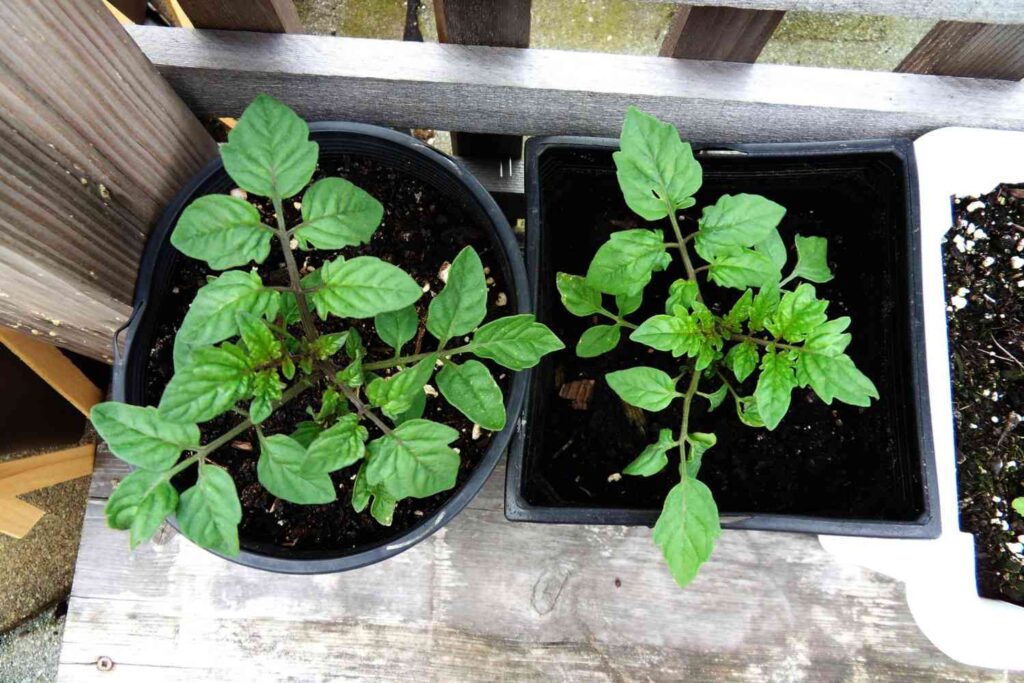
Tomato plants don’t need the same nutrients throughout their life cycle. Their nutritional demands change as they move from leafy growth to flowering and fruit production.
Understanding these stages helps you feed your plants at the right time and avoid common problems like poor fruiting or excessive leaf growth.
1. Seedling Stage (Early Growth)
At this stage, tomato plants focus on developing roots and initial leaves. They need a balanced but mild supply of nutrients, especially phosphorus for strong root development.
Too much fertilizer at this point can burn young roots. A light, diluted homemade fertilizer or compost tea works best to encourage steady, healthy growth.
2. Vegetative Stage (Leaf & Stem Growth)
During active growth, tomato plants require higher amounts of nitrogen. Nitrogen supports lush green foliage and strong stem development, which later supports heavy fruits.
However, excess nitrogen can lead to lots of leaves but fewer flowers. Balance is key—moderate feeding ensures sturdy plants without overgrowth.
3. Flowering Stage
Once flowers begin to appear, the plant’s needs shift. It requires more phosphorus and potassium to support blooming and prepare for fruit formation.
Reducing nitrogen slightly during this stage helps prevent excessive leafy growth and encourages better flower retention.
4. Fruiting Stage
When tomatoes start forming, potassium becomes especially important. It improves fruit size, flavor, color, and overall quality.
Consistent feeding during this stage supports continuous fruit production, but avoids overfertilizing, as it can affect fruit development and soil balance.
Best Time to Fertilize Tomato Plant

Tomatoes respond best when fertilized at the right time—not just regularly. Feeding them according to their growth stage ensures healthy plants, strong flowering, and better fruit production.
- At Planting Time: Mix compost or well-rotted manure into the soil before transplanting seedlings. This gives young plants a nutrient-rich base and supports strong root establishment.
- Once the plant settles and starts active growth, apply a light dose of fertilizer. This supports healthy leaf and stem development during the vegetative stage.
- As soon as you notice the first flowers, switch to a fertilizer higher in phosphorus and potassium. This encourages better blooming and prepares the plant for fruiting.
- Tomato plants are heavy feeders while producing fruit. A light feeding every 3–4 weeks keeps fruit production steady and improves size and flavor.
How to Apply Fertilizer to Tomato Plants?
Fertilizing tomato plants the right way makes a big difference in how well they grow and produce. Always start by watering the soil before applying any fertilizer.
Feeding dry soil can burn the roots and stress the plant, especially during hot weather.
- Apply fertilizer around the base of the plant, about 2–3 inches away from the main stem.
- Whether you’re using compost, granular fertilizer, or liquid feed, avoid direct contact with the stem.
- After applying, water lightly to help the nutrients soak into the soil and reach the roots.
Most importantly, don’t overfertilize. Too much feeding can result in lots of leafy growth but fewer flowers and fruits, and it may even damage the roots. Stick to moderate amounts and adjust the type of fertilizer based on the plant’s growth stage.
13 Homemade Fertilizer for Tomato Plants
When it comes to feeding tomatoes, balance is everything. Your plants need the right mix of nitrogen (N), phosphorus (P), and potassium (K) at different stages to grow strong and produce plenty of fruit.
Too much nitrogen gives you big leafy plants with fewer tomatoes, while too little phosphorus or potassium can affect flowering and fruit quality. That’s why homemade fertilizers should support a healthy NPK balance instead of overloading just one nutrient.
1. Banana Peel Fertilizer

Banana peels are rich in potassium, which tomato plants love during flowering and fruiting. You can chop the peels into small pieces and bury them a few inches deep near the base of the plant. As they break down, they slowly release nutrients into the soil.
Another easy way is to soak banana peels in water for 24–48 hours and use that water to feed your plants. It’s simple, natural, and a great way to boost fruit development without spending extra money.
2. Crushed Eggshells
Eggshells are packed with calcium, which helps prevent blossom end rot—a common problem in tomatoes. Let the shells dry, crush them into a fine powder, and mix them into the soil around your plants.
You can also add crushed shells to your compost. While they break down slowly, they improve soil structure and gradually supply calcium, keeping your tomato plants stronger and healthier over time.
3. Used Coffee Grounds

Used coffee grounds add a small amount of nitrogen to the soil, which supports leafy growth during the early stages. Just sprinkle a thin layer around the base of the plant and gently mix it into the topsoil.
Don’t overdo it, though. Too much coffee can make the soil compact or slightly acidic. Used in moderation, it’s an easy and eco-friendly way to give your tomato plants a gentle nutrient boost.
4. Compost

Compost is one of the best natural fertilizers for tomato plants. It contains a balanced mix of nutrients and improves soil health at the same time. It slowly feeds your plants without overwhelming them.
You can mix compost into the soil before planting or add a layer around the base of the plant as a top dressing. Each time you water, nutrients seep down into the roots.
Compost also helps the soil hold moisture and improves drainage. Over time, it makes your garden soil richer and more productive.
Also Read: How to build a compost bin with pallets?
5. Fish Tank Water
If you have a home aquarium, don’t throw away the old tank water. It contains natural fish waste that is rich in nitrogen and trace minerals, which support leafy growth.
You can use this water to irrigate your tomato plants, especially during the early growth stage. It gives them a mild and natural nutrient boost.
However, fish tank water alone is not enough to meet all the plant’s nutrient needs. It does not provide a complete balance of phosphorus and potassium, so it’s important to use it along with compost or other fertilizers for proper growth.
6. Wood Ash
Wood ash from untreated firewood is a good source of potassium and calcium. Tomatoes benefit from potassium, especially when they start flowering and setting fruit.
Sprinkle a small amount around the plant and lightly mix it into the soil. A little goes a long way, so avoid heavy application.
Too much ash can raise the soil’s pH level, so use it carefully. When applied in moderation, it helps improve fruit quality and overall plant strength.
7. Epsom Salt
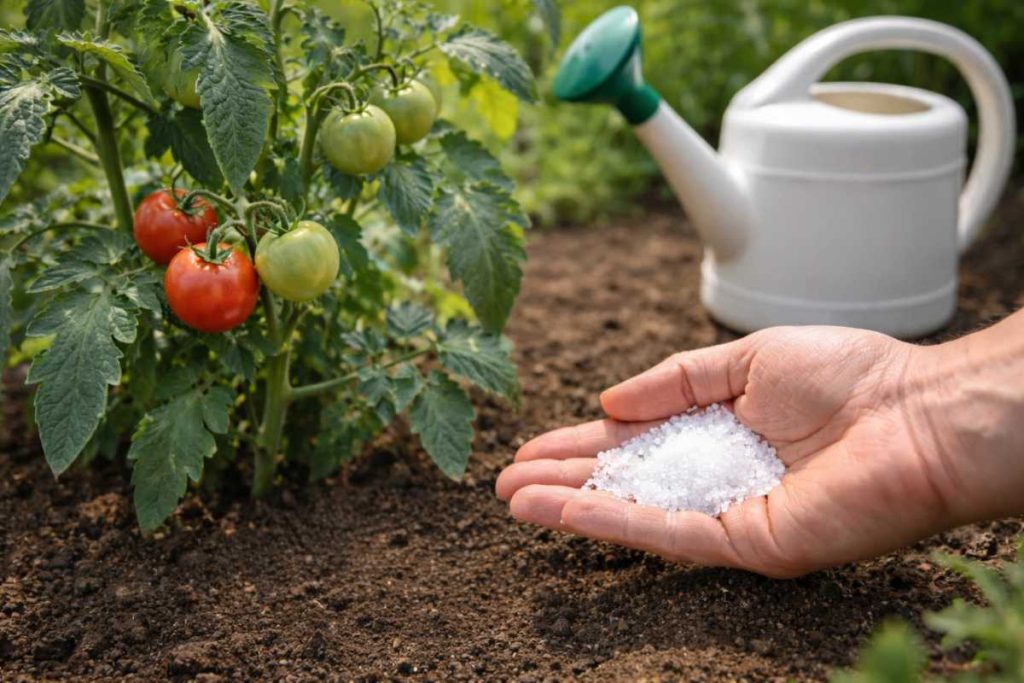
Epsom salt gives magnesium to tomato plants. Magnesium helps the plant make food and keeps the leaves green and healthy.
Mix 1 tablespoon of Epsom salt in 1 gallon of water. Use this solution to water your plants once a month.
Do not use it too often. Too much magnesium can affect how the plant absorbs other nutrients.
Also Read: How to Use Epsom Salt for Tomato Plant?
8. Baking Soda
Baking soda does not work as a regular fertilizer, but it can help improve the sweetness of tomatoes. It lowers the acidity of the soil slightly.
Sprinkle a small amount around the base of the plant. Do not let it touch the stem.
Use it in very small amounts and not too often. Too much can change the soil balance and harm the plant.
9. Grass Clippings
Fresh grass clippings are rich in nitrogen. Nitrogen helps tomato plants grow strong leaves and stems.
Spread a thin layer of dry grass clippings around the plant. This also works as mulch and helps keep the soil moist.
Make sure the grass is free from chemicals or weed killers. Let it dry a little before using it so it does not smell or rot too quickly.
10. Manure Tea
Manure tea is a liquid fertilizer made by soaking well-rotted animal manure in water. It is rich in nitrogen and other nutrients that help tomato plants grow strong and healthy.
To make it, put aged manure in a bucket of water and let it sit for 2–3 days. Stir it once a day. After that, strain the liquid and dilute it with more water before using it on your plants.
Always use well-rotted manure, not fresh manure. Fresh manure can burn the roots and may contain harmful bacteria. Use manure tea every few weeks for steady growth.
11. Bone Meal
Bone meal is a natural fertilizer made from ground animal bones. It is rich in phosphorus, which helps tomato plants develop strong roots and produce more flowers.
You can mix bone meal into the soil at planting time. It works slowly, so it feeds the plant over a longer period.
Do not use too much, because excess phosphorus can block other nutrients from being absorbed. A small handful mixed into the soil is usually enough for each plant.
12. Molasses Solution
Molasses is not a direct fertilizer, but it helps feed the good microbes in the soil. Healthy soil microbes break down organic matter and make nutrients easier for tomato plants to absorb.
Mix 1–2 tablespoons of unsulfured molasses in 1 gallon of water. Use this solution to water the soil around your tomato plants once every few weeks.
Do not pour too much at once, as it can make the soil sticky or attract ants. Used in small amounts, molasses supports healthy soil and better plant growth.
Check this: How to Store Tomatoes from Garden?
13. Compost Tea
Compost tea is a mild liquid fertilizer made from finished compost. It contains small amounts of nitrogen, phosphorus, potassium, and helpful microorganisms that improve soil health.
To make it, place a shovel of compost in a bucket of water and let it soak for 24–48 hours. Stir it once or twice during this time. Strain the liquid and use it to water the base of your tomato plants.
Compost tea is gentle and safe to use every couple of weeks. It does not overload the plant with nutrients but gives steady support for healthy growth, flowering, and fruit production.
Important Tips While Fertilizing Tomato Plants
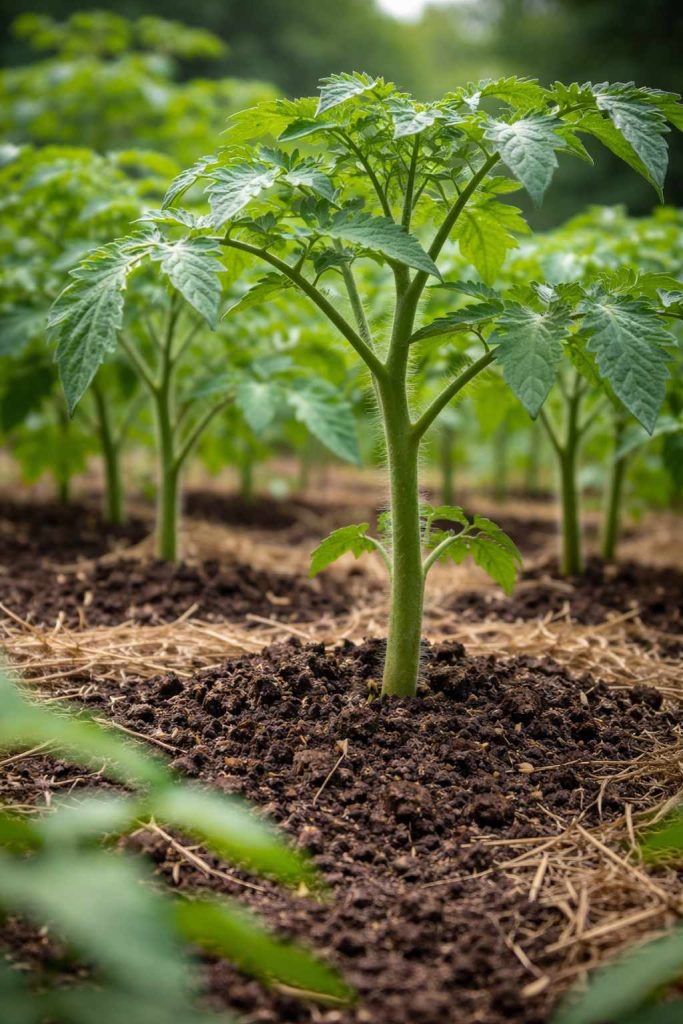
Always feed tomato plants according to their growth stage. More nitrogen early on, and more phosphorus and potassium once they start flowering and fruiting.
Water the soil before and after fertilizing. This prevents root burn and helps nutrients move down to the root zone properly.
Use small amounts more often instead of one heavy dose. Overfertilizing can cause too many leaves and fewer tomatoes.
Watch your plants closely. Yellow leaves, weak growth, or poor fruiting can be signs that your plant needs a nutrient adjustment.
Also Read: How to Can Fresh Tomatoes?
Conclusion
Growing healthy tomato plants isn’t just about watering and sunlight — proper feeding makes all the difference. When you understand what your plant needs at each stage, fertilizing becomes simple and effective.
Homemade fertilizers are affordable, natural, and easy to use. With balanced nutrients and moderate feeding, you’ll enjoy stronger plants, better flowering, and a harvest full of juicy, flavorful tomatoes.

Khaja Moinuddin, a computer science graduate, finds joy in gardening and homesteading. Join him on this blog as he shares his experiences in homesteading, gardening, and composting