If you’re looking to grow strawberries year-around, then a greenhouse is the perfect way to make it happen. You’ll have control over temperature, light and moisture, so that your plants don’t get affected by extreme weather.
With the right greenhouse setup and a little care, you can enjoy healthy plants and sweet, fresh strawberries far beyond the normal outdoor growing season.
Whether you’re a beginner or an experienced gardener, greenhouse strawberry growing is a fun and rewarding way to produce your own fruit at home.
Why Grow Strawberries in a Greenhouse?
Compared to traditional planting, growing strawberries in a greenhouse gives you a huge advantage.
Unlike outdoor plants, these greenhouse plants will consistently reward you with harvest.
Strawberries don’t like sudden temperature drops, heavy rain, or strong winds, and a greenhouse shields them from all of that.
Your plants grow in a calmer, more predictable environment, which leads to better flowering and fruiting.
It gives you full season control, letting you start earlier, harvest longer, and enjoy fresh strawberries even when they’re off-season and expensive in stores.
Along with these benefits, greenhouses also reduce common problems like pests, soil diseases, and fruit rot.
How to Grow Strawberries in a Greenhouse?
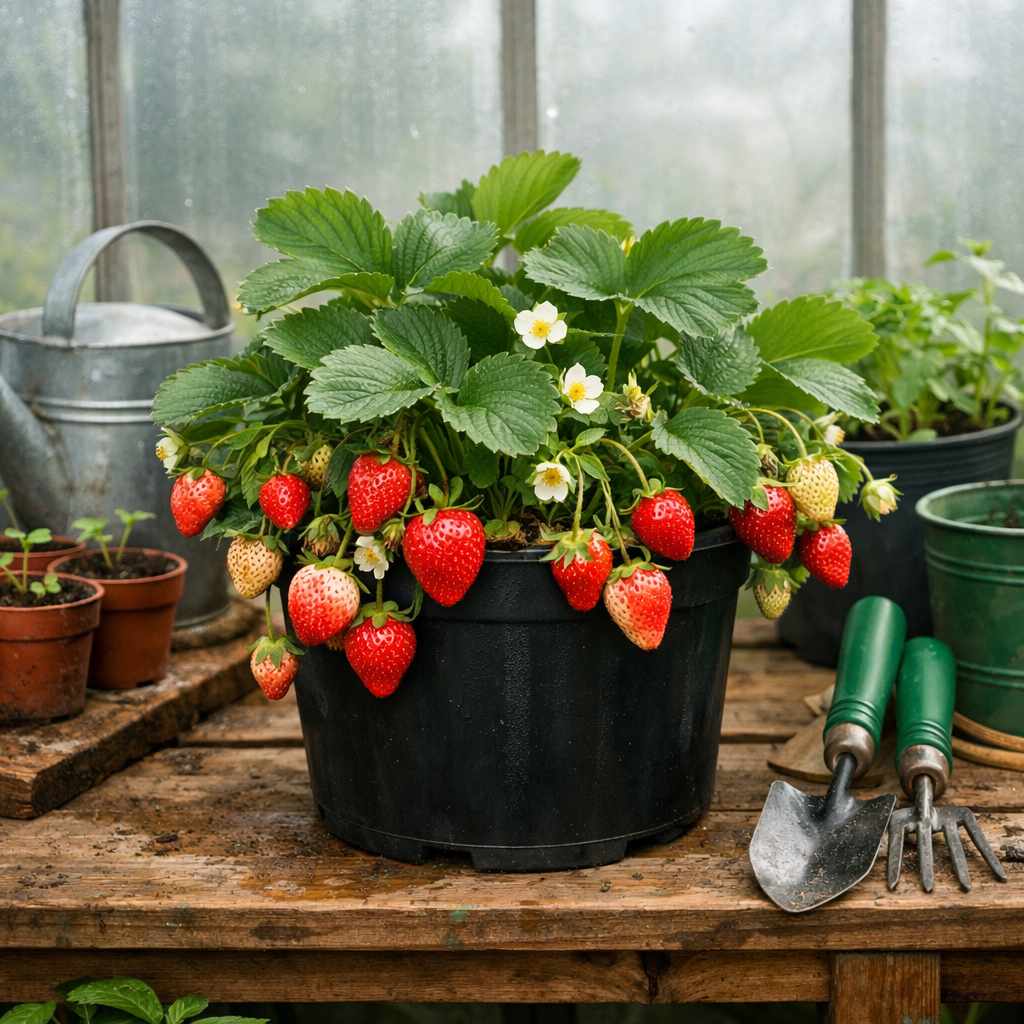
You don’t need fancy equipment or expert-level skills—just a basic understanding of what strawberry plants like and a little consistency in care.
Once the setup feels right, strawberries are surprisingly easygoing plants.
Choosing the Right Strawberry Varieties
Not every strawberry plant behaves the same way, especially when grown under cover. Some varieties love the steady conditions of a greenhouse, while others struggle or produce very little fruit.
That’s why choosing the right type from the start makes a big difference.
For greenhouse growing, day-neutral and everbearing strawberries are usually the safest bet.
These varieties don’t rely heavily on changing daylight hours, so they keep flowering and fruiting over a longer period.
Instead of one short harvest, you get multiple smaller harvests spread out over time, which is perfect for greenhouse conditions.
It’s also smart to look for compact, disease-resistant varieties.
Space in your greenhouse space is valuable, and plants that stay neat and manageable are easier to care for.
Also Read: 9 Tips for Growing Vegetables in a Greenhouse
Ideal Greenhouse Conditions for Strawberries
Strawberries grow best when their environment remains stable. In a greenhouse, maintain daytime temperatures between 60–75F. This range supports steady leaf growth, healthy flowering, and reliable fruit production.
When temperatures climb too high, flowers may drop before setting fruit. If conditions stay too cool, growth slows and harvests are delayed. Use vents, shade cloths, or fans to cool the space during warm days, and close vents early or add light insulation during colder periods.
Humidity should stay moderate. Excess moisture in the air can quickly lead to fungal problems, especially once plants begin flowering.
Light Requirements
Strawberries need 6–8 hours of strong light daily to flower and fruit properly. Position plants where they receive the most natural sunlight, ideally near south-facing greenhouse panels.
During winter or cloudy months, supplemental grow lights can significantly improve yields. Without enough light, plants may look healthy but produce fewer flowers and smaller berries.
Importance of Airflow and Ventilation
Air circulation plays a major role in preventing disease. Stagnant air allows humidity to build up around leaves and fruit, increasing the risk of mold and fungal infections.
Open greenhouse vents regularly and use small fans to keep air moving. Good airflow strengthens plants, improves pollination, and helps berries stay dry and clean as they ripen.
Choosing Containers or Beds
Greenhouse strawberries are highly adaptable and grow well in several setups:
- Pots and grow bags
- Hanging baskets
- Raised beds
- Vertical planters
Containers are especially popular because they improve drainage, save space, and make plant care easier. Hanging baskets also keep fruit off the ground, reducing rot and pest issues.
Whatever option you choose, drainage is essential. Roots should never sit in standing water.
Best Soil Mix for Greenhouse Strawberries
Soil quality directly affects strawberry health and fruit flavor. Strawberries prefer a light, well-draining, nutrient-rich soil that stays moist but never soggy.
A reliable soil mix includes:
- Compost for organic nutrients
- Garden soil or quality potting mix for structure
- Coco peat, perlite, or coarse sand to improve drainage and aeration
This combination allows roots to breathe while still holding enough moisture for steady growth. Heavy or compacted soil should be avoided, as it traps water and increases the risk of root rot.
Refreshing or enriching the soil between growing seasons helps maintain long-term productivity in greenhouse setups.
Proper Planting Technique
Correct planting is critical for strong strawberry growth. When planting strawberry crowns, pay close attention to depth.
The crown—the central growing point where leaves emerge—must sit just above the soil surface:
- Planting too deep can cause crown rot
- Planting too shallow can dry out roots
Gently spread roots downward in the planting hole rather than bending them upward. Firm the soil lightly around the plant to remove air pockets without compacting it.
Space plants so leaves don’t overlap. Good spacing improves airflow, reduces disease risk, and makes watering and harvesting much easier later on.
Watering Greenhouse Strawberries
Strawberries prefer evenly moist soil but dislike excess water. Water when the top layer of soil feels dry to the touch.
Always water at the base of the plant and avoid wetting leaves and flowers. Drip irrigation works exceptionally well in greenhouses, delivering slow, consistent moisture directly to the roots.
If watering by hand, go slow and steady. Overwatering is one of the most common mistakes and often leads to weak plants and poor fruit quality.
Check this: How to Make a Greenhouse from Old Windows?
Fertilizing for Consistent Yields
Greenhouse strawberries produce for extended periods, so regular feeding is essential.
- Apply a balanced fertilizer every 2–3 weeks during active growth
- Once flowering begins, switch to a potassium-rich fertilizer to support fruit development
Avoid heavy feeding all at once. Strawberries respond better to light, frequent feeding than strong doses that can stress roots.
Helping with Pollination Indoors
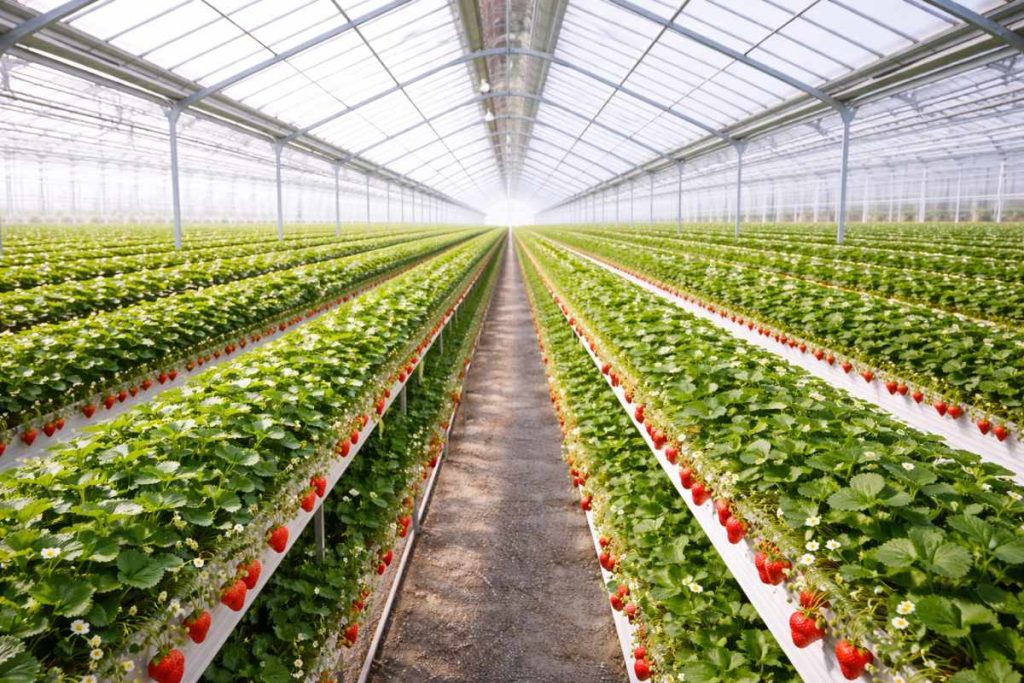
Pollination can be limited inside greenhouses since bees may not enter consistently. Without proper pollination, berries may be small or misshapen.
To help pollination:
- Gently shake plants every few days
- Use fans to move air and spread pollen
- Lightly brush flowers with a soft paintbrush or cotton swab
Even small efforts can greatly improve fruit shape, size, and overall yield. Well-pollinated flowers produce fuller, sweeter strawberries.
Common Strawberry Problems and Solutions
Yellowing leaves often indicate overwatering or nutrient imbalance. Allow soil to dry slightly and switch to a balanced fertilizer.
Flower drop or tiny berries usually result from temperature stress or poor pollination. Stabilize greenhouse temperatures and assist pollination if needed.
Moldy or rotting fruit is caused by high humidity and poor airflow. Remove damaged berries immediately, increase ventilation, and avoid watering late in the day.
Most issues resolve quickly once growing conditions are adjusted.
Harvesting Greenhouse Strawberries
Strawberries are ready to harvest when they turn fully red and feel slightly soft. They do not continue to sweeten after picking, so patience improves flavor.
Harvest in the morning when berries are cool and firm. Use scissors or gently twist the stem instead of pulling to protect the plant.
Frequent harvesting encourages plants to keep producing new fruit.
Also Read: 12 DIY Greenhouse PVC Plans to Build on a Budget
Storing and Enjoying Your Harvest
Fresh greenhouse strawberries taste best when eaten immediately. If needed, store unwashed berries in the refrigerator for up to two days.
Whether eaten fresh, blended into smoothies, or added to desserts and salads, greenhouse-grown strawberries deliver better flavor and a longer harvest season—making the effort truly worthwhile
Tips to Get More Strawberries From Your Greenhouse
- Remove runners regularly: Runners take energy away from fruit production. Trimming them helps the plant focus on producing more flowers and bigger, better berries instead of spreading.
- Keep the greenhouse clean: Clear away old leaves, fallen petals, and overripe fruit as soon as you notice them. This improves airflow and prevents pests and diseases from settling in.
- Stay consistent with care:
- Strawberries love routine. Regular watering, light feeding, and stable temperatures work better than doing too much at once.
- Avoid overdoing it: More care doesn’t always mean better results. Small, steady attention adds up and leads to healthier plants and higher yields.
Also Read: 27 Spring Flower Garden Ideas
Conclusion
Growing strawberries in a greenhouse is one of those gardening projects that gives back more than you put in.
With a controlled environment, fewer weather worries, and a longer growing season, strawberries become easier to manage and more reliable than outdoor plants.
Once you understand their basic needs—light, warmth, good airflow, and consistent care—the process feels simple and enjoyable.
Whether you’re harvesting a handful of berries or bowls full of them, greenhouse-grown strawberries bring a special kind of satisfaction. Start small, learn as you go, and enjoy every sweet harvest along the way.

Khaja Moinuddin, a computer science graduate, finds joy in gardening and homesteading. Join him on this blog as he shares his experiences in homesteading, gardening, and composting