If you’ve ever thought you need a big garden to grow strawberries, here’s some good news—you really don’t. A simple 5-gallon bucket can give you a steady supply of fresh, sweet berries right at home.
Whether you’ve got a small balcony, a sunny corner in your backyard, or even just a terrace, this method makes strawberry growing surprisingly easy and accessible.
What makes bucket gardening so appealing is how low-maintenance and flexible it is. You can move your plants around to catch the best sunlight, control the soil quality from the start, and avoid many common ground pests.
Plus, there’s something satisfying about seeing bright red strawberries hanging over the edge of a container you set up yourself.
In this guide, we’ll walk through everything step by step—from setting up your bucket to harvesting your first juicy berries—so even if you’re a complete beginner, you’ll feel confident getting started.
Why Use 5-Gallon Buckets for Strawberries?
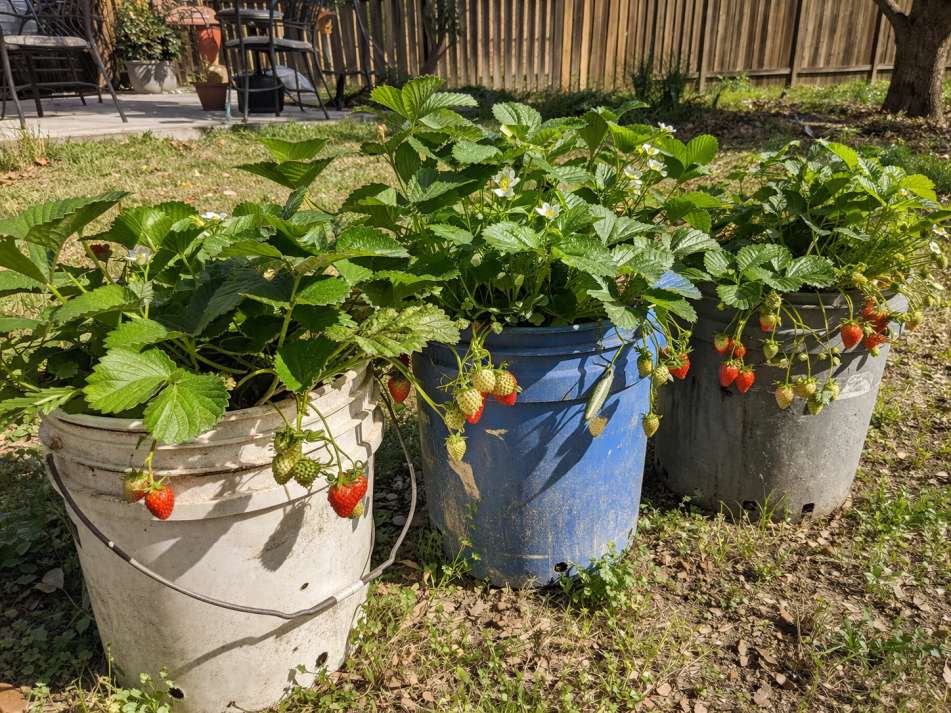
Growing strawberries in 5-gallon buckets just makes life easier—especially if you’re short on space or don’t want to deal with traditional garden beds.
These buckets hit a sweet spot in size: deep enough for healthy root growth, but still compact and easy to handle.
One of the biggest advantages is flexibility:
You can move the buckets around depending on sunlight, shift them during heavy rain, or even bring them indoors when the weather turns harsh.
Try doing that with an in-ground garden—pretty much impossible.
Budget-friendly and easy to find:
Many people even reuse old food-grade buckets, which makes this a great low-cost gardening option.
On top of that, you get full control over the soil mix, which means healthier plants and better yields.
And if you like experimenting, buckets open the door to creative setups—like drilling side holes for multiple plants or arranging them vertically to grow more in less space.
It’s simple, practical, and perfect for beginners who want good results without too much hassle.
Growing Strawberries in 5 Gallon Buckets
Best Strawberry Varieties for Buckets
Not all strawberries grow the same, so choosing the right type makes a big difference when using buckets. You’ll want plants that stay compact and produce fruits regularly instead of spreading too much.
For beginners, day-neutral and everbearing varieties are the best choice. They don’t depend heavily on seasons and can give you strawberries multiple times, which is perfect for container growing.
Some reliable options include Albion, Seascape, and Quinault. These varieties are known for good flavor, steady production, and easy care.
It’s better to avoid large June-bearing types unless you can manage runners, as they spread more and produce only one main harvest.
Also Read: How to Grow Strawberries in Greenhouse?
Materials You’ll Need
Before you start planting, it’s a good idea to gather all your materials so the process goes smoothly. The setup is simple and doesn’t require anything fancy—just a few basic items to give your strawberries the right start.
- 5-gallon bucket – Food-grade is best, but any sturdy bucket will work
- Drill – For making drainage holes at the bottom (and sides if needed)
- Potting mix – Light, well-draining soil (avoid heavy garden soil)
- Compost – Adds nutrients and improves soil structure
- Perlite or sand – Helps with drainage and aeration
- Strawberry plants or runners – Healthy, disease-free plants
- Mulch – Straw, dried leaves, or coco coir to retain moisture
- Optional: support or trellis – Useful if plants start to trail
Once you have these ready, you’re all set to prepare your bucket and start planting.
Preparing the Bucket
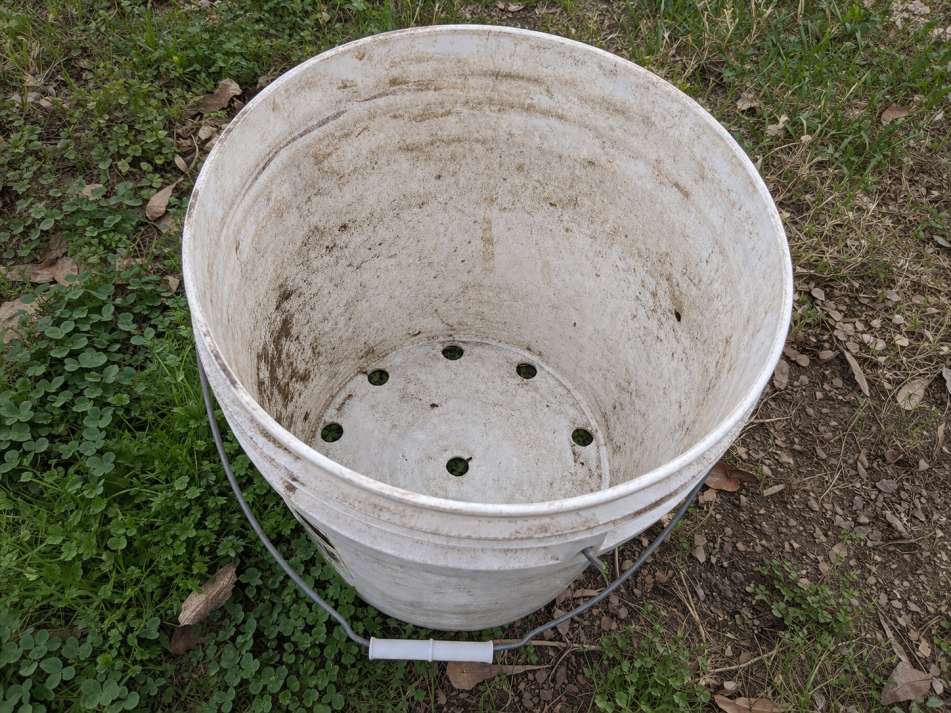
This step is simple but very important. A well-prepared bucket helps avoid problems like root rot and poor growth. Spending a little time here will help your strawberries grow better.
- Drill drainage holes: Make 5–8 holes at the bottom of the bucket. This helps extra water flow out. Strawberries don’t like wet soil.
- Add side holes (optional): You can make a few holes on the sides to grow more plants. Just keep enough space so each plant gets light and air.
- Add a base layer (optional): Put small stones or gravel at the bottom. This helps with better drainage.
- Clean the bucket: If you are using an old bucket, wash it well to remove dirt or chemicals.
- Place it in the right spot: Keep the bucket where it gets 6–8 hours of sunlight before filling it with soil.
- Lift the bucket slightly (optional): Keep it on bricks or a stand so water drains easily and air flows below.
Now your bucket is ready for soil and planting.
Choosing the Right Soil Mix
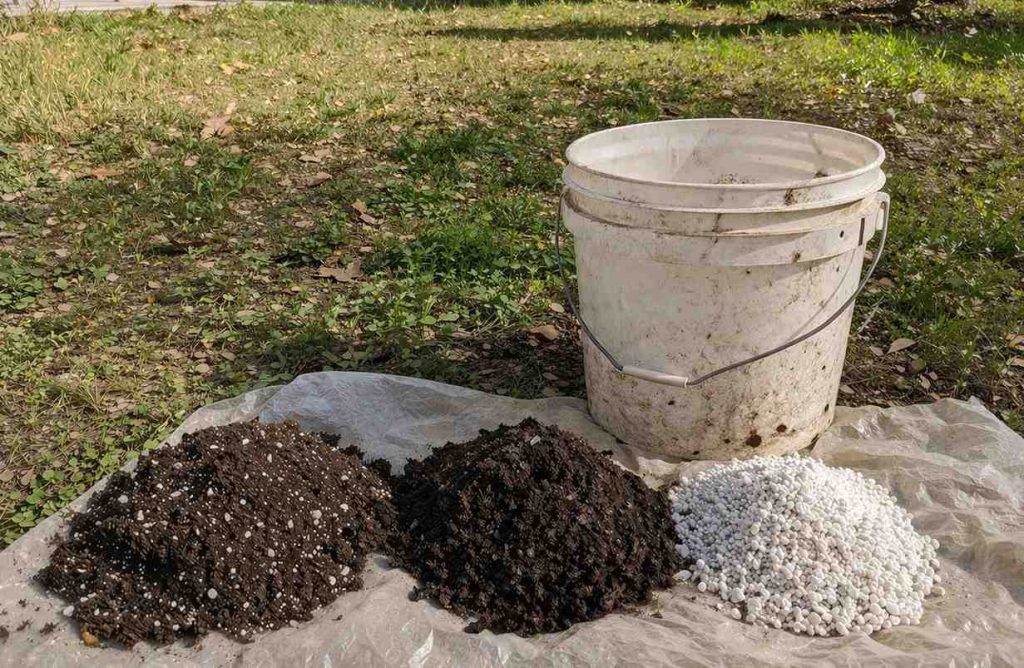
Getting the soil right is half the job done when growing strawberries in buckets. Since containers don’t have natural ground drainage, your soil mix needs to be light, airy, and able to drain excess water quickly.
Start with a good-quality potting mix as your base. Avoid using regular garden soil—it’s usually too heavy and can compact inside the bucket, which leads to poor root growth and waterlogging.
To make the mix more nutritious, add compost. This gives your strawberry plants a steady supply of nutrients and helps improve the overall texture of the soil.
For better drainage, mix in perlite or coarse sand. This keeps the soil from becoming dense and allows roots to breathe, which is especially important in a closed container like a bucket.
A simple and effective mix is:
- 60% potting soil
- 30% compost
- 10% perlite or sand
Once everything is combined well, you’ll have a loose, well-draining mix that’s perfect for healthy strawberry growth.
Check this: How to Grow Squash Vertically?
How to Plant Strawberries in Buckets?
This is where everything starts to come together. Once your bucket and soil are ready, planting strawberries is simple—but doing it the right way helps your plants establish faster and produce better fruit.
Filling the Bucket
Start by adding your prepared soil mix into the bucket. Fill it up to about 2–3 inches below the rim. This extra space prevents water from overflowing when you water the plants and makes maintenance easier.
Make sure the soil is loose and not packed down too tightly. A light, airy fill allows roots to spread comfortably.
How Many Plants per Bucket?
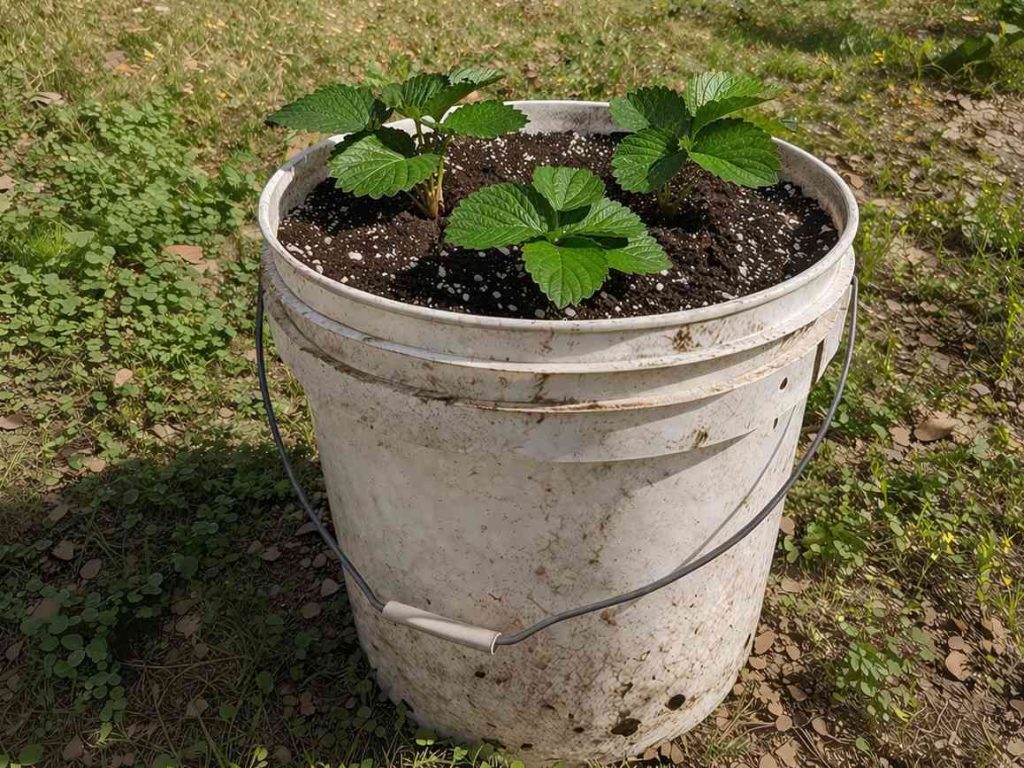
A 5-gallon bucket can hold 3 to 5 strawberry plants comfortably.
If you’re planting from the top only, space them evenly across the surface. If you’ve added side holes, you can place additional plants there, but avoid overcrowding—each plant still needs light and airflow.
Planting Depth Matters
This is one of the most important parts. Each strawberry plant has a crown, which is the central growing point where leaves emerge.
- Keep the crown just above the soil level
- Do not bury it too deep (can cause rotting)
- Do not leave roots exposed (can dry out quickly)
Getting this right ensures healthy growth and prevents common issues early on.
Firming the Soil Gently
After placing each plant, gently press the soil around the roots to hold it in place. Avoid pressing too hard—compact soil can restrict root growth and reduce drainage.
The goal is to secure the plant while keeping the soil light and breathable.
Watering After Planting
Once all your plants are in place, give the bucket a deep, gentle watering. This helps:
- Settle the soil around the roots
- Remove air pockets
- Reduce transplant shock
Make sure water drains out from the bottom—this confirms your drainage setup is working properly.
How to Care Strawberries in Bucket?
For the first few days, keep the bucket in a slightly shaded spot if the sun is too harsh. This helps plants adjust without stress. After that, gradually move them into full sunlight.
Sunlight Requirements
Strawberries need plenty of sunlight to grow well and produce sweet fruits. Aim for 6 to 8 hours of direct sunlight daily for the best results.
If you’re growing in a balcony or small space, place the bucket in the sunniest spot available. You can also move or rotate the bucket every few days to ensure even growth.
In very hot weather, a bit of afternoon shade can help prevent stress, but overall, more sunlight means healthier plants and better harvests.
Watering
Strawberries in buckets need regular watering because the soil dries out quickly. Keep the soil moist, but not too wet.
Check the top layer of soil with your finger. If it feels dry, give water. In hot weather, you may need to water every day.
Always water near the base of the plant, not on the leaves. This helps keep the plant healthy and avoids disease.
Fertilizing
Strawberries need a little extra feeding to grow well and produce more fruits. Since they are in buckets, nutrients can run out faster.
Use a balanced liquid fertilizer every 2–3 weeks. This helps the plants stay healthy and supports fruit growth. You can also use organic options like compost tea.
Once the plant starts flowering, reduce fertilizers with too much nitrogen. This helps the plant focus more on fruits instead of just growing leaves.
Mulching
Mulching helps your strawberry plants stay healthy and makes maintenance easier. It also keeps the fruits clean and improves overall growth.
Add a thin layer of mulch like dry straw, coco coir, or dried leaves on top of the soil. This helps keep moisture in the soil and prevents it from drying out too quickly.
Mulch also stops soil from splashing onto the fruits when watering, which keeps them clean and reduces the chance of disease. It can even help control small weeds in the bucket.
Supporting and Managing Growth
Strawberry plants are easy to manage, but a little care helps them produce more fruits.
Remove extra runners (long stems growing out) if you want the plant to focus on fruit instead of spreading. If you want more plants, you can let a few runners grow.
Trim any yellow or dry leaves to keep the plant healthy and improve airflow.
If the plant starts to spread or hang over the bucket, you can gently guide it or use light support to keep it neat and organized.
Common Problems and Solutions
Strawberries are easy to grow, but sometimes small problems can come up. The good thing is, most of them are easy to fix if you catch them early.
Overwatering is the most common issue. If leaves turn yellow or the plant looks weak, the soil may be too wet. Make sure your bucket has good drainage and don’t water too often.
You might also see small pests like aphids or spider mites. If this happens, spray the plant with water or use a mild soap spray to control them.
Fungal problems can appear if leaves stay wet for too long. Always water at the base and keep good airflow around the plant.
Sometimes, birds may eat your strawberries before you do. You can cover the plant with a simple net to protect your fruits.
Harvesting Strawberries
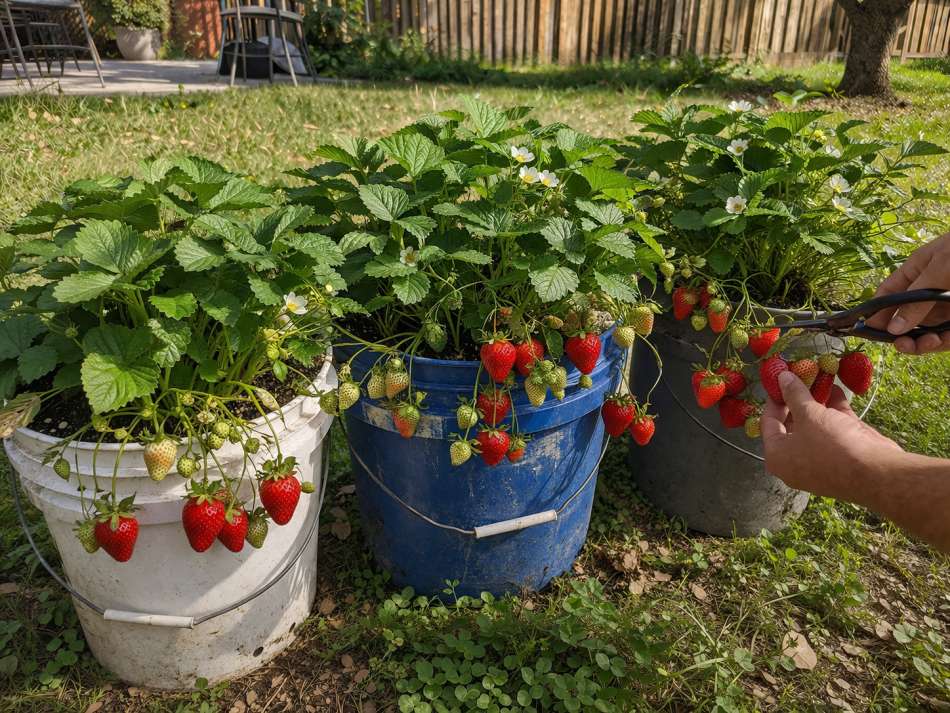
Harvesting is the most rewarding part of growing strawberries. You’ll know they’re ready when the fruits turn fully red and bright.
Pick the strawberries by gently cutting or pinching the stem just above the fruit. Avoid pulling them, as this can damage the plant.
Try to harvest regularly, as ripe fruits don’t last long on the plant. The more you pick, the more the plant will keep producing new strawberries.
Tips for Bigger and Sweeter Strawberries
- Give enough sunlight every day: Strawberries need at least 6–8 hours of direct sunlight to grow well. More sunlight helps the fruits become bigger, juicier, and sweeter. If your plants don’t get enough light, fruits may stay small or taste less sweet.
- Keep watering consistent: Try to keep the soil evenly moist at all times. Letting the soil dry out completely and then overwatering can stress the plant. This can affect fruit size and flavor. Regular, balanced watering gives better results.
- Feed your plants regularly: Since strawberries are growing in buckets, nutrients get used up quickly. Use a balanced fertilizer every 2–3 weeks to support healthy growth and fruit production.
- Avoid too much fertilizer: Adding too much fertilizer, especially high in nitrogen, can cause the plant to grow more leaves instead of fruits. Use the right amount so the plant focuses on producing strawberries.
- Remove extra runners: Runners are long stems that grow out from the plant. While they help create new plants, they also take energy away from fruit production. Remove most of them if you want bigger and better strawberries.
- Harvest fruits on time: Don’t leave ripe strawberries on the plant for too long. Pick them when they are fully red. Regular harvesting encourages the plant to produce more flowers and fruits.
- Keep plants healthy and clean: Remove dry or yellow leaves and keep the plant well-maintained. Healthy plants naturally produce better-quality fruits.
Conclusion
Growing strawberries in a 5-gallon bucket is simple, fun, and perfect for small spaces. You don’t need a big garden—just a sunny spot and a little care.
With the right setup, regular watering, and basic maintenance, you can enjoy fresh, sweet strawberries right at home. It’s a great option for beginners and anyone who wants an easy way to grow their own food.
Start small, follow the steps, and you’ll be surprised how quickly your plants grow and start producing delicious berries.

Khaja Moinuddin, a computer science graduate, finds joy in gardening and homesteading. Join him on this blog as he shares his experiences in homesteading, gardening, and composting