Your greenhouse can be as simple as a functional growing space that gives your plants the right warmth, light, and protection they need.
Or, you can turn it into a cozy retreat — a peaceful spot where you unwind, enjoy your greenery, and relax surrounded by plants.
Your greenhouse doesn’t have to be strictly only for grown-up plants and serious gardening tasks.
Sure, you can line up your mature pots and keep things organized, but it’s also okay to mix in seedlings, cuttings, and even a small cozy corner for yourself.
Add a simple bench, a few shelves, and maybe a chair where you can sit and enjoy the view.
When you set it up this way, your greenhouse feels more relaxed and welcoming — not just a place to grow plants, but a place to enjoy them too.
Let your imagination take over and use your creative side to make your greenhouse interior truly unique and fascinating.
27 Greenhouse Interior Ideas
Designing your greenhouse interior really matters because a good setup helps your plants thrive without extra hassle.
Plus, when the space feels organized and inviting, gardening becomes something you actually look forward to, not just another task on your list.
1. Layered Plant Shelving for Better Light Use
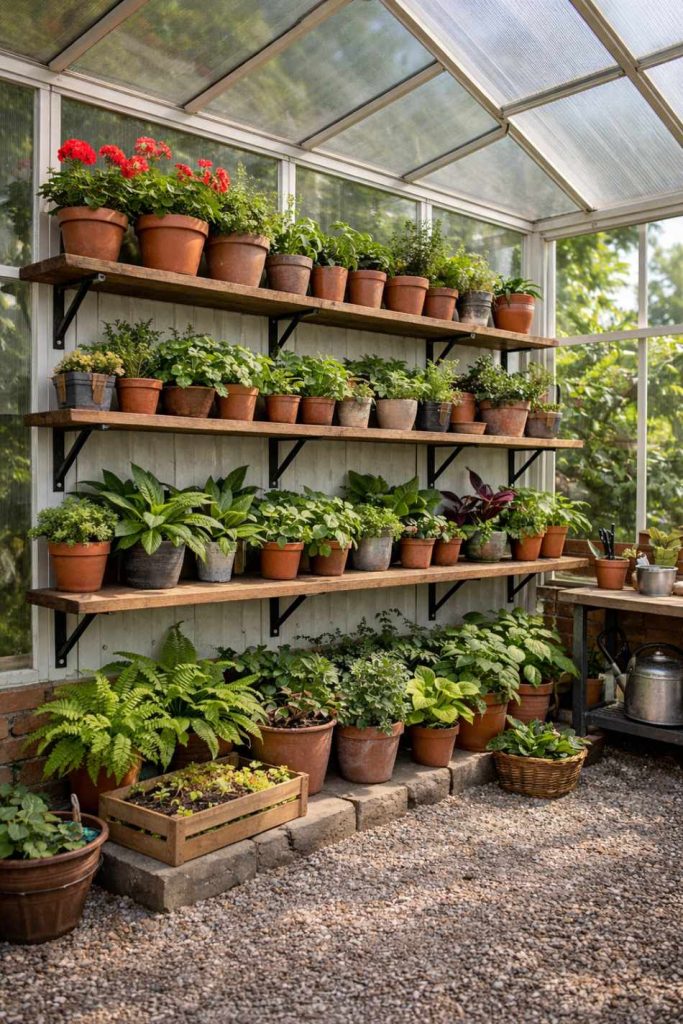
One of the smartest ways to design your greenhouse interior is by using layered shelving. Instead of placing all pots on the ground, install shelves at different heights along the walls. This allows every plant to receive better light exposure, especially in smaller greenhouses.
Tiered shelves also help you group plants based on their light needs. Sun-loving plants can sit higher, while shade-tolerant ones can stay on lower levels. It creates a practical system without taking up extra floor space.
Visually, layered shelving makes your greenhouse look fuller and more organized. The vertical display adds depth and structure, turning a simple growing space into something that feels thoughtfully designed.
2. Cozy Greenhouse Seating Corner
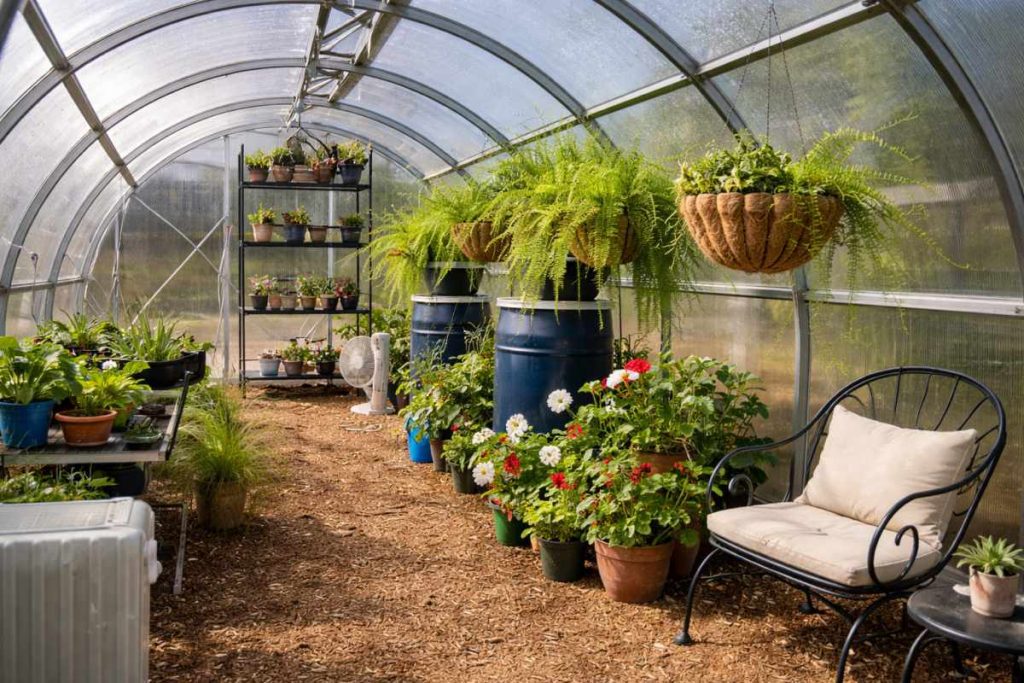
Adding a small seating corner instantly changes the feel of your greenhouse. A simple wooden bench, a weather-resistant chair, or even a compact foldable seat can create a peaceful spot to relax among your plants.
This setup encourages you to spend more time observing plant growth, checking leaves closely, or planning your next planting session. It makes routine gardening tasks feel less rushed and more enjoyable.
To keep the area functional, place the seating near a wall or under shelving so it doesn’t block movement. With the right placement, your greenhouse becomes both a productive space and a calming retreat.
3. Potting Bench Work Station
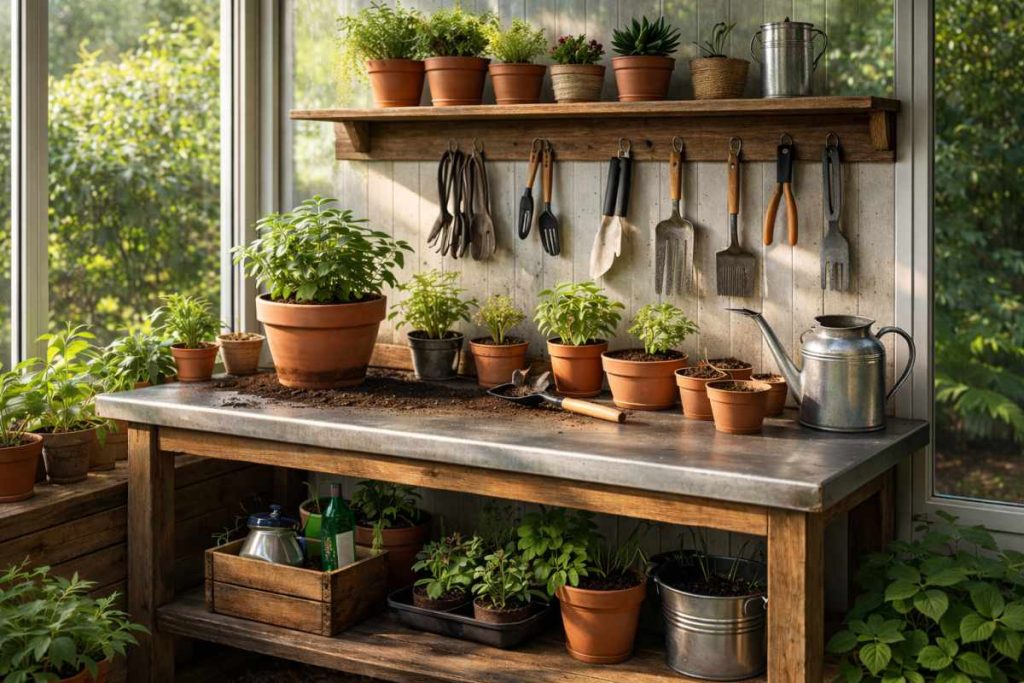
A potting bench makes your greenhouse more practical and easy to manage. It gives you one fixed place to repot plants, mix soil, and organize tools. This keeps the rest of the space clean and less messy.
Choose a sturdy table or wooden bench that can handle water and soil. You can add small hooks or shelves above it to hang tools like pruners and gloves. This saves time because everything stays within reach.
Place the bench near good light so you can clearly see what you are doing. A simple work station like this makes gardening smoother and more enjoyable.
4. Clear Walking Path Layout
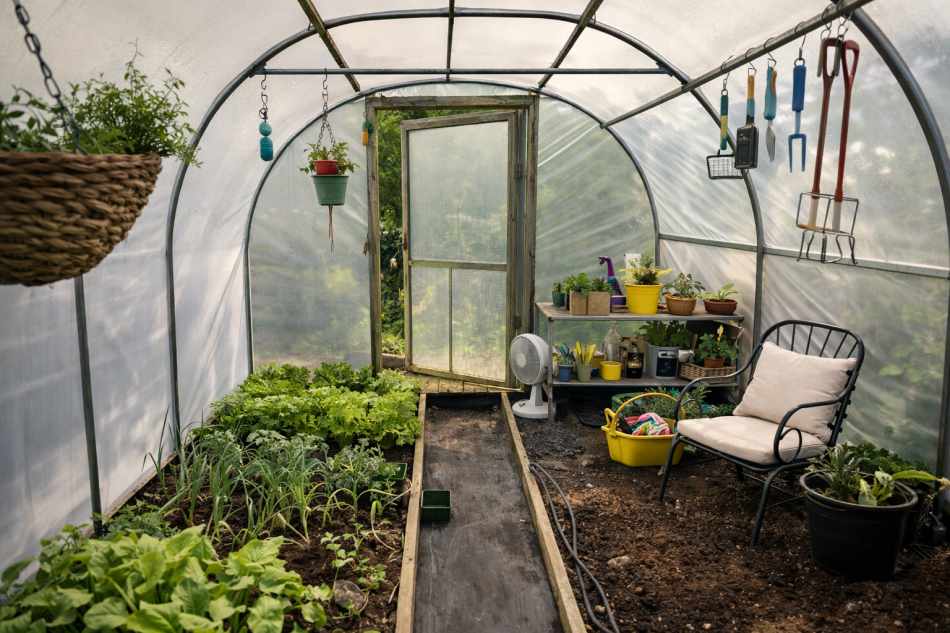
It is important to leave a clear walking path inside your greenhouse. When pots are placed too close together, the space feels crowded and hard to move around in.
Keep a simple path in the center or along one side so you can easily reach every plant. This helps with watering, pruning, and checking for pests without knocking over pots.
A clean pathway also makes your greenhouse look organized and spacious. Even a small greenhouse can feel bigger when the layout is planned properly.
5. Hanging Baskets for Extra Growing Space
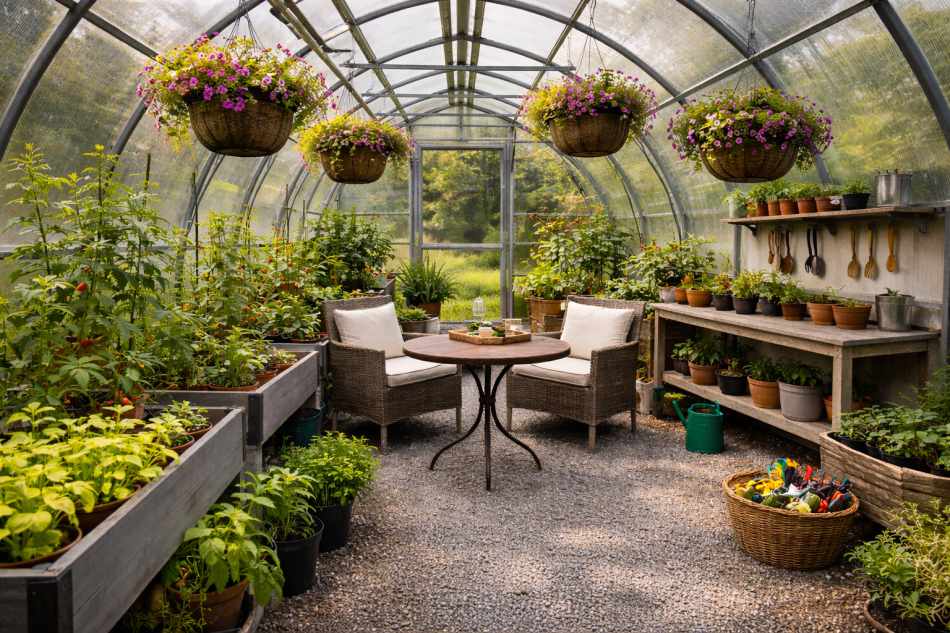
Hanging baskets are a simple way to use the upper space in your greenhouse. Instead of crowding the floor with more pots, you can hang lightweight planters from the roof frame or support bars. This instantly creates more room below.
They work especially well for trailing plants, strawberries, or herbs. The plants get good airflow and light from above, and you can easily water them without bending too much.
Just make sure the hooks are strong and placed securely. When arranged neatly, hanging baskets add height, movement, and a lively feel to the entire greenhouse.
6. Mixed Pot Sizes for a Natural Look
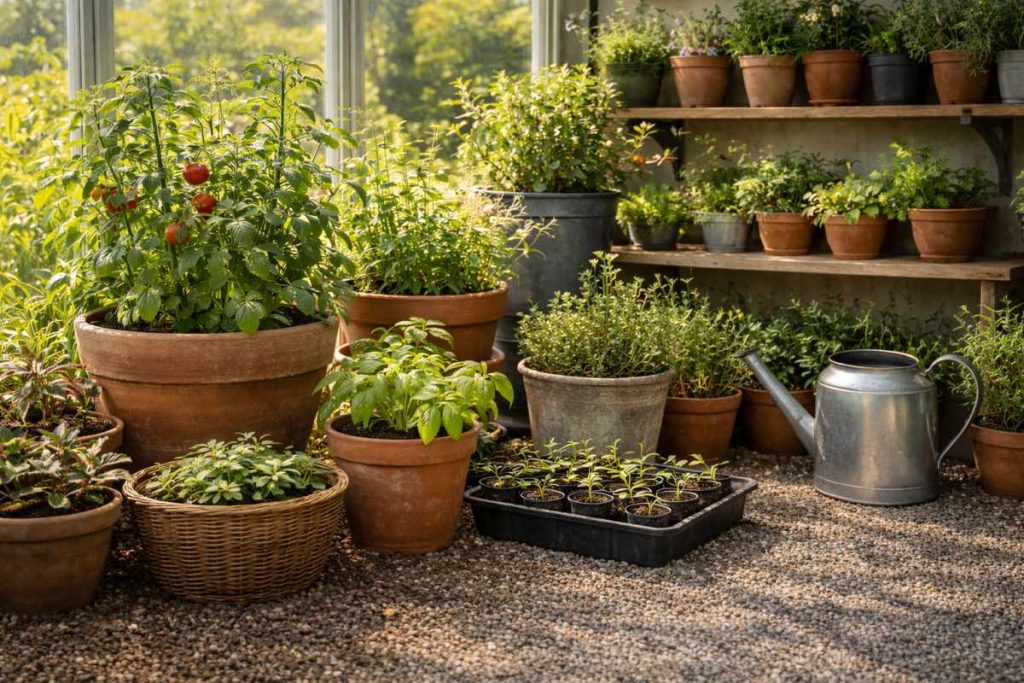
Using pots of different sizes makes your greenhouse look less stiff and more natural. Instead of lining up identical containers, try mixing tall pots, medium ones, and a few small trays for seedlings.
This setup allows you to grow plants at different stages in one place. Larger pots can hold mature plants, while smaller ones are perfect for young seedlings and cuttings. It keeps everything growing together without looking messy.
When you vary pot heights and shapes, the space feels more interesting and relaxed. It gives your greenhouse that “collected over time” look rather than something overly planned.
7. Add a Small Watering Zone

Watering can quickly turn your greenhouse floor messy if you are not careful. Creating a small watering zone helps keep things under control. You can place a tray, shallow tub, or even a simple gravel area where you water your plants.
This keeps extra water from spreading everywhere. It also protects wooden benches and shelves from constant moisture. Over time, this small step can save you from damage and slippery floors.
Having one proper spot for watering makes your routine feel easier. Instead of moving around with a dripping can, you know exactly where to go. It keeps the space neat and stress-free.
8. Use Simple Plant Labels
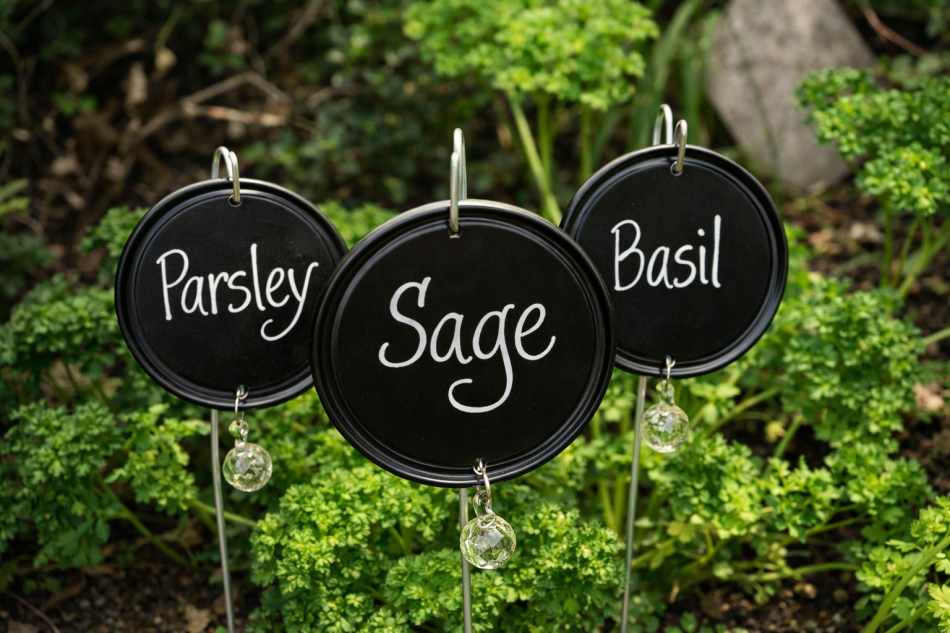
When you grow many plants, it is easy to forget what you planted and when. Simple plant labels can save you from confusion later. You can use wooden sticks, plastic tags, or even small chalkboard labels.
Labels help you remember watering needs, planting dates, or special care instructions. This is especially useful when you are growing seedlings that look similar in the early stages.
It may seem like a small detail, but labeling keeps your greenhouse organized. It also gives you a sense of control and makes you feel more confident about your gardening.
9. Add a Simple Storage Shelf
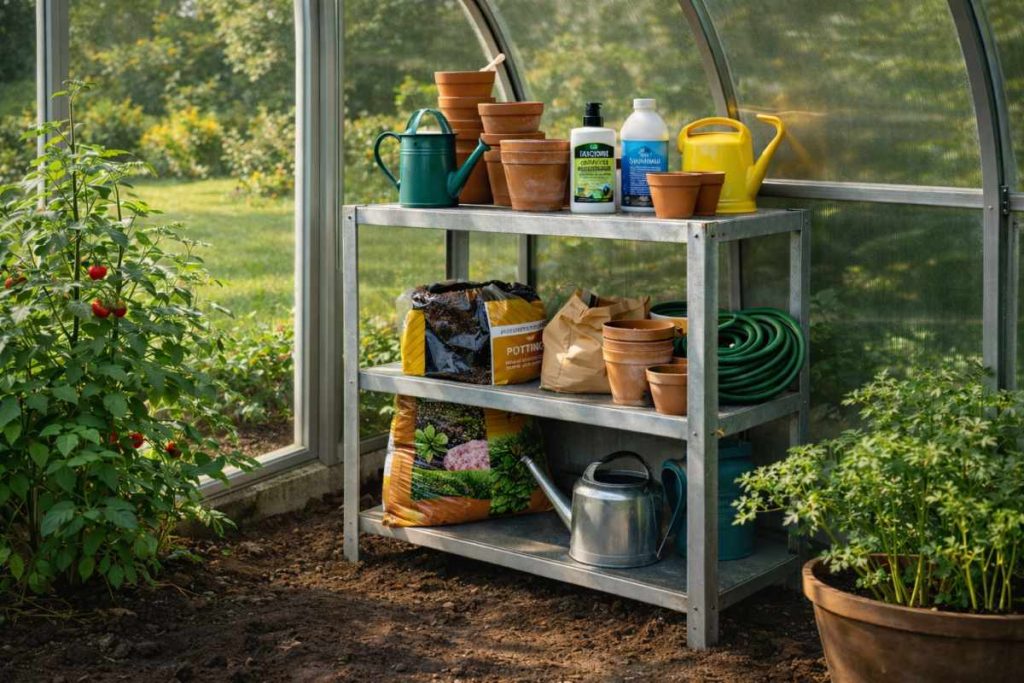
A small storage shelf can make a big difference in your greenhouse. It gives you a proper place to keep soil bags, extra pots, watering cans, and fertilizers. When everything has a place, the space feels less cluttered.
You don’t need anything fancy. A basic metal or wooden rack works well. Just make sure it can handle moisture and weight.
Keeping supplies in one spot saves time. You won’t have to search around when you need something, and your greenhouse will look cleaner and more organized.
10. Create a Seed Starting Area
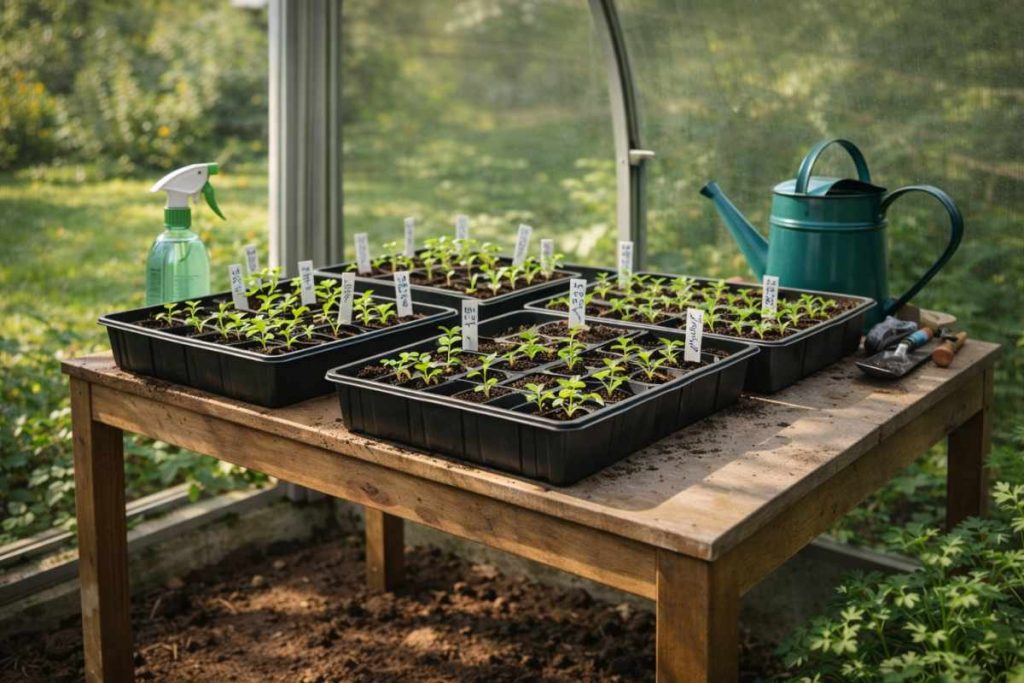
If you like growing plants from seeds, set up a small seed starting area. You can use trays and place them on a table or lower shelf where they are easy to monitor.
Young seedlings need regular care, so keeping them together helps you water and check them easily. It also protects them from being disturbed by larger plants.
Having a dedicated space for seeds makes the growing process smoother. You can watch tiny sprouts grow day by day, which makes gardening even more rewarding.
11. Add Simple Shade Control
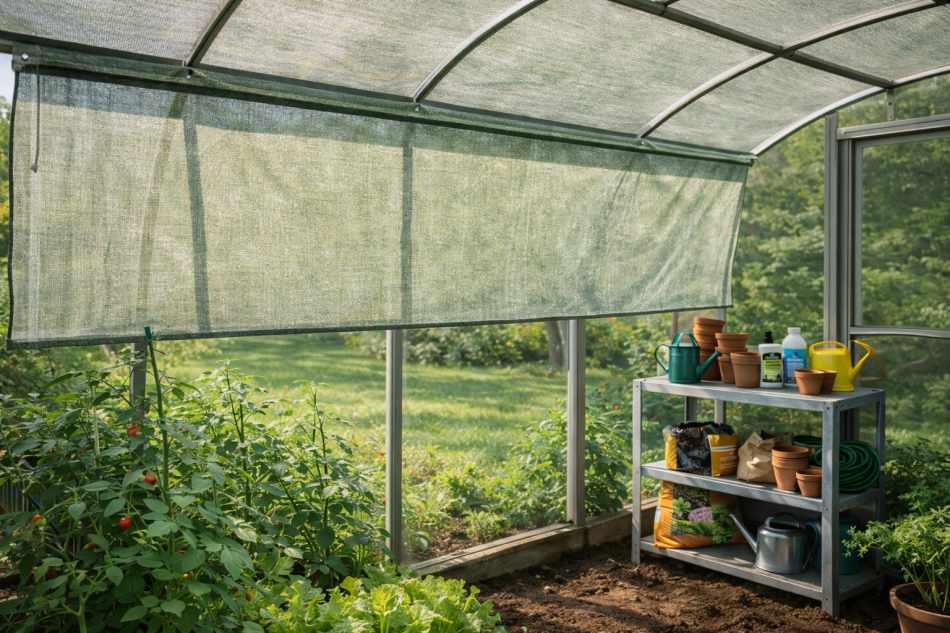
Sometimes your greenhouse can get too hot, especially during strong afternoon sun. Adding a simple shade cloth or light curtain helps control the temperature and protects delicate plants from burning. It keeps the space comfortable for both you and your plants.
You can roll the shade up or down depending on the weather. This small adjustment gives you better control over light and heat without making big changes to your setup.
12. Keep a Small Tool Hook Area
Instead of leaving tools on the bench or floor, create a small hook area on one wall. Hang your pruners, gloves, hand trowel, and spray bottle in one neat row so they are easy to grab.
This keeps your greenhouse tidy and safe to walk in. When tools have a fixed place, you spend less time searching and more time actually gardening.
13. Add a Gravel Floor Section
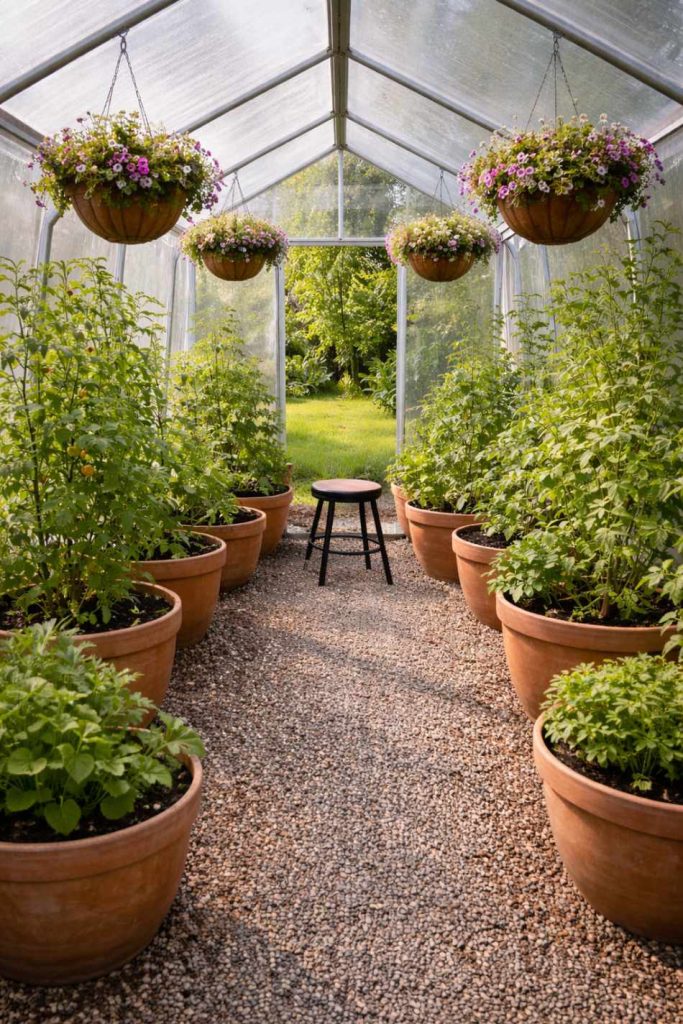
A small gravel section inside your greenhouse can help with drainage. When you water plants, the extra water can soak into the gravel instead of sitting on the surface. This keeps the area cleaner and reduces slippery spots.
It also makes the space feel more natural and garden-like. You don’t have to cover the entire floor — even one section near the entrance or watering area works well.
Also Read: 12 DIY Greenhouse PVC Plans to Build on a Budget
14. Create a Plant Grouping Corner
Instead of spreading plants randomly, try grouping similar plants together. Keep herbs in one corner, flowering plants in another, and leafy greens in their own section. This makes care easier because plants with similar needs stay in one place.
Grouping also makes your greenhouse look more organized. When plants are arranged thoughtfully, the space feels balanced and pleasant to look at.
It becomes easier to notice growth changes or problems when similar plants are side by side. You can quickly compare them and adjust care if needed.
15. Add a Small Decorative Touch
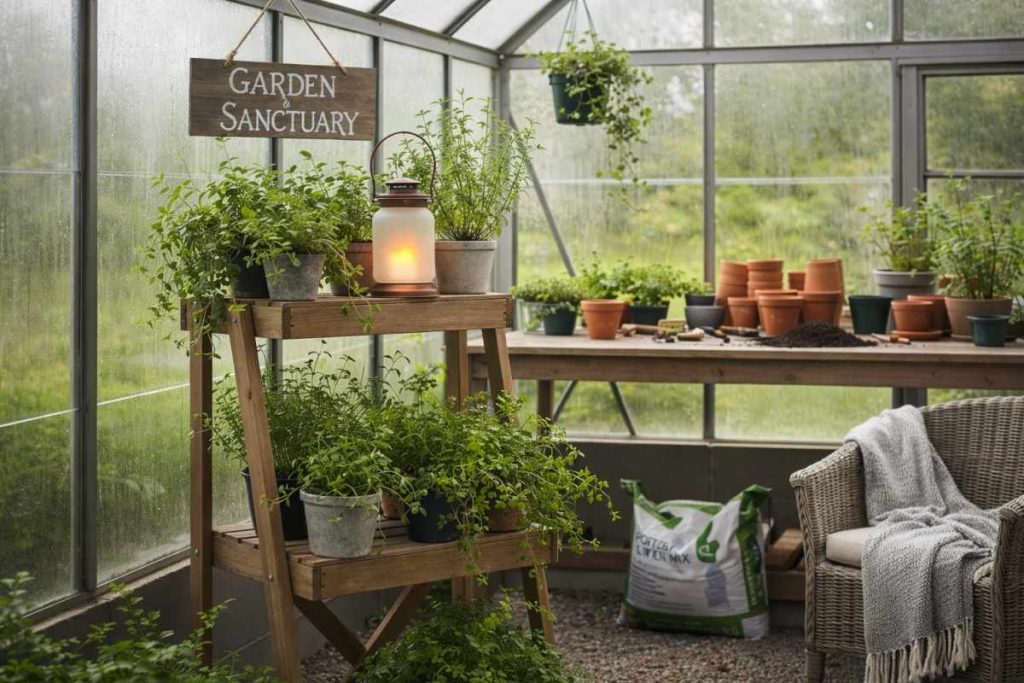
Your greenhouse does not have to feel plain or overly serious. Adding a small decorative touch like a simple lantern, a garden sign, or a neat plant stand can make it feel more personal.
These small details bring warmth to the space. When you enjoy how it looks, you naturally want to spend more time there caring for your plants.
16. Install Simple Ventilation Windows
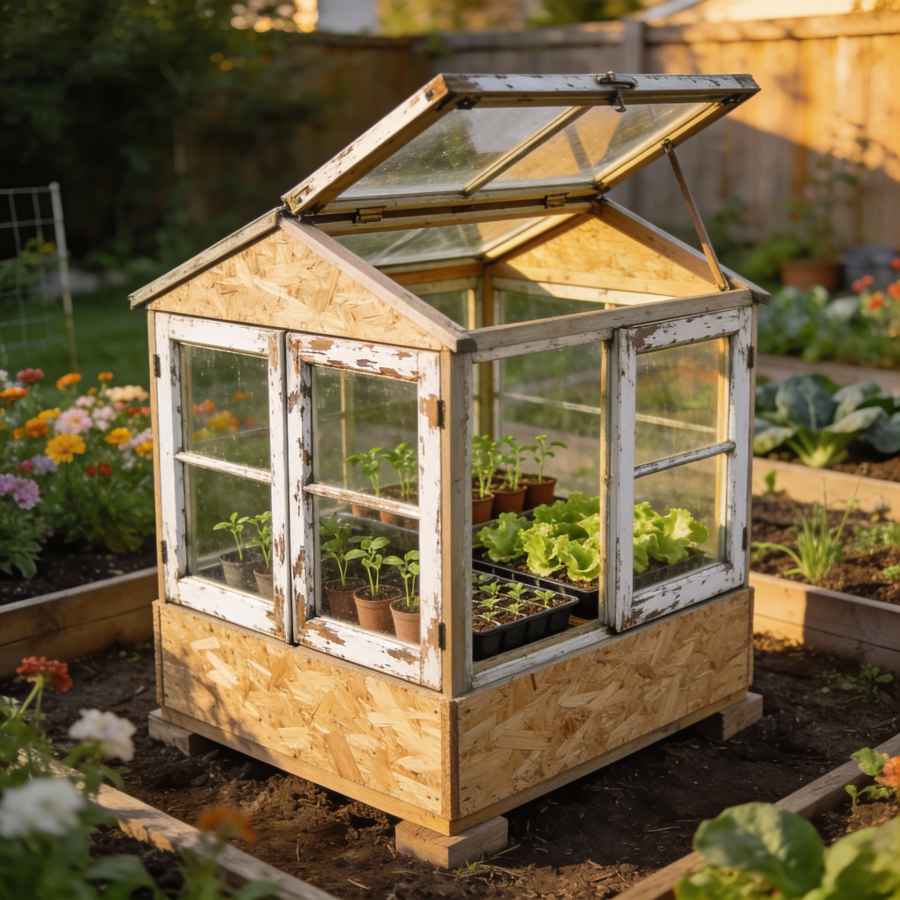
Good airflow is very important inside a greenhouse. If the air feels trapped, plants can suffer from too much heat and moisture. Adding small ventilation windows or roof vents helps fresh air move through the space.
You can open them during warm days and close them when it gets cooler. This simple habit keeps temperature and humidity balanced.
Proper ventilation also reduces the risk of fungal problems and keeps your greenhouse environment healthier overall.
Check this: DIY Wood Frame Greenhouse Plans
17. Use Rolling Plant Stands
Rolling plant stands make it easy to move heavy pots around. Instead of lifting and straining your back, you can simply slide plants to a better light spot or rearrange the layout when needed.
They are especially helpful for larger pots that stay in one place for months. With wheels underneath, cleaning the floor becomes much easier too.
18. Add a Simple Thermometer and Hygrometer
It is hard to manage what you cannot measure. A small thermometer and hygrometer help you track temperature and humidity inside your greenhouse.
By checking them daily, you can decide when to water, ventilate, or add shade. This small tool gives you better control and helps your plants grow in stable conditions.
19. Use Foldable Tables
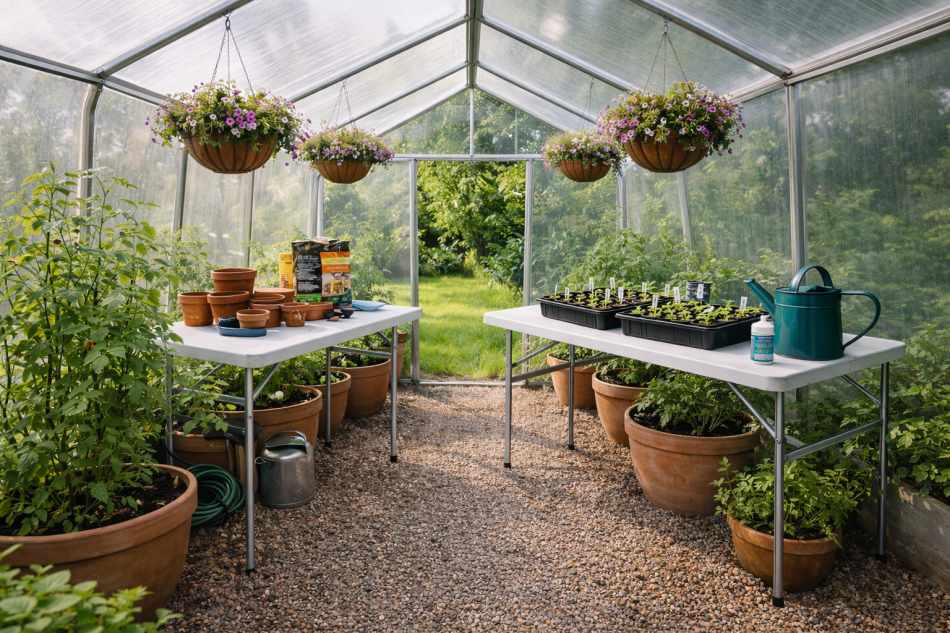
Foldable tables are very useful in a greenhouse. You can open them when you need extra space for repotting or arranging plants, and fold them away when you need more walking room.
This keeps your greenhouse flexible. It is a simple solution, especially if you have a small space and want it to feel open and easy to move around in.
20. Add a Rainwater Collection Barrel
If your greenhouse is connected to a gutter system, you can add a small rainwater barrel outside. This allows you to collect natural rainwater and use it for watering plants.
Rainwater is often better for plants because it does not contain added chemicals like some tap water. It also helps you save water and reduce utility costs.
Also Read: How to Grow Citrus in a Greenhouse?
21. Create a Seasonal Plant Rotation Area
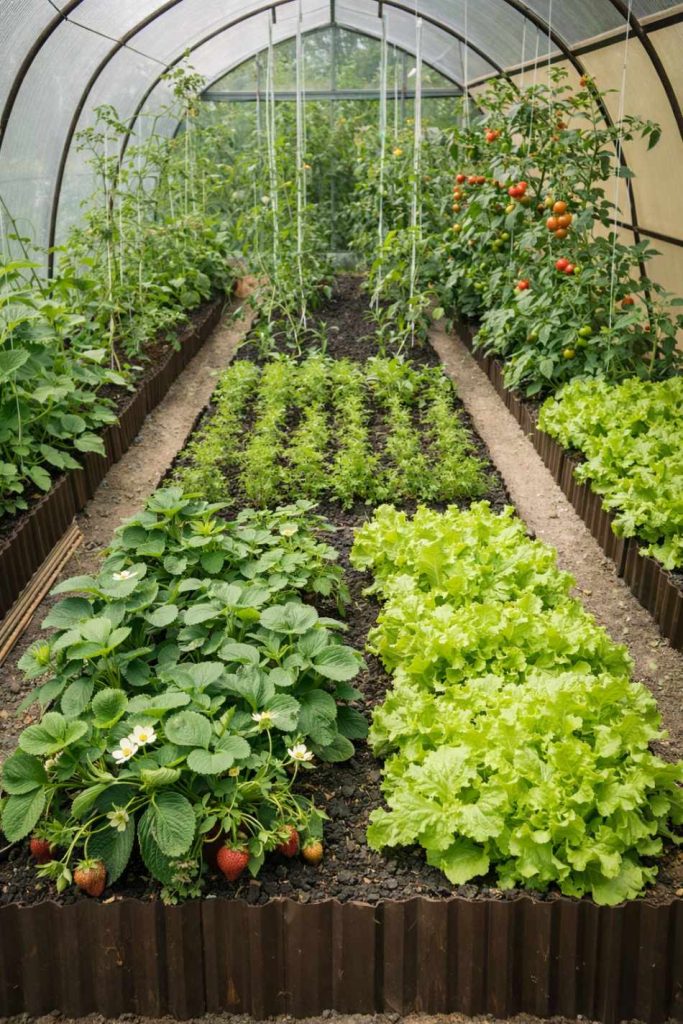
Set aside a small area where you can rotate plants based on the season. In winter, you can move sensitive plants to the warmest and brightest spot. In summer, you can shift heat-sensitive plants to a slightly shaded area.
This keeps your plants healthy throughout the year. A simple rotation plan helps you adjust to changing weather without overcrowding your greenhouse.
Also Read: 9 Tips for Growing Vegetables in a Greenhouse
22. Add a Simple Drip Irrigation Line
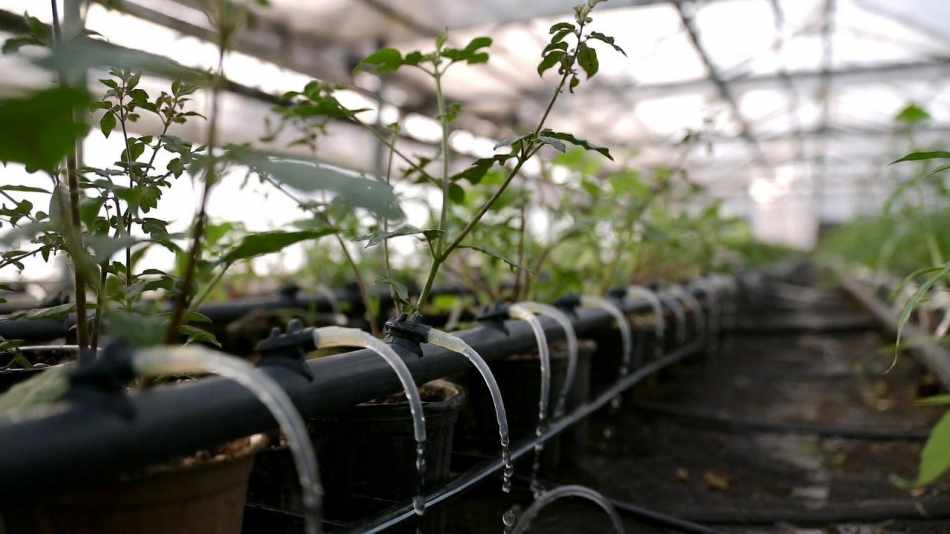
A basic drip irrigation line can make watering much easier. It slowly delivers water directly to the base of each plant, which helps reduce waste and keeps leaves dry.
This system saves time and ensures plants get steady moisture. It is especially helpful if you have many pots and cannot water them by hand every day.
23. Use Clear Storage Bins
Clear storage bins are great for keeping small items organized. You can store seeds, plant tags, twine, and small tools without losing track of them.
Because the bins are transparent, you can quickly see what is inside. This keeps your greenhouse tidy and makes your gardening routine smoother.
24. Add a Simple Grow Light Setup
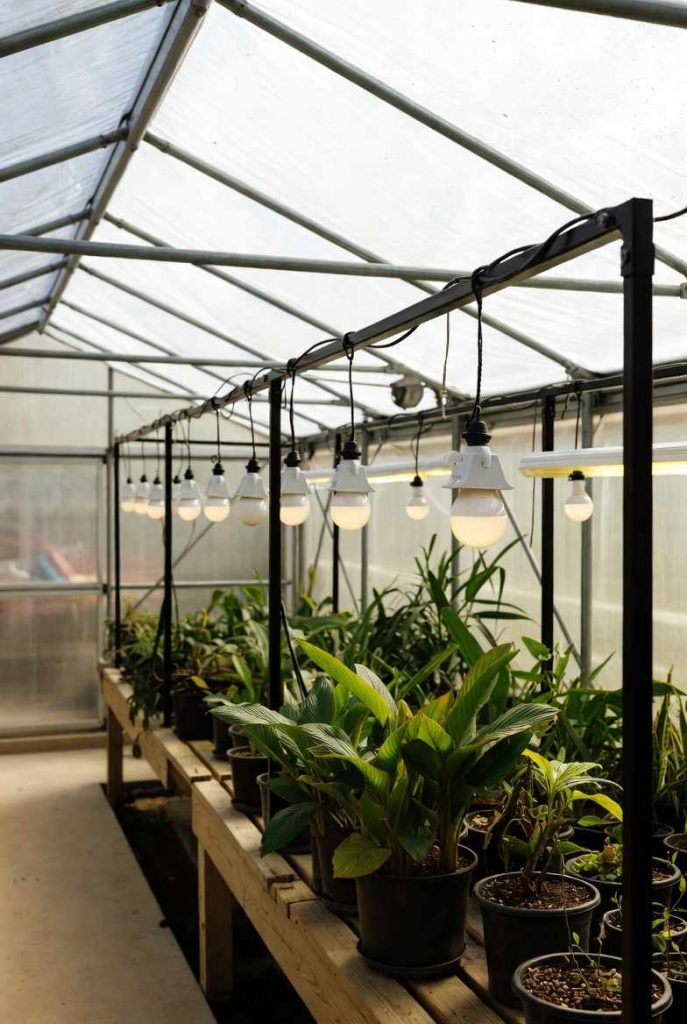
During cloudy days or winter months, natural light may not be enough. A simple grow light setup can support seedlings and light-loving plants.
Place the lights above trays or shelves where young plants are growing. This helps them grow strong and prevents weak, stretched stems.
25. Add a Small Compost Bin
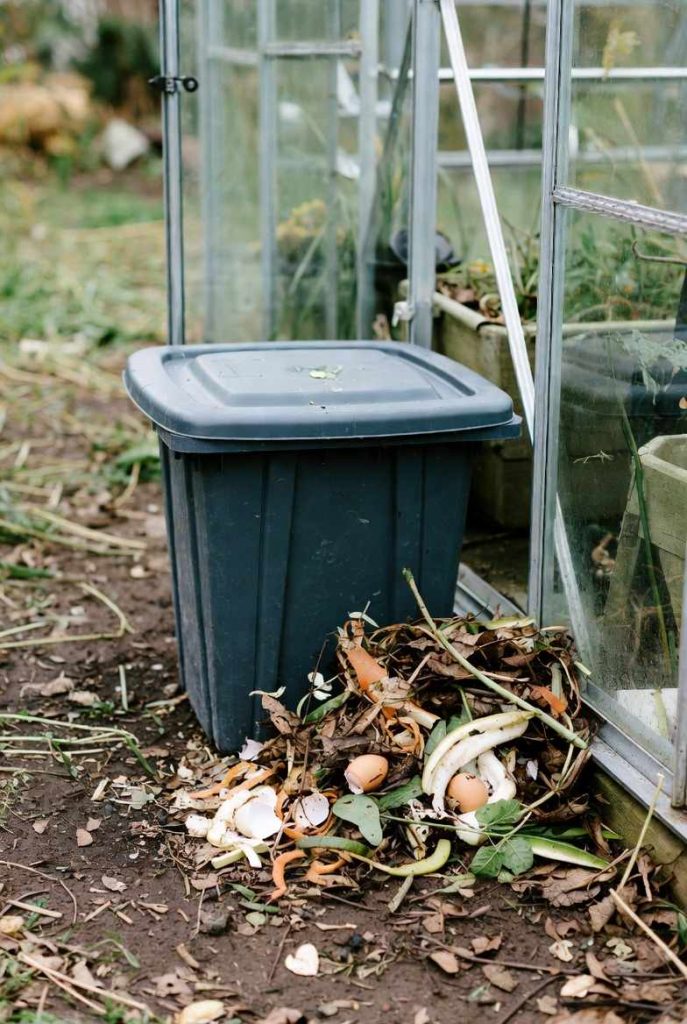
Keeping a small compost bin near your greenhouse is very practical. You can collect dry leaves, plant trimmings, and kitchen scraps to turn them into rich compost over time.
This gives you natural fertilizer for your plants and reduces waste. It is a simple step that supports healthy soil and sustainable gardening.
A small compost system keeps your greenhouse cycle complete.
Also Read: 19 Tips to Grow Blueberries in Spring
26. Install Simple Wall Hooks for Pots
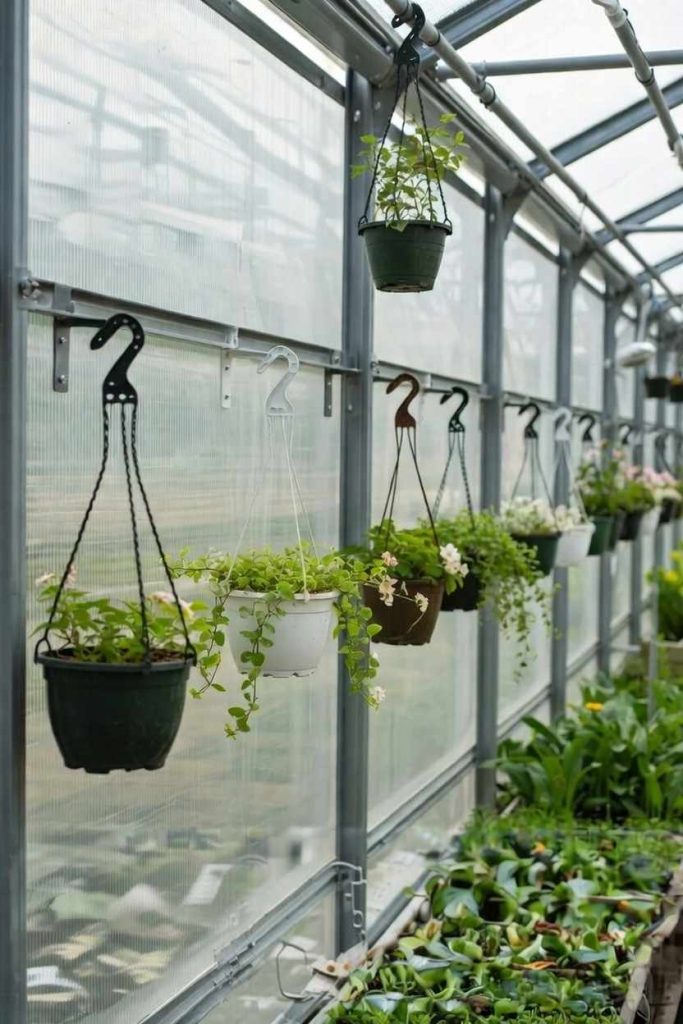
Wall hooks can help you display lightweight pots without using floor space. You can hang small flowering plants or trailing varieties to create a layered look.
This makes the walls more useful and keeps the greenhouse feeling open. It also adds visual interest at eye level.
Small changes like this make a big impact in tight spaces.
27. Keep a Garden Journal Corner
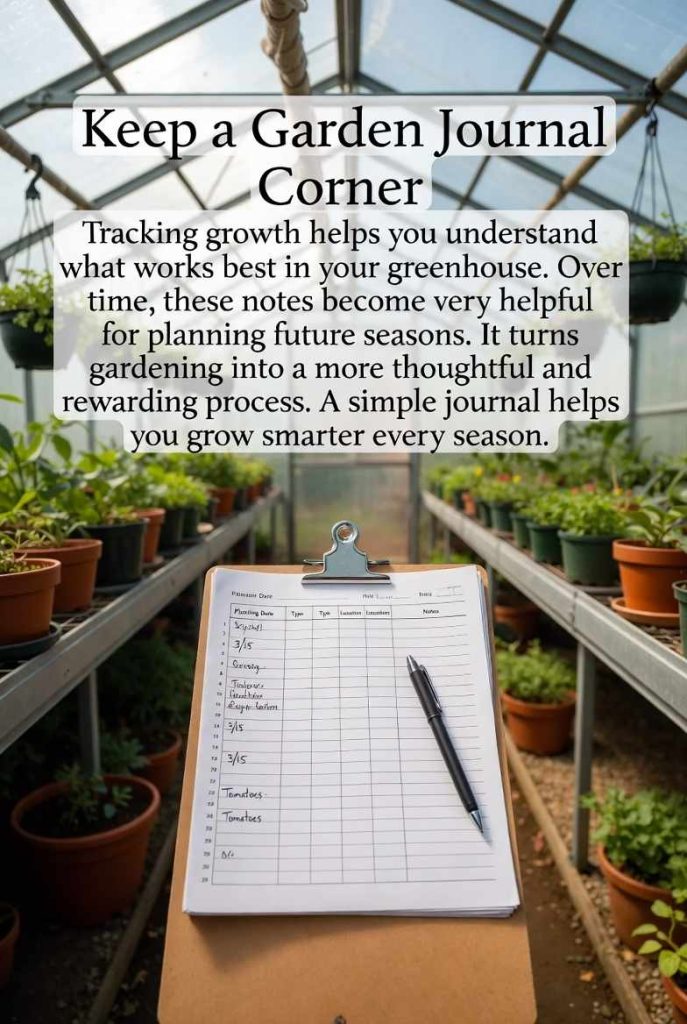
Set up a small spot with a notebook or clipboard where you can write down planting dates and observations. Tracking growth helps you understand what works best in your greenhouse.
Over time, these notes become very helpful for planning future seasons. It turns gardening into a more thoughtful and rewarding process.
A simple journal helps you grow smarter every season.
Conclusion
Designing your greenhouse interior is not just about fitting in more plants. It is about creating a space that works well, feels comfortable, and supports healthy growth throughout the year.
When your greenhouse is planned with care, gardening becomes easier and more enjoyable. You spend less time managing clutter and more time watching your plants thrive.
In the end, a well-designed greenhouse is not only productive — it is a space you truly enjoy spending time in.

Khaja Moinuddin, a computer science graduate, finds joy in gardening and homesteading. Join him on this blog as he shares his experiences in homesteading, gardening, and composting