I have always been fascinated by DIY projects. My love for creating things began back in school, when I first discovered the joy of turning simple ideas into something real.
As a gardener my fascination grew even stronger when I started creating truly useful things for my flocks.
I’ve to admit that I failed most of the time, but I learned from my mistakes and now when I see my homemade chicken feeders I feel a sense of satisfaction.
And probably you’ll agree that it’s not just about saving money. Sustainable gardening is a way of life that teaches resourcefulness, respect for what you have, and making thoughtful choices.
What to Consider While Building a Chicken Feeder?
Having a proper chicken feeder really makes a difference in keeping your flock healthy.
It gives your birds steady access to clean feed, cuts down on waste, and helps prevent common health problems.
A well-made feeder also keeps the feed dry, keeps pests away, and simply makes your daily routine a lot easier.
1. Size and Capacity
The size of your feeder should match the number of chickens you have. If it’s too small, weaker birds may not get enough food, and overcrowding can lead to stress and pecking issues.
Choose a feeder that holds enough feed for at least a day or two, especially if you’re not around all the time. This keeps feeding consistent and reduces frequent refilling.
2. Material and Durability
Select sturdy, weather-resistant materials like metal, thick plastic, or treated wood. Chickens can be rough, and flimsy materials may break quickly.
If the feeder will stay outdoors, make sure it can handle rain and sunlight without cracking, rusting, or rotting over time.
Check this: How to Build a Door for Chicken Coop?
3. Protection from Moisture
Feed must stay dry to prevent mold and spoilage. A good feeder should have a covered top or rain guard to keep water out.
Wet feed not only goes to waste but can also make chickens sick. Proper design helps protect both your birds and your budget.
4. Height and Placement
Place the feeder at the right height—usually at the level of your chickens’ backs. This prevents them from scratching feed out and wasting it.
Avoid placing it directly on the ground, where dirt and droppings can contaminate the feed. Slight elevation improves cleanliness.
5. Ease of Cleaning
A feeder should be easy to open and clean regularly. Feed dust, droppings, and moisture can build up quickly.
Simple designs with fewer tight corners make cleaning faster and help maintain better hygiene for your flock.
6. Pest Control
Rodents and wild birds are attracted to spilled feed. Choose or design a feeder that minimizes spillage and can be sealed when not in use.
This helps protect your feed supply and reduces the risk of disease spreading from outside animals.
12 DIY Chicken Feeders and Waterers Ideas
Place your chicken feeder in a dry, shaded area of the coop or run, ideally raised to the height of your chickens’ backs to reduce waste and contamination.
Choose a feeder with enough capacity to hold at least a day’s worth of feed for your flock, so every bird gets consistent access without frequent refilling.
1. DIY PVC Chicken Feeder
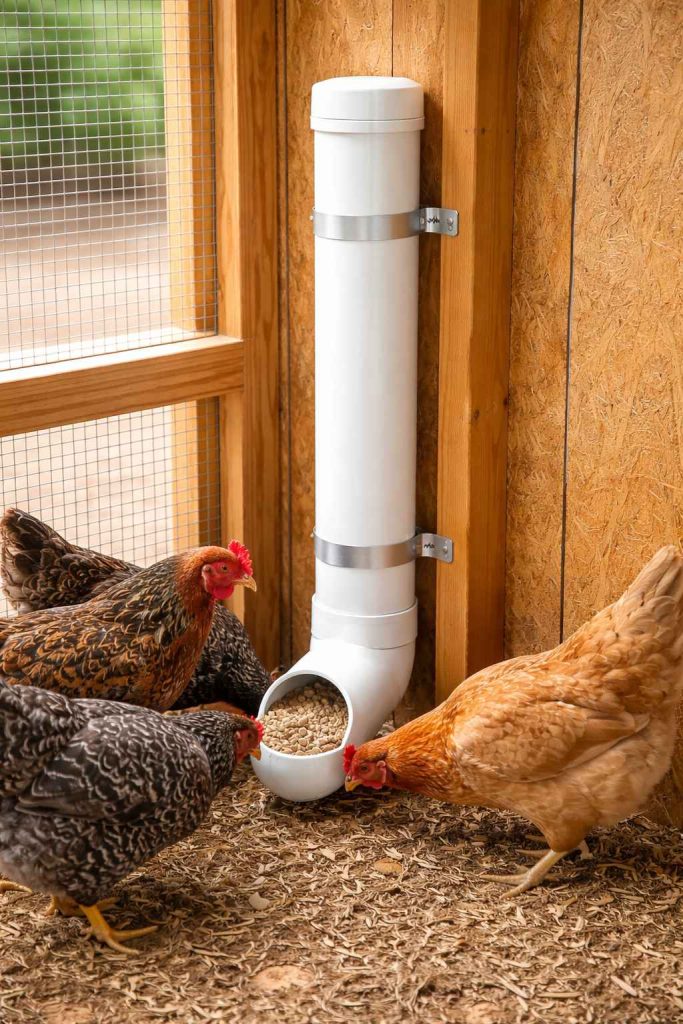
A DIY PVC chicken feeder is one of the simplest and most practical options for backyard flocks. You can mount it along the coop wall or inside the run, keeping it raised to your chickens’ back height to cut down on scratching and waste.
Depending on the size of the pipe, it can easily hold enough feed for a full day or even longer.
To make one, just use a 3–4 inch PVC pipe as the main body and attach a 90-degree elbow joint at the bottom for the feeding opening. Secure it upright to a board or wall and add a cap on top for easy refilling. The feed naturally flows down as your chickens eat.
It’s a neat, no-fuss setup that keeps feeding simple and organized.
Pros
- Less feed waste and mess
- Keeps feed cleaner and drier
- Budget-friendly and easy to build
2. Wooden Trough Feeder
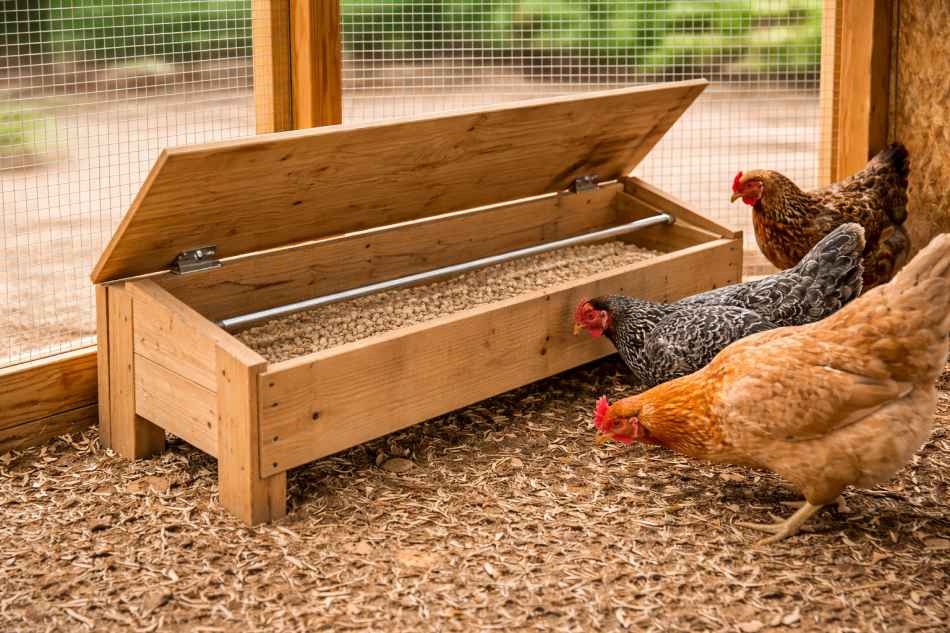
A wooden trough feeder is a classic and reliable option for backyard chickens. Place it in a dry area of the coop or run, slightly raised off the ground to keep feed clean.
You can size it according to your flock, making it large enough to hold a full day’s feed so all your birds can eat comfortably.
To build one, use sturdy wooden boards to create a long, narrow box. Add a divider or a rotating bar across the top to stop chickens from stepping inside and scratching feed out. For outdoor use, attaching a simple hinged lid helps protect the feed from rain.
It’s a simple design, but when built well, it can last for years.
Pros
- Easy to customize for any flock size
- Durable and long-lasting
- Simple design that’s easy to clean
Also Read: 27 Low Budget DIY Chicken Coop Ideas
3. 5-Gallon Bucket Feeder
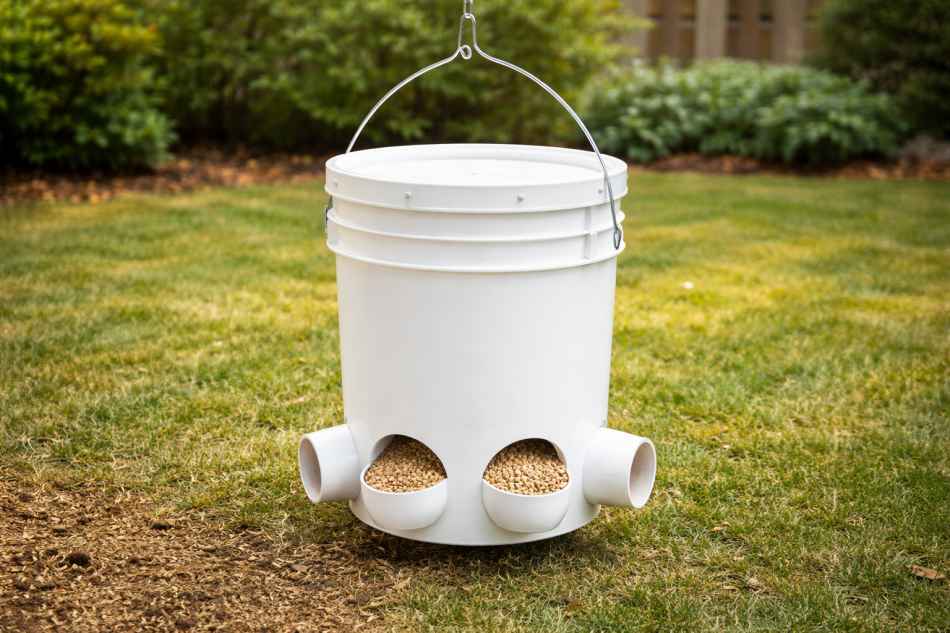
A 5-gallon bucket feeder is perfect if you want something simple with good capacity. Place it under a covered area in the coop or run, slightly raised to back height to reduce spillage. A standard bucket can easily hold enough feed for several days for a small flock.
To make one, drill a few evenly spaced holes near the bottom of the bucket or attach poultry feeder ports. Snap a tight lid on top to keep moisture out. You can set it on bricks or hang it securely so chickens can eat comfortably without scratching feed everywhere.
It’s low-effort, affordable, and great for busy days.
Pros
- Less frequent refilling
- Reduces feed contamination
- Easy to assemble
4. Hanging Bottle Feeder
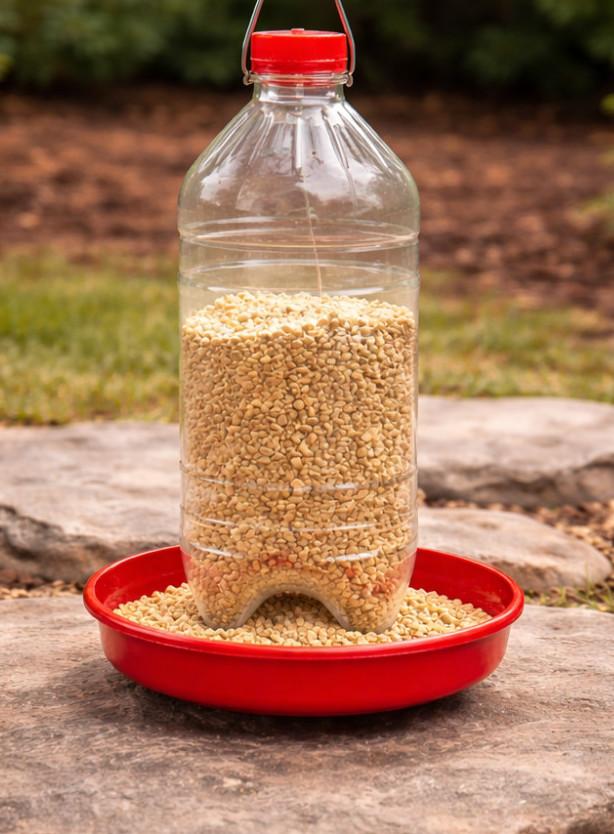
This feeder works well for small flocks and tight spaces. Hang it inside the coop at your chickens’ back height. A large plastic bottle can hold enough feed for a day, making it ideal for controlled feeding.
To build it, cut small feeding openings near the bottom of a sturdy bottle and place it inside a shallow tray. As the chickens eat, gravity pulls more feed down into the tray. Hang it securely with wire or rope to keep it steady.
It’s a great way to reuse materials and keep things tidy.
Pros
- Budget-friendly and recyclable
- Takes up very little space
- Easy to refill and maintain
Also Read: What Microgreens are Good for Chickens?
5. Treadle Chicken Feeder
If rodents are a problem in your coop, a treadle feeder can be a game changer. Keep it in a dry, level spot inside the run.
These feeders usually hold a large amount of feed—often enough for several days—making them ideal for medium to large flocks.
The design works with a simple step mechanism. When a chicken steps on the front pedal, the lid opens and gives access to the feed.
Once it steps away, the lid closes, keeping rats and wild birds out. You can build one using plywood, hinges, and a bit of patience.
Pros
- Excellent rodent protection
- Stores a large quantity of feed
- Reduces feed loss significantly
6. PVC Horizontal Feeder
Short on space? A horizontal PVC feeder fits neatly along a fence or coop wall. Mounted at back height, it keeps feeding organized and off the ground.
With the right pipe length, it can hold enough feed for a full day without constant refilling.
To make it, use a wide PVC pipe laid horizontally with evenly spaced feeding holes cut along the front.
Cap both ends and secure it firmly so it doesn’t roll. It’s compact, sturdy, and surprisingly efficient.
Pros
- Space-saving design
- Keeps feed contained
- Strong and weather-resistant
7. Plastic Container Feeder
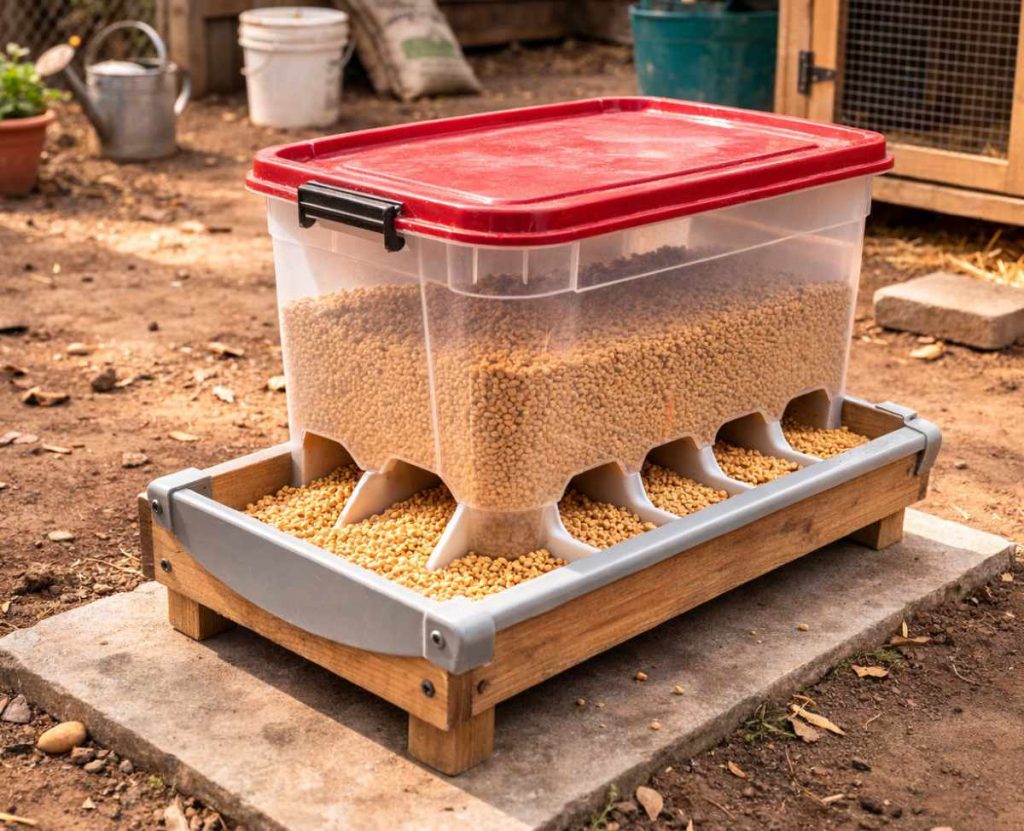
You can keep this feeder inside the coop or under a roof so the feed stays dry.
Choose a large plastic storage container that can hold enough feed for one or two days, depending on how many chickens you have.
To make it, cut small feeding holes near the bottom of the container. Make sure the holes are big enough for chickens to eat but not scratch the feed out.
Close the lid tightly to keep out rain and pests. Raise it a little off the ground for better cleanliness.
8. Simple Tray Feeder with Wire Cover
Place this feeder in a dry corner and lift it slightly off the ground. It works best for daily feeding and is good for small groups of chickens.
Take a shallow tray and fill it with feed. Then place a wire mesh or metal grill on top. The chickens can eat through the gaps, but they cannot scratch the feed out.
9. Hanging Bucket Feeder
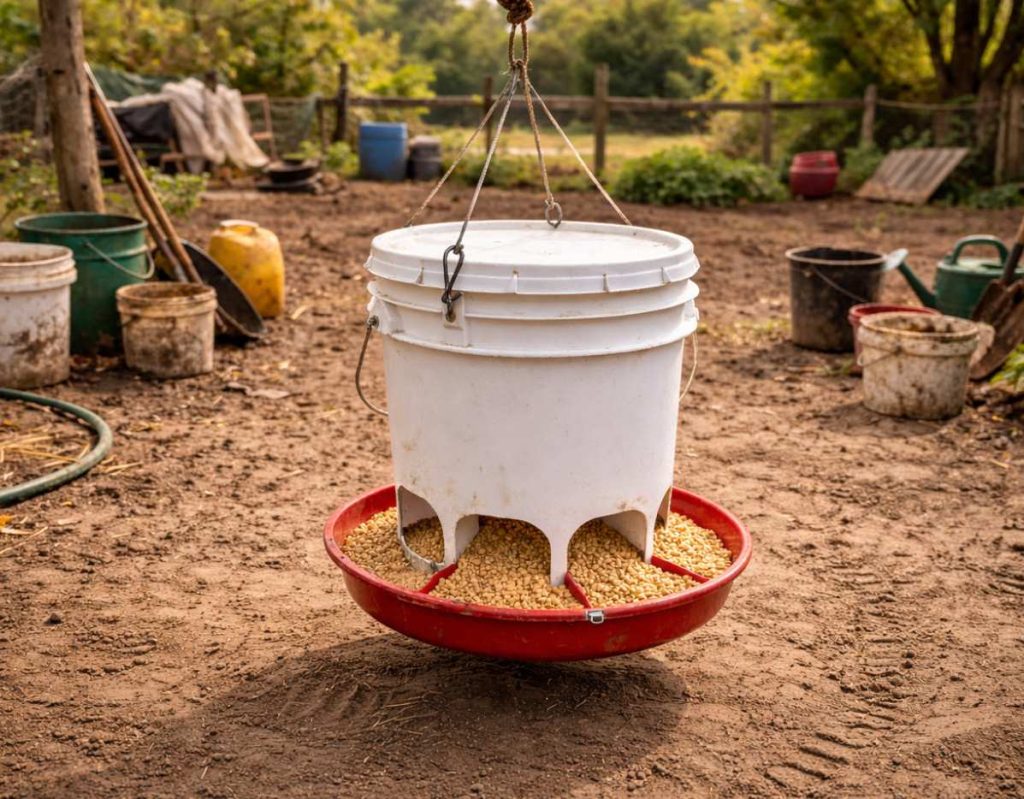
Take a strong plastic bucket and cut a few feeding holes evenly around the lower sides.
Make sure the holes are large enough for chickens to eat comfortably but not big enough for them to waste feed. Attach a tight lid on top to keep the feed safe from moisture.
Hang the bucket inside the coop or under a covered run using rope or wire. Adjust the height to your chickens’ back level.
A medium or large bucket can hold enough feed for a full day or more, and hanging it helps keep the area cleaner.
10. DIY PVC Chicken Nipple Waterer
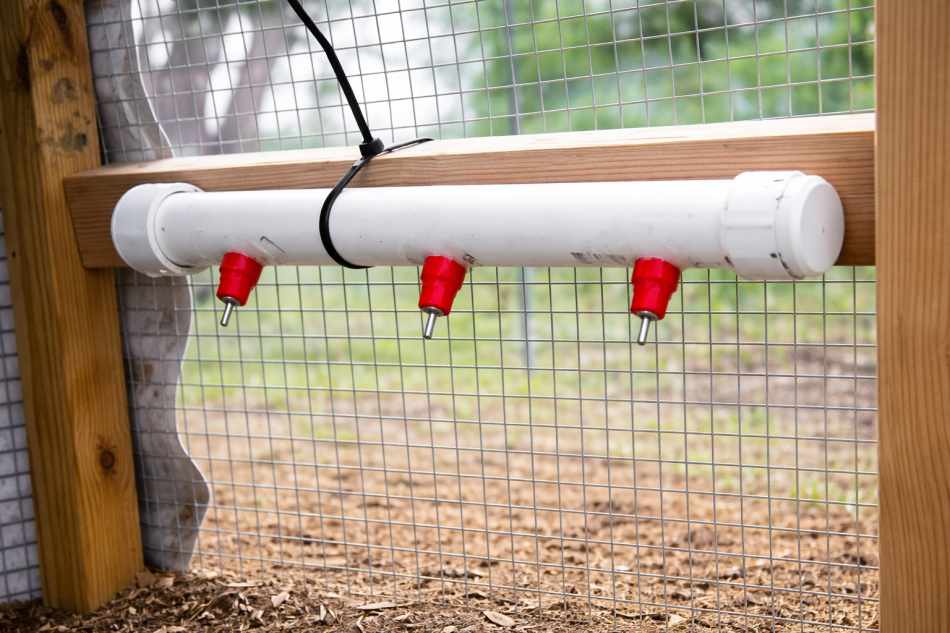
Drill small holes at the bottom of a plastic bucket and screw in poultry water nipples.
Make sure they are tightly fitted to prevent leaks. Fill the bucket with clean water and close it with a secure lid.
Place or hang the bucket in a shaded area and raise it slightly so chickens can easily reach the nipples.
When they peck at the nipple, fresh water drips out, keeping the water cleaner and reducing spills.
Also Read: How to Build a Chicken Nesting Box?
11. Wooden Box Feeder with Lid
Build a simple rectangular box using sturdy wooden boards. Leave the top open and attach a hinged lid so you can easily refill it.
You can also add a narrow wooden bar across the top to stop chickens from stepping inside.
Place the feeder in a dry area of the coop or run, slightly raised off the ground.
Make it large enough to hold a full day’s feed so all your chickens can eat without crowding. The lid helps protect the feed from rain and dirt.
12. Gravity Waterer with Large Bottle
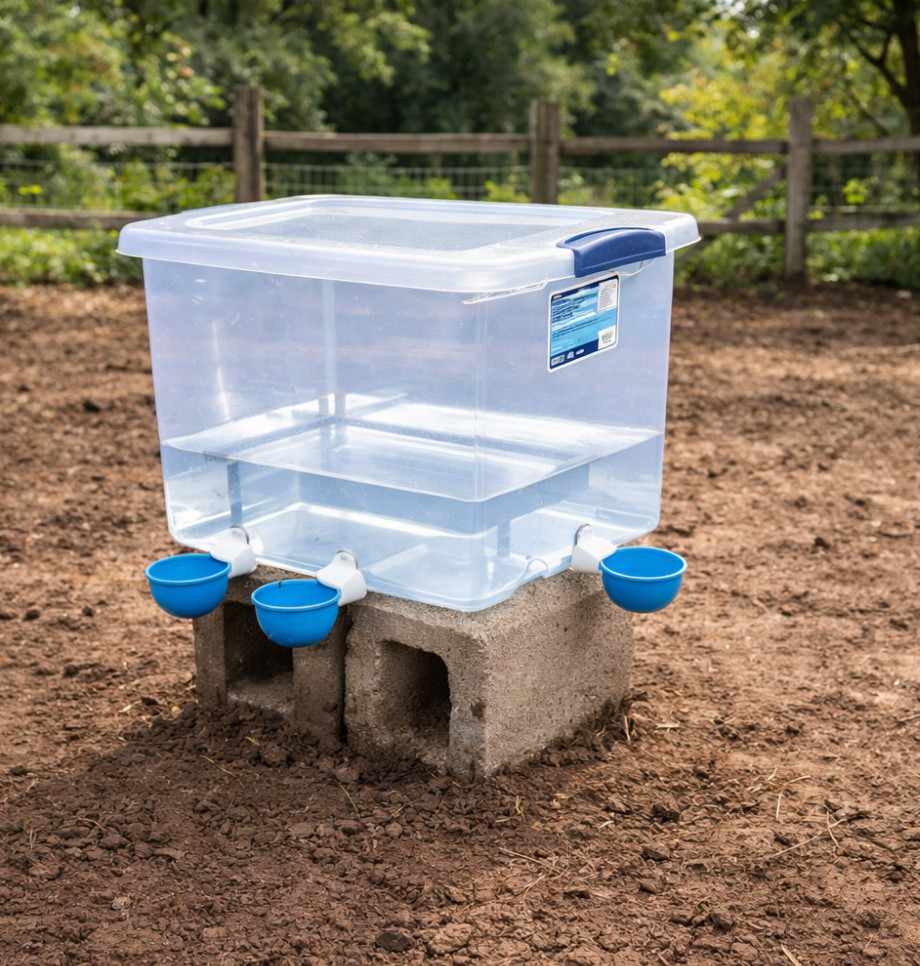
Take a large plastic bottle and fill it with clean water. Place a shallow tray or dish over the mouth of the bottle, then carefully flip it upside down.
Slightly loosen the cap so water slowly flows into the tray.
Keep this waterer on a flat surface inside the coop, raised a little to prevent dirt from getting in. It works well for small flocks and can provide enough water for a full day.
9 Tips While Building Homemade Chicken Feeders and Waterers
Building a chicken feeder takes a little planning, but small details can make it more comfortable and efficient for your flock. A thoughtful design helps chickens eat calmly and makes your daily chores smoother.
1. Provide Enough Feeding Space
Make sure there is enough space for multiple chickens to eat at the same time. If the feeder is too narrow, birds may push or peck each other.
A longer or multi-access design allows timid chickens to eat without stress.
2. Ensure Good Stability
The feeder should not tip over easily. Chickens are curious and may jump or lean on it.
A wide base or secure mounting keeps the feeder steady and prevents spills.
3. Smooth Out Sharp Edges
Check all edges and openings while building. Rough or sharp corners can injure your chickens.
Sand wooden parts and smooth plastic or metal edges to keep feeding safe.
4. Allow Easy Monitoring
Design the feeder so you can quickly see how much feed is left. Transparent sections or open-top designs make checking simple.
This helps you refill on time and avoid sudden feed shortages.
5. Keep It Well Ventilated
If you build a closed feeder, allow small air gaps. Proper airflow prevents feed from becoming stale.
Good ventilation keeps the feed fresher for longer.
6. Consider Weather Changes
Think about seasonal conditions when designing your feeder. In hot weather, avoid placing it in direct sunlight.
In colder months, make sure materials do not crack or weaken.
7. Make It Easy to Move
A lightweight or portable feeder can be helpful. You may want to shift it while cleaning the coop.
Handles or simple grips make moving it much easier.
8. Avoid Overcomplicated Designs
Keep the structure simple. Too many parts can break or make repairs difficult.
A basic, strong design usually lasts longer and works better.
9. Test Before Full Use
After building, test the feeder with a small amount of feed first. Watch how your chickens use it.
This helps you adjust the design if needed before fully relying on it.
Also Read: How to Deworm Chickens Naturally?
Conclusion
Building your own chicken feeder is not just about saving money — it’s about creating something that truly works for your flock.
When you plan carefully and keep your chickens’ comfort in mind, even a simple design can make a big difference.
In the end, a well-built feeder helps your birds eat calmly, reduces stress, and makes your daily routine easier.
With a little effort and creativity, you can build something practical, durable, and perfectly suited to your backyard flock.

Khaja Moinuddin, a computer science graduate, finds joy in gardening and homesteading. Join him on this blog as he shares his experiences in homesteading, gardening, and composting