Cyclamen plants produce delicate and vibrant blooms that resemble butterflies hovering on the heart-shaped leaves.
All the time and work you put into growing cyclamen totally pays off when you see those beautiful flowers bloom. But gardening isn’t all sunshine and blooms – it comes with its fair share of frustrations and disappointments that can really test your patience.
It’s really heart wrenching to see cyclamen plant drooping.
While there can be environmental or climatic conditions that results in drooping, most common causes include overwatering, which leads to root rot, underwatering, that leaves plant dehydrated or excess heat.
Apart from these reasons, your plant may enter its dormancy period, which is a natural part of the cyclamen’s growth cycle that typically occurs in late spring or summer when the leaves gradually yellow and die back.
What are Signs that Cyclamen Plant is Drooping?
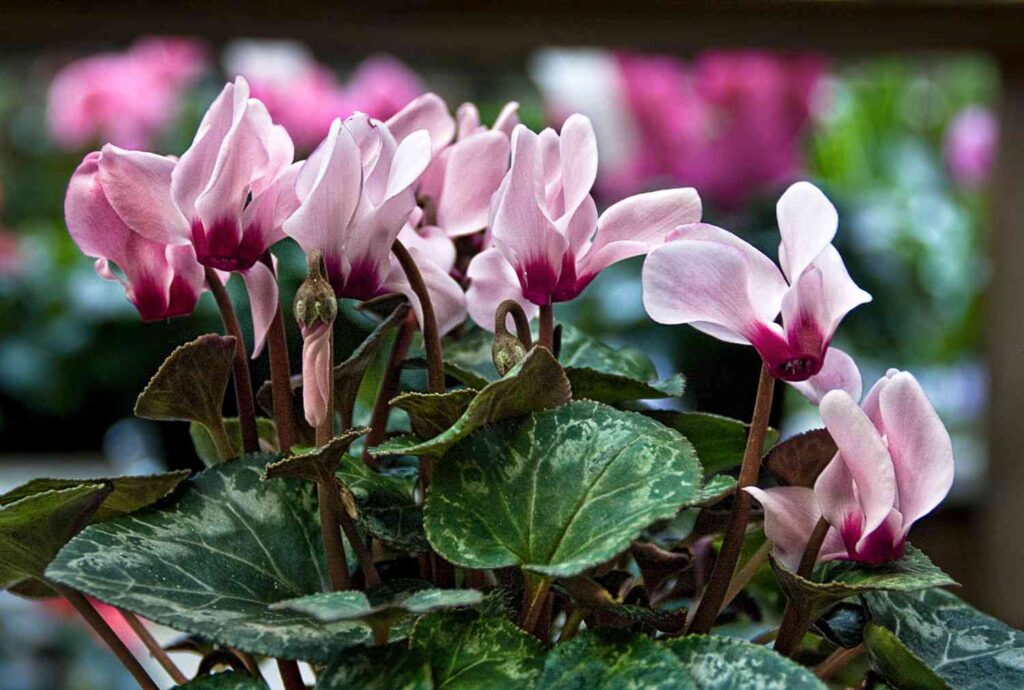
Recognizing the early warning signs of a drooping cyclamen can help you take quick action to save your plant.
These symptoms often appear gradually, so keeping a close eye on your plant’s overall health and appearance is key to catching problems before they become severe.
Wilting or Bent Flower Stems
The most obvious sign is when the delicate flower stems start to bend downward or appear limp, even when the soil moisture seems adequate.
This often indicates the plant is stressed from overwatering, temperature fluctuations, or insufficient light, causing the stems to lose their structural integrity.
Yellowing Leaves
Leaves begin turning yellow from the edges inward, particularly the older, outer leaves first.
While some yellowing is normal during dormancy, excessive or rapid yellowing during the growing season typically signals overwatering, poor drainage, or the onset of root rot that’s affecting the plant’s ability to transport nutrients.
Soft, Mushy Tuber
If you gently check the base of the plant, a healthy tuber should feel firm, but a drooping cyclamen often has a soft, squishy, or darkened tuber.
This is usually a sign of root rot caused by waterlogged soil, and unfortunately, once the tuber becomes mushy, the plant is often beyond saving.
Leaves Losing Their Upright Posture
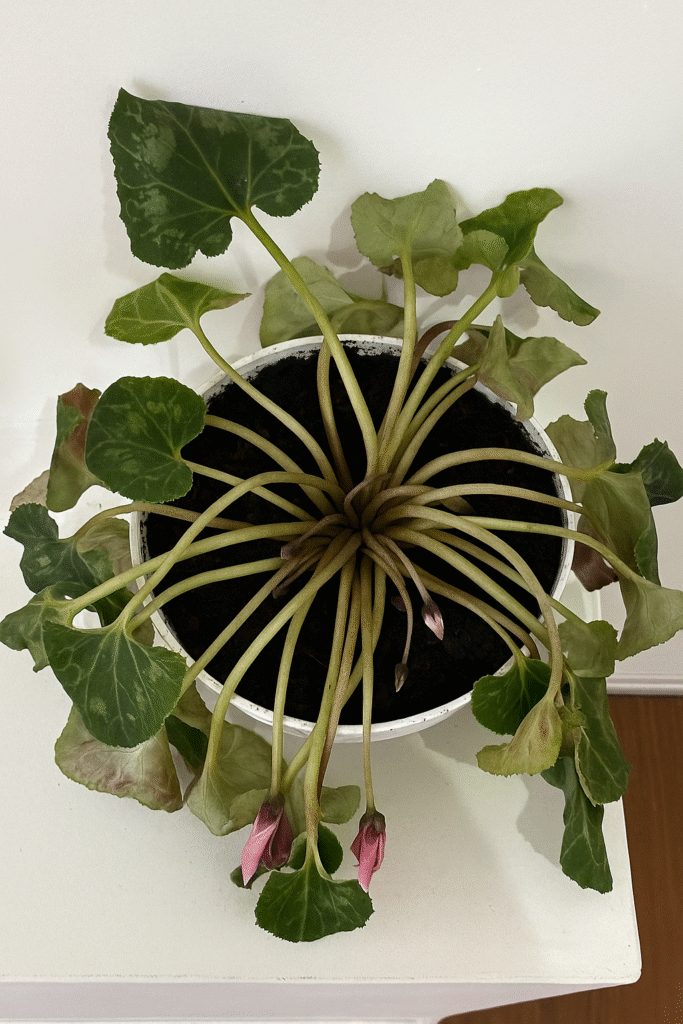
The characteristic heart-shaped leaves start to droop or lie flat against the soil surface instead of standing upright.
This loss of turgidity happens when the plant can’t properly absorb water due to damaged roots, extreme temperatures, or when it’s preparing to enter its natural dormancy period.
Why is My Cyclamen is Drooping?
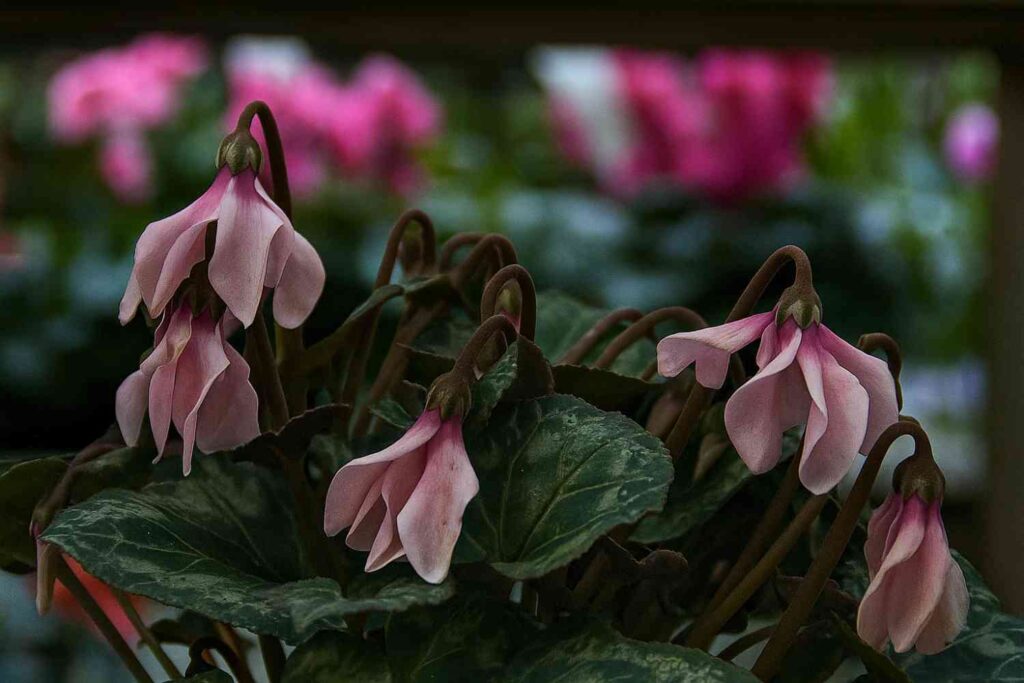
Cyclamen plants are admired for their striking, upswept petals and patterned foliage, but when they suddenly droop, it can be worrying.
Drooping is the plant’s way of signaling that something in its care environment is off-balance, though in some cases it’s simply part of its natural rhythm.
To bring a drooping cyclamen back to health, it’s important to identify the cause correctly. Below are the main reasons why your cyclamen may be drooping, explained in detail.
Also Read: 17 Perennials that Bloom in Fall and Winter
1. Overwatering
One of the most common reasons for drooping is overwatering. Cyclamens grow from tubers, which are very sensitive to sitting in soggy conditions. When the soil is constantly wet, the tuber begins to rot, and the roots lose their ability to transport water and nutrients to the leaves and flowers. The result is limp, collapsing foliage that looks very similar to drought stress—but with far more dangerous consequences.
In overwatered cyclamens, you may also notice leaves turning yellow, a foul or musty odor from the soil, and in advanced cases, blackened, mushy roots. If ignored, this can lead to complete tuber rot and death of the plant.
To prevent overwatering, always check the soil before watering. Let the top inch dry slightly, and avoid pouring water directly over the crown of the tuber. Bottom-watering—placing the pot in a shallow dish of water and letting the soil soak it up—helps keep the crown dry while hydrating the roots properly.
2. Underwatering
On the other hand, underwatering can also cause dramatic drooping. Cyclamens that don’t receive enough water lose leaf firmness because the cells can’t maintain internal water pressure. This causes the leaves to flop over, and flowers may shrivel or dry out prematurely.
Unlike many houseplants that can tolerate neglect, cyclamens thrive in consistently moist—but never waterlogged—soil. During the growing and flowering season, letting them dry out completely stresses the plant and weakens future blooms.
If your cyclamen looks limp and the soil feels bone-dry, a thorough watering is usually enough to perk it back up within hours. However, always water carefully, ensuring excess water drains out so the tuber doesn’t sit in moisture.
Check this: 19 Plants that Have Heart Shaped Leaves
3. Too Much Heat or Direct Sunlight
Cyclamens are native to cooler Mediterranean woodlands, where they grow in dappled light and mild temperatures. They perform best in a cool environment ranging between 50–65f.
Indoors, warm rooms, direct sunlight, or proximity to heating vents and radiators can quickly stress them.
When cyclamens are exposed to heat, their leaves may curl at the edges, flowers wilt or collapse, and the entire plant droops as though exhausted. This isn’t a sign of permanent damage but rather the plant’s natural reaction to unsuitable conditions.
To prevent heat stress, place cyclamens in a bright but indirect light location, such as near a north- or east-facing window. Cooler rooms extend the flowering season and keep the foliage perky much longer.
4. Poor Drainage
Even with careful watering, poor drainage can create conditions similar to overwatering. A cyclamen planted in heavy soil or a pot without drainage holes is prone to waterlogging. Stagnant water suffocates the roots and encourages fungal infections, both of which manifest as drooping, yellowing leaves.
The solution is to repot into a container with adequate drainage holes and a lightweight, well-aerated potting mix.
A blend of peat, perlite, and compost works well to provide moisture while still allowing excess water to escape. Keeping the soil slightly loose also ensures air can circulate around the tuber, reducing the risk of rot.
Also Read: How to Propagate Dahlias from Cuttings?
5. Dormancy Period
Not all drooping is a problem—sometimes it’s simply a natural part of the cyclamen’s life cycle. After a few months of flowering, the plant prepares for dormancy, during which the leaves turn yellow, droop, and eventually die back. The tuber then rests until the next growing season.
Dormancy can be mistaken for decline, but it’s actually vital for the plant’s survival and reblooming. During this phase, reduce watering to prevent tuber rot and place the pot in a cool, shaded area. Once new shoots appear in autumn, resume regular watering and care.
Understanding dormancy prevents unnecessary worry and ensures your cyclamen is given the rest it needs before returning with fresh blooms.
How to Prevent Cyclamen Drooping?
- Water Moderately – Keep the soil evenly moist during the growing season, but never waterlog the pot.
- Use Bottom Watering – Place the pot in a shallow dish of water, letting the roots soak up moisture while keeping the crown dry.
- Check Soil Before Watering – Allow the top inch of soil to dry slightly before adding more water.
- Ensure Proper Drainage – Always grow cyclamens in pots with drainage holes and use a light, airy mix to avoid soggy roots.
- Maintain Cool Temperatures – Keep the plant in a room between 10–18°C (50–65°F) and away from heaters or hot drafts.
- Provide Indirect Light – Place cyclamens in bright but filtered light to prevent leaf scorch and weak growth.
- Avoid Direct Heat & Sun – Keep them out of strong afternoon sunlight and away from radiators or appliances.
- Fertilize Sparingly – Feed with a balanced, diluted fertilizer only during active growth; too much fertilizer can stress the plant.
- Respect Dormancy – Let the plant naturally die back after flowering. Reduce watering, allow the tuber to rest, and resume care when new shoots appear.
Also Read: How to Propagate Zinnias?
Conclusion
Cyclamen drooping isn’t always a cause for alarm—it’s often the plant’s way of signaling stress or preparing for dormancy.
By watering carefully, ensuring proper drainage, and keeping the plant in cool, bright conditions, you can prevent most problems. With a little attention to its natural cycle, your cyclamen will stay healthy and return each year with a fresh display of blooms.

Khaja Moinuddin, a computer science graduate, finds joy in gardening and homesteading. Join him on this blog as he shares his experiences in homesteading, gardening, and composting