No matter whether you’re just building your chicken coop or already have one, there are a few important elements your chickens will definitely appreciate.
You’ll want to plan the height and spacing of nesting boxes in advance so your hens can use them comfortably without any trouble.
Also, hang feeders and waterers where they’re easy to reach but not right in the middle of the play area — it keeps things cleaner and gives your flock more room to move around.
Don’t forget sturdy roosting bars so your chickens have a cozy spot to sleep off the ground, along with proper ventilation to keep the coop fresh and dry. Good airflow really helps prevent moisture and health issues.
Lastly, use easy-to-clean flooring with absorbent bedding like straw or wood shavings, and make sure there’s enough space per bird. When chickens aren’t overcrowded, they stay calmer, healthier, and much happier overall.
Why Does Good Chicken Coop Interiors Matters?
If you want to build a comfortable chicken coop for your flocks, paying attention to the interior is just as important as the outside.
When the coop has enough space, fresh air, and a proper setup, chickens feel safe and relaxed. This helps reduce stress and prevents pecking or fighting.
A well-planned interior also makes your daily work much easier. It keeps the coop cleaner, controls bad smells, and helps hens lay clean eggs.
In simple words, a good chicken interior keeps your flock healthy, happy, and more productive.
16 Chicken Coop Interior Ideas
Most people focus more on how the chicken coop looks from the outside, but once your flock moves in, you quickly realize the interior setup is just as important.
Below are 16 interior ideas designed with your chickens’ comfort in mind.
Each one helps create a safer, cleaner, and more practical space for your flock to live and thrive.
1. Properly Placed Roosting Bars
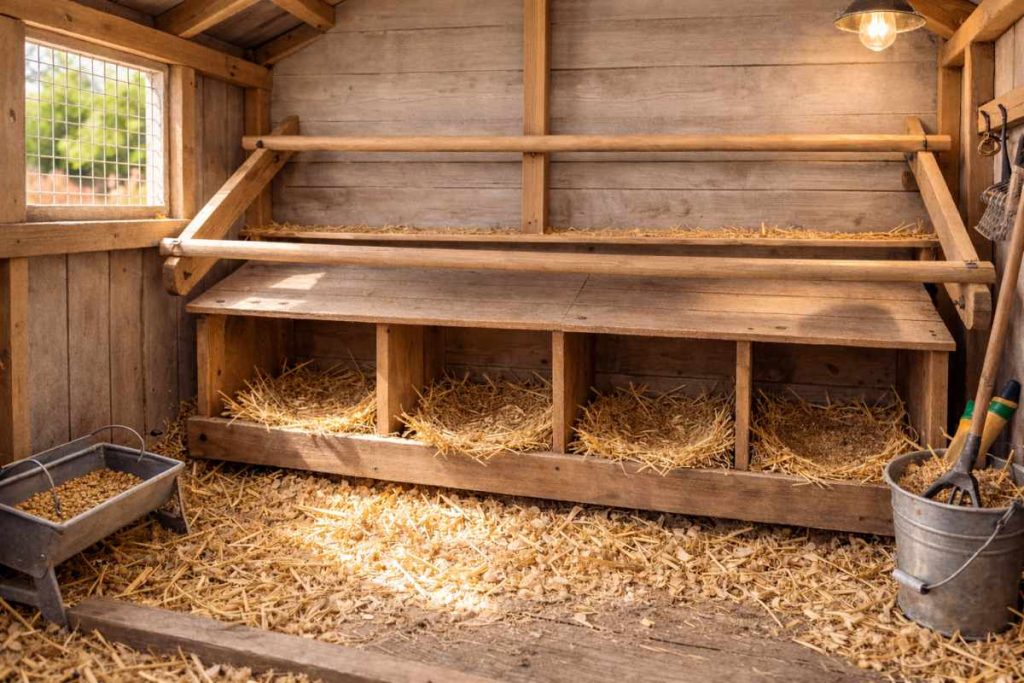
Roosting bars give your chickens a safe and comfortable place to sleep at night. You should place them higher than the nesting boxes, because chickens naturally like to rest off the ground.
Make sure you choose strong, smooth bars that are wide enough for their feet to sit comfortably. Leave enough space between each bar so your birds don’t feel crowded.
2. Comfortable Nesting Boxes
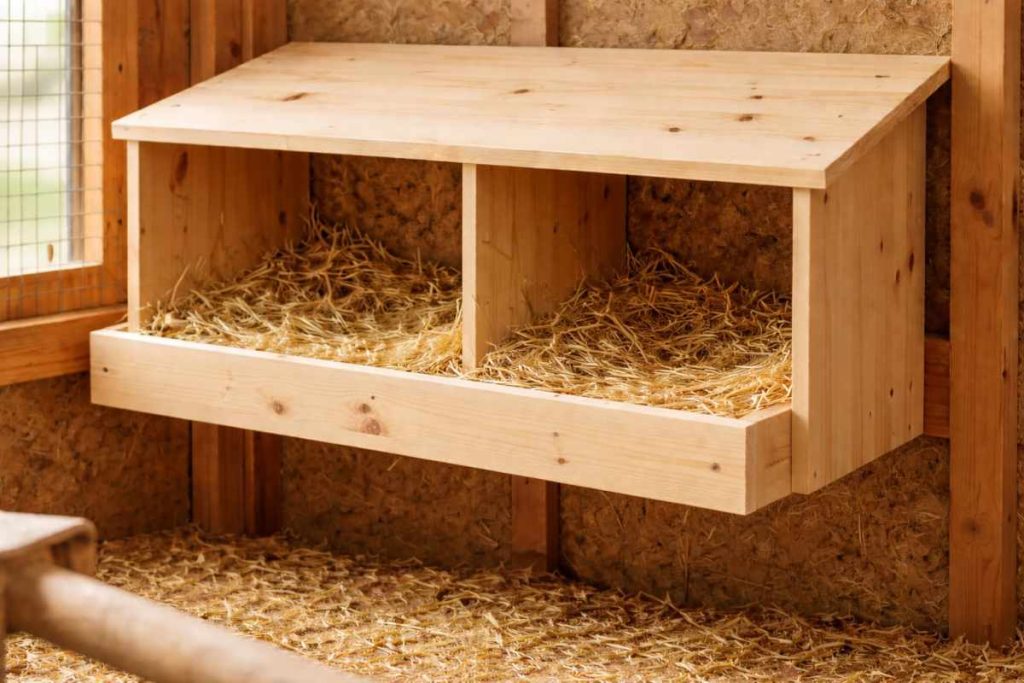
You should place nesting boxes in a quiet and slightly darker corner of the coop. This helps your hens feel safe and relaxed when they lay eggs.
Add soft bedding like straw or wood shavings to keep eggs clean and prevent cracks. You can plan one nesting box for every 3–4 hens.
Also Read: 27 Low Budget DIY Chicken Coop Ideas
3. Good Ventilation

Good ventilation keeps fresh air moving inside the coop. You can add small windows or vents near the top of the walls to let air flow without creating strong drafts.
Fresh air helps remove moisture, dust, and bad smells from the coop. This lowers the risk of breathing problems and keeps your chickens healthier.
If you are a beginner, remember that ventilation should not make the coop cold or windy. The goal is steady airflow, not direct wind blowing on your birds.
4. Easy-to-Clean Flooring
The coop floor should be simple to clean and strong enough to last. You can use wood, concrete, or packed dirt, depending on what works best for you.
Add bedding like straw, sand, or wood shavings on top of the floor. This absorbs moisture and makes cleaning easier.
As a beginner, choose a setup that saves you time. The easier it is to clean, the more likely you are to keep the coop fresh and healthy for your flock.
5. Hanging Feeders
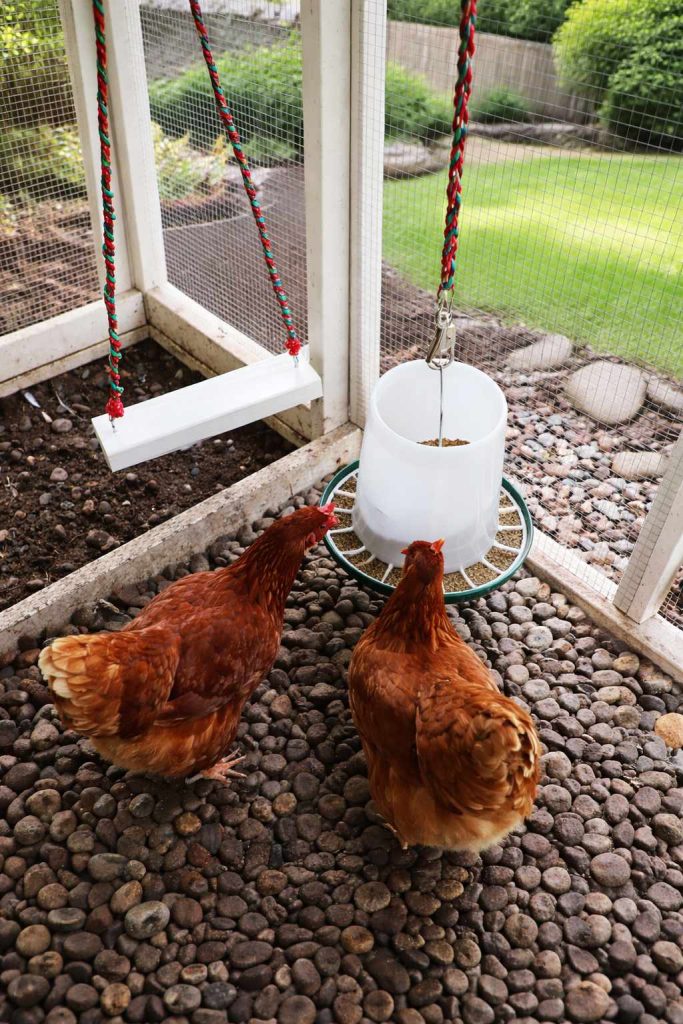
Hanging feeders are a smart way to keep food clean and reduce waste. You should hang them slightly above the ground, around your chickens’ back height, so they can eat comfortably.
When feeders are off the floor, less dirt and bedding get mixed into the feed. This keeps the food fresh and saves you money in the long run.
If you’re just starting out, remember not to hang them too high or too low. Adjust the height as your chickens grow so they can easily reach their food.
Check this: How to Build a Door for Chicken Coop?
6. Raised Waterers
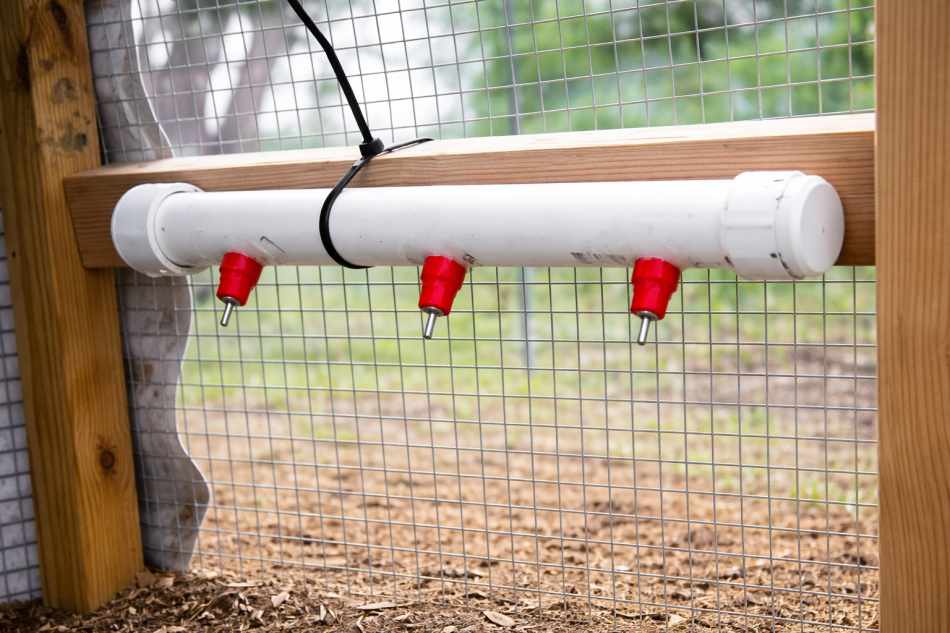
Clean water is very important for healthy chickens. Using raised or hanging waterers helps prevent dirt, bedding, and droppings from getting into the water.
Place the waterer where your chickens can easily access it but not in the middle of their busy walking area. This reduces spills and keeps the floor drier.
As a beginner, check the water daily and clean the container often. Fresh water every day keeps your flock active and supports better egg production.
7. Dropping Board Under Roost
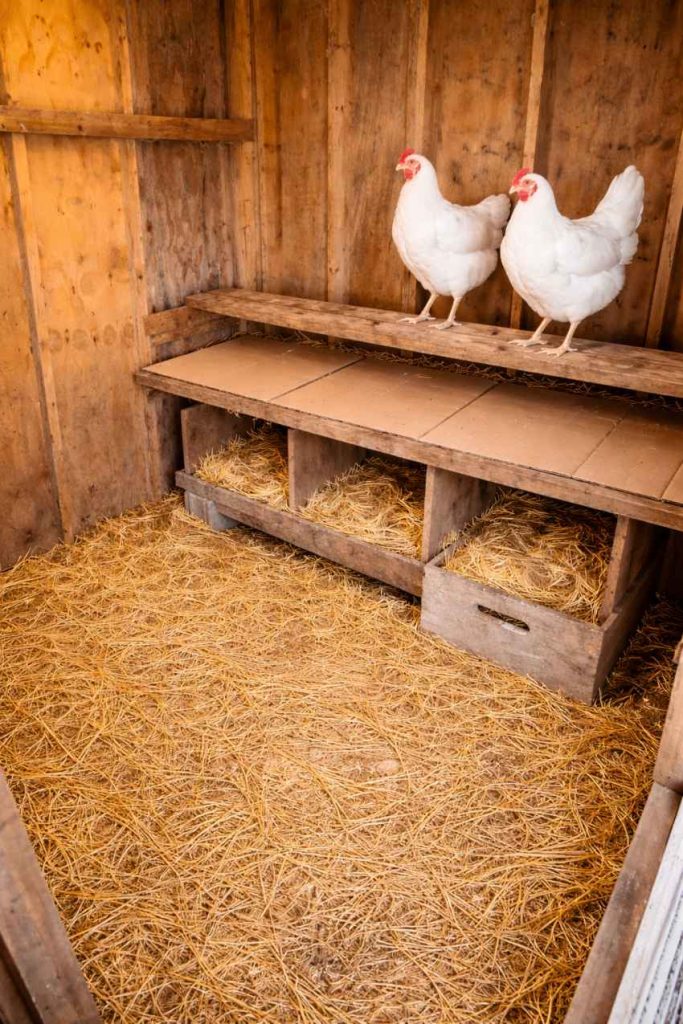
You can place a dropping board under the roosting bars to catch manure at night. Since chickens poop while they sleep, this simple board makes cleaning much easier for you.
In the morning, you can quickly scrape off the waste instead of cleaning the whole coop floor. It saves time and keeps the bedding cleaner for longer.
If you’re new to chicken keeping, this small addition can make a big difference in daily maintenance. It helps control smell and keeps the coop more hygienic.
8. Dust Bath Area Inside the Coop

Chickens love to take dust baths to clean their feathers and remove mites. You can create a small dust bath area inside the coop using a shallow box or tray filled with dry soil or sand.
This gives your flock a natural way to stay clean, especially during rainy or cold weather when they can’t go outside much.
As a beginner, make sure the dust bath stays dry. If it gets wet, replace the material so your chickens can continue enjoying a healthy cleaning routine.
9. Storage Shelf for Supplies

You can add a small shelf inside the coop to keep basic supplies like extra bedding, gloves, or egg baskets. This helps you stay organized and saves time during daily chores.
When everything is in one place, you don’t have to run back and forth looking for tools. It makes feeding and cleaning much easier.
If you’re new to raising chickens, keeping supplies nearby helps you build a simple routine. A little organization goes a long way in managing your coop smoothly.
Also Read: 19 DIY Movable Chicken Coop Plans
10. Safe Lighting Setup
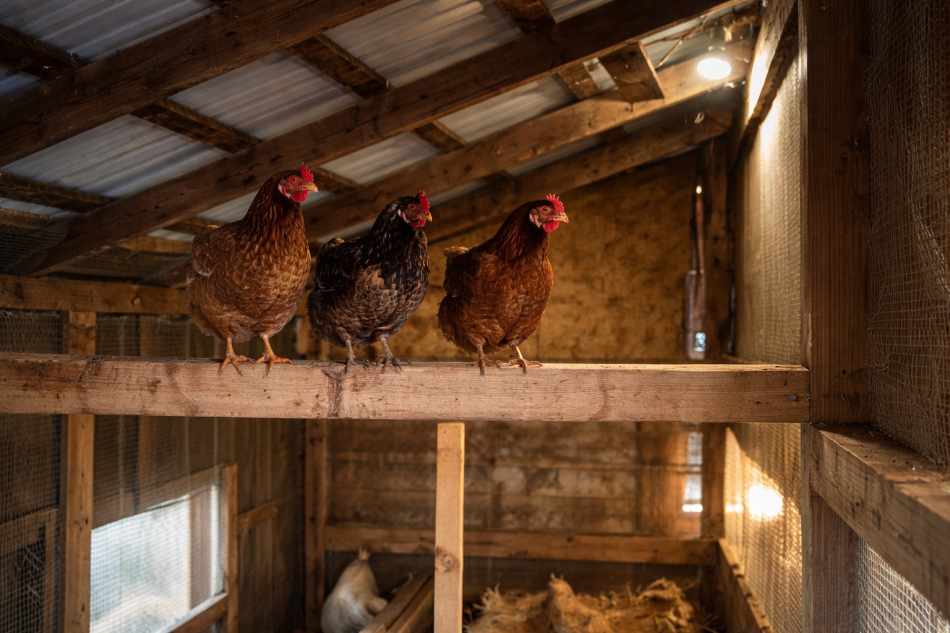
Adding a small light inside the coop can help during early mornings or evenings. It allows you to check on your flock easily and collect eggs without trouble.
In colder months, proper lighting can also support consistent egg laying. Just make sure the light is not too bright, as chickens prefer a calm environment.
As a beginner, keep wires safely secured and out of reach. Safety is very important when adding electricity inside a wooden coop.
11. Wide Pop Door for Easy Movement
You should install a pop door that is wide and tall enough for your chickens to move in and out comfortably. If the door is too small, bigger hens may struggle or avoid using it.
A smooth entry and exit reduce crowding, especially in the morning when all birds rush outside together. It keeps things calm and prevents pushing.
If you’re a beginner, make sure the door is easy for you to open and close too. A simple sliding or hinged door works well and saves effort.
12. Predator-Proof Latches and Mesh
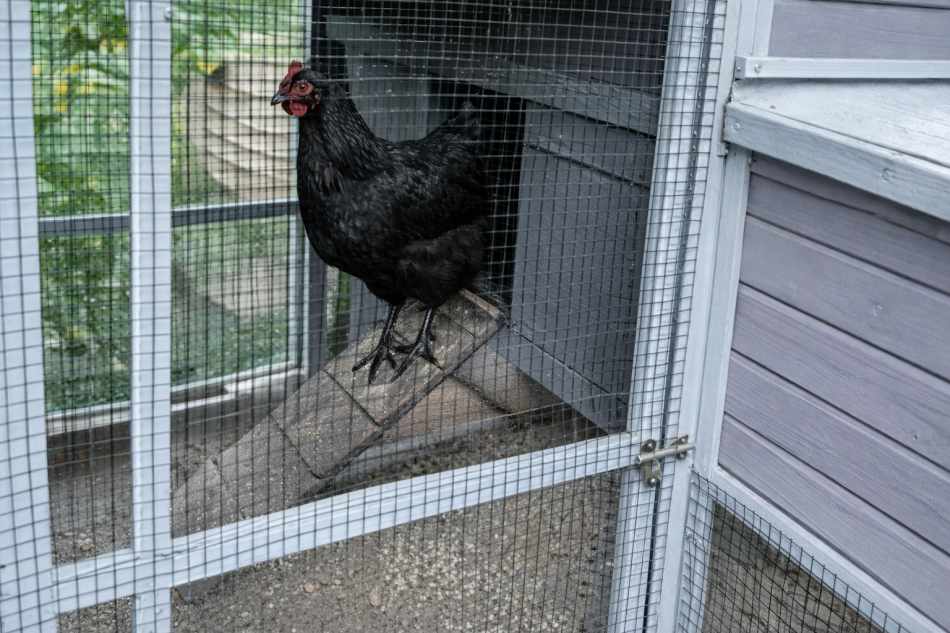
Keeping your chickens safe should always be a top priority. You should use strong latches on doors and cover windows or vents with sturdy wire mesh.
This protects your flock from animals like rats, snakes, or stray dogs that may try to enter the coop. Safety at night is especially important.
As a beginner, double-check all locks before bedtime. A secure coop gives you peace of mind and keeps your chickens safe and stress-free.
13. Separate Broody Hen Corner

Sometimes a hen may want to sit on her eggs for many days. You can create a small, quiet corner inside the coop just for a broody hen.
This gives her privacy and keeps other hens from disturbing her. It also prevents fights over nesting boxes.
If you’re new to chicken keeping, this simple setup helps you manage broody behavior easily. A small divider or extra box can work perfectly.
14. Removable Nesting Box Liner
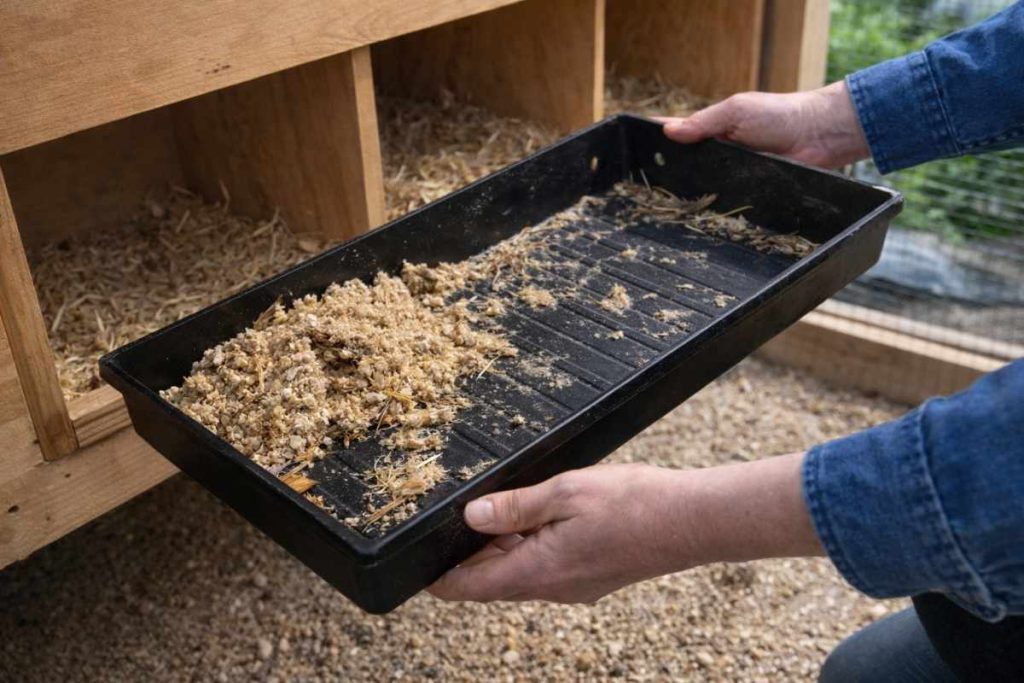
You can add removable liners or trays inside the nesting boxes. This makes cleaning much faster and keeps the area fresh.
When the liner gets dirty, you can simply take it out, clean it, and place it back. It saves time and effort.
As a beginner, look for simple plastic or wooden trays that fit well. Easy cleaning means healthier hens and cleaner eggs for you.
Also Read: How to Clean and Disinfect the Chicken Coop?
15. Insulated Walls for Better Temperature
You can add simple insulation to the coop walls to help control temperature. This keeps the inside warmer in winter and cooler in summer.
Good insulation makes your chickens more comfortable during extreme weather. It also helps reduce stress caused by sudden temperature changes.
If you’re a beginner, you don’t need anything fancy. Even basic foam boards or double wooden panels can make a big difference.
16. Enough Space Per Chicken

One of the most important interior ideas is giving each chicken enough space. Overcrowding can lead to stress, pecking, and health problems.
When chickens have enough room to move, eat, and rest, they stay calmer and healthier. It also keeps the coop cleaner for longer.
As a beginner, remember this simple rule: more space is always better. A little extra room today can prevent many problems later.
Conclusion
Chicken coop interiors aren’t just about attractive designs or making the space look nice. It’s more about comfort and adding the essential things your flock truly needs.
When you focus on proper space, ventilation, safety, and easy cleaning, you create a healthy home for your chickens. A well-planned interior keeps your flock happy, stress-free, and more productive in the long run.

Khaja Moinuddin, a computer science graduate, finds joy in gardening and homesteading. Join him on this blog as he shares his experiences in homesteading, gardening, and composting