Tomato plants need to be supported with a stake or cage to grow healthy and produce a quality yield. Building a tomato trellis with bamboo is one of the smartest ways to minimize disease, manage garden space, and reduce effort while harvesting.
Though you can use metal or wooden stakes, bamboo trellises are often a better option for home gardeners. They’re strong and lightweight, so you can easily build up some solid supports for your tomato vines without breaking a sweat.
Its natural look easily blends with the garden and doesn’t feel out of place. With proper tying and placement, a bamboo trellis can easily support heavy tomato plants throughout the growing season.
Materials Needed for a DIY Bamboo Tomato Trellis
Before you start building your bamboo tomato trellis, gather a few simple materials. Most of these items are easy to find and many gardeners may already have them at home. Having everything ready will make the building process quicker and smoother.
- Bamboo stakes or poles
- Garden twine, jute rope, or strong string
- Scissors or pruning shears
- Measuring tape (optional)
- Small zip ties or garden ties (optional)
How to Build a Bamboo Tomato Trellis (Step-by-Step)
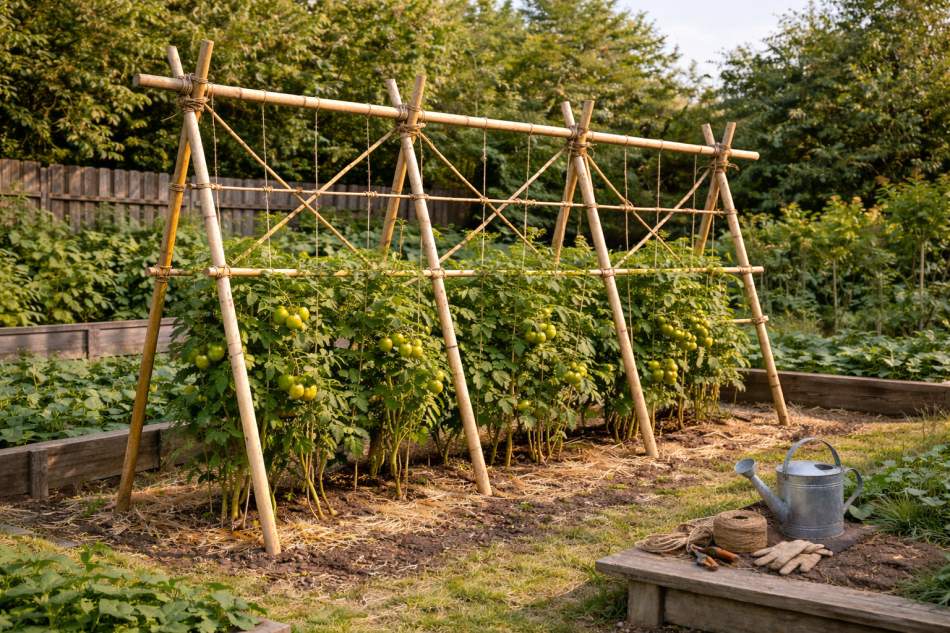
A bamboo tomato trellis is easy to build and doesn’t require special tools.
With a few bamboo poles and some garden twine, you can quickly create a sturdy structure that helps tomato plants grow upright and stay healthy. Follow these simple steps to build your own trellis.
Step 1: Choose the Right Location
Start by selecting the spot where your tomato plants are growing. The soil should be soft enough to push bamboo stakes into the ground.
It’s best to install the trellis soon after planting tomatoes, while the plants are still small. This prevents root damage later and allows the plants to grow naturally around the support.
Step 2: Select Strong Bamboo Poles
Choose bamboo stakes that are straight and sturdy. Poles that are about 5 to 7 feet tall work well for most tomato varieties. Thicker bamboo poles provide better support for mature plants that will become heavy with fruit.
If the bamboo pieces are very long, you can trim them to the desired size using pruning shears or a small saw.
Step 3: Insert the Bamboo Stakes into the Soil
Place 3–4 bamboo stakes around each tomato plant. Push each pole about 6–10 inches deep into the soil so it stays stable and upright.
Space the stakes evenly around the plant, leaving enough room for the tomato to grow in the center. This arrangement forms the base of your trellis structure.
Step 4: Create a Teepee or Pyramid Shape
Bring the tops of the bamboo stakes together above the plant to form a teepee or pyramid shape. Hold the poles together and wrap garden twine or strong string around the top several times.
Tie a tight knot so the poles stay firmly connected. This structure provides strong vertical support for climbing tomato vines.
Step 5: Add Extra Support Across the Sides
For additional strength, you can tie one or two horizontal bamboo pieces between the vertical stakes.
These cross supports help stabilize the trellis and give the tomato vines more places to lean and grow. This step is especially useful if you are growing large or indeterminate tomato varieties that grow very tall.
Step 6: Guide the Tomato Plant as It Grows
As the tomato plant starts growing taller, gently guide the stems toward the bamboo trellis.
Use soft garden ties, cloth strips, or twine to loosely attach the stems to the stakes. Avoid tying too tightly, as the stems need space to expand as they grow.
Step 7: Check and Adjust Regularly
Tomato plants grow quickly, especially during warm weather. Check your trellis every week and add new ties if needed.
Make sure the bamboo poles remain stable in the soil and tighten the twine if it becomes loose. This simple maintenance helps the trellis support the plant throughout the growing season.
With a sturdy bamboo trellis in place, tomato plants can grow upright with better sunlight and airflow. This keeps the leaves dry, reduces the risk of disease, and makes it much easier to spot and harvest ripe tomatoes when they are ready.
Also Read: 18 DIY Cucumber Trellis Ideas for Small Spaces
Tips for Training Tomato Plants on a Bamboo Trellis
Once your bamboo trellis is in place, it’s important to guide the tomato plants as they grow. Training the plants properly helps them stay upright, improves airflow, and makes harvesting easier.
Tie the Tomato Vines Gently
As the plant grows taller, gently tie the main stem to the bamboo stake using soft garden ties, twine, or cloth strips. Make a loose loop so the stem has room to grow and doesn’t get squeezed. Tying the plant every 8–12 inches helps keep it stable and supported.
Add New Ties as the Plant Grows
Tomato plants grow quickly, especially during warm weather. Check the plant every few days and add new ties when the stem gets taller. This keeps the plant growing upward along the trellis instead of leaning or falling over.
Prune Extra Suckers
Suckers are small shoots that grow between the main stem and branches. If too many suckers grow, the plant can become bushy and harder to support. Pinch off small suckers with your fingers to help the plant focus its energy on growing stronger stems and producing fruit.
Keep Plants from Falling Over
As tomato plants get bigger, they can become heavy. Make sure the bamboo stakes stay firmly in the ground and the ties are secure. If the plant starts leaning, gently guide it back toward the trellis and add another tie for extra support.
Support Heavy Fruit Branches
When tomatoes start forming, some branches may bend from the weight. If this happens, loosely tie those branches to the bamboo stakes as well. This prevents branches from breaking and helps the fruit stay clean and off the ground.
With regular tying and a little pruning, your tomato plants will grow neatly on the bamboo trellis and produce healthy, easy-to-harvest tomatoes throughout the season.
Common Mistakes to Avoid
- Using Weak Bamboo Stakes: Thin bamboo poles can bend or break when the plants become heavy with fruit. Always choose strong, sturdy bamboo stakes for better support.
- Installing the Trellis Too Late: Setting up the trellis after the plant grows large can disturb the roots. It’s best to install the support when the tomato plants are still small.
- Tying the Plant Too Tightly: Ties that are too tight can damage the tomato stem as it grows. Always leave a little space so the stem can expand naturally.
- Not Checking the Trellis Regularly: Tomato plants grow quickly during the season. Check the ties and stakes often to make sure the plant stays well supported.
Check this: 22 DIY Cheap Fence Ideas for Garden
Bamboo Tomato Trellis Plans
Teepee Bamboo Trellis
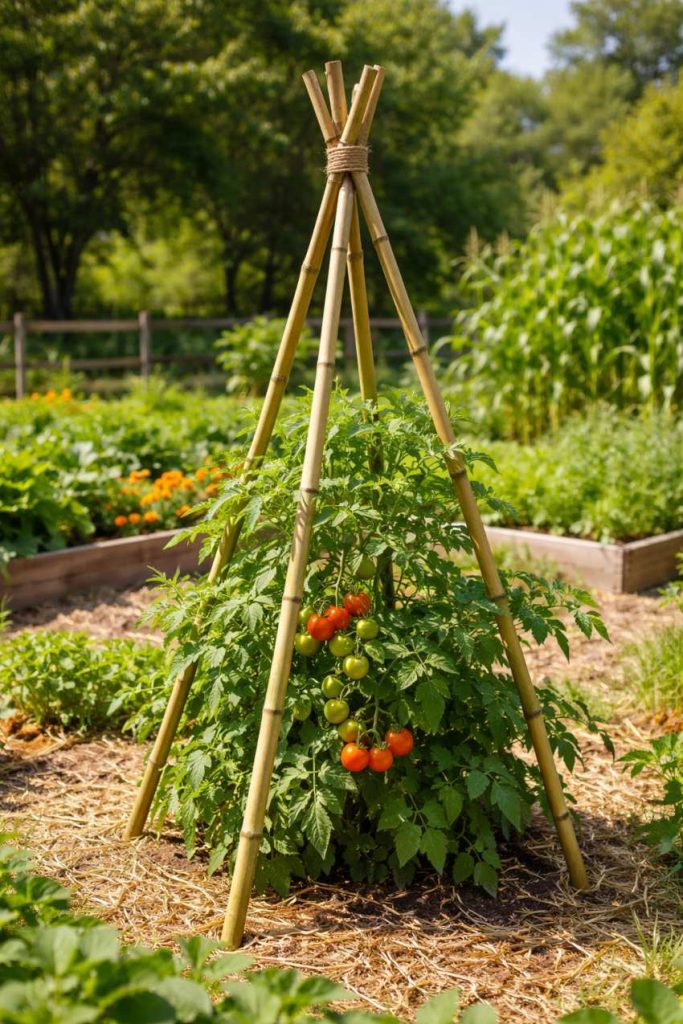
A teepee trellis is one of the easiest designs to make. Place 3–4 bamboo stakes around the tomato plant and tie the tops together with strong twine. This creates a cone-shaped support that helps the plant grow upright and keeps the vines off the ground.
A-Frame Bamboo Trellis
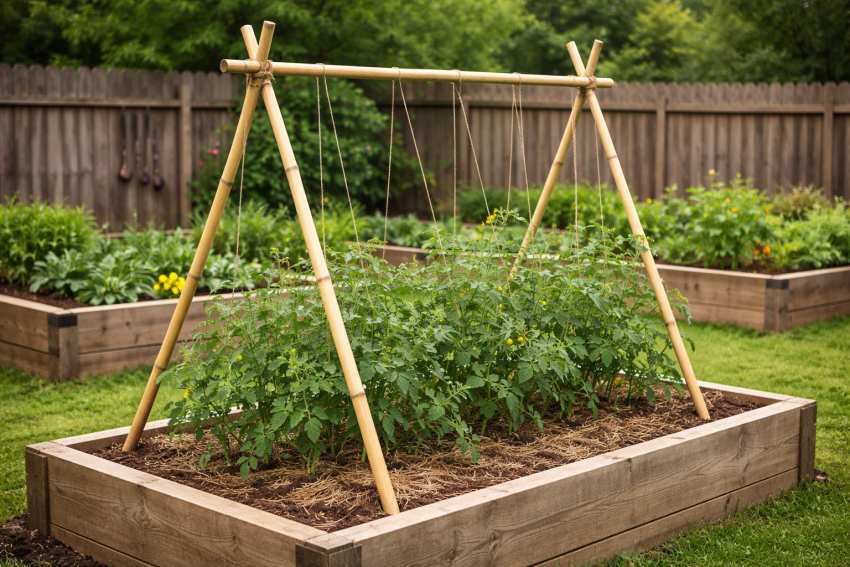
An A-frame trellis is made by leaning two sets of bamboo poles together to form a triangle shape. Tie a bamboo pole across the top to hold the frame in place. This design is strong and works well for supporting several tomato plants in a garden row.
Square Bamboo Cage
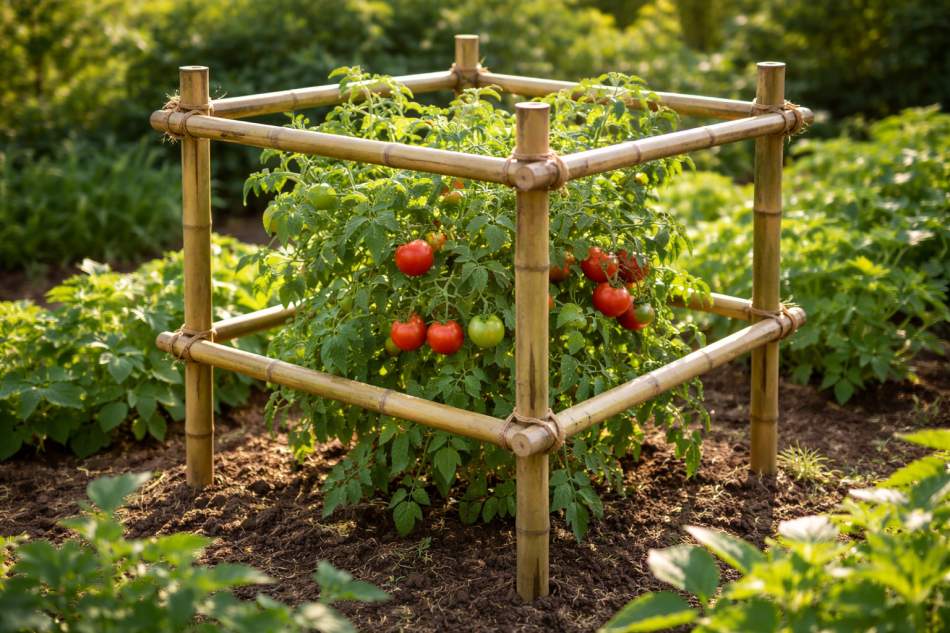
A square bamboo cage is built by placing four bamboo stakes around the tomato plant. Then tie horizontal bamboo pieces between the stakes to create a box-like support. This gives the plant support on all sides as it grows and produces fruit.
Single Stake Bamboo Trellis
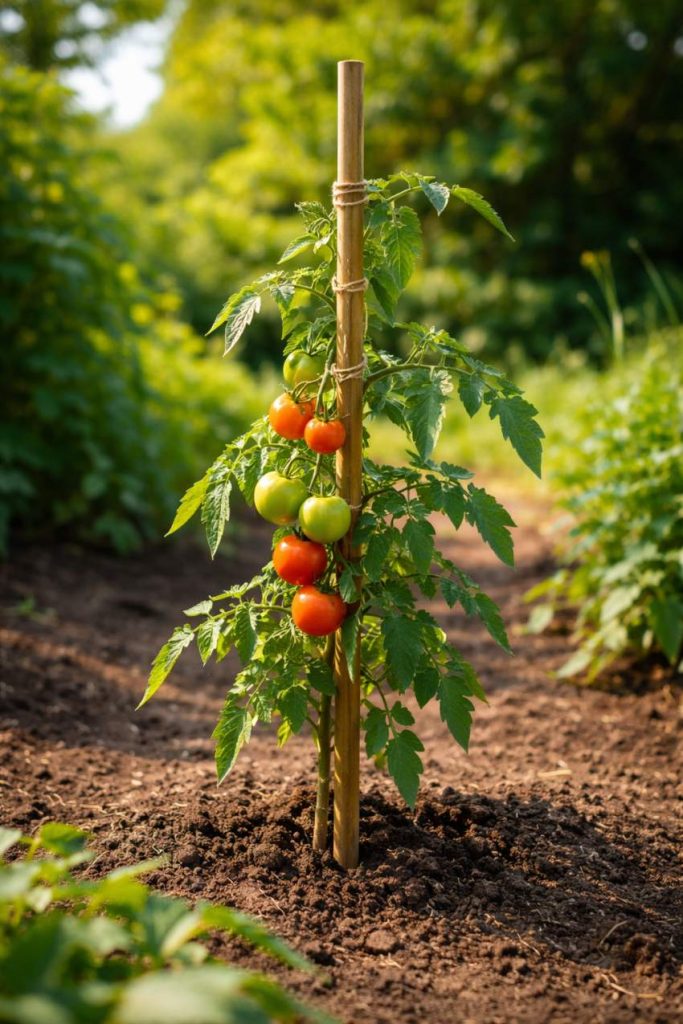
This is the simplest bamboo trellis you can make. Push one tall bamboo stake into the soil next to the tomato plant. As the plant grows, gently tie the stem to the stake to keep it upright and supported.
Also Read: 48 Vegetables You Can Plant in March
Conclusion
A DIY bamboo tomato trellis is a simple and effective way to support your tomato plants. It helps keep plants upright, improves airflow, and makes harvesting much easier. Bamboo is affordable, easy to work with, and blends naturally into the garden.
With a few bamboo stakes and some basic tying, you can build a strong trellis that supports your tomato plants throughout the growing season. It’s a practical solution that helps you grow healthier plants and enjoy a better tomato harvest.

Khaja Moinuddin, a computer science graduate, finds joy in gardening and homesteading. Join him on this blog as he shares his experiences in homesteading, gardening, and composting