Building your own trellis for pea plants isn’t just a garden trend anymore—it’s a practical necessity. Supporting your pea plants encourages them to grow upward, which improves air circulation, reduces pests, and makes harvesting much easier.
Gardeners with a small balcony or container garden can try simple DIY pea trellis ideas to tackle common challenges with climbing plants. Unlike many other vegetables, pea plants produce delicate tendrils that naturally grasp onto anything that supports upward growth.
By building a trellis, you gain better control over how your pea plants grow, allowing you to guide the climbers along the desired path.
Before exploring different pea trellis ideas, it’s helpful to understand a bit more about the characteristics of pea plants.
Pea Plant Growing Characteristics
Pea plants grow quickly, often sprouting within a week and establishing vigorous vines soon after. Their roots are relatively shallow, but they have the added benefit of fixing nitrogen in the soil, which helps improve overall soil fertility.
One of the most distinctive features of pea plants is their climbing habit.
Instead of relying on thick stems, they produce fine, curling tendrils that naturally latch onto nearby supports like trellises, strings, or netting.
Depending on the variety, pea vines can grow anywhere from 2 to 6 feet tall, making vertical support essential for healthy growth and better yield.
As they grow, pea plants develop a light, airy structure with delicate foliage and small white or purple flowers that eventually turn into pods.
Good airflow around the plant helps prevent common issues like mildew, while vertical growth keeps the pods clean and easy to harvest.
With proper support and spacing, pea plants remain manageable, productive, and well-suited even for small garden spaces or containers.
Also Read: 17 Best Vegetables that Grow on Trellis
Key Factors to Consider Before Building a Pea Trellis
1. Height and Strength of Support
Pea plants grow quickly and become dense as they mature. Trellis height should match the variety—dwarf types need less support, while climbers can reach 5–6 feet.
A short or weak trellis leads to tangling, so use sturdy materials like bamboo, mesh, or wood for reliable support.
2. Proper Spacing and Airflow
Ensure enough space between plants and rows when building a trellis. Crowding restricts airflow and increases the risk of fungal issues like powdery mildew.
A well-spaced setup improves sunlight exposure and plant health. It also makes watering, pruning, and harvesting easier while keeping vines organized and productive.
3. Material and Grip for Tendrils
Pea plants climb using delicate tendrils, so trellis material matters. They need narrow, easy-to-grip surfaces like twine, netting, wire mesh, or thin branches.
Smooth or wide supports don’t provide enough grip. Choosing the right material helps vines attach quickly, grow upward naturally, and reduces the need for constant tying or training.
4. Placement and Sunlight Exposure
Trellis placement directly affects pea growth. Choose a sunny spot with 5–7 hours of light and protection from strong winds.
Install the trellis at planting time to avoid root disturbance and guide seedlings early. A well-placed trellis supports healthy growth and keeps your garden neat and manageable.
Best Materials for a DIY Pea Trellis
Choosing the right material makes a big difference in how well your pea trellis performs.
Since pea plants climb using delicate tendrils, the material should be lightweight, easy to grip, and strong enough to hold growing vines.
Bamboo stakes are a popular choice—they’re affordable, natural-looking, and sturdy enough for most garden setups.
Garden netting or nylon mesh is another excellent option, especially for balcony or container gardens. It provides plenty of thin surfaces for tendrils to latch onto, helping plants climb quickly without much training.
You can easily tie the netting between stakes or along a wall to create a simple vertical support system.
For a more durable setup, consider using wire mesh or metal grids. These materials last longer and can support heavier growth, making them ideal for larger gardens.
You can also repurpose items like old wooden frames, branches, or even fencing to create an effective and eco-friendly trellis without spending much.
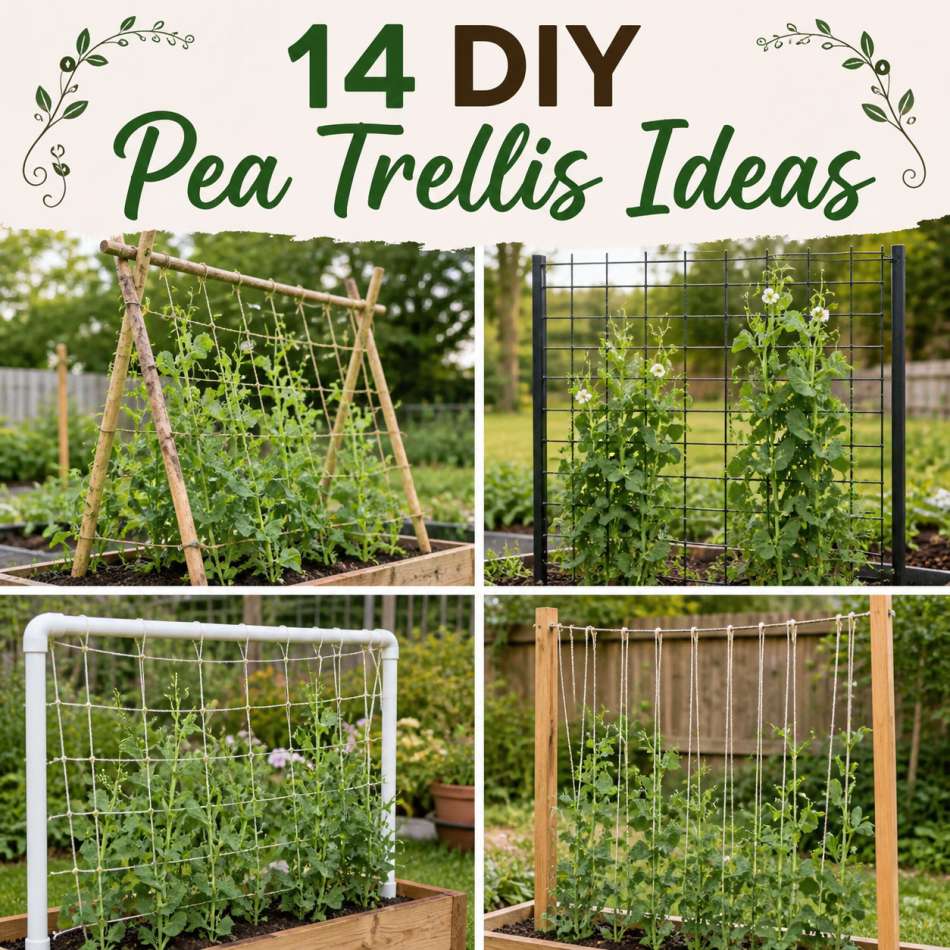
14 DIY Pea Trellis Ideas
A well-designed trellis not only supports healthy pea growth but also keeps your garden neat and easy to manage.
From simple setups to creative structures, there are plenty of DIY pea trellis ideas to suit every space and style.
1. Bamboo Teepee Trellis
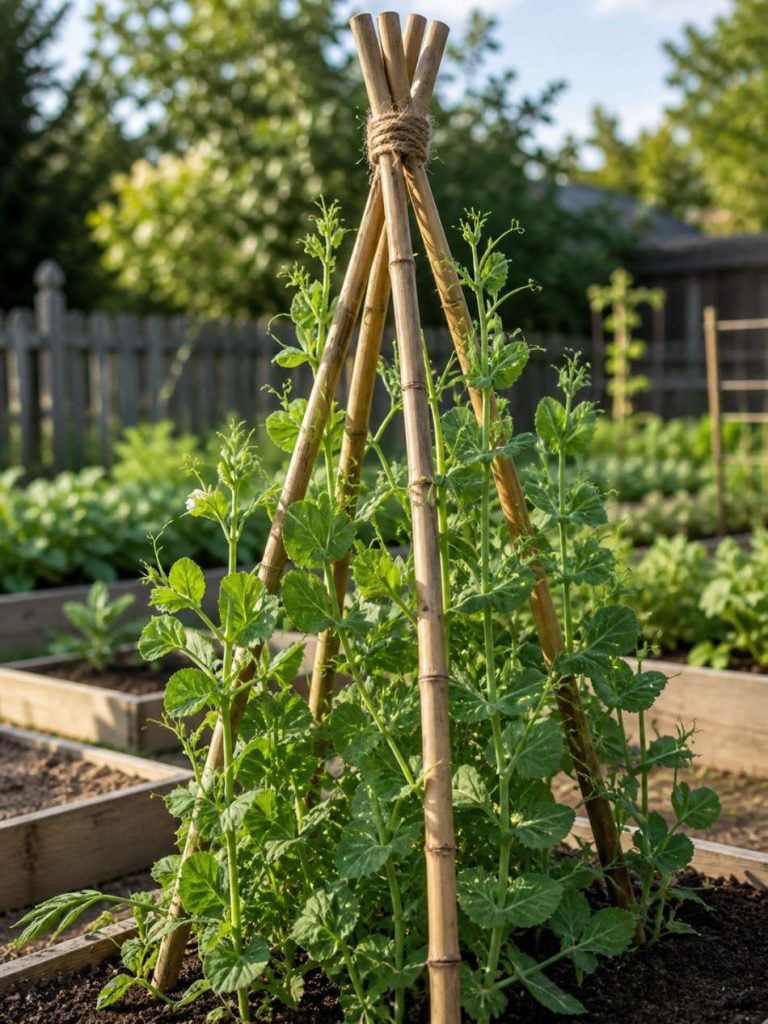
A bamboo teepee trellis is one of the simplest and most effective ways to support pea plants. Just tie a few bamboo stakes together at the top and spread them out at the base to form a cone-like structure.
This design provides strong vertical support while giving tendrils plenty of space to climb. It’s perfect for small gardens or containers and adds a neat, natural look to your setup.
Check this: 9 DIY Bamboo Trellis Ideas
2. String Pea Trellis
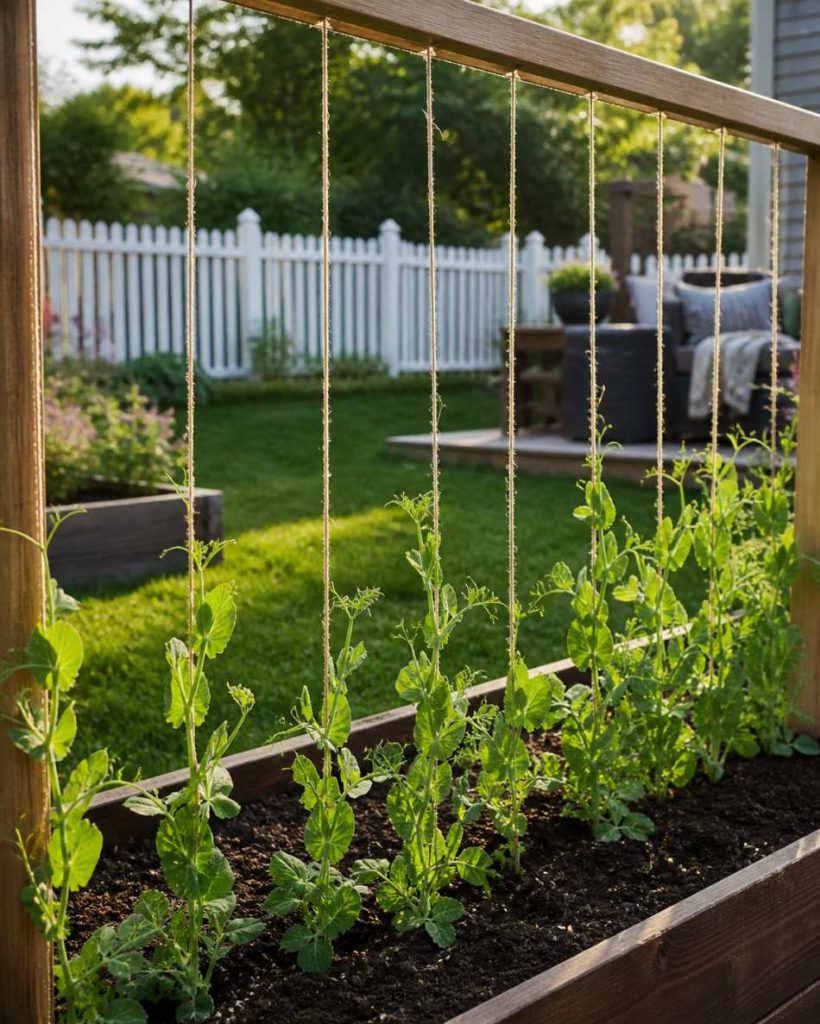
A string trellis is one of the easiest and most budget-friendly options for growing peas vertically. Simply tie strong garden twine from a top support (like a frame or railing) down to the base near each plant.
The thin strings are perfect for pea tendrils to grip, allowing vines to climb effortlessly. It’s ideal for balconies or small spaces and can be set up quickly with minimal materials.
3. Pea Netting Trellis
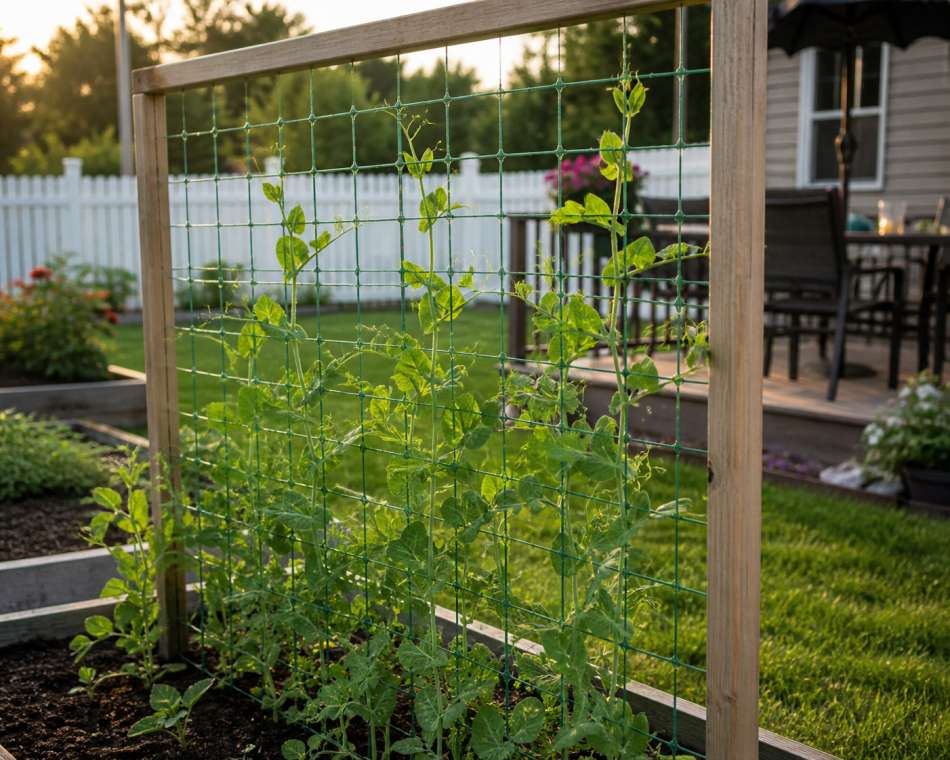
A pea netting trellis is a practical and beginner-friendly option that provides plenty of grip for climbing vines. Simply stretch garden netting between stakes or along a frame to create a vertical growing surface.
Pea tendrils easily latch onto the netting, helping plants climb quickly and stay well-supported. It also keeps the growth neat, improves airflow, and makes harvesting much easier.
4. Pea Fence Trellis
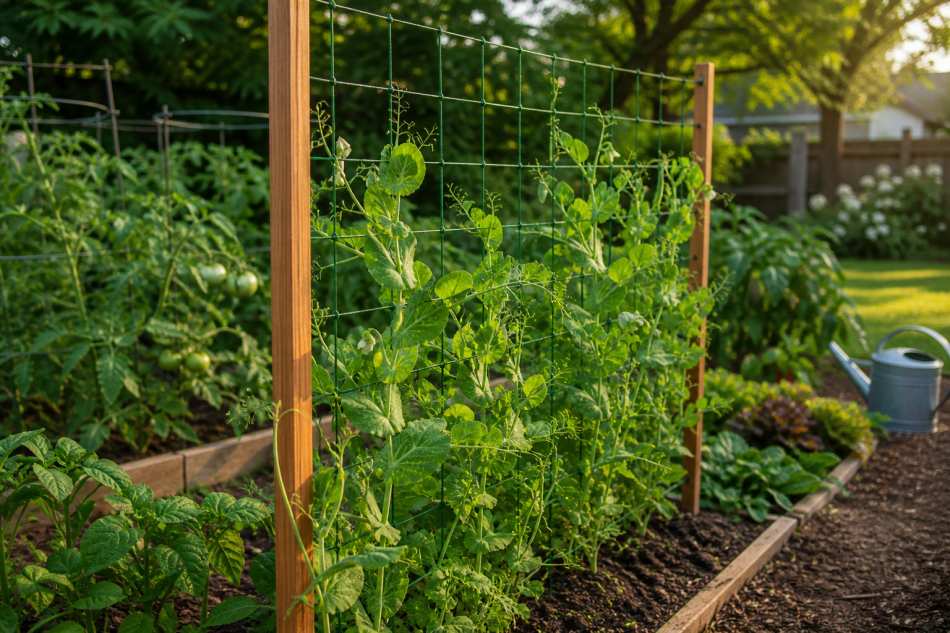
A pea fence trellis uses an existing fence or a simple DIY frame as vertical support for your plants. You can attach wire mesh or let the plants climb directly onto a wooden or metal fence.
This method saves space and works great for backyard gardens, especially along boundaries. Pea plants grow upright and stay organized, making maintenance and picking pods more convenient.
5. Pea A-Frame Trellis
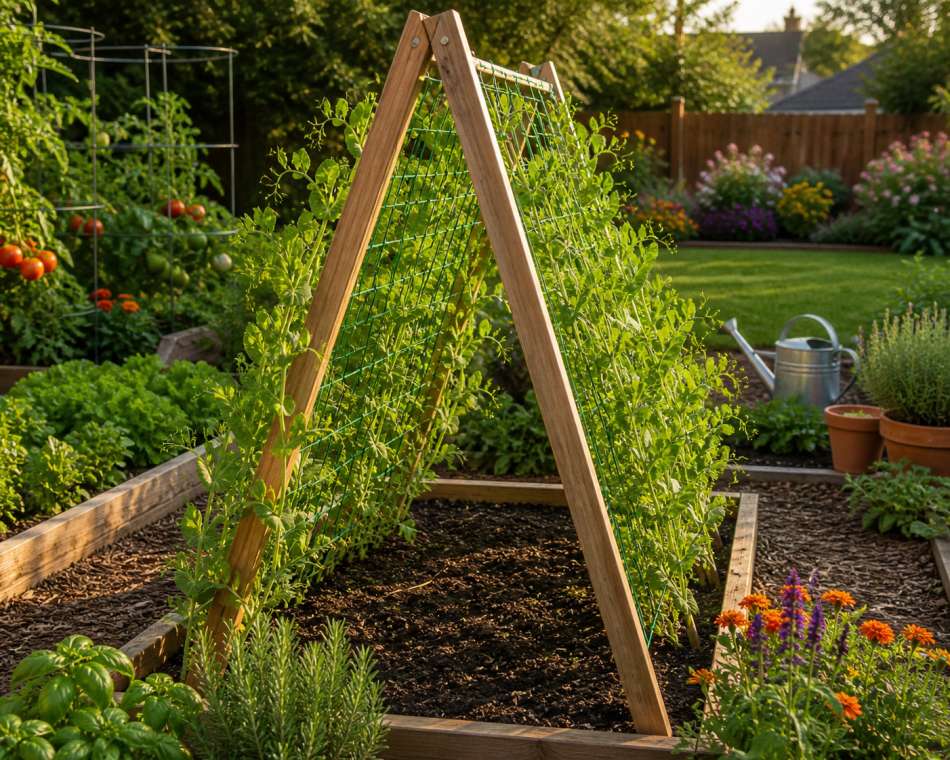
A pea A-frame trellis is a sturdy, foldable structure made by leaning two panels together to form a triangle shape. You can use wood, bamboo, or wire mesh for the sides.
This design gives pea plants support on both sides, maximizing growing space and improving airflow. It’s great for larger beds and makes harvesting easy from either side.
6. Pea Ladder Trellis
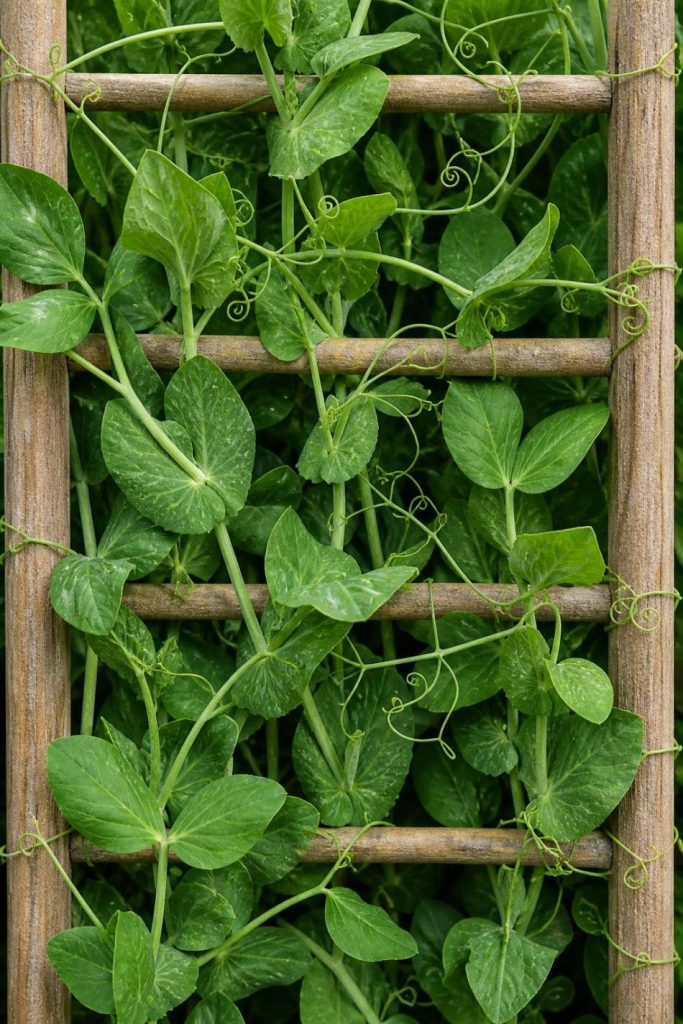
A pea ladder trellis uses horizontal rungs, similar to a ladder, for vines to climb upward. It can be made using wooden slats, bamboo sticks, or even repurposed materials.
The structure offers multiple grip points for pea tendrils, helping them climb evenly. It also keeps plants well-spaced and makes your garden look tidy and organized.
7. Pea String Wall Trellis
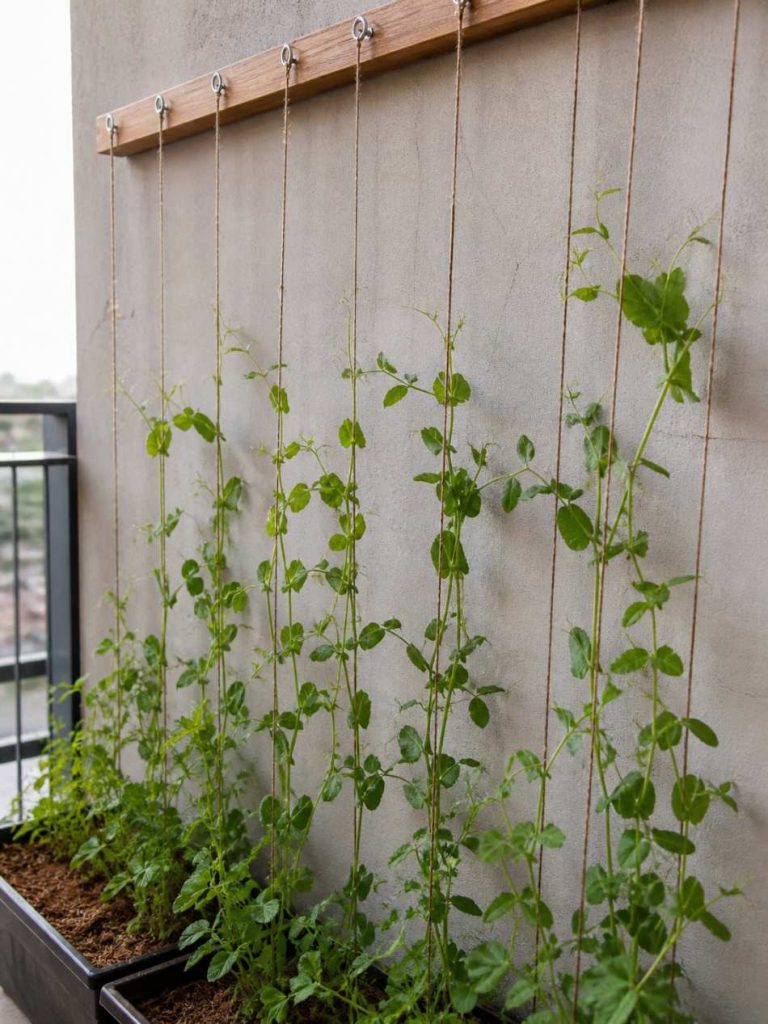
A pea string wall trellis is perfect for tight spaces like balconies or patios. Vertical strings are attached from a top frame or wall down to the base, creating a simple climbing surface.
Pea plants naturally wind around the strings as they grow, requiring minimal training. This setup is lightweight, space-efficient, and ideal for container gardening.
8. Pea Bamboo Grid Trellis
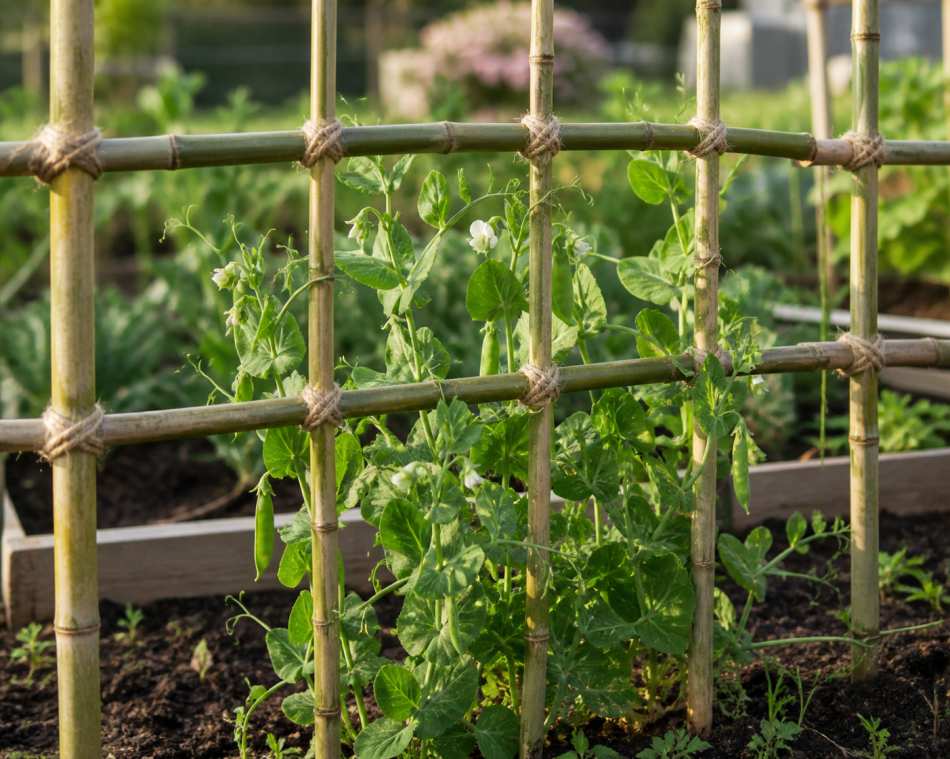
A pea bamboo grid trellis is made by tying bamboo sticks horizontally and vertically to form a crisscross pattern. This creates multiple small openings for tendrils to grab onto.
It provides strong, evenly distributed support and works well in both garden beds and containers. The natural look also blends beautifully into any garden setting.
Check this: 13 Pumpkin Trellis Ideas for Creative Vertical Gardening
9. Pea Arch Trellis
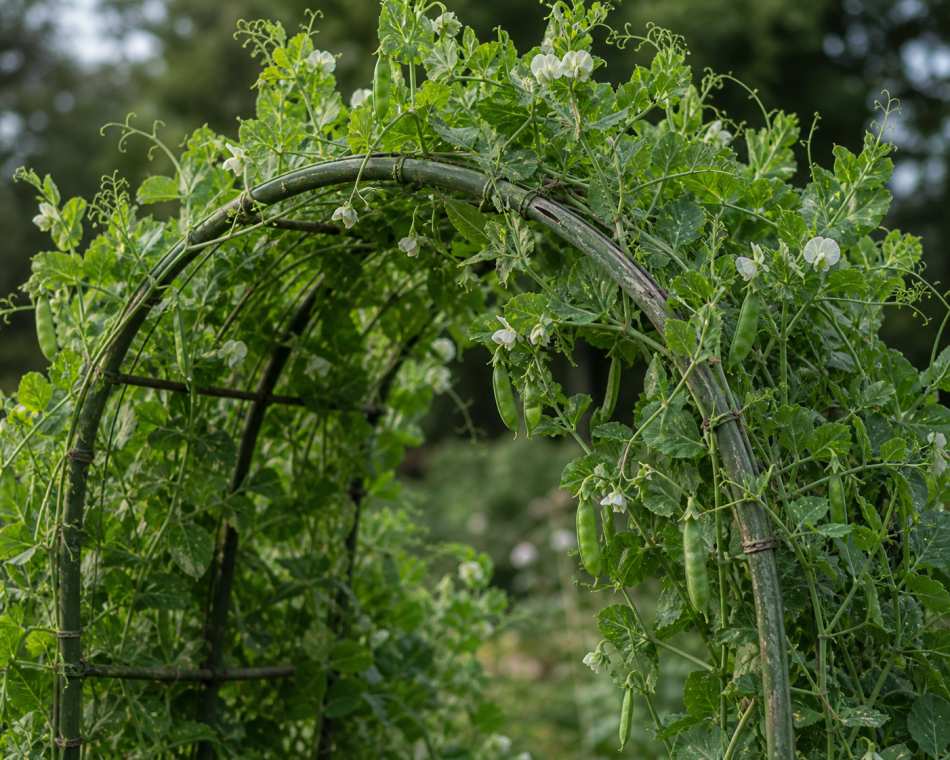
A pea arch trellis adds both function and visual appeal to your garden. It’s created by bending flexible materials like metal rods or PVC pipes into an arch and adding netting or wire for support.
Pea plants climb up and over the arch, creating a lush green tunnel effect. It’s perfect for pathways and makes harvesting easy from both sides.
10. Pea Wire Mesh Trellis
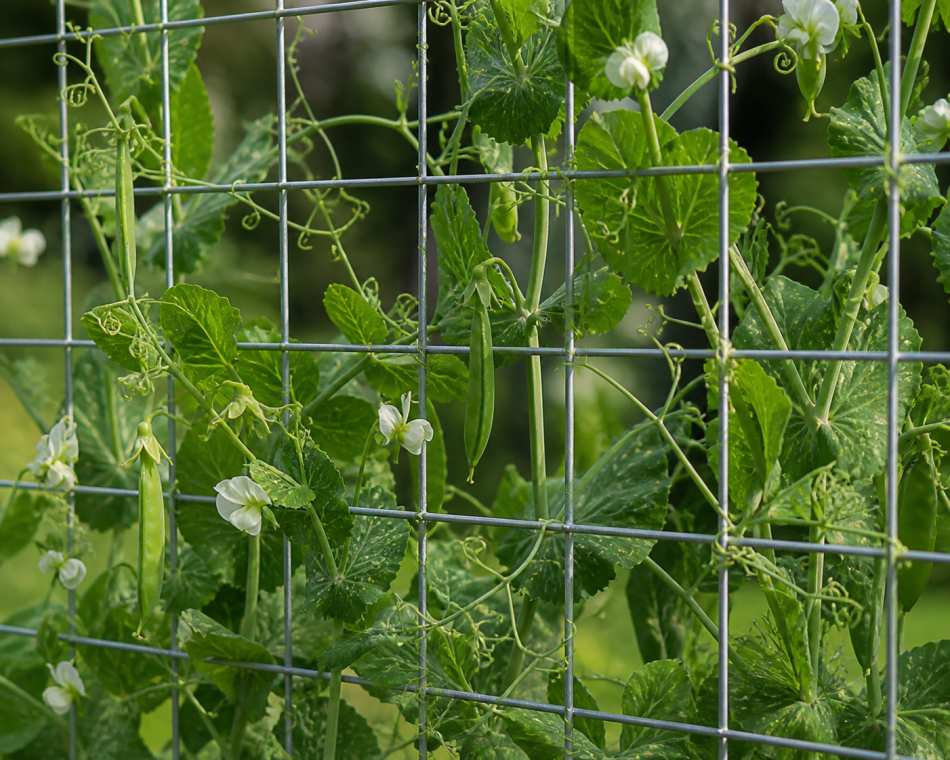
A pea wire mesh trellis uses metal or plastic-coated mesh attached to a frame or stakes. The small openings provide excellent grip for climbing tendrils.
This option is highly durable and ideal for long-term use in garden beds. It keeps pea plants upright, improves airflow, and handles heavier growth without bending.
11. Pea Wooden Frame Trellis
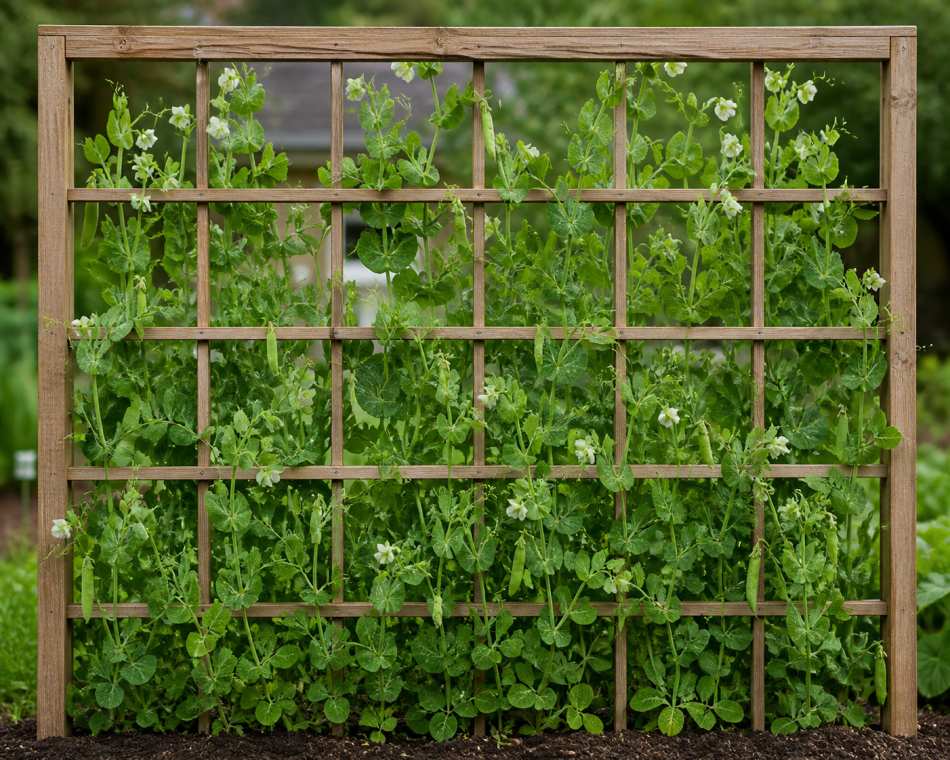
A pea wooden frame trellis is a sturdy and long-lasting option made using simple wooden stakes and slats. You can build a rectangular frame and attach netting or wire for climbing support.
It provides excellent stability for growing vines and works well in raised beds or backyard gardens. Plus, it adds a clean, structured look to your garden space.
12. Pea Branch Trellis
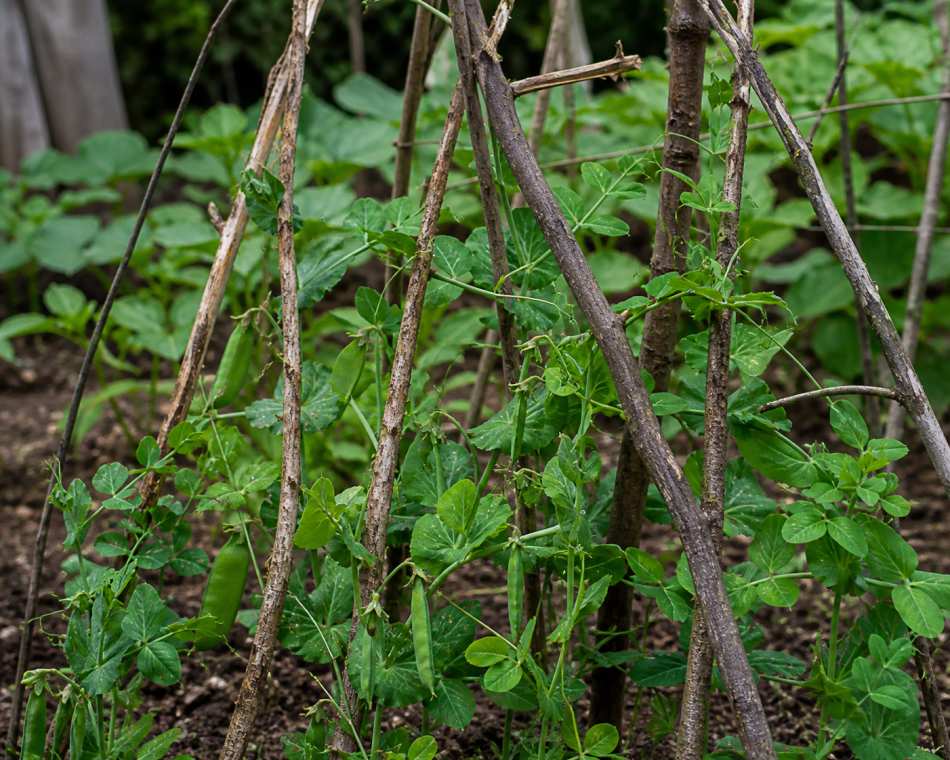
A pea branch trellis uses natural sticks or pruned branches arranged in the soil to create a rustic support system. Simply push them into the ground in a crisscross or teepee style.
Pea tendrils easily grab onto the uneven surfaces, making this an eco-friendly and cost-free option. It blends seamlessly into natural garden settings.
13. Pea Wall-Mounted Trellis
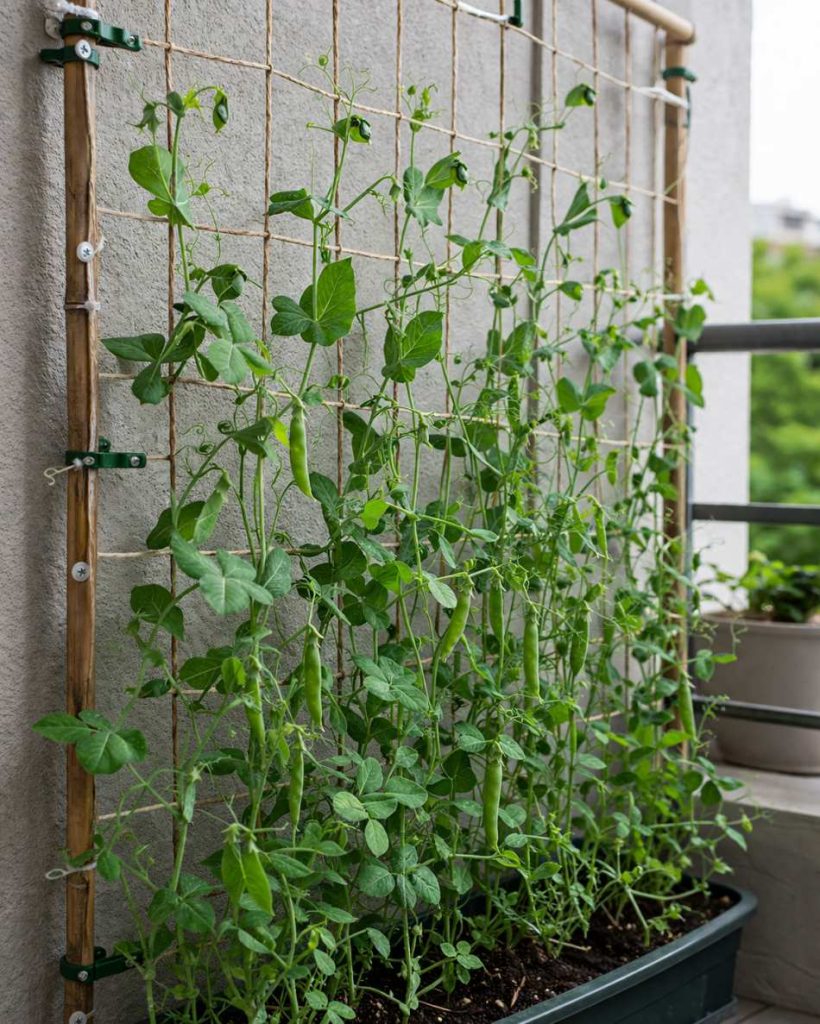
A pea wall-mounted trellis is ideal for small spaces where you can use a wall or railing as support. Attach strings, netting, or a mesh panel vertically against the surface.
This setup helps pea plants grow upward without taking up ground space. It’s perfect for balconies, patios, and compact gardens while keeping everything neat and accessible.
Also Read: 18 DIY Cucumber Trellis Ideas
14. Pea PVC Pipe Trellis
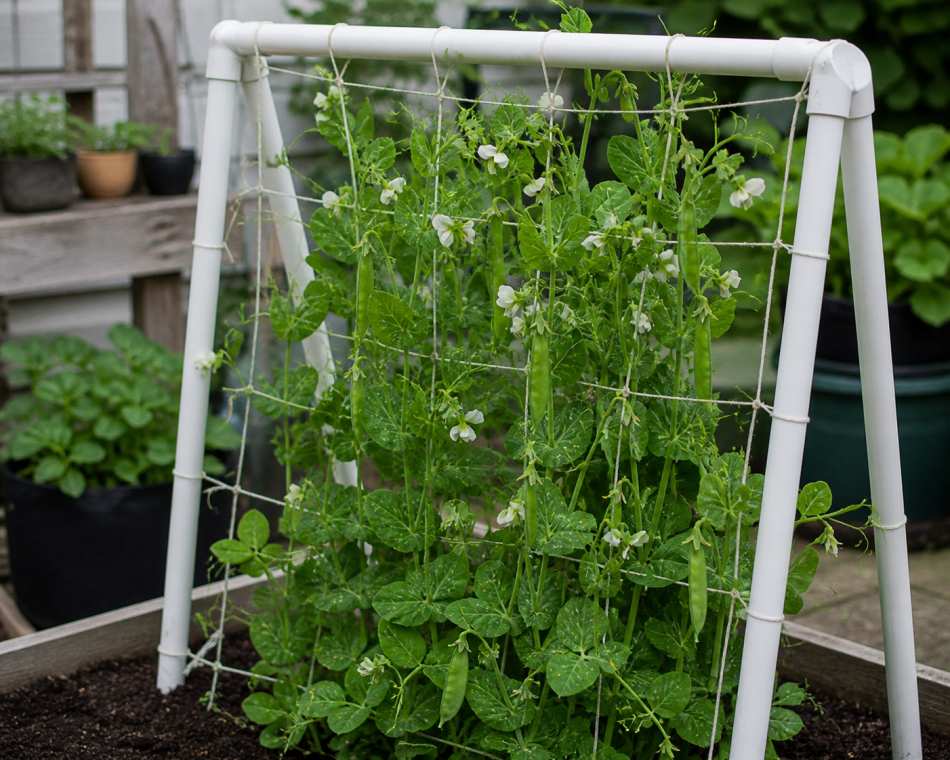
A pea PVC pipe trellis is a lightweight and easy-to-build option using simple PVC pipes and connectors. You can create a rectangular or A-frame structure and add strings or netting for climbing support.
It’s durable, weather-resistant, and perfect for both garden beds and containers. This setup provides strong support while remaining portable and reusable for multiple growing seasons.
Bonus: Creative & Advanced Pea Trellis Ideas
You can introduce upgraded or unique versions instead of basic structures. For example, a recycled pallet trellis, a decorative metal panel trellis, or even a movable trellis on wheels for flexible gardening.
This keeps your article fresh and valuable without repeating the same concepts. It also gives readers inspiration to customize their trellis based on space, style, and available materials.
Common Mistakes to Avoid When Building a Pea Trellis
Even a simple pea trellis can go wrong if a few basics are overlooked. One of the most common mistakes is building a structure that’s too short or too weak to handle mature plants.
As pea vines grow and start producing pods, they become heavier, and a flimsy trellis can easily collapse.
Another issue is using materials that are too thick or smooth for tendrils to grip. Pea plants need thin, textured surfaces to climb naturally, so choosing the right material is just as important as the design. Poor spacing and placing the trellis too late can also limit growth and make maintenance harder.
Planning your trellis early, using the right materials, and allowing enough space for airflow will help your pea plants grow healthier and more productively.
Conclusion
Building a DIY pea trellis is a simple step that makes a big difference in how your plants grow and produce. With the right support, pea plants stay healthy, climb easily, and become much easier to manage and harvest.
Whether you choose a basic string setup or a more structured frame, the key is to match your trellis to your space and plant variety. With a little planning, you can create a functional and attractive support system that keeps your pea plants thriving all season.


Khaja Moinuddin, a computer science graduate, finds joy in gardening and homesteading. Join him on this blog as he shares his experiences in homesteading, gardening, and composting