Apart from saving your pocket, growing pumpkins in your backyard can be fascinating and overwhelming.
Unlike other plants, ‘Howden’ vine needs a proper trellis that can support its monstrous growth.
Otherwise, the plant may sprawl along the garden and be exposed to pests, reducing the yield.
On an average pumpkin plant reaches 10-20 feet in length. So it’s important that you choose a sturdy pumpkin trellis that could withstand the large pumpkin fruit.
Why Should I Use a Trellis for Pumpkins?
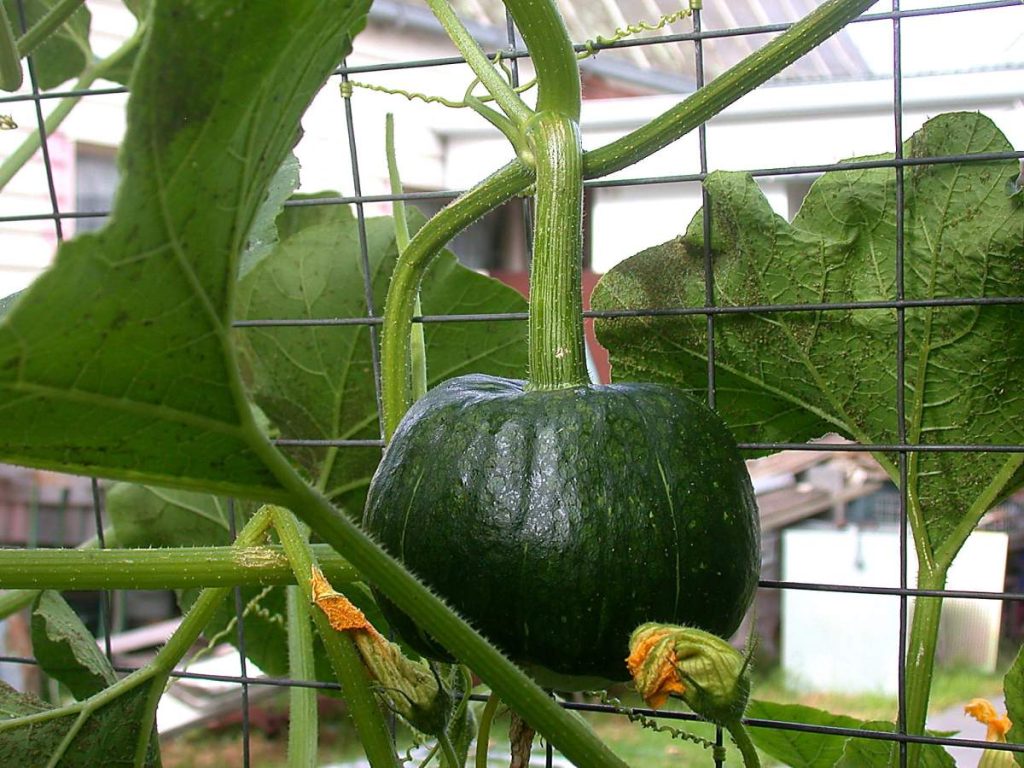
Pumpkins love to spread—but that’s not always ideal for your garden.
Training vines vertically helps you save a lot of ground space, especially in small backyards. It keeps your garden looking neat instead of messy and overgrown.
A trellis improves air circulation around the plant, which helps reduce fungal issues. Healthier airflow often means healthier vines and better growth.
Keeping pumpkins off the ground also lowers the risk of pests and rot. Fruits stay cleaner and develop more evenly.
It also makes watering, pruning, and harvesting much easier. No more digging through tangled vines to find hidden pumpkins.
Things to Consider Before Choosing a Trellis
Not all trellises are built the same, especially for pumpkins.
Sturdy: Pumpkin vines and fruits can get heavy quickly. A strong structure prevents bending or collapsing as the plant matures.
Variety: The type of pumpkin matters more than you think. Larger varieties need heavy-duty support, while smaller ones can manage with lighter setups.
Space: Always consider how much room you have. Some trellises spread wide, while others are perfect for tight or vertical spaces.
Material: Wood, metal, or recycled materials all work differently. Choose something durable that can handle weather and weight.
Ease: Keep it simple and practical. A trellis that’s easy to install and maintain will save you effort in the long run.
13 Pumpkin Trellis Ideas for Your Vertical Garden
If you’re ready to grow pumpkins vertically, choosing the right trellis can completely change your gardening experience.
From simple DIY setups to more durable structures, there’s an option for every space and skill level. The key is finding something that balances strength, space, and ease of use.
Here are some practical and creative pumpkin trellis ideas to get you started:
1. A-Frame Wooden Trellis
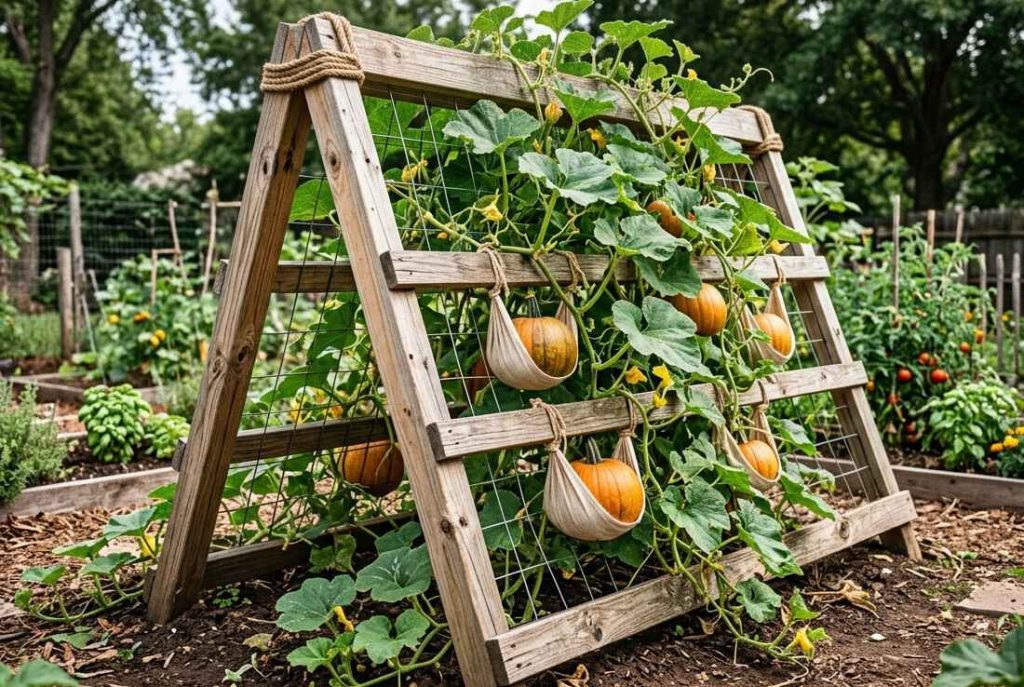
Start by building a simple A-frame using wooden planks or bamboo poles. Join two frames at the top with hinges or rope so they stand like a tent, then add horizontal slats or wire mesh across both sides for the vines to climb.
As the pumpkin plant grows, gently guide the vines toward the trellis and tie them loosely with soft ties. Keep checking regularly and support developing fruits with cloth slings so the structure holds everything safely.
2. Cattle Panel Arch Trellis
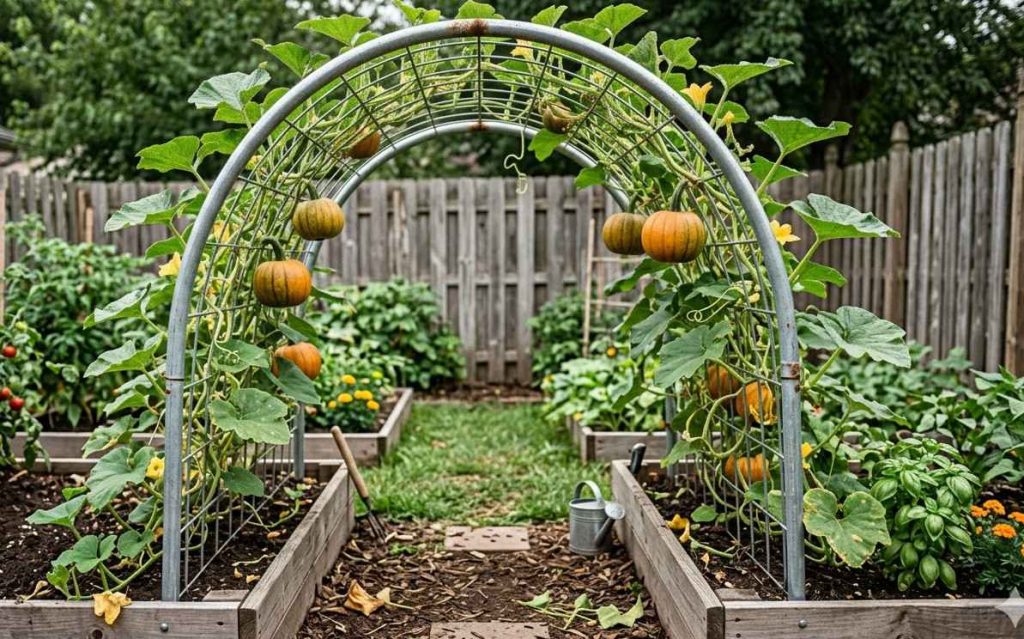
A cattle panel arch is a strong and long-lasting option that can easily handle heavy pumpkin vines. You can bend a metal cattle panel into an arch shape and secure both ends firmly into the ground or raised beds.
Once your pumpkins start growing, train the vines upward by weaving them through the panel gaps. As fruits develop, use netting or cloth slings to support their weight and prevent strain on the vines.
3. Vertical String Trellis
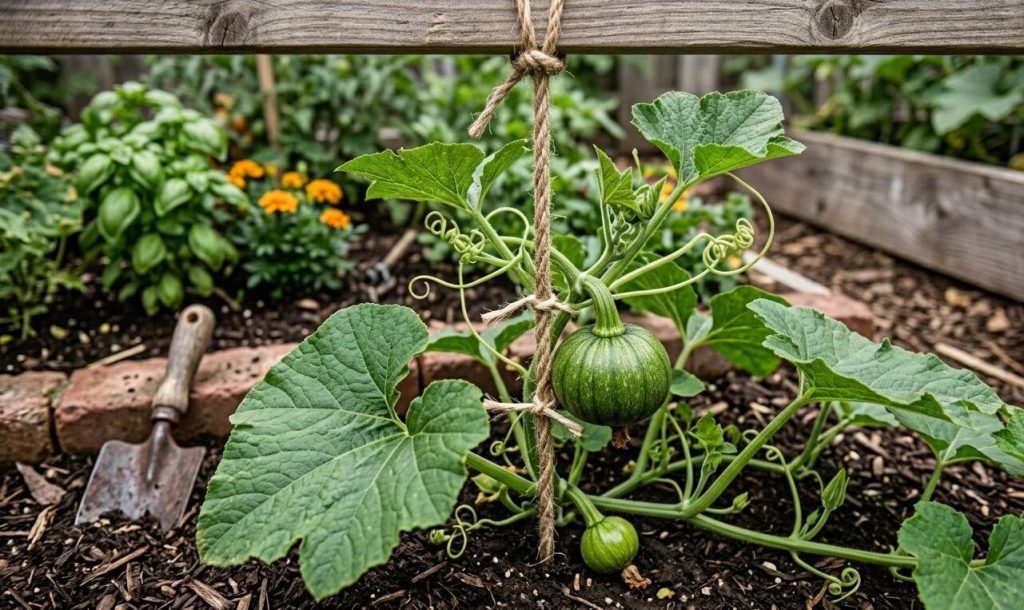
This is one of the simplest and most budget-friendly ways to grow pumpkins vertically. Just tie strong strings from a top support like a frame or roof and anchor them securely into the soil near each plant.
As the vines grow, wrap them gently around the strings to guide their direction. Keep training them every few days so they stay upright, and pinch extra side growth if needed to keep things manageable.
4. Bamboo Teepee Trellis
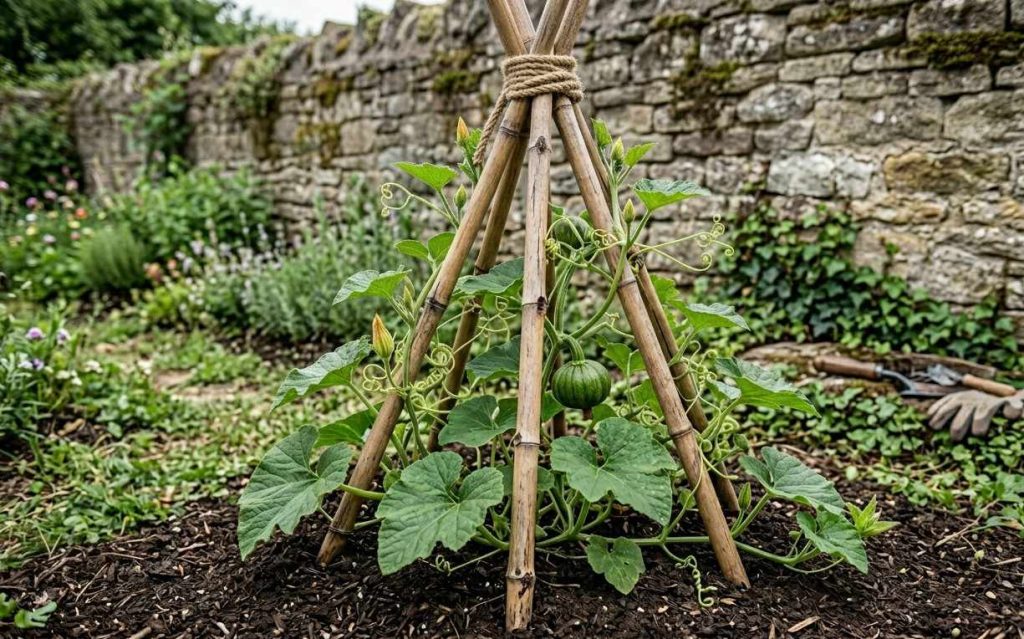
A bamboo teepee trellis gives your garden a natural and tidy look while supporting climbing vines. It’s made by tying 4–6 bamboo sticks together at the top and spreading the base evenly in the soil.
Plant your pumpkins around the base and guide the young vines toward the sticks as they grow. Once they latch on, they’ll climb easily, but you can still tie them loosely for extra support and stability.
Also Read: 9 DIY Bamboo Trellis Ideas
5. Wall-Mounted Trellis
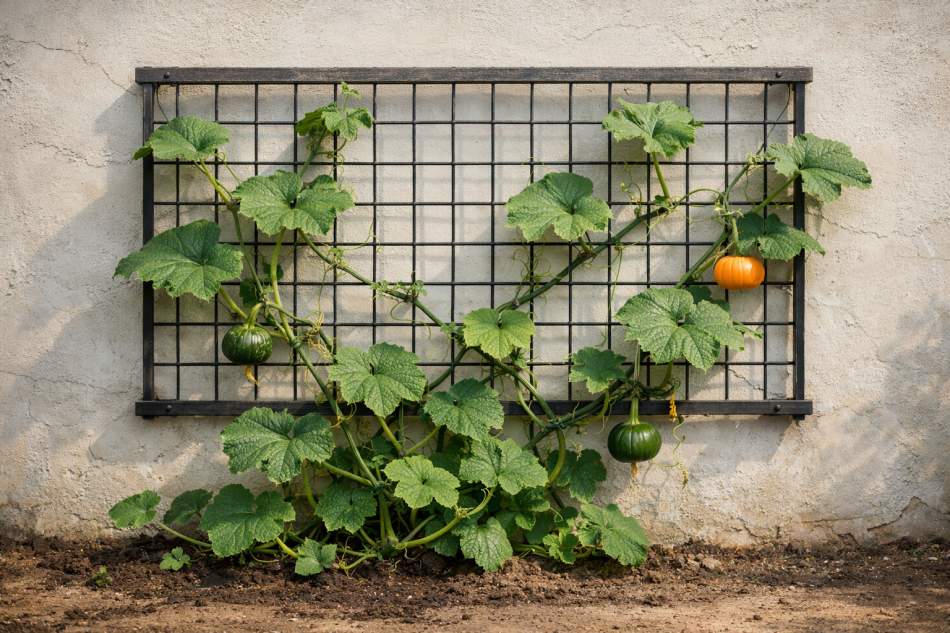
If you’re short on space, a wall-mounted trellis is a smart way to grow pumpkins vertically. You can fix a wooden or metal grid securely onto a wall or sturdy fence, leaving a little gap for airflow.
Plant pumpkins at the base and start directing the vines toward the structure as they grow. Tie them loosely at intervals and keep adjusting their direction so they spread evenly across the wall.
6. Fence Trellis
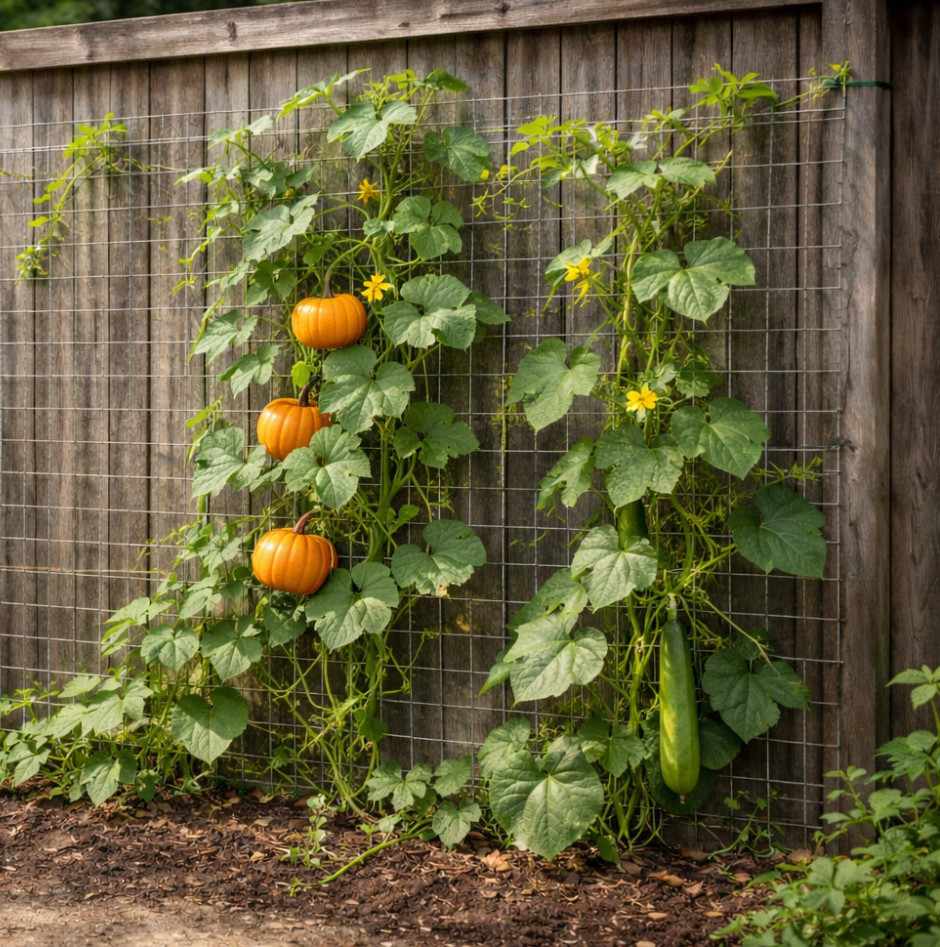
Got a fence already? You’re halfway there without extra effort.
Simply plant your pumpkins along the base of a sturdy fence and let the vines naturally climb it. Guide them through the gaps and tie lightly if needed, making sure the fruits are supported as they start getting heavier.
7. Pergola or Overhead Trellis
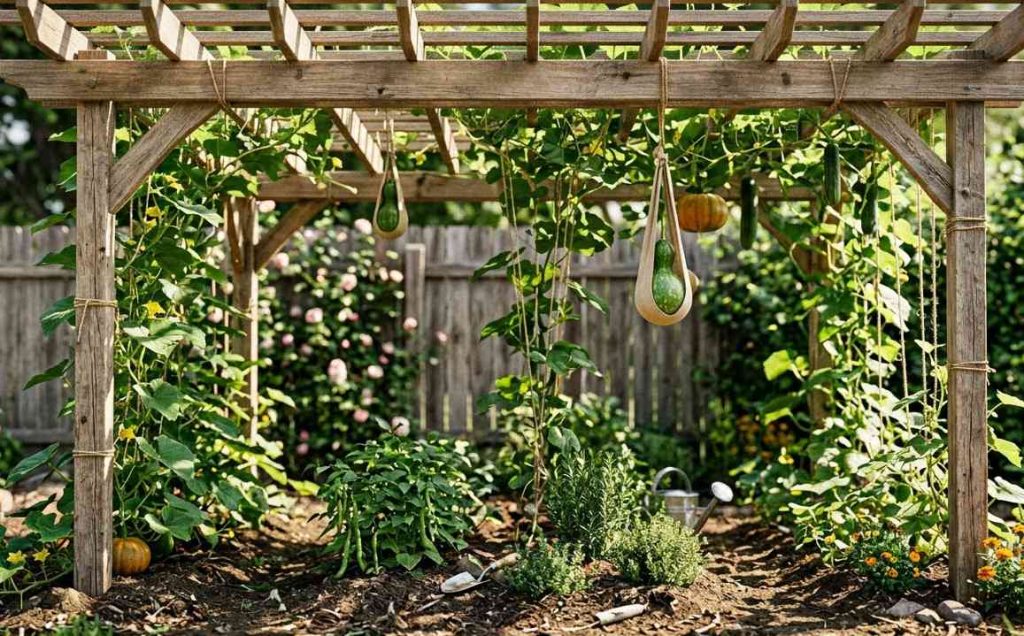
A pergola or overhead trellis creates a beautiful shaded space while supporting pumpkin vines above your head. You can build one using strong wooden beams or metal frames fixed firmly into the ground.
As the vines grow, train them upward along the posts and across the top structure. Once they spread overhead, use slings to hold developing pumpkins so they hang safely without putting stress on the vines.
Also Read: DIY Tomato Trellis Ideas
8. Pallet Trellis
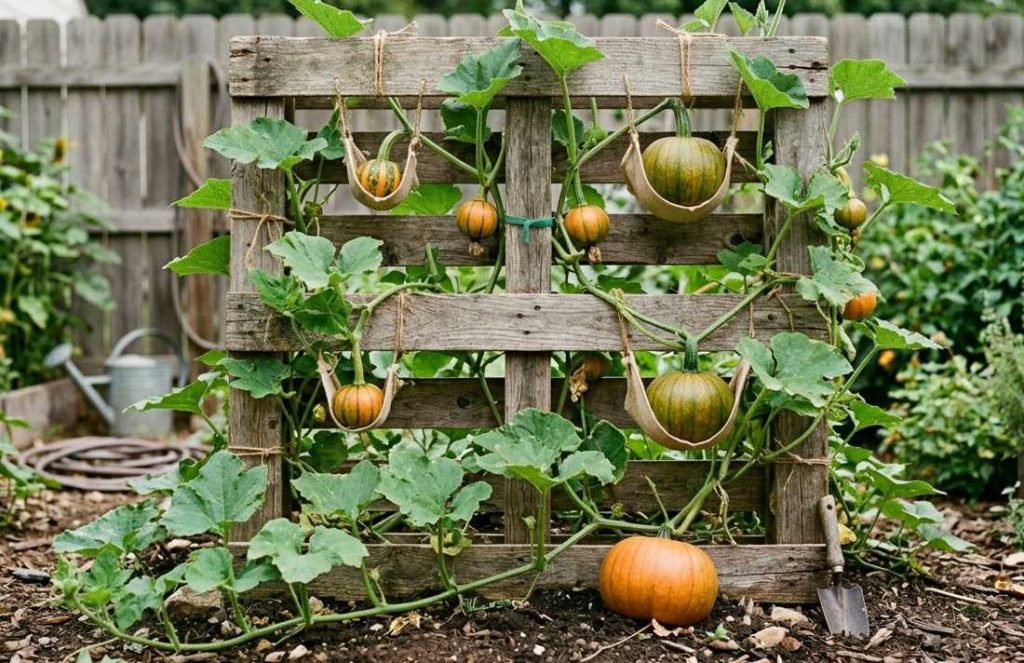
An old wooden pallet can be turned into a quick and affordable trellis with minimal effort. Just stand it upright, secure it firmly into the ground, and add extra support if needed to keep it stable.
As your pumpkin vines grow, guide them through the gaps in the pallet and tie them loosely to keep them in place. This helps the plant climb easily while keeping the fruits off the ground.
9. Ladder Trellis
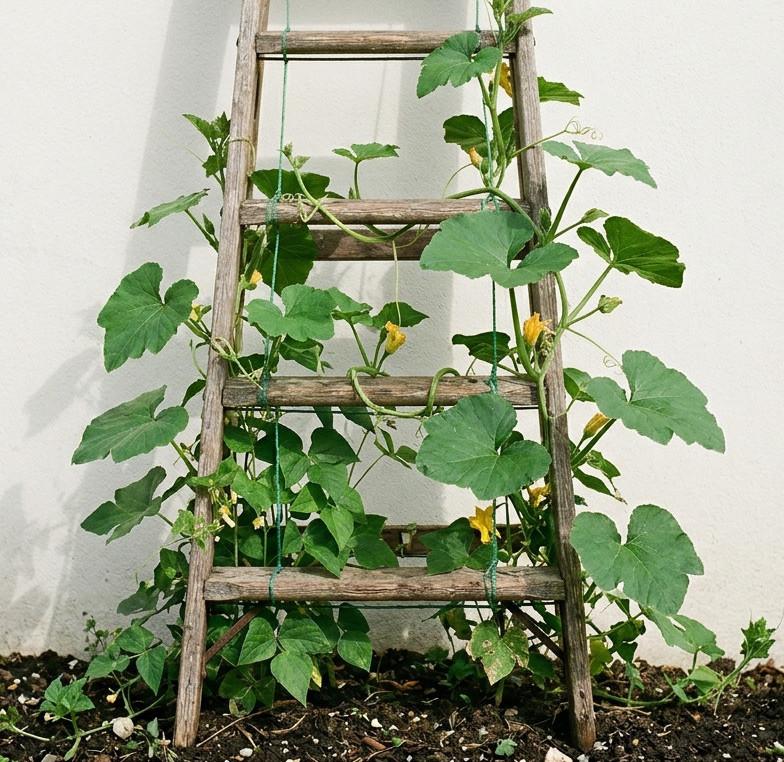
A simple ladder can double as a ready-made trellis without much setup. Just place an old wooden or metal ladder firmly in the soil or lean it securely against a wall.
Plant your pumpkins at the base and start guiding the vines up the rungs as they grow. You can tie them loosely for support and adjust their direction so they spread evenly along the ladder.
10. Wire Mesh Trellis
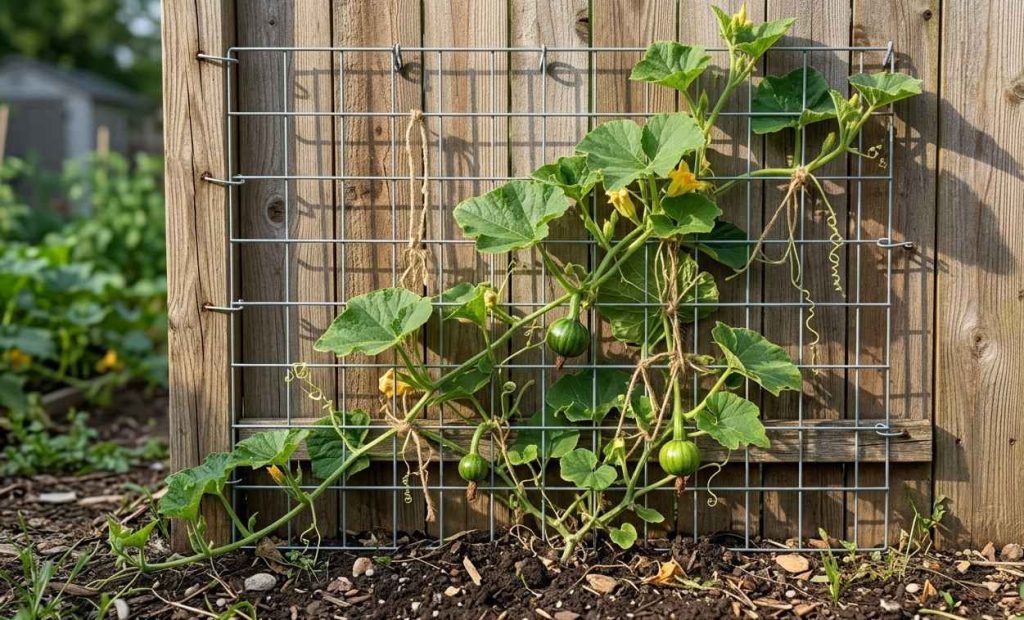
Wire mesh is a flexible option that can be shaped to fit almost any garden space. You can attach it to a wooden frame or fix it between two posts to create a sturdy climbing surface.
As the pumpkin vines grow, weave them through the mesh openings to help them grip naturally. Keep adjusting their direction and add soft ties if needed, especially when the plant starts getting heavier.
Check this: 18 DIY Cucumber Trellis Ideas
11. PVC Pipe Trellis
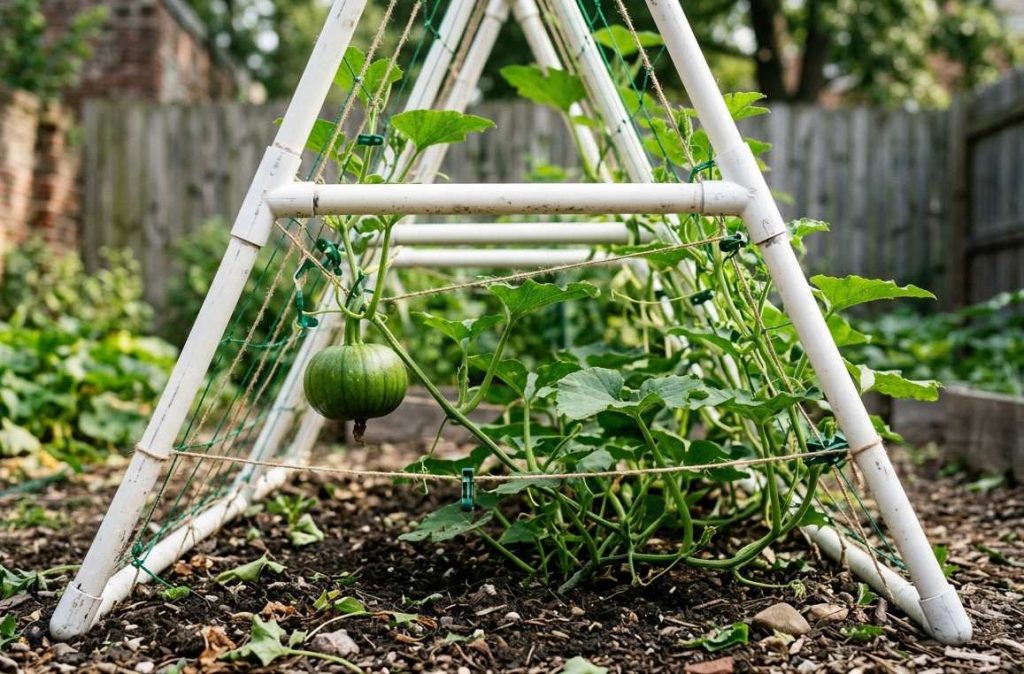
Lightweight and easy to customize, a PVC pipe trellis is great for DIY gardeners. You can connect pipes to form a rectangular or A-frame structure and add netting or strings for climbing support.
Guide the pumpkin vines toward the frame and help them latch onto the strings or netting. As they grow, keep training them upward and check the joints to ensure the structure stays stable.
12. Obelisk Pumpkin Trellis
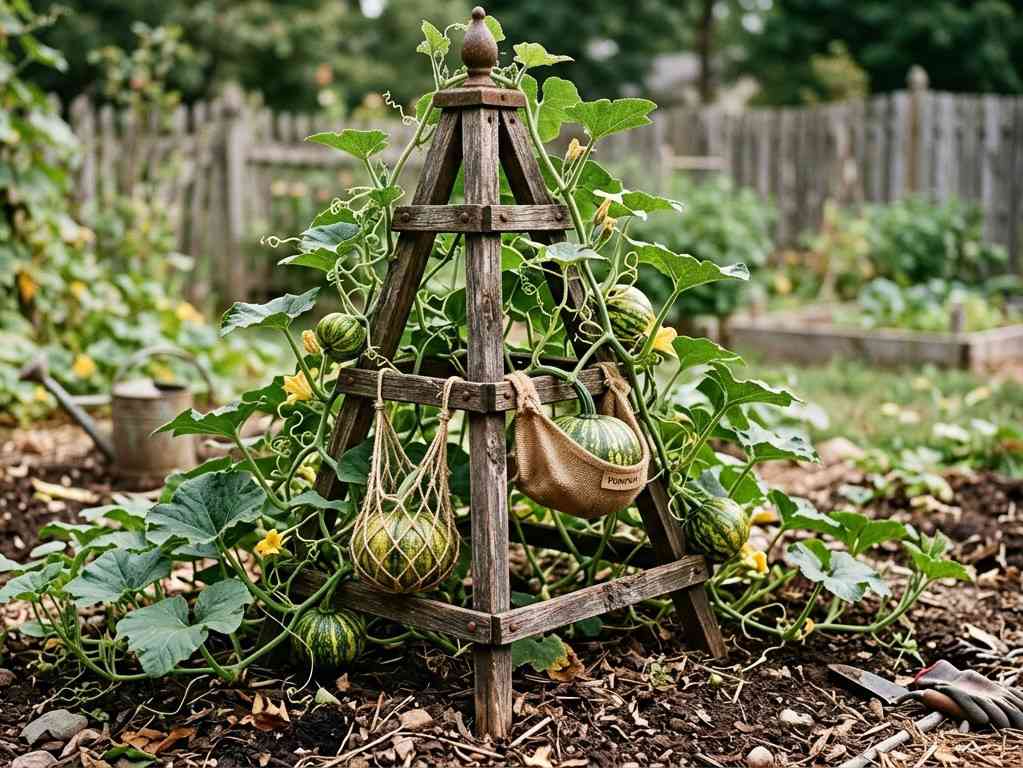
An obelisk trellis adds a decorative touch while keeping your pumpkin vines upright. It’s usually a tall, tower-like structure made from metal or wood that fits well in small spaces.
Plant your pumpkins around the base and start guiding the vines to wrap around the structure. Tie them gently if needed, and as the plant grows, it will naturally climb upward in a neat, compact form.
13. Garden Arch Trellis
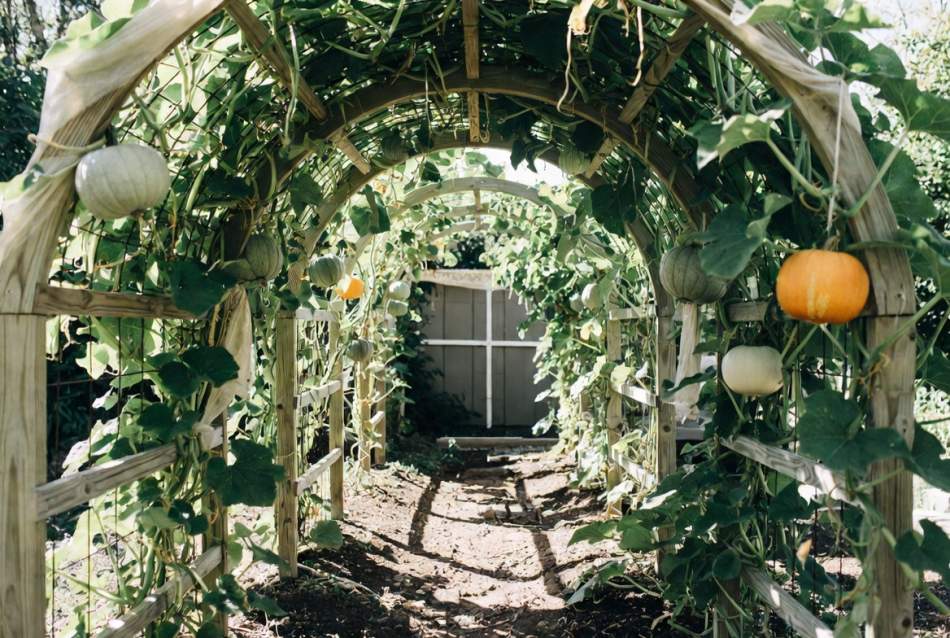
A garden arch trellis creates a stunning focal point while giving pumpkin vines plenty of room to climb. You can use metal or wood to build a strong arch and anchor it firmly into the ground.
As the vines grow, guide them up both sides of the arch and across the top. Use soft ties and fruit slings to support heavy pumpkins, especially when they start hanging overhead.
Also Read: 23 Bucket Garden Ideas
Tips for Supporting Heavy Pumpkins
As pumpkins start sizing up, their weight can quickly pull down vines if left unsupported. Giving them extra support early helps prevent sudden damage later.
Use Slings: Make soft slings using cloth, netting, or old t-shirts to support the fruits. Tie them to the trellis so the weight doesn’t hang directly on the vine.
Check Regularly: Inspect your supports every few days as pumpkins grow. Adjust ties and slings before they become too tight or weak.
Avoid Thin Ties: Don’t use thin strings or wires on vines. They can cut into the plant and cause damage over time.
Secure the Trellis: Ensure your trellis is firmly anchored in the ground. A weak base can collapse under the combined weight of vines and fruits.
Balance the Fruits: Position pumpkins so they rest naturally without twisting the vine. This reduces stress and keeps the plant healthy.
Common Mistakes to Avoid
Pumpkins grow fast and heavy, so small mistakes early on can lead to bigger problems later.
Choosing a Weak Trellis: A light or poorly built structure may not handle the weight of mature vines and fruits. Always go for something sturdy from the start.
Ignoring Fruit Support: Letting pumpkins hang without support can strain or snap the vines. Use slings early before the fruits get too heavy.
Overcrowding Plants: Planting too close reduces airflow and invites pests and diseases. Give each plant enough space to spread and breathe.
Not Training Vines: If you don’t guide the vines early, they can grow in random directions and become hard to manage. Regular training keeps growth neat and controlled.
Poor Anchoring: A trellis that isn’t firmly fixed can tilt or fall over in wind or under weight. Secure it properly into the ground.
Skipping Regular Checks: Pumpkin plants change quickly, so ignoring them for too long can lead to broken supports or damaged vines. A quick check every few days makes a big difference.
Conclusion
Growing pumpkins on a trellis is a simple way to make the most of your space while keeping your garden neat and productive.
With the right support and a bit of regular care, you can manage even vigorous vines with ease. Choose a trellis that suits your space, support the fruits as they grow, and enjoy a healthier, more organized pumpkin harvest.


Khaja Moinuddin, a computer science graduate, finds joy in gardening and homesteading. Join him on this blog as he shares his experiences in homesteading, gardening, and composting