If you let cucumber vines sprawl all over the garden, things can get messy pretty fast. The vines spread across the ground, tangle with other plants, and before you know it, they’ve taken over a big chunk of your garden.
In small gardens especially, this can make the area look cluttered and harder to manage.
Instead of spreading everywhere, using cucumber trellis supports the vine to grow upwards. This keeps the plants tidy, easier to manage, and frees up valuable space so you can grow more plants in the same garden.
You don’t have to go for expensive garden structures to support your plants.
A simple DIY cucumber trellis can be made with basic materials like wood, wire, or garden netting, making it an easy and budget-friendly way to keep your cucumber plants growing neatly.
Best Material to Build Cucumber Trellis
Wood is a popular choice for building a cucumber trellis. Wooden stakes, bamboo poles, or simple wooden frames are easy to work with and provide strong support for climbing vines.
They’re also widely available and blend naturally into the garden, making them great for simple A-frame or ladder-style trellises.
Metal wire or fencing is another reliable option. Materials like wire mesh, cattle panels, or garden fencing are sturdy and long-lasting.
The open grid design allows cucumber tendrils to easily grab and climb, while the strong structure can support the weight of vines and developing cucumbers.
You can also use garden netting or nylon trellis mesh if you want something lightweight and budget-friendly.
It’s simple to attach to stakes or a frame, and cucumber vines quickly latch onto it as they grow upward. This option works especially well in small gardens where you need a quick and flexible trellis setup.
18 Cucumber Trellis Ideas for Small Spaces
When you’re gardening in a small space, letting cucumber vines spread on the ground can quickly take up valuable room.
Using a trellis helps train the vines to grow vertically, keeping the garden neat while making the most of limited space.
1. A-Frame Cucumber Trellis
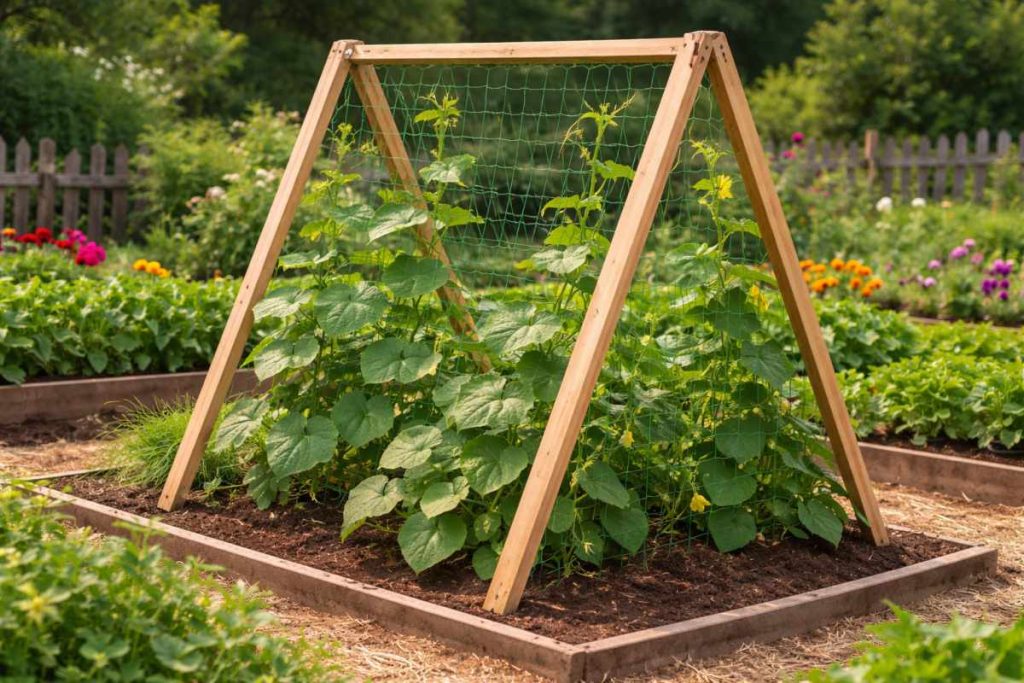
You can build this trellis using simple materials like wooden stakes, bamboo poles, or two small wooden frames.
Place the supports in an A-shape so they lean against each other and secure them at the top with screws or garden ties. Then attach wire mesh, garden netting, or fencing across the sides so cucumber vines have something to climb on.
This design works really well in small gardens because it uses vertical space without taking up much ground area. The vines grow up both sides of the frame, keeping the plants neat and off the soil.
It also makes harvesting easier and leaves more space around the bed for other vegetables.
2. Arched Cucumber Trellis
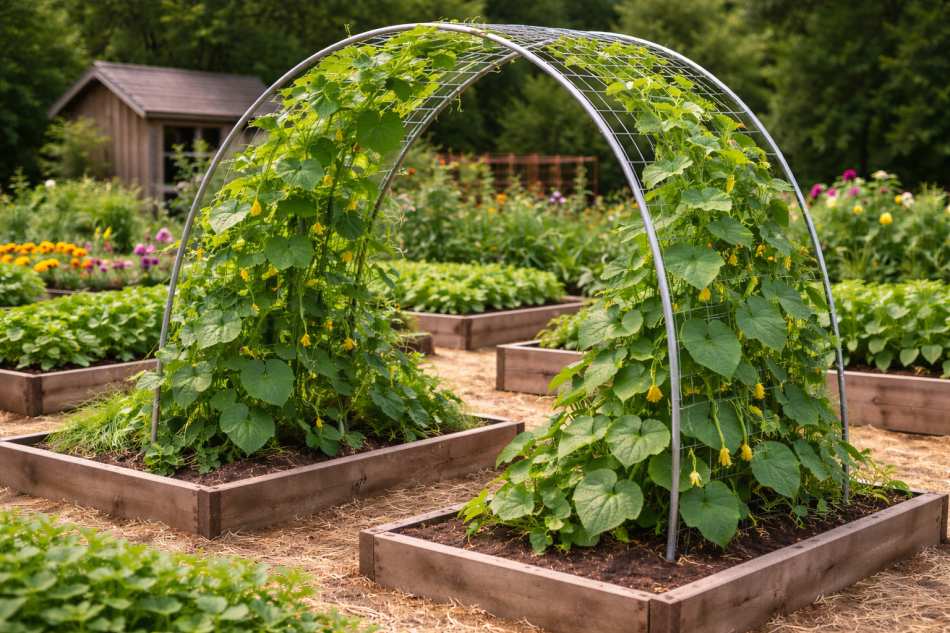
An arched cucumber trellis can be made using sturdy metal panels, cattle panels, or a ready-made garden arch.
Install the arch firmly in the ground or position it between two raised beds or large planters. As the cucumber vines grow, guide them toward the arch so they naturally climb up and across the curved structure.
This type of trellis helps maximize garden space by encouraging vertical growth while also adding a decorative touch. The arch can create a charming walkway or entrance in the vegetable garden, making the space look more inviting.
Although it may cost a bit more than simple trellis designs, it is durable and strong enough to support heavier climbing crops as well.
Also Read: How to Pickle Cucumbers with Vinegar and Sugar?
3. Cattle Panel Cucumber Trellis
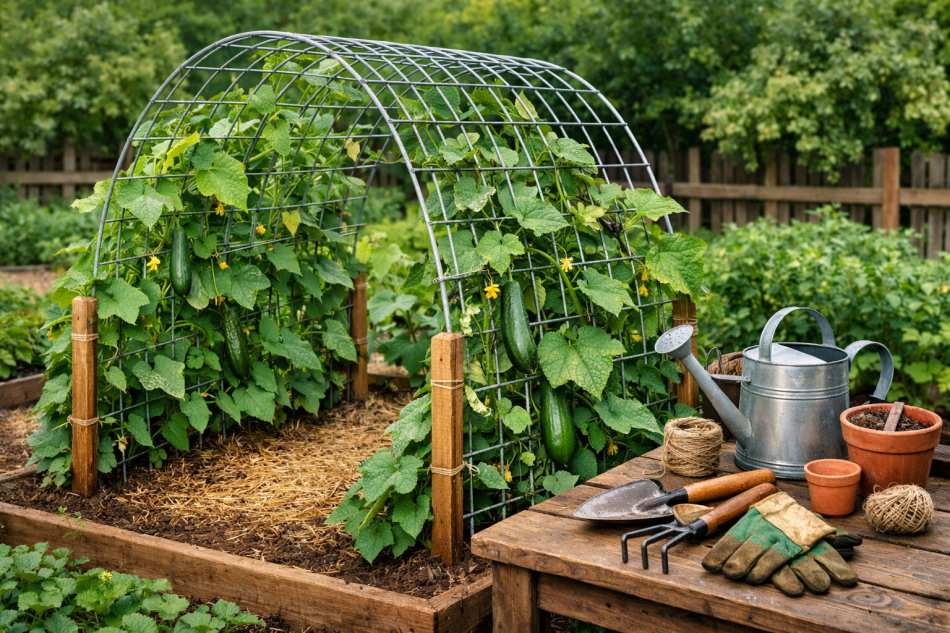
Using a cattle panel is a simple way to create a strong cucumber trellis. The metal panel can be secured upright in the soil with wooden or metal stakes, or slightly bent to form a supportive climbing structure. Its wide metal grid gives cucumber vines plenty of places to grab and climb as they grow.
This setup works well for small gardens because it encourages cucumbers to grow upward instead of spreading across the ground.
The sturdy metal frame easily supports mature vines and heavy fruits while keeping the garden area neat. It’s also very durable, so it can be reused for many growing seasons.
4. Bamboo Teepee Trellis

You can easily make this trellis using 4–6 bamboo poles. Push the poles into the soil in a circle and tie the tops together with garden twine to form a teepee shape.
You can also wrap some string around the poles to give cucumber vines more spots to grab as they climb.
This design works great for small gardens because it takes up very little ground space. The vines grow upward around the poles, keeping the plants neat and making harvesting cucumbers much easier.
5. Wire Fence Trellis
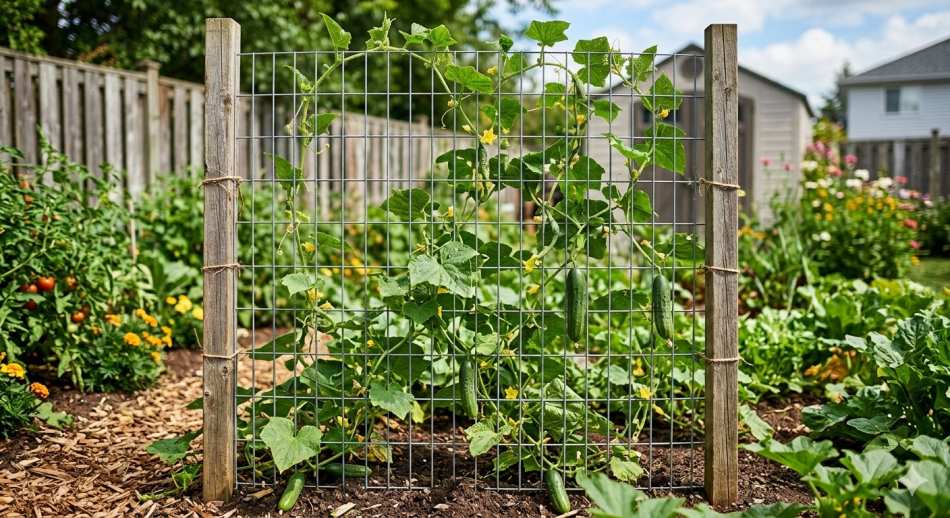
A simple wire fence can easily be turned into a cucumber trellis. Just secure a piece of wire fencing or garden mesh between two wooden stakes or attach it to an existing fence. The open grid makes it easy for cucumber vines to grab and climb as they grow.
This option works well for small gardens because it grows cucumbers vertically along a narrow space.
It keeps vines off the ground, improves air circulation, and leaves more room in the garden for other plants.
Check this: 48 Vegetables You Can Plant in March
6. Wooden Ladder Trellis
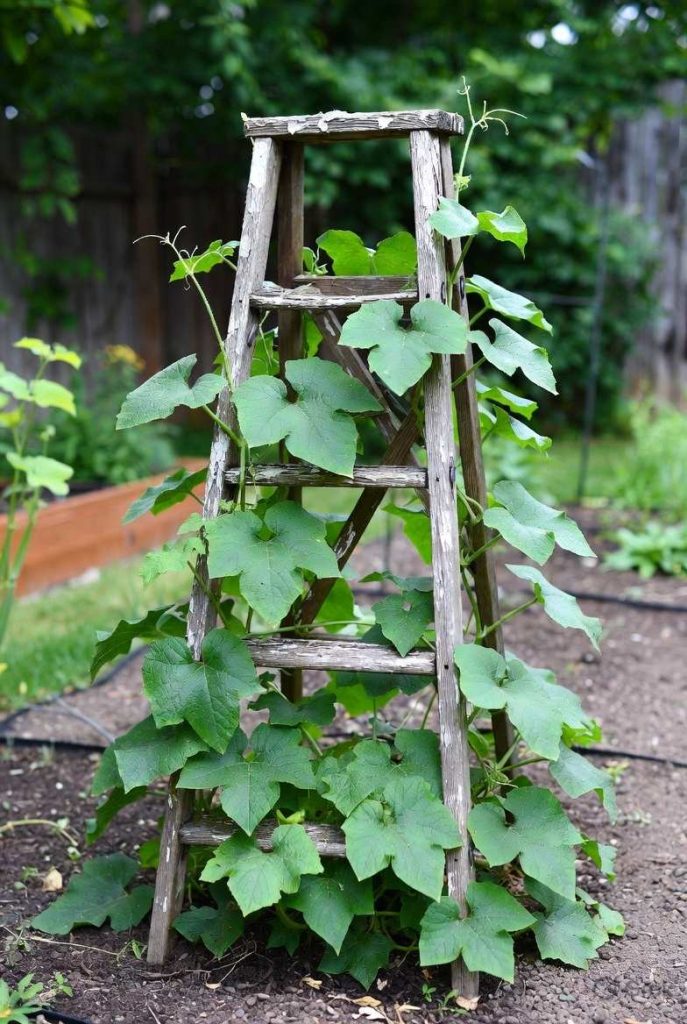
An old wooden ladder can be easily turned into a cucumber trellis. Simply place the ladder in the garden bed and secure it firmly in the soil so it stands stable. The horizontal steps act as natural supports where cucumber vines can climb and spread.
This is a great option for small gardens because it uses vertical space without needing much room on the ground. It also makes harvesting cucumbers easier since the fruits hang down between the ladder steps.
7. String Trellis
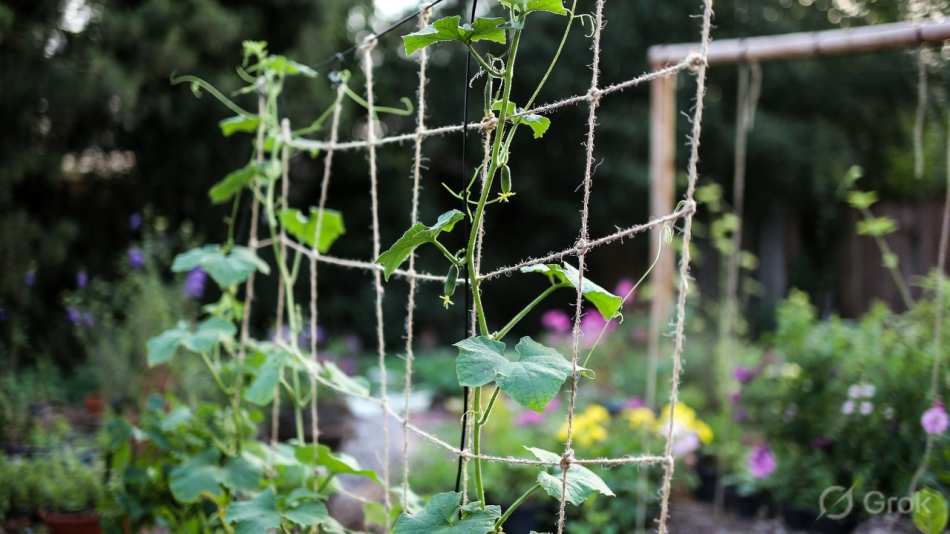
This trellis works well in small gardens because it takes up very little space while helping cucumber vines grow upward. By guiding the plants vertically, it keeps the garden neat and leaves more room for other vegetables.
To build it, tie strong garden twine or string from the base of the plant up to a horizontal support like a wooden frame, pole, or overhead beam. As the cucumber vines grow, gently wrap them around the string so they can climb easily.
8. PVC Pipe Trellis
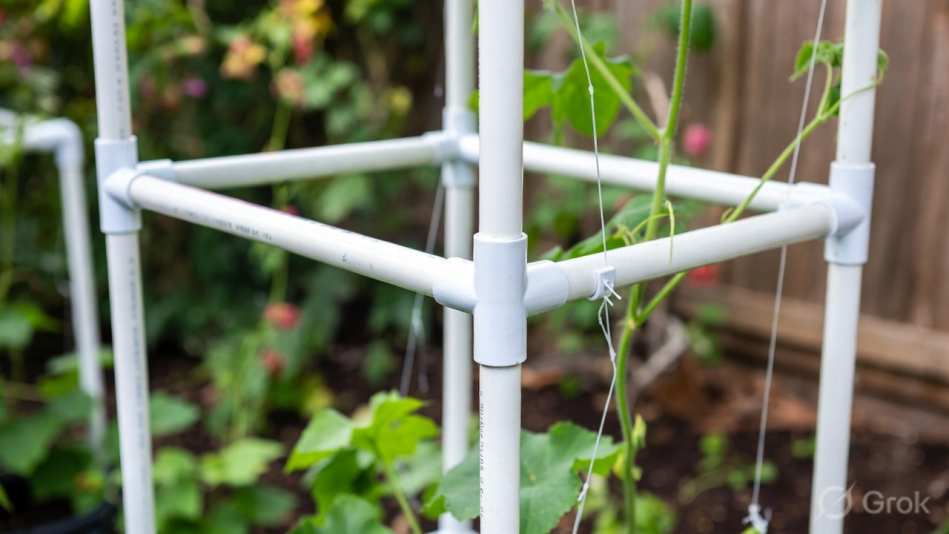
This trellis is helpful for small gardens because it keeps cucumber vines growing upward instead of spreading across the ground. By using vertical space, it helps keep the garden organized and leaves more room for other plants.
To build it, create a simple frame using PVC pipes and connectors.
Once the frame is in place, attach garden netting or plastic mesh across it so cucumber vines have something to climb. PVC is lightweight, affordable, and easy to assemble.
9. Metal Grid Trellis

Metal grid panels or wire mesh make a strong and reliable material for a cucumber trellis. You can secure the panel upright using wooden or metal stakes, or attach it to a garden bed frame. The grid openings give cucumber vines plenty of places to latch onto as they climb.
This setup works well in small gardens because it encourages vertical growth and keeps vines off the ground. The sturdy metal structure can easily support growing vines and cucumbers while helping keep the garden neat and easier to manage.
10. Wooden Pallet Trellis
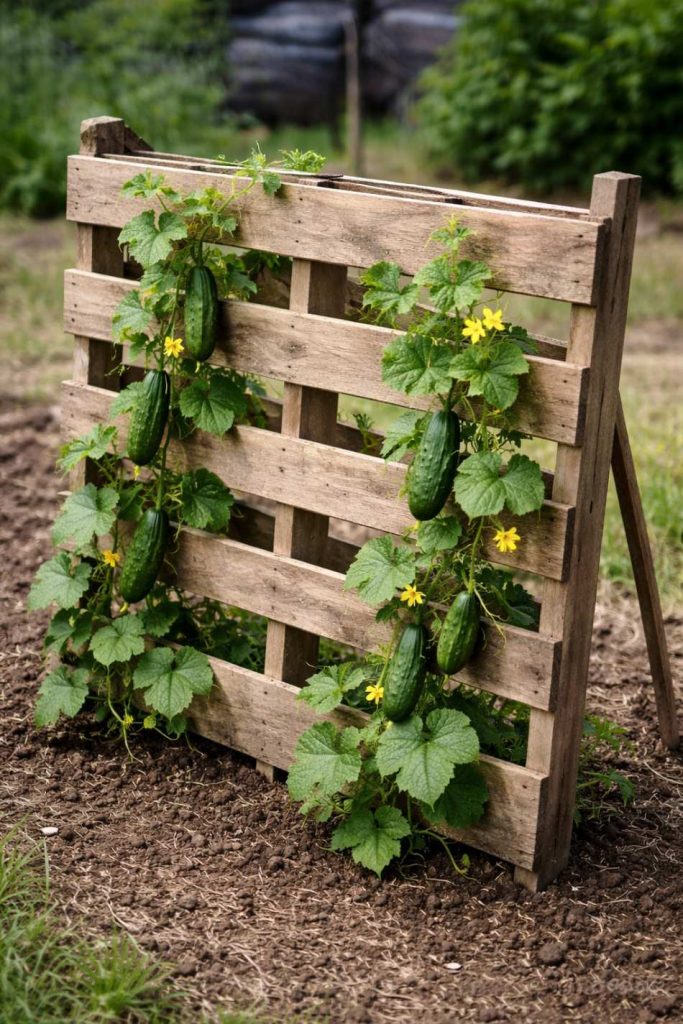
A wooden pallet can easily be repurposed into a cucumber trellis. Simply stand the pallet upright in the garden and secure it firmly with stakes so it stays stable. The gaps between the wooden slats allow cucumber vines to grab and climb naturally.
This is a great option for small gardens because pallets are narrow and don’t take up much ground space. The vertical structure keeps cucumber vines off the soil and helps make better use of limited garden space.
Also Read: 9 Tips for Growing Vegetables in a Greenhouse
11. Garden Netting Trellis
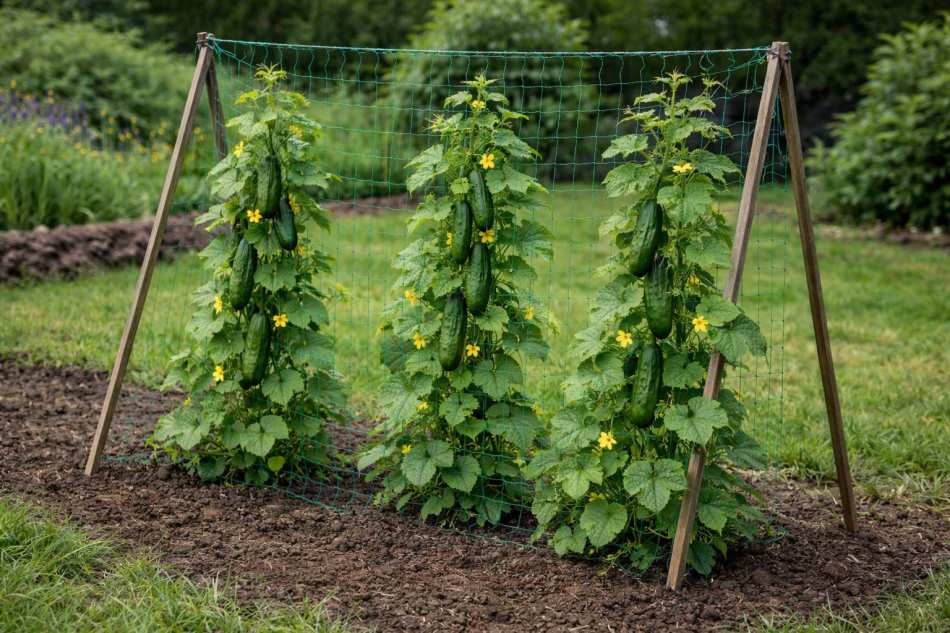
Garden netting is a lightweight and affordable material for supporting cucumber vines. Stretch the netting between two wooden stakes or attach it to a simple frame so the plants have something to climb. As the vines grow, they easily grab onto the netting.
This setup works well in small gardens because it takes up very little space and encourages vertical growth. It keeps the vines off the ground and helps you use limited garden space more efficiently.
12. Tomato Cage Trellis
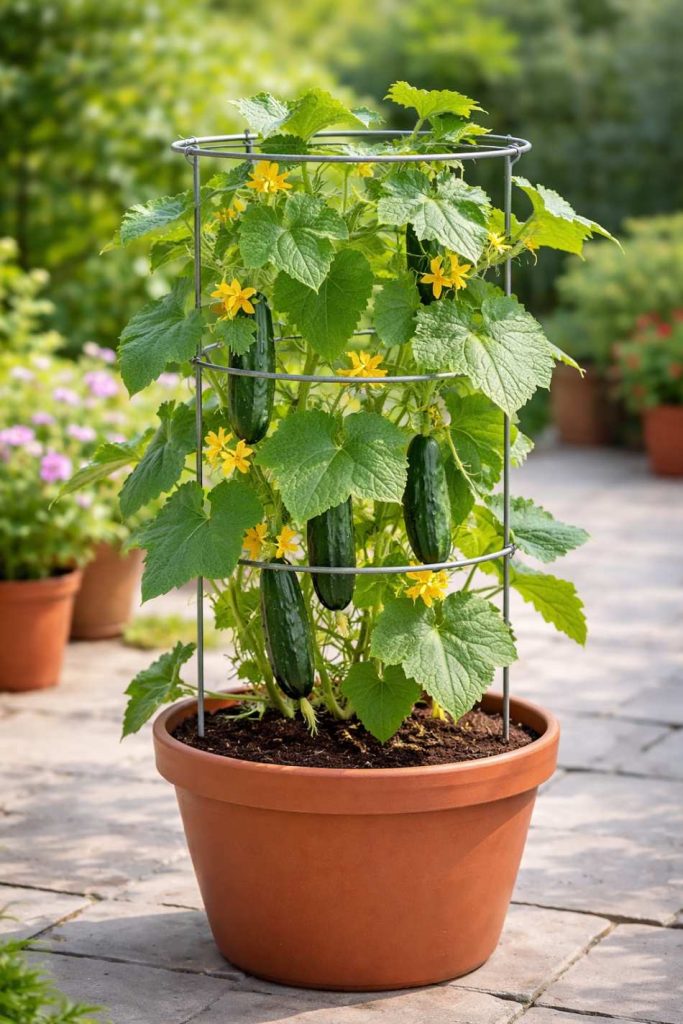
A tomato cage can also be used to support cucumber plants. Just place the cage over a young cucumber plant and push the legs into the soil so it stays steady. As the plant grows, guide the vines to climb around the cage.
This is a simple option for small gardens because it doesn’t take up much space. The vines grow upward around the cage, keeping the plant neat and making it easier to pick cucumbers.
13. Wooden Stakes Trellis
Wooden stakes are a simple material you can use to support cucumber plants. Push two or three stakes into the soil near the plant and tie garden twine between them. The cucumber vines will climb along the strings as they grow.
This setup works well in small gardens because it takes up very little space. It helps the vines grow upward instead of spreading on the ground, leaving more room for other plants.
14. Fence Trellis
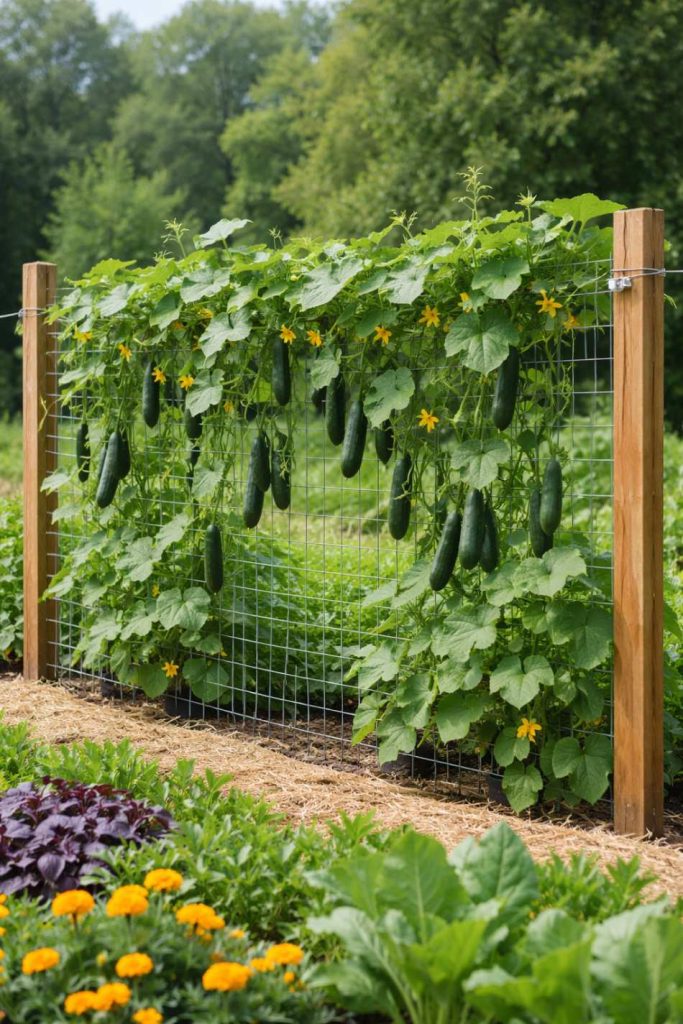
A garden fence can easily work as a cucumber trellis. Plant your cucumbers close to the fence and guide the young vines toward it. The fence wires or slats will give the vines plenty of support as they climb.
This is a great option for small gardens because it uses a structure that is already there. The vines grow upward along the fence instead of spreading across the ground, saving valuable garden space.
15. Branch Trellis
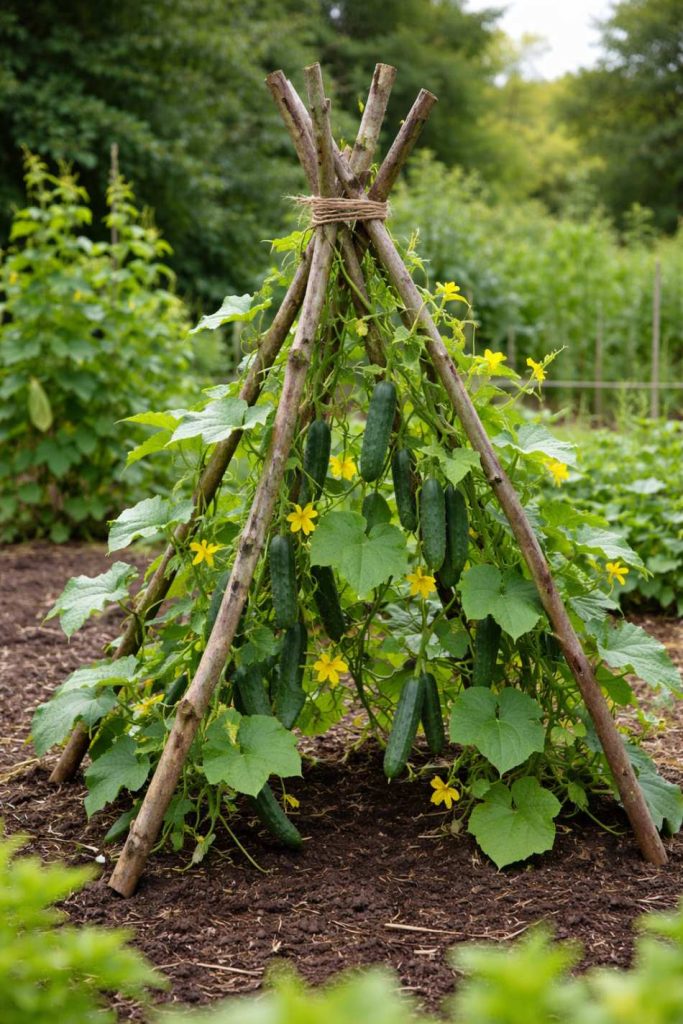
Tree branches can make a simple and natural cucumber trellis. Collect a few sturdy branches and push them into the soil around the plant, leaning them together or crossing them to form a support. You can tie them with twine if needed to keep them stable.
This is a great option for small gardens because it uses free, natural materials and takes up very little space. The vines climb along the branches, keeping the plant off the ground and making better use of the garden area.
Also Read: 5 Simple Ways to Store Carrots from the Garden
16. String and Pole Trellis
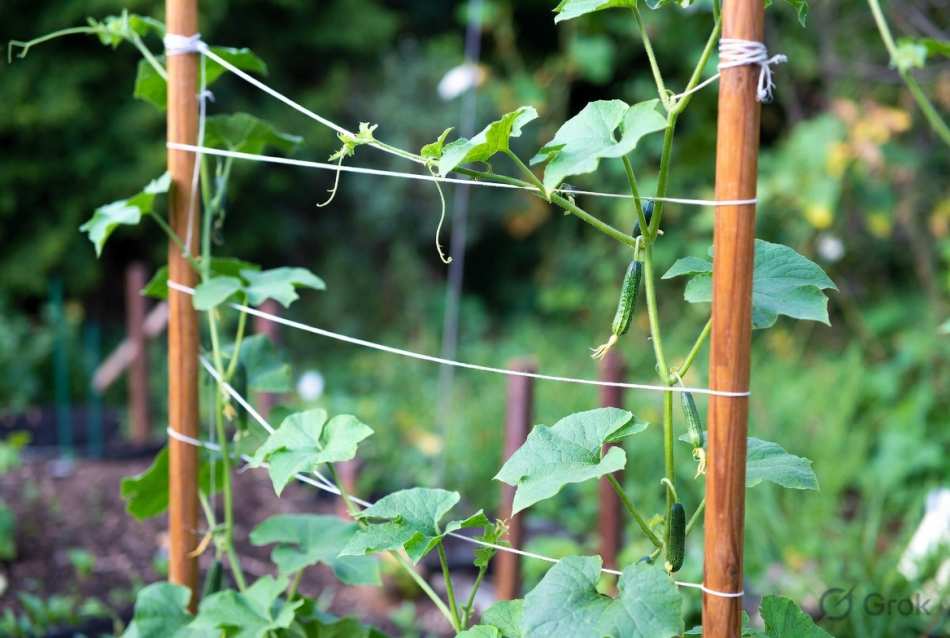
Poles and strong garden string can be used to create a simple cucumber trellis. Place two sturdy poles in the soil and tie several strings from the top of the poles down to the base near the plants. As the cucumbers grow, gently guide the vines to wrap around the strings.
This method works well in small gardens because it uses vertical space without taking up much room on the ground. It keeps the vines tidy and makes watering and harvesting easier.
17. T-Post Trellis
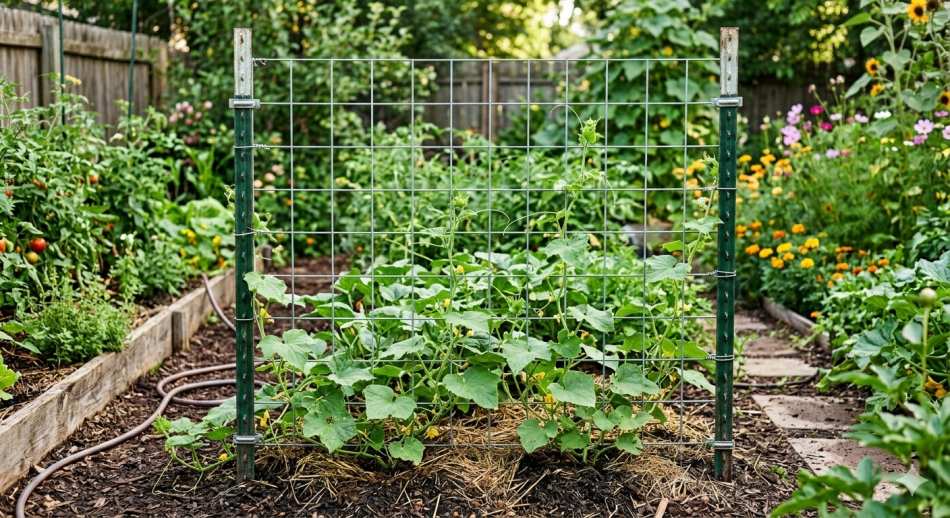
Metal T-posts are strong and easy to use for a cucumber trellis. Place two T-posts in the soil and attach wire mesh or garden fencing between them. The open grid gives cucumber vines plenty of support to climb as they grow.
This setup works well in small gardens because it is narrow and uses vertical space. The strong metal posts hold the trellis firmly, while the climbing vines stay off the ground and easier to manage.
18. Raised Bed Trellis
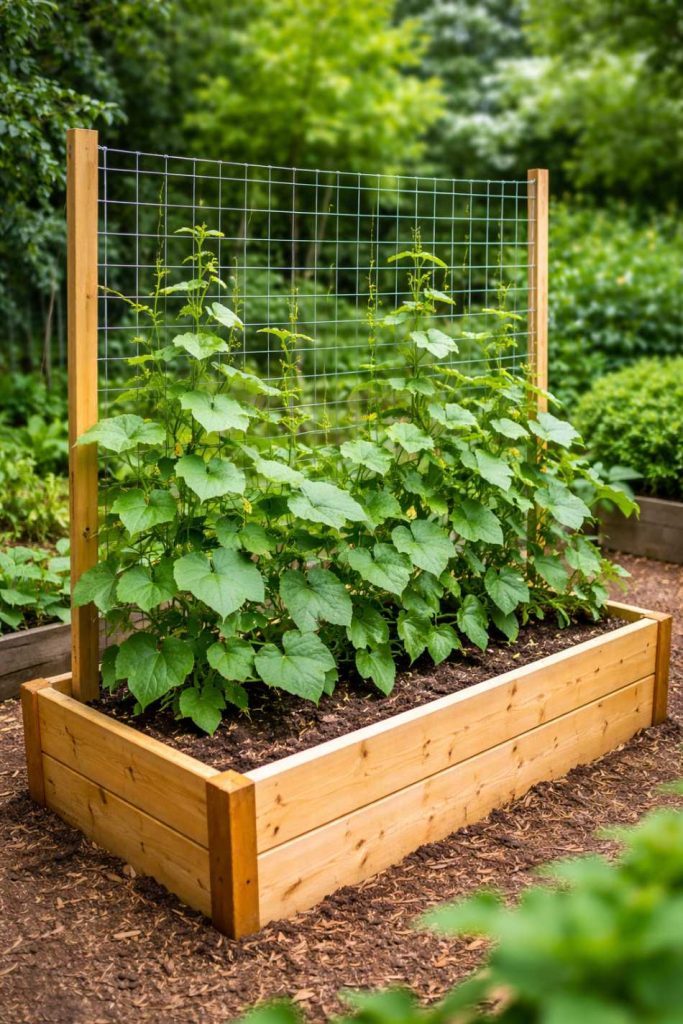
A trellis can also be attached directly to a raised garden bed. Fix wooden stakes or a metal panel to the sides of the bed and add garden netting or wire mesh for the vines to climb. This creates a simple support right where the cucumbers are planted.
This idea is helpful for small gardens because it keeps everything contained within the raised bed. The vines grow upward instead of spreading out, which saves space and keeps the garden area neat.
Also Read: 13 Small Garden Ideas in Your Budget
Conclusion
Growing cucumbers in a small garden doesn’t have to feel crowded or messy. With the right trellis, you can guide the vines to grow upward and make much better use of the space you have.
Vertical growing also keeps plants healthier, improves airflow, and makes harvesting easier.
Whether you choose a simple DIY setup or a sturdy long-lasting structure, a trellis helps keep your cucumber plants organized and productive.
With these cucumber trellis ideas, even a small garden can grow plenty of fresh cucumbers without taking up too much space.


Khaja Moinuddin, a computer science graduate, finds joy in gardening and homesteading. Join him on this blog as he shares his experiences in homesteading, gardening, and composting