Raising chickens can be expensive, especially if you’re particular about the breeds you want. That’s why many chicken growers choose to start with chicks instead of buying adult hens.
Not only is it more affordable, but it also lets you build your flock the way you like. And honestly, there’s something really enjoyable about watching those tiny fluffy chicks slowly grow into full-grown chickens.
That said, baby chicks need a little extra care in the beginning. They can’t keep themselves warm yet, which is why a brooder box is so important.
It gives them the warmth and safe space they need to eat, drink, rest, and grow strong during their first few weeks.
Depending on your needs, you can easily build a chicken brooder box using simple materials you may already have at home, such as a cardboard box, plastic storage bin, wooden crate, or even an old tub.
Below are a few simple DIY brooder box ideas you can easily try at home.
14 DIY Chicken Brooder Box Ideas
When setting up a brooder box for baby chicks, the main things to focus on are warmth, safety, and enough space.
Chicks need a good heat source to stay warm, along with fresh air so the brooder doesn’t get stuffy.
It should also have soft bedding, easy access to food and water, and walls high enough so the chicks can’t escape.
1. Cardboard Box Brooder

A sturdy cardboard box can easily be turned into a simple brooder for baby chicks.
- Just pick a large box with sides tall enough so the chicks can’t jump out.
- Line the bottom with pine shavings or other safe bedding. Then place a chick feeder and waterer inside.
- Hang a heat lamp above one side of the box so the chicks can move closer when they feel cold and step away if they get too warm.
If needed, you can place a piece of wire mesh over the top to keep the chicks safe.
2. Plastic Storage Bin Brooder
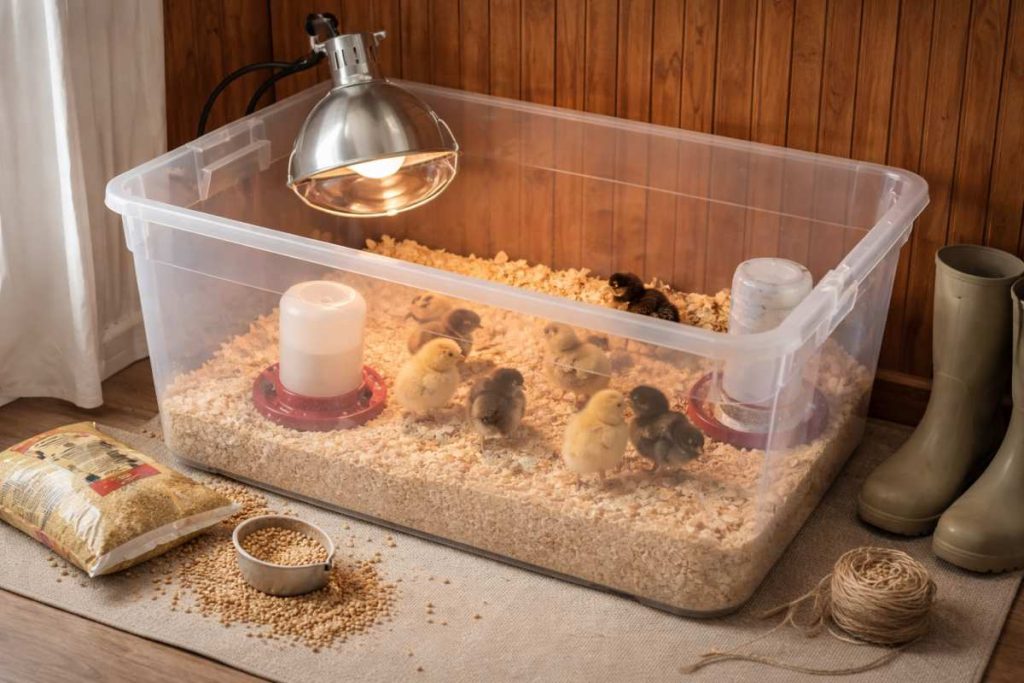
A large plastic storage bin can easily be turned into a brooder for baby chicks. Choose a bin that is deep enough so the chicks can’t jump out as they grow.
Spread a layer of pine shavings or other safe bedding at the bottom. Place a chick feeder and waterer inside, and hang a heat lamp above one side of the bin.
Some people also cut a section on the lid and cover it with wire mesh to improve airflow.
Also Read: 12 Homemade DIY Chicken Feeders
3. Large Storage Tote Brooder
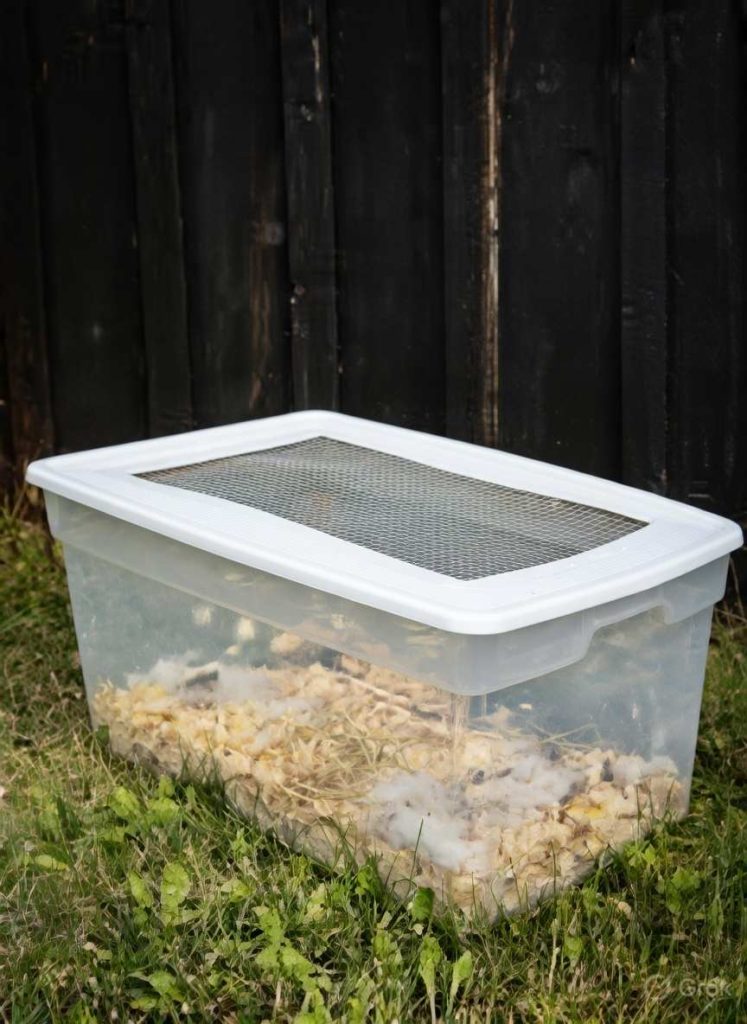
You can easily turn a large storage tote into a brooder for baby chicks. Choose a sturdy tote with high sides so the chicks can’t jump out as they grow.
Add a thick layer of pine shavings or other safe bedding at the bottom.
Place a chick feeder and waterer inside, and position a heat lamp above one side of the tote so the chicks can move closer or farther away from the heat as needed.
If the tote has a lid, you can cut a section and cover it with wire mesh to allow better airflow.
4. Wooden Crate Brooder
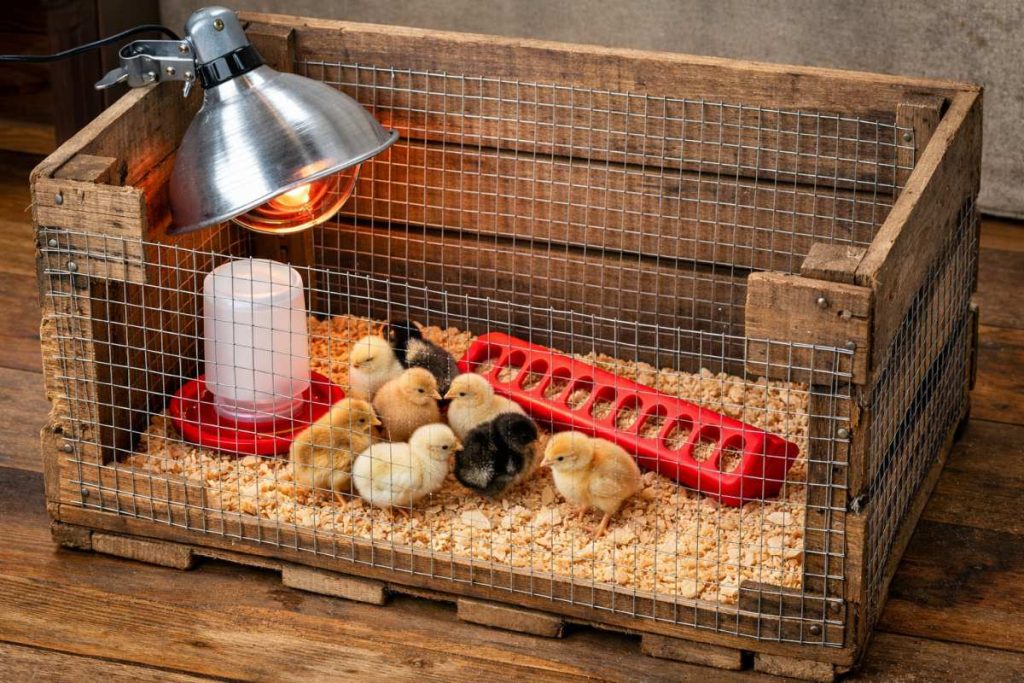
If you have an old wooden crate, it can make a simple brooder for baby chicks. Start by lining the bottom with cardboard or a tray so the bedding doesn’t fall through the gaps.
Add a layer of pine shavings, then place a chick feeder and waterer inside. Position a heat lamp safely above one side of the crate to provide warmth.
If the crate has wide openings, you can attach some wire mesh around the sides to keep the chicks safely inside.
5. Old Dresser Drawer Brooder
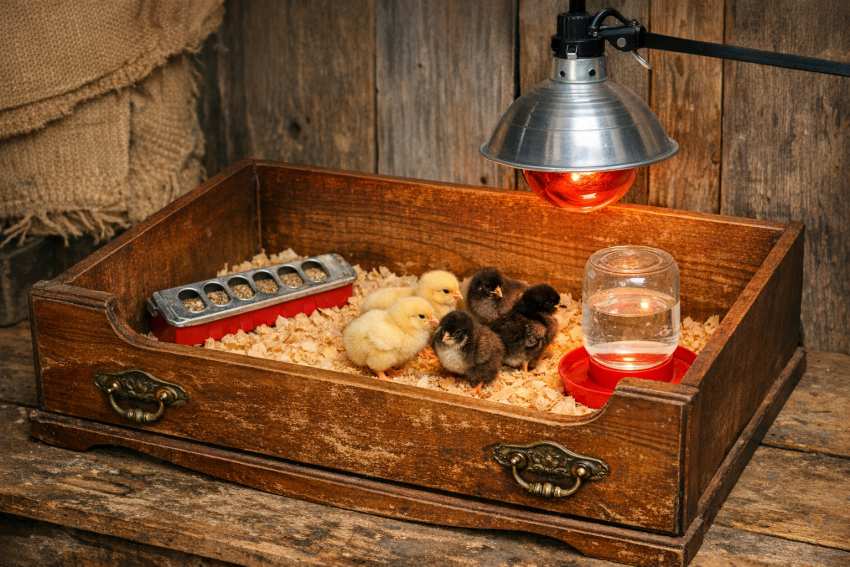
An unused dresser drawer can also work as a small brooder box. Just clean the drawer well and line the bottom with pine shavings or other safe bedding.
Place a small feeder and waterer inside, and hang a heat lamp above one side of the drawer.
Since drawers already have solid sides, they help keep the chicks contained and protected during their early weeks.
Check this: 5 Best Egg Laying Chickens for Beginners
6. Plastic Kiddie Pool Brooder
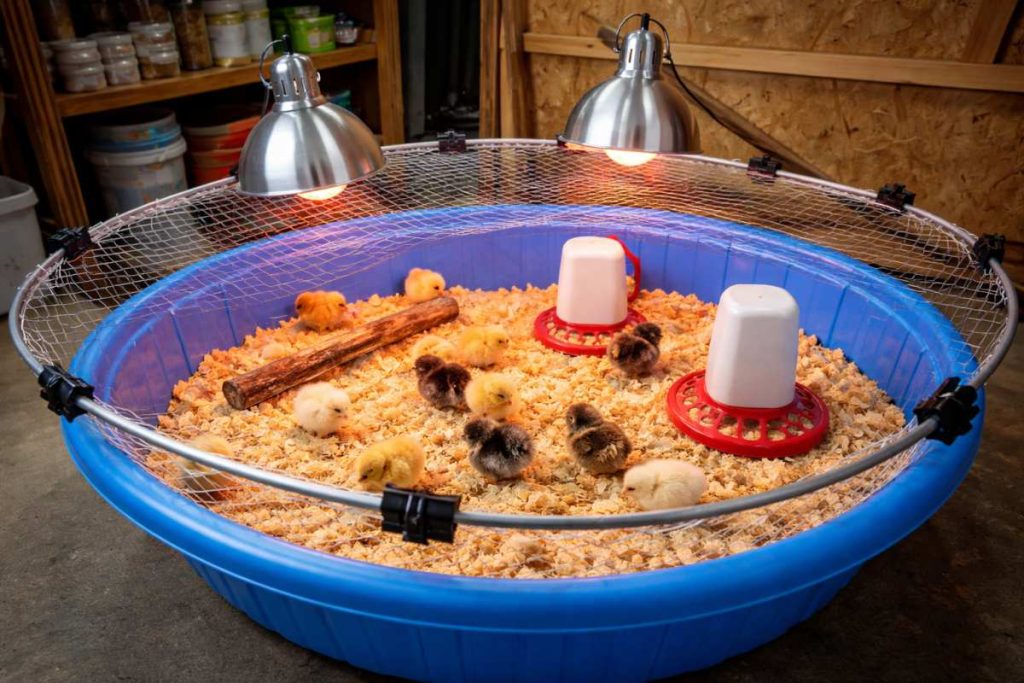
A plastic kiddie pool can make a roomy brooder for baby chicks. Just place the pool in a safe indoor area and spread a thick layer of pine shavings on the bottom.
Add a chick feeder and waterer, and hang a heat lamp above one side of the pool.
Many backyard chicken keepers use this setup because the round shape gives chicks plenty of space to move around as they grow.
7. Dog Crate Brooder
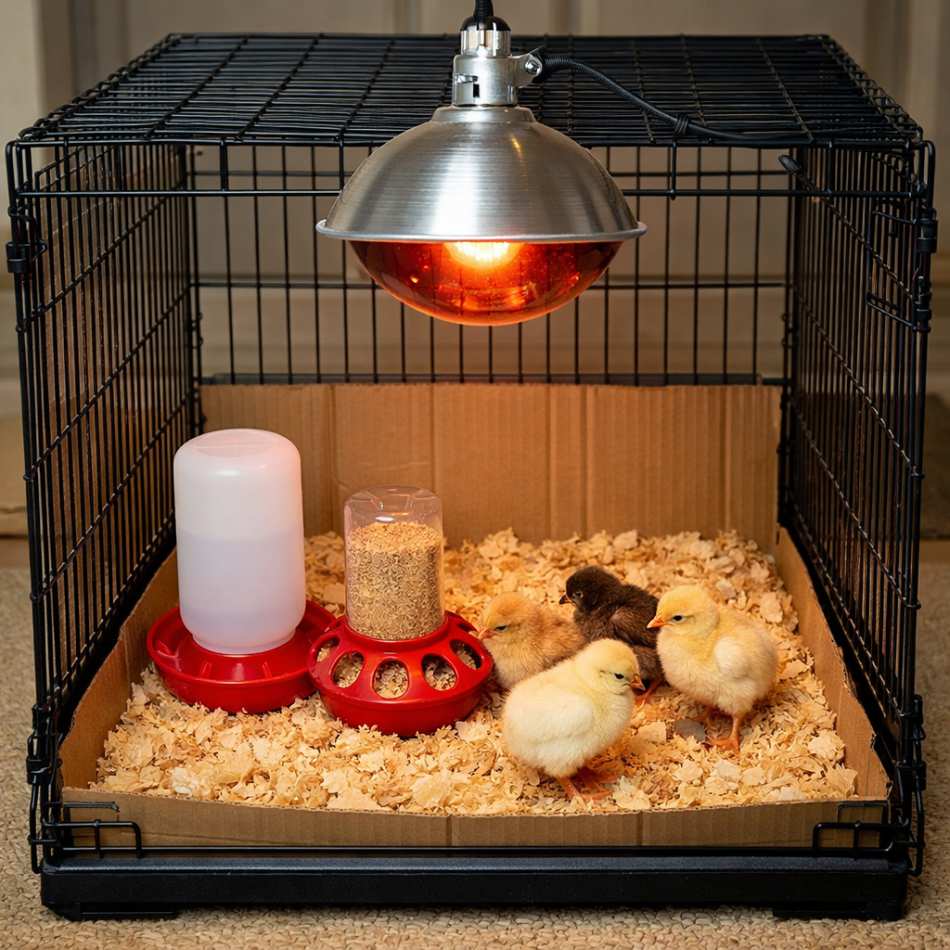
You can also turn a dog crate into a brooder with a few simple changes. Line the bottom with cardboard or a plastic tray first, then add bedding like pine shavings.
Place the feeder and waterer inside, and set up a heat lamp above the crate. The wire sides allow good airflow, which helps keep the brooder fresh and comfortable for the chicks.
8. Wire Storage Cube Brooder
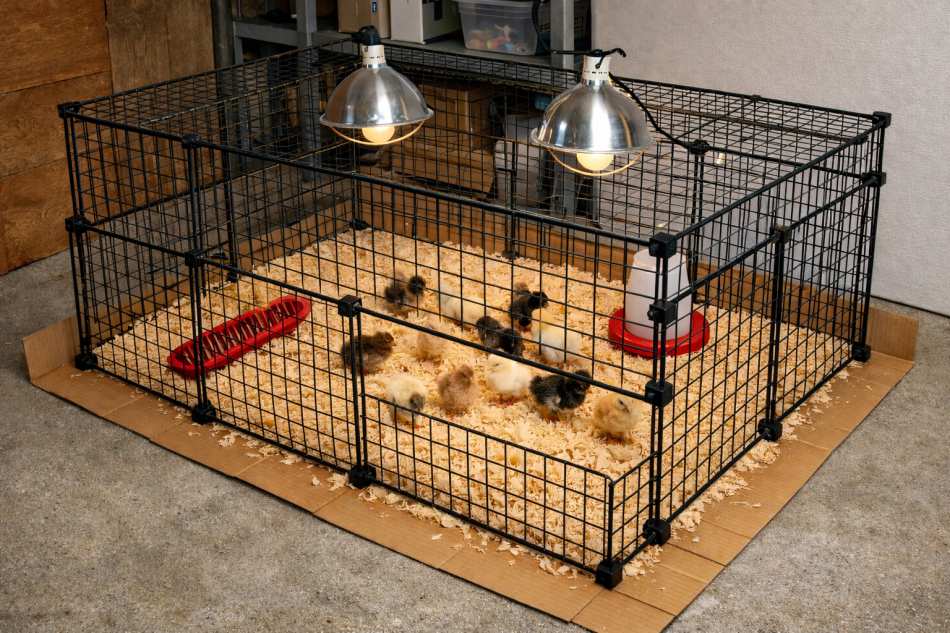
Wire storage cubes can be connected to create a flexible brooder space. Arrange the panels in a square or rectangle and secure them with zip ties.
Line the floor with cardboard or a plastic sheet before adding bedding. This type of brooder is popular because you can easily adjust the size as your chicks grow.
9. Large Plastic Tub Brooder
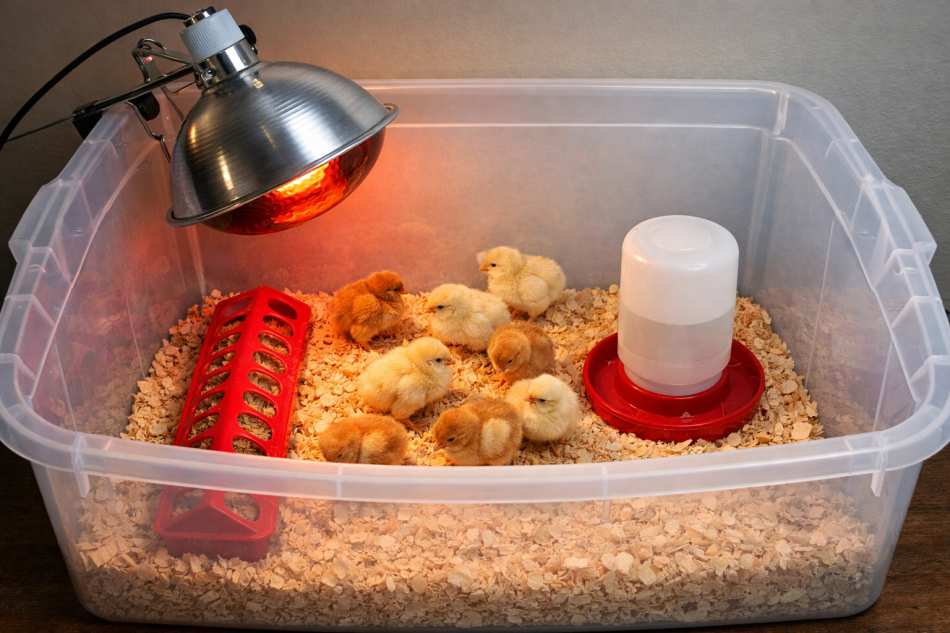
A large plastic tub can also be used as a simple brooder for baby chicks. Choose a tub that is deep enough to keep the chicks from jumping out.
Spread a layer of pine shavings at the bottom, then place a feeder and waterer inside.
Position a heat lamp above one side of the tub so the chicks can move closer to the warmth when needed. Plastic tubs are easy to clean and work well for small groups of chicks.
Also Read: 16 Chicken Coop Interior Ideas
10. Plywood Brooder Box
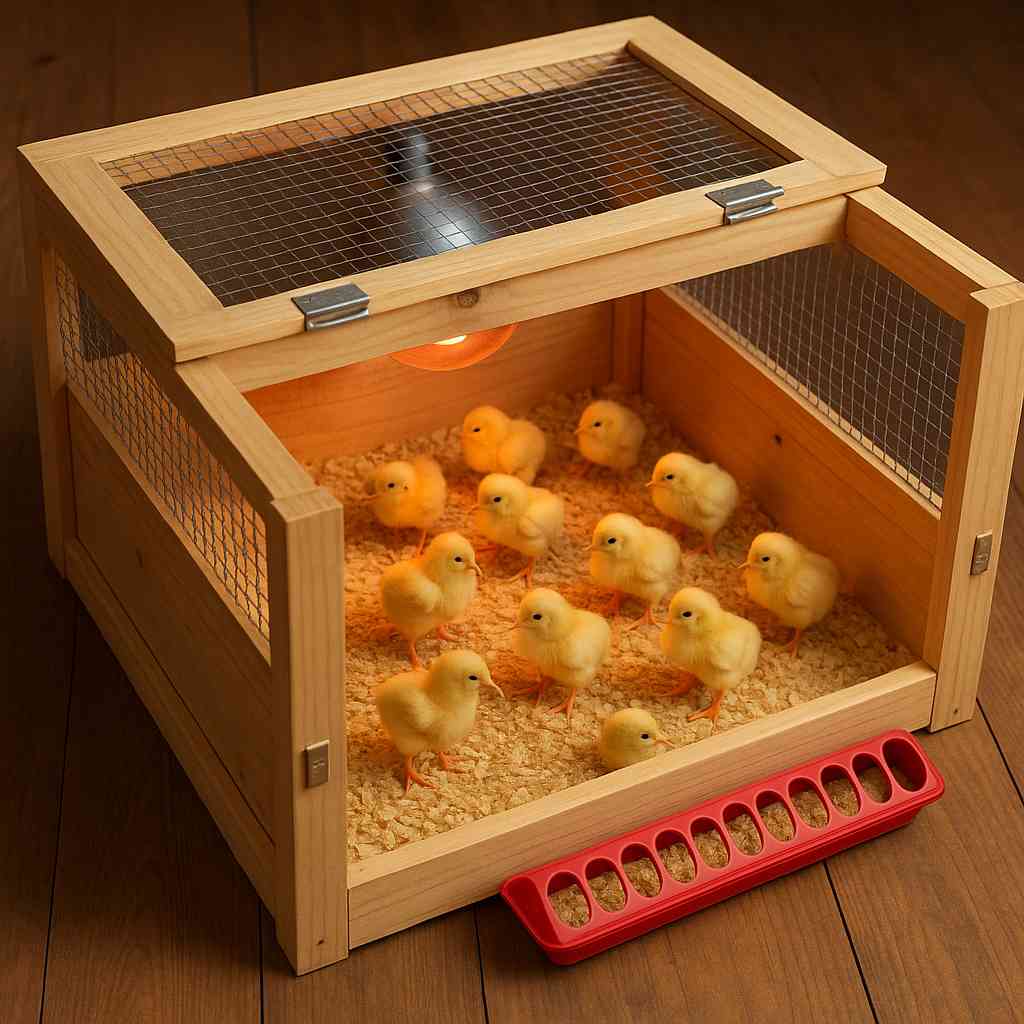
If you want something a bit more sturdy, you can build a simple brooder box using plywood.
Cut a few plywood panels and join them to make a shallow box with high sides.
Add bedding, a feeder, and a waterer inside, and hang a heat lamp above one side. This type of brooder is reusable and can last through many batches of chicks.
11. Stock Tank Brooder
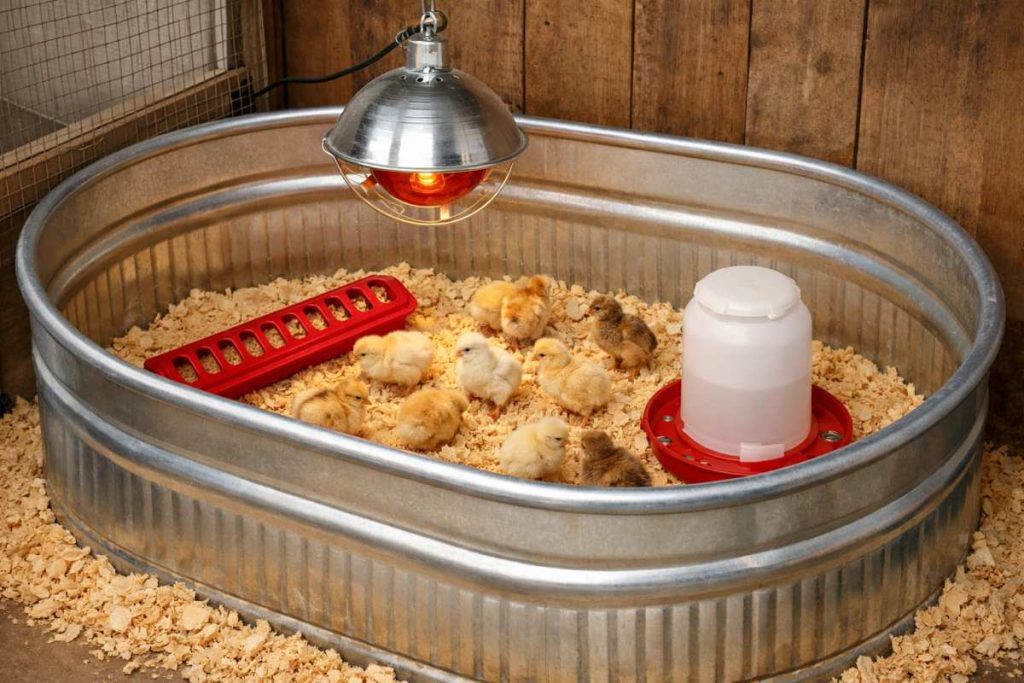
You can also use a metal or plastic stock tank as a brooder for baby chicks. These tanks are often used on farms for watering animals, but they work surprisingly well for brooding too.
Just place the tank in a sheltered indoor area and spread a thick layer of pine shavings at the bottom.
Add a chick feeder and waterer, and hang a heat lamp safely above one side. The deep, sturdy sides help keep chicks contained while giving them plenty of room to move around comfortably.
12. Old Baby Playpen Brooder
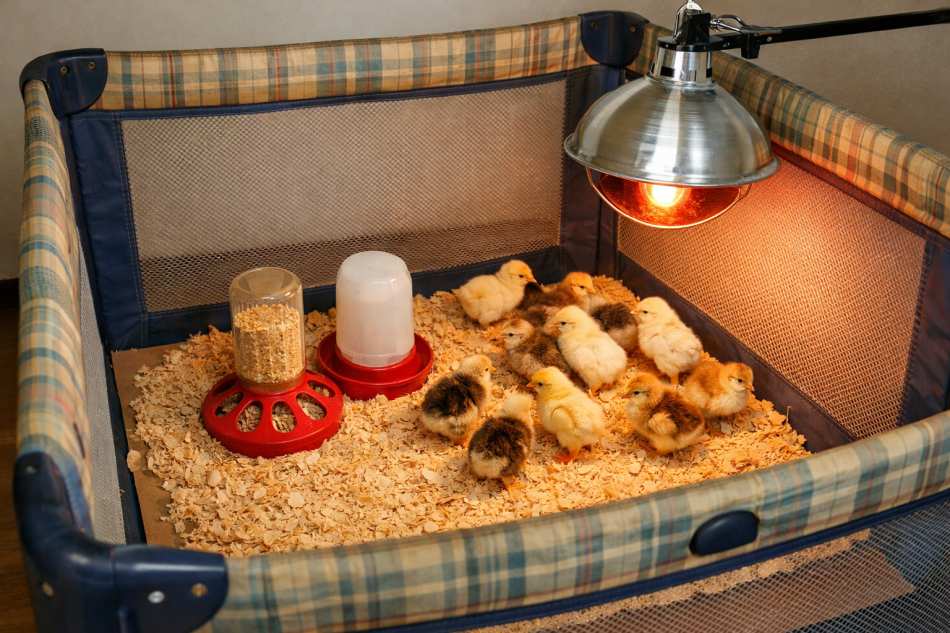
An old baby playpen can easily be turned into a brooder for chicks. Many backyard chicken keepers repurpose playpens because they already have mesh sides for airflow and enough space for growing chicks.
Start by placing cardboard or a plastic sheet on the floor of the playpen to hold the bedding. Add pine shavings, then place a feeder and waterer inside.
Position a heat lamp above one side of the setup so chicks can stay warm while still having room to move away from the heat if needed.
13. Galvanized Water Trough Brooder
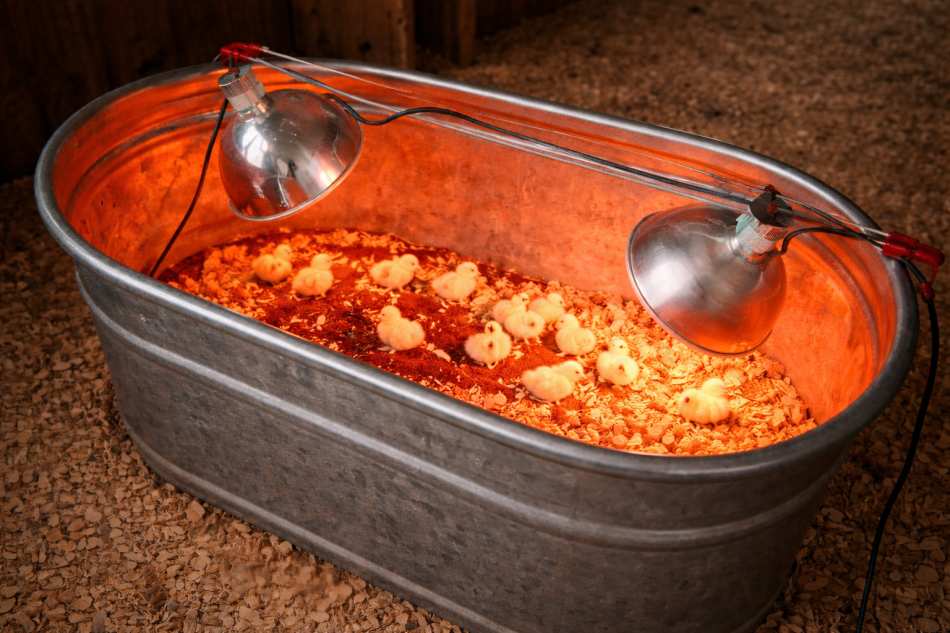
A galvanized water trough can also be used as a sturdy brooder for baby chicks. These metal troughs are often used on farms for feeding or watering animals, but they work well for brooding too.
- Start by placing the trough in a safe indoor spot away from drafts. Add a thick layer of pine shavings at the bottom for soft bedding.
- Then place a chick feeder and waterer inside, and hang a heat lamp securely above one side.
- The tall metal sides help keep chicks safely contained while giving them plenty of room to move around.
Also Read: 27 Low Budget DIY Chicken Coop Ideas
14. Large Cardboard Appliance Box Brooder
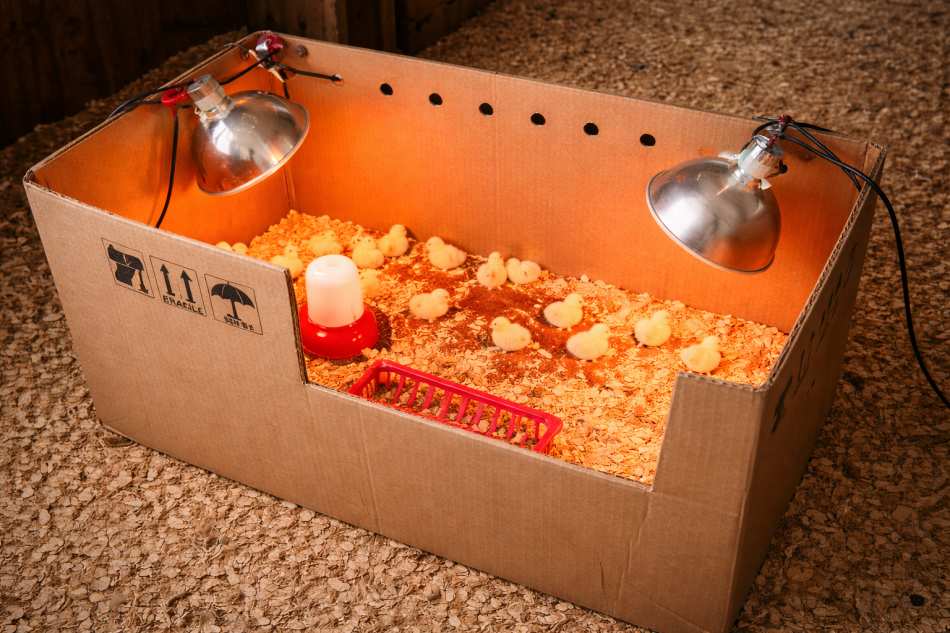
A large cardboard box from appliances like refrigerators or washing machines can easily be turned into a brooder.
These boxes are usually strong and spacious, which makes them great for raising several chicks at once.
Simply place the box in a dry indoor area and line the bottom with pine shavings or other safe bedding.
Add a feeder and waterer, and hang a heat lamp above one side of the box. If needed, you can cut small openings near the top and cover them with mesh to improve airflow.
How Long Do Chicks Need a Brooder?
Baby chicks usually need a brooder for about 4 to 6 weeks. During this time, they rely on an external heat source because they cannot regulate their body temperature on their own.
As the weeks pass, chicks slowly grow feathers and become better at staying warm without extra heat.
In the first week, the brooder temperature should be around 95°F. After that, you can lower the temperature by about 5°F each week until the chicks are fully feathered.
Once they have enough feathers and the outside temperature is warm enough, they can safely move from the brooder to the coop.
Conclusion
Setting up a brooder box doesn’t have to be complicated or expensive. As you’ve seen, many everyday household items can be easily turned into a safe and comfortable space for baby chicks.
The most important thing is to provide enough warmth, clean bedding, proper ventilation, and easy access to food and water.
With the right setup, your chicks will stay healthy and grow quickly during their first few weeks. Once they are fully feathered and strong enough, they’ll be ready to move out of the brooder and into their coop.


Khaja Moinuddin, a computer science graduate, finds joy in gardening and homesteading. Join him on this blog as he shares his experiences in homesteading, gardening, and composting