At first I was a bit confused—how can one build a greenhouse using PVC pipes? Aren’t they fragile and complicated?
But I was wrong.
The more I looked into it, the more it made sense. PVC pipes are light, easy to work with, and surprisingly sturdy when put together the right way.
You don’t need power tools or professional building skills. Most of it comes down to cutting, bending, and connecting a few pieces.
What really sold me was how forgiving the whole project is. If you mess up a measurement, you can fix it. If you want to make it bigger later, you can. And if you’re short on space, you can build a small version that fits right into a corner of your garden or even on a patio.
A DIY PVC greenhouse isn’t about perfection. It’s about giving your plants a simple, warm shelter and giving yourself a project that feels doable instead of overwhelming.
Why PVC to Build a Greenhouse?
When most people think about building a greenhouse, PVC pipes are not the first material that comes to mind. Wood and metal sound more “serious,” while PVC feels a little too simple.
I used to think the same way. PVC seemed fragile and maybe even unreliable for something meant to stand outside in wind and rain.
But once you understand what PVC can actually do, it becomes clear why so many DIY gardeners choose it.
So here are the main reasons PVC works so well for building a greenhouse.
1. Easy to work with
PVC is beginner-friendly. You don’t need special tools or building experience. Pipes are easy to cut, bend, and connect using simple fittings.
2. Lightweight but strong
Even though PVC looks thin, it becomes sturdy when shaped into arches or frames. It can support plastic covers and handle normal wind and rain without rusting or rotting.
3. Budget-friendly
PVC pipes are affordable and available at most hardware stores. You can build a greenhouse at a much lower cost compared to wood or metal structures.
4. Flexible and customizable
You can make your greenhouse tall or short, wide or narrow. It’s easy to expand or change the design later if your needs grow.
5. Works perfectly with plastic covers
PVC holds greenhouse plastic securely. You can roll up sides for ventilation, add simple doors, and replace the plastic without rebuilding the frame.
6. Portable and removable
A PVC greenhouse can be taken apart and moved easily. This is useful for seasonal gardening or if you don’t want a permanent structure.
How to Build a Greenhouse Using PVC Pipe?
If you’ve ever wanted a simple structure to protect your plants from cold, wind, or sudden weather changes, a PVC greenhouse is a perfect place to start.
It’s affordable, flexible, and forgiving—even if you make mistakes along the way.
Materials Needed
Here’s what you’ll need before you begin:
- PVC pipes (¾-inch or 1-inch thick)
- PVC connectors (T-joints, elbows, cross joints)
- Metal rebar or wooden stakes (for anchoring)
- Clear greenhouse plastic or thick plastic sheet
- Zip ties or pipe clamps
- Rope or strong tape
- Bricks, stones, or wood planks (to secure edges)
- Scissors or cutter
- Measuring tape
- Optional: zipper or Velcro strip for a door
Step 1: Choose the right location
Pick a sunny spot that gets at least 6 hours of sunlight each day. The ground should be flat and well-drained so water doesn’t collect under the greenhouse.
Avoid windy areas if possible. A protected corner of your garden will make the structure last longer and keep plants warmer.
Also Read: 9 Tips for Growing Vegetables in a Greenhouse for Beginners
Step 2: Decide the size and shape
Before cutting any pipes, decide how big your greenhouse should be. Think about what you want to grow and how much space you need to move inside.
Small hoop houses work well for garden beds, while taller walk-in frames are better for larger plants like tomatoes and peppers. Sketching a simple plan helps prevent mistakes later.
Step 3: Build the base frame
Mark the outline of your greenhouse on the ground. Hammer metal rods or wooden stakes into the soil along both sides where your arches will go.
Slide PVC pipes over these stakes and bend them into curved hoops. Space each hoop about 2 to 3 feet apart so the structure stays strong.
Step 4: Add support pipes
To keep the frame from wobbling, connect one long PVC pipe along the top of the hoops (called the ridge pipe). This gives the greenhouse strength and keeps the plastic from sagging.
You can also add side pipes or diagonal braces if your area gets strong wind or rain.
Step 5: Cover with plastic
Carefully spread the plastic sheet over the frame. Make sure it covers the entire structure evenly.
Secure the plastic using zip ties or clamps along the pipes. Weigh down the bottom edges with bricks or bury them slightly in the soil so wind can’t lift it.
Step 6: Make a door and ventilation
Plants need fresh air, so don’t seal the greenhouse completely. Cut a flap at one end to use as a door and attach Velcro or a zipper to open and close it easily.
You can also roll up the sides on warm days or leave small openings at the top to let hot air escape.
Step 7: Anchor and check stability
Once everything is covered, gently shake the frame to see if it feels strong. Add extra stakes, ropes, or weights if it moves too much.
Trim any extra plastic and tighten loose ties so the greenhouse looks neat and secure.
A PVC greenhouse doesn’t have to be perfect—it just needs to protect your plants and trap warmth inside. With simple materials and a few easy steps, you can build a greenhouse that helps your garden grow longer and stronger through changing seasons.
DIY PVC Greenhouse Plans
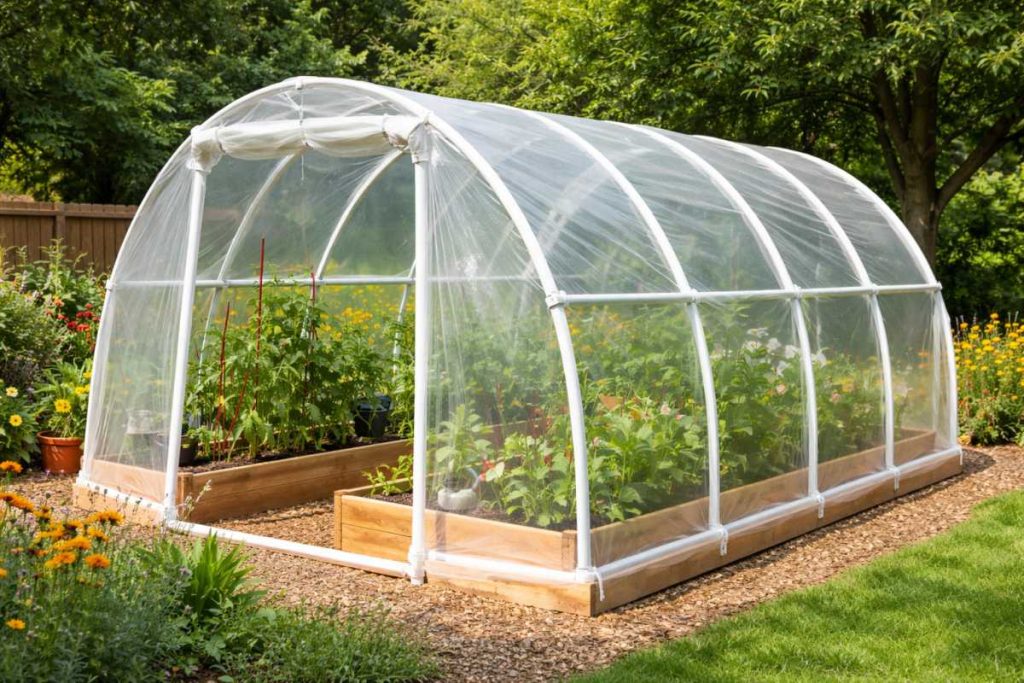
1. PVC Hoop House Greenhouse
To build a PVC Hoop House Greenhouse, start by anchoring PVC pipes into the ground and bending them into arch shapes over your garden bed. Add a support pipe along the top and cover the frame with clear plastic to create a tunnel-like shelter.
This simple structure helps protect plants from cold air, wind, and light frost while trapping warmth inside. It’s especially useful for leafy greens, herbs, and young seedlings during cooler months.
Because it uses basic materials and an easy design, this greenhouse is perfect for beginners and budget-friendly gardens. You can set it up in just a few hours and take it down when the weather warms up.
2. Walk-In PVC Frame Greenhouse
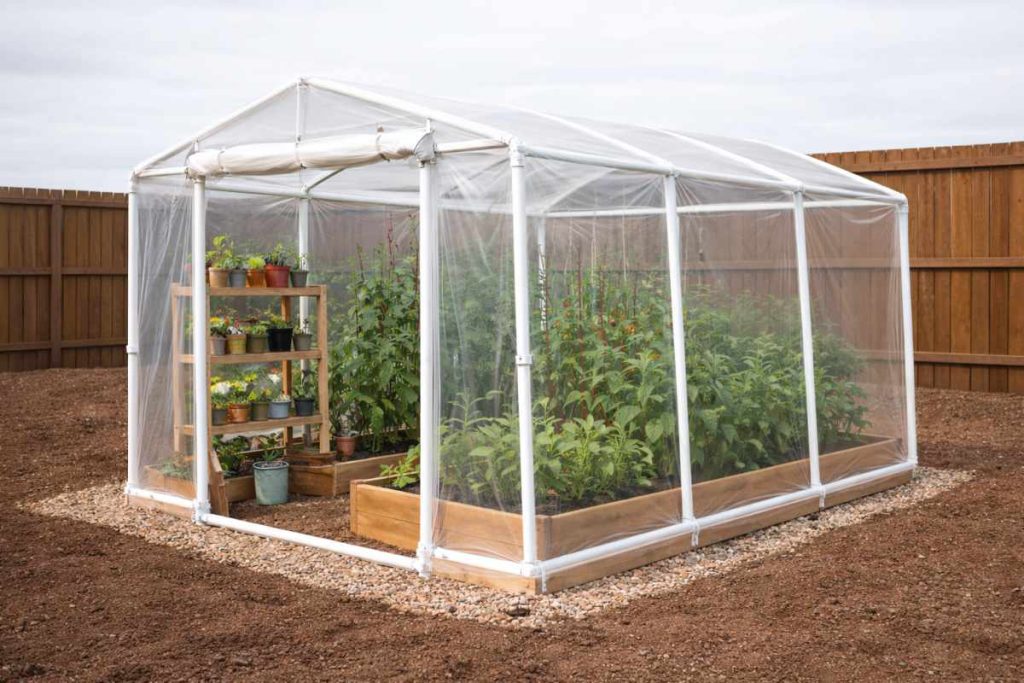
To build a walk-in PVC greenhouse, start by making a rectangular base and fixing vertical PVC pipes at the corners and sides. Connect them at the top with horizontal pipes and add a simple roof frame before covering everything with plastic.
This design gives you enough height to stand and work inside comfortably. It keeps plants protected from cold wind and creates a warm space for tomatoes, peppers, and taller crops.
It’s stronger than a hoop house and works well as a semi-permanent backyard greenhouse. With proper bracing and ventilation, it can be used for most of the year.
3. PVC Cold Frame Greenhouse
To build a PVC cold frame, make a low rectangular box and attach short PVC hoops over it. Cover the top with clear plastic or a transparent sheet and leave one side that can open for air.
This small greenhouse sits close to the ground and traps warmth around young plants. It’s perfect for seedlings, herbs, and early spring or winter growing.
Because it’s compact and lightweight, it works well in small gardens or patios. You can easily move it or open it during warm days to prevent overheating.
Also Read: How to Make a Greenhouse from Old Windows?
4. Lean-To PVC Greenhouse
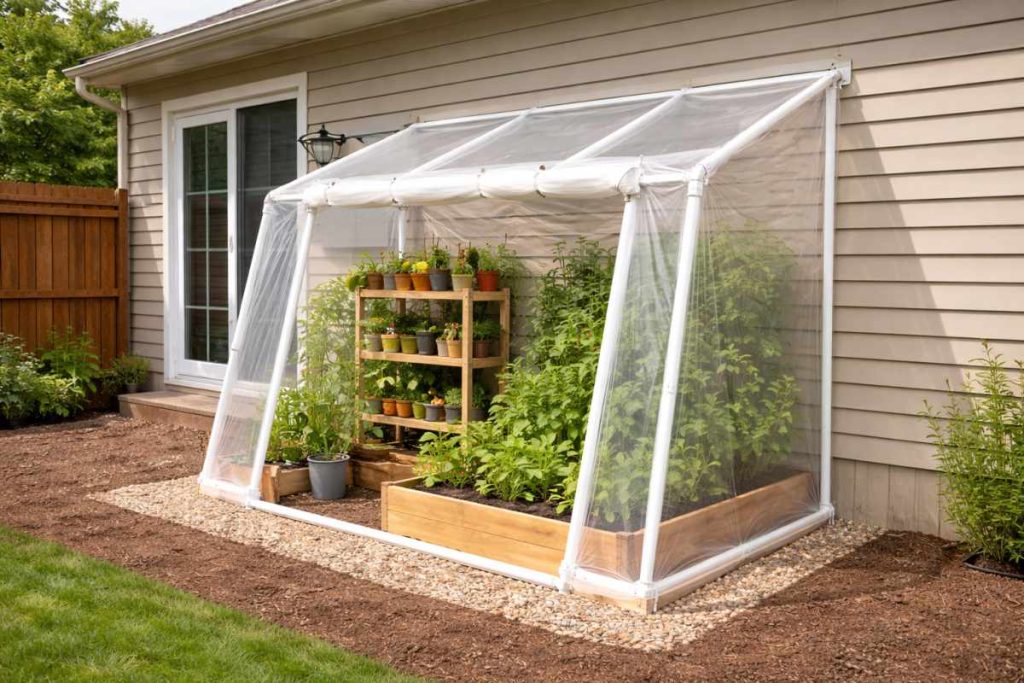
To build a lean-to PVC greenhouse, attach one side of the PVC frame against a sunny wall of your house or shed and angle the roof outward. Cover the frame with clear plastic and leave a small opening for ventilation.
This design uses the warmth of the wall to keep plants warmer, especially during cool nights. It’s great for saving space and works well for herbs and small vegetable plants.
Because one side is already supported by a wall, it’s more stable than free-standing structures. It’s also easier to build and maintain in tight garden areas.
5. Raised Bed PVC Greenhouse
To build a raised bed PVC greenhouse, insert PVC pipes into the corners of a raised bed and bend them into arches over the bed. Cover the frame with plastic and secure the edges tightly.
This setup keeps soil warmer and protects plants from frost and pests. It’s ideal for growing leafy greens and early-season vegetables.
It’s simple, compact, and blends naturally with raised garden beds. You can remove the cover easily once the weather becomes warm.
6. Portable PVC Greenhouse
To build a portable PVC greenhouse, create a lightweight frame using PVC pipes and connectors without fixing it permanently to the ground. Cover it with plastic and secure the edges with clips or ties.
This type of greenhouse can be moved around your garden whenever needed. It’s useful for following sunlight or protecting plants during sudden cold spells.
Because it’s not permanent, it’s perfect for renters or seasonal gardening. You can take it apart and store it when not in use.
7. Mini Balcony PVC Greenhouse

To build a mini balcony PVC greenhouse, create a small box-shaped frame using short PVC pipes and connectors, then cover it with clear plastic. Leave a front flap or top opening for ventilation and easy access to plants.
This design is perfect for balconies, patios, and small spaces where a full greenhouse won’t fit. It helps protect potted plants and herbs from cold air and sudden weather changes.
Because it’s lightweight and compact, you can move it easily and adjust its position for better sunlight. It’s a great option for apartment gardeners who still want greenhouse benefits.
8. PVC Dome Greenhouse
To build a PVC dome greenhouse, connect PVC pipes in curved sections to form a rounded, igloo-style frame and cover it with plastic sheeting. Secure the joints tightly so the dome shape stays strong.
The dome design allows heat to circulate evenly inside and handles wind better than flat-sided structures. It’s ideal for areas that experience strong breezes or uneven weather.
This greenhouse also looks more decorative than basic tunnels and works well for mixed plants. With proper anchoring, it can be both functional and visually appealing in the garden.
9. A-Frame PVC Greenhouse
To build an A-frame PVC greenhouse, connect PVC pipes into two slanted sides that meet at the top like a triangle. Cover the frame with plastic and add a small door or flap at the front.
This shape helps rain and snow slide off easily, keeping the structure dry and stable. It’s especially useful in areas with frequent rainfall or light snowfall.
The A-frame design offers more headroom in the center and is stronger than flat-roof structures. It’s a good balance between simple building and long-term durability.
10. Folding PVC Greenhouse
To build a folding PVC greenhouse, connect PVC pipes with flexible joints so the structure can collapse inward when not in use. Cover it with plastic and secure it with clips that can be removed easily.
This design is perfect for seasonal gardening when you only need a greenhouse part of the year. You can fold it down and store it away during warm months.
It saves space and makes setup quick and stress-free. This type works well for small gardens and temporary plant protection.
Check this: How to Keep a Greenhouse Warm in Winter?
11. Snow-Resistant PVC Greenhouse
To build a snow-resistant PVC greenhouse, use thicker PVC pipes and create a curved or sloped roof shape. Add extra support bars across the frame to hold weight from snow.
This design prevents snow from collecting on top and keeps the structure from collapsing. It’s ideal for cold regions with winter snowfall.
With strong anchoring and proper bracing, it can protect plants all winter long. It’s more durable than basic hoop houses in harsh weather.
12. Recycled Plastic PVC Greenhouse
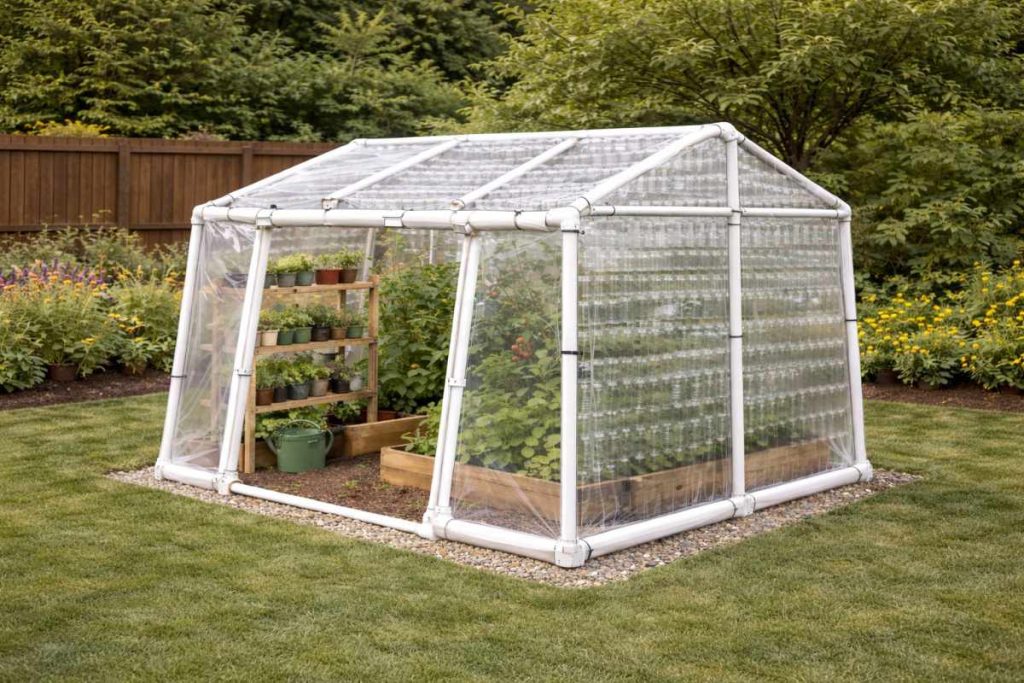
To build a recycled plastic PVC greenhouse, use PVC pipes for the frame and cover it with reused clear plastic sheets or plastic bottles. Secure everything tightly with zip ties or wire.
This plan is eco-friendly and very low cost. It’s a great way to reuse materials while still creating a warm space for plants.
It works best for small gardens and short-term use. With creativity, you can turn everyday waste into a functional greenhouse.
Important Tips for Maintaining a Greenhouse
- Temperature control: Keep the inside temperature between 65F–80F for most plants. Open vents or doors when it gets too hot and close them at night to trap warmth.
- Ventilation: Allow fresh air to flow daily to prevent overheating and mold. Roll up sides or open small vents, especially on sunny days.
- Watering: Water plants in the morning and check soil moisture often. Greenhouses dry out faster, so avoid both overwatering and letting soil completely dry out.
- Fertilizing: Feed plants lightly every 2–3 weeks using a balanced or organic fertilizer. Too much fertilizer can damage roots, so keep it gentle and consistent.
- Cleaning: Clean the plastic cover regularly so sunlight can pass through. Remove dead leaves and plant waste to keep the greenhouse healthy.
- Pest control: Inspect plants weekly for insects and disease. Use natural sprays like neem oil and keep the greenhouse tidy to prevent infestations.
- Maintenance: Tighten loose pipes and clips, repair any plastic tears quickly, and keep weeds out to ensure the structure stays strong and safe.
Conclusion
A DIY PVC greenhouse proves that you don’t need expensive materials or advanced skills to protect your plants and extend your growing season. With simple tools and a little effort, you can create a warm, safe space for healthier growth.
Whether you build a small hoop house or a walk-in structure, PVC makes greenhouse gardening flexible and affordable. It’s an easy project that brings big rewards for both your plants and your confidence as a gardener.


Khaja Moinuddin, a computer science graduate, finds joy in gardening and homesteading. Join him on this blog as he shares his experiences in homesteading, gardening, and composting